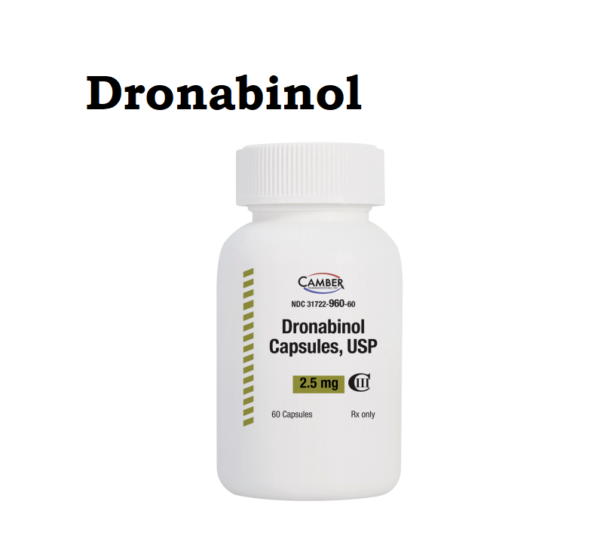
Dronabinol (Marinol) is a synthetic cannabinoid (Marijuana) that has complex effects on the brain. It is used in refractory vomiting and as an appetite stimulant.
Dronabinol Uses:
-
Anorexia in patients with AIDS:
- For anorexia treatment associated with weight loss in AIDS.
-
Chemotherapy-induced nausea and vomiting:
- Nausea and vomiting associated with chemotherapy in patients who have failed to respond enough to conventional anti-emetic treatments.
-
Off Label Use of Dronabinol in Adults:
- Moderate to severe obstructive sleep apnea
Adult dose:
- Note: Use caution when titrating up the dose of dronabinol because of the high frequency of dose-related adverse reactions at higher dosages.
Dronabinol Dose in the treatment of Anorexia in patients with AIDS: Oral:
-
Capsules:
- Initial: 2.5 mg twice a day (1 hour before lunch and dinner);
- for patients unable to tolerate this dosage, reduce the dose to 2.5 mg once a day (1 hour before dinner or at bedtime to reduce the risk of CNS symptoms).
- May titrate the dose up gradually based on response and tolerability (maximum: 20 mg/day [in divided doses]).
-
Oral solution:
- Initial: 2.1 mg twice a day (1 hour before lunch and dinner);
- although most patients respond to this dose, if further therapeutic effect is desired and if tolerated, may gradually increase to 2.1 mg 1 hour prior to lunch and 4.2 mg 1 hour prior to dinner, and then (if needed) to 4.2 mg twice a day (1 hour before lunch and dinner).
- Maximum: 16.8 mg/day [in 2 divided doses].
- In patients unable to tolerate 2.1 mg twice a day, consider 2.1 mg once a day (1 hour before dinner or at bedtime) to reduce the risk of CNS effects.
Dronabinol Dose in the Chemotherapy-induced nausea and vomiting (manufacturer's labeling): Oral:
-
Capsules:
- 5 mg/m² administered 1 to 3 hours prior to chemotherapy, then give 5 mg/m²/dose every 2 to 4 hours following chemotherapy for a total of 4 to 6 doses/day;
- increase dose in increments of 2.5 mg/m² based on response and tolerability (maximum: 15 mg/m²/dose).
- Monitor for adverse reactions; consider reducing dose to 2.5 mg once a day 1 to 3 hours prior to chemotherapy to reduce the risk of CNS adverse reactions.
-
Oral solution:
- Initial: 4.2 mg/m² (rounded to the nearest 0.1 mg increment [or to the nearest 0.1 mL measurable increment on the calibrated oral dosing syringe]) 1 to 3 hours prior to chemotherapy and then every 2 to 4 hours following chemotherapy for a total of 4 to 6 doses/day.
- Titrate dose in 2.1 mg/m² increments (during a cycle or in subsequent cycles) to clinical response.
- Maximum: 12.6 mg/m²/dose and 4 to 6 doses/day.
- In patients unable to tolerate 4.2 mg/m², consider 2.1 mg/m² once a day 1 to 3 hours prior to chemotherapy to reduce the risk of CNS effects.
Dronabinol Dose in Chemotherapy-induced refractory nausea and vomiting (off-label dosing):
- Oral: Capsules: 2.5 to 10 mg 3 or 4 times a day
Dronabinol Dose in the treatment of moderate to severe Obstructive sleep apnea (off-label):
- Oral: 2.5 mg or 10 mg 1 hour prior to bedtime.
- An initial dose escalation is required for the 10 mg dose.
- Initiate at 2.5 mg 1 hour prior to bedtime for 7 days, followed by 5 mg 1 hour prior to bedtime for 7 days, and then 10 mg 1 hour prior to bedtime.
Dose in children:
Note:
- Use caution when titrating up the dose of dronabinol because of the high frequency of dose-related adverse reactions at higher dosages.
- Dronabinol is available both in capsules and an oral solution form;
- they are not bioequivalent and should not be used interchangeably;
- dosing varies for the same indication due to bioavailability differences.
Dronabinol Dose in the Chemotherapy-induced refractory nausea and vomiting:
- Note:
- Start with the lowest recommended dose and titrate according to response;
- based on initial results, the dose may be escalated during a chemotherapy cycle or with subsequent cycles.
-
Children and Adolescents:
-
Oral: Capsules:
- 5 mg/m² administered 1 to 3 hours prior to chemotherapy, then give 5 mg/m² /dose every 2 to 4 hours following chemotherapy for a total of 4 to 6 doses/day;
- increase doses in increments of 2.5 mg/m² based on response and tolerability; maximum dose: 15 mg/m²/dose.
- In adults, usual fixed doses of 2.5 to 10 mg 3 or 4 times a day are used.
- Though FDA approved the drug in the child population, available data is limited and dosing extrapolated based on experience in adults (minimum reported age in pediatrics: 9 years; some experts suggest avoiding use in children <6 years, and using with caution in patients 6 to 12 years
-
-
Dronabinol Dosing adjustment for toxicity:
- The presented dosing adjustments are based on experience in adult patients;
- specific recommendations for pediatric patients are limited.
- Adult:
-
Appetite stimulation in AIDS patients:
-
CNS adverse reactions:
- Reduce dose if needed.
- Note: Administering the dose later in the day may reduce the frequency of CNS adverse effects.
-
Dizziness, somnolence, confusion, or euphoria:
- Adverse effects typically resolve within 1 to 3 days and usually do not require dose reduction
-
Severe or persistent CNS adverse effects:
- Reduce dose to 2.1 mg (solution) or 2.5 mg (capsule) once daily 1 hour before dinner or in the evening at bedtime
- In patients unable to tolerate 2.1 mg twice daily (solution), consider 2.1 mg once daily (1 hour before dinner or at bedtime) to reduce the risk of CNS effects
-
Dronabinol dose in Chemotherapy-induced nausea and vomiting:
-
CNS adverse reactions:
- Consider decreasing the adult dose to 2.1 mg (solution) or 2.5 mg (capsule) once daily 1 to 3 hours prior to chemotherapy to reduce the risk of CNS adverse reactions
Pregnancy Risk Category: C
- Although information related to the use of synthetic cannabinoids during pregnancy is limited, cannabinoids cross the placenta.
- Maternal use may increase the risk of adverse fetal/ neonatal outcomes including growth restriction, low birth weight, preterm birth, and stillbirth.
- Some dosage forms also contain a significant amount of alcohol.
Dronabinol use during breastfeeding:
- Dronabinol is present in breast milk.
- When used for chemotherapy-induced nausea and vomiting, the manufacturer recommends not to breastfeed during treatment and for 9 days after the last dronabinol dose.
- When used to treat anorexia in females with HIV infection, breastfeeding should be completely avoided to decrease the potential transmission of HIV.
Renal dose:
Dronabinol Dose in Kidney disease:
- There are no dosage adjustments provided in the drug manufacturer's labeling.
Dronabinol Dose in Liver disease:
- There are no dosage adjustments provided in the drug manufacturer's labeling.
Common Side Effects of Dronabinol:
-
Central nervous system:
- Euphoria
Less Common Side Effects of Dronabinol:
-
Cardiovascular:
- Facial flushing
- Palpitations
- Tachycardia
- Vasodilatation
- Flushing
- Hypotension
-
Central nervous system:
- Abnormality in thinking
- Dizziness
- Drowsiness
- Paranoia
- Amnesia
- Anxiety
- Ataxia
- Confusion
- Depersonalization
- Hallucination
- Nervousness
- Chills
- Depression
- Headache
- Malaise
- Nightmares
- Speech disturbance
-
Dermatologic:
- Diaphoresis
-
Gastrointestinal:
- Abdominal pain
- Nausea
- Vomiting
- Anorexia
- Diarrhea
- Fecal incontinence
-
Hepatic:
- Increased liver enzymes
-
Neuromuscular & skeletal:
- Weakness
- Myalgia
-
Ophthalmic:
- Conjunctival injection
- Conjunctivitis
- Visual disturbance
-
Otic:
- Tinnitus
-
Respiratory:
- Cough
- Rhinitis
- Sinusitis
Contraindications to Dronabinol:
- Hypersensitivity/Allergy to dronabinol, sesame oil (capsules), alcohol (oral solution) or any component of the formulation;
- receiving, or have recently received, disulfiram- or metronidazole-containing products within 2 weeks (oral solution).
Warnings and Precautions
-
Cardiovascular effects:
- May cause occasional hypotension, possible hypertension, syncope, or tachycardia; patients with cardiac disorders may be at higher risk for hemodynamic instability.
- Monitor for changes in heart rate, blood pressure, and signs/symptoms of syncope after initiating treatment and with dosage increases.
- Avoid concomitant use with other medications associated with similar cardiovascular adverse effects.
-
CNS adverse effects:
- Monitor for CNS adverse effects; may require dosage modification.
- Dronabinol has been observed to exaggerate depression, mania, or schizophrenia; screen patients for the previous history of these conditions prior to treatment initiation.
- Significant CNS symptoms were associated with doses of 0.4 mg/kg in antiemetic studies.
- Avoid use in patients with a previous psychiatric history; if use cannot be avoided, observe closely for new or worsening psychiatric symptoms.
- Avoid concomitant use with other medications associated with similar psychiatric adverse effects.
- May cause cognitive impairment, altered mental state, or CNS depression, which may impair physical or mental abilities; patients must be cautioned about performing tasks that require mental alertness (eg, operating machinery, driving).
- Old age and pediatric patients may be more sensitive to the neurological and psychiatric effects of dronabinol.
- May require dose reduction or discontinuation.
-
GI effects:
- New onset or worsening paradoxical nausea, vomiting, and/or abdominal pain may occur with synthetic cannabinoids; which may be severe.
- Symptoms are similar to cannabinoid hyperemesis syndrome, which is a cyclical syndrome with the same symptoms occurring with long-term use of cannabinoid products.
- Observe patients for worsening nausea, vomiting, or abdominal pain.
- Patients may require dose reduction or even discontinuation.
-
Hypersensitivity:
- Hypersensitivity/Allergic reactions, including disseminated rash, hives, swelling of lip, oral ulcers, skin burning, flushing, and tightness in the throat, have been observed.
-
Seizures:
- Dronabinol has been linked with seizures and seizure-like activity.
- Assess potential risks versus benefits in patients with a history of seizure disorder, those receiving anti-epileptic medications, or with other factors that may lower the seizure threshold.
- Monitor patients with a history of seizure disorder for worsened control.
- Discontinue dronabinol immediately in patients who develop seizures.
-
Substance abuse:
- Patients with a previous history of substance abuse (including marijuana or alcohol abuse) or dependency may be likely to also abuse dronabinol.
- Assess risk for abuse or misuse before treatment and monitor patients with a previous history of substance abuse throughout treatment.
- Tolerance, psychological, and physical dependence may occur with use for prolong time.
- EEG changes consistent with withdrawal have been studied upon abrupt dechallenge of dronabinol.
- Sleep disturbances have been reported for a few weeks after treatment discontinuation with high dronabinol doses.
Dronabinol: Drug Interaction
Note: Drug Interaction Categories:
- Risk Factor C: Monitor When Using Combination
- Risk Factor D: Consider Treatment Modification
- Risk Factor X: Avoid Concomitant Use
Risk Factor C (Monitor therapy) |
|
| Alcohol (Ethyl) | Dronabinol may enhance the CNS depressant effect of Alcohol (Ethyl). |
| Amphotericin B | Dronabinol may increase the serum concentration of Amphotericin B. Specifically, dronabinol may displace amphotericin B from its protein-binding sites, leading to an increased concentration of active, unbound drug. |
| Anticholinergic Agents | May enhance the tachycardic effect of Cannabinoid-Containing Products. |
| CNS Depressants | Dronabinol may enhance the CNS depressant effect of CNS Depressants. |
| Cocaine (Topical) | May enhance the tachycardic effect of Cannabinoid-Containing Products. |
| CycloSPORINE (Systemic) | Dronabinol may increase the serum concentration of CycloSPORINE (Systemic). Specifically, dronabinol may displace cyclosporine from its proteinbinding sites, leading to an increased concentration of active, unbound drug. |
| CYP2C9 Inhibitors (Moderate) | May increase the serum concentration of Dronabinol. |
| CYP3A4 Inducers (Strong) | May decrease the serum concentration of Dronabinol. |
| CYP3A4 Inhibitors (Moderate) | May increase the serum concentration of Dronabinol. |
| CYP3A4 Inhibitors (Strong) | May increase the serum concentration of Dronabinol. |
| Ritonavir | May increase the serum concentration of Dronabinol. |
| Sympathomimetics | Cannabinoid-Containing Products may enhance the tachycardic effect of Sympathomimetics. |
| Warfarin | Dronabinol may increase the serum concentration of Warfarin. Specifically, dronabinol may displace warfarin from its protein-binding sites, leading to an increased concentration of active, unbound drug. |
Risk Factor D (Consider therapy modification) |
|
| Disulfiram | May enhance the adverse/toxic effect of Dronabinol. Specifically, disulfiram may produce severe intolerance to the alcohol contained in the dronabinol oral solution. |
| MetroNIDAZOLE (Systemic) | May enhance the adverse/toxic effect of Dronabinol. Specifically, metronidazole may produce severe intolerance to the alcohol contained in the dronabinol oral solution. |
[/bg_collapse] [bg_collapse view="button-blue" color="#f7f2f2" icon="arrow" expand_text="Monitoring parameters" collapse_text="Monitoring parameters" ]
Monitoring parameters:
- Monitor heart rate and blood pressure.
- Monitor for CNS adverse effects, seizures (including worsened seizure control), new or worsening psychiatric symptoms,
- nausea, vomiting or abdominal pain may worsen, and
- monitor substance abuse behavioral profile.
How to administer Dronabinol?
Capsules:
- Anorexia in patients with AIDS:
- Administer twice a day doses 1 hour before lunch and dinner;
- administer single doses 1 hour before dinner or at bedtime.
- Chemotherapy-induced nausea and vomiting:
- The first dose should be taken on an empty stomach at least 30 minutes prior to eating;
- subsequent doses may be administered without regard to any meals, although once titrated, the timing of administration in relation to meals should be kept consistent for each chemotherapy cycle.
Oral solution:
- Always use calibrated oral dosing syringe provided along when administering to ensure the dose is measured and administered accurately.
- If the prescribed dose is >5 mg, then administer in divided doses and drawn up in 2 or more portions using the oral syringe.
- Administer directly from oral dosing syringe; immediately followed by a full glass of water (180 to 240 mL).
- May also be administered through silicone-based enteral feeding tubes that are size ≥14 French (eg, nasogastric [NG], gastrostomy tube [G-tube], percutaneous endoscopic gastrostomy tube [PEG-tube], and gastro-jejunostomy tube [GJ-tube]); don't use polyurethane tubing; after administration, flush feeding tube with 30 mL of water by a catheter-tip syringe.
Anorexia in patients with AIDS:
- Take 1 hour prior to lunch and 1 hour before dinner initially; if persistent or severe CNS adverse effects are observed, administering later in the day (1 hour before dinner and at bedtime) may reduce the frequency of CNS adverse effects.
Chemotherapy-induced nausea and vomiting:
- The first dose must be taken on an empty stomach at least 30 minutes before eating; subsequent doses in the chemotherapy cycle may be administered without any regard to meals.
- Once a dose has been titrated, the timing of doses with regard to food in subsequent cycles should remain constant with earlier cycles.
Mechanism of action of Dronabinol:
- Dronabinol (synthetic delta-9-tetrahydrocannabinol), an active cannabinoid and naturally occurring component of Cannabis sativa L. (marijuana) that activates cannabinoid receptors CB and CB.
- Activation of the CB receptor produces marijuana-like effects on psyche and circulation, whereas activation of the CB receptor does not.
- Dronabinol has approximately equal affinity for the CB and CB receptors; however, efficacy is less at CB receptors.
- Activation of the cannabinoid system with dronabinol produces psychological effects that can be further divided into FOUR groups:
- sensory (increased perception of external stimuli and of the person's own body);
- affective (euphoria and easy laughter);
- somatic (feeling of the body floating or sinking in the bed); and
- cognitive (distortion of time perception, lapses of memory, difficult to concentrate).
- Most of the effects (eg, pain killer, appetite enhancement, muscle relaxation, hormonal actions) are central cannabinoid receptors (CB ) mediated, their distribution reflecting many of the medicinal benefits and adverse effects.
The onset of action:
- ~0.5 to 1 hour
Peak effect:
- 2 to 4 hours
Duration:
- 4 to 6 hours (psychoactive effects); ≥24 hours (appetite stimulation)
Absorption:
- Oral: about 90% to 95%; while 10% to 20% of dose reaches systemic circulation
Protein binding:
- ~97%
Metabolism:
- First-pass extensive hepatic metabolism occurs primarily via microsomal hydroxylation to metabolites, some of which are active; but major active metabolite is 11-hydroxy-delta-9-tetrahydrocannabinol (11-OH-THC).
Half-life elimination:
- Biphasic: Alpha: about 4 to 5 hours; Terminal: about 25 to 36 hours
Time to peak, serum:
- 0.5 to 4 hours
Excretion:
- Feces (50%, <5% as unchanged drug);
- Urine (10% to 15%)
International Brands of Dronabinol:
- Marinol
- Syndros
- Elevat
Dronabinol Brand Names in Pakistan:
No Brands Available in Pakistan.
.png)