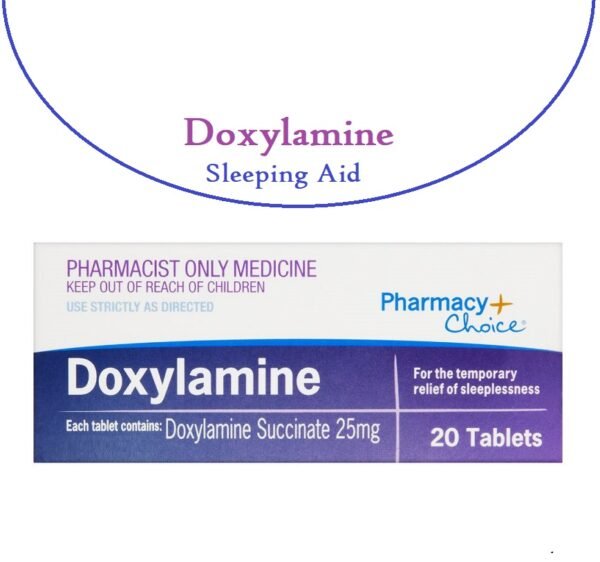
Doxylamine (Sleeping aid) tablets are recommended for the treatment of nausea and vomiting during pregnancy (in combination with pyridoxine). It is a sedative antihistamine and is used for the treatment of insomnia.
Doxylamine Uses:
-
Insomnia:
- It is used as a sleeping aid to reduce the time to fall asleep.
-
Off-Label Use of Doxylamine in Adults:
- It is recommended for the treatment of nausea and vomiting during pregnancy.
Adult dose:
Doxylamine Dose in the treatment of Insomnia:
- 25 mg orally once a day 30 minutes before bedtime or as advised by a healthcare professional.
Dose in children:
Doxylamine Dose in the treatment of Insomnia:
-
Children ≥12 years and Adolescents:
- 25 mg orally once a day 30 minutes before bedtime or as advised by a healthcare professional
Pregnancy risk category: A
- It can be used during pregnancy to treat nausea and vomiting. It is safe to be used in combination with pyridoxine.
Use of Doxylamine while breastfeeding
- Breastmilk can eliminate it and infants could experience adverse reactions.
- It can cause sedation, irritability, unusual excitement, and other adverse effects in infants.
- Children with respiratory problems or apnea could be at greater risk.
- If infants are exposed to anti-histamines of the first generation, it is important to monitor them for any central effects.
Dose in Kidney disease:
There are no dosage adjustments provided in the manufacturer's labeling.
Dose in Liver disease:
There are no dosage adjustments provided in the manufacturer's labeling.
Side effects of Doxylamine:
-
Cardiovascular:
- Palpitations
- Tachycardia
-
Central Nervous System:
- Disorientation
- Dizziness
- Drowsiness
- Headache
- Paradoxical Central Nervous System Stimulation
- Vertigo
-
Gastrointestinal:
- Anorexia
- Constipation
- Diarrhea
- Dry Mucous Membranes
- Epigastric Pain
- Xerostomia
-
Genitourinary:
- Dysuria
- Urinary Retention
-
Ophthalmic:
- Blurred Vision
- Diplopia
Contraindications to Doxylamine:
- OTC labeling
- Avoid children under 12 years old.
Canadian labeling: Additional contraindications not in US labeling
- Allergy reactions to the drug, or any component thereof;
- Glaucoma with narrow angles
- Asthma severe;
- Prostatic hypertrophy
- Stenosing peptic ulcers or pyloroduodenal obstruction
- Bladder-neck obstruction
- Monoamine oxidase inhibitors can be used concurrently.
Warnings and precautions
-
CNS depression:
- It can cause depression of central nervous system, which could lead to drowsiness or impairment of mental abilities.
- It should not be used for patients who are unable to perform mental tasks or those who operate heavy machinery.
-
Sleeplessness
- If insomnia persists after treatment, it is important to see a healthcare provider.
-
Glaucoma and increased intraocular pressure:
- Patients with angle-closure or high intraocular pressure should not use it.
-
Prostatic hyperplasia, urinary obstruction
- It has anticholinergic properties, which can cause a genitourinary obstruction or urinary retention in patients suffering from prostatic hyperplasia.
-
Respiratory disease
- Patients with asthma and other chronic respiratory conditions should not use it.
Doxylamine: Drug Interaction
Note: Drug Interaction Categories:
- Risk Factor C: Monitor When Using Combination
- Risk Factor D: Consider Treatment Modification
- Risk Factor X: Avoid Concomitant Use
Risk Factor C (Monitor therapy). |
|
| Acetylcholinesterase inhibitors | Anticholinergic Agents may have a decreased therapeutic effect. Anticholinergic Agents can decrease the therapeutic effects of Acetylcholinesterase inhibitors. |
| Alcohol (Ethyl) | Doxylamine may increase the CNS depressant effects. Management: The manufacturer of Diclegis (doxylamine/pyridoxine), intended for use in pregnancy, specifically states that use with alcohol is not recommended |
| Alizapride | CNS Depressants may increase the CNS depressant effects. |
| Amantadine | Anticholinergic Agents may have an enhanced anticholinergic effect. |
| Amezinium | Amezinium may have a stronger stimulatory effect if it is combined with antihistamines. |
| Amphetamines | May decrease the sedative effects of Antihistamines. |
| Anticholinergic Agents | Other Anticholinergic Agents may have an adverse/toxic effect. |
| Betahistine | Betahistine's therapeutic effects may be diminished by antihistamines. |
| Botulinum Toxin-Containing Products | Anticholinergic Agents may have an enhanced anticholinergic effect. |
| Brexanolone | CNS Depressants can increase the CNS depressant effects of Brexanolone. |
| Brimonidine (Topical) | CNS Depressants may increase the CNS depressant effects. |
| Bromopride | CNS Depressants may increase the CNS depressant effects. |
| Cannabidiol | CNS Depressants may increase the CNS depressant effects. |
| Cannabis | CNS Depressants may increase the CNS depressant effects. |
| Chloral Betaine | Anticholinergic Agents may have an adverse/toxic effect. |
| Chlorphenesin Carbamate | CNS Depressants may have an adverse/toxic effect that can be exacerbated by them. |
| CNS Depressants | Doxylamine could increase the CNS depressant effects of CNS Depressants. Management: The manufacturer of Diclegis (doxylamine/pyridoxine), intended for use in pregnancy, specifically states that use with other CNS depressants is not recommended. |
| Dimethindene (Topical). | CNS Depressants may increase the CNS depressant effects. |
| Dronabinol | CNS Depressants may increase the CNS depressant effects. |
| Esketamine | CNS Depressants may increase the CNS depressant effects. |
| Gastrointestinal Agents (Prokinetic) | Anticholinergic Agents can reduce the therapeutic effects of Gastrointestinal Agents (Prokinetic). |
| Glucagon | Anticholinergic agents may increase the toxic/adverse effects of Glucagon. Particularly, there may be an increase in the likelihood of gastrointestinal adverse reactions. |
| HydrOXYzine | CNS Depressants may increase the CNS depressant effects. |
| Itopride | Itopride's therapeutic effects may be diminished by anticholinergic agents. |
| Kava Kava | CNS Depressants may have an adverse/toxic effect that can be exacerbated by them. |
| Lofexidine | CNS Depressants may have a greater depressant effect on the brain. Management: Separate drug interaction monographs are available for drugs listed as an exception to this monograph. |
| Magnesium Sulfate | CNS Depressants may increase the CNS depressant effects. |
| MetyroSINE | MetyroSINE may have a sedative effect that can be enhanced by CNS depressants. |
| Mianserin | Anticholinergic Agents may have an enhanced anticholinergic effect. |
| Minocycline | CNS Depressants may increase the CNS depressant effects. |
| Mirabegron | Anticholinergic agents may increase the toxic/adverse effects of Mirabegron. |
| Mirtazapine | CNS Depressants can increase the CNS depressant effects of Mirtazapine. |
| Monoamine Oxidase Inhibitors | Doxylamine may have an increased anticholinergic activity. Management: The US manufacturer of Diclegis (doxylamine/pyridoxine) and the manufacturers of Canadian doxylamine products specifically lists use with monoamine oxidase inhibitors as contraindicated. Exceptions: Linezolid; Procarbazine; Rasagiline; Safinamide; Selegiline; Tedizolid. |
| Nabilone | CNS Depressants may increase the CNS depressant effects. |
| Nitroglycerin | The absorption of Nitroglycerin may be decreased by anticholinergic agents. Anticholinergic Agents may reduce the dissolution sublingual nitroglycerin tablet, which could impair or slow down nitroglycerin absorbtion. |
| Piribedil | CNS Depressants could increase the CNS depressant effects of Piribedil. |
| Pitolisant | Antihistamines can reduce the therapeutic effects of Pitolisant. |
| Pramipexole | Pramipexole may have a greater sedative effect if it is combined with CNS depressants. |
| Ramosetron | Ramosetron's constipating effects may be enhanced by anticholinergic agents. |
| ROPINIRole | CNS Depressants can increase the sedative effects of ROPINIRole. |
| Rotigotine | CNS Depressants can increase the sedative effects of Rotigotine. |
| Rufinamide | CNS Depressants may have an adverse/toxic effect that can be exacerbated by this. Particularly, dizziness and sleepiness may be increased. |
| Selective Serotonin Reuptake inhibitors | CNS Depressants can increase the toxic/adverse effects of Selective Serotonin Resuptake Inhibitors. Particularly, psychomotor impairment could be increased. |
| Tetrahydrocannabinol | CNS Depressants may increase the CNS depressant effects. |
| Tetrahydrocannabinol, and Cannabidiol | CNS Depressants may increase the CNS depressant effects. |
| Thiazide and Thiazide - Like Diuretics | Anticholinergic Agents can increase serum Thiazide or Thiazide-Like Diuretics. |
| Topiramate | Topiramate's toxic/adverse effects may be exacerbated by anticholinergic agents. |
| Trimeprazine | CNS Depressants may increase the CNS depressant effects. |
Risk Factor D (Consider therapy modifications) |
|
| BenzylpenicilloylPolylysine | Antihistamines may diminish the diagnostic effect of BenzylpenicilloylPolylysine. Management: Suspend systemic H1 antagonists for benzylpenicilloyl-polylysine skin testing and delay testing until systemic antihistaminic effects have dissipated. To assess for persistent antihistaminic effects, a histamine skin test can be performed. |
| Blonanserin | CNS Depressants can increase the CNS depressant effects of Blonanserin. |
| Buprenorphine | CNS Depressants can increase the CNS depressant effects of buprenorphine. Management: Consider reduced doses of other CNS depressants, and avoiding such drugs in patients at high risk of buprenorphine overuse/self-injection. Buprenorphine patches (Butrans) should be initiated at 5 mg/hr for adults when taken with other CNS depression drugs. |
| Chlormethiazole | CNS Depressants may increase the CNS depressant effects. Monitoring: Look out for signs of CNS depression. If a combination of chlormethiazole and other drugs is required, a reduced dose should be used. |
| Droperidol | CNS Depressants may increase the CNS depressant effects. Management: Droperidol and other CNS agents, such as opioids, may be reduced or used in combination with droperidol. Separate drug interaction monographs provide more detail on exceptions to this monograph. |
| Flunitrazepam | CNS Depressants can increase the CNS depressant effects of Flunitrazepam. |
| Hyaluronidase | Hyaluronidase's therapeutic effects may be diminished by antihistamines. Management: Patients who are taking antihistamines, especially at higher doses, may not have the desired clinical response to standard doses hyaluronidase. Higher doses of hyaluronidase might be necessary. |
| HYDROcodone | CNS Depressants can increase the CNS depressant effects of HYDROcodone. When possible, avoid concomitant use with hydrocodone and other CNS depressants. Combining these agents is not recommended unless there are other options. Limit the amount and duration of each drug when combined. |
| Methotrimeprazine | Methotrimeprazine may have a higher CNS depressant activity than CNS Depressants. Methotrimeprazine can increase the CNS depressant effects of CNS Depressants. Management: Lower the adult dose of CNS Depressants by 50% and start concomitant methotrimeprazine treatment. After clinically proven efficacy of methotrimeprazine, further CNS depressant dose adjustments should only be made. |
| Opioid Agonists | CNS Depressants can increase the CNS depressant effects of Opioid Aggonists. Management: When possible, avoid concomitant use opioid agonists and other CNS depressants. Combining these agents is not recommended unless there are other options. Limit the amount and duration of each drug when combined. |
| OxyCODONE | CNS Depressants can increase OxyCODONE's CNS depressant effects. When possible, avoid the simultaneous use of oxycodone and other CNS depressants. Combining these agents is not recommended unless there are other options. Limit the amount and duration of each drug when combined. |
| Perampanel | CNS Depressants may have a greater CNS depressant effect. Perampanel and any other CNS depressant drug should be used in combination. Patients who take perampanel together with other drugs that have CNS depressant activity should not engage in complex or high-risk activities until they are familiar with the combination. |
| Pramlintide | Anticholinergic Agents may have an enhanced anticholinergic effect. These effects are only for the GI tract. |
| Secretin | Secretin's therapeutic effects may be diminished by anticholinergic agents. Concomitant use: Secretin and anticholinergic agents should be avoided. Stop using anticholinergic drugs for at least five half-lives before administering secretin. |
| Sodium Oxybate | CNS Depressants may have a greater depressant effect if taken in combination. Management: Look for alternatives to the combination use. If you must combine use, reduce the doses of any one or more drugs. It is not recommended to combine sodium oxybate and alcohol, or any sedative hypnotics. |
| Suvorexant | CNS Depressants can increase the CNS depressant effects of Suvorexant. Management: Suvorexant or any other CNS depressionant can be reduced in doses. Suvorexant should not be taken with alcohol. It is also not recommended to take suvorexant along with any other drugs for insomnia. |
| Tapentadol | CNS Depressants may increase the CNS depressant effects. Tapentadol, benzodiazepines and other CNS depressants should be avoided when possible. Combining these agents is not recommended unless there are other options. Limit the amount and duration of each drug when combined. |
| Zolpidem | CNS Depressants can increase the CNS depressant effects of Zolpidem. Management: For men who also take CNS depressants, reduce the adult Intermezzo brand sublingual Zolpidem dose to 1.75mg. For women, no dose adjustment is advised. Avoid using CNS depressants at night; do not use alcohol. |
Risk Factor X (Avoid Combination) |
|
| Aclidinium | Anticholinergic Agents may have an enhanced anticholinergic effect. |
| Azelastine (Nasal) | CNS Depressants could increase the CNS depressant effects of Azelastine. |
| Bromperidol | CNS Depressants may increase the CNS depressant effects. |
| Cimetropium | Cimetropium may have an anticholinergic effect that can be enhanced by the use of anticholinergic agents. |
| Eluxadoline | Eluxadoline may cause constipation by using anticholinergic agents. |
| Glycopyrrolate (Oral Inhalation) | Anticholinergic agents may increase the anticholinergic effects of Glycopyrrolate (Oral inhalation). |
| Glycopyrronium (Topical) | Anticholinergic Agents may have an enhanced anticholinergic effect. |
| Oral Inhalation with Ipratropium | Anticholinergic Agents may have an enhanced anticholinergic effect. |
| Levosulpiride | Anticholinergic Agents can reduce the therapeutic effects of Levosulpiride. |
| Orphenadrine | Orphenadrine may be more effective against CNS depression than other drugs. |
| Oxatomide | Anticholinergic Agents may have an enhanced anticholinergic effect. |
| Oxomemazine | CNS Depressants may increase the CNS depressant effects. |
| Paraldehyde | Paraldehyde may be enhanced by CNS depressants. |
| Potassium Chloride | Potassium Chloride may have an ulcerogenic effect that can be exacerbated by anticholinergic agents. Treatment: Patients taking drugs that have significant anticholinergic effects should not consume any oral dose form of potassium chloride. |
| Potassium Citrate | Potassium Citrate may be more ulcerogenic if it is given to anticholinergic agents. |
| Revefenacin | Revefenacin may be enhanced by anticholinergic agents. |
| Thalidomide | CNS Depressants can increase Thalidomide's CNS depressant effects. |
| Tiotropium | Anticholinergic agents may increase the anticholinergic effects of Tiotropium. |
| Umeclidinium | Anticholinergic Agents may have an enhanced anticholinergic effect. |
Monitoring parameters:
None mentioned.
How to administer Doxylamine?
It is administered orally at bedtime or with an evening meal to reduce the gastrointestinal side effects.
Mechanism of action of Doxylamine:
It competes with H-1 receptors within effector cells. It blocks vestibular stimulation and reduces the chemoreceptor trigger area. Additionally, it depresses labyrinthine function through its central anticholinergic activities.
Metabolism:
- It is metabolized by N-dealkylation to metabolites in the liver
Half-life elimination:
- 10-12 hours; Older patients may have a shorter half-life.
Time to peak:
- 2-4 hours.
Excretion:
- It is excreted in the urine primarily as metabolites
International Brand Names of Doxylamine:
- Nitetime Sleep-Aid
- Sleep Aid
- Donormyl
- Dormirel
- Doxamil
- Dozile
- Lidene
- Lormidina
- Noctyl
- Restavit
- Sanalepsi N
- Sarain
- Sedaplus
- Sleep Aid
- Sominar
- Somnil
- Sondox
- Sonmil
- Sonnix
- Stressfree
- Stressno
- Tonight
- Unisom
- Zarcop
Doxylamine Brand Names in Pakistan:
It is available in combination with pyridoxine as Navidoxine and other brands.
.png)


