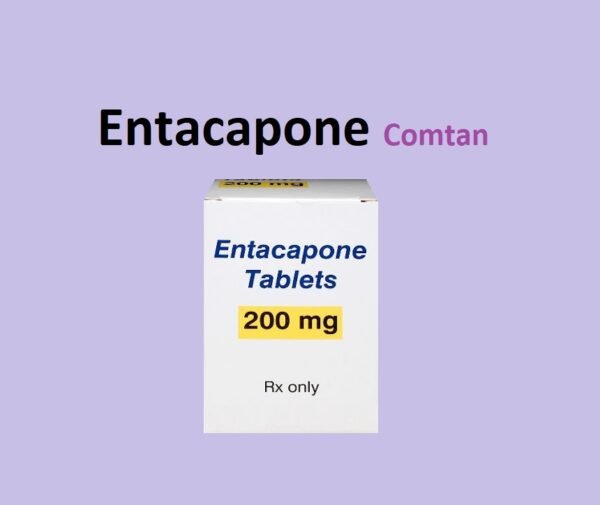
Entacapone (Comtan) is a COMT (catechol-O-methyltransferase) inhibitor. COMT degrades levodopa. Entacapone, thus, prolongs the half-life of levodopa and is used to treat the end-of-dose 'wearing-off' symptoms in patients with Parkinson's disease.
Entacapone Uses:
-
Parkinson disease:
- Entacapone is an adjunct to Levodopa/Carbidopa therapy in patients with idiopathic Parkinson disease who experience “wearing-off” symptoms at the end of a dosing interval.
Entacapone (Comtan) Dose in adults
Entacapone (Comtan) Dose in the treatment of Parkinson disease:
- Oral: 200 mg PO with each dose of Levodopa/Carbidopa, up to a maximum of 8 times daily (maximum daily dose: 1600 mg daily).
Note:
- To optimize therapy, the dosage of Levodopa might need reduction or the dosing interval may need to be extended.
- Patients taking levodopa ≥800 mg daily or who had moderate to severe dyskinesias prior to therapy are required an average decrease of 25% in the daily Levodopa dose.
Use in Children:
Not indicated.
Pregnancy Risk Category: C
- Recent studies have shown that there were side effects on the reproductive system.
- It is rare for Parkinson's disease to occur in pregnancy. Information about Entacapone use in pregnant women is limited.
Use of entacapone while breastfeeding
- It is unknown if Entacapone secretes in breast milk.
- Manufacturer recommends caution when giving Entacapone to nursing mothers and may need physician's advice.
Dose in Kidney disease:
There are no dosage adjustments provided in the manufacturer's labeling; however, renal function was not found to significantly affect the pharmacokinetics of entacapone.
Dose in Liver disease:
U.S. labeling:
- There are no dosage adjustments provided in the manufacturer's labeling in chronic kidney and liver diseases.
- However, it is advisable to administer with caution and monitor the parameters closely; AUC and C may possibly be doubled.
Canadian labeling:
- Use is contraindicated
Common Side Effects of Entacapone (Comtan):
-
Gastrointestinal:
- Nausea
-
Neuromuscular & skeletal:
- Dyskinesia
Less Common Side Effects of Entacapone (Comtan):
-
Cardiovascular:
- Syncope
-
Central Nervous System:
- Dizziness
- Fatigue
- Anxiety
- Drowsiness
- Agitation
- Hallucination
-
Dermatologic:
- Diaphoresis
-
Gastrointestinal:
- Diarrhea
- Abdominal Pain
- Constipation
- Vomiting
- Xerostomia
- Dyspepsia
- Flatulence
- Dysgeusia
- Gastritis
- Gastrointestinal Disease
-
Genitourinary:
- Urine Discoloration
-
Hematologic & Oncologic:
- Purpura
-
Infection:
- Bacterial Infection
-
Neuromuscular & Skeletal:
- Hyperkinesia
- Hypokinesia
- Back Pain
- Weakness
-
Respiratory:
- Dyspnea
Contraindications to Entacapone (Comtan):
- It is contraindicated for hypersensitivity to Entacapone and any other components of its formulation in Canadian labeling
- Additional contraindications not in U.S. labeling
- There is no evidence in clinical or laboratory of uncompensated cardio, endocrine or pulmonary diseases, or renal disease.
- History of neuroleptic malignant syndromes (NMS) or nontraumatic rhabdomyolysis.
- Hepatic impairment
- Diverse:
- The narrow-angle glaucoma
- Pheochromocytoma
- If there is a history of melanoma or a suspicious skin lesion that has not been diagnosed,
- Concomitant usage with a nonselective Monoamine Oxase (MAO), inhibitor (eg tranylcypromine and phenelzine), or concomitant uses with both a selective MAO–A and selective MAO–B inhibitor.
- It is also contraindicated if it is used in conjunction with sympathomimetic anamine.
Warnings and precautions
-
Abnormal behavior/thinking:
- Reports of abnormal thinking and behavior have been made. They include aggression, confusion, delirium and delusions.
-
Diarrhea
- This product has been linked to delayed development of diarrhea (usual onset within 4 to 12 weeks).
- Avoid it in patients with lower gastrointestinal diseases or at higher risk of becoming dehydrated.
- Diarrhea could be an indication of drug-induced colitis (primarily Lympocytic).
- Keep an eye out for weight loss.
- Stop using if you have prolonged diarrhea.
-
Dyskinesia
- When used in conjunction with levodopa, it is possible for preexisting dyskinesia to recur or even worsen.
- These side effects may be reduced by decreasing the dosage of levodopa in certain cases.
-
Hallucinations
- Could cause hallucinations.
-
Impulse control disorders:
- Compulsive behavior and/or loss in impulse control have been described as pathological gambling, hypersexuality, increased libido, intense urges to spend money without restraint, and other intense urges.
- Some cases of these behaviors can be reversed by discontinuing therapy or reducing dosages.
-
Melanoma
- Patients with Parkinson's disease are at higher risk of developing melanoma. However, it is not known if there is a drug cause or other factors that contribute to the increased risk.
- Patients must be closely monitored and should have their skin examined regularly.
- Canadian labeling prohibits the use of this medication in patients with undiagnosed, suspicious skin lesions or a history of melanoma.
-
Neuroleptic malignant Syndrome:
- Entacapone in combination with other drugs that alter brain biogenic amine levels (eg MAO inhibitors, SSRIs) has been linked to a syndrome resembling neuroleptic Malignant Syndrome (hyperpyrexia, confusion - some fatal) upon abrupt withdrawal or dose reduction.
- Avoid concurrent use of entacapone or nonselective MAO inhibitors.
-
Orthostatic hypotension
- Orthostatic hypotension may be caused by syncope.
-
Pleural/Retroperitoneal Fibrosis
- Dopaminergic drugs from the ergot family have been linked to fibrotic complications such as retroperitoneal Fibrosis or pleural effusions and thickening.
- While these complications can be resolved when the drug is stopped, it does not always resolve completely.
- This risk may be caused by non-ergot or pro-dopaminergic drugs like Entacapone.
-
Rhabdomyolysis
- Use has been linked to severe rhabdomyolysis.
-
Somnolence
- Patients have reported falling asleep while performing daily activities. This has happened without any warning signs and can occur up to one year after treatment began.
- Monitor for daytime somnolence and preexisting sleep disorders.
- Be cautious when using ethanol with CNS depressants, sedating drugs, psychoactive drugs or sedating agents.
- It is important to warn patients about tasks that require mental alertness, such as driving or operating machinery.
-
Cardiovascular disease
- Canadian product labeling advises patients with heart disease to be cautious, especially if they have a history of arrhythmias or myocardial injury (MI). Clinical trials have shown that MI and other adverse events can occur in patients with heart disease.
-
Hepatic impairment
- Patients with hepatic impairment and biliary obstruction should be cautious.
- Canadian labeling prohibits use in the presence of hepatic impairment.
-
Psychotic disorders
- Patients with severe psychotic disorders should be avoided as they may experience exacerbating psychosis.
- Psychosis treatments can exacerbate Parkinson's disease symptoms and decrease the effectiveness Entacapone.
Entacapone: Drug Interaction
Note: Drug Interaction Categories:
- Risk Factor C: Monitor When Using Combination
- Risk Factor D: Consider Treatment Modification
- Risk Factor X: Avoid Concomitant Use
Risk Factor C (Monitor therapy) |
|
| Alcohol (Ethyl) | CNS Depressants may enhance the CNS depressant effect of Alcohol (Ethyl). |
| Alizapride | May enhance the CNS depressant effect of CNS Depressants. |
| Brexanolone | CNS Depressants may enhance the CNS depressant effect of Brexanolone. |
| Brimonidine (Topical) | May enhance the CNS depressant effect of CNS Depressants. |
| Bromopride | May enhance the CNS depressant effect of CNS Depressants. |
| Cannabidiol | May enhance the CNS depressant effect of CNS Depressants. |
| Cannabis | May enhance the CNS depressant effect of CNS Depressants. |
| Chlorphenesin Carbamate | May enhance the adverse/toxic effect of CNS Depressants. |
| CNS Depressants | May enhance the adverse/toxic effect of other CNS Depressants. |
| COMT Substrates | COMT Inhibitors may decrease the metabolism of COMT Substrates. |
| Dimethindene (Topical) | May enhance the CNS depressant effect of CNS Depressants. |
| Doxylamine | May enhance the CNS depressant effect of CNS Depressants. Management: The manufacturer of Diclegis (doxylamine/pyridoxine), intended for use in pregnancy, specifically states that use with other CNS depressants is not recommended. |
| Dronabinol | May enhance the CNS depressant effect of CNS Depressants. |
| Esketamine | May enhance the CNS depressant effect of CNS Depressants. |
| HydrOXYzine | May enhance the CNS depressant effect of CNS Depressants. |
| Kava Kava | May enhance the adverse/toxic effect of CNS Depressants. |
| Lofexidine | May enhance the CNS depressant effect of CNS Depressants. Management: Drugs listed as exceptions to this monograph are discussed in further detail in separate drug interaction monographs. |
| Magnesium Sulfate | May enhance the CNS depressant effect of CNS Depressants. |
| MetyroSINE | CNS Depressants may enhance the sedative effect of MetyroSINE. |
| Minocycline | May enhance the CNS depressant effect of CNS Depressants. |
| Mirtazapine | CNS Depressants may enhance the CNS depressant effect of Mirtazapine. |
| Nabilone | May enhance the CNS depressant effect of CNS Depressants. |
| Pipamperone [INT] | COMT Inhibitors may diminish the therapeutic effect of Pipamperone [INT]. Pipamperone [INT] may diminish the therapeutic effect of COMT Inhibitors. |
| Piribedil | CNS Depressants may enhance the CNS depressant effect of Piribedil. |
| Pramipexole | CNS Depressants may enhance the sedative effect of Pramipexole. |
| ROPINIRole | CNS Depressants may enhance the sedative effect of ROPINIRole. |
| Rotigotine | CNS Depressants may enhance the sedative effect of Rotigotine. |
| Rufinamide | May enhance the adverse/toxic effect of CNS Depressants. Specifically, sleepiness and dizziness may be enhanced. |
| Selective Serotonin Reuptake Inhibitors | CNS Depressants may enhance the adverse/toxic effect of Selective Serotonin Reuptake Inhibitors. Specifically, the risk of psychomotor impairment may be enhanced. |
| Tetrahydrocannabinol | May enhance the CNS depressant effect of CNS Depressants. |
| Tetrahydrocannabinol and Cannabidiol | May enhance the CNS depressant effect of CNS Depressants. |
| Trimeprazine | May enhance the CNS depressant effect of CNS Depressants. |
Risk Factor D (Consider therapy modification) |
|
| Blonanserin | CNS Depressants may enhance the CNS depressant effect of Blonanserin. |
| Buprenorphine | CNS Depressants may enhance the CNS depressant effect of Buprenorphine. Management: Consider reduced doses of other CNS depressants, and avoiding such drugs in patients at high risk of buprenorphine overuse/self-injection. Initiate buprenorphine patches (Butrans brand) at 5 mcg/hr in adults when used with other CNS depressants. |
| Chlormethiazole | May enhance the CNS depressant effect of CNS Depressants. Management: Monitor closely for evidence of excessive CNS depression. The chlormethiazole labeling states that an appropriately reduced dose should be used if such a combination must be used. |
| Droperidol | May enhance the CNS depressant effect of CNS Depressants. Management: Consider dose reductions of droperidol or of other CNS agents (eg, opioids, barbiturates) with concomitant use. Exceptions to this monograph are discussed in further detail in separate drug interaction monographs. |
| Flunitrazepam | CNS Depressants may enhance the CNS depressant effect of Flunitrazepam. |
| HYDROcodone | CNS Depressants may enhance the CNS depressant effect of HYDROcodone. Management: Avoid concomitant use of hydrocodone and benzodiazepines or other CNS depressants when possible. These agents should only be combined if alternative treatment options are inadequate. If combined, limit the dosages and duration of each drug. |
| Iron Salts | May decrease the serum concentration of Entacapone. Management: Consider separating doses of the agents by 2 or more hours to minimize the effects of this interaction. Monitor for decreased therapeutic effects of levodopa during concomitant therapy, particularly if doses cannot be separated. Exceptions: Ferric Carboxymaltose; Ferric Gluconate; Ferric Hydroxide Polymaltose Complex; Ferric Pyrophosphate Citrate; Ferumoxytol; Iron Dextran Complex; Iron Isomaltoside; Iron Sucrose. |
| Methotrimeprazine | CNS Depressants may enhance the CNS depressant effect of Methotrimeprazine. Methotrimeprazine may enhance the CNS depressant effect of CNS Depressants. Management: Reduce adult dose of CNS depressant agents by 50% with initiation of concomitant methotrimeprazine therapy. Further CNS depressant dosage adjustments should be initiated only after clinically effective methotrimeprazine dose is established. |
| Monoamine Oxidase Inhibitors | COMT Inhibitors may enhance the adverse/toxic effect of Monoamine Oxidase Inhibitors. |
| Opioid Agonists | CNS Depressants may enhance the CNS depressant effect of Opioid Agonists. Management: Avoid concomitant use of opioid agonists and benzodiazepines or other CNS depressants when possible. These agents should only be combined if alternative treatment options are inadequate. If combined, limit the dosages and duration of each drug. |
| OxyCODONE | CNS Depressants may enhance the CNS depressant effect of OxyCODONE. Management: Avoid concomitant use of oxycodone and benzodiazepines or other CNS depressants when possible. These agents should only be combined if alternative treatment options are inadequate. If combined, limit the dosages and duration of each drug. |
| Perampanel | May enhance the CNS depressant effect of CNS Depressants. Management: Patients taking perampanel with any other drug that has CNS depressant activities should avoid complex and high-risk activities, particularly those such as driving that require alertness and coordination, until they have experience using the combination. |
| Sodium Oxybate | May enhance the CNS depressant effect of CNS Depressants. Management: Consider alternatives to combined use. When combined use is needed, consider minimizing doses of one or more drugs. Use of sodium oxybate with alcohol or sedative hypnotics is contraindicated. |
| Suvorexant | CNS Depressants may enhance the CNS depressant effect of Suvorexant. Management: Dose reduction of suvorexant and/or any other CNS depressant may be necessary. Use of suvorexant with alcohol is not recommended, and the use of suvorexant with any other drug to treat insomnia is not recommended. |
| Tapentadol | May enhance the CNS depressant effect of CNS Depressants. Management: Avoid concomitant use of tapentadol and benzodiazepines or other CNS depressants when possible. These agents should only be combined if alternative treatment options are inadequate. If combined, limit the dosages and duration of each drug. |
| Zolpidem | CNS Depressants may enhance the CNS depressant effect of Zolpidem. Management: Reduce the Intermezzo brand sublingual zolpidem adult dose to 1.75 mg for men who are also receiving other CNS depressants. No such dose change is recommended for women. Avoid use with other CNS depressants at bedtime; avoid use with alcohol. |
Risk Factor X (Avoid combination) |
|
| Azelastine (Nasal) | CNS Depressants may enhance the CNS depressant effect of Azelastine (Nasal). |
| Bromperidol | May enhance the CNS depressant effect of CNS Depressants. |
| Lofepramine | Entacapone may enhance the adverse/toxic effect of Lofepramine. |
| Orphenadrine | CNS Depressants may enhance the CNS depressant effect of Orphenadrine. |
| Oxomemazine | May enhance the CNS depressant effect of CNS Depressants. |
| Paraldehyde | CNS Depressants may enhance the CNS depressant effect of Paraldehyde. |
| Thalidomide | CNS Depressants may enhance the CNS depressant effect of Thalidomide. |
Monitoring parameters:
- Clinical evaluation should be done to determine if there are any signs or symptoms of Parkinson's Disease.
- Blood pressure
- Assessing the mental health and impulse control of patients is important.
- You should look out for signs such as daytime sleepiness.
- You should be aware of weight loss caused by chronic diarrhea.
- If there are signs of anemia, serum iron levels & LFTs.
- If abrupt discontinuation is required, signs and symptoms can develop. Therefore, caution is recommended.
- Regular dermatologic examination during therapy.
Canadian labeling (additional monitor recommendations):
- Patients who have Ischemic heart disease should be evaluated regularly for their cardiac function during extended therapy with Entacapone.
How to administer Entacapone (Comtan)?
- Always use Levodopa/Carbidopa in conjunction.
- You can combine it with the immediate or sustained release formulations.
- You can also take it with or without food. You should not abruptly withdraw it from the patient's treatment due to NMS and significant worsening.
Mechanism of action of Entacapone (Comtan):
- Entacapone is a selective and reversible inhibitor of catechol O-methyltransferase.
- Entacapone taken in combination with levodopa results in a more sustained level of levodopa than if taken by itself.
- These increased levels of levodopa result in increased absorption across blood-brain barriers, which means that dopamine, an active metabolite, is available at higher levels in the CNS.
Onset of action:
- Rapid
Absorption:
- Rapid
Protein binding:
- 98%, primarily to albumin
Metabolism:
- Isomerization to the cis-isomer, followed by direct glucuronidation of the parent and cis-isomer
Bioavailability:
- 35%
Half-life elimination:
- Beta phase: 0.4 to 0.7 hours;
- gamma phase: 2.4 hours
Time to peak, serum:
- 1 hour
Excretion:
- Feces (90%);
- urine (10%)
International Brand Names of Entacapone:
- Comtan
- MYLAN-Entacapone
- SANDOZ Entacapone
- TEVA-Entacapone
- Adcapone
- Anxopone
- Comtade
- Comtan
- Comtapone
- Comtess
- Encapia
- Parkicapone
Entacapone Brand Names in Pakistan:
It is available in Pakistan as Dopacone. Dopacone is a combination pill of Levodopa, Carbidopa, and Entacapone.
Correct Spelling: Entacapone Incorrect Spelling: Entacapon, Entecapone, antacapone, Enticapone
.png)