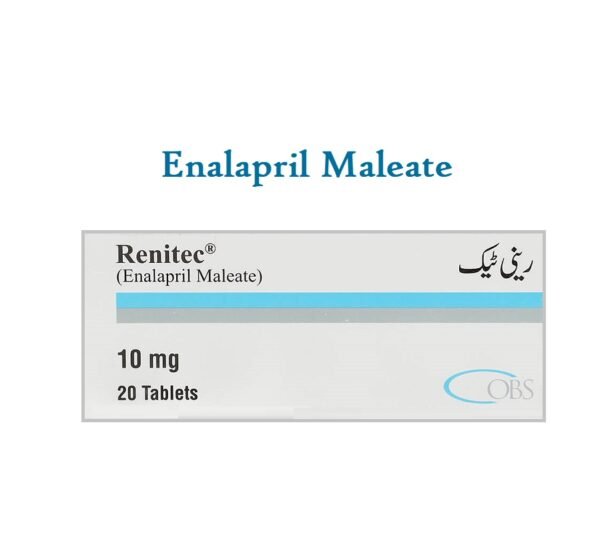
Angiotensin-converting enzyme inhibitor enalapril (Epaned, Renitec) is used to treat individuals with hypertension, heart failure, and proteinuria.
Enalapril (Epaned, Renitec) Uses:
-
Asymptomatic left ventricular dysfunction:
- lessens the risk of developing heart failure and decreases hospitalisation for people with low ejection failure due to heart failure.
-
Heart Failure:
- Utilized for symptomatic heart failure
- Guideline recommendations: The American College of Cardiology/American Heart Association's (ACC/AHA) 2013 Heart Failure Guidelines advise using ACE inhibitors in conjunction with other medical therapies that follow the guidelines to stop the progression of heart failure (HF) and reduced ejection fraction in asymptomatic patients with or without a history of myocardial infarction (Stage B HF) or to treat patients with symptomatic HF and reduced ejection fraction to reduce illness and mortality (Stage C HFrEF).
Hypertension:
-
- Management of hypertension.
- Guideline recommendations:
- In the absence of comorbidities (such as cerebrovascular disease, chronic kidney disease, diabetes, heart failure, ischemic heart disease, etc.), the 2017 Guideline for the Avoidance, Discovery, Evaluation, and Managing of High Blood Pressure in Adults suggests that thiazide-like diuretics or dihydropyridine calcium channel blockers may be preferred options due to improved cardiovascular endpoints (eg, prevention of heart failure and stroke).
- ARBs and ACE inhibitors are also suitable for monotherapy.
- Combination therapy is initially favoured in patients at high risk (stage 2 hypertension or atherosclerotic cardiovascular disease [ASCVD] risk 10%) and may be necessary to achieve blood pressure objectives.
-
Off Label Use of Enalapril in Adults:
-
- Non–ST-elevation acute coronary syndrome
- Steady coronary artery disease
- ST-elevation acute coronary syndrome
- Aldosteronism (diagnosis)
- Bartter's syndrome
- Hypertension secondary to scleroderma renal crisis
- Hypertensive crisis
- Idiopathic edema
- Postmyocardial infarction for avoidance of ventricular failure
-
Enalapril (Epaned, Renitec) Dose in Adults
Note: In patients with hyponatremia, hypovolemia, severe HF, impaired renal function, or those using diuretics, the recommended primary dose should be reduced.
Enalapril (Epaned, Renitec) Dose in the treatment of Asymptomatic left ventricular dysfunction:
- Oral: Initial: 2.5 mg twice daily, titrated as tolerated to a target dose of 10 mg twice a day.
- The maximum dose: 20 mg/day).
Enalapril (Epaned, Renitec) Dose in the treatment of Heart failure:
- Oral: Initial: 2.5 mg two times every day.
- The maximum dose is 40 mg/day;
- Titrate gradually at 1- to 2week intervals.
- Target dose: 10 to 20 mg two times every day.
Enalapril (Epaned, Renitec) Dose in the treatment of Hypertension:
- Oral: Preliminary: 5 mg once on a daily basis;
- Titrate up to 40 mg per day in 1 or 2 split doses as necessary at 1- to 2-week intervals based on patient reaction.
- The maximum dose is 40 mg/day.
- Conversion from IV enalaprilat to oral enalapril therapy:
- Enalapril 5 mg once daily should be started if diuretics are not also being taken
- if they are and you are responding to enalaprilat 0.625 mg IV every six hours, start with 2.5 mg once day and titrate as needed.
Enalapril (Epaned, Renitec) Dose in Childrens
Note: In individuals with hyponatremia, hypovolemia, severe CHF, impaired renal function, or those taking diuretics, use the lower specified preliminary dose.
Enalapril (Epaned, Renitec) Dose in Heart failure:
- Infants, Children, and Adolescents:
- Oral: Primary: 0.1 mg/kg/day in 1 to 2 divided doses;
- The mean dose necessary for CHF improvement in 39 children (aged 9 days to 17 years) was 0.36 mg/kg/day. Increase the dose as necessary during a 2-week period to a maximum of 0.5 mg/kg/day.
Enalapril (Epaned, Renitec) Dose in the treatment of Hypertension:
- Infants, Children, and Adolescents:
- Oral: Primary: 0.08 mg/kg/dose one time each day (maximum dose: 5 mg);
- The dose should be adjusted in accordance with blood pressure readings; doses more than 0.58 mg/kg (or 40 mg) have not been studied
Enalapril (Epaned, Renitec) Dose in Proteinuria and nephrotic syndrome: Oral:
- Fixed dosing:
- Children ≥7 years and Adolescents:
- Uses range from 2.5 to 5 milligrammes per day. The dose has been raised to 7.5 mg per day in some case reports.
- Children ≥7 years and Adolescents:
- Weight-directed dosing:
- Children and Adolescents:
- Initial: 0.2 mg/kg/day;
- At intervals of four to twelve weeks, the dose may be increased or decreased to achieve the desired effect.
- The maximum daily dose is 20 mg.
- Children and Adolescents:
Enalapril Pregnancy Risk Category: D
- [US Boxed Warning] The developing foetus may suffer harm or even pass away as a result of drugs that affect the renin/angiotensin system.
- When your pregnancy has been medically verified, stop as soon as you can.
- Enalapril crosses over the placenta; active metabolite Enalaprilat may be found in the newborn.
- Oligohydramnios is a link between drugs that affect the renin–angiotensin systems.
- Oligohydramnios may result in foetal lung hypoplasia or skeletal abnormalities because of the reduced foetal renal function.
- During pregnancy, these medications can potentially result in hypotension and anuria.
- Although using an ACE-inhibitor during the first trimester of pregnancy may have teratogenic effects, this may not always be the result of an illness in the mother.
- Avoiding ACE inhibitors during pregnancy is not recommended because adverse fetal outcomes are well documented.
- Monitor infants who are exposed in utero to an ACE inhibitor for hyperkalemia, hypotension, or oliguria.
- After a permanent fetal trauma, oligohydramnios might not be present.
- Although data on the effectiveness of dialysis or exchange transfusions in neonates are limited, it is possible to reverse hypotension and improve renal function with dialysis or transfusions.
- Chronic maternal hypertension has been related to harmful outcomes for both the mother and the foetus or newborn.
- Simple hypertension should not be treated during pregnancy with ACE inhibitors.
- Additionally, some recommendations warn that they should not be used to treat or prevent chronic heart disease and hypertension.
- Women of reproductive age should avoid ACE inhibitors.
- Other agents may be required if treatment is needed for hypertension and chronic heart failure during pregnancy.
Enalapril use during breastfeeding:
- Breast milk contains enalaprilat and enalapril.
- Comparative infant dose (RID), of enalapril, is 1.1%. This was determined using the highest breastmilk concentration and compared with an infant therapeutic dose (0.08 mg/kg/day).
- Overall, breastfeeding is acceptable as long as the RID of the medication is less than 10% (Anderson 2016; Ito2000).
- Calculating the RID of Enalapril was done by using a milk concentration of 5.9ng/mL.
- This gives an infant's daily dose via breastmilk of 0.00089 mg/kg/day. This was determined after maternal administration of Enalapril 20mg. Enalaprilat also was present (Redman, 1990).
- The manufacturer warns that there are serious adverse reactions for breastfed babies and advises that the mother decide whether to stop breastfeeding or discontinue using the drug.
Enalapril (Epaned, Renitec) Dose in Kidney Disease:
-
Manufacturer's labeling:
- CrCl >30 mL/minute: No dosage adjustment required.
- CrCl ≤30 mL/minute: Initial: 2.5 mg once every day; titrate upward as required (maximum: 40 mg/day).
- Patients with HF with serum creatinine levels over 1.6 mg/dL: 2.5 mg once daily at first, increasing to twice daily as required. Increase the dosage further by 2.5 mg/dose increments every four days, up to a daily maximum of 40 mg.
- Moderately dialyzable (20% to 50%) substances: Initial: 2.5 mg post-dialysis on days when you have dialysis; change the dose on days when you don't, depending on how your blood pressure reacts.
-
Conversion from IV enalaprilat to oral enalapril therapy:
- CrCl >30 mL/minute: May initiate enalapril 5 mg one time daily.
- CrCl ≤30 mL/minute: May initiate enalapril 2.5 mg once every day.
-
Alternate recommendations (Aronoff 2007):
- GFR >50 mL/minute: No dosage adjustment required
- GFR 10 to 50 mL/minute: Administer 50% to 100% of usual dose.
- GFR <10 mL/minute: Administer 25% of usual dose.
- Peritoneal dialysis: Administer 25% of the usual dose.
Dose in Liver disease:
- No adjustment to the dose is required.
- Patients with severe hepatic impairment may experience a delayed or impaired hydrolysis of enalapril to enalaprilat, but this does not appear to significantly alter the drug's pharmacodynamic effects.
Note: Data from trials on hypertension and heart failure make up frequency ranges. Patients with CHF frequently have higher rates of side effects. But the incidence of unfavourable
Common Side Effects of Enalapril (Epaned, Renitec):
-
Renal:
- Increased serum creatinine
Less Common Side Effects of Enalapril (Epaned, Renitec):
-
Cardiovascular:
- Hypotension
- Chest Pain
- Orthostatic Effect
- Orthostatic Hypotension
- Syncope
-
Central Nervous System:
- Fatigue
- Headache
- Dizziness
-
Dermatologic:
- Skin Rash
-
Gastrointestinal:
- Anorexia
- Nausea
- Constipation
- Dysgeusia
- Vomiting
- Abdominal Pain
- Diarrhea
-
Neuromuscular & Skeletal:
- Weakness
-
Renal:
- Renal Insufficiency
-
Respiratory:
- Bronchitis
- Cough
- Dyspnea
Contraindications to Enalapril (Epaned, Renitec):
- hypersensitivity to enalapril and/or any formulation ingredient
- Angioedema brought on by ACE inhibitor medication in the past
- Using aliskiren concurrently with hereditary or idiopathic angioedema in people with diabetes mellitus; using it within 36 hours of taking or stopping a neprilysin inhibitor (such as sacubitril).
There are very few cases of cross-reactivity between ACE inhibitors and allergenic ACE inhibitors. Cross-sensitivity is possible due to chemical similarities and/or pharmacologic reactions. However, cross-sensitivity cannot always be ruled out.
Canadian labeling: Additional contraindications not in US labeling
- Patients with moderate-to severe renal impairment may also use aliskiren-containing drugs.
Warnings and precautions
-
Angioedema
- .Any time, but especially after the initial dose, angioedema can happen. It might also happen when using ACE inhibitors.
- African Americans might be more vulnerable.
- A neprilysin inhibitor like sacubitril or a mTOR inhibitor like everolimus used concurrently may enhance the risk.
- Long-term monitoring may be necessary, particularly if the tongue, glottis, or larynx are implicated because these structures have been associated with airway blockage.
- Patients who have had previous airway surgery may be at greater risk for obstruction.
- It is crucial to be aggressive early and appropriately managed.
- Patients with idiopathic, hereditary or previous angioedema due to ACE inhibitor therapy are not recommended.
-
Cholestatic jaundice
- Cholestatic jaundice is a rare toxicity that can be caused by ACE inhibitors. This may lead to fulminant hepatic destruction (some fatal).
-
Cough:
- In the initial months of treatment, a dry, hacking, ineffective cough develops. After the ACE inhibitor has been discontinued, it should normally go away in one to four weeks.
- Before stopping medication, it is important to rule out any additional reasons of cough, such as lung congestion in HF patients.
-
Hematologic effects
- Another ACE medication, captopril, has been connected to agranulocytosis, neutropenia, and myeloid hypoplasia. Also noted were thrombocytopenia and anaemia.
- Neutropenia is more likely in patients with significant renal impairment.
- Neutropenia is more likely to occur in patients with renal impairment and collagen-vascular disease (such as systemic lupus, etc.).
- CBC should be routinely monitored in patients with a differential.
-
Hyperkalemia:
- can occur with taking ACE inhibitors. Renal impairment, diabetes, concurrent use of potassium-sparing diuretics, and potassium supplements are risk factors.
- Potassium should be continuously checked, and these substances should be taken with caution.
-
Hypersensitivity reactions
- With ACE inhibitors, anaphylactic/anaphylactoid responses can happen.
- When utilising high-flux dialysis membranes for hemodialysis (such as CVVHD), severe anaphylactoid reactions have been documented. With low-density lipoprotein apheresis with Dextran Sulfate Cellulose, this is not the case.
- Patients who have received ACE inhibitors and are subject to sensitization with Hymenoptera (bee or wasp) venom have experienced exceptional anaphylactic reactions.
-
Hypotension/syncope
- ACE inhibitors can result in hypotension symptoms, including syncope (most commonly with the first few doses).
- Patients with low volume are more likely to experience these effects. Before admitting patients, ensure that they have corrected their volume.
- It is important to keep the patient in good health, especially when administering the first dose or increasing the dosage. Blood pressure should be controlled at a level that is appropriate for the patient's medical condition.
- Even if it might be essential to lower doses, hypotension is not a cause to stop using ACE inhibitors in the future, especially in patients with HF where a drop in systolic pressure is desired.
-
Renal function deterioration:
- In individuals with limited renal flow (such as those who have renal artery stenosis or heart failure), whose GFR depends on efferent eriolar vasoconstriction via angiotensin 2, it may be linked to diminished renal function and/or an increase in serum creatinine. Oliguria, acute renal failure, and progressive azotemia can all result from deterioration.
- After initiation, serum creatinine levels may rise slightly. Patients with significant impairment or progressive renal disease should consider terminating the treatment.
-
Aortic stenosis
- Patients with severe aorticstenosis should be careful. It can cause reduced coronary perfusion, which could lead to ischemia.
-
Ascites:
- Patients with refractory ascites and ascites caused by cirrhosis should be told to discontinue taking this medicine.
- If you must use it in patients suffering from ascites due cirrhosis, ensure that they are closely monitored for blood pressure and kidney function to prevent rapid development of renal failure.
-
Cardiovascular disease
- Patients with cerebrovascular disease or ischemic heart disease should be closely monitored as there is a risk of hypotension.
- Fluid resuscitation can be continued if blood pressure is stabilized.
- If blood pressure drops halt use.
-
Collagen vascular disease:
- Patients with persistent renal impairment, in particular those with collagen vascular disease, should be handled carefully.
-
Hypertrophic cardiomyopathy with outflow tract obstruction (HCM)
- Be careful when using HOCM, as the decrease in afterload could lead to signs of outflow obstruction.
-
Renal artery stenosis
- Be careful if you have unilateral renal artery narrowing.
- Avoid use in bilateral renal arterial stenosis.
-
Renal impairment
- Pre-existing renal disease? Use caution.
- To prevent renal dysfunction, do not increase the dose too quickly.
Enalapril: Drug Interaction
Note: Drug Interaction Categories:
- Risk Factor C: Monitor When Using Combination
- Risk Factor D: Consider Treatment Modification
- Risk Factor X: Avoid Concomitant Use
Risk Factor C (Monitor therapy) |
|
| Alfuzosin | The hypotensive effects of blood pressure-lowering medications may be strengthened. |
| Amphetamines | May lessen the effectiveness of antihypertensive agents. |
| Angiotensin II | The therapeutic efficacy of angiotensin II may be enhanced by angiotensin-converting enzyme inhibitors. |
| Antipsychotic Agents (Second Generation [Atypical]) | Antipsychotic drugs' hypotensive effects may be enhanced by blood pressure-lowering medications (Second Generation [Atypical]). |
| Aprotinin | Angiotensin-Converting Enzyme Inhibitors might make their effect on hyperkalemia stronger. |
| AzaTHIOprine | AzaTHIOprine's myelosuppressive effects may be enhanced by angiotensin-converting enzyme inhibitors. |
| Barbiturates | The hypotensive effects of blood pressure-lowering medications may be strengthened. |
| Benperidol | The hypotensive effects of blood pressure-lowering medications may be strengthened. |
| Brigatinib | May lessen the effectiveness of antihypertensive agents. Antihypertensive Agents' bradycardic action may be strengthened by brutinib. |
| Brimonidine (Topical) | The hypotensive effects of blood pressure-lowering medications may be strengthened. |
| Dapoxetine | The impact of angiotensin-converting enzyme inhibitors on hyperkalemia may be enhanced. |
| Dexmethylphenidate | Can lessen an antihypertensive drug's therapeutic impact. |
| Diazoxide | The hypotensive effects of blood pressure-lowering medications may be strengthened. |
| Dipeptidyl Peptidase-IV Inhibitors | May worsen angiotensin-converting enzyme inhibitors' toxic or severe effects. Particularly, there may be a higher incidence of angioedema. |
| Drospirenone | Drospirenone's hyperkalemic impact may be enhanced by angiotensin-converting enzyme inhibitors. |
| DULoxetine | The hypotensive impact of DULoxetine may be enhanced by blood pressure lowering medications. |
| Eplerenone | Angiotensin-Converting Enzyme Inhibitors might make their effect on hyperkalemia stronger. |
| Everolimus | May intensify angiotensin-converting enzyme inhibitors' harmful or hazardous effects. Particularly, there may be a higher incidence of angioedema. |
| Ferric Gluconate | Angiotensin-Converting Enzyme Inhibitors might make ferric gluconate more harmful or poisonous. |
| Ferric Hydroxide Polymaltose Complex | Ferric Hydroxide Polymaltose Complex may have a more negative or toxic effect when taken with angiotensin-converting enzyme inhibitors. In particular, there may be an elevated risk for angioedema or allergic responses. |
| Gelatin (Succinylated) | Ferric Hydroxide Polymaltose Complex may have a more negative or toxic effect when taken with angiotensin-converting enzyme inhibitors. In particular, there may be an elevated risk for angioedema or allergic responses. |
| Gold Sodium Thiomalate | Gold Sodium Thiomalate may have a more negative or toxic effect when used with angiotensin-converting enzyme inhibitors. Nitritoid responses are more likely now, it has been noted. |
| Heparin | Angiotensin-Converting Enzyme Inhibitors might make their effect on hyperkalemia stronger. |
| Heparins (Low Molecular Weight) | Angiotensin-Converting Enzyme Inhibitors might make their effect on hyperkalemia stronger. |
| Herbs (Hypertensive Properties) | May lessen the effectiveness of antihypertensive agents. |
| Herbs (Hypotensive Properties) | May enhance the hypotensive effect of Blood Pressure Lowering Agents. |
| Hypotension-Associated Agents | The hypotensive action of hypotension-associated agents may be strengthened by blood pressure lowering medications. |
| Icatibant | May lessen the effectiveness of angiotensin-converting enzyme inhibitors in treating hypertension. |
| Levodopa-Containing Products | Levodopa-Containing Products' hypotensive effects may be strengthened by blood pressure-lowering medications. |
| Loop Diuretics | May strengthen angiotensin-converting enzyme inhibitors' hypotensive effects. Angiotensin-Converting Enzyme Inhibitors' nephrotoxic effects may be increased by loop diuretics. |
| Lormetazepam | The hypotensive effects of blood pressure-lowering medications may be strengthened. |
| Methylphenidate | May lessen the effectiveness of antihypertensive agents. |
| Molsidomine | The hypotensive effects of blood pressure-lowering medications may be strengthened. |
| Naftopidil | The hypotensive effects of blood pressure-lowering medications may be strengthened. |
| Nicergoline | The hypotensive effects of blood pressure-lowering medications may be strengthened. |
| Nicorandil | The hypotensive effects of blood pressure-lowering medications may be strengthened. |
| Nicorandil | The hypotensive effects of blood pressure-lowering medications may be strengthened. |
| Nitroprusside | Blood Pressure Lowering Agents may enhance the hypotensive effect of Nitroprusside. |
| Nonsteroidal Anti-Inflammatory Agents | Nonsteroidal Anti-Inflammatory Agents' negative/toxic effects may be increased by angiotensin-converting enzyme inhibitors. In particular, the combination may cause a marked decline in renal function. Angiotensin-Converting Enzyme Inhibitors' antihypertensive effects may be lessened by nonsteroidal anti-inflammatory drugs. |
| Pentoxifylline | Angiotensin-Converting Enzyme Inhibitors might make their effect on hyperkalemia stronger. |
| Pholcodine | Pholcodine's hypotensive impact may be strengthened by blood pressure lowering medications. |
| Phosphodiesterase 5 Inhibitors | The hypotensive effects of blood pressure-lowering medications may be strengthened. |
| Potassium Salts | Angiotensin-Converting Enzyme Inhibitors might make their effect on hyperkalemia stronger. |
| Potassium-Sparing Diuretics | Angiotensin-Converting Enzyme Inhibitors might make their effect on hyperkalemia stronger. |
| Pregabalin | Angiotensin-Converting Enzyme Inhibitors may intensify Pregabalin's negative/toxic effects. Particularly, there may be a higher incidence of angioedema. |
| Prostacyclin Analogues | The hypotensive effects of blood pressure-lowering medications may be strengthened. |
| Quinagolide | The hypotensive effects of blood pressure-lowering medications may be strengthened. |
| Racecadotril | May intensify angiotensin-converting enzyme inhibitors' harmful or hazardous effects. In particular, this combination may make angioedema more likely. |
| Ranolazine | Angiotensin-Converting Enzyme Inhibitors might make their effect on hyperkalemia stronger. |
| Salicylates | May intensify angiotensin-converting enzyme inhibitors' nephrotoxic effects. The therapeutic benefit of angiotensin-converting enzyme inhibitors may be reduced by salicylates. |
| Sirolimus | Angiotensin-Converting Enzyme Inhibitors might make their effect on hyperkalemia stronger.. |
| Tacrolimus (Systemic) | Angiotensin-Converting Enzyme Inhibitors may enhance the hyperkalemic effect of Tacrolimus (Systemic). |
| Temsirolimus | Angiotensin-Converting Enzyme Inhibitors might make their effect on hyperkalemia stronger. |
| Thiazide and Thiazide-Like Diuretics | May increase the angiotensin-converting enzyme inhibitors' hypotensive effects. Angiotensin-Converting Enzyme Inhibitors' nephrotoxic effects may be increased by thiazide and thiazide-like diuretics. |
| TiZANidine | Angiotensin-Converting Enzyme Inhibitors might make their effect on hyperkalemia stronger. |
| Tolvaptan | Angiotensin-Converting Enzyme Inhibitors might make their effect on hyperkalemia stronger. |
| Trimethoprim | Angiotensin-Converting Enzyme Inhibitors might make their effect on hyperkalemia stronger. |
| Yohimbine | May lessen the effectiveness of antihypertensive agents. |
Risk Factor D (Consider therapy modification) |
|
| Aliskiren | Angiotensin-Converting Enzyme Inhibitors may intensify their hyperkalemic effects. Angiotensin-Converting Enzyme Inhibitors' hypotensive effects may be strengthened by aliskiren. Angiotensin-Converting Enzyme Inhibitors' nephrotoxic effects may be made worse by aliskiren. Treatment: It is not advised for diabetic patients to take aliskiren along with ACEIs or ARBs. Combination therapy should be avoided in other patients, especially when CrCl is less than 60 mL/min. If combined, keep a close eye on your blood pressure, potassium, and creatinine levels. |
| Allopurinol | Angiotensin-Converting Enzyme Inhibitors might make Allopurinol more likely to cause allergic or hypersensitive reactions. |
| Amifostine | Amifostine's hypotensive impact may be strengthened by blood pressure lowering medications. Treatment: Blood pressure-lowering drugs need to be avoided for 24 hours before amifostine is administered when used at chemotherapeutic doses. Amifostine should not be given if blood pressure lowering treatment cannot be stopped. |
| Angiotensin II Receptor Blockers | May worsen angiotensin-converting enzyme inhibitors' toxic or severe effects. Angiotensin-Converting Enzyme Inhibitors' serum levels may rise in response to angiotensin II receptor blockers. Management: According to US labelling, it is not advisable to take telmisartan and ramipril. It is unclear whether another ACE inhibitor and ARB combo would be any safer. When possible, take into account alternatives to the mix. |
| Grass Pollen Allergen Extract (5 Grass Extract) | Grass pollen allergen extract may have a more negative or toxic effect if angiotensin-converting enzyme inhibitors are used (5 Grass Extract). With regard to grass pollen allergen extract, ACE inhibitors may specifically enhance the likelihood of a severe allergic reaction (5 Grass Extract). |
| Iron Dextran Complex | Angiotensin-Converting Enzyme Inhibitors might make Iron Dextran Complex more harmful or poisonous. Patients taking an ACE inhibitor may be more susceptible to events of the anaphylactic variety. Management: Adhere strictly to the instructions for iron dextran administration, including the use of a test dose before the initial therapeutic dose and the availability of resuscitation tools and qualified people. |
| Lanthanum | May lower angiotensin-converting enzyme inhibitors' serum concentration. Angiotensin-converting enzyme inhibitors should be given at least two hours before or after lanthanum. |
| Lithium | The serum concentration of lithium may rise in response to angiotensin-converting enzyme inhibitors. Management: After adding an ACE inhibitor, lithium dosage decreases will probably be required. Following the addition or discontinuation of concurrent ACE inhibitor therapy, carefully monitor the patient's response to lithium. |
| Obinutuzumab | The hypotensive effects of blood pressure-lowering medications may be strengthened. Management: Take into account temporarily stopping blood pressure-lowering drugs 12 hours before the start of the obinutuzumab infusion and keeping them off until 1 hour after the infusion is finished. |
| Sodium Phosphates | The nephrotoxic impact of sodium phosphates may be enhanced by angiotensin-converting enzyme inhibitors. In particular, there may be an increased risk of acute phosphate nephropathy. Treatment: You might want to temporarily stop taking ACEIs or look into alternatives to the oral sodium phosphate bowel preparation in order to prevent this combo. Maintaining appropriate hydration and properly monitoring renal function should be done if the combination cannot be avoided. |
| Urapidil | Angiotensin-Converting Enzyme Inhibitors may interact with them through an unidentified method. Avoid taking urapidil and ACE inhibitors simultaneously as a management strategy. |
Risk Factor X (Avoid combination) |
|
| Bromperidol | May lessen blood pressure lowering agents' hypotensive effects. The hypotensive impact of bromperidol may be enhanced by blood pressure lowering medications. |
| Sacubitril | The negative or hazardous effects of sacubitril may be increased by angiotensin-converting enzyme inhibitors. In particular, this combination may raise the risk of angioedema. |
Monitoring parameters:
- Blood pressure;
- serum creatinine
- potassium levels
- Periodically examine CBC with differential if patient has renal impairment or collagen vascular disease.
Heart Failure:
- Re-evaluate renal function and serum potassium in patients with pre-existing hypotension, hyponatremia, diabetes mellitus, azotemia, or those taking potassium supplements within 1 to 2 weeks following the start of and on a frequent basis thereafter.
Hypertension: The 2017 Guideline for the Prevention, Detection, Evaluation, and Management of High Blood Pressure in Adults:
- Confirmed hypertension and known CVD or 10-year atherosclerotic cardiovascular disease (ASCVD) risk ≥10%:
- Target blood pressure <130/80 mm Hg is recommended
- Confirmed hypertension without markers of increased ASCVD risk:
- Target blood pressure <130/80 mm Hg may be reasonable
Diabetes and hypertension: The American Diabetes Association (ADA) guidelines (ADA 2019):
- Patients 18 to 65 years of age, without ASCVD, and 10-year ASCVD risk <15%: Target blood pressure <140/90 mm Hg is advised.
- Patients 18 to 65 years of age and known ASCVD or 10-year ASCVD risk >15%: Target blood pressure <130/80 mm Hg may be appropriate if it can be safely achieved.
- Patients >65 years of age (healthy or complex/intermediate health): Target blood pressure <140/90 mm Hg is suggested.
- Patients >65 years of age (very complex/poor health): Target blood pressure <150/90 mm Hg is suggested.
How to administer Enalapril (Epaned, Renitec)?
Oral: Manage without regard to meals.
Mechanism of action of Enalapril (Epaned, Renitec):
- It is an inhibitor of the angiotensin-converting enzyme that is competitive (ACE).
- It stops the conversion of angiotensin 1, a potent vasoconstrictor, to angiotensin 2, which results in decreased levels of angiotensin 2.
- Both plasma renin activity and aldosterone secretion are decreased as a result of this.
The onset of action:
- about 1 hour
Peak effect:
- 4 to 6 hours
Duration:
- 12 to 24 hours
Absorption:
- 55% to 75%
Protein binding:
- ~50%
Metabolism:
- It is a prodrug that transforms into enalaprilat through hepatic biotransformation.
Half-life elimination:
- Enalapril:
- CHF: Neonates: 10.3 hours (range: 4.2 to 13.4 hours)
- CHF: Infants and Children ≤6.5 years of age: 2.7 hours (range: 1.3 to 6.3 hours);
- Adults:
- Healthy: 2 hours;
- CHF: 3.4 to 5.8 hours
- Enalaprilat:
- CHF: Neonates: 11.9 hours (range: 5.9 to 15.6 hours)
- CHF: Infants and Children ≤6.5 years of age: 11.1 hours (range: 5.1 to 20.8 hours)
- Infants 6 weeks to 8 months of age: 6 to 10 hours;
- Adults: ~35 hours
Time to peak serum concentration: Oral:
- Enalapril: 0.5 to 1.5 hours;
- Enalaprilat (active metabolite): 3 to 4.5 hours
Excretion:
- Urine (61%; 18% of which was enalapril, 43% was enalaprilat);
- feces (33%; 6% of which was enalapril, 27% was enalaprilat).
International Brand Names of Enalapril:
- Epaned
- Vasotec
- ACT Enalapril
- APO-Enalapril
- JAMP Enalapril
- MAR-Enalapril
- MYLAN-Enalapril
- NOVO-Enalapril
- PMS-Enalapril
- PRO-Enalapril-10
- PRO-Enalapril-2.5
- PRO-Enalapril-20
- PRO-Enalapril-5
- RAN-Enalapril
- RIVA-Enalapril
- SANDOZ Enalapril
- SIG-Enalapril
- TARO-Enalapril
- TEVA-Enalapril
- Acapril
- Acebitor
- Acetec
- Acetensil
- Alapren
- Amprace
- Analept
- Anapril
- Anapril S Minitab
- Angiotec
- Angonic
- Antens
- Apridal
- Auspril
- Bajaten
- Baripril
- Bealipril
- Beartec
- Benalipril
- Berlipril
- Biocronil
- Bonapress
- BQL
- Converten
- Corodil
- Crinoren
- Dabonal
- Danssan
- Dynapril
- Ednyt
- Elfonal
- Enace
- Enahexal
- Enalagamma
- Enalap
- Enalapril
- Enaloc
- Enam
- Enap
- Enap i.v.
- Enap [inj.]
- Enaprel
- Enapren
- Enapril
- Enaprin
- Enaril
- Enatec
- Enazil
- Enbid-20
- Enetil
- Enpril
- Entab
- Envas
- Eril
- Ezapril
- Glioten
- Grifopil
- Herten
- Hypace
- Hyperil
- Hypril
- Hytrol
- Iecatec
- Ileveran
- Innovace
- Invoril
- Istopril
- Kalpiren
- KaparlonS
- Korandil
- Lapril
- Lenipril
- Lotrial
- Macpril
- Meipril
- Naprilate
- Naprilene
- Narapril
- Neopril
- Nuril
- Olivin
- Perisafe
- Pres
- Presil
- Prilace
- Rapril
- Renacardon
- Renallapin
- Renite
- Renite XL
- Renitec
- Renitek
- Reniten
- Renivace
- Sintec
- Tenace
- Tenaten
- Unipril
- Vasonorm
- Vasopress
- Vasopril
- Xanef
Enalapril Brand Names in Pakistan:
Enalapril Maleate Tablets 5 Mg in Pakistan |
|
| Acelar | Pharmevo (Pvt) Ltd. |
| Cardace | Zafa Pharmaceutical Laboratories (Pvt) Ltd. |
| Cardil | Himont Pharmaceuticals (Pvt) Ltd. |
| Cardiotec | Wilsons Pharmaceuticals |
| Coniuren | Gray`S Pharmaceuticals |
| Cortec | Nabiqasim Industries (Pvt) Ltd. |
| Enace | Atco Laboratories Limited |
| Enetec | Alliance Pharmaceuticals (Pvt) Ltd. |
| Enpril | Bryon Pharmaceuticals (Pvt) Ltd. |
| Hipril | Raazee Theraputics (Pvt) Ltd. |
| Japril | Jawa Pharmaceuticals(Pvt) Ltd. |
| Lopritol | Unipharma (Pvt) Ltd. |
| Medipril | Medicaids Pakistan (Pvt) Ltd. |
| Napril | Caylex Pharmaceuticals (Pvt) Ltd. |
| Renitec | Obs |
| Stadelant | Meezab International |
| Zepres | Continental Chemical Company (Pvt) Ltd. |
Enalapril Maleate Tablets 10 Mg in Pakistan |
|
| Acelar | Pharmevo (Pvt) Ltd. |
| Alphrin | Qureshi Pharma (Pvt) Ltd. |
| Amotac | Mass Pharma (Private) Limited |
| Cardace | Zafa Pharmaceutical Laboratories (Pvt) Ltd. |
| Cardil | Himont Pharmaceuticals (Pvt) Ltd. |
| Cardiotec | Wilsons Pharmaceuticals |
| Coniuren | Gray`S Pharmaceuticals |
| Cortec | Nabiqasim Industries (Pvt) Ltd. |
| Cortec Plus | Nabiqasim Industries (Pvt) Ltd. |
| Enace | Atco Laboratories Limited |
| Enetec | Alliance Pharmaceuticals (Pvt) Ltd. |
| Enpril | Bryon Pharmaceuticals (Pvt) Ltd. |
| Hipril | Raazee Theraputics (Pvt) Ltd. |
| Japril | Jawa Pharmaceuticals(Pvt) Ltd. |
| Laporide | Usawa Pharmaceuticals |
| Maxpril | Makson Pharmaceuticals |
| Napril | Caylex Pharmaceuticals (Pvt) Ltd. |
| Redopril | Novartis Pharma (Pak) Ltd |
| Renitec | Obs |
| Shozupril | W & Ali Sons Pharmaceuticals |
| Zepres | Continental Chemical Company (Pvt) Ltd. |
Enalapril Maleate Tablets 20 Mg in Pakistan |
|
| Maxpril | Makson Pharmaceuticals |
| Renitec | Obs |
| Stadelant | Meezab International |
| Zepres | Continental Chemical Company (Pvt) Ltd. |
.png)