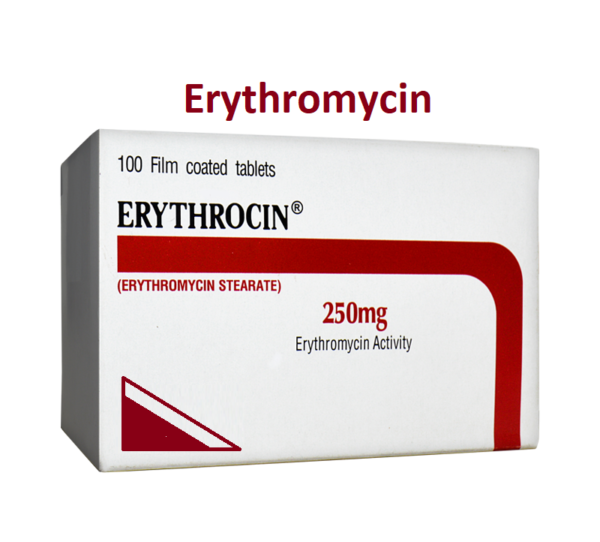
Erythromycin is a macrolide broad-spectrum antibiotic that is used to treat infections of the respiratory, gastrointestinal, genitourinary tracts, and skin caused by susceptible bacteria.
Erythromycin Uses:
-
Bacterial infections:
- Used in the treatment of susceptible bacterial infections, including:
- Legionella pneumophila,
- S. pyogenes,
- Some S. pneumoniae,
- Some S. aureus,
- M. pneumoniae,
- diphtheria,
- pertussis,
- N. gonorrhoeae,
- E. histolytica,
- Chlamydia,
- Erythrasma,
- Syphilis, and nongonococcal urethritis, and
- Campylobacter gastroenteritis;
- It may be used in conjunction with neomycin for decontaminating the bowel.
- Used in the treatment of susceptible bacterial infections, including:
-
Surgical (preoperative) prophylaxis (colorectal):
- Colorectal decontamination, in conjunction with other agents, prior to surgical intervention
-
Off-Label Use of Erythromycin in Adults:
- Used in Acne vulgaris
- Used in Bartonella spp. infections (treatment)
- Used in Bartonella spp. infections (treatment) in HIV infected patients (adolescents and adults)
- Used in Chancroid
- Used in Chronic obstructive pulmonary disease, prevention of exacerbations
- Used in Endoscopy/esophagogastroduodenoscopy, an adjunctive prokinetic agent
- Used in Gastroparesis (management)
- Used in Granuloma inguinale (donovanosis)
Erythromycin Dose in Adults
Note:
- Due to differences in absorption, 400 mg erythromycin ethylsuccinate produces the same serum levels as 250 mg erythromycin base or stearate.
Erythromycin Usual dosage range:
- Oral:
- Base: 250 to 500 mg every 6 to 12 hours; maximum: 4 g in a day.
- Ethylsuccinate: 400 to 800 mg every 6 to 12 hours; maximum: 4 g in a day.
- IV:
- Lactobionate: 15 to 20 mg/kg/day divided every 6 hours or 500 mg to 1 g every 6 hours; maximum: 4 g in a day.
Erythromycin Indication-specific dosing:
Dose as an alternative therapy in the Acne vulgaris (off-label):
- Oral: Initial: 250 to 500 mg (base) two times a day, followed by 250 to 500 mg (base) once a day.
- The shortest possible duration should be used to minimize the development of bacterial resistance; reevaluate at 3 to 4 months.
Erythromycin Dose in the treatment of Bartonella spp infections (bacillary angiomatosis [BA], peliosis hepatis [PH]) (off-label):
- Oral: 500 mg (base) 4 times in a day for 3 months (BA) or 4 months (PH)
- Note: IDSA skin and soft tissue infection guidelines recommend a duration of initial therapy of 2 weeks to 2 months for cutaneous BA, although treatment durations are not standardized.
Erythromycin Dose in the treatment of Bartonella spp infections in HIV-infected patients (off-label):
Note: Duration of therapy is at least 3 months; continuation of therapy depends on relapse occurrence and clinical condition
-
Bacillary angiomatosis, peliosis hepatis, bacteremia, and osteomyelitis:
- Oral, IV: 500 mg every 6 hours
-
Other severe infections (excluding CNS infections or endocarditis):
- Oral, IV: 500 mg every 6 hours with rifampin
Erythromycin Dose in the treatment of Chancroid (off-label):
- Oral: 500 mg (base) thrice in a day for weak;
- Note: Isolates with intermediate resistance have been documented.
Erythromycin Dose in the treatment of uncomplicated Chlamydia trachomatis infection: Oral:
-
Urogenital infections (off-label):
- 500 mg (base) four times in a day or 800 mg (ethylsuccinate) four times in a day for a weak.
-
Lymphogranuloma venereum (off-label; alternative therapy to doxycycline):
- Oral: 500 mg (base) 4 times in a day for 21 days (CDC [Workowski 2015])
Erythromycin Dose in the treatment of Chronic obstructive pulmonary disease (COPD), prevention of exacerbations (off label):
- Oral: 200 to 400 mg per day (formulation not specified) or 250 mg (stearate) two times in a day.
Erythromycin Dose in the treatment of Endoscopy/ esophagogastroduodenoscopy, adjunctive prokinetic agent (off-label):
- IV: 3 mg per kg as a single dose over 30 minutes administered 30 to 90 minutes prior to endoscopy or 250 mg as a single dose over 5 to 30 minutes administered 20 to 30 minutes prior to endoscopy.
Erythromycin Dose in the treatment of Gastroparesis (off-label):
- IV: 3 mg per kg administered over 45 minutes every 8 hours.
- Oral: Patients refractory/intolerant to other prokinetic agents (eg, domperidone, metoclopramide): 250 to 500 mg (base) thrice a day before meals.
- Limit duration of therapy, tachyphylaxis may occur after 4 weeks.
Erythromycin Dose in the treatment of Granuloma inguinale (donovanosis) (off-label):
- Oral: 500 mg (base) 4 times a day for at least 21 days and resolution of lesions.
Note: If symptoms do not improve within the first few days of therapy, the addition of gentamicin may be considered.
Erythromycin Dose in the treatment of Impetigo: Oral:
- Base: 250 mg 4 times a day for a week, depending on the response to therapy.
- Ethylsuccinate: 400 mg 4 times in a day for a weak depending on the response
Erythromycin Dose in the treatment of Legionnaire disease:
- Oral: 1.6 to 4 g (ethylsuccinate) daily or 1 to 4 g (base) daily in divided doses for 21 days. Note: No longer preferred therapy and only used in nonhospitalized patients.
Erythromycin Dose in the treatment of Nongonococcal urethritis: Oral:
- 500 mg (base) 4 times in a day or 800 mg (ethylsuccinate) 4 times in a day for a weak.
- Manufacturer's labeling: Dosing in the prescribing information may not reflect current clinical practice.
- Base: 500 mg (base) 4 times in a day or two 333 mg (base) tablets every 8 hours
- Ethylsuccinate: 800 mg (ethylsuccinate) 3 times in a day. Note: May use 250 mg (base) or 400 mg (ethylsuccinate) 4 times in day.
Erythromycin Dose in the treatment of Pertussis:
- Oral: 500 mg (base) every 6 hours for 2 weeks.
Erythromycin Dose in the treatment of Surgical (preoperative) prophylaxis (colorectal) (off-label dose):
- Oral: 1 g erythromycin base per dose at 1 PM, 2 PM, and 11 PM on the day before 8 AM surgery combined with mechanical cleansing of the large intestine, oral neomycin.
- Perioperative IV antibiotics are also given on the day of surgery.
Erythromycin Dose in Childrens
Erythromycin General dosing in susceptible infections:
-
Infants, Children, and Adolescents:
-
Manufacturer's labeling:
- Oral: Base, ethylsuccinate, stearate:
- 30 to 50 mg per kg per day divided every 6 to 8 hours usually;
- for severe infection may double dose;
- The maximum daily dose:
- Mild to moderate infection: 2,000 mg per day;
- severe infection: 4,000 mg per day
- IV: Lactobionate:
- 15 to 20 mg per kg per day divided every 6 hours;
- maximum daily dose: 4,000 mg per day
- Oral: Base, ethylsuccinate, stearate:
-
Alternate dosing:
- Mild to moderate infection:
- Oral: 50 mg per kg per day divided every 6 to 8 hours;
- maximum daily dose: 2,000 mg per day
- Severe infection:
- IV: Lactobionate: 5 mg per kg per dose every 6 hours,
- maximum daily dose: 4,000 mg per day
- Mild to moderate infection:
-
Erythromycin Dose in the treatment of moderate to severe Acne:
-
Children and Adolescents:
- Oral: 250 to 500 mg 1 to 2 times daily in conjunction with topical therapy (eg, benzoyl peroxide);
- The maximum daily dose: 50 mg per kg per day;
- The duration of 4 to 8 weeks of therapy is usually necessary to evaluate initial clinical response with a longer duration for a maximum effect (3 to 6 months);
- resistance problematic with therapy, use typically reserved for patients less than 8 years who cannot receive tetracycline derivatives.
Dose in the treatment of cutaneous community-acquired Anthrax:
-
Infants, Children, and Adolescents:
- Oral:
- 10 mg per kg per dose every 6 hours;
- The treatment duration of 5 to 9 days is usually adequate in most cases
- IV:
- 20 to 40 mg per kg per day divided every 6 hours;
- The maximum daily dose: 4,000 mg;
- The treatment duration of 5 to 9 days usually adequate in most cases
- Oral:
Erythromycin Dose in the treatment of Bartonella sp infections [bacillary angiomatosis (BA), peliosis hepatis (PH)]:
-
Treatment of Non-HIV-exposed/-positive:
- Infants, Children, and Adolescents:
- Oral: Ethylsuccinate: 10 mg per kg per dose 4 times a day;
- The maximum daily dose: 2,000 mg per day;
- Treatment duration: BA: 3 months; PH: 4 months.
- Infants, Children, and Adolescents:
-
HIV-exposed/-positive:
-
Prophylaxis:
- Infants and Children (CDC 2009):
- Oral: 30 to 50 mg per kg per day divided into 2 to 4 doses daily;
- The maximum daily dose: 2,000 mg per day
- Infants and Children (CDC 2009):
-
Treatment: Duration of therapy: 3 months or more than 3 months (of sufficient duration to prevent relapse)
- Infants and Children:
- Oral:
- 30 to 50 mg per kg per day divided into 2 to 4 doses in day;
- maximum daily dose: 2,000 mg per day
- IV:
- 15 to 50 mg per kg per day divided into 4 doses daily;
- The maximum daily dose: 2,000 mg per day
- Oral:
- Adolescents:
- IV, Oral: 500 mg every 6 hours with or without rifampin.
- Infants and Children:
-
Erythromycin Dose in the treatment of Catheter (peritoneal dialysis); exit-site or tunnel infection:
-
Infants, Children, and Adolescents:
- Oral (base): 30 to 50 mg per kg per day divided 3 to 4 times a day;
- The maximum dose: 500 mg per dose.
Erythromycin Dose in the treatment of Chlamydia trachomatis infection:
-
Conjunctivitis or pneumonia:
- Infants, Children, and Adolescents:
- Oral (base or ethylsuccinate): 50 mg per kg per day divided every 6 hours for 14 days;
- The maximum daily dose: 2,000 mg per day;
- A repeat course may be necessary; for severe trachoma, longer durations may be necessary (40 days).
- Infants, Children, and Adolescents:
Erythromycin Dose in the treatment of Anogenital tract infection:
-
Children and Adolescents <45 kg:
- Oral (base or ethylsuccinate): 50 mg per kg per day divided every 6 hours for 14 days;
- The maximum daily dose: 2,000 mg per day
-
Adolescents ≥45 kg: Oral:
- Base: 500 mg 4 times a day for a weak.
- Ethylsuccinate: 800 mg 4 times a day for a weak.
Erythromycin Dose in the treatment of Lymphogranuloma venereum (LGV):
-
Adolescents ≥45 kg:
- Oral (base): 500 mg 4 times a day for 21 days
Erythromycin Dose in the treatment of Impetigo:
-
Infants, Children, and Adolescents:
- Oral: 10 mg/kg/dose 4 times in a day (Stevens 2005)
Erythromycin Dose in the treatment of Lyme Disease:
-
Infants, Children, and Adolescents:
- Oral: 50 mg per kg per day divided every 6 hours for 14 to 21 days;
- The maximum dose: 500 mg.
Erythromycin Dose in the treatment of Pertussis:
-
Infants 1 to 5 months:
- Oral: 10 mg/kg/dose 4 times a day for two weeks.
-
Infants ≥6 months and Children:
- Oral: 10 mg per kg per dose 4 times in a day for 7 to 14 days; maximum daily dose: 2,000 mg per day
-
Adolescents:
- Oral: 500 mg 4 times a day for 7 to 14 days
Erythromycin Dose in the treatment of community-acquired Pneumonia, (CAP):
-
Infants >3 months, Children, and Adolescents:
Note: A beta-lactam antibiotic should be added if typical bacterial pneumonia cannot be ruled out.
-
- Presumed atypical (M. pneumoniae, C. pneumoniae, C. trachomatis); mild infection or step-down therapy:
- Oral: 10 mg per kg per dose every 6 hours;
- The maximum in a day dose: 2,000 mg/day
- Moderate to severe atypical infection:
- IV: Lactobionate: 5 mg per kg per dose every 6 hours;
- The maximum daily dose: 4,000 mg per day
- Presumed atypical (M. pneumoniae, C. pneumoniae, C. trachomatis); mild infection or step-down therapy:
Erythromycin Dose in the treatment of Preoperative bowel preparation:
-
Children and Adolescents:
- Oral: Base: 20 mg per kg;
- The maximum dose: 1,000 mg administered at 1, 2, and 11 PM on the day before surgery combined with mechanical cleansing of the large intestine and oral neomycin.
Erythromycin Dose in the treatment of Prokinetic (GI motility) agent:
-
Infants, Children, and Adolescents:
-
Diagnosis; gastric emptying study (provocative testing):
- IV:
- 2.8 mg per kg infused over 20 minutes was reported from one center's experience;
- maximum dose: 250 mg.
- Treatment:
- Oral: 3 mg per kg per dose 4 times in a day;
- may increase as needed to effect;
- maximum dose: 10 mg per kg or 250 mg.
- IV:
-
Pneumococcal prophylaxis in penicillin-allergic patients with sickle cell disease (SCD) and functional or anatomic asplenia: Oral:
-
Infants and Children: 4 months to <3 years:
- 125 mg twice in a day; salt not specified
-
Children 3 to 4 years:
- 250 mg twice in a day; salt not specified
Pregnancy Risk Factor B
- It can also cross the placenta.
- It is an antibiotic of choice for preterm, prelabor ruptures of membranes (34 0/7 week's gestation), treatment of lymphogranuloma in pregnancy, treatment or long-term suppression Bartonella infection in HIV infected pregnant patients
- Some observational studies have shown that early exposure to radiation can lead to cardiovascular anomalies.
- Pregnant women may have different serum concentrations of erythromycin.
- It can be used to treat chancroid and granuloma ingguinale in pregnancy.
Use during breastfeeding:
- It can be found in breast milk.
- Breastfeeding infants who have been exposed to macrolide anti-biotics have experienced diarrheal, rash, nausea, vomiting, and somnolence.
- After erythromycin exposure, symptoms such as irritability and discoloration of the stool have been reported.
- A cohort study and a case report raise the possibility of a connection between erythromycin-induced pyloric obstruction in neonates who were given breastmilk erythromycin.
- Breastfeeding mothers may prefer an alternative antibiotic to this drug.
- Breast milk antibiotics can cause non-dose-related changes in the bowel flora.
- Monitor infants for GI disorders such as thrush or dehydration.
- Erythromycin is the preferred treatment for granuloma and lymphogranuloma venereum among breastfeeding females.
- It is not recommended to use systemic erythromycin for dermatologic conditions. However, breastfeeding is a good option.
- The manufacturer suggests caution when administering erythromycin to a nursing female. However, the usual recommended doses of erythromycin are considered compatible.
Dose in Kidney Disease:
The manufacturer's labeling doesn't provide any dosage adjustments.
- Dialysis:
- Slightly dialyzable (5% to 20%).
- The supplemental dose is not necessary in hemo- or peritoneal dialysis or in continuous arteriovenous or venovenous hemofiltration.
Dose in Liver disease:
The manufacturer's labeling doesn't provide any dosage adjustments. Use with caution in patients with hepatic impairment.
Side effects of erythromycin:
Incidence may vary with the formulation.
-
Cardiovascular:
- QT Prolongation
- Ventricular Tachycardia
- Torsade De Pointes
- Ventricular Arrhythmia
-
Central Nervous System:
- Seizure
-
Dermatologic:
- Erythema Multiforme
- Pruritus
- Urticaria
- Skin Rash
- Stevens-Johnson Syndrome
- Toxic Epidermal Necrolysis
-
Gastrointestinal:
- Abdominal Pain
- Anorexia
- Diarrhea
- Nausea
- Oral Candidiasis
- Pancreatitis
- Pseudomembranous Colitis
- Pyloric Stenosis (Infantile Hypertrophic)
- Vomiting
-
Hepatic:
- Abnormal Hepatic Function Tests
- Cholestatic Jaundice (Most Common With Estolate)
- Hepatitis
-
Hypersensitivity:
- Anaphylaxis
- Hypersensitivity Reaction
-
Local:
- Injection Site Phlebitis
-
Neuromuscular & Skeletal:
- Weakness
-
Otic:
- Hearing Loss
-
Renal:
- Interstitial Nephritis
Contraindications to Erythromycin:
- Hypersensitivity to erythromycin or macrolide antibiotics.
- Use with cisapride or ergotamine or pimozide or dihydroergotamine in combination
Warnings and precautions
-
Modified cardiac conduction
- Rare QTc prolongation, ventricular arrhythmias and torsade-de-pointes have been linked to macrolides;
- Patients at high risk for prolonged cardiac repolarization should be treated with caution. Avoid use in patients with prolonged QT intervals, uncorrected hypokalemia and hypomagnesemia, clinically significant bradycardia or concurrent use Class IA (eg quinidine, procainamide) and Class III (eg amiodarone dofetilide, sotalol).
-
Superinfection
- Extended use can lead to fungal or bacterial overinfections, such as C. difficile-associated diarrhea or pseudomembranous collitis. CDAD has been documented for up to 2 months after antibiotic treatment.
-
Hepatic impairment
- Patients with liver disease should be cautious. Hepatic impairment (including hepatocellular or cholestatic) has been observed in some patients.
- If you experience nausea, vomiting or abdominal colic, stop taking the medication.
-
Myasthenia gravis:
- Myasthenia gravis symptoms can be exacerbated or reactivated.
Erythromycin (systemic): Drug Interaction
Note: Drug Interaction Categories:
- Risk Factor C: Monitor When Using Combination
- Risk Factor D: Consider Treatment Modification
- Risk Factor X: Avoid Concomitant Use
Risk Factor C (Monitor therapy) |
|
| Abemaciclib | CYP3A4 Inhibitors (Moderate) may increase the serum concentration of Abemaciclib. |
| ALPRAZolam | Erythromycin (Systemic) may increase the serum concentration of ALPRAZolam. |
| Apixaban | CYP3A4 Inhibitors (Moderate) may increase the serum concentration of Apixaban. |
| AtorvaSTATin | Erythromycin (Systemic) may increase the serum concentration of AtorvaSTATin. |
| ARIPiprazole | CYP3A4 Inhibitors (Moderate) may increase the serum concentration of ARIPiprazole. Management: Monitor for increased aripiprazole pharmacologic effects. Aripiprazole dose adjustments may or may not be required based on concomitant therapy and/or indication. Consult full interaction monograph for specific recommendations. |
| BCG Vaccine (Immunization) | Antibiotics may diminish the therapeutic effect of BCG Vaccine (Immunization). |
| Benzhydrocodone | CYP3A4 Inhibitors (Moderate) may increase the serum concentration of Benzhydrocodone. Specifically, the concentration of hydrocodone may be increased. |
| Blonanserin | CYP3A4 Inhibitors (Moderate) may increase the serum concentration of Blonanserin. |
| Bosentan | May decrease the serum concentration of CYP3A4 Substrates (High risk with Inducers). |
| Bosentan | CYP3A4 Inhibitors (Moderate) may increase the serum concentration of Bosentan. Management: Concomitant use of both a CYP2C9 inhibitor and a CYP3A inhibitor or a single agent that inhibits both enzymes with bosentan is likely to cause a large increase in serum concentrations of bosentan and is not recommended. See monograph for details. |
| Brentuximab Vedotin | P-glycoprotein/ABCB1 Inhibitors may increase the serum concentration of Brentuximab Vedotin. Specifically, concentrations of the active monomethyl auristatin E (MMAE) component may be increased. |
| Brexpiprazole | CYP3A4 Inhibitors (Moderate) may increase the serum concentration of Brexpiprazole. Management: The brexpiprazole dose should be reduced to 25% of usual if used together with both a moderate CYP3A4 inhibitor and a strong or moderate CYP2D6 inhibitor, or if a moderate CYP3A4 inhibitor is used in a CYP2D6 poor metabolizer. |
| Cannabidiol | CYP3A4 Inhibitors (Moderate) may increase the serum concentration of Cannabidiol. |
| Cannabis | CYP3A4 Inhibitors (Moderate) may increase the serum concentration of Cannabis. More specifically, tetrahydrocannabinol and cannabidiol serum concentrations may be increased. |
| Cardiac Glycosides | Macrolide Antibiotics may increase the serum concentration of Cardiac Glycosides. |
| Celiprolol | P-glycoprotein/ABCB1 Inhibitors may increase the serum concentration of Celiprolol. |
| Ceritinib | QT-prolonging Moderate CYP3A4 Inhibitors (Moderate Risk) may enhance the QTcprolonging effect of Ceritinib. Ceritinib may enhance the QTc-prolonging effect of QT-prolonging Moderate CYP3A4 Inhibitors (Moderate Risk). QT-prolonging Moderate CYP3A4 Inhibitors (Moderate Risk) may increase the serum concentration of Ceritinib. Management: Monitor for QTc interval prolongation and ventricular arrhythmias when these agents are combined. Patients with additional risk factors for QTc prolongation may be at even higher risk. |
| Citalopram | May enhance the QTc-prolonging effect of QT-prolonging Moderate CYP3A4 Inhibitors (Moderate Risk). QT-prolonging Moderate CYP3A4 Inhibitors (Moderate Risk) may increase the serum concentration of Citalopram. |
| Clopidogrel | Erythromycin (Systemic) may diminish the antiplatelet effect of Clopidogrel. |
| Codeine | CYP3A4 Inhibitors (Moderate) may decrease serum concentrations of the active metabolite(s) of Codeine. |
| Crizotinib | QT-prolonging Moderate CYP3A4 Inhibitors (Moderate Risk) may enhance the QTcprolonging effect of Crizotinib. QT-prolonging Moderate CYP3A4 Inhibitors (Moderate Risk) may increase the serum concentration of Crizotinib. Management: Monitor for QTc interval prolongation and ventricular arrhythmias when these agents are combined. Patients with additional risk factors for QTc prolongation may be at even higher risk. |
| CycloSPORINE (Systemic) | Erythromycin (Systemic) may increase the serum concentration of CycloSPORINE (Systemic). |
| CYP3A4 Inducers (Moderate) | May decrease the serum concentration of CYP3A4 Substrates (High risk with Inducers). |
| CYP3A4 Substrates (High risk with Inhibitors) | CYP3A4 Inhibitors (Moderate) may decrease the metabolism of CYP3A4 Substrates (High risk with Inhibitors). Exceptions: Alitretinoin (Systemic); Praziquantel; Trabectedin; Vinorelbine. |
| Deferasirox | May decrease the serum concentration of CYP3A4 Substrates (High risk with Inducers). |
| Doxofylline | Erythromycin (Systemic) may increase the serum concentration of Doxofylline. |
| Dronabinol | CYP3A4 Inhibitors (Moderate) may increase the serum concentration of Dronabinol. |
| Erdafitinib | May decrease the serum concentration of CYP3A4 Substrates (High risk with Inducers). |
| Erdafitinib | May increase the serum concentration of P-glycoprotein/ABCB1 Substrates. |
| Estrogen Derivatives | CYP3A4 Inhibitors (Moderate) may increase the serum concentration of Estrogen Derivatives. |
| Fexofenadine | Erythromycin (Systemic) may increase the serum concentration of Fexofenadine. |
| Haloperidol | QT-prolonging Moderate CYP3A4 Inhibitors (Moderate Risk) may enhance the QTcprolonging effect of Haloperidol. Management: Monitor for QTc interval prolongation and ventricular arrhythmias when these agents are combined. Patients with additional risk factors for QTc prolongation may be at even higher risk. |
| HYDROcodone | CYP3A4 Inhibitors (Moderate) may increase the serum concentration of HYDROcodone. |
| Ifosfamide | CYP3A4 Inhibitors (Moderate) may decrease serum concentrations of the active metabolite(s) of Ifosfamide. |
| Imatinib | CYP3A4 Inhibitors (Moderate) may increase the serum concentration of Imatinib. |
| Lactobacillus and Estriol | Antibiotics may diminish the therapeutic effect of Lactobacillus and Estriol. |
| Larotrectinib | P-glycoprotein/ABCB1 Inhibitors may increase the serum concentration of Larotrectinib. |
| Mirodenafil | CYP3A4 Inhibitors (Moderate) may increase the serum concentration of Mirodenafil. |
| Naldemedine | CYP3A4 Inhibitors (Moderate) may increase the serum concentration of Naldemedine. |
| Naldemedine | P-glycoprotein/ABCB1 Inhibitors may increase the serum concentration of Naldemedine. |
| Nalfurafine | CYP3A4 Inhibitors (Moderate) may increase the serum concentration of Nalfurafine. |
| Nintedanib | Combined Inhibitors of CYP3A4 and P-glycoprotein may increase the serum concentration of Nintedanib. |
| Ondansetron | May enhance the QTc-prolonging effect of QT-prolonging Moderate CYP3A4 Inhibitors (Moderate Risk). Management: Monitor for QTc interval prolongation and ventricular arrhythmias when these agents are combined. Patients with additional risk factors for QTc prolongation may be at even higher risk. |
| Oxybutynin | Erythromycin (Systemic) may increase the serum concentration of Oxybutynin. |
| OxyCODONE | CYP3A4 Inhibitors (Moderate) may enhance the adverse/toxic effect of OxyCODONE. CYP3A4 Inhibitors (Moderate) may increase the serum concentration of OxyCODONE. Serum concentrations of the active metabolite Oxymorphone may also be increased. |
| Pentamidine (Systemic) | May enhance the QTc-prolonging effect of QT-prolonging Moderate CYP3A4 Inhibitors (Moderate Risk). Management: Monitor for QTc interval prolongation and ventricular arrhythmias when these agents are combined. Patients with additional risk factors for QTc prolongation may be at even higher risk. |
| P-glycoprotein/ABCB1 Inhibitors | May increase the serum concentration of Pglycoprotein/ABCB1 Substrates. P-glycoprotein inhibitors may also enhance the distribution of pglycoprotein substrates to specific cells/tissues/organs where p-glycoprotein is present in large amounts (e.g., brain, T-lymphocytes, testes, etc.). |
| P-glycoprotein/ABCB1 Substrates | P-glycoprotein/ABCB1 Inhibitors may increase the serum concentration of P-glycoprotein/ABCB1 Substrates. P-glycoprotein inhibitors may also enhance the distribution of p-glycoprotein substrates to specific cells/tissues/organs where p-glycoprotein is present in large amounts (e.g., brain, T-lymphocytes, testes, etc.). Exceptions: Loperamide. |
| Pimecrolimus | CYP3A4 Inhibitors (Moderate) may decrease the metabolism of Pimecrolimus. |
| Pivmecillinam | Erythromycin (Systemic) may diminish the therapeutic effect of Pivmecillinam. |
| Pravastatin | Erythromycin (Systemic) may increase the serum concentration of Pravastatin. |
| QT-prolonging Antidepressants (Moderate Risk) | May enhance the QTc-prolonging effect of QTprolonging Moderate CYP3A4 Inhibitors (Moderate Risk). Exceptions: Citalopram. |
| QT-prolonging Antipsychotics (Moderate Risk) | QT-prolonging Moderate CYP3A4 Inhibitors (Moderate Risk) may enhance the QTc-prolonging effect of QT-prolonging Antipsychotics (Moderate Risk). Management: Monitor for QTc interval prolongation and ventricular arrhythmias when these agents are combined. Patients with additional risk factors for QTc prolongation may be at even higher risk. Exceptions: Pimozide. |
| QT-prolonging Class IC Antiarrhythmics (Moderate Risk) | May enhance the QTc-prolonging effect of QT-prolonging Moderate CYP3A4 Inhibitors (Moderate Risk). Management: Monitor for QTc interval prolongation and ventricular arrhythmias when these agents are combined. Patients with additional risk factors for QTc prolongation may be at even higher risk. |
| QT-prolonging Kinase Inhibitors (Moderate Risk) | QT-prolonging Moderate CYP3A4 Inhibitors (Moderate Risk) may enhance the QTc-prolonging effect of QT-prolonging Kinase Inhibitors (Moderate Risk). QT-prolonging Moderate CYP3A4 Inhibitors (Moderate Risk) may increase the serum concentration of QT-prolonging Kinase Inhibitors (Moderate Risk). Exceptions: Encorafenib. |
| QT-prolonging Miscellaneous Agents (Moderate Risk) | QT-prolonging Moderate CYP3A4 Inhibitors (Moderate Risk) may enhance the QTc-prolonging effect of QT-prolonging Miscellaneous Agents (Moderate Risk). QT-prolonging Moderate CYP3A4 Inhibitors (Moderate Risk) may increase the serum concentration of QT-prolonging Miscellaneous Agents (Moderate Risk). Management: Monitor for QTc interval prolongation and ventricular arrhythmias when these agents are combined. Patients with additional risk factors for QTc prolongation may be at even higher risk. Exceptions: Domperidone. |
| QT-prolonging Moderate CYP3A4 Inhibitors (Moderate Risk) | Erythromycin (Systemic) may enhance the QTc-prolonging effect of QT-prolonging Moderate CYP3A4 Inhibitors (Moderate Risk). Management: Monitor for QTc interval prolongation and ventricular arrhythmias when these agents are combined. Patients with additional risk factors for QTc prolongation may be at even higher risk. Exceptions: Ceritinib; Crizotinib; Fluconazole. |
| QT-prolonging Quinolone Antibiotics (Moderate Risk) | May enhance the QTc-prolonging effect of QT-prolonging Moderate CYP3A4 Inhibitors (Moderate Risk). Management: Monitor for QTc interval prolongation and ventricular arrhythmias when these agents are combined. Patients with additional risk factors for QTc prolongation may be at even higher risk. |
| QT-prolonging Strong CYP3A4 Inhibitors (Moderate Risk) | Erythromycin (Systemic) may enhance the QTc-prolonging effect of QT-prolonging Strong CYP3A4 Inhibitors (Moderate Risk). Management: Monitor for QTc interval prolongation and ventricular arrhythmias when these agents are combined. Patients with additional risk factors for QTc prolongation may be at even higher risk. Exceptions: Saquinavir. |
| Repaglinide | Erythromycin (Systemic) may increase the serum concentration of Repaglinide. Management: The addition of a CYP2C8 inhibitor to this drug combination may substantially increase the magnitude of increase in repaglinide exposure. |
| RifAXIMin | P-glycoprotein/ABCB1 Inhibitors may increase the serum concentration of RifAXIMin. |
| Rupatadine | CYP3A4 Inhibitors (Moderate) may increase the serum concentration of Rupatadine. |
| Ruxolitinib | CYP3A4 Inhibitors (Moderate) may increase the serum concentration of Ruxolitinib. |
| Salmeterol | CYP3A4 Inhibitors (Moderate) may increase the serum concentration of Salmeterol. |
| Sarilumab | May decrease the serum concentration of CYP3A4 Substrates (High risk with Inducers). |
| SAXagliptin | CYP3A4 Inhibitors (Moderate) may increase the serum concentration of SAXagliptin. |
| Sertraline | Erythromycin (Systemic) may enhance the adverse/toxic effect of Sertraline. |
| Silodosin | P-glycoprotein/ABCB1 Inhibitors may increase the serum concentration of Silodosin. |
| Silodosin | CYP3A4 Inhibitors (Moderate) may increase the serum concentration of Silodosin. |
| Siltuximab | May decrease the serum concentration of CYP3A4 Substrates (High risk with Inducers). |
| Tacrolimus (Systemic) | Erythromycin (Systemic) may increase the serum concentration of Tacrolimus (Systemic). |
| Tacrolimus (Topical) | Macrolide Antibiotics may increase the serum concentration of Tacrolimus (Topical). |
| Talazoparib | P-glycoprotein/ABCB1 Inhibitors may increase the serum concentration of Talazoparib. Management: These listed exceptions are discussed in detail in separate interaction monographs. |
| Tamsulosin | CYP3A4 Inhibitors (Moderate) may increase the serum concentration of Tamsulosin. |
| Telithromycin | CYP3A4 Inhibitors (Moderate) may increase the serum concentration of Telithromycin. |
| Tetrahydrocannabinol | CYP3A4 Inhibitors (Moderate) may increase the serum concentration of Tetrahydrocannabinol. |
| Ticagrelor | CYP3A4 Inhibitors (Moderate) may increase the serum concentration of Ticagrelor. |
| Tocilizumab | May decrease the serum concentration of CYP3A4 Substrates (High risk with Inducers). |
| Trabectedin | CYP3A4 Inhibitors (Moderate) may increase the serum concentration of Trabectedin. |
| Udenafil | CYP3A4 Inhibitors (Moderate) may increase the serum concentration of Udenafil. |
| Vilazodone | CYP3A4 Inhibitors (Moderate) may increase the serum concentration of Vilazodone. |
| Vitamin K Antagonists (eg, warfarin) | Macrolide Antibiotics may increase the serum concentration of Vitamin K Antagonists. |
| Zafirlukast | Erythromycin (Systemic) may decrease the serum concentration of Zafirlukast. |
| Zuclopenthixol | CYP3A4 Inhibitors (Moderate) may increase the serum concentration of Zuclopenthixol. |
Risk Factor D (Consider therapy modification) |
|
| Acalabrutinib | CYP3A4 Inhibitors (Moderate) may increase the serum concentration of Acalabrutinib. Management: Reduce acalabrutinib dose to 100 mg once daily with concurrent use of a moderate CYP3A4 inhibitor. Monitor patient closely for both acalabrutinib response and evidence of adverse effects with any concurrent use. |
| Afatinib | P-glycoprotein/ABCB1 Inhibitors may increase the serum concentration of Afatinib. Management: Per US labeling: reduce afatinib by 10mg if not tolerated. Per Canadian labeling:avoid combination if possible; if used, administer the P-gp inhibitor simultaneously with or after the dose of afatinib. |
| Alfentanil | Erythromycin (Systemic) may increase the serum concentration of Alfentanil. Management: For patients who are actively receiving erythromycin, caution should be used in administering alfentanil; monitor for increased anesthetic and respiratory depressant effects. Consider using lower doses of alfentanil or an alternative anesthetic. |
| Antineoplastic Agents (Vinca Alkaloids) | Macrolide Antibiotics may increase the serum concentration of Antineoplastic Agents (Vinca Alkaloids). Macrolides may also increase the distribution of Vinca Alkaloids into certain cells and/or tissues. Management: Consider an alternative to using a macrolide antibiotic when possible in order to avoid the potential for increased vinca alkaloid toxicity. |
| Avanafil | CYP3A4 Inhibitors (Moderate) may increase the serum concentration of Avanafil. Management: The maximum avanafil adult dose is 50 mg per 24-hour period when used together with a moderate CYP3A4 inhibitor. Patients receiving such a combination should also be monitored more closely for evidence of adverse effects. |
| Betrixaban | P-glycoprotein/ABCB1 Inhibitors may increase the serum concentration of Betrixaban. Management: Decrease the betrixaban dose to an initial single dose of 80 mg followed by 40 mg once daily if combined with a P-glycoprotein inhibitor. |
| Bilastine | P-glycoprotein/ABCB1 Inhibitors may increase the serum concentration of Bilastine. Management: Consider alternatives when possible; bilastine should be avoided in patients with moderate to severe renal insufficiency who are receiving p-glycoprotein inhibitors. |
| Brigatinib | CYP3A4 Inhibitors (Moderate) may increase the serum concentration of Brigatinib. Management: Avoid concurrent use of brigatinib with moderate CYP3A4 inhibitors when possible. If such a combination cannot be avoided, reduce the dose of brigatinib by approximately 40% (ie, from 180 mg to 120 mg, from 120 mg to 90 mg, or from 90 mg to 60 mg). |
| Bromocriptine | CYP3A4 Inhibitors (Moderate) may increase the serum concentration of Bromocriptine. Management: The bromocriptine dose should not exceed 1.6 mg daily with use of a moderate CYP3A4 inhibitor. The Cycloset brand specifically recommends this dose limitation, but other bromocriptine products do not make such specific recommendations. |
| Budesonide (Topical) | CYP3A4 Inhibitors (Moderate) may increase the serum concentration of Budesonide (Topical). Management: Per US prescribing information, avoid this combination. Canadian product labeling does not recommend strict avoidance. If combined, monitor for excessive glucocorticoid effects as budesonide exposure may be increased. |
| BusPIRone | Erythromycin (Systemic) may increase the serum concentration of BusPIRone. Management: Limit the buspirone dose to 2.5 mg twice daily and monitor for increased buspirone effects/toxicities if combined with erythromycin. |
| Calcium Channel Blockers | Macrolide Antibiotics may decrease the metabolism of Calcium Channel Blockers. Management: Consider using a noninteracting macrolide. Felodipine Canadian labeling specifically recommends avoiding its use in combination with clarithromycin. Exceptions: Clevidipine. |
| CarBAMazepine | Erythromycin (Systemic) may increase the serum concentration of CarBAMazepine. Management: Consider alternative antimicrobial therapy in combination with carbamazepine. If combined, monitor for increased carbamazepine effects/toxicities. |
| Cilostazol | CYP3A4 Inhibitors (Moderate) may increase the serum concentration of Cilostazol. Management: Consider reducing the cilostazol dose to 50 mg twice daily in adult patients who are also receiving moderate inhibitors of CYP3A4. |
| Colchicine | CYP3A4 Inhibitors (Moderate) may increase the serum concentration of Colchicine. Management: Reduce colchicine dose as directed when using with a moderate CYP3A4 inhibitor, and increase monitoring for colchicine-related toxicity. See full monograph for details. Use extra caution in patients with impaired renal and/or hepatic function. |
| Colchicine | P-glycoprotein/ABCB1 Inhibitors may increase the serum concentration of Colchicine. Colchicine distribution into certain tissues (e.g., brain) may also be increased. Management: Colchicine is contraindicated in patients with impaired renal or hepatic function who are also receiving a p-glycoprotein inhibitor. In those with normal renal and hepatic function, reduce colchicine dose as directed. See full monograph for details. |
| CYP3A4 Inducers (Strong) | May increase the metabolism of CYP3A4 Substrates (High risk with Inducers). Management: Consider an alternative for one of the interacting drugs. Some combinations may be specifically contraindicated. Consult appropriate manufacturer labeling. |
| Dabigatran Etexilate | P-glycoprotein/ABCB1 Inhibitors may increase serum concentrations of the active metabolite(s) of Dabigatran Etexilate. Management: Dabigatran dose reductions may be needed. Specific recommendations vary considerably according to US vs Canadian labeling, specific P-gp inhibitor, renal function, and indication for dabigatran treatment. Refer to full monograph or dabigatran labeling. |
| Dabrafenib | May decrease the serum concentration of CYP3A4 Substrates (High risk with Inducers). Management: Seek alternatives to the CYP3A4 substrate when possible. If concomitant therapy cannot be avoided, monitor clinical effects of the substrate closely (particularly therapeutic effects). |
| Dapoxetine | CYP3A4 Inhibitors (Moderate) may increase the serum concentration of Dapoxetine. Management: The dose of dapoxetine should be limited to 30 mg per day when used together with a moderate inhibitor of CYP3A4. |
| Deflazacort | CYP3A4 Inhibitors (Moderate) may increase serum concentrations of the active metabolite(s) of Deflazacort. Management: Administer one third of the recommended deflazacort dose when used together with a strong or moderate CYP3A4 inhibitor. |
| DOXOrubicin (Conventional) | CYP3A4 Inhibitors (Moderate) may increase the serum concentration of DOXOrubicin (Conventional). Management: Seek alternatives to moderate CYP3A4 inhibitors in patients treated with doxorubicin whenever possible. One U.S. manufacturer (Pfizer Inc.) recommends that these combinations be avoided. |
| DOXOrubicin (Conventional) | P-glycoprotein/ABCB1 Inhibitors may increase the serum concentration of DOXOrubicin (Conventional). Management: Seek alternatives to P-glycoprotein inhibitors in patients treated with doxorubicin whenever possible. One U.S. manufacturer (Pfizer Inc.) recommends that these combinations be avoided. |
| Edoxaban | P-glycoprotein/ABCB1 Inhibitors may increase the serum concentration of Edoxaban. Management: See full monograph for details. Reduced doses are recommended for patients receiving edoxaban for venous thromboembolism in combination with certain P-gp inhibitors. Similar dose adjustment is not recommended for edoxaban use in atrial fibrillation. |
| Eletriptan | CYP3A4 Inhibitors (Moderate) may increase the serum concentration of Eletriptan. Management: The use of eletriptan within 72 hours of a moderate CYP3A4 inhibitor should be avoided. |
| Eliglustat | CYP3A4 Inhibitors (Moderate) may increase the serum concentration of Eliglustat. Management: Use should be avoided under some circumstances. See full drug interaction monograph for details. |
| Encorafenib | CYP3A4 Inhibitors (Moderate) may increase the serum concentration of Encorafenib. Management: Avoid concomitant use of encorafenib and moderate CYP3A4 inhibitors whenever possible. If concomitant administration is unavoidable, decrease the encorafenib dose to one-half of the encorafenib dose used prior to initiation of the CYP3A4 inhibitor. |
| Encorafenib | May enhance the QTc-prolonging effect of QT-prolonging Moderate CYP3A4 Inhibitors (Moderate Risk). QT-prolonging Moderate CYP3A4 Inhibitors (Moderate Risk) may increase the serum concentration of Encorafenib. Management: Avoid using moderate CYP3A4 inhibitors together with encorafenib if possible. If the combination must be used, reduce the encorafenib dose by 50% (to one-half of the prior dose). |
| Enzalutamide | May decrease the serum concentration of CYP3A4 Substrates (High risk with Inducers). Management: Concurrent use of enzalutamide with CYP3A4 substrates that have a narrow therapeutic index should be avoided. Use of enzalutamide and any other CYP3A4 substrate should be performed with caution and close monitoring. |
| Eplerenone | CYP3A4 Inhibitors (Moderate) may increase the serum concentration of Eplerenone. Management: When used concomitantly with moderate inhibitors of CYP3A4, eplerenone dosing recommendations vary by indication and international labeling. See full drug interaction monograph for details. |
| Ergot Derivatives | Macrolide Antibiotics may increase the serum concentration of Ergot Derivatives. Cabergoline and Clarithromycin may interact, see specific monograph for full details. Exceptions: Cabergoline; Nicergoline; Pergolide. |
| Estazolam | Macrolide Antibiotics may increase the serum concentration of Estazolam. Management: Consider an alternative less likely to interact. Azithromycin is likely a lower-risk macrolide, and benzodiazepines less dependent on CYP3A metabolism (e.g., lorazepam, oxazepam) are similarly less likely to interact. |
| Everolimus | CYP3A4 Inhibitors (Moderate) may increase the serum concentration of Everolimus. Management: Everolimus dose reductions are required for most indications. See full monograph or prescribing information for specific dose adjustment and monitoring recommendations. |
| Everolimus | Inhibitors of CYP3A4 (Moderate) and P-glycoprotein may increase the serum concentration of Everolimus. Management: Everolimus dose reductions are required for most indications. See full monograph or prescribing information for specific dose adjustment and monitoring recommendations. |
| FentaNYL | CYP3A4 Inhibitors (Moderate) may increase the serum concentration of FentaNYL. Management: Monitor patients closely for several days following initiation of this combination, and adjust fentanyl dose as necessary. |
| GuanFACINE | CYP3A4 Inhibitors (Moderate) may increase the serum concentration of GuanFACINE. Management: Reduce the guanfacine dose by 50% when initiating this combination. |
| Ibrutinib | CYP3A4 Inhibitors (Moderate) may increase the serum concentration of Ibrutinib. Management: When treating B-cell malignancies, decrease ibrutinib to 280 mg daily when combined with moderate CYP3A4 inhibitors. When treating graft versus host disease, monitor patients closely and reduce the ibrutinib dose as needed based on adverse reactions. |
| Ivacaftor | CYP3A4 Inhibitors (Moderate) may increase the serum concentration of Ivacaftor. Management: Ivacaftor dose reductions are required; consult full monograph content for specific age- and weight-based recommendations. No dose adjustment is needed when using ivacaftor/lumacaftor with a moderate CYP3A4 inhibitor. |
| Ivosidenib | May enhance the QTc-prolonging effect of QT-prolonging Moderate CYP3A4 Inhibitors (Moderate Risk). QT-prolonging Moderate CYP3A4 Inhibitors (Moderate Risk) may increase the serum concentration of Ivosidenib. Management: Consider alternatives to this drug combination. If combined, monitor for QTc interval prolongation and ventricular arrhythmias.Patients with additional risk factors for QTc prolongation may be at even higher risk. |
| Lorlatinib | May decrease the serum concentration of CYP3A4 Substrates (High risk with Inducers). Management: Avoid concurrent use of lorlatinib with any CYP3A4 substrates for which a minimal decrease in serum concentrations of the CYP3A4 substrate could lead to therapeutic failure and serious clinical consequences. |
| Lurasidone | CYP3A4 Inhibitors (Moderate) may increase the serum concentration of Lurasidone. Management: Lurasidone US labeling recommends reducing lurasidone dose by half with a moderate CYP3A4 inhibitor. Some non-US labeling recommends initiating lurasidone at 20 mg/day and limiting dose to 40 mg/day; avoid concurrent use of grapefruit products. |
| Methadone | May enhance the QTc-prolonging effect of QT-prolonging Moderate CYP3A4 Inhibitors (Moderate Risk). QT-prolonging Moderate CYP3A4 Inhibitors (Moderate Risk) may increase the serum concentration of Methadone. Management: Consider alternatives to this drug combination. If combined, monitor for QTc interval prolongation and ventricular arrhythmias. Patients with additional risk factors for QTc prolongation may be at even higher risk. |
| Midazolam | Macrolide Antibiotics may increase the serum concentration of Midazolam. Management: Consider an alternative less likely to interact. Azithromycin is likely a lower-risk macrolide, and benzodiazepines less dependent on CYP3A metabolism (e.g., lorazepam, oxazepam) are similarly less likely to interact. |
| Mitotane | May decrease the serum concentration of CYP3A4 Substrates (High risk with Inducers). Management: Doses of CYP3A4 substrates may need to be adjusted substantially when used in patients being treated with mitotane. |
| Olaparib | CYP3A4 Inhibitors (Moderate) may increase the serum concentration of Olaparib. Management: Avoid use of moderate CYP3A4 inhibitors in patients being treated with olaparib, if possible. If such concurrent use cannot be avoided, the dose of olaparib should be reduced to 150 mg twice daily. |
| Pitavastatin | Erythromycin (Systemic) may increase the serum concentration of Pitavastatin. Management: Limit pitavastatin to a maximum of 1 mg/day (adult dose) when used in combination with erythromycin. If this combination is used, monitor patients more closely for evidence of pitavastatin toxicity. |
| Pitolisant | May decrease the serum concentration of CYP3A4 Substrates (High risk with Inducers). Management: Combined use of pitolisant with a CYP3A4 substrate that has a narrow therapeutic index should be avoided. Other CYP3A4 substrates should be monitored more closely when used with pitolisant. |
| QT-prolonging Class IA Antiarrhythmics (Highest Risk) | May enhance the QTc-prolonging effect of Erythromycin (Systemic). Erythromycin (Systemic) may enhance the QTc-prolonging effect of QT-prolonging Class IA Antiarrhythmics (Highest Risk). Erythromycin (Systemic) may increase the serum concentration of QT-prolonging Class IA Antiarrhythmics (Highest Risk). Management: Consider alternatives to this drug combination. If combined, monitor for QTc interval prolongation and ventricular arrhythmias. Patients with additional risk factors for QTc prolongation may be at even higher risk. |
| QT-prolonging Kinase Inhibitors (Highest Risk) | May enhance the QTc-prolonging effect of QTprolonging Moderate CYP3A4 Inhibitors (Moderate Risk). QT-prolonging Moderate CYP3A4 Inhibitors (Moderate Risk) may increase the serum concentration of QT-prolonging Kinase Inhibitors (Highest Risk). Management: Consider alternatives to this drug combination. If combined, monitor for QTc interval prolongation and ventricular arrhythmias. Patients with additional risk factors for QTc prolongation may be at even higher risk. Exceptions: Ivosidenib. |
| QT-prolonging Miscellaneous Agents (Highest Risk) | QT-prolonging Moderate CYP3A4 Inhibitors (Moderate Risk) may enhance the QTc-prolonging effect of QT-prolonging Miscellaneous Agents (Highest Risk). QT-prolonging Moderate CYP3A4 Inhibitors (Moderate Risk) may increase the serum concentration of QT-prolonging Miscellaneous Agents (Highest Risk). Management: Consider alternatives to this drug combination. If combined, monitor for QTc interval prolongation and ventricular arrhythmias. Patients with additional risk factors for QTc prolongation may be at even higher risk. |
| Ranolazine | CYP3A4 Inhibitors (Moderate) may increase the serum concentration of Ranolazine. Management: Limit the ranolazine adult dose to a maximum of 500 mg twice daily in patients concurrently receiving moderate CYP3A4 inhibitors (e.g., diltiazem, verapamil, erythromycin, etc.). |
| Rifamycin Derivatives | Macrolide Antibiotics may decrease the metabolism of Rifamycin Derivatives. Exceptions: Rifapentine. |
| Rilpivirine | Macrolide Antibiotics may increase the serum concentration of Rilpivirine. Management: Consider the use of azithromycin or another non-macrolide alternative when appropriate to avoid this potential interaction. |
| Rivaroxaban | Erythromycin (Systemic) may increase the serum concentration of Rivaroxaban. Management: In patients with impaired renal function, erythromycin should not be used unless the potential benefits outweigh the potential risks. This interaction is unlikely clinically significant in patients with normal renal function. |
| Sildenafil | Erythromycin (Systemic) may increase the serum concentration of Sildenafil. Management: For pulmonary arterial hypertension, US label recommends no dose adjustment and Canadian label recommends reducing to 20 mg twice/day. For erectile dysfunction, consider using a lower starting dose of 25 mg in patients who are also taking erythromycin. |
| Sincalide | Drugs that Affect Gallbladder Function may diminish the therapeutic effect of Sincalide. Management: Consider discontinuing drugs that may affect gallbladder motility prior to the use of sincalide to stimulate gallbladder contraction. |
| Sirolimus | Erythromycin (Systemic) may increase the serum concentration of Sirolimus. Sirolimus may increase the serum concentration of Erythromycin (Systemic). Management: Monitor for increased serum concentrations of sirolimus if combined with erythromycin. Lower initial sirolimus doses or sirolimus dose reductions will likely be required. |
| Sodium Picosulfate | Antibiotics may diminish the therapeutic effect of Sodium Picosulfate. Management: Consider using an alternative product for bowel cleansing prior to a colonoscopy in patients who have recently used or are concurrently using an antibiotic. |
| Sonidegib | CYP3A4 Inhibitors (Moderate) may increase the serum concentration of Sonidegib. Management: Avoid concomitant use of sonidegib and moderate CYP3A4 inhibitors when possible. When concomitant use cannot be avoided, limit CYP3A4 inhibitor use to less than 14 days and monitor for sonidegib toxicity (particularly musculoskeletal adverse reactions). |
| St John's Wort | May decrease the serum concentration of CYP3A4 Substrates (High risk with Inducers). Management: Consider an alternative for one of the interacting drugs. Some combinations may be specifically contraindicated. Consult appropriate manufacturer labeling. |
| Suvorexant | CYP3A4 Inhibitors (Moderate) may increase the serum concentration of Suvorexant. Management: The recommended dose of suvorexant is 5 mg daily in patients receiving a moderate CYP3A4 inhibitor. The dose can be increased to 10 mg daily (maximum dose) if necessary for efficacy. |
| Tezacaftor | CYP3A4 Inhibitors (Moderate) may increase the serum concentration of Tezacaftor. Management: When combined with moderate CYP3A4 inhibitors, tezacaftor/ivacaftor (100 mg/150 mg) should be given in the morning, every other day. Ivacaftor (150 mg) alone should be given in the morning, every other day on alternate days from tezacaftor/ivacaftor. |
| Theophylline Derivatives | Macrolide Antibiotics may decrease the metabolism of Theophylline Derivatives. Exceptions: Dyphylline. |
| Tolvaptan | CYP3A4 Inhibitors (Moderate) may increase the serum concentration of Tolvaptan. Management: Jynarque dose requires adjustment when used with a moderate CYP3A4 inhibitor. See labeling or full interaction monograph for specific recommendations. Use of Samsca with moderate CYP3A4 ihibitors should generally be avoided. |
| Triazolam | Erythromycin (Systemic) may increase the serum concentration of Triazolam. Management: Consider alternatives to the combination of triazolam and erythromycin. If combined, use extra caution and closer monitoring for excessive triazolam effects. Reduced triazolam doses may be necessary. |
| Typhoid Vaccine | Antibiotics may diminish the therapeutic effect of Typhoid Vaccine. Only the live attenuated Ty21a strain is affected. Management: Vaccination with live attenuated typhoid vaccine (Ty21a) should be avoided in patients being treated with systemic antibacterial agents. Use of this vaccine should be postponed until at least 3 days after cessation of antibacterial agents. |
| Vardenafil | Erythromycin (Systemic) may increase the serum concentration of Vardenafil. Management: Limit dose of vardenafil film-coated tablets (Levitra) to 5 mg per 24 hours with concomitant use of erythromycin. Concomitant use of vardenafil orally disintegrating tablets (Staxyn) with erythromycin is not recommended. |
| Venetoclax | CYP3A4 Inhibitors (Moderate) may increase the serum concentration of Venetoclax. Management: Reduce the venetoclax dose by at least 50% in patients requiring these combinations. |
| Venetoclax | P-glycoprotein/ABCB1 Inhibitors may increase the serum concentration of Venetoclax. Management: Consider a venetoclax dose reduction by at least 50% in patients requiring concomitant treatment with P-glycoprotein (P-gp) inhibitors. |
| Zopiclone | CYP3A4 Inhibitors (Moderate) may increase the serum concentration of Zopiclone. Management: The starting adult dose of zopiclone should not exceed 3.75 mg if combined with a moderate CYP3A4 inhibitor. Monitor patients for signs and symptoms of zopiclone toxicity if these agents are combined. |
Risk Factor X (Avoid combination) |
|
| Amiodarone | May enhance the QTc-prolonging effect of Erythromycin (Systemic). Erythromycin (Systemic) may enhance the QTc-prolonging effect of Amiodarone. Erythromycin (Systemic) may increase the serum concentration of Amiodarone. |
| Aprepitant | CYP3A4 Inhibitors (Moderate) may increase the serum concentration of Aprepitant. |
| Asunaprevir | CYP3A4 Inhibitors (Moderate) may increase the serum concentration of Asunaprevir. |
| Barnidipine | Erythromycin (Systemic) may increase the serum concentration of Barnidipine. |
| BCG (Intravesical) | Antibiotics may diminish the therapeutic effect of BCG (Intravesical). |
| Bosutinib | CYP3A4 Inhibitors (Moderate) may increase the serum concentration of Bosutinib. |
| Budesonide (Systemic) | CYP3A4 Inhibitors (Moderate) may increase the serum concentration of Budesonide (Systemic). |
| Cholera Vaccine | Antibiotics may diminish the therapeutic effect of Cholera Vaccine. Management: Avoid cholera vaccine in patients receiving systemic antibiotics, and within 14 days following the use of oral or parenteral antibiotics. |
| Clindamycin (Topical) | Erythromycin (Systemic) may diminish the therapeutic effect of Clindamycin (Topical). |
| Cobimetinib | CYP3A4 Inhibitors (Moderate) may increase the serum concentration of Cobimetinib. Management: Avoid the concomitant use of cobimetinib and moderate CYP3A4 inhibitors. If concurrent short term (14 days or less) use cannot be avoided, reduce the cobimetinib dose to 20 mg daily. |
| Domperidone | May enhance the QTc-prolonging effect of QT-prolonging Moderate CYP3A4 Inhibitors (Moderate Risk). QT-prolonging Moderate CYP3A4 Inhibitors (Moderate Risk) may increase the serum concentration of Domperidone. |
| Dronedarone | May enhance the QTc-prolonging effect of Erythromycin (Systemic). Erythromycin (Systemic) may increase the serum concentration of Dronedarone. |
| Flibanserin | CYP3A4 Inhibitors (Moderate) may increase the serum concentration of Flibanserin. |
| Fluconazole | May enhance the QTc-prolonging effect of Erythromycin (Systemic). Fluconazole may increase the serum concentration of Erythromycin (Systemic). |
| Fosaprepitant | CYP3A4 Inhibitors (Moderate) may increase the serum concentration of Fosaprepitant. |
| Ivabradine | CYP3A4 Inhibitors (Moderate) may increase the serum concentration of Ivabradine. |
| Lincomycin | Erythromycin (Systemic) may diminish the therapeutic effect of Lincomycin. |
| Lomitapide | CYP3A4 Inhibitors (Moderate) may increase the serum concentration of Lomitapide. |
| Lovastatin | Erythromycin (Systemic) may increase the serum concentration of Lovastatin. |
| Mequitazine | Erythromycin (Systemic) may enhance the arrhythmogenic effect of Mequitazine. Management: Concurrent administration of intravenous erythromycin with mequitazine is contraindicated. |
| Mizolastine | Macrolide Antibiotics may increase the serum concentration of Mizolastine. |
| Naloxegol | CYP3A4 Inhibitors (Moderate) may increase the serum concentration of Naloxegol. |
| Neratinib | CYP3A4 Inhibitors (Moderate) may increase the serum concentration of Neratinib. |
| PAZOPanib | P-glycoprotein/ABCB1 Inhibitors may increase the serum concentration of PAZOPanib. |
| Pimozide | CYP3A4 Inhibitors (Moderate) may increase the serum concentration of Pimozide. |
| Pimozide | May enhance the QTc-prolonging effect of QT-prolonging Agents (Moderate Risk). |
| QT-prolonging Class III Antiarrhythmics (Highest Risk) | May enhance the QTc-prolonging effect of Erythromycin (Systemic). Erythromycin (Systemic) may enhance the QTc-prolonging effect of QT-prolonging Class III Antiarrhythmics (Highest Risk). Erythromycin (Systemic) may increase the serum concentration of QT-prolonging Class III Antiarrhythmics (Highest Risk). Management: Use of erythromycin with dronedarone is contraindicated in dronedarone US prescribing information and is represented in a separate interaction monograph. Exceptions: Dronedarone. |
| QuiNIDine | Erythromycin (Systemic) may enhance the QTc-prolonging effect of QuiNIDine. Erythromycin (Systemic) may increase the serum concentration of QuiNIDine. |
| Saquinavir | Erythromycin (Systemic) may enhance the QTc-prolonging effect of Saquinavir. Erythromycin (Systemic) may increase the serum concentration of Saquinavir. |
| Simeprevir | Erythromycin (Systemic) may increase the serum concentration of Simeprevir. Simeprevir may increase the serum concentration of Erythromycin (Systemic). |
| Simvastatin | Erythromycin (Systemic) may increase the serum concentration of Simvastatin. |
| Topotecan | P-glycoprotein/ABCB1 Inhibitors may increase the serum concentration of Topotecan. |
| Ulipristal | CYP3A4 Inhibitors (Moderate) may increase the serum concentration of Ulipristal. Management: This is specific for when ulipristal is being used for signs/symptoms of uterine fibroids (Canadian indication). When ulipristal is used as an emergency contraceptive, patients receiving this combination should be monitored for ulipristal toxicity. |
| VinCRIStine (Liposomal) | P-glycoprotein/ABCB1 Inhibitors may increase the serum concentration of VinCRIStine (Liposomal). |
Monitoring Parameters:
Monitor the response to therapy, QTc Interval (especially in patients at high risk), liver function tests.
How to administer Erythromycin?
Oral:
- Administer base, PCE, or stearate dosage forms on an empty stomach (2 hours before or after a meal);
- Administer ethylsuccinate (EES) or delayed-release (ERY-TAB) without regard to meals; It may be administered after food to decrease GI discomfort.
- Swallow delayed-release capsule or enteric-coated tablets whole, do not chew or break.
IV:
- Infuse 1 g over 20 to 60 minutes.
- IV infusion may be very irritating to the vein; infusion should be sufficiently slow to minimize pain along the vein.
- Do not administer IV push or bolus.
Mechanism of action of Erythromycin:
Blocks RNA-dependent protein synthesis during the chain elongation stage; binds with the 50S ribosomal unit, resulting in blocking transpeptidation.
Absorption:
- Oral: Variable, but more effective with salt forms than base forms; 18 to 45 percent; ethylsuccinate might be better absorbed when eaten with food.
Distribution:
-
- Relative diffusion of blood into CSF is minimal even when there's inflammation
- CSF:blood level ratio Normal meninges 2% to 13% Inflamed meninges 7% to 25%
Protein binding:
- Base: 73 percent to 81 percent.
Metabolism:
- Demethylation primarily via hepatic CYP3A4.
Half-life elimination:
- Neonates (≤15 days of age): 2.1 hours;
- Adults: Peak: 1.5-2 hours;
- End-stage renal disease: 5-6 hours
Time to peak serum concentration:
- Base: 4 hours;
- Ethylsuccinate: 0.5-2.5 hours;
- Stearate: 3 hours;
- delayed with food due to differences in absorption
Excretion:
- Primarily feces;
- urine (2 percent to 15 percent as unchanged drug)
International Brands of Erythromycin:
- E.S. 400
- EES 600
- Erybid
- Eryc
- Erythro-Base
- Erythro-ES
- Erythro-S
- Erythrocin
- NOVO-Rythro
- Estolate
- NOVO-Rythro
- Ethylsuccinate
- PCE
- Abboticin
- E.S. Granules
- Ery-Tab
- EryPed 200
- EryPed 400
- Erythrocin Lactobionate
- Erythrocin Stearate
- PCE
- EES 200
- Abomacetin
- Ai Jia Xing
- Aldricin
- Ambamida
- Ao Shu Xin
- Baknyl
- Dothrocyn
- E-Mycin
- Ecolide
- EES
- Elthrocin
- Emu-V E
- ERA
- Erase
- Eribiotic
- Erigran
- Erios
- Eritrex
- Eritrocina
- Ery
- Ery Max
- Ery-Tab
- Eryc
- Erycin
- Erycip
- Eryest
- Eryko
- Erymax
- Erymer
- Erymycin AF
- Eryped 200
- Eryped 400
- Erysanbe
- Erytab-S
- Eryth-Mycin
- Erythin
- Erythran
- Erythrin
- Erythro
- Erythro-Teva
- Erythrocid
- Erythrocin
- Erythrocine
- Erythrodar
- Erythromil
- Erythromycin
- Erythromycinum
- Erythropen
- Etocin
- Etrocin
- Etrotab
- Farmicina
- Firmac
- Hexabiotin
- Ilosone
- Indo-250
- Narlecin
- Eritrolag
- Eritromicin
- Eritromicina
- Ermycin
- ERO-125
- Erocin
- Eromel
- Eromycin
- Erotab
- Omathrocin
- Panamicyn
- Pantomicina
- Pharothrocin
- Primacine
- Razimycin
- Retorin Suspension
- Rhythm
- Roug-mycin
- Rubimycin
- Ryebact
- Rythocin
- Rythrocaps
- Trovilon
- Xin Hong Kang
Erythromycin Brand Names in Pakistan:
Erythromycin Injection 1 G in Pakistan |
|
| Erythrocin | Indus Pharma (Pvt) Ltd. |
Erythromycin Drops 100 Mg in Pakistan |
|
| Erythrocin | Indus Pharma (Pvt) Ltd. |
Erythromycin Drops 100 Mg/2.5ml in Pakistan |
|
| Emycin | Lisko Pakistan (Pvt) Ltd |
| Irzacin | Irza Pharma (Pvt) Ltd. |
Erythromycin Suspension 200 Mg in Pakistan |
|
| Erythrocin | Indus Pharma (Pvt) Ltd. |
Erythromycin Suspension 125 Mg/5ml in Pakistan |
|
| Epthrocin | Epoch Pharmaceutical |
| Erthromed | Mediate Pharmaceuticals (Pvt) Ltd |
| Erysin | Swiss Pharmaceuticals (Pvt) Ltd. |
| Erythromycin | Munawar Pharma (Pvt) Ltd. |
| Irzacin | Irza Pharma (Pvt) Ltd. |
| Novomycin | Krka-Pak Pharmaceutical & Chemical Works |
| Tethrocin | Tabros Pharma |
Erythromycin Suspension 200 Mg/5ml in Pakistan |
|
| Acumen | Rakaposhi Pharmaceutical (Pvt) Ltd. |
| D Mycin | Don Valley Pharmaceuticals (Pvt) Ltd. |
| Deltacin | Delta Pharma (Pvt) Ltd. |
| Emycin | Lisko Pakistan (Pvt) Ltd |
| Erithrin | Ferozsons Laboratoies Ltd. |
| Erthromed | Mediate Pharmaceuticals (Pvt) Ltd |
| Erycare Es | Csh Pharmaceuticals-North (Pvt) Ltd |
| Erymac | Bio Labs (Pvt) Ltd. |
| Erymox | Mediceena Pharma (Pvt) Ltd. |
| Erythromycin | Don Valley Pharmaceuticals (Pvt) Ltd. |
| Erythromycin | Shifa Laboratories.(Pvt) Ltd. |
| Erywil | Wilsons Pharmaceuticals |
| Geoerythcin | Geofman Pharmaceuticals |
| Lolvan | Nimrall Laboratories |
| Muzomycin | Alkemy Pharmaceutical Laboratories (Private) Ltd. |
| Mycin-E | Polyfine Chempharma (Pvt) Ltd. |
| Ocemycin | Safe Pharmaceutical (Pvt) Ltd. |
| Trocin | Karachi Pharmaceutical Laboratory |
| Xexab | Everest Pharmaceuticals |
Erythromycin Suspension 250 Mg/5ml in Pakistan |
|
| Erythromycin | Pliva Pakistan (Pvt) Limited |
| Novomycin | Krka-Pak Pharmaceutical & Chemical Works |
Erythromycin Suspension 500 Mg/5ml in Pakistan |
|
| Xyrox-E | Jawa Pharmaceuticals (Pvt) Ltd. |
Erythromycin Solution 2 %W/V in Pakistan |
|
| Eryderm | Indus Pharma (Pvt) Ltd. |
Erythromycin Solution 4 %W/V in Pakistan |
|
| Stiemycin-Ds | Glaxosmithkline |
Erythromycin Granules 200 Mg/5ml in Pakistan |
|
| Erythin | Webros Pharmaceuticals |
Erythromycin Gel 2 %W/W in Pakistan |
|
| Cosmun Plus | Festel Lab |
| Isocane | Neophar Health-Care |
Erythromycin Lotion 1.5 %W/V in Pakistan |
|
| Akne Ban-T | Wilshire Laboratories (Pvt) Ltd. |
Erythromycin Tablets 250 Mg in Pakistan |
|
| Acumen | Rakaposhi Pharmaceutical (Pvt) Ltd. |
| D Mycin | Don Valley Pharmaceuticals (Pvt) Ltd. |
| Deltacin | Delta Pharma (Pvt) Ltd. |
| Ecin | Efroze Chemical Industries (Pvt) Ltd. |
| Emycin | Lisko Pakistan (Pvt) Ltd |
| Epthrocin | Epoch Pharmaceutical |
| Erithrin | Ferozsons Laboratoies Ltd. |
| Erupcin | Fynk Pharmaceuticals |
| Erycina | Medipak Limited |
| Erymin | Bloom Pharmaceuticals (Pvt) Ltd. |
| Erymox | Mediceena Pharma (Pvt) Ltd. |
| Erytab | Hamaz Pharmaceutical (Pvt) Ltd. |
| Erythin | Webros Pharmaceuticals |
| Erythro | Unexo Labs (Pvt) Ltd. |
| Erythro | Unexo Labs (Pvt) Ltd. |
| Erythrocin | Indus Pharma (Pvt) Ltd. |
| Erythrocin | Indus Pharma (Pvt) Ltd. |
| Erythromycin | Dosaco Laboratories |
| Erythromycin | Munawar Pharma (Pvt) Ltd. |
| Erythromycin | Irza Pharma (Pvt) Ltd. |
| Erythromycin | Don Valley Pharmaceuticals (Pvt) Ltd. |
| Erythromycin | Pliva Pakistan (Pvt) Limited |
| Erythromycin | Safina Pharma (Pvt) Ltd |
| Erythrosaf | Saaaf Pharmaceuticals |
| Erywil | Wilsons Pharmaceuticals |
| Geoerythcin | Geofman Pharmaceuticals |
| Infectocin | Euro Pharma International |
| Irzacin | Irza Pharma (Pvt) Ltd. |
| Mb-Throcin | Multinational Buisness Link |
| Medrithro | Medera Pharmaceuticals (Pvt) Ltd. |
| Muconil | Pearl Pharmaceuticals |
| Novomycin | Krka-Pak Pharmaceutical & Chemical Works |
| Ocemycin | Safe Pharmaceutical (Pvt) Ltd. |
| Rythobact | Caylex Pharmaceuticals (Pvt) Ltd. |
| Thromycin | Semos Pharmaceuticals (Pvt) Ltd. |
| Tiloryth | Glitz Pharma |
| Trocin | Karachi Pharmaceutical Laboratory |
| Wilmycin | Wilshire Laboratories (Pvt) Ltd. |
| Wilmycin | Wilshire Laboratories (Pvt) Ltd. |
| Xexab | Everest Pharmaceuticals |
Erythromycin Tablets 500 Mg in Pakistan |
|
| Acumen | Rakaposhi Pharmaceutical (Pvt) Ltd. |
| D Mycin | Don Valley Pharmaceuticals (Pvt) Ltd. |
| Deltacin | Delta Pharma (Pvt) Ltd. |
| Emycin | Lisko Pakistan (Pvt) Ltd |
| Erithrin | Ferozsons Laboratoies Ltd. |
| Erupcin | Fynk Pharmaceuticals |
| Erycare | Csh Pharmaceuticals-North (Pvt) Ltd |
| Erycina | Medipak Limited |
| Erymox | Mediceena Pharma (Pvt) Ltd. |
| Erytab | Hamaz Pharmaceutical (Pvt) Ltd. |
| Erytab | Hamaz Pharmaceutical (Pvt) Ltd. |
| Erythin | Webros Pharmaceuticals |
| Erythro | Unexo Labs (Pvt) Ltd. |
| Erythro | Unexo Labs (Pvt) Ltd. |
| Erythrocin | Indus Pharma (Pvt) Ltd. |
| Erythromycin | Don Valley Pharmaceuticals (Pvt) Ltd. |
| Erythromycin | Safina Pharma (Pvt) Ltd |
| Erythrosaf | Saaaf Pharmaceuticals |
| Geoerythcin | Geofman Pharmaceuticals |
| Mb Throcin | Multinational Buisness Link |
| Medrithro | Medera Pharmaceuticals (Pvt) Ltd. |
| Novomycin | Krka-Pak Pharmaceutical & Chemical Works |
| Rythobact | Caylex Pharmaceuticals (Pvt) Ltd. |
| Throgin | Jinnah Pharmaceuticals |
| Tiloryth | Glitz Pharma |
| Wilmycin | Wilshire Laboratories (Pvt) Ltd. |
| Wilmycin | Wilshire Laboratories (Pvt) Ltd. |
| Xexab | Everest Pharmaceuticals |
Erythromycin Tablets 250 Mg/5ml in Pakistan |
|
| Xyrox | Jawa Pharmaceuticals(Pvt) Ltd. |
Erythromycin Tablets 500 Mg/5ml in Pakistan |
|
| Xyrox | Jawa Pharmaceuticals(Pvt) Ltd. |
Erythromycin Capsules 250 Mg in Pakistan |
|
| Erythromycin | Lahore Chemical & Pharmaceutical Works (Pvt) Ltd |
Erythromycin Powder 200 Mg in Pakistan |
|
| Erycin-20% | Univet Pharmaceuticals |
.png)


