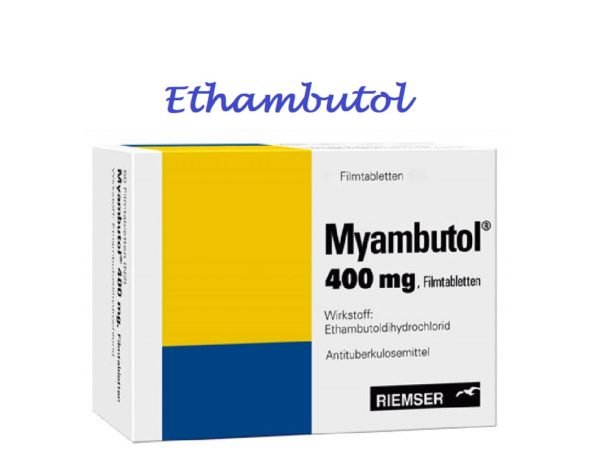
Ethambutol (Myambutol) is a bacteriostatic drug that is used in combination with other medications to treat tuberculosis.
-
Indications of Ethambutol:
- Treatment of pulmonary tuberculosis in addition to other anti-tuberculosis ( ATT) drugs.
-
Off Label Use of Ethambutol in Adults:
- Mycobacterium avium complex disease
- Nontuberculous mycobacterial disease (M. kansasii)
- Tuberculous meningitis (drug-susceptible)
Ethambutol Dose in Adults
Ethambutol treatment dosage of Drug-susceptible pulmonary Tuberculosis:
Note: It should always be prescribed in combination with other anti-tuberculous drugs.
-
ATS/CDC/ IDSA drug-susceptible tuberculosis guideline recommendations:
- Dosing: The dose depends on lean body weight for patients within a normal weight range for their height (optimal dosing for obese patients has not been established)
-
Once-daily therapy:
- Note:Once daily dose is the preferred frequency of administration, however, 5-days/week administration by directly observed therapy (DOT) is another alternative.
-
40 to 55 kg:
- 800 mg (14.5 to 20 mg/kg)
-
56 to 75 kg:
- 1,200 mg (16 to 21.4 mg/kg)
-
76 to 90 kg:
- 1,600 mg (17.8 to 21.1 mg/kg)
-
-
Three-times-weekly DOT:
-
40 to 55 kg:
- 1,200 mg (21.8 to 30 mg/kg)
-
56 to 75 kg:
- 2,000 mg (26.7 to 35.7 mg/kg)
-
76 to 90 kg:
- 2,400 mg (26.7 to 31.6 mg/kg)
-
-
Twice-weekly DOT:
-
40 to 55 kg:
- 2,000 mg (36.4 to 50 mg/kg)
-
56 to 75 kg:
- 2,800 mg (37.3 to 50 mg/kg)
-
76 to 90 kg:
- 4,000 mg (44.4 to 52.6 mg/kg)
-
-
Treatment regimen:
- It comprises of an initial 8 weeks phase of a quadruple regime including ethambutol, followed by a continuation phase of a 2-drug regimen (does not include ethambutol) of an additional 4 to 7 months
- Frequency and dosing of ethambutol depend on the type of treatment regimen; consult current drug-sensitive TB guidelines.
-
- Dosing: The dose depends on lean body weight for patients within a normal weight range for their height (optimal dosing for obese patients has not been established)
Ethambutol treatment dosage of Drug-susceptible Tuberculous meningitis:
- Ethambutol is used as part of a quadruple regime initially for 2 months;
- a 2-drug regimen (excluding ethambutol) is continued for an additional 7 to 10 months (optimal duration not defined).
- Adjunctive corticosteroid therapy (such as dexamethasone and prednisolone) tapered over 6 to 8 weeks is also recommended.
Ethambutol treatment dosage of Mycobacterium avium complex (MAC) disease (off-label):
-
Nodular/ bronchiectatic disease:
- The oral dose of 25 mg/kg 3 times per week in addition to a 3-times per week regimen of a macrolide (azithromycin or clarithromycin) and rifampin.
- Treatment should be continued until the patient is culture negative on therapy for 12 months.
- Note: Not recommended for severe or previously treated pulmonary disease.
-
Severe nodular/ bronchiectatic or fibrocavitary disease:
- The oral dose is 15 mg/kg once every 24 hours in combination with a daily macrolide (azithromycin or clarithromycin) and rifamycin (rifampin or rifabutin) therapy.
- Treatment should be continued until the patient is culture-negative on therapy for 12 months.
- An addition of 3 times per week amikacin or streptomycin during the early phase can be recommended.
-
For the treatment and chronic maintenance therapy of Disseminated disease in HIV-infected patients:
- The dose is 15 mg/kg orally every 24 hours in addition to a macrolide (azithromycin or clarithromycin).
- Treatment can be stopped when the patient has completed ≥12 months of therapy, Or is asymptomatic, and has sustained (>6 months) CD4 cell count >100 cells/mm³ in response to ART.
- Note: In case of immunosuppression/high bacterial load/absence of effective ART, the addition of a third or fourth drug should be recommended.
Ethambutol treatment dosage of Non-tuberculous mycobacterial disease (M. kansasii) (off-label):
- The dose is 15 mg/kg orally per 24 hours in addition to rifampin and isoniazid or clarithromycin for a duration to include 1 year of culture-negative sputum.
Ethambutol Dose in Childrens
Ethambutol treatment dosage of active Tuberculosis (excluding meningitis):
Note: Recommendations depend on epidemiology (resistance) and emerging information,therefore, consultation of CDC and WHO would be needed. A multidrug regimen is recommended. Directly observed therapy (DOT) is recommended for any regimens using less than once daily dosing. Treatment regimens for pulmonary TB includes the initial 8 weeks intensive phase of a quadruple regimen, followed by a continuation phase of an additional 4 to 7 months of isoniazid and rifampin. Frequency and dosing of ethambutol depend on type of treatment regimen selected,consult current drug-sensitive TB guidelines for detailed information.
-
ATS/CDC/IDSA Recommendations:
-
Once-daily or 5-times-weekly (Directly observed therapy):
-
Infants/Children/ Adolescents <15 years, weighing <40 kg:
- Oral dose of 20 mg/kg once every 24 hours or 5 times per week directly observed therapy.
- suggested range: 15 to 25 mg/kg/dose
-
Children and Adolescents <15 years weighing ≥40 kg or Adolescents ≥15 years:
- Note: Doses vary according to lean body weight for patients within a normal weight range for their height (optimal dosing for obese patients has not been established):
-
Oral weight-dependent dosing for whole tablets:
-
40 to 55 kg:
- 800 mg (14.5 to 20 mg/kg/dose) once daily or 5-times every week(DOT)
-
56 to 75 kg:
- 1,200 mg (16 to 21.4 mg/kg/dose) once daily or 5-times every week (DOT)
-
76 to 90 kg:
- 1,600 mg (17.8 to 21.1 mg/kg/dose) once daily or 5-times every week (DOT)
-
-
Three-times per week directly observed therapy
- Note: It is suggested 3-times per week regimens are more effective than twice weekly DOT regimens.
- Ethambutol containing 3-times weekly directly observed therapy can be considered as part of an intensive phase.
- Consult guidelines for specific information.
-
Infants/Children/Adolescents, weighing <40 kg:
- Oral dose of 50 mg/kg 3 times every week
-
Children and Adolescents weighing ≥40 kg:
- Note: Doses vary according to lean body weight for patients within a normal weight range for their height (optimal dosing for obese patients has not been established)
-
Oral: Weight dependent dosing for whole tablets:
-
40 to 55 kg:
- 1,200 mg (21.8 to 30 mg/kg/dose) 3-times every week
-
56 to 75 kg:
- 2,000 mg (26.7 to 35.7 mg/kg/dose) 3-times every week
-
76 to 90 kg:
- 2,400 mg (26.7 to 31.6 mg/kg/dose) 3-times every week
-
-
-
Twice weekly directly observed therapy:
- Note: This regimen is not usually recommended.
- It is contraindicated in HIV patients or those with smear-positive and/or cavitary disease.
- This therapy is recommended following completion of a 2-week intensive phase once every 24 hours (or 5 times per week) regimen.
- Missed doses result in the equivalent of once-weekly dosing which has been shown to be inferior and it can result in treatment failure, relapse, and drug resistance.
-
Infants/Children/Adolescents <15 years, weighing <40 kg:
- Oral dose of 50 mg/kg twice weekly
-
Children and Adolescents <15 years weighing ≥40 kg or Adolescents ≥15 years:
- Note: Doses vary according to lean body weight for patients within a normal weight range for their height (optimal dosing for obese patients has not been established)
-
Oral: Weight dependent dosing for whole tablets
-
40 to 55 kg:
- 2,000 mg (36.4 to 50 mg/kg/dose) twice weekly
-
56 to 75 kg:
- 2,800 mg (37.3 to 50 mg/kg/dose) twice weekly
-
76 to 90 kg:
- 4,000 mg (44.4 to 52.6 mg/kg/dose) twice weekly
-
-
-
-
Ethambutol treatment dosage of Mycobacterium avium complex (MAC) in HIV-exposed/positive:
-
Treatment:
-
Infants and Children:
- Oral dose of 15 to 25 mg/kg once every 24 hours in addition to clarithromycin (or azithromycin). For severe disease add rifabutin.
- The maximum dose is 2,500 mg/dose.
-
Adolescents:
- Oral dose of 15 mg/kg once every 24 hours in combination with clarithromycin (or azithromycin).
-
-
Chronic suppressive therapy :
-
Infants and Children:
- Oral dose of 15 to 25 mg/kg once every 24 hours.
- maximum dose: 2,500 mg/dose with clarithromycin (or azithromycin) with or without rifabutin.
-
Ethambutol treatment dosage of Non-tuberculous mycobacterial infection (eg, m. kansasii):
Limited data available:
-
Infants, Children, and Adolescents:
- Oral dose of 15 to 25 mg/kg once every 24 hours
- The maximum dose is 2,500 mg/dose.
Pregnancy Risk Factor: C
- Studies on animal reproduction have shown that there are adverse events.
- Ophthalmic abnormalities have been reported in infants of women who received ethambutol as part of anti-tuberculous treatment.
- Treatment is recommended when there is a high probability of developing tuberculosis in the mother or fetus.
- Ethambutol can be safely used in combination therapy for pregnant women.
Use of Ethambutol while breastfeeding
- Breast milk contains Ethambutol.
- Breastfeeding infants with tuberculosis is difficult because of the low concentration of drugs in breast milk.
- Even though newborn exposure is low and does not cause toxicity, some sources suggest monitoring breastfeeding infants for signs such as rash, malaise or nausea.
- Manufacturer recommends breastfeeding only if the benefits to the mother are greater than the potential risk to the infant.
- Breastfeeding women who have not been infected and are being treated with first-line agents (ethambutol) are not considered contraindicated when ethambutol's treatment is used to treat drug-susceptible tuberculosis.
Ethambutol dose in renal impairment:
-
As per the Manufacturer's labeling:
- Dosing is reduced according to serum levels (However, specific dosing adjustments are not provided).
- It is primarily excreted via the kidneys.
-
Alternate dosing for the treatment of drug-susceptible TB:
-
Creatinine clearance less than 30 mL/minute:
- 20 to 25 mg/kg 3 times per week (daily dosing not recommended).
-
Hemodialysis:
- 20 to 25 mg/kg/dose 3 times per week (daily dosing not recommended).
- administer after dialysis if given on a dialysis day.
-
-
Aronoff 2007:
-
Creatinine clearance 10 to 50 mL/minute:
- Administer every 24 to 36 hours
-
Creatinine clearance <10 mL/minute:
- Administer every 48 hours
-
Hemodialysis:
- Slightly dialyzable (5% to 20%).
- Administer dose after dialysis
-
Peritoneal dialysis:
- Dose for Creatinine clearance <10 mL/minute: Administer every 48 hours
-
Continuous arteriovenous or venovenous hemofiltration:
- Dose for Creatinine clearance 10 to 50 mL/minute:
- Administer every 24 to 36 hours
- Dose for Creatinine clearance 10 to 50 mL/minute:
-
Ethambutol dosage in liver disease:
There are no dosage adjustments provided in the manufacturer's labeling; use with caution.
Side effects of ethambutol:
-
Cardiovascular:
- Myocarditis
- Pericarditis
-
Central Nervous System:
- Confusion
- Disorientation
- Dizziness
- Hallucination
- Headache
- Malaise
- Peripheral Neuritis
-
Dermatologic:
- Dermatitis
- Erythema Multiforme
- Exfoliative Dermatitis
- Pruritus
- Skin Rash
-
Endocrine & Metabolic:
- Acute Gout Attack
- Hyperuricemia
-
Gastrointestinal:
- Abdominal Pain
- Anorexia
- Gastric Distress
- Nausea
- Vomiting
-
Hematologic & Oncologic:
- Eosinophilia
- Leukopenia
- Lymphadenopathy
- Neutropenia
- Thrombocytopenia
-
Hepatic:
- Abnormal Hepatic Function Tests
- Hepatitis
- Hepatotoxicity (Possibly Related To Concurrent Therapy)
-
Hypersensitivity:
- Anaphylaxis
- Anaphylactoid Reaction
- Hypersensitivity Reaction (Syndrome Includes Cutaneous Reactions, Eosinophilia, And Organ-Specific Inflammation)
-
Neuromuscular & Skeletal:
- Arthralgia
-
Ophthalmic:
- Color Blindness
- Decreased Visual Acuity
- Optic Neuritis
- Scotoma
- Visual Disturbance (Usually Reversible With Discontinuation; Irreversible Blindness Has Been Described)
-
Renal:
- Nephritis
-
Respiratory:
- Pneumonitis
- Pulmonary Infiltrates (With Or Without Eosinophilia)
-
Miscellaneous:
- Fever
Contraindications to Ethambutol:
- Hypersensitivity to ethambutol and any component of the formulation
- Take care:
- Optic neuritis (risk-benefit decision)
- use in young children,
- unconsciousness,
- Patients who are unable to report visual changes.
Warnings and precautions
-
Hepatic toxicities
- It has been mostly reported due to combination therapy.
- Before and after treatment, monitor liver function.
-
Optic neuritis:
- May result in optic neuritis (unilateral/bilateral), causing decreased visual acuity or other vision changes.
- The drug should be immediately stopped in the event of any visual changes, color blindness or other visual defects. These effects are usually reversible but may take up to one year.
- It is possible to experience irreversible blindness.
- Monitor your visual acuity during and before therapy.
-
Ocular disease:
- Visual acuity evaluations may be more difficult in patients with cataracts or optic neuritis, diabetic retinalopathy, or inflammatory conditions.
- You should consider whether the visual changes you see are due to disease progression, therapy effects or any other cause.
-
Renal impairment
- Patients with impaired renal function should be cautious.
- Modifications to dosage would be necessary.
- Before and after treatment, test your renal function.
Ethambutol: Drug Interaction
Note: Drug Interaction Categories:
- Risk Factor C: Monitor When Using Combination
- Risk Factor D: Consider Treatment Modification
- Risk Factor X: Avoid Concomitant Use
| Risk Factor C (Monitor therapy) | |
| BCG Vaccine (Immunization) | Antibiotics may diminish the therapeutic effect of BCG Vaccine (Immunization). |
| Lactobacillus and Estriol | Antibiotics may diminish the therapeutic effect of Lactobacillus and Estriol. |
| Risk Factor D (Consider therapy modification) | |
| Aluminum Hydroxide | May decrease the serum concentration of Ethambutol. |
| Sodium Picosulfate | Antibiotics may diminish the therapeutic effect of Sodium Picosulfate. Management: Consider using an alternative product for bowel cleansing prior to a colonoscopy in patients who have recently used or are concurrently using an antibiotic. |
| Typhoid Vaccine | Antibiotics may diminish the therapeutic effect of Typhoid Vaccine. Only the live attenuated Ty21a strain is affected. Management: Vaccination with live attenuated typhoid vaccine (Ty21a) should be avoided in patients being treated with systemic antibacterial agents. Use of this vaccine should be postponed until at least 3 days after cessation of antibacterial agents. |
| Risk Factor X (Avoid combination) | |
| BCG (Intravesical) | Antibiotics may diminish the therapeutic effect of BCG (Intravesical). |
| Cholera Vaccine | Antibiotics may diminish the therapeutic effect of Cholera Vaccine. Management: Avoid cholera vaccine in patients receiving systemic antibiotics, and within 14 days following the use of oral or parenteral antibiotics. |
Monitoring parameter:
- Baseline and monthly visual testing (Snellen test) and color discrimination tests (each eye individually, as well as both eyes tested together) is recommended in patients receiving doses greater than 15 mg/kg/day.
- Baseline and monthly renal, hepatic, and hematopoietic tests should be carried out.
How to administer Ethambutol?
It is administered with or without food.
Mechanism of action of Ethambutol:
Ethambutol inhibits arabinosyltransferase, resulting in impaired synthesis mycobacterial cell walls.
AbsorptionThe drug has an estimated 80% success rate. Distribution: It's widely distributed throughout the body. Concentrated in the kidneys, liver, lungs, saliva and red blood cells. CSF:blood level ratio: Normal meninges: 0%; Inflamed meninges: 25% Protein binding20-30% Metabolism: Hepatic (20%) and inactive metabolites Half-life elimination2.5 to 3.6 hours. End-stage renal disease: 7-15 hours When to reach the peak serum concentration: 2 to 4 Hours
Excretion:
- Urine (50% unchanged drug, 8%- 15% as metabolites), and feces (20% unchanged drug).
Ethambutol Brand Names (International):
- Myambutol
- Etibi
- Ambutol
- Amiobutols
- Arbutol
- Clobutol
- Combutol
- Dexambutol
- E-Butol
- Ebutol
- Ecox
- EMB
- EMB-Fatol
- Etambutol
- Etambutol Northia
- Etambutol Richet
- Etambutol Richmond
- Etapiam
- ETH Ciba 400
- Etham
- Ethambin-PIN
- Ethambutol
- Ethbutol
- Etibi
- Eubotol
- Inbutol
- Interbutol
- Lambutol
- Litamol
- Manzida
- Myambutol
- Mycobac
- Mycobutol
- Oributol
- Purderal
- Riotol
- Servambutol
- Stambutol
- Sural
- Tambutol
- Thamtol
- Thural
- Tibigon
- Tibitol
- Tibutol
- Tobutol
- Winbutol
Ethambutol brands in Pakistan:
Ethambutol (HCl) Injection 100 mg/ml |
|
| Etibi | Tread Pharmaceuticals Pvt Ltd |
Ethambutol 100 mg Tablets |
|
| Butarex | Rex Pharmaceuticals Pakistan |
Ethambutol 300 mg Tablets |
|
| Tubercure | Lowitt Pharmaceuticals (Pvt) Ltd |
Ethambutol 400 mg Tablets |
|
| Abbutol | Abbott Laboratories (Pakistan) Limited. |
| Ambutol | Pharmawise Labs. (Pvt) Ltd. |
| Butal | Novartis Pharma (Pak) Ltd |
| Ethambutol | Geofman Pharmaceuticals |
| Ethambutol | Lahore Chemical & Pharmaceutical Works (Pvt) Ltd |
| Ethambutol | Lahore Chemical & Pharmaceutical Works (Pvt) Ltd |
| Ethambutol | Lahore Chemical & Pharmaceutical Works (Pvt) Ltd |
| Ethambutol | Lahore Chemical & Pharmaceutical Works (Pvt) Ltd |
| Liskobutol | Lisko Pakistan (Pvt) Ltd |
| Medibutol | Mediceena Pharma (Pvt) Ltd. |
| Medibutol | Mediceena Pharma (Pvt) Ltd. |
| Myambutol | Pfizer Laboratories Ltd. |
| Novobutol | Krka-Pak Pharmaceutical & Chemical Works |
| Panbutol | P.D.H. Pharmaceuticals (Pvt) Ltd. |
| Pharbutol | Pharmacare Laboratories (Pvt) Ltd. |
| Pharbutol | Pharmacare Laboratories (Pvt) Ltd. |
| Pulmobutol | Amson Vaccines & Pharma (Pvt) Ltd. |
| Schazobutol | Schazoo Zaka |
| U-Butol | Unexo Labs (Pvt) Ltd. |
| Wilbutol | Wilshire Laboratories (Pvt) Ltd. |
.png)


