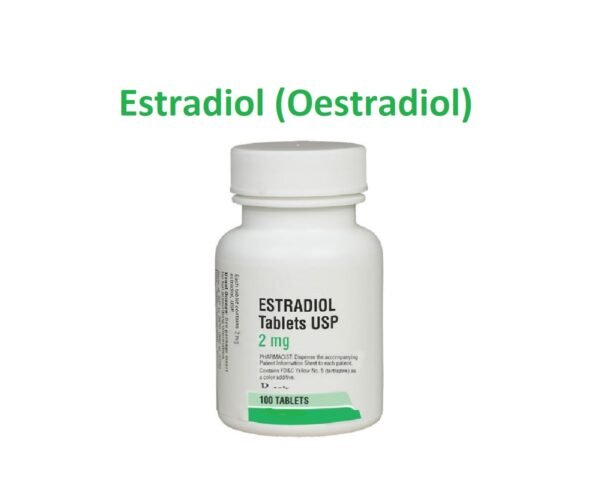
Estradiol (Oestradiol) is a potent female sex hormone that is primarily produced by the ovaries. It is important for the development of female sexual organs and secondary sexual characteristics. It is also available as injections, tablets, and patches in the following disorders:
Estradiol (Oestradiol) Uses:
-
Metastatic Breast Cancer:
- Useful for treating metastatic breast cancer (palliation), in appropriately selected men and women postmenopausal.
-
Hypoestrogen (female).
- This is used to treat hypoestrogenism caused by castration, hypogonadism or primary ovarian failure.
-
Prevention of osteoporosis (female)
- It is used to prevent osteoporosis postmenopausal
- Use restrictions: Use of nonestrogen medication should be considered only for women who are at high risk of osteoporosis after menopause.
-
Advanced Prostate Cancer:
- This is used to treat advanced androgen-dependent prostate cancer (palliation).
-
Menopause is associated with vasomotor symptoms
- This is used to treat moderate to severe vasomotor symptoms that are associated with menopause.
-
Menopause associated with vaginal and vulvar atrophy
- This medication is used to treat moderate to severe vaginal and vulvar atrophy that can be caused by menopause.
- Use restrictions: Topical vaginal products are not recommended if they are used for treatment of vulvar or vaginal atrophy.
Estradiol (Oestradiol) Dose in Adults
Estradiol (Oestradiol) General dosing guidelines:
- When treating symptoms of menopause, hormone therapy should be evaluated routinely for appropriate dose, duration, and route of administration for each individual patient based on treatment goals, risk factors, and overall health.
- Combined estrogen/progestin therapy is indicated for postmenopausal persons with a uterus to decrease the risk of endometrial cancer.
- Individuals who have had a hysterectomy generally do not need a progestin; however, one may be needed if there is a history of endometriosis. Adjust dose based on patient response.
Estradiol (Oestradiol) Dose in the treatment of metastatic Breast cancer:
- Oral (Estrace): Males and postmenopausal females: 10 mg thrice in a day or
- (off-label dosing) postmenopausal women: 2 thrice in a day.
Estradiol (Oestradiol) Dose in the treatment of Hormone therapy for transgender females (male-to-female), monotherapy, or combination therapy (off-label):
- IM:
- Cypionate: 2 to 10 mg each week
- Valerate: 5 to 30 mg each 2 weeks
- Oral: 2 to 6 mg per day
- Transdermal:
- Apply 0.025 to 0.2 mg/day patch every 3 to 5 days.
- Note: Apply two 0.1 mg patches to create a 0.2 mg per day dose.
Note: Adjust dose with a goal of elevating serum estradiol levels and suppressing serum testosterone levels into the normal range for females.
Estradiol (Oestradiol) Dose in the treatment of Hypoestrogenism (female) due to hypogonadism, castration, or primary ovarian failure:
- Oral (Estrace):
- 1 to 2 mg per day;
- titrate as necessary to control symptoms using minimal effective dose for maintenance therapy
- IM: Valerate (Delestrogen):
- 10 to 20 mg every 4 weeks
- Transdermal (Alora, Climara, Vivelle-Dot):
- Refer to transdermal product-specific dosing (below).
Estradiol (Oestradiol) Dose in the treatment of Hypoestrogenism (female) due to hypogonadism:
- IM: Cypionate (Depo-Estradiol): 1.5 to 2 mg monthly
Estradiol (Oestradiol) Dose in the prevention of Osteoporosis (females):
- Oral (Estrace): Lowest effective dose has not been determined;
- doses of at least 0.5 mg per day were used in clinical studies evaluating bone mineral density.
- Transdermal (Climara, Menostar, Minivelle, Alora, Vivelle-Dot):
- Refer to transdermal product-specific dosing (below).
Estradiol (Oestradiol) Dose in the treatment of advanced Prostate cancer:
- IM: Valerate (Delestrogen): 30 mg or more every 1 to 2 weeks
- Oral (Estrace): 1 to 2 mg thrice in a day.
Estradiol (Oestradiol) Dose in the treatment of moderate to severe vasomotor symptoms associated with menopause:
- Oral (Estrace):
- 0.5 to 1 mg once daily.
- Dosage range: 0.5 to 2 mg/day.
- IM: Cypionate (Depo-Estradiol):
- 1 to 5 mg every 3 to 4 weeks
- IM: Valerate (Delestrogen):
- 10 to 20 mg every 4 weeks
- Topical gel:
- Divigel:
- Initial: 0.25 g/day;
- adjust dose based on patient response
- Elestrin:
- Initial: 0.87 g/day applied at the same time each day;
- adjust dose based on patient response.
- EstroGel:
- 1.25 g/day applied at the same time each day
- Topical spray (Evamist):
- Initial: One spray (1.53 mg) per day.
- Adjust dose based on patient response.
- Dosing range: 1 to 3 sprays per day.
- Transdermal (Alora, Climara, Minivelle, Vivelle-Dot):
- Refer to transdermal product-specific dosing (below).
- Vaginal ring (Femring):
- Initial: 0.05 mg intravaginally;
- following insertion, the dose is released daily for 3 months.
- Usual dose: 0.05 mg to 0.1 mg intravaginally every 3 months.
- Divigel:
Estradiol (Oestradiol) Dose in the treatment of moderate to severe vulvar and vaginal atrophy associated with menopause:
- IM: Valerate (Delestrogen):
- 10 to 20 mg every 4 weeks
- Intravaginal: Vaginal ring (Femring):
- Initial: 0.05 mg intravaginally;
- following insertion, the dose is released daily for 3 months.
- Usual dose: 0.05 mg to 0.1 mg intravaginally eevery 3 months.
- Oral (Estrace):
- 0.5 to 1 mg/day.
- Topical gel (EstroGel):
- 1.25 g/day applied at the same time every day
- Transdermal (Alora, Climara, Vivelle-Dot):
- Refer to transdermal product-specific dosing (below).
Transdermal product-specific dosing:
Note:
- The indicated dose may be used continuously in patients without a uterus.
- Continuous or cyclic schedules (3 weeks on, 1 week off) may be used in women with a uterus (indication and product-specific; refer to manufacturers labeling).
- When changing patients from oral to transdermal therapy, start transdermal patch 1 week after discontinuing oral hormone (may begin sooner if symptoms reappear within 1 week):
Estradiol (Oestradiol) Dose in the treatment of Hypoestrogenism (female) due to hypogonadism, castration, or primary ovarian failure: Adjust dose as necessary to control symptoms.
- Alora: Initial: Initial: Apply 0.05 mg/day patch two times in a week.
- Climara: Initial: Apply 0.025 mg/day patch once in a week.
- Vivelle-Dot: Initial: Apply 0.025 mg/day patch two times in a week.
Estradiol (Oestradiol) Dose in the treatment of Functional hypothalamic amenorrhea with low bone density (adolescent and young adult female; off-label):
- The Endocrine Society guidelines are unable to recommend an optimal dose due to insufficient data.
- Application of 0.1 mg per day patch two times in a week (with cyclic progesterone for endometrial protection) improved spine and hip bone mineral density (BMD) in adolescent girls (bone age ≥15 years) with anorexia nervosa-associated low BMD.
Estradiol (Oestradiol) Dose in the prevention of Osteoporosis (female):
- Alora, Minivelle, Vivelle-Dot:
- Initial: Apply 0.025 mg per day patch two times in a week. Adjust dose as required.
- Climara:
- Initial: Apply 0.025 mg/day patch one time in a week; adjust dosage depend on the response to therapy.
- Estradot [Canadian product]:
- There are no specific initial dosage recommendations provided in the manufacturer's labeling; individualize dose per clinical status, BMD status, and 17-beta estradiol levels (maintain levels at 50 picograms/mL).
- Menostar:
- Apply 0.014 mg/day patch once in a week.
- In women with a uterus, also administer a progestin for 14 days every 6 to 12 months.
Estradiol (Oestradiol) Dose in the treatment of Vasomotor symptoms associated with menopause:
Note: Adjust dose as required.
- Alora, Estradot [Canadian product]:
- Initial: Apply 0.05 mg/day patch twice in a weak.
- Climara:
- Initial: Apply 0.025 mg/day patch once in a week.
- Minivelle, Vivelle-Dot:
- Initial: Apply 0.0375 mg/day patch twice in a week.
- Oesclim [Canadian product]:
- Initial: Apply 0.025 to 0.05 mg per day patch twice in a week.
Estradiol (Oestradiol) Dose in the treatment of moderate to severe vulvar and vaginal atrophy associated with menopause:
Note: Adjust dose as required.
- Alora:
- Initial: Apply 0.05 mg per day patch twice in a week.
- Climara:
- Initial: Apply 0.025 mg per day patch once in a week.
- Vivelle-Dot:
- Initial: Apply 0.0375 mg per day patch twice in a week.
Estradiol (Oestradiol) Dose in Childrens
Note:
- Estrasorb has been discontinued in the US for more than 1 year.
- Use the lowest effective dose for the shortest duration possible that is consistent with an individual's treatment goals and risks; all dosage needs to be adjusted based upon the patient's response.
Estradiol (Oestradiol) Dose in the treatment of Constitutional delay of growth and puberty (CDGP) (females): Limited data available:
-
Children ≥12 years and Adolescents:
Note:
- Begin with the lowest available dose and gradually increase.
- Obtain bone age every 6 months to avoid premature epiphyseal closure.
- If treatment continues beyond 1 year or breast growth is significant and has plateaued or breakthrough bleeding occurs, add cyclic progesterone.
- Continue until menstruation has been established, or longer if clinically indicated.
- Oral (micronized, Estrace):
- Initial dose: 5 mcg per kg once in a day;
- after 6 to 12 months of therapy, may increase to 10 mcg per kg once daily.
- Using currently available dosage forms, some have recommended starting at a fixed dose of 0.25 mg once in a day (1/2 of the 0.5 mg tablet) and increasing to 0.5 mg once in a day after 6 to 12 months.
- Transdermal:
- Initial dose: 3.1 to 6.2 mcg per day patch (eg, 1/8 to 1/4 of a 25 mcg per day patch), apply at night, remove in the morning.
- Increase by 3.1 to 6.2 mcg per day patch every 6 months (Palmert 2012).
- Note:
- The practice of cutting patches to achieve low doses is cited frequently in the literature.
- however, product-specific data may not be available for all transdermal products due to product availability or manufacturing changes.
- Oral (micronized, Estrace):
Estradiol (Oestradiol) Dose in the treatment of Hypogonadism (females): Limited data available:
-
Children ≥12 years and Adolescents:
Note:
- Begin with the lowest available dose and gradually increase.
- Obtain bone age every 6 months to avoid premature epiphyseal closure.
- Once breast growth is significant and has plateaued or breakthrough bleeding occurs, add cyclic progesterone.
- Continue until menstruation has been established, or longer if clinically indicated.
- Oral (micronized):
- Initial dose: 5 mcg per kg once in a day for 6 to 12 months;
- may then increase to 10 mcg per kg per day for 6 to 12 months;
- The dose may be increased at every 6 to 12-month intervals by 5 mcg per kg per day, up to 20 mcg per kg per day.
- Do not exceed the adult dose of 2 mg each day.
- Transdermal:
- Initial dose: 3.1 to 6.2 mcg/day patch (eg, 1/8 to 1/4 of a 25 mcg per day patch), apply at night, remove in the morning.
- Increase by 3.1 to 6.2 mcg per day patch every 6 months;
- Do not exceed adult dose of 50 to 100 mcg per 24 hours.
- Note:
- The practice of cutting patches to achieve low doses is cited frequently in the literature, however, product-specific data may not be available for all transdermal products due to product availability/manufacturing changes.
- Oral (micronized):
Estradiol (Oestradiol) Dose in the treatment of Turner syndrome (females): Limited data available:
-
Children ≥12 years and Adolescents:
- Begin at ~12 years of age using a low dose and gradually increase dose over 2 to 4 years to full adult dose.
- After 2 years of estrogen or when breakthrough bleeding occurs, add cyclic progesterone.
- Note:
- Full dose estrogen will be needed until at least age 30 years.
- IM: Cypionate (Depot-Estradiol):
- Initial: 0.2 to 0.4 mg every 4 weeks, slowly increase dose over about 2 years to the goal adult dose: 3 mg per month;
- one trial started at 0.2 mg per dose, then increased dose at 6-month intervals in 0.2 mg per dose increments until a dose of 1 mg reached and then increased in 0.5 mg per dose increments thereafter to a final dose of 3 mg.
- Oral (micronized, Estrace):
- Initial dose: 5 mcg per kg once in a day for the first 2 years, followed by 7.5 mcg per kg for the 3rd year, then 10 mcg per kg thereafter;
- once final height is attained, increase to the adult dose of 1 to 2 mg per day.
- A fixed-dose of 0.25 mg once daily; increase to the adult dose of 2 to 4 mg/day over the course of 2 years has also been suggested.
- Note:
- Due to extensive first-pass metabolism, other routes of administration may be preferable.
- Topical gel (Divigel):
- Initial: 0.1 mg of estradiol once daily for the first year, 0.2 mg of estradiol once daily for the second year, 0.5 mg of estradiol once in a day for the third year, 1 mg of estradiol once in a day for the fourth year, and 1.5 mg of estradiol once in a day for the fifth year.
- Dosing based on a trial of 23 girls that followed the development for 5 years; long term dose is unknown.
- Due to a lack of commercially available products for lower doses, individual sachets of 0.1 mg estradiol were prepared.
- Transdermal patch:
- Initial: 6.25 mcg per day patch;
- slowly increase over about 2 years to the goal adult dose: 100 to 200 mcg per day patch.
Note:
- The lowest-dose commercially available patches deliver 14 and 25 μg every day;
- The preferred dose fractionation method has not been established (eg, administering a partial patch, limiting to overnight use, or administering whole patches for 7 to 10 days per month).
- Product-specific data may not be available for splitting/cutting some transdermal patches; one center has used the following titration method using Vivelle-Dot product:
-
Treatment month:
- 0 to <6 months of treatment:
- 125 mcg to 4.17 mcg per dose (equals 1/8 to 1/ 6 of a 25 mcg per day patch), apply at night, remove in the morning (not continuous)
- 6 to <12 months of treatment:
- 125 mcg to 4.17 mcg per dose (equals 1/8 to 1/6 of a 25 mcg per day patch) apply twice in a weak (continuous)
- 12 to <18 months of treatment:
- 25 mcg to 8.33 mcg per dose (equals 1/4 to 1/3 of a 25 mcg per day patch), apply twice in a weak (continuous)
- 18 to <24 months of treatment:
- 5 mcg/dose (equals 1/2 of a 25 mcg/day patch), apply twice in a weak (continuous)
- ≥24 months of treatment:
- 25 mcg per day patch, apply twice weekly (continuous);
- then increase by one patch strength every 6 months to a final goal of 100 mcg per day continuously
- 0 to <6 months of treatment:
Estradiol (Oestradiol, Alora) Pregnancy Risk Category: X
- Products approved only for women who are postmenopausal may not be used during pregnancy.
- Some products are clearly indicated on the label as being contraindicated.
- Combining hormonal contraceptives with estrogen and progestin has not been proven to cause teratogenic side effect.
Estradiol use during breastfeeding:
- Breast milk contains estrogens.
- It has been shown that estrogens can reduce the quality and quantity human milk.
- Manufacturers advise breastfeeding mothers to be careful when administering the medication. Monitor your infant's growth closely.
Estradiol (Oestradiol, Alora) Dose in Kidney Disease:
For most products, the Manufacturer's labeling doesn't provide any dosage adjustments (has not been studied).
Estradiol (Oestradiol, Alora) Dose in Liver disease:
Its use is contraindicated with hepatic dysfunction or disease.
Side effects of Estradiol (Oestradiol, Alora):
Some adverse reactions observed with estrogen and/or progestin combination therapy.
-
Cardiovascular:
- Edema
- Hypertension
- Cerebrovascular Accident
- Thrombophlebitis
- Venous Thromboembolism
- Deep Vein Thrombosis
- Local Thrombophlebitis
- Myocardial Infarction
- Pulmonary Thromboembolism
- Retinal Thrombosis
-
Central Nervous System:
- Headache
- Hypoesthesia
- Chorea
- Dementia
- Exacerbation Of Epilepsy
- Irritability
- Mood Disorder
- Pain
- Depression
- Anxiety
- Dizziness
- Migraine
- Nipple Pain
- Nervousness
-
Dermatologic:
- Skin Rash
- Pruritus
- Chloasma
- Urticaria
- Erythema Multiforme
- Erythema Nodosum
- Localized Erythema
- Loss Of Scalp Hair
- Skin Discoloration
-
Endocrine & Metabolic:
- Fibrocystic Breast Changes
- Fluid Retention
- Galactorrhea
- Hypocalcemia
- Increased Serum Triglycerides
- Weight Gain
- Hot Flash
- Hirsutism
- Change In Libido
- Change In Menstrual Flow
- Exacerbation Of Diabetes Mellitus
- Exacerbation Of Porphyria
- Weight Loss
-
Gastrointestinal:
- Abdominal Pain
- Nausea
- Gastroenteritis
- Diarrhea
- Abdominal Cramps
- Bloating
- Carbohydrate Intolerance
- Gallbladder Disease
- Pancreatitis
- Dyspepsia
- Constipation
- Flatulence
- Vomiting
-
Genitourinary:
- Mastalgia
- Vaginal Hemorrhage
- Breast Tenderness
- Change In Cervical Ectropion
- Change In Cervical Secretions
- Endometrial Hyperplasia
- Nipple Discharge
- Spotting
- Uterine Fibroids
- Uterine Pain
- Vaginal Discomfort
- Endometrium Disease
- Breakthrough Bleeding
- Leukorrhea
- Abnormal Uterine Bleeding
- Breast Hypertrophy
- Dysmenorrhea
- Cervical Polyp
- Vulvovaginal Candidiasis
- Urinary Tract Infection
- Vaginitis
-
Hematologic & Oncologic:
- Hypercoagulability State
- Malignant Neoplasm Of Breast
- Ovarian Cancer
- Hemorrhagic Eruption
-
Hepatic:
- Cholestatic Jaundice
- Exacerbation Of Hepatic Hemangioma
-
Hypersensitivity:
- Anaphylactoid Reaction
- Anaphylaxis
- Angioedema
- Hypersensitivity Reaction
-
Infection:
- Infection
- Fungal Infection
-
Local:
- Application Site Reaction
-
Neuromuscular & Skeletal:
- Myalgia
- Neck Pain
- Arthropathy
- Exacerbation Of Systemic Lupus Erythematosus
- Leg Cramps
- Arthralgia
- Back Pain
- Weakness
- Limb Pain
-
Ophthalmic:
- Change In Corneal Curvature
- Contact Lens Intolerance
- Conjunctivitis
-
Otic:
- Otitis Media
-
Respiratory:
- Flu-Like Symptoms
- Sinusitis
- Sinus Headache
- Bronchitis
- Sinus Congestion
- Pharyngitis
- Rhinitis
- Cough
- Nasopharyngitis
- Upper Respiratory Tract Infection
- Asthma
- Exacerbation Of Asthma
-
Miscellaneous:
- Accidental Injury
- Cyst
Contraindication to Estradiol:
- Angioedema, anaphylactic reaction, hypersensitivity to estradiol or any component of formulation.
- An undiagnosed condition that causes abnormal genital bleeding;
- Patients with DVT/PE or a history of DVT/PE;
- An active or past history of arterial embolic disease such as stroke or MI
- Patients who are being treated with metastatic disease or known, suspected, or historical breast cancer are not permitted.
- An estrogen-dependent tumor (known, suspected)
- Hepatic impairment and disease
- Antithrombin deficiencies known, protein C and protein A known;
- Pregnancy (Note - Products approved for women after menopause cannot be used during pregnancy. Some products are clearly indicated on the label as being contraindicated.
Canadian labeling: Additional contraindications that are not found in the US labeling
- Notice: Dosage form can depend on product. Please consult product labeling.
- Breastfeeding
- Endometrial hyperplasia
- Active thrombophlebitis
- Ophthalmic vascular disease can lead to partial or complete vision loss, or diplopia.
- History of or presence of hepatic carcinomas (benign and/or malignant); porphyria
- Classic migraine.
Precautions and warnings
-
Anaphylaxis
- Anaphylaxis is a condition that requires immediate medical attention. It can occur at any time during treatment.
- There have been reports of angioedema reported in the lips, tongue, feet, hands and larynx.
-
Breast cancer: [US Boxed Warning]
- The Women's Health Initiative (WHI) data shows that postmenopausal females who use medroxyprogesterone and conjugated estrogens (CE), have a higher chance of developing invasive breast carcinoma.
- Women who receive hormone therapy after menopause could be at higher risk of breast cancer because of their estrogen or progestin dosages, timing of therapy initiation, length and patient characteristics.
- Hormone therapy may cause an increase in breast density. There have been reports of abnormal mammogram results that need further examination. This can be caused by estrogen alone, or combined therapy with progestin.
- High levels of estrogen may cause severe hypercalcemia in patients with breast cancer and bone metastases. Stop using estrogen if this occurs.
- According to observational studies, this risk drops when therapy is stopped.
- WHI found no evidence that women who had a hysterectomy and CE were at increased risk of breast cancer.
-
Dementia: [US Boxed Warning]
- It is not a good idea for dementia prevention to use estrogens with or without progestin.
- Women over 65 years old were more likely than men to develop dementia if they had taken CE alone or in combination, according to the Women's Health Initiative Memory Study (WHIMS).
- For the treatment or prevention of cognitive decline or dementia, hormone therapy is not recommended at any age.
- WHI memory studies were conducted on women over 65 years old. The findings of the WHI memory studies are not applicable to younger women after menopause.
-
Endometrial cancer: [US BoxedWarn]
- Women who use estrogen unopposed are more likely to develop endometrial carcinoma.
- To reduce the risk of endometrial Hyperplasia (precursor to endometrial cancer), a progestin can be added to estrogen therapy.
- It is crucial to do appropriate diagnostic tests and endometrial sampling if there are any abnormalities in the vaginal blood flow.
- The duration and dosage of treatment are key factors in endometrial cancer risk. Patients who have been receiving therapy for longer than five years are at risk. It may persist even after treatment is stopped.
- If low doses of progestin are being administered to vaginal atrophy patients, it should be avoided. This recommendation is supported by insufficient long-term data (>1 year)
- There is no evidence that natural estrogens pose a higher risk than synthetic estrogens with equivalent estrogen doses.
-
Endometriosis
- Estrogens can exacerbate endometriosis.
- Progestin should be considered for women with endometriosis following hysterectomy.
- The malignant transformation of the remaining implants after a post-hysterectomy has been unaffected by estrogen therapy.
-
The Lipid Effects
- Glycerides may be increased in hypertriglyceridemia patients. Stop taking medication if you suspect that you have pancreatitis.
- Estrogen compounds can have lipid effects such as increased HDL-cholesterol and decreased LDL cholesterol.
-
Ovarian cancer:
- Although an association might exist, the likelihood of developing a serious condition is low. It is also possible to influence the likelihood of an interaction by the length of treatment.
- There is inconsistent information regarding the risks of ovarian cancer and the use estrogen/progestin therapy, or menstrual estrogen.
-
Retinal vascular embolism
- Retinal vein thrombosis can be caused by estrogens
- Stop using if you have migraines, vision loss, proptosis, diplopia or other symptoms.
- Stop using permanent contraceptives if retinal vascular disease or papilledema is found during examination
-
Asthma
- Asthma: Be careful
- This could make the situation worse.
-
Carbohydrate intolerance
- You should assess the risk factors for diabetes, including their age, cardiovascular health, and metabolic.
- Diabetes patients may have impaired glucose tolerance.
-
Cardiovascular disease: [US Boxed Warning]
- It is important to avoid heart disease by not combining estrogens with progestin.
- The Women's Health Initiative data has shown that CE is at higher risk of stroke and deep vein embolism. Postmenopausal women between 50-79 years old have been reported to experience an increase in stroke, DVT, and pulmonary emboli (PE).
- SLE, diabetes mellitus, and obesity are all risk factors.
- The drug is not recommended for women with DVT, PE or other arterial thromboembolic conditions (stroke and MI).
- Negative cardiovascular events have been reported by males who have used estrogens to treat prostate carcinoma.
- It is important to manage your risk factors. Stop using the medication immediately if you are concerned about adverse cardiovascular events.
- Patients at high risk of developing thrombotic conditions are more likely to receive transdermal treatment.
-
Fluid retention can cause more serious diseases
- Fluid retention can lead to complications in certain conditions, including renal dysfunction and cardiac problems.
-
Epilepsy:
- Take care with epilepsy.
- This could make the situation worse.
-
Gallbladder disease
- Gallbladder disease that requires surgery may be more common in women who use estrogen after menopause.
-
Hepatic dysfunction
- Stop using if you have jaundice or are suffering from acute or chronic liver disorders.
- Hepatic impairment or disease can be reasons to stop taking this medication.
- Patients with hepatic dysfunction may have a lower ability to metabolize estrogens.
- If you have had cholestatic jaundice from estrogen use in the past or are pregnant, be cautious.
-
Hepatic hemomangiomas
- Take care with hepatic hemomangiomas.
- This could make the situation worse.
-
Angioedema is hereditary
- Exogenous estrogens can cause angioedema in women with angioedema.
-
Hypoparathyroidism
- Hypoparathyroidism patients should be cautious when using it
- Estrogen can cause hypocalcemia.
-
Migraine
- Patients with Migraine may experience worsening symptoms if they are given medication.
-
Porphyria
- Patients suffering from Porphyria need to be treated with caution
- This could make the situation worse.
-
SLE:
- Patients suffering from SLE should be cautious when using it
- This could make the situation worse.
Estradiol (systemic): Drug Interaction
Note: Drug Interaction Categories:
- Risk Factor C: Monitor When Using Combination
- Risk Factor D: Consider Treatment Modification
- Risk Factor X: Avoid Concomitant Use
Risk Factor C (Monitor therapy) |
|
| Ajmaline | Estrogen Derivatives may enhance the adverse/toxic effect of Ajmaline. Specifically, the risk for cholestasis may be increased. |
| Anthrax Immune Globulin (Human) | Estrogen Derivatives may enhance the thrombogenic effect of Anthrax Immune Globulin (Human). |
| Antidiabetic Agents | Hyperglycemia-Associated Agents may diminish the therapeutic effect of Antidiabetic Agents. |
| Ascorbic Acid | May increase the serum concentration of Estrogen Derivatives. |
| Bosentan | May decrease the serum concentration of CYP3A4 Substrates (High risk with Inducers). |
| Broccoli | May decrease the serum concentration of CYP1A2 Substrates (High risk with Inducers). |
| C1 inhibitors | Estrogen Derivatives may enhance the thrombogenic effect of C1 inhibitors. |
| Cannabis | May decrease the serum concentration of CYP1A2 Substrates (High risk with Inducers). |
| Chenodiol | Estrogen Derivatives may diminish the therapeutic effect of Chenodiol. Management: Monitor clinical response to chenodiol closely when used together with any estrogen derivative. |
| CloZAPine | CYP1A2 Inhibitors (Weak) may increase the serum concentration of CloZAPine. Management: Drugs listed as exceptions to this monograph are discussed in further detail in separate drug interaction monographs. |
| Corticosteroids (Systemic) | Estrogen Derivatives may increase the serum concentration of Corticosteroids (Systemic). |
| CYP1A2 Inducers (Moderate) | May decrease the serum concentration of CYP1A2 Substrates (High risk with Inducers). |
| CYP3A4 Inducers (Moderate) | May decrease the serum concentration of CYP3A4 Substrates (High risk with Inducers). |
| CYP3A4 Inhibitors (Moderate) | May increase the serum concentration of Estrogen Derivatives. |
| CYP3A4 Inhibitors (Strong) | May increase the serum concentration of Estrogen Derivatives. |
| Cyproterone | May decrease the serum concentration of CYP1A2 Substrates (High risk with Inducers). |
| Dantrolene | Estrogen Derivatives may enhance the hepatotoxic effect of Dantrolene. |
| Deferasirox | May decrease the serum concentration of CYP3A4 Substrates (High risk with Inducers). |
| Erdafitinib | May decrease the serum concentration of CYP3A4 Substrates (High risk with Inducers). |
| Erdafitinib | May increase the serum concentration of P-glycoprotein/ABCB1 Substrates. |
| Herbs (Estrogenic Properties) | May enhance the adverse/toxic effect of Estrogen Derivatives. |
| Immune Globulin | Estrogen Derivatives may enhance the thrombogenic effect of Immune Globulin. |
| Ivosidenib | May decrease the serum concentration of CYP3A4 Substrates (High risk with Inducers). |
| LamoTRIgine | Estrogen Derivatives may decrease the serum concentration of LamoTRIgine. |
| Lenalidomide | Estrogen Derivatives may enhance the thrombogenic effect of Lenalidomide. |
| Mivacurium | Estrogen Derivatives may increase the serum concentration of Mivacurium. |
| Nonsteroidal Anti-Inflammatory Agents (COX-2 Selective) | May enhance the thrombogenic effect of Estrogen Derivatives. Nonsteroidal Anti-Inflammatory Agents (COX-2 Selective) may increase the serum concentration of Estrogen Derivatives. |
| P-glycoprotein/ABCB1 Inhibitors | May increase the serum concentration of Pglycoprotein/ABCB1 Substrates. P-glycoprotein inhibitors may also enhance the distribution of pglycoprotein substrates to specific cells/tissues/organs where p-glycoprotein is present in large amounts (e.g., brain, T-lymphocytes, testes, etc.). |
| Ranolazine | May increase the serum concentration of P-glycoprotein/ABCB1 Substrates. |
| ROPINIRole | Estrogen Derivatives may increase the serum concentration of ROPINIRole. |
| Sarilumab | May decrease the serum concentration of CYP3A4 Substrates (High risk with Inducers). |
| Siltuximab | May decrease the serum concentration of CYP3A4 Substrates (High risk with Inducers). |
| Succinylcholine | Estrogen Derivatives may increase the serum concentration of Succinylcholine. |
| Teriflunomide | May decrease the serum concentration of CYP1A2 Substrates (High risk with Inducers). |
| Thalidomide | Estrogen Derivatives may enhance the thrombogenic effect of Thalidomide. |
| Theophylline Derivatives | Estrogen Derivatives may increase the serum concentration of Theophylline Derivatives. Exceptions: Dyphylline. |
| Thyroid Products | Estrogen Derivatives may diminish the therapeutic effect of Thyroid Products. |
| Tocilizumab | May decrease the serum concentration of CYP3A4 Substrates (High risk with Inducers). |
| Ursodiol | Estrogen Derivatives may diminish the therapeutic effect of Ursodiol. |
Risk Factor D (Consider therapy modification) |
|
| Anticoagulants | Estrogen Derivatives may diminish the anticoagulant effect of Anticoagulants. More specifically, the potential prothrombotic effects of some estrogens and progestin-estrogen combinations may counteract anticoagulant effects. Management: Carefully weigh the prospective benefits of estrogens against the potential increased risk of procoagulant effects and thromboembolism. Use is considered contraindicated under some circumstances. Refer to related guidelines for specific recommendations. |
| Cosyntropin | Estrogen Derivatives may diminish the diagnostic effect of Cosyntropin. Management: Discontinue estrogen containing drugs 4 to 6 weeks prior to cosyntropin (ACTH) testing. |
| CYP3A4 Inducers (Strong) | May increase the metabolism of CYP3A4 Substrates (High risk with Inducers). Management: Consider an alternative for one of the interacting drugs. Some combinations may be specifically contraindicated. Consult appropriate manufacturer labeling. |
| Dabrafenib | May decrease the serum concentration of CYP3A4 Substrates (High risk with Inducers). Management: Seek alternatives to the CYP3A4 substrate when possible. If concomitant therapy cannot be avoided, monitor clinical effects of the substrate closely (particularly therapeutic effects). |
| Enzalutamide | May decrease the serum concentration of CYP3A4 Substrates (High risk with Inducers). Management: Concurrent use of enzalutamide with CYP3A4 substrates that have a narrow therapeutic index should be avoided. Use of enzalutamide and any other CYP3A4 substrate should be performed with caution and close monitoring. |
| Hyaluronidase | Estrogen Derivatives may diminish the therapeutic effect of Hyaluronidase. Management: Patients receiving estrogens (particularly at larger doses) may not experience the desired clinical response to standard doses of hyaluronidase. Larger doses of hyaluronidase may be required. |
| Lorlatinib | May decrease the serum concentration of CYP3A4 Substrates (High risk with Inducers). Management: Avoid concurrent use of lorlatinib with any CYP3A4 substrates for which a minimal decrease in serum concentrations of the CYP3A4 substrate could lead to therapeutic failure and serious clinical consequences. |
| Mitotane | May decrease the serum concentration of CYP3A4 Substrates (High risk with Inducers). Management: Doses of CYP3A4 substrates may need to be adjusted substantially when used in patients being treated with mitotane. |
| Pitolisant | May decrease the serum concentration of CYP3A4 Substrates (High risk with Inducers). Management: Combined use of pitolisant with a CYP3A4 substrate that has a narrow therapeutic index should be avoided. Other CYP3A4 substrates should be monitored more closely when used with pitolisant. |
| Pomalidomide | May enhance the thrombogenic effect of Estrogen Derivatives. Management: Canadian pomalidomide labeling recommends caution with use of hormone replacement therapy and states that hormonal contraceptives are not recommended. US pomalidomide labeling does not contain these specific recommendations. |
| Somatropin | Estrogen Derivatives may diminish the therapeutic effect of Somatropin. Shown to be a concern with oral hormone replacement therapy in postmenopausal women. Management: Monitor for reduced growth hormone efficacy. A larger somatropin dose may be required to reach treatment goal. This interaction does not appear to apply to non-orally administered estrogens (e.g., transdermal, vaginal ring). |
| St John's Wort | May decrease the serum concentration of CYP3A4 Substrates (High risk with Inducers). Management: Consider an alternative for one of the interacting drugs. Some combinations may be specifically contraindicated. Consult appropriate manufacturer labeling. |
| Tipranavir | Estrogen Derivatives may enhance the dermatologic adverse effect of Tipranavir. The combination of tipranavir/ritonavir and ethinyl estradiol/norethindrone was associated with a high incidence of skin rash. Tipranavir may decrease the serum concentration of Estrogen Derivatives. Management: Women using hormonal contraceptives should consider alternative, non-hormonal forms of contraception. |
| TiZANidine | CYP1A2 Inhibitors (Weak) may increase the serum concentration of TiZANidine. Management: Avoid these combinations when possible. If combined use is necessary, initiate tizanidine at an adult dose of 2 mg and increase in 2 to 4 mg increments based on patient response. Monitor for increased effects of tizanidine, including adverse reactions. |
Risk Factor X (Avoid combination) |
|
| Anastrozole | Estrogen Derivatives may diminish the therapeutic effect of Anastrozole. |
| Dehydroepiandrosterone | May enhance the adverse/toxic effect of Estrogen Derivatives. |
| Exemestane | Estrogen Derivatives may diminish the therapeutic effect of Exemestane. |
| Hemin | Estrogen Derivatives may diminish the therapeutic effect of Hemin. |
| Indium 111 Capromab Pendetide | Estrogen Derivatives may diminish the diagnostic effect of Indium 111 Capromab Pendetide. |
| Ospemifene | Estrogen Derivatives may enhance the adverse/toxic effect of Ospemifene. Estrogen Derivatives may diminish the therapeutic effect of Ospemifene. |
Monitoring parameters:
Females:
- Prior to therapy, baseline risk for breast cancer and CVD.
- During therapy, age-appropriate breast, and pelvic exams;
- blood pressure;
- unscheduled bleeding lasting longer than 6 months for endometrial pathology (sooner in patients who are obese, diabetic, or have a history of endometrial cancer);
- serum triglycerides (2 weeks after starting therapy in patients with baseline level >200 mg/dL);
- TSH (6 to 12 weeks after starting oral therapy in patients taking thyroid replacement).
Menopausal symptoms:
- Efficacy beginning 1 to 3 months after starting therapy, then every 6 to 12 months as appropriate.
- The duration of treatment should be evaluated at least annually.
Note: Monitoring of FSH and serum estradiol is not useful when managing vasomotor symptoms or GSM Prevention of osteoporosis:
- Bone density measurement
Menostar:
- When used in a woman with a uterus, endometrial sampling is recommended at yearly intervals or when clinically indicated.
Transgender hormone therapy:
- Serum estradiol levels (goal: ≤100 to 200 pg/mL) and serum testosterone levels (goal: <50 ng/dL) every 3 months during the first year and then annually or bi-annually;
- prolactin levels (as appropriate);
- routine cancer and laboratory screening as in non-transgender individuals for all tissues present.
How to administer Estradiol (Oestradiol, Alora)?
When administering estrogens postmenopausally to women with a uterus, it is important to consider the use of progestin.
- Injection formulation: Intramuscular only
- Estradiol Cypionate:
- To dissolve any crystals that might have formed during storage, shake the vial gently or warm it.
- Estradiol valerate
- To be injected into gluteal muscles' upper outer quadrant, use a dry needle. The solution may cloudy if used with a wet needle.
- Estradiol Cypionate:
- Gel
- Every day, apply to dry, clean skin.
- After applying, wash your hands.
- The gel can be flammable so avoid flame or fire until your skin is completely dry.
- Divigel
- Apply to the face, breasts and vaginal areas only. Do not use on irritated skin.
- You should apply the entire contents of the packet to your right or left upper leg each day (or alternate sites).
- Spread the adhesive over a surface measuring 5x7 inches
- Wash the application area for at least 1 hour.
- Before dressing, let the gel dry.
- Elestrin
- Apply to the breasts and vaginal areas only.
- Apply the entire amount to your upper arm and shoulder region using only two fingers to spread it.
- Before you apply your clothes, allow the skin to dry at least 5 minutes.
- Before the first use of the pump, it must be primed.
- The pump has 30 metered doses after priming; the pump should be discarded after 30 doses, even though it may not have been empty.
- Wait 5 seconds before you pump the next dose if more than one dose is required.
- You should not permit others to touch the gel application site for at least 2 hours after it has been applied.
- Between applying gel and swimming, allow at least two hours.
- Before applying sunscreen to the area, wait at least 25 minutes.
- The absorption of estradiol increases when sunscreen and gel are used on the same area for more than 7 consecutive days.
- Do not apply sunscreen to areas where the gel has been used for more than seven consecutive days.
- EstroGel
- Apply to the breasts and vaginal areas only.
- Use the dosage to place in the palm of your hand, and then apply it to the other arm from the wrist to shoulder.
- Spread the gel as thinly over one arm as you can, but don't massage or rub the gel in.
- Before dressing, allow the skin to dry for five minutes.
- Before the first use of the pump, it must be primed.
- After priming, the pump has 32 daily doses (50g canister) and 14 daily doses (12.5g canister).
- After all the doses have been taken, discard the pump.
- You should not permit others to touch the application site more than one hour after gel has been applied.
- Between applying gel and swimming, wait as long as you can.
- The absorption rate of estradiol decreased when sunscreen was applied one hour after gel was applied to the same spot for more than 7 consecutive days. However, moisturizing lotion applied 1 hour after gel was applied to the same place for more than 7 consecutive days showed an increase in absorption.
- It has not been proven that sunscreen or lotion applied before gel application can have any effect.
- Spray:
- Before the first use, prime the pump by spraying three sprays with the cover on.
- When spraying, keep the container straight up and vertical.
- Spray the inner surface of your forearm starting at the elbow.
- Apply to adjoining but not overlapping areas if more than one spray is required.
- Each day, apply at the same moment.
- Spray for 2 minutes.
- Do not rub the skin.
- Wash the application area for no less than 60 minutes
- Use to clean, dry, and unbroken skin
- Apply only to the skin of your forearm.
- Children should not be exposed to any skin that has been treated with the drug.
- Wear long sleeves if you have to contact children.
- Direct exposure is a possibility. Wash the child as soon as possible with soap and water.
- Spray solution is flammable. Avoid flame, fire, and smoking until spray has dried.
- Apply sunscreen at least one hour before applying Evamist if you feel the need.
- Transdermal patch
- General instructions for administration (also refer to product marking):
- After removing the protective pouch, apply the patch to your lower abdomen or buttocks immediately.
- Apply to dry, clean skin that has not been oiled, powdered, or sprayed with lotion.
- Avoid the area around your waistline and other areas that could rub the patch; don't apply to your breasts.
- Apply the patch and hold it in place for 10 seconds.
- Rotate the application sites, allowing for a one-week interval between applications at a site.
- If the patch becomes loose, it can be reapplied, or a different system used for the rest of the dosing period.
- Replace the patch by applying it again to a different site. To avoid irritation to the skin, remove the patch slowly.
- After removing any adhesive, allow the skin to dry for at least 15 minutes. Then, use an oil-based lotion or cream to gently rub the affected area.
- You can dispose of any unused or used patches by folding the adhesive ends together and placing them in a pouch or sealed container.
- General instructions for administration (also refer to product marking):
- Climara, Menostar
- It has not been proven safe to swim, bathe, or wear a patch in a sauna.
- Vaginal ring
- It is not necessary to position the implant precisely for maximum efficacy. However, patients should not feel any discomfort once they are in place.
- If you feel discomfort, push the ring further into your vagina.
- You can rinse the ring with warm water and have it reinserted if it is not removed within 90 days.
- To avoid accidental bladder insertion, ensure that the ring is properly placed in your vaginal area.
- Femring can be left in place during treatment for a vaginal infections.
Mechanism of action of Estradiol (Oestradiol, Alora):
- Estrogens are responsible both for the development of and maintaining the female reproductive system, as well as secondary sexual characteristics.
- Estradiol is the main intracellular human estrogen and it's more potent than estrone and estriol at receptor level.
- Estradiol is also the main intracellular human estrogen. It is more potent than estrone or estriol at the receptor level.
- Estrogens control the pituitary secretion gonadotropins, luteinizing hormones and other negative feedback mechanisms.
- Estrogen replacement can reduce estrogen levels in postmenopausal women.
Absorption
- The gut, mucous membranes and skin absorb the nutrients well.
- Average serum estradiol concentrations (C ) vary by product
Injection:
- Estradiol valerate and estradiol cypionate are absorbed over several weeks following IM injection
Distribution:
- Widely distributed;
- high concentrations in the sex hormone target organs
Protein binding:
- Bound to sex hormone-binding globulin and albumin
Metabolism:
- Hepatic; partial metabolism via CYP3A4 enzymes;
- estradiol is reversibly converted to estrone and estriol;
- oral estradiol also undergoes enterohepatic recirculation by conjugation in the liver, followed by excretion of sulfate and glucuronide conjugates into the bile, then hydrolysis in the intestine and estrogen reabsorption.
- Sulfate conjugates are the primary form found in postmenopausal women.
- With the transdermal application, less estradiol is metabolized leading to higher circulating concentrations of estradiol and lower concentrations of estrone and conjugates.
Excretion:
- Primarily urine (as estradiol, estrone, estriol, and their glucuronide and sulfate conjugates)
International Brand Names of Estradiol:
- Alora
- Climara
- Delestrogen
- Depo-Estradiol
- Divigel
- Climara 50
- Climara 75
- Divigel
- Estrace
- Estradot 100
- Estradot 25
- Estradot 37.5
- Estradot 50
- Estradot 75
- Estrogel
- Lupin-Estradiol
- Oesclim
- PMS-Estradiol Valerate
- SANDOZ Estradiol Derm 100
- SANDOZ Estradiol Derm 50
- Elestrin
- Estrace
- Estrogel
- Evamist
- Femring
- Menostar
- Minivelle
- Vivelle-Dot
- Climara 100
- Climara 25
- SANDOZ Estradiol Derm 75
- Aerodiol
- Bedol
- Climaderm
- Climara
- Dermestril
- Dermestril Septem
- Estramon
- Estrapatch
- Estreva
- Estreva Gel
- Estrifam
- Estro-Pause
- Estrofem
- Estrofem Forte
- Estrogel
- Estrozhel
- Evopad
- Evorel
- Evorel Conti
- Fem
- Femanest
- Fematab
- Fematrix
- Feminova
- Femsept
- Femseven
- Femtran
- Ginoderm Gel
- Gynokadin
- Prosu 2
- Provames
- Pyvihel
- Sandrena
- Sandrena Gel
- Sisare Gel
- Thais
- Tradelia
- Valiera
- Vivelle-Dot
- Vivelledot
- Divigel
- Enadiol
- Estra Gel
- Estrade
- Estraderm
- Estraderm MX
- Estraderm TTS
- Estradiol Depot
- Estradot
- Gynova
- GynPolar
- Kliovance
- Lindisc
- Linoladiol N
- Lumelin 2
- MenodinRetard
- Menorest
- Merimono
- Oesclim
- Oestrodose
- Postmenop
- Preda
- Primogyn Depot
- Progyluton 21
- Progynon
- Progynon Depot
- Progynova
- Zumenon
Estradiol Brand Names in Pakistan:
Estradiol Injection 5 mg/ml |
|
| Ovlogyn | Zafa Pharmaceutical Laboratories (Pvt) Ltd. |
| Progynon Depot | Bayer Health Care |
Estradiol Gel 60 mg |
|
| Oestrodose | Galaxy Pharma (Pvt) Ltd. |
Estradiol Gel 1.25 gms |
|
| Oestrogel | Galaxy Pharma (Pvt) Ltd. |
.png)