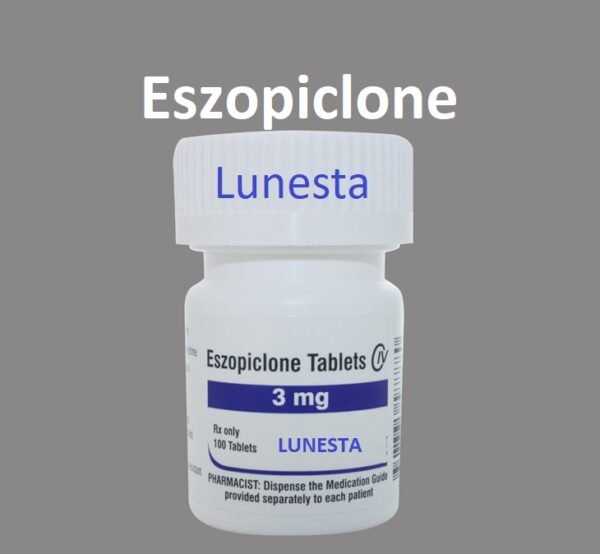
Eszopiclone (Lunesta) is a non-benzodiazepine hypnotic drug. It is a prescription sleeping pill that is used to fall asleep faster, increase the sleep time, and reduce sleep interruptions.
Eszopiclone (Lunesta) Uses:
-
Insomnia:
- It is indicated for the treatment of insomnia.
Eszopiclone (Lunesta) Dose in Adults
Eszopiclone (Lunesta) Dose in the treatment of Insomnia: Oral:
Note: Use the lowest effective dose.
- Initial dose:
- 1 mg administered orally immediately before bedtime.
- The dose may be increased to 2 mg or 3 mg if indicated/ required to a maximum dose of 3 mg daily.
-
Debilitated patients:
- Initial dose: 1 mg administered immediately before bedtime to a maximum dose of 2 mg.
-
Concurrent use with strong CYP3A4 inhibitor:
- Initial dose: 1 mg administered immediately before bedtime to a maximum dose of 2 mg.
Dose in Children:
Not indicated.
Eszopiclone (Lunesta) Pregnancy Risk Category: C
- Es-zopiclone, the S-isomer for the racemic derivative of zopiclone, is called Es-zopiclone.
- Although data is not available, it is possible that similar drugs may cause preterm births, low birth weights, and/or small gestational ages in infants who have been exposed to hypnotic drugs by their mothers.
- Pregnancy should not be prolonged and the drug should be stopped immediately to prevent rebound insomnia.
Use of eszopiclone during breastfeeding
- It is unknown if the drug will be excreted into breast milk.
- Zopiclone can be excreted from breastmilk.
- Manufacturers recommend weighing the risks to the infant's health and the benefits for the mother when treating them.
Lunesta Dose in Kidney Disease:
Adjustment in the dose is not necessary.
Lunesta Dose in Liver disease:
-
Mild to moderate impairment:
- Adjustment in the dose is not necessary.
-
Severe impairment:
- 1 mg immediately before bedtime initially to a maximum dose of 2 mg.
- Since systemic exposure is increased in severe hepatic impairment, it should be used with caution.
Common Side Effects of Eszopiclone (Lunesta):
-
Central Nervous System:
- Headache
-
Gastrointestinal:
- Dysgeusia
Less Common Side Effects Of Eszopiclone (Lunesta):
-
Cardiovascular:
- Chest Pain
- Peripheral Edema
-
Central Nervous System:
- Drowsiness
- Dizziness
- Pain
- Nervousness
- Depression
- Confusion
- Neuralgia
- Abnormal Dreams
- Anxiety
- Hallucination
- Migraine
-
Dermatologic:
- Skin Rash
- Pruritus
-
Endocrine & Metabolic:
- Decreased Libido
- Gynecomastia
-
Gastrointestinal:
- Xerostomia
- Dyspepsia
- Nausea
- Diarrhea
- Vomiting
-
Genitourinary:
- Dysmenorrhea
- Urinary Tract Infection
-
Infection:
- Infection
- Viral Infection
-
Miscellaneous:
- Accidental Injury
Contraindications to Eszopiclone (Lunesta):
Allergy reactions to eszopiclone and any component of the formulation
Warnings and precautions
-
Abnormal thinking and behavior changes:
- The unpredictable behavior changes caused by hypnotics or sedatives include abnormal thinking, inhibition, bizarre behavior and aggression.
- These changes could indicate undiagnosed psychiatric disorders that should be assessed.
-
Depression in the CNS:
- Patients on high doses, such as over 2 mg, may experience impairments in daytime activities.
- Patients taking 3 mg or more of the medication should be warned about activities that require mental alertness, such as heavy machinery operation.
- If the patient took the drug, but got less than a full night of sleep (7 to 8 hours), there may be a risk of daytime psychomotor impairment.
- Daytime psychomotor impairment can also be caused by a higher dose or co-administration of the drug with another CNS depressant drug or drugs that could raise its serum concentration.
- If a CNS depressant drug has been used concurrently, it may be necessary to adjust the dosage.
- Avoid using sedatives and hypnotics together.
-
Hypersensitivity reactions
- Anaphylaxis, angioedema and other allergic reactions may occur.
- As fatal hypersensitivity reactions can occur, patients who have suffered severe allergic reactions should not be given the drug again.
-
Activities that are sleep-related:
- It is associated with an increased risk of sleeping-related hazardous activities like sleep walking, driving, cooking, making calls, and amnesia.
- Concomitant alcohol consumption or use of other drugs that increase arousal could increase the likelihood of these activities.
- Patients who report such activities must stop receiving treatment.
-
Depression
- Patients suffering from depression should be aware that the drug can cause serious side effects. Apnea may result from drug overdose.
- This may lead to depression worsening and even suicidal thoughts being heightened.
- To avoid overdose and dependence, doctors must prescribe the lowest effective dose for the least time.
-
Use of drugs:
- Patients who have a history or drug dependence should be closely monitored.
-
Hepatic impairment
- Patients with liver disease should not use it as it is metabolized by the liver.
- Patients with severe hepatic impairment may need to adjust their dose.
-
Respiratory disease
- Patients with COPD, sleep apnea, or other chronic lung diseases should not use it.
Eszopiclone: Drug Interaction
Note: Drug Interaction Categories:
- Risk Factor C: Monitor When Using Combination
- Risk Factor D: Consider Treatment Modification
- Risk Factor X: Avoid Concomitant Use
Risk Factor C (Monitor therapy) |
|
| Alcohol (Ethyl) | CNS Depressants may enhance the CNS depressant effect of Alcohol (Ethyl). |
| Alizapride | May enhance the CNS depressant effect of CNS Depressants. |
| Aprepitant | May increase the serum concentration of CYP3A4 Substrates (High risk with Inhibitors). |
| Bosentan | May decrease the serum concentration of CYP3A4 Substrates (High risk with Inducers). |
| Brexanolone | CNS Depressants may enhance the CNS depressant effect of Brexanolone. |
| Brimonidine (Topical) | May enhance the CNS depressant effect of CNS Depressants. |
| Bromopride | May enhance the CNS depressant effect of CNS Depressants. |
| Cannabidiol | May enhance the CNS depressant effect of CNS Depressants. |
| Cannabis | May enhance the CNS depressant effect of CNS Depressants. |
| Chlorphenesin Carbamate | May enhance the adverse/toxic effect of CNS Depressants. |
| Clofazimine | May increase the serum concentration of CYP3A4 Substrates (High risk with Inhibitors). |
| CNS Depressants | May enhance the adverse/toxic effect of other CNS Depressants. |
| CYP3A4 Inducers (Moderate) | May decrease the serum concentration of CYP3A4 Substrates (High risk with Inducers). |
| CYP3A4 Inhibitors (Moderate) | May decrease the metabolism of CYP3A4 Substrates (High risk with Inhibitors). |
| Deferasirox | May decrease the serum concentration of CYP3A4 Substrates (High risk with Inducers). |
| Dimethindene (Topical) | May enhance the CNS depressant effect of CNS Depressants. |
| Doxylamine | May enhance the CNS depressant effect of CNS Depressants. Management: The manufacturer of Diclegis (doxylamine/pyridoxine), intended for use in pregnancy, specifically states that use with other CNS depressants is not recommended. |
| Dronabinol | May enhance the CNS depressant effect of CNS Depressants. |
| Duvelisib | May increase the serum concentration of CYP3A4 Substrates (High risk with Inhibitors). |
| Erdafitinib | May decrease the serum concentration of CYP3A4 Substrates (High risk with Inducers). |
| Erdafitinib | May increase the serum concentration of CYP3A4 Substrates (High risk with Inhibitors). |
| Esketamine | May enhance the CNS depressant effect of CNS Depressants. |
| Fosaprepitant | May increase the serum concentration of CYP3A4 Substrates (High risk with Inhibitors). |
| Fosnetupitant | May increase the serum concentration of CYP3A4 Substrates (High risk with Inhibitors). |
| HydrOXYzine | May enhance the CNS depressant effect of CNS Depressants. |
| Ivosidenib | May decrease the serum concentration of CYP3A4 Substrates (High risk with Inducers). |
| Kava Kava | May enhance the adverse/toxic effect of CNS Depressants. |
| Larotrectinib | May increase the serum concentration of CYP3A4 Substrates (High risk with Inhibitors). |
| Lofexidine | May enhance the CNS depressant effect of CNS Depressants. Management: Drugs listed as exceptions to this monograph are discussed in further detail in separate drug interaction monographs. |
| Magnesium Sulfate | May enhance the CNS depressant effect of CNS Depressants. |
| Melatonin | May enhance the sedative effect of Hypnotics (Nonbenzodiazepine). |
| MetyroSINE | CNS Depressants may enhance the sedative effect of MetyroSINE. |
| Minocycline | May enhance the CNS depressant effect of CNS Depressants. |
| Mirtazapine | CNS Depressants may enhance the CNS depressant effect of Mirtazapine. |
| Nabilone | May enhance the CNS depressant effect of CNS Depressants. |
| Netupitant | May increase the serum concentration of CYP3A4 Substrates (High risk with Inhibitors). |
| Palbociclib | May increase the serum concentration of CYP3A4 Substrates (High risk with Inhibitors). |
| Piribedil | CNS Depressants may enhance the CNS depressant effect of Piribedil. |
| Pramipexole | CNS Depressants may enhance the sedative effect of Pramipexole. |
| ROPINIRole | CNS Depressants may enhance the sedative effect of ROPINIRole. |
| Rotigotine | CNS Depressants may enhance the sedative effect of Rotigotine. |
| Rufinamide | May enhance the adverse/toxic effect of CNS Depressants. Specifically, sleepiness and dizziness may be enhanced. |
| Sarilumab | May decrease the serum concentration of CYP3A4 Substrates (High risk with Inducers). |
| Selective Serotonin Reuptake Inhibitors | CNS Depressants may enhance the adverse/toxic effect of Selective Serotonin Reuptake Inhibitors. Specifically, the risk of psychomotor impairment may be enhanced. |
| Siltuximab | May decrease the serum concentration of CYP3A4 Substrates (High risk with Inducers). |
| Simeprevir | May increase the serum concentration of CYP3A4 Substrates (High risk with Inhibitors). |
| Tetrahydrocannabinol | May enhance the CNS depressant effect of CNS Depressants. |
| Tetrahydrocannabinol and Cannabidiol | May enhance the CNS depressant effect of CNS Depressants. |
| Tocilizumab | May decrease the serum concentration of CYP3A4 Substrates (High risk with Inducers). |
| Trimeprazine | May enhance the CNS depressant effect of CNS Depressants. |
Risk Factor D (Consider therapy modification) |
|
| Blonanserin | CNS Depressants may enhance the CNS depressant effect of Blonanserin. |
| Buprenorphine | CNS Depressants may enhance the CNS depressant effect of Buprenorphine. Management: Consider reduced doses of other CNS depressants, and avoiding such drugs in patients at high risk of buprenorphine overuse/self-injection. Initiate buprenorphine patches (Butrans brand) at 5 mcg/hr in adults when used with other CNS depressants. |
| Chlormethiazole | May enhance the CNS depressant effect of CNS Depressants. Management: Monitor closely for evidence of excessive CNS depression. The chlormethiazole labeling states that an appropriately reduced dose should be used if such a combination must be used. |
| CYP3A4 Inducers (Strong) | May increase the metabolism of CYP3A4 Substrates (High risk with Inducers). Management: Consider an alternative for one of the interacting drugs. Some combinations may be specifically contraindicated. Consult appropriate manufacturer labeling. |
| CYP3A4 Inhibitors (Strong) | May increase the serum concentration of Eszopiclone. Management: Limit the eszopiclone dose to 2 mg daily when combined with strong CYP3A4 inhibitors and monitor for increased eszopiclone effects and toxicities (eg, somnolence, drowsiness, CNS depression). |
| Dabrafenib | May decrease the serum concentration of CYP3A4 Substrates (High risk with Inducers). Management: Seek alternatives to the CYP3A4 substrate when possible. If concomitant therapy cannot be avoided, monitor clinical effects of the substrate closely (particularly therapeutic effects). |
| Droperidol | May enhance the CNS depressant effect of CNS Depressants. Management: Consider dose reductions of droperidol or of other CNS agents (eg, opioids, barbiturates) with concomitant use. Exceptions to this monograph are discussed in further detail in separate drug interaction monographs. |
| Enzalutamide | May decrease the serum concentration of CYP3A4 Substrates (High risk with Inducers). Management: Concurrent use of enzalutamide with CYP3A4 substrates that have a narrow therapeutic index should be avoided. Use of enzalutamide and any other CYP3A4 substrate should be performed with caution and close monitoring. |
| Flunitrazepam | CNS Depressants may enhance the CNS depressant effect of Flunitrazepam. |
| HYDROcodone | CNS Depressants may enhance the CNS depressant effect of HYDROcodone. Management: Avoid concomitant use of hydrocodone and benzodiazepines or other CNS depressants when possible. These agents should only be combined if alternative treatment options are inadequate. If combined, limit the dosages and duration of each drug. |
| Lorlatinib | May decrease the serum concentration of CYP3A4 Substrates (High risk with Inducers). Management: Avoid concurrent use of lorlatinib with any CYP3A4 substrates for which a minimal decrease in serum concentrations of the CYP3A4 substrate could lead to therapeutic failure and serious clinical consequences. |
| Methotrimeprazine | CNS Depressants may enhance the CNS depressant effect of Methotrimeprazine. Methotrimeprazine may enhance the CNS depressant effect of CNS Depressants. Management: Reduce adult dose of CNS depressant agents by 50% with initiation of concomitant methotrimeprazine therapy. Further CNS depressant dosage adjustments should be initiated only after clinically effective methotrimeprazine dose is established. |
| MiFEPRIStone | May increase the serum concentration of CYP3A4 Substrates (High risk with Inhibitors). Management: Minimize doses of CYP3A4 substrates, and monitor for increased concentrations/toxicity, during and 2 weeks following treatment with mifepristone. Avoid cyclosporine, dihydroergotamine, ergotamine, fentanyl, pimozide, quinidine, sirolimus, and tacrolimus. |
| Mitotane | May decrease the serum concentration of CYP3A4 Substrates (High risk with Inducers). Management: Doses of CYP3A4 substrates may need to be adjusted substantially when used in patients being treated with mitotane. |
| Opioid Agonists | CNS Depressants may enhance the CNS depressant effect of Opioid Agonists. Management: Avoid concomitant use of opioid agonists and benzodiazepines or other CNS depressants when possible. These agents should only be combined if alternative treatment options are inadequate. If combined, limit the dosages and duration of each drug. |
| OxyCODONE | CNS Depressants may enhance the CNS depressant effect of OxyCODONE. Management: Avoid concomitant use of oxycodone and benzodiazepines or other CNS depressants when possible. These agents should only be combined if alternative treatment options are inadequate. If combined, limit the dosages and duration of each drug. |
| Perampanel | May enhance the CNS depressant effect of CNS Depressants. Management: Patients taking perampanel with any other drug that has CNS depressant activities should avoid complex and high-risk activities, particularly those such as driving that require alertness and coordination, until they have experience using the combination. |
| Pitolisant | May decrease the serum concentration of CYP3A4 Substrates (High risk with Inducers). Management: Combined use of pitolisant with a CYP3A4 substrate that has a narrow therapeutic index should be avoided. Other CYP3A4 substrates should be monitored more closely when used with pitolisant. |
| St John's Wort | May decrease the serum concentration of CYP3A4 Substrates (High risk with Inducers). Management: Consider an alternative for one of the interacting drugs. Some combinations may be specifically contraindicated. Consult appropriate manufacturer labeling. |
| Stiripentol | May increase the serum concentration of CYP3A4 Substrates (High risk with Inhibitors). Management: Use of stiripentol with CYP3A4 substrates that are considered to have a narrow therapeutic index should be avoided due to the increased risk for adverse effects and toxicity. Any CYP3A4 substrate used with stiripentol requires closer monitoring. |
| Suvorexant | CNS Depressants may enhance the CNS depressant effect of Suvorexant. Management: Dose reduction of suvorexant and/or any other CNS depressant may be necessary. Use of suvorexant with alcohol is not recommended, and the use of suvorexant with any other drug to treat insomnia is not recommended. |
| Tapentadol | May enhance the CNS depressant effect of CNS Depressants. Management: Avoid concomitant use of tapentadol and benzodiazepines or other CNS depressants when possible. These agents should only be combined if alternative treatment options are inadequate. If combined, limit the dosages and duration of each drug. |
| Zolpidem | CNS Depressants may enhance the CNS depressant effect of Zolpidem. Management: Reduce the Intermezzo brand sublingual zolpidem adult dose to 1.75 mg for men who are also receiving other CNS depressants. No such dose change is recommended for women. Avoid use with other CNS depressants at bedtime; avoid use with alcohol. |
Risk Factor X (Avoid combination) |
|
| Azelastine (Nasal) | CNS Depressants may enhance the CNS depressant effect of Azelastine (Nasal). |
| Bromperidol | May enhance the CNS depressant effect of CNS Depressants. |
| Conivaptan | May increase the serum concentration of CYP3A4 Substrates (High risk with Inhibitors). |
| Fusidic Acid (Systemic) | May increase the serum concentration of CYP3A4 Substrates (High risk with Inhibitors). |
| Idelalisib | May increase the serum concentration of CYP3A4 Substrates (High risk with Inhibitors). |
| Orphenadrine | CNS Depressants may enhance the CNS depressant effect of Orphenadrine. |
| Oxomemazine | May enhance the CNS depressant effect of CNS Depressants. |
| Paraldehyde | CNS Depressants may enhance the CNS depressant effect of Paraldehyde. |
| Sodium Oxybate | Hypnotics (Nonbenzodiazepine) may enhance the CNS depressant effect of Sodium Oxybate. |
| Thalidomide | CNS Depressants may enhance the CNS depressant effect of Thalidomide. |
Monitoring parameters:
None mentioned.
How to administer Eszopiclone (Lunesta)?
- The drug should not be taken following a high fat meal.
- Because of its rapid onset of action, it should be taken immediately before going to bed or it should be administered after the patient has been in the bed and is having difficulty falling asleep.
Mechanism of action of Eszopiclone (Lunesta):
Although the mechanism of action is still not known, it likely interacts with GABA receptors in the binding domains close to the benzodiazepine receptors.
Absorption:
- It is rapidly absorbed, however, fatty meals and heavy meals may delay its absorption.
Protein binding:
- 52% to 59% of the drug is protein-bound.
Metabolism:
- It is metabolized in the liver via oxidation and demethylation (CYP2E1, 3A4); .
- The (S)-N-desmethyl zopiclone metabolite is less potent than the parent compound
Half-life elimination:
- About 6 hours;
- In elderly (≥65 years), the half-life is prolonged to about 9 hours.
Time to peak, plasma:
- 1 hour
Excretion:
- Upt o75% is excreted in urine primarily as metabolites;
- <10% is excreted as parent drug
International Brands of Eszopiclone:
- Lunesta
- Eszop
- Fresom
- Fulnite
- Inductal
- Isoklon
- Lunesta
- Lunox 2
- Magicpiclone
- Nefor
- Neogaival
- Night Calm
- Noptic
- Orizon
- Sleepez
- Sleepil
- Sominex 1
- Sominex 2
- Sono
- Valnoc
- Wen Fei
- Zolnite
Eszopiclone Brand Names in Pakistan:
Eszopiclone 1 mg Tablets in Pakistan |
|
| CLONEXA | ATCO LABORATORIES LIMITED |
Eszopiclone 2 mg Tablets in Pakistan |
|
| CLONEXA | ATCO LABORATORIES LIMITED |
| ZUZETA | WILSHIRE LABORATORIES (PVT) LTD. |
Eszopiclone 3 mg Tablets in Pakistan |
|
| CLONEXA | ATCO LABORATORIES LIMITED |
.png)