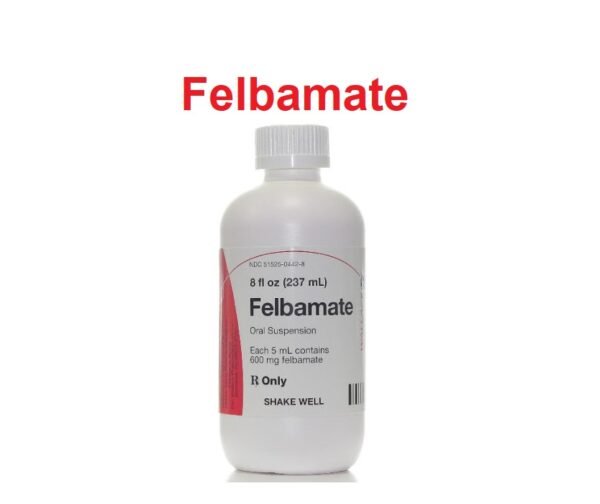
Felbamate is an orally available medicine used to treat partial seizures in adults and generalized seizures associated with Lennox-Gastaut Syndrome in children.
Felbamate Uses:
-
Partial seizures (monotherapy or adjunctive):
- felbamate is used as a monotherapy or adjunctive therapy in the treatment of partial seizures (with and without generalization) in adults and adolescents 14 years and older.
-
Lennox-Gastaut syndrome:
- It is used as adjunctive therapy in the treatment of partial and generalized seizures associated with Lennox-Gastaut syndrome in children
- Limitations of use: Not indicated for use as first-line treatment for Lennox-Gastaut Syndrome.
Felbamate Dose in Adults
Felbamate Dose in the monotherapy of Partial seizures:
- Initial: 1,200 mg/day orally in 3 to 4 divided doses.
- Titrate previously untreated patients under close clinical supervision, increasing the dosage in 600 mg increments every 2 weeks to 2400 mg/day based on the clinical response of patients and thereafter to 3,600 mg/day if clinically indicated.
-
Conversion to monotherapy:
- Initiate at 1,200 mg/day in 3 to 4 divided doses
- Reduce the dosage of the concomitant anticonvulsant(s) by 33% at the initiation of felbamate therapy.
- At week 2, increase the felbamate dosage to 2,400 mg/day while reducing the dosage of the other anticonvulsant(s) up to an additional 33% of their original dosage.
- At week 3, increase the felbamate dosage up to 3,600 mg/day and continue to reduce the dose of the other anticonvulsant(s) as clinically indicated.
Felbamate Dose in the adjunctive therapy of partial seizures:
- Oral: Initial: 1,200 mg/day in 3 to 4 divided doses; increase once per week by 1,200 mg/day increments up to 3,600 mg/day in 3 to 4 divided doses.
Note: Decrease the dosage of concomitant carbamazepine (and carbamazepine metabolites), phenytoin, phenobarbital, or valproic acid by 20% when initiating felbamate therapy. Further dosage reductions may be necessary as the dose of felbamate is increased.
Felbamate Dose in Childrens
Felbamate Dose as Anticonvulsant (adjunctive therapy):
-
Adolescents ≥14 years:
- Oral: Initial: 1,200 mg/day in 3 or 4 divided doses
- Increase the dose in 1,200 mg/day increments at weekly intervals.
- The maximum daily dose: 3,600 mg/day.
- Note: At the initiation of felbamate therapy, decrease the dose of concomitant carbamazepine, phenytoin, phenobarbital, or valproic acid by 20%. Further dosage reductions may be necessary as the dose of felbamate is increased.
Felbamate Dose as Anticonvulsant (Monotherapy):
-
Adolescents ≥ 14 years: Oral:
- Initial: 1,200 mg/day in divided doses 3 or 4 times daily.
- Titrate previously untreated patients under close clinical supervision, increasing the dose in 600 mg/day increments every 2 weeks to 2,400 mg/day based on clinical response and thereafter to 3,600 mg/day if clinically indicated.
-
Conversion to monotherapy:
- Initial: 1,200 mg/day in divided doses 3 or 4 times daily, reduce the dosage of the concomitant anticonvulsant(s) by 33% at the initiation of felbamate therapy;
- At week 2, increase felbamate daily dose to 2000 mg/day in 3-4 divided doses while reducing the dosage of the other anticonvulsant(s) up to an additional 33% of their original dose.
- At week 3, increase the felbamate dosage up to a maximum daily dose: 3,600 mg/day and continue to reduce the dosage of the other anticonvulsant(s) as clinically indicated.
Felbamate Dose in the adjunctive therapy of Lennox-Gastaut syndrome:
-
Children and Adolescents 2 to 14 years:
- Oral: Initial dose: 15 mg/kg/day in 3 or 4 divided doses.
- Increase dose of felbamate by 15 mg/kg/day increments at weekly intervals.
- The maximum daily dose: 45 mg/kg/day or 3,600 mg/day or whichever is less.
Note: At the initiation of felbamate, decrease the dose of concomitant carbamazepine, phenytoin, phenobarbital, or valproic acid by 20%. Further dosage reductions may be necessary as the dose of felbamate is increased.
Felbamate Pregnancy Risk Factor C
- Negative events have been reported in animal reproduction studies.
- Human postmarketing cases include anencephaly and encephalocele, placental disorder and fetal deaths.
- Further information can be found at www.aedpregnancyregistry.org.
Use of Felbamate during breastfeeding:
- Breast milk contains Felbamate.
- Breast-feeding is not recommended until more data are available.
Felbamate Dose in Kidney Disease:
- Use caution.
- Reduce initial and maintenance dosages by 50%.
- Adjunctive therapy with medications that affect felbamate plasma concentrations i.e AEDs, may warrant further reductions in felbamate daily doses in patients with renal dysfunction.
Felbamate Dose in Liver disease:
- Use is contraindicated in patients with a history of hepatic dysfunction.
Common Side Effects of Felbamate:
-
Central Nervous System:
- Drowsiness
- Headache
- Dizziness
- Insomnia
- Fatigue
- Nervousness
-
Gastrointestinal:
- Anorexia
- Vomiting
- Nausea
- Dyspepsia
- Constipation
-
Hematologic & Oncologic:
- Purpura
-
Respiratory:
- Upper Respiratory Infection
-
Miscellaneous:
- Fever
Less Common Side Effects Of Felbamate:
-
Cardiovascular:
- Chest Pain
- Facial Edema
- Palpitations
- Tachycardia
-
Central Nervous System:
- Abnormal Gait
- Abnormality In Thinking
- Ataxia
- Emotional Lability
- Pain
- Anxiety
- Depression
- Paresthesia
- Stupor
- Aggressive Behavior
- Agitation
- Malaise
- Psychological Disorder
- Attempted Suicide
- Dystonia
- Euphoria
- Hallucination
- Migraine
-
Dermatologic:
- Skin Rash
- Acne Vulgaris
- Pruritus
- Bullous Rash
- Urticaria
-
Endocrine And Metabolic:
- Menstrual Disease
- Hypophosphatemia
- Hypokalemia
- Hyponatremia
- Increased Lactate Dehydrogenase
-
Gastrointestinal:
- Hiccups
- Weight Loss
- Dysgeusia
- Abdominal Pain
- Diarrhea
- Xerostomia
- Weight Gain
- Esophagitis
- Increased Appetite
-
Genitourinary:
- Urinary Tract Infection
-
Hematologic & Oncologic:
- Leukopenia
- Granulocytopenia
- Leukocytosis
- Lymphadenopathy
- Thrombocytopenia
-
Hepatic:
- Increased Liver Enzymes
- Increased Serum Alkaline Phosphatase
-
Neuromuscular & Skeletal:
- Tremor
- Myalgia
- Weakness
-
Ophthalmic:
- Miosis
- Diplopia
- Visual Disturbance
-
Otic:
- Otitis Media
-
Respiratory:
- Pharyngitis
- Cough
- Rhinitis
- Sinusitis
- Flu-Like Symptoms
Contraindications to Felbamate:
- Hypersensitivity to felbamate
- Hypersensitivity to carbamates or any other component of the formulation
- Any history of blood dyscrasia.
- Hepatic dysfunction
Warnings and precautions
-
Aplastic anemia: [US-Boxed Warning]
- A significantly higher risk of anemia is associated with Felbamate.
- Aplastic anemia can be up to 100 times more common in patients who have not been treated.
- Current fatality rates are between 20% and 30%. However, higher rates (upto 70%) have been reported in past years.
- Fetal anemia can occur at any time during felbamate therapy, and even after the therapy has ended.
- It is unknown if the dose, duration, and concomitant use of medication affect risk.
- Routine blood monitoring can be useful in detecting hematologic signs and symptoms before they become clinically apparent.
- However, aplasticanemia often occurs without warning or indication.
- If you notice evidence of bone-marrow suppression, discontinue using the medication.
-
Hepatic failure: [US Boxed Warning]
- Rare cases of hepatic dysfunction have been linked to Felbamate (estimated at >6 cases per 75,000 patients annually).
- 67% of the cases described in the literature have led to liver transplantation or death.
- Prodromal symptoms may be present before the onset of hepatic dysfunction.
- It is unknown if the dose, duration, and concomitant use of medication affect risk.
- Although monitoring serum aminotransferases is not shown to protect against serious liver injury, it may be possible to detect the condition early and withdraw from drugs.
- You should obtain baseline levels of transaminase and then check them periodically.
- Stop using if transaminase levels rise to >=2x the normal limit or if you have signs/symptoms that indicate hepatic dysfunction.
- Patients with evidence of liver damage or those who have stopped using the medication for any reason should not be given therapy.
-
Suicidal thoughts:
- A pooled analysis of antiepileptic trials (regardless the indication) revealed an increase in suicidal thoughts/behavior.
- The incidence rate was 0.43% for patients treated, compared to 0.2% for patients who received placebo.
- Risk can be observed as soon as one week after initiation, and continues throughout the trial (most trials last less than 24 weeks).
- All patients should be monitored for any changes in behavior that could indicate depression or suicidal thoughts.
- If symptoms persist, immediately notify your healthcare provider.
-
Renal impairment
- Patients with impaired renal function should be cautious.
- Half-life could be extended
Felbamate: Drug Interaction
Note: Drug Interaction Categories:
- Risk Factor C: Monitor When Using Combination
- Risk Factor D: Consider Treatment Modification
- Risk Factor X: Avoid Concomitant Use
Risk Factor C (Monitor therapy) |
|
| Alcohol (Ethyl) | CNS Depressants may enhance the CNS depressant effect of Alcohol (Ethyl). |
| Alizapride | May enhance the CNS depressant effect of CNS Depressants. |
| Aprepitant | May increase the serum concentration of CYP3A4 Substrates (High risk with Inhibitors). |
| Barbiturates | Felbamate may increase the serum concentration of Barbiturates. Barbiturates may decrease the serum concentration of Felbamate. Management: Monitor for elevated barbiturate concentrations/toxicity if felbamate is initiated/dose increased, or reduced concentrations/effects if felbamate is discontinued/dose decreased. Refer to phenobarbital dosing guidelines for patients receiving that agent. |
| Bosentan | May decrease the serum concentration of CYP3A4 Substrates (High risk with Inducers). |
| Brexanolone | CNS Depressants may enhance the CNS depressant effect of Brexanolone. |
| Brimonidine (Topical) | May enhance the CNS depressant effect of CNS Depressants. |
| Bromopride | May enhance the CNS depressant effect of CNS Depressants. |
| Cannabidiol | May enhance the CNS depressant effect of CNS Depressants. |
| Cannabis | May enhance the CNS depressant effect of CNS Depressants. |
| Chlorphenesin Carbamate | May enhance the adverse/toxic effect of CNS Depressants. |
| Clofazimine | May increase the serum concentration of CYP3A4 Substrates (High risk with Inhibitors). |
| CNS Depressants | May enhance the adverse/toxic effect of other CNS Depressants. |
| CYP3A4 Inducers (Moderate) | May decrease the serum concentration of CYP3A4 Substrates (High risk with Inducers). |
| CYP3A4 Inhibitors (Moderate) | May decrease the metabolism of CYP3A4 Substrates (High risk with Inhibitors). |
| Deferasirox | May decrease the serum concentration of CYP3A4 Substrates (High risk with Inducers). |
| Dimethindene (Topical) | May enhance the CNS depressant effect of CNS Depressants. |
| Doxylamine | May enhance the CNS depressant effect of CNS Depressants. Management: The manufacturer of Diclegis (doxylamine/pyridoxine), intended for use in pregnancy, specifically states that use with other CNS depressants is not recommended. |
| Dronabinol | May enhance the CNS depressant effect of CNS Depressants. |
| Duvelisib | May increase the serum concentration of CYP3A4 Substrates (High risk with Inhibitors). |
| Erdafitinib | May decrease the serum concentration of CYP3A4 Substrates (High risk with Inducers). |
| Erdafitinib | May increase the serum concentration of CYP3A4 Substrates (High risk with Inhibitors). |
| Esketamine | May enhance the CNS depressant effect of CNS Depressants. |
| Fosaprepitant | May increase the serum concentration of CYP3A4 Substrates (High risk with Inhibitors). |
| Fosnetupitant | May increase the serum concentration of CYP3A4 Substrates (High risk with Inhibitors). |
| HydrOXYzine | May enhance the CNS depressant effect of CNS Depressants. |
| Ivosidenib | May decrease the serum concentration of CYP3A4 Substrates (High risk with Inducers). |
| Kava Kava | May enhance the adverse/toxic effect of CNS Depressants. |
| Larotrectinib | May increase the serum concentration of CYP3A4 Substrates (High risk with Inhibitors). |
| Lofexidine | May enhance the CNS depressant effect of CNS Depressants. Management: Drugs listed as exceptions to this monograph are discussed in further detail in separate drug interaction monographs. |
| Magnesium Sulfate | May enhance the CNS depressant effect of CNS Depressants. |
| MetyroSINE | CNS Depressants may enhance the sedative effect of MetyroSINE. |
| Mianserin | May diminish the therapeutic effect of Anticonvulsants. |
| Minocycline | May enhance the CNS depressant effect of CNS Depressants. |
| Mirtazapine | CNS Depressants may enhance the CNS depressant effect of Mirtazapine. |
| Nabilone | May enhance the CNS depressant effect of CNS Depressants. |
| Netupitant | May increase the serum concentration of CYP3A4 Substrates (High risk with Inhibitors). |
| Orlistat | May decrease the serum concentration of Anticonvulsants. |
| Palbociclib | May increase the serum concentration of CYP3A4 Substrates (High risk with Inhibitors). |
| Piribedil | CNS Depressants may enhance the CNS depressant effect of Piribedil. |
| Pramipexole | CNS Depressants may enhance the sedative effect of Pramipexole. |
| ROPINIRole | CNS Depressants may enhance the sedative effect of ROPINIRole. |
| Rotigotine | CNS Depressants may enhance the sedative effect of Rotigotine. |
| Rufinamide | May enhance the adverse/toxic effect of CNS Depressants. Specifically, sleepiness and dizziness may be enhanced. |
| Sarilumab | May decrease the serum concentration of CYP3A4 Substrates (High risk with Inducers). |
| Selective Serotonin Reuptake Inhibitors | CNS Depressants may enhance the adverse/toxic effect of Selective Serotonin Reuptake Inhibitors. Specifically, the risk of psychomotor impairment may be enhanced. |
| Siltuximab | May decrease the serum concentration of CYP3A4 Substrates (High risk with Inducers). |
| Simeprevir | May increase the serum concentration of CYP3A4 Substrates (High risk with Inhibitors). |
| Tetrahydrocannabinol | May enhance the CNS depressant effect of CNS Depressants. |
| Tetrahydrocannabinol and Cannabidiol | May enhance the CNS depressant effect of CNS Depressants. |
| Tocilizumab | May decrease the serum concentration of CYP3A4 Substrates (High risk with Inducers). |
| Trimeprazine | May enhance the CNS depressant effect of CNS Depressants. |
Risk Factor D (Consider therapy modification) |
|
| Blonanserin | CNS Depressants may enhance the CNS depressant effect of Blonanserin. |
| Buprenorphine | CNS Depressants may enhance the CNS depressant effect of Buprenorphine. Management: Consider reduced doses of other CNS depressants, and avoiding such drugs in patients at high risk of buprenorphine overuse/self-injection. Initiate buprenorphine patches (Butrans brand) at 5 mcg/hr in adults when used with other CNS depressants. |
| CarBAMazepine | May decrease the serum concentration of Felbamate. Felbamate may decrease the serum concentration of CarBAMazepine. Management: In patients receiving carbamazepine, initiate felbamate at 1200 mg/day in divided doses 3-4 times daily while reducing carbamazepine dose by 20%. Monitor for reduced concentrations/effects of both drugs. |
| Chlormethiazole | May enhance the CNS depressant effect of CNS Depressants. Management: Monitor closely for evidence of excessive CNS depression. The chlormethiazole labeling states that an appropriately reduced dose should be used if such a combination must be used. |
| CYP3A4 Inducers (Strong) | May increase the metabolism of CYP3A4 Substrates (High risk with Inducers). Management: Consider an alternative for one of the interacting drugs. Some combinations may be specifically contraindicated. Consult appropriate manufacturer labeling. |
| CYP3A4 Inhibitors (Strong) | May decrease the metabolism of CYP3A4 Substrates (High risk with Inhibitors). |
| Dabrafenib | May decrease the serum concentration of CYP3A4 Substrates (High risk with Inducers). Management: Seek alternatives to the CYP3A4 substrate when possible. If concomitant therapy cannot be avoided, monitor clinical effects of the substrate closely (particularly therapeutic effects). |
| Droperidol | May enhance the CNS depressant effect of CNS Depressants. Management: Consider dose reductions of droperidol or of other CNS agents (eg, opioids, barbiturates) with concomitant use. Exceptions to this monograph are discussed in further detail in separate drug interaction monographs. |
| Enzalutamide | May decrease the serum concentration of CYP3A4 Substrates (High risk with Inducers). Management: Concurrent use of enzalutamide with CYP3A4 substrates that have a narrow therapeutic index should be avoided. Use of enzalutamide and any other CYP3A4 substrate should be performed with caution and close monitoring. |
| Estrogen Derivatives (Contraceptive) | Felbamate may decrease the serum concentration of Estrogen Derivatives (Contraceptive). Contraceptive failure is possible. Management: Use of a nonhormonal contraceptive is recommended. |
| Flunitrazepam | CNS Depressants may enhance the CNS depressant effect of Flunitrazepam. |
| Fosphenytoin | May decrease the serum concentration of Felbamate. Felbamate may increase the serum concentration of Fosphenytoin. Management: Decreased phenytoin dose will likely be needed when adding felbamate; some reports suggest an empiric 20% decrease in phenytoin dose. Additional reductions may be needed if felbamate dose is increased or as otherwise guided by monitoring. |
| HYDROcodone | CNS Depressants may enhance the CNS depressant effect of HYDROcodone. Management: Avoid concomitant use of hydrocodone and benzodiazepines or other CNS depressants when possible. These agents should only be combined if alternative treatment options are inadequate. If combined, limit the dosages and duration of each drug. |
| Lorlatinib | May decrease the serum concentration of CYP3A4 Substrates (High risk with Inducers). Management: Avoid concurrent use of lorlatinib with any CYP3A4 substrates for which a minimal decrease in serum concentrations of the CYP3A4 substrate could lead to therapeutic failure and serious clinical consequences. |
| Mefloquine | May diminish the therapeutic effect of Anticonvulsants. Mefloquine may decrease the serum concentration of Anticonvulsants. Management: Mefloquine is contraindicated for malaria prophylaxis in persons with a history of convulsions. Monitor anticonvulsant concentrations and treatment response closely with concurrent use. |
| Methotrimeprazine | CNS Depressants may enhance the CNS depressant effect of Methotrimeprazine. Methotrimeprazine may enhance the CNS depressant effect of CNS Depressants. Management: Reduce adult dose of CNS depressant agents by 50% with initiation of concomitant methotrimeprazine therapy. Further CNS depressant dosage adjustments should be initiated only after clinically effective methotrimeprazine dose is established. |
| MiFEPRIStone | May increase the serum concentration of CYP3A4 Substrates (High risk with Inhibitors). Management: Minimize doses of CYP3A4 substrates, and monitor for increased concentrations/toxicity, during and 2 weeks following treatment with mifepristone. Avoid cyclosporine, dihydroergotamine, ergotamine, fentanyl, pimozide, quinidine, sirolimus, and tacrolimus. |
| Mitotane | May decrease the serum concentration of CYP3A4 Substrates (High risk with Inducers). Management: Doses of CYP3A4 substrates may need to be adjusted substantially when used in patients being treated with mitotane. |
| Opioid Agonists | CNS Depressants may enhance the CNS depressant effect of Opioid Agonists. Management: Avoid concomitant use of opioid agonists and benzodiazepines or other CNS depressants when possible. These agents should only be combined if alternative treatment options are inadequate. If combined, limit the dosages and duration of each drug. |
| OxyCODONE | CNS Depressants may enhance the CNS depressant effect of OxyCODONE. Management: Avoid concomitant use of oxycodone and benzodiazepines or other CNS depressants when possible. These agents should only be combined if alternative treatment options are inadequate. If combined, limit the dosages and duration of each drug. |
| Perampanel | May enhance the CNS depressant effect of CNS Depressants. Management: Patients taking perampanel with any other drug that has CNS depressant activities should avoid complex and high-risk activities, particularly those such as driving that require alertness and coordination, until they have experience using the combination. |
| PHENobarbital | May decrease the serum concentration of Felbamate. Felbamate may increase the serum concentration of PHENobarbital. Management: In patients receiving phenobarbital, initiate felbamate at 1200 mg/day in divided doses 3-4 times daily and reduce phenobarbital dose by 20%. Monitor for increased phenobarbital concentrations/effects and decreased felbamate concentrations/effects. |
| Phenytoin | Felbamate may increase the serum concentration of Phenytoin. Phenytoin may decrease the serum concentration of Felbamate. Management: Decreased phenytoin dose will likely be needed when adding felbamate; some reports suggest an empiric 20% decrease in phenytoin dose. Additional reductions may be needed if felbamate dose is increased or as otherwise guided by monitoring. |
| Pitolisant | May decrease the serum concentration of CYP3A4 Substrates (High risk with Inducers). Management: Combined use of pitolisant with a CYP3A4 substrate that has a narrow therapeutic index should be avoided. Other CYP3A4 substrates should be monitored more closely when used with pitolisant. |
| Primidone | Felbamate may increase serum concentrations of the active metabolite(s) of Primidone. Specifically, phenobarbital concentrations may increase. Primidone may decrease the serum concentration of Felbamate. Management: In patients receiving primidone, initiate felbamate at 1200 mg/day in divided doses 3-4 times daily and reduce primidone dose by 20%. Monitor for increased phenobarbital concentrations/effects and decreased felbamate concentrations/effects. |
| Progestins (Contraceptive) | Felbamate may decrease the serum concentration of Progestins (Contraceptive). Management: Contraceptive failure is possible. Use of an alternative, nonhormonal method of contraception is recommended. |
| Sodium Oxybate | May enhance the CNS depressant effect of CNS Depressants. Management: Consider alternatives to combined use. When combined use is needed, consider minimizing doses of one or more drugs. Use of sodium oxybate with alcohol or sedative hypnotics is contraindicated. |
| St John's Wort | May decrease the serum concentration of CYP3A4 Substrates (High risk with Inducers). Management: Consider an alternative for one of the interacting drugs. Some combinations may be specifically contraindicated. Consult appropriate manufacturer labeling. |
| Stiripentol | May increase the serum concentration of CYP3A4 Substrates (High risk with Inhibitors). Management: Use of stiripentol with CYP3A4 substrates that are considered to have a narrow therapeutic index should be avoided due to the increased risk for adverse effects and toxicity. Any CYP3A4 substrate used with stiripentol requires closer monitoring. |
| Suvorexant | CNS Depressants may enhance the CNS depressant effect of Suvorexant. Management: Dose reduction of suvorexant and/or any other CNS depressant may be necessary. Use of suvorexant with alcohol is not recommended, and the use of suvorexant with any other drug to treat insomnia is not recommended. |
| Tapentadol | May enhance the CNS depressant effect of CNS Depressants. Management: Avoid concomitant use of tapentadol and benzodiazepines or other CNS depressants when possible. These agents should only be combined if alternative treatment options are inadequate. If combined, limit the dosages and duration of each drug. |
| Valproate Products | Felbamate may increase the serum concentration of Valproate Products. |
| Zolpidem | CNS Depressants may enhance the CNS depressant effect of Zolpidem. Management: Reduce the Intermezzo brand sublingual zolpidem adult dose to 1.75 mg for men who are also receiving other CNS depressants. No such dose change is recommended for women. Avoid use with other CNS depressants at bedtime; avoid use with alcohol. |
Risk Factor X (Avoid combination) |
|
| Azelastine (Nasal) | CNS Depressants may enhance the CNS depressant effect of Azelastine (Nasal). |
| Bromperidol | May enhance the CNS depressant effect of CNS Depressants. |
| Conivaptan | May increase the serum concentration of CYP3A4 Substrates (High risk with Inhibitors). |
| Fusidic Acid (Systemic) | May increase the serum concentration of CYP3A4 Substrates (High risk with Inhibitors). |
| Idelalisib | May increase the serum concentration of CYP3A4 Substrates (High risk with Inhibitors). |
| Orphenadrine | CNS Depressants may enhance the CNS depressant effect of Orphenadrine. |
| Oxomemazine | May enhance the CNS depressant effect of CNS Depressants. |
| Paraldehyde | CNS Depressants may enhance the CNS depressant effect of Paraldehyde. |
| Thalidomide | CNS Depressants may enhance the CNS depressant effect of Thalidomide. |
| Ulipristal | Felbamate may decrease the serum concentration of Ulipristal. |
Monitoring parameters:
- Serum levels of concomitant anticonvulsant therapy.
- liver function tests (baseline and periodically thereafter).
- CBC (baseline, frequently during therapy, and for a significant period after discontinuation).
- suicidality (eg, suicidal thoughts, depression, behavioral changes).
How to administer Felbamate?
- Administer with or without food.
- Shake suspension of felbamate prior to use.
Mechanism of action of Felbamate:
- Although the mechanism of action is not known, it shares many properties with anticonvulsants on the market.
- It has weak inhibitory properties on GABA receptor binding and benzodiazepine receiver binding.
Absorption:
- Rapid and almost complete;
- food has no effect upon the tablet's absorption
Protein binding:
- 22% to 25%, primarily to albumin
Half-life elimination:
- 20 to 23 hours (average);
- prolonged by 9 to 15 hours in patients with renal impairment
Bioavailability:
- ≥80%
Time to peak, serum:
- 2 to 6 hours.
Excretion:
- Urine (40% to 50% as unchanged drug, 40% as inactive metabolites)
Clearance:
- clearance is decreased in renal impairment (40% to 50%).
- Clearance is faster in children than adults (20% to 65%) (Perucca 2006), particularly younger children.
International Brand Names of Felbamate:
- Felbatol
- Alopileptic
- Felbamyl
- Taloxa
Felbamate Brand Names in Pakistan:
No Brands Available in Pakistan.
.png)


