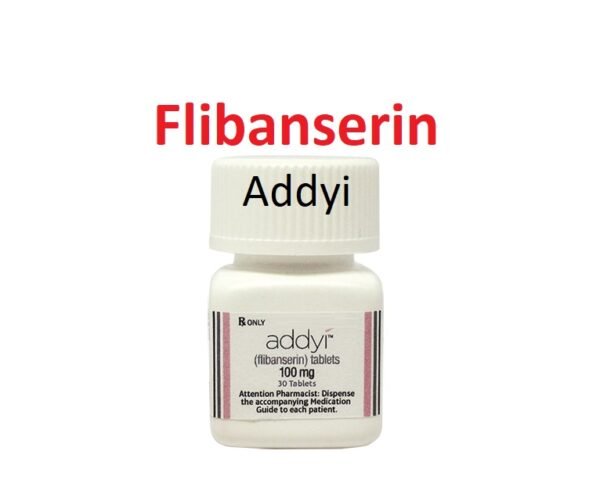
Flibanserin (Addyi) is used in the treatment with premenopausal women with a reduced libido or women who have a hypoactive sexual disorder. Hypoactive sexual disorder is considered as the most common form of female sexual disorders.
Flibanserin (Addyi) Uses:
-
Hypoactive sexual desire disorder:
- It is indicated for the treatment of hypoactive sexual disorder in premenopausal women characterized by a reduced sexual desire that causes marked interpersonal difficulty and distress. Hypoactive disorder is not secondary to a psychiatric or coexisting medical disorder, secondary to the effects of medications, drugs or substance use, or relationship problems.
- Limitations of use:
- It is not indicated for the treatment of hypoactive sexual disorder in men or postmenopausal women, or to enhace sexual performance.
Flibanserin (Addyi) Dose in Adults
Flibanserin (Addyi) Dose in the treatment of Hypoactive sexual desire disorder:
-
Females (premenopausal):
- 100 mg orally once a day at bedtime.
- The treatment efficacy should be assessed at 8 weeks. If the symptoms have not improved, the treatment may be discontinued.
-
Missed dose:
- Incase a dose is missed, the dose should not be doubled. If a dose is missed, the dose should not be doubled. Skip the missed dose and resume with the regular schedule.
Dosage adjustment for the transition to or from treatment with a moderate or strong CYP3A4 inhibitors:
- Avoid using the drug with concomitant moderate or strong CYP3A4 inhibitors.
- The manufacturer recommends the following guidelines when transitioning to or from treatment with a moderate or strong CYP3A4 inhibitor:
- Initiation of a moderate or strong CYP3A4 inhibitor therapy following the use of flibanserin:
- Initiate the CYP3A4 inhibitor two days after the last dose of the drug.
- If the benefit of starting the CYP3A4 inhibitor within two days outweighs the risk of adverse effects such as hypotension and syncope, the patient should be monitored closely.
- Initiation of flibanserin following the use of a moderate or strong CYP3A4 inhibitor:
- Initiate flibanserin therapy two weeks after the last dose of the CYP3A4 inhibitor.
- Initiation of a moderate or strong CYP3A4 inhibitor therapy following the use of flibanserin:
Dose in children:
Not indicated.
Flibanserin (Addyi) Pregnancy risk category: N
- Studies on animal reproduction have shown that adverse reactions to the drug during pregnancy have been reported.
Flibanserin use during breastfeeding:
- It is unknown if the drug will be excreted into breast milk.
- The manufacturer does not recommend breastfeeding due to the possibility of adverse effects such as sedation in infants.
Flibanserin (Addyi) Dose in Kidney Disease:
In the manufacturer's labeling dose adjustments have not been provided, however, dosage adjustments are not required because of the minimal change in AUC in patients with mild to severe renal impairment.
Dose in Liver disease:
Use is contraindicated.
Common Side Effects of Flibanserin (Addyi):
-
Central nervous system:
- Dizziness
- Drowsiness
Less Common Side Effects of Flibanserin (Addyi):
-
Central nervous system:
- Fatigue
- Insomnia
- Anxiety
- Sedation
- Vertigo
-
Gastrointestinal:
- Nausea
- Abdominal pain
- Constipation
- Xerostomia
Contraindication to Flibanserin (Addyi):
- Use alcohol with medications that have strong or moderate CYP3A4 inhibitory properties.
- Liver disease
Canadian labeling: Additional contraindications not in the US labeling
- Allergy reactions to flibanserin and any component of this formulation
- Patients with a resting blood sugar of less than 110mm Hg systolic and less than 60mm Hg diastolic combined with alcohol
- pregnancy;
- Breastfeeding
Warnings and precautions
-
CNS depression:
- It can lead to depression in the central nervous system, and it may also impair mental and physical abilities.
- It is important to warn patients about tasks that require mental alertness, such as driving or operating heavy machinery.
- Before a patient can drive, he or she must wait at least six hours.
- Patients with hepatic impairment are more likely to experience CNS depressant symptoms.
- This is because they have been exposed to alcohol, medications that cause sedation, CNS depression, as well as medications that increase serum levels of drugs such CYP3A4 inhibits.
-
Syncope and hypotension:
- Syncope and hypotension may be possible.
- Drug-induced syncope is a greater risk.
- Syncope and hypotension may occur.
- Hypotension-prone patients should be supervised.
- Pre-syncope patients should immediately lie down and seek medical assistance if symptoms persist. Patients with syncope should also seek immediate medical attention.
-
Hepatic impairment: [US-Boxed Warning]
- A higher serum drug concentration can lead to liver impairment, which may increase the chance of hypotension and syncope.
- Patients with severe hepatic impairment should be avoided
Flibanserin: Drug Interaction
|
Risk Factor C (Monitor therapy) |
|
|
Alizapride |
May enhance the CNS depressant effect of CNS Depressants. |
|
Brentuximab Vedotin |
P-glycoprotein/ABCB1 Inhibitors may increase the serum concentration of Brentuximab Vedotin. Specifically, concentrations of the active monomethyl auristatin E (MMAE) component may be increased. |
|
Brexanolone |
CNS Depressants may enhance the CNS depressant effect of Brexanolone. |
|
Brimonidine (Topical) |
May enhance the CNS depressant effect of CNS Depressants. |
|
Bromopride |
May enhance the CNS depressant effect of CNS Depressants. |
|
Cannabidiol |
May enhance the CNS depressant effect of CNS Depressants. |
|
Cannabis |
May enhance the CNS depressant effect of CNS Depressants. |
|
Celiprolol |
P-glycoprotein/ABCB1 Inhibitors may increase the serum concentration of Celiprolol. |
|
Chlorphenesin Carbamate |
May enhance the adverse/toxic effect of CNS Depressants. |
|
Clofazimine |
May increase the serum concentration of CYP3A4 Substrates (High risk with Inhibitors). |
|
CNS Depressants |
May enhance the adverse/toxic effect of other CNS Depressants. |
|
CYP2C19 Inhibitors (Moderate) |
May increase the serum concentration of Flibanserin. |
|
CYP3A4 Inhibitors (Weak) |
May increase the serum concentration of Flibanserin. |
|
Deferasirox |
May decrease the serum concentration of CYP3A4 Substrates (High risk with Inducers). |
|
Digoxin |
Flibanserin may increase the serum concentration of Digoxin. |
|
Dimethindene (Topical) |
May enhance the CNS depressant effect of CNS Depressants. |
|
Doxylamine |
May enhance the CNS depressant effect of CNS Depressants. Management: The manufacturer of Diclegis (doxylamine/pyridoxine), intended for use in pregnancy, specifically states that use with other CNS depressants is not recommended. |
|
Dronabinol |
May enhance the CNS depressant effect of CNS Depressants. |
|
Erdafitinib |
May decrease the serum concentration of CYP3A4 Substrates (High risk with Inducers). |
|
Erdafitinib |
May increase the serum concentration of CYP3A4 Substrates (High risk with Inhibitors). |
|
Esketamine |
May enhance the CNS depressant effect of CNS Depressants. |
|
Estrogen Derivatives (Contraceptive) |
May increase the serum concentration of Flibanserin. |
|
Everolimus |
P-glycoprotein/ABCB1 Inhibitors may increase the serum concentration of Everolimus. |
|
Fosaprepitant |
May increase the serum concentration of CYP3A4 Substrates (High risk with Inhibitors). |
|
HydrOXYzine |
May enhance the CNS depressant effect of CNS Depressants. |
|
Ivosidenib |
May decrease the serum concentration of CYP3A4 Substrates (High risk with Inducers). |
|
Kava Kava |
May enhance the adverse/toxic effect of CNS Depressants. |
|
Larotrectinib |
May increase the serum concentration of CYP3A4 Substrates (High risk with Inhibitors). |
|
Larotrectinib |
P-glycoprotein/ABCB1 Inhibitors may increase the serum concentration of Larotrectinib. |
|
Lofexidine |
May enhance the CNS depressant effect of CNS Depressants. Management: Drugs listed as exceptions to this monograph are discussed in further detail in separate drug interaction monographs. |
|
Magnesium Sulfate |
May enhance the CNS depressant effect of CNS Depressants. |
|
MetyroSINE |
CNS Depressants may enhance the sedative effect of MetyroSINE. |
|
Minocycline |
May enhance the CNS depressant effect of CNS Depressants. |
|
Mirtazapine |
CNS Depressants may enhance the CNS depressant effect of Mirtazapine. |
|
Nabilone |
May enhance the CNS depressant effect of CNS Depressants. |
|
Naldemedine |
P-glycoprotein/ABCB1 Inhibitors may increase the serum concentration of Naldemedine. |
|
Naloxegol |
P-glycoprotein/ABCB1 Inhibitors may increase the serum concentration of Naloxegol. |
|
Palbociclib |
May increase the serum concentration of CYP3A4 Substrates (High risk with Inhibitors). |
|
P-glycoprotein/ABCB1 Substrates |
P-glycoprotein/ABCB1 Inhibitors may increase the serum concentration of P-glycoprotein/ABCB1 Substrates. P-glycoprotein inhibitors may also enhance the distribution of p-glycoprotein substrates to specific cells/tissues/organs where p-glycoprotein is present in large amounts (e.g., brain, T-lymphocytes, testes, etc.). Exceptions: Loperamide. |
|
Piribedil |
CNS Depressants may enhance the CNS depressant effect of Piribedil. |
|
Pramipexole |
CNS Depressants may enhance the sedative effect of Pramipexole. |
|
Progestins (Contraceptive) |
May increase the serum concentration of Flibanserin. |
|
Prucalopride |
P-glycoprotein/ABCB1 Inhibitors may increase the serum concentration of Prucalopride. |
|
Ranolazine |
P-glycoprotein/ABCB1 Inhibitors may increase the serum concentration of Ranolazine. |
|
RifAXIMin |
P-glycoprotein/ABCB1 Inhibitors may increase the serum concentration of RifAXIMin. |
|
ROPINIRole |
CNS Depressants may enhance the sedative effect of ROPINIRole. |
|
Rotigotine |
CNS Depressants may enhance the sedative effect of Rotigotine. |
|
Rufinamide |
May enhance the adverse/toxic effect of CNS Depressants. Specifically, sleepiness and dizziness may be enhanced. |
|
Sarilumab |
May decrease the serum concentration of CYP3A4 Substrates (High risk with Inducers). |
|
Selective Serotonin Reuptake Inhibitors |
CNS Depressants may enhance the adverse/toxic effect of Selective Serotonin Reuptake Inhibitors. Specifically, the risk of psychomotor impairment may be enhanced. |
|
Silodosin |
P-glycoprotein/ABCB1 Inhibitors may increase the serum concentration of Silodosin. |
|
Siltuximab |
May decrease the serum concentration of CYP3A4 Substrates (High risk with Inducers). |
|
Simeprevir |
May increase the serum concentration of CYP3A4 Substrates (High risk with Inhibitors). |
|
Talazoparib |
P-glycoprotein/ABCB1 Inhibitors may increase the serum concentration of Talazoparib. Management: These listed exceptions are discussed in detail in separate interaction monographs. |
|
Tetrahydrocannabinol |
May enhance the CNS depressant effect of CNS Depressants. |
|
Tetrahydrocannabinol and Cannabidiol |
May enhance the CNS depressant effect of CNS Depressants. |
|
Tocilizumab |
May decrease the serum concentration of CYP3A4 Substrates (High risk with Inducers). |
|
Trimeprazine |
May enhance the CNS depressant effect of CNS Depressants. |
|
Risk Factor D (Consider therapy modification) |
|
|
Afatinib |
P-glycoprotein/ABCB1 Inhibitors may increase the serum concentration of Afatinib. Management: Per US labeling: reduce afatinib by 10mg if not tolerated. Per Canadian labeling: avoid combination if possible; if used, administer the P-gp inhibitor simultaneously with or after the dose of afatinib. |
|
Betrixaban |
P-glycoprotein/ABCB1 Inhibitors may increase the serum concentration of Betrixaban. Management: Decrease the betrixaban dose to an initial single dose of 80 mg followed by 40 mg once daily if combined with a P-glycoprotein inhibitor. |
|
Bilastine |
P-glycoprotein/ABCB1 Inhibitors may increase the serum concentration of Bilastine. Management: Consider alternatives when possible; bilastine should be avoided in patients with moderate to severe renal insufficiency who are receiving p-glycoprotein inhibitors. |
|
Blonanserin |
CNS Depressants may enhance the CNS depressant effect of Blonanserin. |
|
Buprenorphine |
CNS Depressants may enhance the CNS depressant effect of Buprenorphine. Management: Consider reduced doses of other CNS depressants, and avoiding such drugs in patients at high risk of buprenorphine overuse/self-injection. Initiate buprenorphine patches (Butrans brand) at 5 mcg/hr in adults when used with other CNS depressants. |
|
Chlormethiazole |
May enhance the CNS depressant effect of CNS Depressants. Management: Monitor closely for evidence of excessive CNS depression. The chlormethiazole labeling states that an appropriately reduced dose should be used if such a combination must be used. |
|
Colchicine |
P-glycoprotein/ABCB1 Inhibitors may increase the serum concentration of Colchicine. Colchicine distribution into certain tissues (e.g., brain) may also be increased. Management: Colchicine is contraindicated in patients with impaired renal or hepatic function who are also receiving a p-glycoprotein inhibitor. In those with normal renal and hepatic function, reduce colchicine dose as directed. See full monograph for details. |
|
Dabigatran Etexilate |
P-glycoprotein/ABCB1 Inhibitors may increase serum concentrations of the active metabolite(s) of Dabigatran Etexilate. Management: Dabigatran dose reductions may be needed. Specific recommendations vary considerably according to US vs Canadian labeling, specific P-gp inhibitor, renal function, and indication for dabigatran treatment. Refer to full monograph or dabigatran labeling. |
|
DOXOrubicin (Conventional) |
P-glycoprotein/ABCB1 Inhibitors may increase the serum concentration of DOXOrubicin (Conventional). Management: Seek alternatives to P-glycoprotein inhibitors in patients treated with doxorubicin whenever possible. One U.S. manufacturer (Pfizer Inc.) recommends that these combinations be avoided. |
|
Droperidol |
May enhance the CNS depressant effect of CNS Depressants. Management: Consider dose reductions of droperidol or of other CNS agents (eg, opioids, barbiturates) with concomitant use. Exceptions to this monograph are discussed in further detail in separate drug interaction monographs. |
|
Edoxaban |
P-glycoprotein/ABCB1 Inhibitors may increase the serum concentration of Edoxaban. Management: See full monograph for details. Reduced doses are recommended for patients receiving edoxaban for venous thromboembolism in combination with certain P-gp inhibitors. Similar dose adjustment is not recommended for edoxaban use in atrial fibrillation. |
|
Flunitrazepam |
CNS Depressants may enhance the CNS depressant effect of Flunitrazepam. |
|
HYDROcodone |
CNS Depressants may enhance the CNS depressant effect of HYDROcodone. Management: Avoid concomitant use of hydrocodone and benzodiazepines or other CNS depressants when possible. These agents should only be combined if alternative treatment options are inadequate. If combined, limit the dosages and duration of each drug. |
|
Methotrimeprazine |
CNS Depressants may enhance the CNS depressant effect of Methotrimeprazine. Methotrimeprazine may enhance the CNS depressant effect of CNS Depressants. Management: Reduce adult dose of CNS depressant agents by 50% with initiation of concomitant methotrimeprazine therapy. Further CNS depressant dosage adjustments should be initiated only after clinically effective methotrimeprazine dose is established. |
|
Opioid Agonists |
CNS Depressants may enhance the CNS depressant effect of Opioid Agonists. Management: Avoid concomitant use of opioid agonists and benzodiazepines or other CNS depressants when possible. These agents should only be combined if alternative treatment options are inadequate. If combined, limit the dosages and duration of each drug. |
|
OxyCODONE |
CNS Depressants may enhance the CNS depressant effect of OxyCODONE. Management: Avoid concomitant use of oxycodone and benzodiazepines or other CNS depressants when possible. These agents should only be combined if alternative treatment options are inadequate. If combined, limit the dosages and duration of each drug. |
|
Perampanel |
May enhance the CNS depressant effect of CNS Depressants. Management: Patients taking perampanel with any other drug that has CNS depressant activities should avoid complex and high-risk activities, particularly those such as driving that require alertness and coordination, until they have experience using the combination. |
|
Pitolisant |
May decrease the serum concentration of CYP3A4 Substrates (High risk with Inducers). Management: Combined use of pitolisant with a CYP3A4 substrate that has a narrow therapeutic index should be avoided. Other CYP3A4 substrates should be monitored more closely when used with pitolisant. |
|
Sodium Oxybate |
May enhance the CNS depressant effect of CNS Depressants. Management: Consider alternatives to combined use. When combined use is needed, consider minimizing doses of one or more drugs. Use of sodium oxybate with alcohol or sedative hypnotics is contraindicated. |
|
Stiripentol |
May increase the serum concentration of CYP3A4 Substrates (High risk with Inhibitors). Management: Use of stiripentol with CYP3A4 substrates that are considered to have a narrow therapeutic index should be avoided due to the increased risk for adverse effects and toxicity. Any CYP3A4 substrate used with stiripentol requires closer monitoring. |
|
Suvorexant |
CNS Depressants may enhance the CNS depressant effect of Suvorexant. Management: Dose reduction of suvorexant and/or any other CNS depressant may be necessary. Use of suvorexant with alcohol is not recommended, and the use of suvorexant with any other drug to treat insomnia is not recommended. |
|
Tapentadol |
May enhance the CNS depressant effect of CNS Depressants. Management: Avoid concomitant use of tapentadol and benzodiazepines or other CNS depressants when possible. These agents should only be combined if alternative treatment options are inadequate. If combined, limit the dosages and duration of each drug. |
|
Venetoclax |
P-glycoprotein/ABCB1 Inhibitors may increase the serum concentration of Venetoclax. Management: Consider a venetoclax dose reduction by at least 50% in patients requiring concomitant treatment with P-glycoprotein (P-gp) inhibitors. |
|
Zolpidem |
CNS Depressants may enhance the CNS depressant effect of Zolpidem. Management: Reduce the Intermezzo brand sublingual zolpidem adult dose to 1.75 mg for men who are also receiving other CNS depressants. No such dose change is recommended for women. Avoid use with other CNS depressants at bedtime; avoid use with alcohol. |
|
Risk Factor X (Avoid combination) |
|
|
Alcohol (Ethyl) |
May enhance the hypotensive effect of Flibanserin. |
|
Azelastine (Nasal) |
CNS Depressants may enhance the CNS depressant effect of Azelastine (Nasal). |
|
Bromperidol |
May enhance the CNS depressant effect of CNS Depressants. |
|
Conivaptan |
May increase the serum concentration of CYP3A4 Substrates (High risk with Inhibitors). |
|
CYP3A4 Inducers (Moderate) |
May decrease the serum concentration of Flibanserin. |
|
CYP3A4 Inducers (Strong) |
May decrease the serum concentration of Flibanserin. |
|
CYP3A4 Inhibitors (Moderate) |
May increase the serum concentration of Flibanserin. |
|
CYP3A4 Inhibitors (Strong) |
May increase the serum concentration of Flibanserin. |
|
Fusidic Acid (Systemic) |
May increase the serum concentration of CYP3A4 Substrates (High risk with Inhibitors). |
|
Idelalisib |
May increase the serum concentration of CYP3A4 Substrates (High risk with Inhibitors). |
|
Orphenadrine |
CNS Depressants may enhance the CNS depressant effect of Orphenadrine. |
|
Oxomemazine |
May enhance the CNS depressant effect of CNS Depressants. |
|
Paraldehyde |
CNS Depressants may enhance the CNS depressant effect of Paraldehyde. |
|
PAZOPanib |
P-glycoprotein/ABCB1 Inhibitors may increase the serum concentration of PAZOPanib. |
|
Thalidomide |
CNS Depressants may enhance the CNS depressant effect of Thalidomide. |
|
Topotecan |
P-glycoprotein/ABCB1 Inhibitors may increase the serum concentration of Topotecan. |
|
VinCRIStine (Liposomal) |
P-glycoprotein/ABCB1 Inhibitors may increase the serum concentration of VinCRIStine (Liposomal). |
Monitoring parameters:
Monitor for features of low blood pressure and syncope.
How to administer Flibanserin (Addyi)?
Administer the drug orally once a day at bedtime.
Mechanism of action of Flibanserin (Addyi):
- It is unknown what the drug's mechanism of action is. It is an agonist for 5HT-A1 but has inhibitory effect against 5HT–A2.
- It has moderate inhibitory actions on 5HT-2B and 5HT-2C receptors, as well as dopamine D4 receptors.
Protein binding:
- Around 98% of the drug has been bound to proteins, most notably albumin.
Metabolism:
- Primarily metabolized CYP3A4 with a lesser degree CYP2C19 to inactive metabolites.
Bioavailability:
- Oral: 33%
Half-life elimination:
- Terminal half-life: About 11 hours;
- Patients with mild hepatic impairment, the terminal half-life is increased to 26 hours;
- Patients who are CYP2C19 poor metabolizers, the terminal half-life is increased to 13.5 hours compared to CYP2C19 extensive metabolizers
Time to peak:
- 0.75 hours (range: 0.75 to 4 hours)
Excretion:
- Feces (51%);
- urine (44%)
International Brand Names of Flibanserin:
- Addyi
Flibanserin Brand Names in Pakistan:
No Brands Available in Pakistan.
.png)


