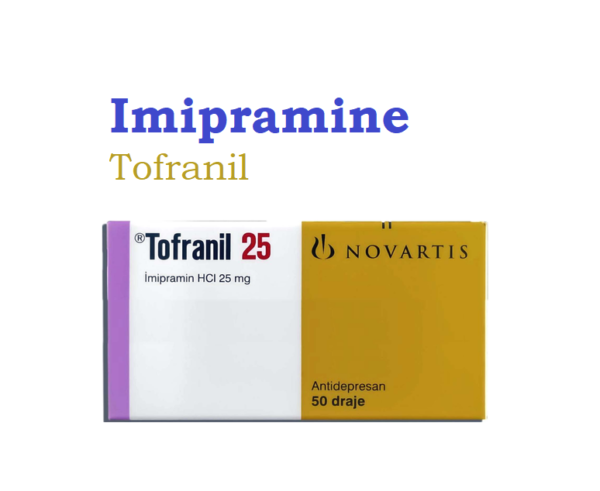
Imipramine (Tofranil) is a tricyclic antidepressant drug that is primarily used to treat patients with depression, anxiety, and panic disorders.
Imipramine (Tofranil) Uses:
-
Childhood enuresis (imipramine hydrochloride only):
- Use 25–50 mg/day, administered in divided doses throughout the day or as a single dosage at bedtime, as a temporary supplementary therapy to treat enuresis in children under the age of six after all organic causes have been ruled out by the necessary tests.
-
Major depressive disorder (unipolar):
- Unipolar major depressive disorder treatment (MDD)
-
Off Label Use of Imipramine in Adults:
- Bulimia nervosa.
- Neuropathic pain.
- Panic disorder.
Imipramine dose in adults:
Imipramine (Tofranil) Dose in the treatment of Major depressive disorder (unipolar):
- P/O:
- Initial:
- Depending on response and tolerance, the dose may be increased by 25–50
- mg/day spaced by one week up to the typical dose of 100–300 mg/day.
- Initial:
-
Manufacturer's labeling:
Note: Current clinical practise might not be reflected in the dosing in the prescribed information.
-
-
Outpatients:
- Initial:
- Depending on response and tolerance, the dose may be gradually increased up to 200 mg/day.
- 75 mg/day.
- Usual maintenance dose:
- May be used as a single bedtime dose or in split doses.
- 50-150 mg/day.
- Initial:
-
Inpatients:
- Initial:
- It may be gradually increased to 200 mg/day depending on the reaction and tolerability.
- If there is still no improvement after two weeks, the dosage may be raised to 250 to 300 mg/day.
- may be used as a single bedtime dose or in split doses.
- 100 mg/day.
- Initial:
-
Imipramine (Tofranil) Dose in the treatment of Bulimia nervosa (off-label): P/O:
- Initial:
- At bedtime, gradually raise the dosage up to 300 mg depending on the response and tolerability.
- 50 mg at bedtime.
Imipramine (Tofranil) Dose in the treatment of Neuropathic pain (off-label): P/O:
Note:
- Not preferred TCA.
- Initial:
-
50 mg once daily or twice daily in split dosages.
-
Once you reach a plasma concentration of 113–170 ng/mL (SI: 400–600 nmol/L) of imipramine with desipramine, you can progressively increase your dosage up to 150 mg per day.
-
Imipramine (Tofranil) Dose in the treatment of the Panic disorder (off-label):
- P/O:
- Initial:
- 10 mg/day.
-
Increase gradually to the target dose of 100 to 300 mg/day over the course of 3–5 weeks.
-
The studies' average doses ranged from 155-239 mg/day.
- Initial:
-
Discontinuation of therapy:
- When stopping antidepressant medication that has lasted for more than three weeks, taper the dose gradually (for instance, over 2 to 4 weeks) to reduce withdrawal symptoms and spot reemerging symptoms.
- Prior history of antidepressant withdrawal symptoms, or high doses of antidepressants, reasons for a slower titration (eg, over 4 weeks), includes the use of a drug with a half-life <24 hours (eg, paroxetine, venlafaxine).
- Resuming the previously prescribed dose or reducing it more gradually is advised if withdrawal symptoms become severe.
- Tapering over more than three months may be beneficial for some individuals receiving long-term treatment (>6 months), such as those with a history of discontinuation syndrome.
- There is little data to support appropriate taper rates.
-
Switching antidepressants:
-
The evidence is scant for the best antidepressant switching methods.
-
Cross titration (gradually stopping the previous antidepressant while also gradually increasing the new antidepressant) and straight changeover are two techniques (abruptly discontinuing the first antidepressant and then starting the new antidepressant at an equivalent dose or lower dose and increasing it gradually).
-
Cross-titration is recommended for the majority of switches but is not recommended when transitioning to or from an MAO inhibitor (e.g., over 1-4 weeks depending on susceptibility to withdrawal symptoms and adverse effects).
- When switching to another agent in the same or similar class, a direct switch may be an appropriate approach (eg, when switching between two SSRIs), when the antidepressant to be discontinued has been used for <1 week, or when the discontinuation is for adverse effects.
- Consider the risk of discontinuation symptoms, the potential for drug interactions, other antidepressant properties when choosing the switch strategy, (eg, half-life, adverse effects, and pharmacodynamics) & the degree of symptom control desired.
-
-
Switching to or from an MAOI:
-
Allow 14 days to pass between stopping an MAOI and starting imipramine.
-
Allow 14 days to pass between stopping imipramine and starting an MAOI.
-
Imipramine dose in childrens:
- Note:
- The dosing presented is based on hydrochloride salt.
Imipramine (Tofranil) Dose in the treatment of Attention-deficit hyperactivity disorder:
-
Children ≥6 years and Adolescents:
- P/O:
-
Initial:
- In 1-3 divided doses, 1 mg/kg/day.
- Titrate as required.
-
Max daily dose:
- 4 mg/kg/day or 200 mg/day.
- Monitor serum concentrations for doses >2 mg/kg/day (target: ≤200 ng/mL).
-
- P/O:
Note:
-
- Pediatric patients should not receive doses greater than 2.5 mg/kg/day, according to the manufacturer's labelling.
- There have been reports of ECG abnormalities (of uncertain significance) in paediatric children who got twice this dose.
Imipramine (Tofranil) Dose in the treatment of Depression: P/O:
Note:
-
-
Controlled clinical trials have not demonstrated that tricyclic antidepressants are more effective than a placebo in treating depression in children and adolescents.
-
Not suggested as a first-line treatment.
-
Patients with concomitant conditions may benefit.
-
-
Children ≥8 years:
- 5 mg/kg/day in 2-3 divided doses.
-
Every three to four days, titrate as necessary in increments of 1 mg/kg.
-
In certain centres, maximum daily dosages of 5 mg/kg/day have been applied.
-
Pay close attention, especially at doses below 3.5 mg/kg/day.
-
The manufacturer's labelling advises against using doses greater than 2.5 mg/kg/day in paediatric patients.
-
Pediatric patients who received twice this dose reported ECG abnormalities (of uncertain relevance).
-
Adolescents:
- Initial:
- 25-50 mg/day.
- Increase gradually.
- Max daily dose:
- 100 mg/day in single or divided doses
- Initial:
Imipramine (Tofranil) Dose in the treatment of Enuresis:
-
Children ≥6 years and Adolescents:
- P/O:
-
Initial:
- If an insufficient response is still evident after one week of therapy, increase the dose by 25 mg/day.
-
Max daily dose:
- The lesser of:
- 2.5 mg/kg/day or 50 mg/day if 6 to <12 years old.
- And 75 mg/day if ≥12 years old.
- The lesser of:
-
- For early night bedwetters, it has been demonstrated that the medication is more effective if administered earlier and in divided doses (eg, 25 mg in midafternoon and repeated at bedtime).
- Although medication is generally not used in children under the age of six, certain patients may consider it for children older than four.
- P/O:
Note:
-
- Imipramine is considered a third-line treatment for enuresis due to the risk of serious side effects (eg, arrhythmias, heart block, seizures).
-
Discontinuation of therapy:
- Recognizing that non-illness-related events may induce stress or anxiety and be mistakenly attributed to antidepressant withdrawal, consider scheduling antidepressant discontinuance for less stressful times.
- When stopping antidepressant therapy, lower the dosage gradually to reduce the likelihood of discontinuation syndromes (withdrawal) and make it possible to spot resurfacing illness state signs (eg, relapse).
- There is little data to support appropriate taper rates following sickness remission. In light of the antidepressant's half-life, APA and NICE recommendations recommend tapering medication over a minimum of a few weeks.
- Antidepressants with a shorter half-life may need to be tapered more conservatively.
- After long-term (years) antidepressant treatment, WFSBP guidelines recommend tapering over 4 to 6 months, with close monitoring during and for 6 months after discontinuation.
- Consider resuming the previously prescribed dose and/or decrease dose at a more gradual rate if intolerable discontinuation symptoms occur following a dose reduction.
MAO inhibitor recommendations:
-
A psychiatric condition is treated by using an MAO inhibitor, and switching to or from one:
- When starting imipramine, wait 14 days after stopping an MAO inhibitor used to treat psychiatric problems.
- Give yourself 14 days between stopping imipramine and starting an MAO inhibitor for psychiatric illnesses.
Pregnancy Risk Category: C
- Congenital abnormalities in humans have been reported.
- But, it has yet to be established that there is a causal relationship.
- Tricyclic antidepressants can cause irritability, convulsions and jitteriness in neonates.
- Pregnant women may need to adjust their doses late in pregnancy in order to achieve euthymia. This is due to pregnancy-induced physiological changes.
- Individualized treatment is advised by ACOG for depression during pregnancy.
- The paediatrician, obstetrician, and primary health care physician, in addition to the mental healthcare practitioner, should all contribute their clinical skills to the treatment.
- Medication treatment is not a recommended course of action, according to the American Psychiatric Association (APA).
- Women who have stopped taking antidepressant medication during pregnancy or who are at high risk of developing postpartum depression can have their medications re-instated.
- The ACOG and APA have developed treatment algorithms for women suffering from depression during pregnancy and before conception.
- Pregnant women who have been exposed to antidepressants during pregnancy are encouraged to register in the National Pregnancy Registry for Antidepressants.
Use of imipramine while breastfeeding
- Breast milk contains Imipramine and its active metabolite, desipramine.
- Concentrations of imipramine in maternal plasma may be comparable to those found in the mother's blood.
- Based on five mothers/infant pairs, the maternal exposure to imipramine 75-200mg/day would be 0.1%-7.5% for the breastfed infant.
- Infants should be closely watched even if adverse occurrences have not been documented.
- It can be detected in the urine of nursing babies.
- Manufacturers do not recommend breastfeeding.
Imipramine (Tofranil) Dose in Kidney Disease:
- In the manufacturer's labeling, there are no dosage adjustments provided.
- Use cautiously.
Imipramine (Tofranil) Dose in Liver disease:
- In the manufacturer's labeling, there are no dosage adjustments provided.
- Use cautiously.
- Reported for tricyclic antidepressants in general.
Side effects of Imipramine (Tofranil):
-
Cardiovascular:
- Palpitations
- Cardiac Failure
- Myocardial Infarction
- Heart Block
- ECG Changes
- Hypertension
- Orthostatic Hypotension
- Cerebrovascular Accident
- Tachycardia
- Cardiac Arrhythmia
-
Central Nervous System:
- Taste Disorder
- Anxiety
- Restlessness
- Confusion
- Peripheral Neuropathy
- Disorientation
- Numbness
- Drowsiness
- Headache
- Insomnia
- Extrapyramidal Reaction
- Hallucination
- Hypomania
- Falling
- Nightmares
- EEG Pattern Changes
- Paresthesia
- Fatigue
- Dizziness
- Psychosis
- Delusions
- Seizure
- Ataxia
- Tingling Sensation
- Agitation
-
Dermatologic:
- Skin Rash
- Diaphoresis
- Urticaria
- Skin Photosensitivity
- Pruritus
- Alopecia
-
Endocrine & Metabolic:
- Increased Libido
- Decreased Serum Glucose
- SIADH
- Gynecomastia
- Increased Serum Glucose
- Weight Gain
- Galactorrhea
- Weight Loss
- Decreased Libido
-
Gastrointestinal:
- Vomiting
- Anorexia
- Stomatitis
- Diarrhea
- Melanoglossia
- Intestinal Obstruction
- Nausea
- Epigastric Distress
- Sublingual Adenitis
- Constipation
- Xerostomia
- Abdominal Cramps
-
Genitourinary:
- Urinary Retention
- Impotence
- Urinary Hesitancy
- Testicular Swelling
- Urinary Tract Dilation
- Breast Hypertrophy
-
Hematologic & Oncologic:
- Purpura
- Eosinophilia
- Thrombocytopenia
- Petechia
- Agranulocytosis
-
Hepatic:
- Increased Serum Transaminases
- Cholestatic Jaundice
-
Hypersensitivity:
- Hypersensitivity
-
Neuromuscular & Skeletal:
- Weakness
- Tremor
-
Ophthalmic:
- Angle-Closure Glaucoma
- Accommodation Disturbance
- Mydriasis
- Blurred Vision
-
Otic:
- Tinnitus
Contraindications to Imipramine (Tofranil):
- It is possible to experience imipramine hypersensitivity or cross-reactivity with other dibenzodiazepines.
- After myocardial injury (MI), i.e. during the acute recovery period.
- MAO inhibitors may be used concurrently with or within 14 days after stopping imipramine or any MAO inhibitor to treat psychiatric disorders.
- Patients receiving IV methyleneblue or linezolid should initiate the process.
- Limited evidence exists of cross-reactivity between tricyclic antidepressants and allergenic antidepressants.
- Cross-sensitivity can be possible due to similarities in chemical structure and pharmacologic activities.
Warnings and precautions
-
Anticholinergic effects
- Possible anticholinergic side effects: constipation, xerostomia and blurred vision.
- Patients with reduced gastrointestinal motility, increased intraocular Pressure, angle-closure Glaucoma, paralytic Ileus, urinary retention or BPH should be cautious.
- This agent produces a high degree of anticholinergic blocking relative to other antidepressants.
-
Depression in the CNS:
- CNS depression can lead to mental or physical impairment.
- It is important to warn patients about tasks that require mental alertness, such as driving or operating machinery.
- The degree of sedation relative to other antidepressants is high.
-
Fractures
- Bone fractures can be prevented by antidepressant treatment.
- If an antidepressant-treated person presents with unresolved bone pain or tenderness, swelling, or bruising, there may be a fragility fracture.
-
Hematologic effects
- Rarely, TCAs can cause bone marrow suppression.
- If you notice symptoms such as fever or sore throat, get CBC.
- If there are indications of neutrophil depression, stop taking imipramine.
-
Orthostatic hypotension
- Orthostatic hypotension may occur (high risk relative to other antidepressants).
- Patients at high risk for this effect and those who cannot tolerate temporary hypotensive episodes (cerebrovascular Disease, cardiovascular disease, hypovolemia) should be cautious.
-
Photosensitization
- Photosensitization has been linked to this.
- Avoid too much exposure to the sun.
-
Serotonin syndrome
- Serotonergic drugs (eg SSRIs, SNRIs), can cause potentially life-threatening serotonin Syndrome (SS), especially when combined with other serotonergic medications (eg triptans TCAs, fentanyl and lithium, tramadol buspirone, St John's wort or tryptophan) and agents that impair serotonin metabolism (eg MAO inhibitors for psychiatric disorders, intravenous methylenebluezolid, linezolid, intravenous methylene blue, methylene blue)
- Monitor patients carefully for signs of SS, such as mental state changes (eg, agitation and hallucinations), delirium, and coma.
- Serotonin syndrome also has other features, such as:
- Autonomic instability
- Neuromuscular changes
- GI symptoms
- Seizures
- Stop taking any serotonergic agents or treatment if you notice signs or symptoms.
-
Alcohol abuse disorder
- Patients with chronic alcohol abuse disorder may have their pharmacokinetics altered.
- Reports have indicated an increase in clearance and a decrease in elimination half-life.
-
Cardiovascular disease
- Patients with a history or cardiovascular disease (including stroke, MI, or tachycardia) should be cautious.
- This agent has a higher risk of conduction abnormalities than other antidepressants.
- Imipramine was discovered to be a substance that can make myocardial dysfunction worse in a scientific statement by the American Heart Association (magnitude moderate).
- Patients with preexisting heart disease and elderly patients should be aware that higher doses can lead to a baseline and periodic EKG.
-
Diabetes:
- Patients with diabetes mellitus should be cautious.
- May affect glucose regulation
-
Hepatic impairment
- Patients with hepatic impairment should be cautious.
-
Hypomania and mania:
- It can worsen the psychosis of patients suffering from bipolar disorder or cause a shift towards mania or hypomania in patients.
- Monotherapy should not be used for bipolar disorder patients.
- Patients with depressive symptoms need to be tested for bipolar disorder.
- The FDA has not approved Imipramine for treatment of bipolar disorder.
-
Ocular effects
- Mild pupillary dilation may occur, which can in some cases lead to narrow-angle glaucoma.
- Patients who have not undergone an iridectomy to reduce the risk of narrow-angle glaucoma should be evaluated.
-
Renal impairment
- Patients with impaired renal function should be cautious.
-
Seizure disorder
- Patients at high risk of seizures should be treated with caution, especially those who have had seizures in the past, are brain damaged, suffered from head trauma or have been drinking, and/or are receiving concurrent treatment with medication that could lower their seizure threshold.
|
Acetylcholinesterase Inhibitors |
May reduce an anticholinergic agent's therapeutic impact. Acetylcholinesterase Inhibitors' therapeutic impact may be reduced by anticholinergic drugs. |
|
Ajmaline |
May elevate CYP2D6 Substrates' serum concentration (High risk with Inhibitors). |
|
Alcohol (Ethyl) |
Alcohol's CNS depressing effect may be amplified by CNS depressants (Ethyl). |
|
Alfuzosin |
The hypotensive effects of blood pressure-lowering medications may be strengthened. |
|
Alizapride |
CNS depressants may have an enhanced CNS depressant impact. |
|
Almotriptan |
Perhaps makes serotonergic agents more effective (High Risk). Serotonin syndrome might occur from this. When these medications are taken together, it is important to watch out for any signs and symptoms of serotonin syndrome or serotonin poisoning, such as hyperreflexia, clonus, hyperthermia, diaphoresis, tremor, autonomic instability, and changes in mental status. |
|
Alosetron |
Perhaps makes serotonergic agents more effective (High Risk). Serotonin syndrome might occur from this. When these medications are taken together, it is important to watch out for any signs and symptoms of serotonin syndrome or serotonin poisoning, such as hyperreflexia, clonus, hyperthermia, diaphoresis, tremor, autonomic instability, and changes in mental status. |
|
Alpha1-Agonists |
Tricyclic Antidepressants may enhance the therapeutic effect of Alpha1Agonists. Tricyclic Antidepressants may diminish the therapeutic effect of Alpha1-Agonists. |
|
Alpha2-Agonists (Ophthalmic) |
The therapeutic benefit of alpha2-agonists may be diminished by tricyclic antidepressants (Ophthalmic). |
|
Altretamine |
Could make tricyclic antidepressants' orthostatic hypotensive effect stronger. |
|
Amantadine |
May strengthen an anticholinergic agent's anticholinergic action. |
|
Amifampridine |
Amifampridine may have a stronger neuroexcitatory and/or seizure-potentiating impact when combined with substances with seizure threshold lowering potential. |
|
Amphetamines |
Tricyclic antidepressants may make amphetamines more harmful or poisonous. The effects of amphetamines on the cardiovascular system may be amplified by tricyclic antidepressants. Tricyclic antidepressants' serotonergic action may be strengthened by amphetamines. Serotonin syndrome might occur from this. Management: When these drugs are combined, watch out for enhanced cardiovascular effects as well as signs and symptoms of serotonin syndrome/serotonin poisoning (such as hyperreflexia, clonus, hyperthermia, diaphoresis, tremor, autonomic instability, and mental status abnormalities). |
|
Anticholinergic Agents |
Other anticholinergic agents' negative or hazardous effects might be amplified. |
|
Antiemetics (5HT3 Antagonists) |
Perhaps makes serotonergic agents more effective (High Risk). Serotonin syndrome might occur from this. When these medications are taken together, it is important to watch out for any signs and symptoms of serotonin syndrome or serotonin poisoning, such as hyperreflexia, clonus, hyperthermia, diaphoresis, tremor, autonomic instability, and changes in mental status. Alosetron, Ondansetron, and Ramosetron are exceptions. |
|
Antipsychotic Agents |
Antipsychotic Agents' negative or toxic effects may be exacerbated by Serotonergic Agents (High Risk). Particularly, serotonergic drugs may intensify the effects of dopamine blocking, thus raising the danger of neuroleptic malignant syndrome. Serotonergic agents' serotonergic action may be enhanced by antipsychotic drugs (High Risk). Serotonin syndrome might occur from this. |
|
Antipsychotic Agents (Second Generation [Atypical]) |
Antipsychotic drugs' hypotensive effects may be enhanced by blood pressure-lowering medications |
|
Aspirin |
Aspirin's antiplatelet action may be enhanced by tricyclic antidepressants (tertiary amine). |
|
Benperidol |
The hypotensive effects of blood pressure-lowering medications may be strengthened. |
|
Beta2-Agonists |
Tricyclic antidepressants may make beta2 agonists more harmful or poisonous. |
|
Blood Pressure Lowering Agents |
May increase the hypotensive effects of agents associated with hypotension. |
|
Botulinum Toxin-Containing Products |
May strengthen an anticholinergic agent's anticholinergic action. |
|
Brexanolone |
Brexanolone's CNS depressing effects may be amplified by other CNS depressants. |
|
Brimonidine (Topical |
CNS depressants may have an enhanced CNS depressant impact. |
|
Brimonidine (Topical) |
The hypotensive effects of blood pressure-lowering medications may be strengthened. |
|
BusPIRone |
Perhaps makes serotonergic agents more effective (High Risk). Serotonin syndrome might occur from this. When these medications are taken together, it is important to watch out for any signs and symptoms of serotonin syndrome or serotonin poisoning, such as hyperreflexia, clonus, hyperthermia, diaphoresis, tremor, autonomic instability, and changes in mental status. |
|
Cannabidiol |
May enhance the CNS depressant effect of CNS Depressants. |
|
Cannabis |
May enhance the CNS depressant effect of CNS Depressants. |
|
CarBAMazepine |
May decrease the serum concentration of Tricyclic Antidepressants. |
|
Chloral Betaine |
May enhance the adverse/toxic effect of Anticholinergic Agents. |
|
Chlorphenesin Carbamate |
May enhance the adverse/toxic effect of CNS Depressants. |
|
Cimetidine |
May decrease the metabolism of Tricyclic Antidepressants. |
|
Citalopram |
Tricyclic Antidepressants may enhance the serotonergic effect of Citalopram. Tricyclic Antidepressants may increase the serum concentration of Citalopram. Citalopram may increase the serum concentration of Tricyclic Antidepressants. Management: Monitor for signs and symptoms of serotonin syndrome/serotonin toxicity (eg, hyperreflexia, clonus, hyperthermia, diaphoresis, tremor, autonomic instability, mental status changes) and increased TCA and citalopram concentrations/effects. |
|
CloBAZam |
May increase the serum concentration of CYP2D6 Substrates (High risk with Inhibitors). |
|
CNS Depressants |
May enhance the adverse/toxic effect of other CNS Depressants. |
|
Cobicistat |
May increase the serum concentration of CYP2D6 Substrates (High risk with Inhibitors). |
|
Cyclobenzaprine |
Perhaps makes serotonergic agents more effective (High Risk). Serotonin syndrome might occur from this. When these medications are taken together, it is important to watch out for any signs and symptoms of serotonin syndrome or serotonin poisoning, such as hyperreflexia, clonus, hyperthermia, diaphoresis, tremor, autonomic instability, and changes in mental status. |
|
CYP2C19 Inducers (Moderate) |
May lower the serum level of CYP2C19 substrates (High risk with Inducers). |
|
CYP2D6 Inhibitors (Moderate) |
CYP2D6 substrate metabolism may be decreased (High risk with Inhibitors). |
|
Darunavir |
May elevate CYP2D6 Substrates' serum concentration (High risk with Inhibitors). |
|
Desmopressin |
Tricyclic antidepressants may intensify Desmopressin's harmful or hazardous effects. |
|
Dexmethylphenidate-Methylphenidate |
Perhaps makes serotonergic agents more effective (High Risk). Serotonin syndrome might occur from this. Management: When these medications are taken together, keep an eye out for any serotonin syndrome or serotonin poisoning signs and symptoms (such as hyperreflexia, clonus, hyperthermia, diaphoresis, tremor, autonomic instability, and changes in mental status). |
|
Dextromethorphan |
Perhaps makes serotonergic agents more effective (High Risk). Serotonin syndrome might occur from this. When these medications are taken together, it is important to watch out for any signs and symptoms of serotonin syndrome or serotonin poisoning, such as hyperreflexia, clonus, hyperthermia, diaphoresis, tremor, autonomic instability, and changes in mental status. |
|
Diazoxide |
The hypotensive effects of blood pressure-lowering medications may be strengthened. |
|
Dimethindene (Topical) |
CNS depressants may have an enhanced CNS depressant impact. |
|
Doxylamine |
CNS depressants may have an enhanced CNS depressant impact. Management: The producer of the pregnancy-safe drug Diclegis (doxylamine/pyridoxine) particularly advises against combining it with other CNS depressants. |
|
Dronabinol |
CNS depressants may have an enhanced CNS depressant impact. |
|
DULoxetine |
Tricyclic antidepressants' serotonergic action should be improved. Serotonin syndrome might occur from this. Tricyclic Antidepressants' serum levels may rise when DULoxetine is used. Management: If TCA is combined with other medications, keep an eye out for any side effects and elevated TCA concentrations that could indicate serotonin syndrome or serotonin toxicity (such as hyperreflexia, clonus, hyperthermia, diaphoresis, tremor, autonomic instability, and changes in mental status). |
|
DULoxetine |
The hypotensive impact of DULoxetine may be enhanced by blood pressure lowering medications. |
|
Eletriptan |
May enhance the serotonergic effect of Serotonergic Agents (High Risk). This could result in serotonin syndrome. Management: Monitor for signs and symptoms of serotonin syndrome/serotonin toxicity (eg, hyperreflexia, clonus, hyperthermia, diaphoresis, tremor, autonomic instability, mental status changes) when these agents are combined. |
|
Ergot Derivatives |
May enhance the serotonergic effect of Serotonergic Agents (High Risk). This could result in serotonin syndrome. Management: Monitor for signs and symptoms of serotonin syndrome/serotonin toxicity (eg, hyperreflexia, clonus, hyperthermia, diaphoresis, tremor, autonomic instability, mental status changes) when these agents are combined. Exceptions: Nicergoline. |
|
Escitalopram |
Tricyclic Antidepressants may enhance the serotonergic effect of Escitalopram. Escitalopram may increase the serum concentration of Tricyclic Antidepressants. Management: Monitor for signs and symptoms of serotonin syndrome/serotonin toxicity (eg, hyperreflexia, clonus, hyperthermia, diaphoresis, tremor, autonomic instability, mental status changes) and increased TCA concentrations/effects if these agents are combined. |
|
Esketamine |
May enhance the CNS depressant effect of CNS Depressants. |
|
FluvoxaMINE |
May enhance the serotonergic effect of Tricyclic Antidepressants. FluvoxaMINE may increase the serum concentration of Tricyclic Antidepressants. Management: Monitor for signs and symptoms of serotonin syndrome/serotonin toxicity (eg, hyperreflexia, clonus, hyperthermia, diaphoresis, tremor, autonomic instability, mental status changes) and increased TCA concentrations/effects if these agents are combined. |
|
Gastrointestinal Agents (Prokinetic) |
Anticholinergic Agents may diminish the therapeutic effect of Gastrointestinal Agents (Prokinetic). |
|
Glucagon |
Anticholinergic Agents may enhance the adverse/toxic effect of Glucagon. Specifically, the risk of gastrointestinal adverse effects may be increased. |
|
Guanethidine |
Tricyclic Antidepressants may diminish the therapeutic effect of Guanethidine. |
|
Herbs (Hypotensive Properties) |
May enhance the hypotensive effect of Blood Pressure Lowering Agents. |
|
HydrOXYzine |
CNS depressants may have an enhanced CNS depressant impact. |
|
Hypotension-Associated Agents |
The hypotensive action of hypotension-associated agents may be strengthened by blood pressure lowering medications. |
|
Imatinib |
May elevate CYP2D6 Substrates' serum concentration (High risk with Inhibitors). |
|
Itopride |
Itopride's therapeutic impact may be diminished by anticholinergic drugs. |
|
Kava Kava |
CNS depressants' harmful or toxic effects could be increased. |
|
Lasmiditan |
Perhaps makes serotonergic agents more effective (High Risk). Serotonin syndrome might occur from this. When these medications are taken together, it is important to watch out for any signs and symptoms of serotonin syndrome or serotonin poisoning, such as hyperreflexia, clonus, hyperthermia, diaphoresis, tremor, autonomic instability, and changes in mental status. |
|
Levodopa-Containing Products |
Levodopa-Containing Products' hypotensive effects may be strengthened by blood pressure-lowering medications. |
|
Lorcaserin |
Tricyclic antidepressants' serotonergic action should be improved. Serotonin syndrome might occur from this. Tricyclic Antidepressants' serum levels may rise as a result of lorcaserin. Management: If TCA is combined with other medications, keep an eye out for any side effects and elevated TCA concentrations that could indicate serotonin syndrome or serotonin toxicity (such as hyperreflexia, clonus, hyperthermia, diaphoresis, tremor, autonomic instability, and changes in mental status). |
|
Lormetazepam |
The hypotensive effects of blood pressure-lowering medications may be strengthened. |
|
Lumacaftor |
May lower the serum level of CYP2C19 substrates (High risk with Inducers). |
|
Lumefantrine |
May elevate CYP2D6 Substrates' serum concentration (High risk with Inhibitors). |
|
Magnesium Sulfate |
CNS depressants may have an enhanced CNS depressant impact. |
|
Melatonin: |
Imipramine's negative or hazardous effects could be increased. |
|
Metaxalone |
Perhaps makes serotonergic agents more effective (High Risk). Serotonin syndrome might occur from this. When these medications are taken together, it is important to watch out for any signs and symptoms of serotonin syndrome or serotonin poisoning, such as hyperreflexia, clonus, hyperthermia, diaphoresis, tremor, autonomic instability, and changes in mental status. |
|
MetyroSINE |
The sedative effects of metyroSINE may be strengthened by CNS depressants. |
|
MetyroSINE |
Tricyclic antidepressants' harmful or hazardous effects could be increased. |
|
Mianserin |
May strengthen an anticholinergic agent's anticholinergic action. |
|
Minocycline (Systemic) |
CNS depressants may have an enhanced CNS depressant impact. |
|
Mirabegron |
Anticholinergic drugs may make Mirabegron's harmful or hazardous effects worse. |
|
Molsidomine |
The hypotensive effects of blood pressure-lowering medications may be strengthened. |
|
Nabilone |
CNS depressants may have an enhanced CNS depressant impact. |
|
Naftopidil |
The hypotensive effects of blood pressure-lowering medications may be strengthened. |
|
Nefazodone |
Tricyclic antidepressants may strengthen Nefazodone's serotonergic effects. Serotonin syndrome might result from this. When these medications are taken together, it is important to watch out for any signs and symptoms of serotonin syndrome or serotonin poisoning, such as hyperreflexia, clonus, hyperthermia, diaphoresis, tremor, autonomic instability, and changes in mental status. |
|
Nicergoline |
The hypotensive effects of blood pressure-lowering medications may be strengthened. |
|
Nicorandil |
Nicorandil's hypotensive effects may be enhanced by tricyclic antidepressants. |
|
Nicorandil |
The hypotensive effects of blood pressure-lowering medications may be strengthened. |
|
Nitroglycerin |
Nitroglycerin absorption may be decreased by anticholinergic agents. Anticholinergic medications specifically have the potential to impede or prevent the absorption of nitroglycerin by reducing the breakdown of sublingual nitroglycerin pills. |
|
Nitroprusside |
Nitroprusside's hypotensive impact may be strengthened by blood pressure-lowering medications. |
|
Nonsteroidal Anti-Inflammatory Agents (COX-2 Selective |
Nonsteroidal Anti-Inflammatory Drugs' (Non-steroidal) antiplatelet action may be enhanced by Tricyclic Antidepressants (Tertiary Amine) (COX-2 Selective). |
|
Nonsteroidal Anti-Inflammatory Agents (Nonselective |
Nonsteroidal Anti-Inflammatory Drugs' (Non-steroidal) antiplatelet action may be enhanced by Tricyclic Antidepressants (Tertiary Amine) (Nonselective). |
|
Ondansetron |
Perhaps makes serotonergic agents more effective (High Risk). Serotonin syndrome might occur from this. When these medications are taken together, it is important to watch out for any signs and symptoms of serotonin syndrome or serotonin poisoning, such as hyperreflexia, clonus, hyperthermia, diaphoresis, tremor, autonomic instability, and changes in mental status. |
|
Oxitriptan |
The serotonergic impact of oxitriptan may be enhanced by serotonergic agents (high risk). Serotonin syndrome might occur from this. When these medications are taken together, it is important to watch out for any signs and symptoms of serotonin syndrome or serotonin poisoning, such as hyperreflexia, clonus, hyperthermia, diaphoresis, tremor, autonomic instability, and changes in mental status. |
|
Panobinostat |
May elevate CYP2D6 Substrates' serum concentration (High risk with Inhibitors). |
|
Peginterferon Alfa-2b |
May lower the serum level of CYP2D6 substrates (High risk with Inhibitors). |
|
Pentoxifylline |
The hypotensive effects of blood pressure-lowering medications may be strengthened. |
|
Perhexiline |
The serum levels of perhexiline may increase when exposed to CYP2D6 Substrates (High Risk with Inhibitors). The serum concentration of CYP2D6 Substrates may rise in response to perhexiline (High risk with Inhibitors). |
|
Pholcodine |
Pholcodine's hypotensive impact may be strengthened by blood pressure lowering medications. |
|
Phosphodiesterase 5 Inhibitors |
The hypotensive effects of blood pressure-lowering medications may be strengthened. |
|
Piribedil |
Piribedil's CNS depressing effects may be enhanced by other CNS depressants. |
|
Pramipexole |
The sedative effects of pramipexole might be enhanced by CNS depressants. |
|
Prostacyclin Analogues |
The hypotensive effects of blood pressure-lowering medications may be strengthened. |
|
Protease Inhibitors |
Tricyclic Antidepressants' serum levels can rise. |
|
Quinagolide |
The hypotensive effects of blood pressure-lowering medications may be strengthened. |
|
QuiNINE |
May elevate CYP2D6 Substrates' serum concentration (High risk with Inhibitors). |
|
Ramosetron |
Ramosetron's constipating effects may be enhanced by anticholinergic drugs. |
|
Ramosetron |
Perhaps makes serotonergic agents more effective (High Risk). Serotonin syndrome might occur from this. When these medications are taken together, it is important to watch out for any signs and symptoms of serotonin syndrome or serotonin poisoning, such as hyperreflexia, clonus, hyperthermia, diaphoresis, tremor, autonomic instability, and changes in mental status. |
|
ROPINIRole |
The sedative effects of CNS depressants may increase those of ROPINIRole. |
|
Rotigotine |
Rotigotine's sedative effects may be boosted by CNS depressants. |
|
Rufinamide |
CNS depressants' harmful or toxic effects could be increased. Particularly, drowsiness and lightheadedness could be worsened. |
|
Serotonergic Agents (High Risk, Miscellaneous) |
Tricyclic antidepressants might make serotonergic agents more effective (High Risk, Miscellaneous). Serotonin syndrome might occur from this. When these medications are taken together, it is important to watch out for any signs and symptoms of serotonin syndrome or serotonin poisoning, such as hyperreflexia, clonus, hyperthermia, diaphoresis, tremor, autonomic instability, and changes in mental status. |
|
Serotonergic Non-Opioid CNS Depressants |
Serotonergic non-opioid CNS depressants may have a greater CNS depressive effect when used with tricyclic antidepressants. Serotonergic non-opioid CNS depressants' serotonergic effects may be enhanced by tricyclic antidepressants. Serotonin syndrome might occur from this. When these medications are taken together, it is important to watch out for any signs and symptoms of serotonin syndrome or serotonin poisoning, such as hyperreflexia, clonus, hyperthermia, diaphoresis, tremor, autonomic instability, and changes in mental status. |
|
Serotonin 5-HT1D Receptor Agonists (Triptans) |
Makes serotonergic agents more effective (High Risk). Serotonin syndrome might occur from this. When these medications are taken together, it is important to watch out for any signs and symptoms of serotonin syndrome or serotonin poisoning, such as hyperreflexia, clonus, hyperthermia, diaphoresis, tremor, autonomic instability, and changes in mental status. |
|
Serotonin/Norepinephrine Reuptake Inhibitors |
Tricyclic antidepressants' serotonergic action should be improved. Serotonin syndrome might occur from this. When using these drugs together, watch out for any changes in mental status and indicators of serotonin syndrome, such as hyperreflexia, clonus, hyperthermia, diaphoresis, tremor, and autonomic instability. DULoxetine is an exception. |
|
Sertraline |
Tricyclic antidepressants' serotonergic action should be improved. Tricyclic Antidepressants' serum levels may rise in response to sertraline. Management: If these medications are combined, keep an eye out for elevated TCA concentrations and side effects, as well as signs and symptoms of serotonin syndrome and serotonin toxicity (such as hyperreflexia, clonus, hyperthermia, diaphoresis, tremor, autonomic instability, and changes in mental status). |
|
Sodium Phosphates |
Tricyclic antidepressants might make sodium phosphates' harmful or hazardous effects worse. Specifically, patients with severe sodium phosphate-induced fluid/electrolyte imbalances may be at a higher risk of seizures and/or losing consciousness. |
|
St John's Wort |
Makes serotonergic agents more effective (High Risk). Serotonin syndrome might occur from this. Serotonergic Agents' serum concentration may be reduced by St. John's Wort (High Risk). When these medications are taken together, it is important to watch out for any signs and symptoms of serotonin syndrome or serotonin poisoning, such as hyperreflexia, clonus, hyperthermia, diaphoresis, tremor, autonomic instability, and changes in mental status. |
|
Sulfonylureas |
Cyclical antidepressants might make sulfonylureas' hypoglycemia effect stronger. |
|
Syrian Rue |
Makes serotonergic agents more effective (High Risk). Serotonin syndrome might occur from this. When these medications are taken together, it is important to watch out for any signs and symptoms of serotonin syndrome or serotonin poisoning, such as hyperreflexia, clonus, hyperthermia, diaphoresis, tremor, autonomic instability, and changes in mental status. |
|
Tetrahydrocannabinol |
CNS depressants may have an enhanced CNS depressant impact. |
|
Tetrahydrocannabinol and Cannabidiol |
CNS depressants may have an enhanced CNS depressant impact. |
|
Thiazide and Thiazide-Like Diuretics |
Thiazide and Thiazide-Like Diuretics' serum concentrations may be elevated by anticholinergic agents. |
|
Thyroid Products |
Tricyclic antidepressants' arrhythmogenic effects might be increased. Tricyclic Antidepressants' stimulatory action may be strengthened by thyroid products. May lower the level of imipramine in the serum. |
|
Tobacco (Smoked) |
Anticholinergic drugs may intensify topiramate's harmful or toxic effects. |
|
Topiramate |
The anticholinergic action of other tricyclic antidepressants may be enhanced. |
|
Tricyclic Antidepressants |
Other tricyclic antidepressants may have a greater CNS depressive effect when used with them. The serotonergic impact of other tricyclic antidepressants may be enhanced by tricyclic antidepressants. Serotonin syndrome might occur from this. Increasing TCA side effects, such as serotonin syndrome/serotonin toxicity, CNS depression, and anticholinergic effects, should be continuously monitored. |
|
Trimeprazine |
CNS depressants may have an enhanced CNS depressant impact. |
|
Valproate Products |
Tricyclic Antidepressants' serum levels can rise. |
|
Vilazodone |
Tricyclic antidepressants may improve Vilazodone's serotonergic effects. Serotonin syndrome might occur from this. If these medications are taken together, keep an eye out for any signs and symptoms of serotonin syndrome or serotonin poisoning (such as hyperreflexia, clonus, hyperthermia, diaphoresis, tremor, autonomic instability, and changes in mental status). |
|
Vitamin K Antagonists (eg, warfarin) |
The anticoagulant action of vitamin K antagonists may be increased by tricyclic antidepressants. |
|
Vortioxetine |
Tricyclic antidepressants may improve Vortioxetine's serotonergic effects. Serotonin syndrome might occur from this. If these medications are taken together, keep an eye out for any signs and symptoms of serotonin syndrome or serotonin poisoning (such as hyperreflexia, clonus, hyperthermia, diaphoresis, tremor, autonomic instability, and changes in mental status). |
|
Yohimbine |
Tricyclic Antidepressants may increase the serum concentration of Yohimbine. |
|
Risk Factor D (Consider therapy modification) |
|
|
Abiraterone Acetate |
May increase the serum concentration of CYP2D6 Substrates (High risk with Inhibitors). Management: Avoid concurrent use of abiraterone with CYP2D6 substrates that have a narrow therapeutic index whenever possible. When concurrent use is not avoidable, monitor patients closely for signs/symptoms of toxicity. |
|
Alpha-/Beta-Agonists |
|
|
Alpha2-Agonists |
Tricyclic Antidepressants may diminish the antihypertensive effect of Alpha2Agonists. Management: Consider avoiding this combination. If used, monitor for decreased effects of the alpha2-agonist. Exercise great caution if discontinuing an alpha2-agonist in a patient receiving a TCA. Exceptions: Apraclonidine; Brimonidine (Ophthalmic); Lofexidine. |
|
Amifostine |
Amifostine's hypotensive impact may be strengthened by blood pressure lowering medications. Treatment: Blood pressure-lowering drugs need to be avoided for 24 hours before amifostine is administered when used at chemotherapeutic doses. Amifostine should not be given if blood pressure lowering treatment cannot be stopped. |
|
Asunaprevir |
May increase the serum concentration of CYP2D6 Substrates (High risk with Inhibitors). |
|
Barbiturates |
May increase the metabolism of Tricyclic Antidepressants. |
|
Blonanserin |
CNS Depressants may enhance the CNS depressant effect of Blonanserin. |
|
Buprenorphine |
CNS Depressants may enhance the CNS depressant effect of Buprenorphine. Management: Consider reduced doses of other CNS depressants, and avoiding such drugs in patients at high risk of buprenorphine overuse/self-injection. Initiate buprenorphine at lower doses in patients already receiving CNS depressants. |
|
Chlormethiazole |
May enhance the CNS depressant effect of CNS Depressants. Management: Monitor closely for evidence of excessive CNS depression. The chlormethiazole labeling states that an appropriately reduced dose should be used if such a combination must be used. |
|
Cinacalcet |
May increase the serum concentration of Tricyclic Antidepressants. Management: Seek alternatives when possible. If these combinations are used, monitor closely for increased effects/toxicity and/or elevated serum concentrations (when testing is available) of the tricyclic antidepressant. |
|
CYP2C19 Inducers (Strong) |
May speed up CYP2C19 substrate metabolism (High risk with Inducers). Management: Take into account a substitute for one of the interfering medications. Specific contraindications may apply to some combinations. the relevant manufacturer's label. |
|
CYP2D6 Inhibitors (Strong) |
CYP2D6 substrate metabolism may be decreased (High risk with Inhibitors). |
|
Dabrafenib |
May lower the serum level of CYP2C19 substrates (High risk with Inducers). Management: When possible, look for substitutes for the CYP2C19 substrate. If concurrent therapy cannot be avoided, pay special attention to the substrate's clinical consequences (particularly therapeutic effects). |
|
Dacomitinib |
May elevate CYP2D6 Substrates' serum concentration (High risk with Inhibitors). Management: Steer clear of using dacomitinib at the same time as CYP2D6 subtrates with a limited therapeutic index. |
|
Droperidol |
CNS depressants may have an enhanced CNS depressant impact. Consider lowering the dosage of droperidol or other CNS drugs (such as opioids or barbiturates) when they are used concurrently. In separate drug interaction monographs, exceptions to this monograph are covered in more detail. |
|
Enzalutamide |
May lower the serum level of CYP2C19 substrates (High risk with Inducers). For medications that CYP2C19 activates, active metabolite concentrations may decrease instead. Treatment: Enzalutamide should not be used concurrently with CYP2C19 substrates that have a limited therapeutic index. Enzalutamide use, as with the use of any other CYP2C19 substrate, should be done cautiously and well monitored. |
|
Flunitrazepam |
Flunitrazepam's CNS depressing effects may be enhanced by other CNS depressants. |
|
FLUoxetine |
Tricyclic antidepressants' serotonergic action should be improved. Tricyclic Antidepressants' serum levels may rise when Fluoxetine is used. Management: If these medications are combined, keep an eye out for elevated TCA concentrations and side effects, as well as signs and symptoms of serotonin syndrome and serotonin toxicity (such as hyperreflexia, clonus, hyperthermia, diaphoresis, tremor, autonomic instability, and changes in mental status). |
|
HYDROcodone |
CNS Depressants may enhance the CNS depressant effect of HYDROcodone. Management: Avoid concomitant use of hydrocodone and benzodiazepines or other CNS depressants when possible. These agents should only be combined if alternative treatment options are inadequate. If combined, limit the dosages and duration of each drug. |
|
Iohexol |
Agents With Seizure Threshold Lowering Potential may enhance the adverse/toxic effect of Iohexol. Specifically, the risk for seizures may be increased. Management: Discontinue agents that may lower the seizure threshold 48 hours prior to intrathecal use of iohexol. Wait at least 24 hours after the procedure to resume such agents. In nonelective procedures, consider use of prophylactic anticonvulsants. |
|
Iomeprol |
Agents With Seizure Threshold Lowering Potential may enhance the adverse/toxic effect of Iomeprol. Specifically, the risk for seizures may be increased. Management: Discontinue agents that may lower the seizure threshold 48 hours prior to intrathecal use of iomeprol. Wait at least 24 hours after the procedure to resume such agents. In nonelective procedures, consider use of prophylactic anticonvulsants. |
|
Iopamidol |
Agents With Seizure Threshold Lowering Potential may enhance the adverse/toxic effect of Iopamidol. Specifically, the risk for seizures may be increased. Management: Discontinue agents that may lower the seizure threshold 48 hours prior to intrathecal use of iopamidol. Wait at least 24 hours after the procedure to resume such agents. In nonelective procedures, consider use of prophylactic anticonvulsants. |
|
Lemborexant |
CNS depressants may have an enhanced CNS depressant impact. Management: Due to the possibility of additive CNS depressant effects when lemborexant and concurrent CNS depressants are administered concurrently, dosage modifications may be required. Effects of CNS depressants must be closely monitored. |
|
Lofexidine |
The therapeutic impact of lofexidine may be diminished by tricyclic antidepressants. Management: If at all possible, steer clear of this medication cocktail. When starting a combined therapy and stopping either medicine, closely monitor blood pressure if concurrent administration is necessary. To do so, adjust the dosage. |
|
Methotrimeprazine |
CNS Depressants may enhance the CNS depressant effect of Methotrimeprazine. Methotrimeprazine may enhance the CNS depressant effect of CNS Depressants. Management: Reduce adult dose of CNS depressant agents by 50% with initiation of concomitant methotrimeprazine therapy. Further CNS depressant dosage adjustments should be initiated only after clinically effective methotrimeprazine dose is established. |
|
Metoclopramide |
May enhance the adverse/toxic effect of Tricyclic Antidepressants. Management: Seek alternatives to this combination when possible. Monitor patients receiving metoclopramide with tricyclic antidepressants for signs of extrapyramidal symptoms, neuroleptic malignant syndrome, and serotonin syndrome. |
|
Obinutuzumab |
The hypotensive effects of blood pressure-lowering medications may be strengthened. Management: Take into account temporarily stopping blood pressure-lowering drugs 12 hours before the start of the obinutuzumab infusion and keeping them off until 1 hour after the infusion is finished. |
|
Opioid Agonists |
CNS Depressants may enhance the CNS depressant effect of Opioid Agonists. Management: Avoid concomitant use of opioid agonists and benzodiazepines or other CNS depressants when possible. These agents should only be combined if alternative treatment options are inadequate. If combined, limit the dosages and duration of each drug. |
|
OxyCODONE |
CNS Depressants may enhance the CNS depressant effect of OxyCODONE. Management: Avoid concomitant use of oxycodone and benzodiazepines or other CNS depressants when possible. These agents should only be combined if alternative treatment options are inadequate. If combined, limit the dosages and duration of each drug. |
|
PARoxetine |
Tricyclic antidepressants' serotonergic action should be improved. Tricyclic Antidepressants' serum levels may rise when PARoxetine is used. Management: If these medications are combined, keep an eye out for elevated TCA concentrations and side effects, as well as signs and symptoms of serotonin syndrome and serotonin toxicity (such as hyperreflexia, clonus, hyperthermia, diaphoresis, tremor, autonomic instability, and changes in mental status). |
|
Perampanel |
May enhance the CNS depressant effect of CNS Depressants. Management: Patients taking perampanel with any other drug that has CNS depressant activities should avoid complex and high-risk activities, particularly those such as driving that require alertness and coordination, until they have experience using the combination. |
|
Pramlintide |
May enhance the anticholinergic effect of Anticholinergic Agents. These effects are specific to the GI tract. |
|
QuiNIDine |
Tricyclic Antidepressants may enhance the QTc-prolonging effect of QuiNIDine. QuiNIDine may increase the serum concentration of Tricyclic Antidepressants. Management: Drugs listed as exceptions to this monograph are discussed in further detail in separate drug interaction monographs. |
|
Secretin |
Anticholinergic Agents may diminish the therapeutic effect of Secretin. Management: Avoid concomitant use of anticholinergic agents and secretin. Discontinue anticholinergic agents at least 5 half-lives prior to administration of secretin. |
|
Serotonergic Opioids (High Risk) |
Tricyclic Antidepressants may intensify Serotonergic Opioids' CNS depressive effects (High Risk). Tricyclic Antidepressants may have a stronger serotonergic effect when used with Serotonergic Opioids (High Risk). Serotonin syndrome might occur from this. Management: Take into account different pharmacological combinations. Keep an eye out for the warning signs and symptoms of CNS depression and serotonin syndrome, if they occur together. |
|
Sodium Oxybate |
CNS depressants may have an enhanced CNS depressant impact. Management: Take into account substitutes for combined use. Reduce the doses of one or more medications when simultaneous use is necessary. It is not advised to use sodium oxybate with alcoholic beverages or hypnotic sedatives. |
|
Suvorexant |
CNS Depressants may enhance the CNS depressant effect of Suvorexant. Management: Dose reduction of suvorexant and/or any other CNS depressant may be necessary. Use of suvorexant with alcohol is not recommended, and the use of suvorexant with any other drug to treat insomnia is not recommended. |
|
Tapentadol |
May enhance the CNS depressant effect of CNS Depressants. Management: Avoid concomitant use of tapentadol and benzodiazepines or other CNS depressants when possible. These agents should only be combined if alternative treatment options are inadequate. If combined, limit the dosages and duration of each drug. |
|
Terbinafine (Systemic) |
May increase the serum concentration of Imipramine. Management: Monitor for increased effects/toxicity of imipramine during concomitant administration with terbinafine. Reduced dosages of imipramine may be needed. |
|
Zolpidem |
CNS Depressants may enhance the CNS depressant effect of Zolpidem. Management: Reduce the Intermezzo brand sublingual zolpidem adult dose to 1.75 mg for men who are also receiving other CNS depressants. No such dose change is recommended for women. Avoid use with other CNS depressants at bedtime; avoid use with alcohol. |
|
Risk Factor X (Avoid combination) |
|
|
Aclidinium |
May enhance the anticholinergic effect of Anticholinergic Agents. |
|
Azelastine (Nasal) |
CNS Depressants may enhance the CNS depressant effect of Azelastine (Nasal). |
|
Bromopride |
May enhance the adverse/toxic effect of Tricyclic Antidepressants. |
|
Bromperidol |
The hypotensive impact of bromperidol may be enhanced by blood pressure lowering medications. Blood Pressure Lowering Agents' hypotensive effects may be lessened by bromperidol. |
|
Bromperidol |
CNS depressants may have an enhanced CNS depressant impact. |
|
Cimetropium |
The anticholinergic activity of cimetropium may be strengthened by anticholinergic agents. |
|
Dapoxetine |
Makes serotonergic agents more effective (High Risk). Serotonin syndrome might occur from this. Treatment: Avoid using high-risk serotonergic medications with dapoxetine or within 7 days after stopping them. Within 14 days of using a monoamine oxidase inhibitor, do not take dapoxetine. This combination is listed on the labelling for dapoxetine as being harmful. |
|
Dronedarone |
Tricyclic Antidepressants may enhance the arrhythmogenic effect of Dronedarone. Management: Drugs listed as exceptions to this monograph are discussed in further detail in separate drug interaction monographs. |
|
Eluxadoline |
Anticholinergic Agents may enhance the constipating effect of Eluxadoline. |
|
Fexinidazole [INT] |
Tricyclic antidepressants may increase Fexinidazole's [INT] ability to extend QTc. |
|
Glycopyrrolate (Oral Inhalation) |
Anticholinergic Agents may enhance the anticholinergic effect of Glycopyrrolate (Oral Inhalation). |
|
Glycopyrronium (Topical) |
May enhance the anticholinergic effect of Anticholinergic Agents. |
|
Iobenguane Radiopharmaceutical Products |
Tricyclic Antidepressants may diminish the therapeutic effect of Iobenguane Radiopharmaceutical Products. Management: Discontinue all drugs that may inhibit or interfere with catecholamine transport or uptake for at least 5 biological half-lives before iobenguane administration. Do not administer these drugs until at least 7 days after each iobenguane dose. |
|
Ipratropium (Oral Inhalation) |
May enhance the anticholinergic effect of Anticholinergic Agents. |
|
Levosulpiride |
Anticholinergic Agents may diminish the therapeutic effect of Levosulpiride. |
|
Linezolid |
May enhance the serotonergic effect of Tricyclic Antidepressants. This could result in serotonin syndrome. |
|
Methylene Blue |
Tricyclic Antidepressants may enhance the serotonergic effect of Methylene Blue. This could result in serotonin syndrome. |
|
Monoamine Oxidase Inhibitors (Antidepressant) |
May enhance the serotonergic effect of Tricyclic Antidepressants. This could result in serotonin syndrome. |
|
Orphenadrine |
CNS Depressants may enhance the CNS depressant effect of Orphenadrine. |
|
Oxatomide |
May enhance the anticholinergic effect of Anticholinergic Agents. |
|
Oxomemazine |
May enhance the CNS depressant effect of CNS Depressants. |
|
Paraldehyde |
CNS Depressants may enhance the CNS depressant effect of Paraldehyde. |
|
Pitolisant |
Tricyclic Antidepressants may diminish the therapeutic effect of Pitolisant. |
|
Potassium Chloride |
Anticholinergic Agents may enhance the ulcerogenic effect of Potassium Chloride. Management: Patients on drugs with substantial anticholinergic effects should avoid using any solid oral dosage form of potassium chloride. |
|
Potassium Citrate |
Anticholinergic Agents may enhance the ulcerogenic effect of Potassium Citrate. |
|
Rasagiline |
Tricyclic antidepressants' serotonergic action should be improved. Serotonin syndrome might occur from this. |
|
Revefenacin |
Revefenacin's anticholinergic action may be strengthened by anticholinergic agents. |
|
Safinamide |
May enhance the serotonergic effect of Tricyclic Antidepressants. This could result in serotonin syndrome. |
|
Selegiline |
May enhance the serotonergic effect of Imipramine. This could result in serotonin syndrome. |
|
Thalidomide |
CNS Depressants may enhance the CNS depressant effect of Thalidomide. |
|
Tiotropium |
Anticholinergic Agents may enhance the anticholinergic effect of Tiotropium. |
|
Umeclidinium |
May enhance the anticholinergic effect of Anticholinergic Agents. |
Monitoring parameters:
- CBC
- ECG
- Prior to & during initial therapy, monitor BP and heart rate.
- Serum sodium in at-risk populations
- Evaluate mental status and suicide ideation
- Anxiety
- Blood glucose.
- Panic attacks.
- Signs/symptoms of serotonin syndrome.
- Weight & BMI
- Social functioning
How to administer Imipramine (Tofranil)?
Initiate treatment with a low dose, preferably after the night meal. Increase the dose in increments of 25 mg every 3 - 5 days.
Mechanism of action of Imipramine (Tofranil):
- It has been believed that serotonin and norepinephrine can be increased in synaptic concentrations by inhibiting their reuptake at the presynaptic neural membrane.
- Additional receptor effects were found to include desensitization adenylcyclase, downregulation beta-adrenergic and downregulation serotonin receptors.
The onset of action:
- Depression:
- Individual responses vary, however, 4-8 weeks of treatment is needed before determining if a patient is partially or nonresponsive (APA 2010).
Absorption:
- Well absorbed.
- Not affected by food.
Protein binding:
- 60%-96%.
- Primarily to alpha1 acid glycoprotein & lipoproteins.
- To a lesser extent albumin.
Metabolism:
- Hepatic, primarily via CYP2D6 to desipramine (active) and other metabolites.
- Significant first-pass effect.
Bioavailability:
- 22%-77%.
Half-life elimination:
- 8-21 hours.
- Mean:
- Children: 11 hours.
- Adults: 16-17 hours.
- Desipramine (active metabolite):
- 22-28 hours
Time to peak
- serum: 2-6 hours.
Excretion:
- Urine (as metabolites; <5% unchanged)
International Brands of Imipramine:
- Tofranil
- NOVO-Pramine
- PMS-Imipramine
- Antidep
- Bonil
- Celamine
- Chrytemin
- Depram
- Depramina
- Depsol
- Depsonil
- Ethipramine
- Eupramin
- Feinalmin
- Fronil
- Imidol
- Imilanyle
- Imimine
- Imine
- Melipramin
- Meripramin
- Pinor
- Pramin
- Pryleugan
- Seizuban
- Sermonil
- Talpramin
- Tofranil
- TofranilPM
- Tofyram
- Topramine
Imipramine Brand Names in Pakistan:
Imipramine 25 mg Tablets |
|
| Depna | Saydon Pharmaceutical Industries (Pvt) Ltd. |
| Imidol | Siza International (Pvt) Ltd. |
| Imipral | Usawa Pharmaceuticals |
| Imipramin | Delta Pharma (Pvt) Ltd. |
| Imipramine | Rehman Medicine Co. |
| Imiprol | Usawa Pharmaceuticals |
| Imira | Weather Folds Pharmaceuticals |
| Tofranil | Indus Pharma (Pvt) Ltd. |
Imipramine 75 mg Tablets |
|
| Imiprol | Usawa Pharmaceuticals |
.png)


