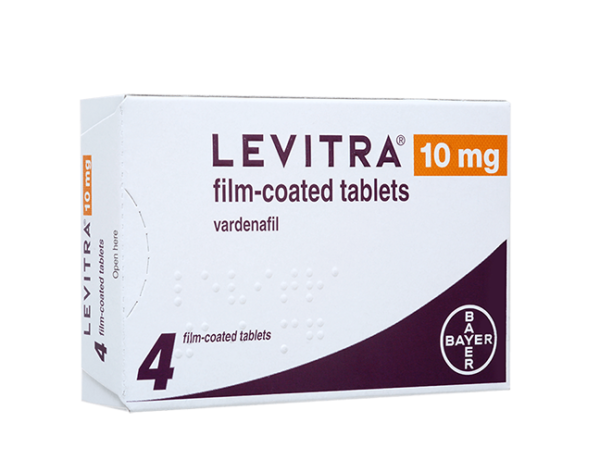
Levitra does not directly cause penile erections but affects the response to sexual stimulation.
It is used to treat erectile dysfunction. It is also used (as off-label medicine) in adults for the treatment of Raynaud's phenomenon.
Vardenafil Dose in Adults
- Oral disintegrating tablets cannot be used interchangeably with film-coated tablets
- Patients who require a dose other than 10 mg have to use film-coated tablets.
Dosage in the treatment of Erectile dysfunction:
- Film-coated tablet (Levitra):
- 10 mg orally given almost 1 hour before sexual activity.
- Dosage varies from 5 to 20 mg
- It is taken as one single dose and should not be taken more than once daily
- The maximum dose is 20 mg in 24 hours
- The orally disintegrating tablet (Staxyn):
- 10 mg given orally 1 hour before sexual activity.
- The maximum dose is 10 mg in 24 hours
Off label dosage in the treatment of Raynaud phenomenon :
- It is given 10 mg orally twice daily.
Dosing adjustment with other medications:
- Alpha-blocker (Stable dose at the time of vardenafil initiation):
- Film-coated tablet (Levitra):
- Initially, 5 mg is given once daily;
- If an alpha-blocker is given in addition to vardenafil therapy, then it should be given at the smallest possible dose.
- Oral disintegrating tablet (Staxyn):
- Do not use to start therapy.
- Initially, therapy should be given with film-coated tablets at lower doses.
- Patients who have been using previously filmcoated tablets then it may be switched to oral disintegrating tablets as recommended by a physician.
- When coadministering, allow a time interval between dosing (eg, 6-hour interval).
-
CYP3A4 inhibitors:
- Film-coated tablet (Levitra):
- The dosage of vardenafil can require adjustment in patients receiving potent CYP3A4 inhibitors (eg, clarithromycin, erythromycin, saquinavir, atazanavir, indinavir, itraconazole, ketoconazole, ritonavir ).
- For ritonavir, maximum dose of vardenafil 2.5 mg should not be exceeded in a 72hour period.
- For indinavir, atazanavir, ketoconazole, saquinavir,400 mg daily, itraconazole 400 mg daily, and clarithromycin, maximum dose of vardenafil 2.5 mg should not be exceeded in a 24-hour period.
- For ketoconazole 200 mg daily, itraconazole 200 mg daily, and erythromycin, a single maximum dose of vardenafil 5 mg should not be exceeded in a 24-hour period.
- Oral disintegrating tablet (Staxyn):
- Donot coadminister with potent or moderate CYP3A4 inhibitors (atazanavir, ritonavir,erythromycin, indinavir, clarithromycin, itraconazole, ketoconazole, , saquinavir)
Vardenafil Dose in Childrens
Not recommmended in children
Pregnancy Risk Factor B
- Animal studies did not show any adverse events
- Vardenafil should not be used by women.
- In healthy males, there were no effects on sperm motility and morphology.
Vardenafil can be used during breastfeeding
- It is unknown whether vardenafil can be found in breast milk.
Vardenafil Dose in Kidney disease:
- Mild, moderate, or severe impairment:
- No dosage adjustment advised.
- Hemodialysis:
- Use is not advised.
Vardenafil Dose in Liver Disease:
- Mild impairment (Child-Pugh class A):
- No dosage adjustment advised.
- Moderate impairment (Child-Pugh class B):
- Film-coated tablet (Levitra):
- Initially, 5 mg is given almost 60 minutes before sexual activity
- The maximum dose is 10 mg daily which is taken as one single dose and should not be taken more than once daily
- The orally disintegrating tablet (Staxyn):
- Its use is not recommended.
- Film-coated tablet (Levitra):
- Severe impairment (Child-Pugh class C):
- Use is not advised.
Common Side Effects of Vardenafil Include:
- Cardiovascular:
- Flushing
- Central nervous system:
- Headache
Less Common Side Effects of Vardenafil Include:
- Central Nervous System:
- Dizziness
- Gastrointestinal:
- Dyspepsia
- Nausea
- Neuromuscular & Skeletal:
- Back Pain
- Increased Creatine Phosphokinase
- Respiratory:
- Rhinitis
- Flu-Like Symptoms
- Nasal Congestion
- Sinusitis
Contraindication to Vardenafil Include:
- Coadministration of nitric oxide donors or nitrates (either continuously and/or intermittently) or guanylate-cyclase stimulators, such as riociguat.
- Allergy reactions to vardenafil and any component of the formulation
- Indinavir, ketoconazole or ritonavir can be co-administered (Levitra and Staxyn), as well as erythromycin and clarithromycin.
- History of Pateritic Anterior Ischemic Optic Neuropathy (NAION)
Warnings and precautions
- Color discrimination:
- It can lead to color discrimination impairment due to dose.
- Patients with retinitis pigmentosa should use it with caution.
- Hearing loss:
- It can lead to a sudden loss or decrease in hearing, tinnitus and dizziness.
- Hypotension
- There have been decreases in blood pressure.
- Patients with left ventricular obstruction should not use it.
- Hypotension can be caused by coadministration of alpha-adrenergic antagonist treatment.
- Before initiating treatment at the lowest dose, patients should be hemodynamically stable.
- Reduce ethanol intake as it may increase the risk for symptomatic hypotension.
- Priapism
- It has been reported that painful erections lasting more than six hours have been observed.
- If the erection continues for more than four hours, advise patients to immediately seek medical attention.
- Patients with conditions that may lead to priapism (multiple meeloma or sickle cell anemia) should be cautious.
- Vision loss:
- Vision loss is a rare occurrence and can be a sign that NAION has been diagnosed.
- If a sudden loss occurs in vision, advise patients to seek medical attention.
- Other risk factors include smoking, hyperlipidemia and diabetes.
- Anatomical penis deformation:
- Patients with anatomical deformations of the penis should be cautious.
- Bleeding disorders:
- Patients with bleeding disorders should be treated carefully
- Cardiovascular disease
- Patients with uncontrolled hypertension (>170/100mm Hg), hypotension (0-90/50mm Hg), life-threatening arrhythmias; stroke or MI within 6 months; heart disease or coronary artery disease causing angina are not recommended.
- Patients with left ventricular obstruction should be careful.
- Sexual activity can pose a cardiac risk so doctors may consider their patients' cardiovascular health before prescribing any treatment for erectile problems.
- Congenital QT prolongation:
- Patients with congenital QT prolongation are not advised to use this product.
- Hepatic impairment
- Patients with moderate hepatic impairment (Child Puugh class B) should be used with caution and dosage adjustment.
- Patients with severe hepatic impairment (Child Pugh class C) are not advised to use this product.
- Peptic ulcer disease:
- Patients with active peptic ulcer diseases should be cautious.
- Renal impairment
- Patients with end-stage renal disease that requires dialysis are not advised to use it.
|
Alcohol (Ethyl) |
May enhance the hypotensive effect of Phosphodiesterase 5 Inhibitors. |
|
Alpha1-Blockers (Uroselective) |
May enhance the hypotensive effect of Phosphodiesterase 5 Inhibitors. |
|
Aprepitant |
May increase the serum concentration of CYP3A4 Substrates (High risk with Inhibitors). |
|
Blood Pressure Lowering Agents |
Phosphodiesterase 5 Inhibitors may enhance the hypotensive effect of Blood Pressure Lowering Agents. |
|
Bosentan |
May decrease the serum concentration of Phosphodiesterase 5 Inhibitors. Phosphodiesterase 5 Inhibitors may increase the serum concentration of Bosentan. |
|
Clofazimine |
May increase the serum concentration of CYP3A4 Substrates (High risk with Inhibitors). |
|
CYP3A4 Inhibitors (Moderate) |
May decrease the metabolism of CYP3A4 Substrates (High risk with Inhibitors). |
|
Duvelisib |
May increase the serum concentration of CYP3A4 Substrates (High risk with Inhibitors). |
|
Erdafitinib |
May increase the serum concentration of CYP3A4 Substrates (High risk with Inhibitors). |
|
Etravirine |
May decrease the serum concentration of Phosphodiesterase 5 Inhibitors. Management: No empiric dosage adjustments are recommended with concomitant therapy; however, dose of the phosphodiesterase inhibitor may need to be altered based on clinical response. |
|
Fosaprepitant |
May increase the serum concentration of CYP3A4 Substrates (High risk with Inhibitors). |
|
Fosnetupitant |
May increase the serum concentration of CYP3A4 Substrates (High risk with Inhibitors). |
|
Haloperidol |
QT-prolonging Agents (Indeterminate Risk - Avoid) may enhance the QTcprolonging effect of Haloperidol. |
|
Larotrectinib |
May increase the serum concentration of CYP3A4 Substrates (High risk with Inhibitors). |
|
Lorcaserin |
May enhance the adverse/toxic effect of Phosphodiesterase 5 Inhibitors. Specifically, the risk of developing priapism may be increased. |
|
Netupitant |
May increase the serum concentration of CYP3A4 Substrates (High risk with Inhibitors). |
|
Palbociclib |
May increase the serum concentration of CYP3A4 Substrates (High risk with Inhibitors). |
|
QT-prolonging Agents (Highest Risk) |
QT-prolonging Agents (Indeterminate Risk - Avoid) may enhance the QTc-prolonging effect of QT-prolonging Agents (Highest Risk). Management: Monitor for QTc interval prolongation and ventricular arrhythmias when these agents are combined. Patients with additional risk factors for QTc prolongation may be at even higher risk. |
|
Sapropterin |
May enhance the hypotensive effect of Phosphodiesterase 5 Inhibitors. |
|
Simeprevir |
May increase the serum concentration of CYP3A4 Substrates (High risk with Inhibitors). |
|
Simeprevir |
May increase the serum concentration of Phosphodiesterase 5 Inhibitors. |
|
Risk Factor D (Consider therapy modification) |
|
|
Alpha1-Blockers (Nonselective) |
Phosphodiesterase 5 Inhibitors may enhance the hypotensive effect of Alpha1-Blockers (Nonselective). Management: Ensure patient is stable on one agent prior to initiating the other, and always initiate combination using the lowest possible dose of the drug being added. When tadalafil is used for treatment of BPH, concurrent alpha 1-blockers are not recommended. |
|
Clarithromycin |
|
|
Cobicistat |
May increase the serum concentration of Vardenafil. Management: Recommendations regarding use of vardenafil with cobicistat-containing products vary by vardenafil product and by country. See full drug interaction monograph for details. |
|
CYP3A4 Inhibitors (Strong) |
May increase the serum concentration of Vardenafil. Management: Recommendations regarding concomitant use of vardenafil with strong CYP3A4 inhibitors may vary depending on brand name (e.g., Levitra, Staxyn) or by international labeling. See full drug interaction monograph for details. |
|
Erythromycin (Systemic) |
May increase the serum concentration of Vardenafil. Management: Limit dose of vardenafil film-coated tablets (Levitra) to 5 mg per 24 hours with concomitant use of erythromycin. Concomitant use of vardenafil orally disintegrating tablets (Staxyn) with erythromycin is not recommended. |
|
Fluconazole |
May increase the serum concentration of Vardenafil. Management: Limit vardenafil doses to a maximum of 5 mg per 24-hour period in patients receiving concurrent therapy with a moderate CYP3A4 inhibitor such as fluconazole. |
|
Itraconazole |
May increase the serum concentration of Vardenafil. Management: Limit vardenafil to a max of 5 mg/24 hours in patients receiving itraconazole 200 mg/day, and a max of 2.5 mg/24 hours in patients receiving itraconazole 400 mg/day. Itraconazole labeling and Staxyn brand of vardenafil both recommend avoiding this combo. |
|
Ketoconazole (Systemic) |
May increase the serum concentration of Vardenafil. Management: Limit vardenafil dosing to a maximum of 5 mg per 24 hours in patients receiving ketoconazole 200 mg/day, and a maximum of 2.5 mg per 24 hours in patients receiving ketoconazole 400 mg/day. |
|
MiFEPRIStone |
May increase the serum concentration of CYP3A4 Substrates (High risk with Inhibitors). Management: Minimize doses of CYP3A4 substrates, and monitor for increased concentrations/toxicity, during and 2 weeks following treatment with mifepristone. Avoid cyclosporine, dihydroergotamine, ergotamine, fentanyl, pimozide, quinidine, sirolimus, and tacrolimus. |
|
Posaconazole |
May increase the serum concentration of Vardenafil. Management: Limit vardenafil dosing to a maximum of 2.5 mg per 24 hours in patients receiving concurrent therapy with strong CYP3A4 inhibitors, such as posaconazole. |
|
Stiripentol |
May increase the serum concentration of CYP3A4 Substrates (High risk with Inhibitors). Management: Use of stiripentol with CYP3A4 substrates that are considered to have a narrow therapeutic index should be avoided due to the increased risk for adverse effects and toxicity. Any CYP3A4 substrate used with stiripentol requires closer monitoring. |
|
Voriconazole |
May increase the serum concentration of Vardenafil. Management: Limit vardenafil dosing to a maximum of 2.5 mg per 24 hours in patients receiving concurrent therapy with strong CYP3A4 inhibitors, such as voriconazole. |
|
Risk Factor X (Avoid combination) |
|
|
Alprostadil |
Phosphodiesterase 5 Inhibitors may enhance the adverse/toxic effect of Alprostadil. |
|
Amyl Nitrite |
Phosphodiesterase 5 Inhibitors may enhance the vasodilatory effect of Amyl Nitrite. |
|
Conivaptan |
May increase the serum concentration of CYP3A4 Substrates (High risk with Inhibitors). |
|
Dapoxetine |
May enhance the orthostatic hypotensive effect of Phosphodiesterase 5 Inhibitors. |
|
Fusidic Acid (Systemic) |
May increase the serum concentration of CYP3A4 Substrates (High risk with Inhibitors). |
|
Idelalisib |
May increase the serum concentration of CYP3A4 Substrates (High risk with Inhibitors). |
|
Molsidomine |
May enhance the hypotensive effect of Phosphodiesterase 5 Inhibitors. |
|
Nitroprusside |
Phosphodiesterase 5 Inhibitors may enhance the hypotensive effect of Nitroprusside. |
|
Phosphodiesterase 5 Inhibitors |
May enhance the adverse/toxic effect of other Phosphodiesterase 5 Inhibitors. |
|
Riociguat |
Phosphodiesterase 5 Inhibitors may enhance the hypotensive effect of Riociguat. |
|
Vasodilators (Organic Nitrates) |
Phosphodiesterase 5 Inhibitors may enhance the vasodilatory effect of Vasodilators (Organic Nitrates). |
Monitor:
Monitor for response, adverse reactions, blood pressure, and heart rate.
How to administer Vardenafil?
- It can be administered with or without food, about 60 minutes prior to sexual activity.
- The orally disintegrating tablet should not be removed from the pack until administered.
- While using dry hands, immediately place on the tongue.
- Then tablet will dissolve within seconds
- Do not use with liquids.
- Do not split, crush or chew.
Mechanism of action of Vardenafil:
- It is a PDE-5 inhibitor.
- Although it does not cause penile erections, it affects sexual stimulation.
- The physiological mechanism for erection of penis involves the release of nitric dioxide in the corpus cavernosum and sexual stimulation.
- The Nitric oxide activates the guanylate cyclease, which causes an increase in cGMP. This results in smooth muscle relaxation, and blood flow to the corpus cavernosum.
- It also increases the NO effect by inhibiting phosphodiesterase 5
- Inhibiting PDE-5 with vardenafil causes local NO release.
- This results in increased levels of cGMP within the corpus cavernosum.
- It also leads to smooth muscle relaxation and an increase in blood flow to the corpus.
- It is safe to take at the recommended dosage.
Onset of action: almost 60 minutes
Absorption: Rapid
Distribution: V : 208 L
Protein binding: almost 95% (parent drug and metabolite)
Metabolism: Hepatic via CYP3A4 (major), CYP2C and 3A5 (minor); forms active metabolite
Bioavailability: almost 15%
- Film-coated tablet: Elderly (≥65 years): AUC increases by 52%;
- In hepatic impairment (moderate, Child-Pugh class B) AUC is increased by 160%
- Oral disintegrating tablet: Elderly (≥65 years): AUC is increased by 21% more compared to film coated tablet
Half-life elimination: Vardenafil and metabolite has half life of 4 to 6 hours
Time to peak plasma concentration: 0.5 to 2 hours
Excretion: In Feces (~91% to 95% as metabolites); in urine (~2% to 6%)
International Brands of Vardenafil:
- APO-Vardenafil
- JAMP-Vardenafil
- JAMP-Vardenafil ODT
- Levitra
- MYLAN-VARDENAFIL
- Staxyn
- Levitra
- Levitra ODT
- Levitra Orodispersible
- Powerecta
- Romantigra
- Valenty
- Vardena
- Vivanza
- Yaila
Vardenafil Brands in Pakistan:
Levitra (Verdenafil) is not available in Pakistan.
.png)