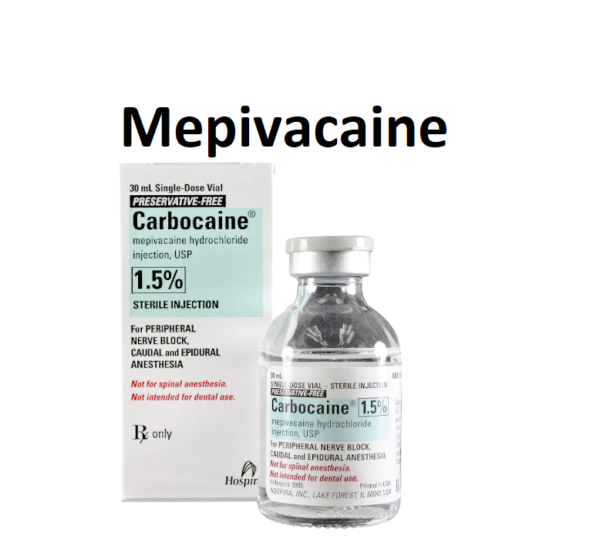
A local anaesthetic with a moderately quick onset and medium duration of action is mepivacaine (Carbocaine). For local anaesthetic during dental treatments and nerve blocks, it is recommended.
Mepivacaine (Carbocaine) Uses:
-
Dental anesthesia:
- It is used to produce local anaesthetic for dental treatments in both adult and paediatric patients through infiltration or nerve block.
-
Local or regional anesthesia (eg, epidural, caudal, or peripheral nerve blocks):
-
Additionally, using local infiltration, peripheral, and central neural procedures like epidural and caudal, it is utilised to provide local or regional analgesia as well as anaesthesia. The use of spinal anaesthetic is not permitted.
-
Mepivacaine (Carbocaine) Dose in Adults:
It is important to note that Dose varies depending on the procedure, level of anaesthesia needed, vascularity of the tissue, length of anaesthesia needed, and patient's physical condition.The smallest dose and concentration required to produce the desired effect is recommended.
Mepivacaine Dose in the Local or regional anesthesia (eg, epidural, caudal, or peripheral nerve blocks):
- 400 mg is the highest single or total dose that can be administered for one procedure. A dose of 500 mg can be given if epinephrine has been added.
- The maximum dose per 24 hours is 1,000 mg.
Mepivacaine Dose in the treatment of Cervical, brachial, intercostal, pudendal nerve block:
-
5 to 40 mL of a 1% solution or 5 to 20 mL of a 2% solution up to a 400 mg maximum dose is acceptable. Inject half the whole amount on each side to block the pudendal nerve.
Mepivacaine Dose in the treatment of Transvaginal block (paracervical plus pudendal):
-
It may be dispersed. 300 mg in a maximum of 30 mL (total for both sides) of a 1% solution Give each side half of the whole dose.
Mepivacaine Dose in the treatment of Paracervical block:
- Up to 20 mL (total for both sides) of a 1% solution up to a maximum of 200 mg.
- Inject one-half the total dose to each side. This is the maximum clinically recommended dose per 90-minute procedure. It should be injected slowly with 5 minutes between sides.
Mepivacaine dose in the treatment of Caudal and epidural block (preservative-free solutions only):
- 15 to 30 mL of a 1% solution with a 300 mg maximum dose, 10 to 25 mL of a 1.5% solution with a 375 mg maximum dose, or 10 to 20 mL of a 2% solution are the other options (maximum: 400 mg).
Mepivacaine Dose in the treatment of Infiltration:
- Up to 40 mL of a 1% solution (maximum dose of 400 mg). If epinephrine is added then up to 50 mL of epinephrine has been added with a maximum dose of 500 mg).
- An equivalent amount of a 0.5% solution prepared by diluting the 1% solution with NS may be used for large areas.
Mepivacaine dose in the treatment of Peripheral nerve block to provide a surgical level of anesthesia:
-
Blockade of two or more different nerves, a nerve plexus, or very big nerves at more proximal sites constitutes a major nerve block:
- 30 to 50 mL of a 1.5% or 1% solution, with a 500 mg maximum dosage)
-
Minor nerve block (blockade of a single nerve [eg, ulnar or radial]):
- 5 to 20 mL of a 1% solution with a maximum dose of up to 200 mg.
-
Therapeutic block:
- 1 to 5 mL of a 1% solution with a 50 mg maximum dose or 1 to 5 mL of a 2% solution with a 100 mg maximum dose.
Mepivacaine Dose in Dental anesthesia:
-
Single site in upper or lower jaw:
- 51 mg as a 3% solution.
Mepivacaine Dose for treating Infiltration and nerve block of the entire oral cavity:
- 300 mg each appointment, not to exceed 270 mg as a 3% solution, up to 6.6 mg/kg.
- The highest total dose advised by the manufacturer is 400 mg.
The following number of dental cartridges (1.7 mL) provide the indicated amounts of mepivacaine dental anesthetic 3%. See table.
| # of Cartridges (1.7 mL) | Mepivacaine mg (3%) |
| 1 | 51 |
| 2 | 102 |
| 3 | 153 |
| 4 | 204 |
| 5 | 255 |
| 6 | 306 |
| 7 | 357 |
| 8 | 408 |
Mepivacaine (Carbocaine) Dose in Childrens:
- It is noteworthy that the dose changes depending on the procedure, level of anaesthetic necessary, vascularity of tissue, length of anaesthesia needed, and patient's physical condition.
- The smallest dose and concentration required to produce the desired effect should be chosen.
- To avoid vascular entrance, think about incremental administration with negative aspiration before each injection.
- However, there is no assurance that intravascular injection has been avoided just because there is no blood in the syringe. It should only be administered under the direction of a trained medical professional with experience with anaesthetics.
Mepivacaine Dose in the Dental anesthesia:
-
Children and Adolescents: 3% solution: Injection:
- Manufacturer's labeling:
- The maximum dose is 5 -6 mg/kg with a maximum total dose of 270 mg.
- In adults, the dose for a single site in the upper or lower jaw is 51 mg which amounts to one 1.7 mL cartridge.
- Alternate dosing:
- American Academy Pediatric Dentistry (AAPD 2015):
- The maximum dose is 4.4 mg/kg with a maximum total dose of 300 mg in any single dental sitting
- American Academy Pediatric Dentistry (AAPD 2015):
- Manufacturer's labeling:
Mepivacaine Dose in the regional or Local anesthesia (eg, epidural, caudal, or peripheral nerve blocks):
- The manufacturer's recommended maximum adult dose is 400 mg, with the maximum single or cumulative dose for one procedure being 5 to 6 mg/kg.
- Only concentrations of less than 2% should be used in patients less than 3 years or less than 14 kg to ensure adequate drug volume for the area and to decrease the potential for local anesthetic systemic toxicity.
Mepivacaine Pregnancy Category: C
- Studies on animal reproduction have not been done yet.
- Mepivacaine was used for obstetrical pain relief.
Use of mepivacaine while breastfeeding
- It is not yet known if breast milk contains it.
- Breastfeeding mothers should be cautious when administering mepivacaine.
- Breastfeeding infants are generally healthy regardless of the Usual Infiltration Doses of Mepivacaine administered in dental anesthetics.
Dose in Kidney Disease:
There are no clear cut dose adjustments recommended in the literature however caution is advised.
Mepivacaine (Carbocaine) Dose in Liver disease:
The literature doesn't mention changing the dosage. Because individuals with severe hepatic illness are unable to metabolise local anaesthetics normally and are more likely to produce hazardous plasma concentrations, it should be administered with caution in these patients.
Side effects of Mepivacaine (Carbocaine):
The amount of mepivacaine in the blood, the method of administration, and the patient's physical condition all have an impact on how detrimental effects on the CNS and cardiovascular system manifest. The following consequences are more likely to happen during systemic injection as opposed to infiltration.
-
Cardiovascular:
- Ventricular arrhythmia
- Bradycardia
- Syncope
- Cardiovascular depression
- Heart block
- Cardiovascular stimulation
- Hypertension
- Low cardiac output
- Hypotension
- Tachycardia
- Cardiac insufficiency
-
Central nervous system:
- Persistent anesthesia
- Chills
- Paralysis
- Convulsions
- Increased body temperature
- Excitement
- Loss of consciousness
- Nervousness
- Drowsiness
- Dizziness
- Confusion
- Restlessness
- Anxiety
-
Dermatologic:
- Pruritus
- Erythema
- Urticaria
- Diaphoresis
-
Gastrointestinal:
- Fecal incontinence
- Nausea
- Oral paresthesia (persistent; involving lips, tongue, and oral tissues)
- Vomiting
-
Genitourinary:
- Urinary retention
- Urinary incontinence
-
Hematologic & oncologic:
- Methemoglobinemia
-
Hypersensitivity:
- Anaphylactoid reaction
- Angioedema
- Hypersensitivity reaction
-
Neuromuscular & skeletal:
- Tremor
- Chondrolysis (continuous intra-articular administration)
- Weakness
-
Ophthalmic:
- Miosis
- Blurred vision
-
Otic:
- Tinnitus
-
Respiratory:
- Apnea
- Respiratory depression
- Sneezing
Contraindications to Mepivacaine (Carbocaine):
Hypersensitivity is a serious contraindication to the use of this drug.
Warnings and precautions
-
Toxicity to the CNS:
- Following each injection of local anesthetic, it is important to monitor the patient's consciousness carefully and continuously.
- These symptoms may include restlessness, anxiety and dizziness.
- The treatment is primarily supportive and symptomatic.
-
Familial malignant hyperthermia
- This could also lead to malignant hyperthermia. It is important to follow a standard protocol for treatment and identification.
-
Infusion-related intra-articular chondrolysis
- Continuous intra-articular injections of local anaesthetics after arthroscopic or other surgical procedures are not advised.
- Following infusion, chondrolysis—most commonly seen in the shoulder joint—has been seen. Some situations call for shoulder replacement or arthroplasty.
-
Methemoglobinemia
- Local anesthesia has been used to treat methemoglobinemia. Methemoglobinemia that is clinically significant must be treated immediately.
- It can occur immediately or it may take several hours.
- Patients with glucose-6-phosphate hydrogenase deficiencies, congenital or irreversible methemoglobinemia, cardiac compromise, exposure to oxidizing agent or their metabolites, and infants younger than 6 months old are more at risk.
-
Respiratory arrest
- Local anesthetics can be used to treat respiratory arrest.
-
Seizures
- Unintentional intravascular injections may have caused cardiac arrest-like convulsions.
-
Cardiovascular disease
- Patients with cardiovascular disease (rhythm disturbances, shocks, heart block, hypotension) should be cautious.
-
Hepatic impairment
- The danger of producing hazardous plasma concentrations is higher in individuals with severe hepatic disorders because they cannot or cannot normalise the metabolization of local anaesthetics.
-
Renal impairment
- Patients with impaired renal function should be cautious.
Mepivacaine: Drug Interaction
|
Beta-Blockers |
May increase the serum concentration of Mepivacaine. |
|
Hyaluronidase |
Could make local anaesthetics more harmful or poisonous. |
|
Methemoglobinemia Associated Agents |
Could make local anaesthetics more harmful or poisonous. In particular, there may be an elevated risk for methemoglobinemia. |
|
Neuromuscular-Blocking Agents |
The neuromuscular-blocking effect of neuromuscular-blocking agents may be strengthened by local anaesthetics. |
|
Technetium Tc 99m Tilmanocept |
Technetium Tc 99m Tilmanocept's diagnostic utility may be reduced by local anaesthetics. Management: Prevent co-injecting local anaesthetics and technetium Tc 99m tilmanocept at the same time. Other applications of these agents in combination do not appear to be affected by this interaction. |
|
Bupivacaine (Liposomal) |
Local Anesthetics may enhance the adverse/toxic effect of Bupivacaine (Liposomal). Management: Liposomal bupivacaine should not be administered with local anesthetics. Liposomal bupivacaine may be administered 20 minutes or more after the administration of lidocaine, but the optimal duration of dose separation for other local anesthetics is unknown |
Monitoring parameters:
- Vital signs.
- State of consciousness.
- Signs of CNS toxicity
How to administer Mepivacaine (Carbocaine)?
- Administer slowly in small incremental doses, with frequent aspirations before and during the injection to avoid intravascular injection.
- When infection and inflammation are present in the area where the injection is to be given, use with caution.
Mechanism of action of Mepivacaine (Carbocaine):
- Lidocaine-like local anaesthetic mepivacaine is an amide.
- Local anesthetics are able to bind to specific areas of the intracellular sodium channels to prevent sodium influx into the axon.
- Depolarization is therefore prevented, which is necessary for action potential propagation as well as subsequent nerve function.
- Reversible. In order to restore sodium channel function, the medication is able to diffuse away from the axon. Then, nerve transmission resumes.
The onset of action (route and dose-dependent):
- Range: 3 to 20 minutes.
- Dental:
- In Upper jaw: 30 to 120 seconds and
- In Lower jaw: 1 to 4 minutes
Duration (route and dose-dependent):
- 2 to 2.5 hours.
- Dental:
- Upper jaw: 20 minutes and
- lower jaw: 40 minutes
Protein binding:
- Approximately 75%
Metabolism:
- Primarily hepatic via N-demethylation, hydroxylation, and glucuronidation.
Half-life elimination:
- Neonates: 8.7 to 9 hours;
- Adults: 1.9 to 3.2 hours
Excretion:
- Mainly through kidneys.
- 90% to 95% as metabolites.
International Brand Names of Mepivacaine:
- Carbocaine
- Carbocaine Preservative-Free
- Polocaine; Polocaine Dental
- Polocaine-MPF
- Scandonest 3% Plain
- Carbocain
- Carbocain Dental
- Carbocaina
- Carbocaine Dental
- Carbocaine HCl
- Isocaine
- Isocaine 3%
- Lentocaine
- Meaverin
- Mepecaine
- Mepicaton
- Mepicaton 3%
- Mepidont
- Mepifrin
- Mepigobbi
- Mepivastesin
- Mevan
- Scandicain
- Scandicaine
- Scandinibsa
- Scandonest
- Scandonest Plain
- Scandonest Sans Vasoconstricteur
Mepivacaine Brand Names in Pakistan:
Mepivacaine Injection 3 % in Pakistan |
|
| Mepican | Ray Pharma (Pvt) Ltd |
.png)


