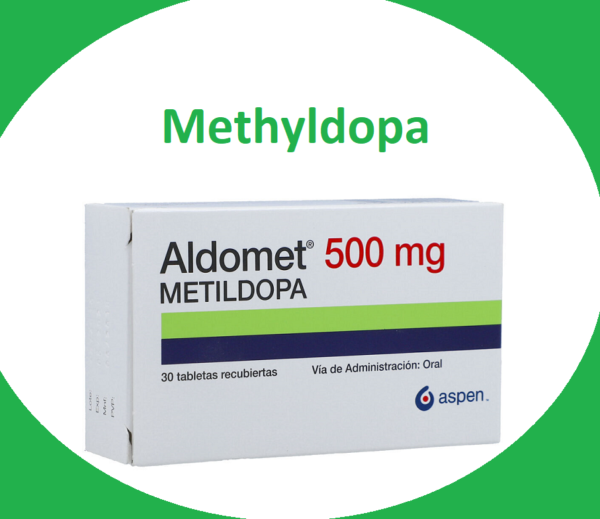
Methyldopa (Aldomet) is a centrally-acting antihypertensive medicine that inhibits the sympathetic outflow to the heart, vessels, and kidneys. It is considered the preferred treatment for hypertension in pregnant women.
Methyldopa (Aldomet) Uses:
-
Hypertension:
- Used in the management of hypertension.
Note: Not necessary for the initial treatment of hypertension (ACC/AHA [Whelton 2017]).
Methyldopa Dose in Adults:
Methyldopa (Aldomet) Dose as an alternative agent in the treatment of Hypertension:
- Oral: Initial:
- 250 mg 2 to 3 times a day;
- increase or decrease each day dose every 2 days dependent on response;
- maximum dose: 3,000 mg per day;
- usual dose range: 250 to 1,000 mg each day in 2 divided doses.
- Note: When considered with other antihypertensives other than thiazide diuretics, limit the initial daily dose of methyldopa to 500 mg per day.
- IV:
- 250 to 1,000 mg every 6 to 8 hours;
- maximum: 1,000 mg every 6 hours
Methyldopa Dose in Childrens:
Note: Methyldopate injection is not available in the US.
Methyldopa (Aldomet) Dose in the treatment of Hypertension:
Note: Methyldopa is not suggested as a treatment option for hypertension, use has been replaced by other agents.
-
Children and Adolescents:
- Oral: Initial: 10 mg per kg per day in 2 to 4 divided doses; titrate no more frequently than every 2 days until adequate response to maximum daily dose: 65 mg/kg/day or 3,000 mg/day whichever is less.
Methyldopa (Aldomet) Dose in the treatment of Hypertensive crisis:
Note: Use has been replaced by other agents; methyldopa not suggested by experts as a treatment option:
-
Children and Adolescents:
- IV: Initial: 2 to 4 mg/kg/dose every 6 to 8 hours; titrate as needed to a recommended daily dose of 20 to 40 mg/kg/day in divided doses or higher if required up to maximum daily dose: 65 mg per kg per day or 3,000 mg per day whichever is less.
Methyldopa (Aldomet) Pregnancy Category:
- Methyldopa crosses over the placenta.
- Data available show that pregnancy use does not cause harm to fetal health and can improve fetal outcomes.
- Chronic maternal hypertension can increase the risk for birth defects, low birthweight, stillbirths, preterm delivery and neonatal deaths.
- The severity and duration of maternal hypertension may have an impact on the actual fetal/neonatal risk.
- Untreated hypertension can also increase the risk of adverse maternal outcomes, myocardial injury, stroke, preeclampsia and gestational complications.
- Oral methyldopa can be used to treat chronic hypertension in pregnancy. However, adverse effects and reduced effectiveness may make it less attractive than other drugs.
- Pre-existing hypertension in women may be reintroduced to their medication during pregnancy, unless contraindications are present.
Methyldopa use during breastfeeding:
- Breast milk contains methyldopa.
- The relative infant dose (RID), of methyldopa, is 1.2%. This was calculated using the highest concentration of breast milk and compared with a maternal weight-adjusted dose of 1,000mg per day.
- When the RID of medication falls below 10%, breastfeeding is generally acceptable.
- The RID of Methyldopa was calculated with a milk concentration 1.14 mg/mL.
- This gives an estimated daily infant dose via breastmilk of 0.1716mg/day.
- This was done after a 1-week-old patient was given oral methyldopa 1,000mg/day.
- The peak milk concentration was measured at 6 hours after administration.
- Additionally, methyldopa in the infant's serum was detected; no adverse effects were observed in this infant or in two other exposed infants.
- According to the World Health Organization and the American College of Obstetricians and Gynologists (ACOG), methyldopa can be used in conjunction with breastfeeding.
- Due to the risk of depression in the postnatal period, methyldopa administration has been linked to maternal depression.
Methyldopa (Aldomet) Dose in Kidney Disease:
- There are no dosage adjustments provided in the manufacturer's labeling; however, the following adjustments have been recommended:
- CrCl >50 mL/minute:
- Administer every 8 hours.
- CrCl 10 to 50 mL/minute:
- Administer every 8 to 12 hours.
- CrCl <10 mL/minute:
- Administer every 12 to 24 hours.
- CrCl >50 mL/minute:
- Intermittent hemodialysis:
- Moderately dialyzable (up to 60% with a 6-hour session): Administer after hemodialysis on dialysis days.
- Peritoneal dialysis (PD):
- Administer every 12 to 24 hours.
- Continuous renal replacement therapy (CRRT):
- Administer every 8 to 12 hours.
Note: Use of antihypertensives in patients requiring CRRT is generally not recommended since CRRT is typically employed when patients cannot tolerate intermittent hemodialysis due to hypotension.
Methyldopa (Aldomet) Dose in Liver disease:
There are no dosage adjustments provided in the manufacturer's labeling; use is contraindicated in patients with active hepatic disease.
Side effects of Methyldopa (Aldomet):
-
Cardiovascular:
- Bradycardia
- Cardiac Failure
- Exacerbation Of Angina Pectoris
- Myocarditis
- Orthostatic Hypotension
- Paradoxical Pressor Response (Intravenous Use)
- Pericarditis
- Peripheral Edema
- Prolonged Carotid Sinus Syncope
- Vasculitis
-
Central Nervous System:
- Bell’s Palsy
- Cerebrovascular Insufficiency (Symptoms)
- Choreoathetosis
- Decreased Mental Acuity
- Depression
- Dizziness
- Drug Fever
- Headache
- Nightmares
- Paresthesia
- Parkinson’s Disease
- Sedation
-
Dermatologic:
- Skin Rash
- Toxic Epidermal Necrolysis
-
Endocrine & Metabolic:
- Amenorrhea
- Decreased Libido
- Gynecomastia
- Hyperprolactinemia
- Weight Gain
-
Gastrointestinal:
- Abdominal Distention
- Colitis
- Constipation
- Diarrhea
- Flatulence
- Glossalgia
- Melanoglossia
- Nausea
- Pancreatitis
- Sialadenitis
- Vomiting
- Xerostomia
-
Genitourinary:
- Breast Hypertrophy
- Impotence
- Lactation
-
Hematologic & Oncologic:
- Bone Marrow Depression
- Eosinophilia
- Granulocytopenia
- Hemolytic Anemia
- Leukopenia
- Positive ANA Titer
- Positive Direct Coombs Test
- Thrombocytopenia
-
Hepatic:
- Abnormal Hepatic Function Tests
- Hepatic Disease (Hepatitis)
- Jaundice
-
Neuromuscular & Skeletal:
- Arthralgia
- Lupus-Like Syndrome
- Myalgia
- Positive Rheumatoid Factor
- Weakness
-
Renal:
- Increased Blood Urea Nitrogen
-
Respiratory:
- Nasal Congestion
-
Miscellaneous:
- Positive LE Cell Preparation
Contraindications to Methyldopa (Aldomet):
- Hypersensitivity to methyldopa and any component of the formulation
- Hepatic disorders that were previously associated with methyldopa use;
- Active hepatic Disease (eg, active Cirrhosis, acute Hepatitis)
- Concurrent use of MAO inhibitors
Warnings and precautions
-
Edema
- You may experience weight gain or clinical edema. If this happens, discontinue the treatment. Concomitant diuretic therapy may be used to control mild edema.
-
Hematologic effects
- Rare cases of reversible Granulocytopenia or Thrombcytopenia have been reported.
- Hemolytic anemia is rare; positive Coombs tests are usually performed in 10% to 20% patients. This can occur between 6 and 12 month of treatment.
- Do not use methyldopa-induced Coombs negative hemolytic anemia during therapy. The Coombs test may not return to normal for several weeks or months.
-
Hepatic effects
- Rarely may cause hepatic diseases, including fatal hepatic neoplasms.
- If you have fever, jaundice, or abnormal liver function tests, stop using the drug and don't restart it.
-
Sedation
- Sedation is usually temporary and may occur during initiation or when the dose has been increased.
-
Cerebrovascular disease
- If symptoms develop in patients with severe cerebrovascular disease, discontinue use.
-
Hepatic impairment
- Patients with a history or impairment of the liver should be cautious.
-
Pheochromocytoma:
- Patients with pheochromocytoma should not use this product.
-
Renal impairment
- Patients with impaired renal function should be cautious. You may need to take smaller doses.
- Patients with severe renal impairment are more likely to have their active metabolites of Methyldopa accumulated.
Methyldopa: Drug Interaction
|
Alfuzosin |
May enhance the hypotensive effect of Blood Pressure Lowering Agents. |
|
Amphetamines |
May diminish the antihypertensive effect of Antihypertensive Agents. |
|
Antipsychotic Agents (Second Generation [Atypical]) |
Blood Pressure Lowering Agents may enhance the hypotensive effect of Antipsychotic Agents (Second Generation [Atypical]). |
|
Barbiturates |
May enhance the hypotensive effect of Blood Pressure Lowering Agents. |
|
Benperidol |
May enhance the hypotensive effect of Blood Pressure Lowering Agents. |
|
Bradycardia-Causing Agents |
May enhance the bradycardic effect of other Bradycardia-Causing Agents. |
|
Brigatinib |
May diminish the antihypertensive effect of Antihypertensive Agents. Brigatinib may enhance the bradycardic effect of Antihypertensive Agents. |
|
Brimonidine (Topical) |
May enhance the hypotensive effect of Blood Pressure Lowering Agents. |
|
COMT Inhibitors |
|
|
Dexmethylphenidate |
May diminish the therapeutic effect of Antihypertensive Agents. |
|
Diazoxide |
May enhance the hypotensive effect of Blood Pressure Lowering Agents. |
|
DULoxetine |
Blood Pressure Lowering Agents may enhance the hypotensive effect of DULoxetine. |
|
Herbs (Hypertensive Properties) |
May diminish the antihypertensive effect of Antihypertensive Agents. |
|
Herbs (Hypotensive Properties) |
May enhance the hypotensive effect of Blood Pressure Lowering Agents. |
|
Hypotension-Associated Agents |
Blood Pressure Lowering Agents may enhance the hypotensive effect of Hypotension-Associated Agents. |
|
Ivabradine |
Bradycardia-Causing Agents may enhance the bradycardic effect of Ivabradine. |
|
Lacosamide |
Bradycardia-Causing Agents may enhance the AV-blocking effect of Lacosamide. |
|
Levodopa-Containing Products |
Blood Pressure Lowering Agents may enhance the hypotensive effect of Levodopa-Containing Products. |
|
Lithium |
Methyldopa may enhance the adverse/toxic effect of Lithium. This may occur without notable changes in serum lithium concentrations. |
|
Lormetazepam |
May enhance the hypotensive effect of Blood Pressure Lowering Agents. |
|
Methylphenidate |
May diminish the antihypertensive effect of Antihypertensive Agents. |
|
Midodrine |
May enhance the bradycardic effect of Bradycardia-Causing Agents. |
|
Molsidomine |
May enhance the hypotensive effect of Blood Pressure Lowering Agents. |
|
Naftopidil |
May enhance the hypotensive effect of Blood Pressure Lowering Agents. |
|
Nicergoline |
May enhance the hypotensive effect of Blood Pressure Lowering Agents. |
|
Nicorandil |
May enhance the hypotensive effect of Blood Pressure Lowering Agents. |
|
Nitroprusside |
Blood Pressure Lowering Agents may enhance the hypotensive effect of Nitroprusside. |
|
Pentoxifylline |
May enhance the hypotensive effect of Blood Pressure Lowering Agents. |
|
Pholcodine |
Blood Pressure Lowering Agents may enhance the hypotensive effect of Pholcodine. |
|
Phosphodiesterase 5 Inhibitors |
May enhance the hypotensive effect of Blood Pressure Lowering Agents. |
|
Prostacyclin Analogues |
May enhance the hypotensive effect of Blood Pressure Lowering Agents. |
|
Quinagolide |
May enhance the hypotensive effect of Blood Pressure Lowering Agents. |
|
Ruxolitinib |
May enhance the bradycardic effect of Bradycardia-Causing Agents. Management: Ruxolitinib Canadian product labeling recommends avoiding use with bradycardia-causing agents to the extent possible. |
|
Serotonin/Norepinephrine Reuptake Inhibitors |
May diminish the antihypertensive effect of Alpha2-Agonists. |
|
Terlipressin |
May enhance the bradycardic effect of Bradycardia-Causing Agents. |
|
Tofacitinib |
May enhance the bradycardic effect of Bradycardia-Causing Agents. |
|
Yohimbine |
May diminish the antihypertensive effect of Antihypertensive Agents. |
|
Risk Factor D (Consider therapy modification) |
|
|
Amifostine |
Blood Pressure Lowering Agents may enhance the hypotensive effect of Amifostine. Management: When amifostine is used at chemotherapy doses, blood pressure lowering medications should be withheld for 24 hours prior to amifostine administration. If blood pressure lowering therapy cannot be withheld, amifostine should not be administered. |
|
Beta-Blockers |
Alpha2-Agonists may enhance the AV-blocking effect of Beta-Blockers. Sinus node dysfunction may also be enhanced. Beta-Blockers may enhance the rebound hypertensive effect of Alpha2-Agonists. This effect can occur when the Alpha2-Agonist is abruptly withdrawn. Management: Closely monitor heart rate during treatment with a beta blocker and clonidine. Withdraw beta blockers several days before clonidine withdrawal when possible, and monitor blood pressure closely. Recommendations for other alpha2-agonists are unavailable. Exceptions: Levobunolol; Metipranolol. |
|
Ceritinib |
|
|
Iron Preparations |
May decrease the serum concentration of Methyldopa. Exceptions: Ferric Carboxymaltose; Ferric Gluconate; Ferric Hydroxide Polymaltose Complex; Ferric Pyrophosphate Citrate; Ferumoxytol; Iron Dextran Complex; Iron Isomaltoside; Iron Sucrose. |
|
Mirtazapine |
May diminish the antihypertensive effect of Alpha2-Agonists. Management: Consider avoiding concurrent use. If the combination cannot be avoided, monitor for decreased effects of alpha2-agonists if mirtazapine is initiated/dose increased, or increased effects if mirtazapine is discontinued/dose decreased. |
|
Multivitamins/Minerals (with ADEK, Folate, Iron) |
May decrease the serum concentration of Methyldopa. Management: Consider separating doses of these products by 2 or more hours to minimize this interaction; however, the success of this action appears limited. Monitor for decreased therapeutic effects of methyldopa with concurrent use. |
|
Obinutuzumab |
May enhance the hypotensive effect of Blood Pressure Lowering Agents. Management: Consider temporarily withholding blood pressure lowering medications beginning 12 hours prior to obinutuzumab infusion and continuing until 1 hour after the end of the infusion. |
|
Riluzole |
Methyldopa may enhance the adverse/toxic effect of Riluzole. Specifically, the risk of hepatotoxicity may be increased. Management: Consider alternatives to methyldopa in patients receiving treatment with riluzole due to the potential for additive hepatotoxicity. |
|
Siponimod |
Bradycardia-Causing Agents may enhance the bradycardic effect of Siponimod. Management: Avoid coadministration of siponimod with drugs that may cause bradycardia. |
|
Tricyclic Antidepressants |
May diminish the antihypertensive effect of Alpha2-Agonists. Management: Consider avoiding this combination. If used, monitor for decreased effects of the alpha2-agonist. Exercise great caution if discontinuing an alpha2-agonist in a patient receiving a TCA. |
|
Risk Factor X (Avoid combination) |
|
|
Bromperidol |
Blood Pressure Lowering Agents may enhance the hypotensive effect of Bromperidol. Bromperidol may diminish the hypotensive effect of Blood Pressure Lowering Agents. |
|
Fexinidazole [INT] |
Bradycardia-Causing Agents may enhance the arrhythmogenic effect of Fexinidazole [INT]. |
|
Iobenguane Radiopharmaceutical Products |
Methyldopa may diminish the therapeutic effect of Iobenguane Radiopharmaceutical Products. Management: Discontinue all drugs that may inhibit or interfere with catecholamine transport or uptake for at least 5 biological half-lives before iobenguane administration. Do not administer methyldopa until at least 7 days after each iobenguane dose. |
|
Monoamine Oxidase Inhibitors |
May enhance the adverse/toxic effect of Methyldopa. |
Monitoring parameters:
- Blood pressure (standing and sitting/lying down),
- CBC,
- liver enzymes (periodically during the first 6 to 12 weeks or when unexplained fever occurs),
- Coombs test (direct) (may obtain prior to initiation and at 6 and 12 months);
- blood pressure monitor required during IV administration
The 2017 Guideline for the Prevention, Detection, Evaluation, and Management of High Blood Pressure in Adults:
- Confirmed hypertension and known CVD or 10-year ASCVD risk ≥10%:
- Target blood pressure less than 130 per 80 mm Hg is necessary.
- Confirmed hypertension without markers of increased ASCVD risk:
- Target blood pressure <130/80 mm Hg may be reasonable
How to administer Methyldopa (Aldomet)?
- IV: Infuse over 30 to 60 minutes.
- Oral: Administer new dosage increases in the evening to minimize sedation.
Mechanism of action of Methyldopa (Aldomet):
- Stimulation of central alpha-adrenergic receptors by a false neurotransmitter (alpha-methyl-norepinephrine) that results in a decreased sympathetic outflow to the heart, kidneys, and peripheral vasculature
The onset of action:
- Peak effect: Hypotensive: Oral, IV:
- Single-dose: Within 3 to 6 hours;
- Multiple-dose: 48 to 72 hours
Duration:
- Oral:
- Single-dose: 12 to 24 hours,
- Multiple-dose: 24 to 48 hours;
- IV: 10 to 16 hours
Absorption: Oral:
- Incomplete due to presystemic gut metabolism.
Protein binding:
- 10 percent to 15 percent.
Metabolism:
- Intestinal and hepatic
Bioavailability:
- ~42 percent.
Half-life elimination:
- Neonates: 10 to 20 hours;
- Adults: 1.5 to 2 hours;
- End-stage renal disease: Prolonged.
Time to peak, plasma:
- Oral: 2 to 4 hours.
Excretion:
- Urine (~70 percent as parent drug and metabolites);
- excretion complete within 36 hours
International Brand Names of Methyldopa:
- Adamet
- Adopal
- Aldin
- Aldomet
- Aldomet Forte
- Aldomet-Forte
- Aldometil
- Aldopa
- Alfamed
- Alfamet
- Alphadopa
- Bekanta
- Domecin
- Domepa
- Dopaflex
- Dopagyt
- Dopamed
- Dopamet
- Dopanore
- Doparine
- Dopatab
- Dopatab M
- Dopegyt
- Dopress
- Emdopa
- Fidopa
- Hy-po-tone
- Hydopa
- Hypolag
- Hypotens
- Kadomet
- Matilda
- Medopa
- Medoram
- Mefpa
- Methoplain
- Metildopa
- Metpata
- Normopress
- Pharmet
- Presinol
- Presinol 500
- Prodopa
- Rivapress
- Sardopa
- Sembrina
- Siamdopa
- Stridopa
Methyldopa Brand Names in Pakistan:
Methyldopa 250 mg Tablets |
|
| Aldomet | OBS |
| Aldopa | Irza Pharma (Pvt) Ltd. |
| Bimet | Bio Labs (Pvt) Ltd. |
| Dopamat | Neo Medix |
| Hypergen | Genera Pharmaceuticals |
| Liskomet | Lisko Pakistan (Pvt) Ltd |
| Normet | Valor Pharmaceuticals |
| Regatop | Regent Laboratories Ltd. |
Methyldopa 500 mg Tablets |
|
| Aldopress | Multinational Buisness Link |
.png)


