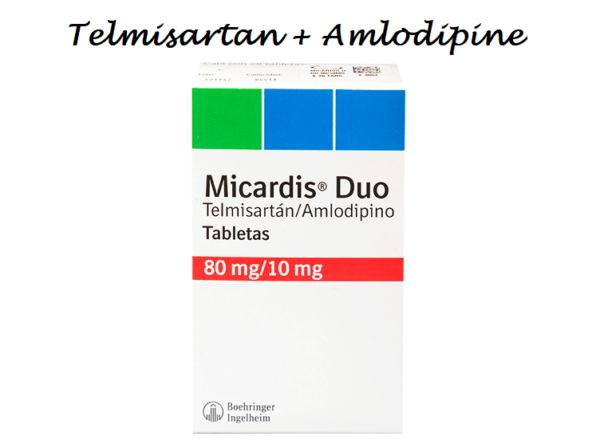
Micardis Duo is a combination of two antihypertensive medicines - Telmisartan and amlodipine.
It is used in the treatment of hypertension, including initial treatment in patients who will require multiple antihypertensives for adequate control.
Telmisartan and amlodipine dose in Adults
Micardis Duo (Telmisartan + Amlodipine) Dosage:
- The dose is individualized and titrated according to the patient's requirements.
- combination product might be substituted for individual components in patients currently maintained on both agents separately or in patients not adequately controlled with monotherapy (using one of the agents or an agent within the same antihypertensive class).
- May also be used as initial therapy in patients who are likely to need >1 antihypertensive to control blood pressure.
Dose in the treatment of Hypertension:
-
Initial therapy (antihypertensive naive):
- Telmisartan 40 mg/amlodipine 5 mg once daily given
- The dose can be increased after 2 weeks of therapy.
- Patients requiring larger blood pressure reductions can be started on telmisartan 80 mg/amlodipine 5 mg once daily.
- The maximum dose is Telmisartan 80 mg/amlodipine 10 mg per day
-
Add-on therapy for patients not adequately controlled on antihypertensive monotherapy:
- Telmisartan 40 mg/amlodipine 5 mg
- telmisartan 40 mg/amlodipine 10 mg
- telmisartan 80 mg/amlodipine 5 mg
- telmisartan 80 mg/amlodipine 10 mg once daily
- The dose may be increased after 2 weeks of therapy
- The maximum dose is Telmisartan 80 mg/amlodipine 10 mg per day
-
Replacement therapy:
- Combination product could be substituted for individual titrated agents
Telmisartan and amlodipine Dose in Childrens
Not recommended in children.
Pregnancy Risk Factor: D
[US Boxed Warning]
- Drugs that affect the renin-angiotensin systems can cause injury and death for the developing foetus.
- Once you are aware that you are pregnant, it is important to stop immediately.
Use of telmisartan or amlodipine during breastfeeding
- Breast milk contains amlodipine
- Telmisartan excretion is not known.
- The manufacturer does not recommend breastfeeding due to the risk of serious adverse reactions in breastfed babies.
Telmisartan and amlodipine Dose in renal impairment:
- No dosage adjustment required.
- Titrate slowly in severe impairment.
Hemodialysis: Telmisartan and amlodipine:
- It is Nondialyzable
Telmisartan and amlodipine Dose in liver disease:
- Hepatic impairment or biliary obstructive disorders:
- It is not recommended for initial therapy.
- For add-on/replacement therapy initiate amlodipine 2.5 mg once daily (use of individual agents is necessary as appropriate combination dose is not available).
- Titrate slowly.
Common Side Effects of (Micardis Duo) Telmisartan and amlodipine Include:
-
Cardiovascular:
- Peripheral edema
Less Common Side Effects of Telmisartan and amlodipine Include:
-
Cardiovascular:
- Orthostatic Hypotension
- Edema
- Hypotension
- Syncope
-
Central Nervous System:
- Dizziness
-
Neuromuscular & Skeletal:
- Back Pain
Contraindication to Micardis Duo (Telmisartan and amlodipine Include):
- Hypersensitivity to amlodipine or telmisartan (eg anaphylaxis, angioedema), or any component of the formulation
- concomitant use with the direct renin inhibitor (aliskiren) in patients with diabetes mellitus.
- Limited evidence exists of allergenic cross-reactivity between angiotensin II receptor blocking agents and calcium channel blocking agents.
- Anaphylaxis or known hypersensitivity to angiotensin II receptor blocking agents (ARBs), are signs of anaphylaxis.
- Patients with moderate to severe kidney impairment (GFR 60mL/minute/1.73m2 ) may also be prescribed aliskiren.
- Biliary obstruction disorders
- Grave hepatic impairment
- Cardiogenic shock
- pregnancy
- Breast-feeding
- fructose intolerance
Warnings and precautions
-
Angioedema
- Angioedema is a rare side effect of some angiotensin II receptor inhibitors (ARBs). It can occur anytime during treatment, especially after the first dose.
- It may affect the head and neck (potentially impairing the airway), or the intestine (presenting as abdominal pain).
- Patients who have idiopathic angioedema, hereditary angioedema, or angioedema that was previously associated with ACE inhibitor therapy are at increased risk.
- It is important to monitor your airway frequently, especially if you have a problem with the tongue, glottis or larynx.
- Patients who have had previous airway surgery may be at greater risk for obstruction.
- If angioedema develops, stop treatment immediately.
- It is crucial to be aggressive in early management.
- It is possible to administer epinephrine intramuscularly (IM).
- Patients who have angioedema caused by ARBs should not be given.
-
Angina/Myocardial Infarction:
- With the initiation of or the titration to amlodipine, an increase in angina and/or MI has been observed.
- Patients with obstructive heart disease may experience reflex tachycardia, which can lead to angina or MI. This is especially true if there is no concurrent beta-blockade.
-
Hyperkalemia:
- Telmisartan can cause side effects
- Risk factors include kidney dysfunction, diabetes mellitus and concomitant potassium-sparing diuretics or potassium supplements.
- These agents should be used with caution and potassium monitoring should be performed regularly.
-
Hypotension
- Patients who have been treated with high-dose diuretics or salt-depleted can develop symptoms of hypotension.
- correct volume depletion before administration.
- Patients with heart failure, volume and salt depletion, severe Aortic Stenosis, post-MI patients, patients undergoing surgery, dialysis, or patients who have had previous heart attacks should be cautious about initiating therapy.
- This transient hypotensive response is not a contraindication to further treatment with telmisartan/amlodipine.
-
Peripheral edema
- Peripheral edema is the most common side effect of amlodipine.
- Within 2 to 3 weeks after starting therapy, it will be complete.
-
Renal function deterioration:
- Telmisartan, like other ACE inhibitors and ARBs, can result in the deterioration of renal function, mainly in patients with low renal blood flow (eg, renal artery stenosis, heart failure).
- High-risk patients are at high risk of developing azotemia. This is because their glomerular filter rate (GFR), primarily depends on the efferent arterial vasoconstriction, which is mediated through angiotensin 2.
- Deterioration can lead to oliguria, acute kidney failure, or progressive azotemia.
- After initiation, small increases in serum creatinine may occur.
- Patients with progressive and severe impairment of renal function must stop taking the medication.
-
Aortic/mitral stenosis:
- Patients with severe aortic or mitral stenosis should be cautious.
- It can lead to decreased coronary perfusion, which could result in ischemia.
-
Heart failure (HF):
- Be careful when you start HF
- You may need to adjust your dose and/or use concurrent diuretic therapy.
-
Hepatic impairment
- Patients with biliary obstruction disorders or hepatic impairment should be cautious.
- Telmisartan and amlodipine clearance are decreased, so it is recommended to start with the lowest dose.
- Patients with liver disease should not avoid a combination product as the correct dose is not available in the combination form.
-
Hypertrophic cardiomyopathy with outflow tract obstruction (HCM)
- Patients with HCM or outflow tract obstruction should not take amlodipine. Reduced afterload can worsen the symptoms.
-
Renal artery stenosis
- Use telmisartan with cautiously in patients with unstented unilateral/bilateral renal artery stenosis.
- If unstented bilateral renal arterial stenosis exists, it is best to avoid use unless the potential benefits outweigh the risks.
-
Renal impairment
- Patients with impaired renal function should be cautious.
Telmisartan and amlodipine: Drug Interaction
|
Alfuzosin |
May enhance the hypotensive effect of Blood Pressure Lowering Agents. |
|
Alpha1-Blockers |
May enhance the hypotensive effect of Calcium Channel Blockers. |
|
Amphetamines |
May diminish the antihypertensive effect of Antihypertensive Agents. |
|
Angiotensin II |
Receptor Blockers may diminish the therapeutic effect of Angiotensin II. |
|
Antipsychotic Agents (Second Generation [Atypical]) |
Blood Pressure Lowering Agents may enhance the hypotensive effect of Antipsychotic Agents (Second Generation [Atypical]). |
|
Aprepitant |
May increase the serum concentration of CYP3A4 Substrates (High risk with Inhibitors). |
|
ARIPiprazole |
CYP3A4 Inhibitors (Weak) may increase the serum concentration of ARIPiprazole. Management: Monitor for increased aripiprazole pharmacologic effects. Aripiprazole dose adjustments may or may not be required based on concomitant therapy and/or indication. Consult full interaction monograph for specific recommendations. |
|
Atosiban |
Calcium Channel Blockers may enhance the adverse/toxic effect of Atosiban. Specifically, there may be an increased risk for pulmonary edema and/or dyspnea. |
|
Barbiturates |
May increase the metabolism of Calcium Channel Blockers. Management: Monitor for decreased therapeutic effects of calcium channel blockers with concomitant barbiturate therapy. Calcium channel blocker dose adjustments may be necessary. Nimodipine Canadian labeling contraindicates concomitant use with phenobarbital. |
|
Barbiturates |
May enhance the hypotensive effect of Blood Pressure Lowering Agents. |
|
Benperidol |
May enhance the hypotensive effect of Blood Pressure Lowering Agents. |
|
Bosentan |
May decrease the serum concentration of CYP3A4 Substrates (High risk with Inducers). |
|
Brigatinib |
May diminish the antihypertensive effect of Antihypertensive Agents. Brigatinib may enhance the bradycardic effect of Antihypertensive Agents. |
|
Brimonidine (Topical) |
May enhance the hypotensive effect of Blood Pressure Lowering Agents. |
|
Calcium Channel Blockers (Nondihydropyridine) |
|
|
Calcium Salts |
May diminish the therapeutic effect of Calcium Channel Blockers. |
|
Cardiac Glycosides |
Telmisartan may increase the serum concentration of Cardiac Glycosides. |
|
Clofazimine |
May increase the serum concentration of CYP3A4 Substrates (High risk with Inhibitors). |
|
Clopidogrel |
Calcium Channel Blockers may diminish the therapeutic effect of Clopidogrel. |
|
CycloSPORINE (Systemic) |
Calcium Channel Blockers (Dihydropyridine) may increase the serum concentration of CycloSPORINE (Systemic). CycloSPORINE (Systemic) may increase the serum concentration of Calcium Channel Blockers (Dihydropyridine). |
|
CycloSPORINE (Systemic) |
Angiotensin II Receptor Blockers may enhance the hyperkalemic effect of CycloSPORINE (Systemic). |
|
CYP3A4 Inducers (Moderate):\ |
May decrease the serum concentration of CYP3A4 Substrates (High risk with Inducers). |
|
CYP3A4 Inhibitors (Moderate) |
May increase the serum concentration of AmLODIPine. |
|
CYP3A4 Inhibitors (Strong) |
May increase the serum concentration of AmLODIPine. |
|
Dapoxetine |
May enhance the orthostatic hypotensive effect of Angiotensin II Receptor Blockers. |
|
Dapoxetine |
May enhance the orthostatic hypotensive effect of Calcium Channel Blockers. |
|
Deferasirox |
May decrease the serum concentration of CYP3A4 Substrates (High risk with Inducers). |
|
Dexmethylphenidate |
May diminish the therapeutic effect of Antihypertensive Agents. |
|
Diazoxide |
May enhance the hypotensive effect of Blood Pressure Lowering Agents. |
|
Dofetilide |
CYP3A4 Inhibitors (Weak) may increase the serum concentration of Dofetilide. |
|
Drospirenone |
Angiotensin II Receptor Blockers may enhance the hyperkalemic effect of Drospirenone. |
|
DULoxetine |
Blood Pressure Lowering Agents may enhance the hypotensive effect of DULoxetine. |
|
Duvelisib |
May increase the serum concentration of CYP3A4 Substrates (High risk with Inhibitors). |
|
Efavirenz |
May decrease the serum concentration of Calcium Channel Blockers. |
|
Eplerenone |
May enhance the hyperkalemic effect of Angiotensin II Receptor Blockers. |
|
Erdafitinib |
May decrease the serum concentration of CYP3A4 Substrates (High risk with Inducers). |
|
Erdafitinib |
May increase the serum concentration of CYP3A4 Substrates (High risk with Inhibitors). |
|
Flibanserin |
CYP3A4 Inhibitors (Weak) may increase the serum concentration of Flibanserin. |
|
Fluconazole |
May increase the serum concentration of Calcium Channel Blockers. |
|
Fosaprepitant |
May increase the serum concentration of CYP3A4 Substrates (High risk with Inhibitors). |
|
Fosnetupitant |
May increase the serum concentration of CYP3A4 Substrates (High risk with Inhibitors). |
|
Heparin |
May enhance the hyperkalemic effect of Angiotensin II Receptor Blockers. |
|
Heparins (Low Molecular Weight) |
May enhance the hyperkalemic effect of Angiotensin II Receptor Blockers. |
|
Herbs (Hypertensive Properties) |
May diminish the antihypertensive effect of Antihypertensive Agents. |
|
Herbs (Hypotensive Properties) |
May enhance the hypotensive effect of Blood Pressure Lowering Agents. |
|
Hypotension-Associated Agents |
Blood Pressure Lowering Agents may enhance the hypotensive effect of Hypotension-Associated Agents. |
|
Ivosidenib |
May decrease the serum concentration of CYP3A4 Substrates (High risk with Inducers). |
|
Larotrectinib |
May increase the serum concentration of CYP3A4 Substrates (High risk with Inhibitors). |
|
Levodopa-Containing Products |
Blood Pressure Lowering Agents may enhance the hypotensive effect of Levodopa-Containing Products. |
|
Lormetazepam |
May enhance the hypotensive effect of Blood Pressure Lowering Agents. |
|
Lovastatin |
AmLODIPine may increase the serum concentration of Lovastatin. |
|
Magnesium Salts |
Calcium Channel Blockers may enhance the adverse/toxic effect of Magnesium Salts. Magnesium Salts may enhance the hypotensive effect of Calcium Channel Blockers. |
|
Melatonin |
May diminish the antihypertensive effect of Calcium Channel Blockers (Dihydropyridine). |
|
Methylphenidate |
May diminish the antihypertensive effect of Antihypertensive Agents. |
|
Molsidomine |
May enhance the hypotensive effect of Blood Pressure Lowering Agents. |
|
Naftopidil |
May enhance the hypotensive effect of Blood Pressure Lowering Agents. |
|
Netupitant |
May increase the serum concentration of CYP3A4 Substrates (High risk with Inhibitors). |
|
Neuromuscular-Blocking Agents (Nondepolarizing) |
Calcium Channel Blockers may enhance the neuromuscular-blocking effect of Neuromuscular-Blocking Agents (Nondepolarizing). |
|
Nicergoline |
May enhance the hypotensive effect of Blood Pressure Lowering Agents. |
|
Nicorandil |
May enhance the hyperkalemic effect of Angiotensin II Receptor Blockers. |
|
Nicorandil |
May enhance the hypotensive effect of Blood Pressure Lowering Agents. |
|
NiMODipine |
CYP3A4 Inhibitors (Weak) may increase the serum concentration of NiMODipine. |
|
Nitroprusside |
Blood Pressure Lowering Agents may enhance the hypotensive effect of Nitroprusside. |
|
Nonsteroidal Anti-Inflammatory Agents |
Angiotensin II Receptor Blockers may enhance the adverse/toxic effect of Nonsteroidal Anti-Inflammatory Agents. Specifically, the combination may result in a significant decrease in renal function. Nonsteroidal Anti-Inflammatory Agents may diminish the therapeutic effect of Angiotensin II Receptor Blockers. The combination of these two agents may also significantly decrease glomerular filtration and renal function. |
|
Palbociclib |
May increase the serum concentration of CYP3A4 Substrates (High risk with Inhibitors). |
|
Pentoxifylline |
May enhance the hypotensive effect of Blood Pressure Lowering Agents. |
|
Pholcodine |
Blood Pressure Lowering Agents may enhance the hypotensive effect of Pholcodine. |
|
Phosphodiesterase 5 Inhibitors |
May enhance the hypotensive effect of Blood Pressure Lowering Agents. |
|
Potassium Salts |
May enhance the hyperkalemic effect of Angiotensin II Receptor Blockers. |
|
Potassium-Sparing Diuretics |
Angiotensin II Receptor Blockers may enhance the hyperkalemic effect of Potassium-Sparing Diuretics. |
|
Prostacyclin Analogues |
May enhance the hypotensive effect of Blood Pressure Lowering Agents. |
|
Quinagolide |
May enhance the hypotensive effect of Blood Pressure Lowering Agents. |
|
QuiNIDine |
Calcium Channel Blockers (Dihydropyridine) may decrease the serum concentration of QuiNIDine. Calcium Channel Blockers (Dihydropyridine) may increase the serum concentration of QuiNIDine. QuiNIDine may increase the serum concentration of Calcium Channel Blockers (Dihydropyridine). |
|
Ranolazine |
May enhance the adverse/toxic effect of Angiotensin II Receptor Blockers. |
|
Sarilumab |
May decrease the serum concentration of CYP3A4 Substrates (High risk with Inducers). |
|
Siltuximab |
May decrease the serum concentration of CYP3A4 Substrates (High risk with Inducers). |
|
Simeprevir |
May increase the serum concentration of CYP3A4 Substrates (High risk with Inhibitors). |
|
Tacrolimus (Systemic) |
Calcium Channel Blockers (Dihydropyridine) may increase the serum concentration of Tacrolimus (Systemic). |
|
Tacrolimus (Systemic |
Angiotensin II Receptor Blockers may enhance the hyperkalemic effect of Tacrolimus (Systemic). |
|
Tocilizumab |
May decrease the serum concentration of CYP3A4 Substrates (High risk with Inducers). |
|
Tolvaptan |
May enhance the hyperkalemic effect of Angiotensin II Receptor Blockers. |
|
Trimethoprim |
May enhance the hyperkalemic effect of Angiotensin II Receptor Blockers. |
|
Yohimbine |
May diminish the antihypertensive effect of Antihypertensive Agents. |
|
Risk Factor D (Consider therapy modification) |
|
|
Aliskiren |
May enhance the hyperkalemic effect of Angiotensin II Receptor Blockers. Aliskiren may enhance the hypotensive effect of Angiotensin II Receptor Blockers. Aliskiren may enhance the nephrotoxic effect of Angiotensin II Receptor Blockers. Management: Aliskiren use with ACEIs or ARBs in patients with diabetes is contraindicated. Combined use in other patients should be avoided, particularly when CrCl is less than 60 mL/min. If combined, monitor potassium, creatinine, and blood pressure closely. |
|
Amifostine |
Blood Pressure Lowering Agents may enhance the hypotensive effect of Amifostine. Management: When amifostine is used at chemotherapy doses, blood pressure lowering medications should be withheld for 24 hours prior to amifostine administration. If blood pressure lowering therapy cannot be withheld, amifostine should not be administered. |
|
Angiotensin-Converting Enzyme Inhibitors |
Angiotensin II Receptor Blockers may enhance the adverse/toxic effect of Angiotensin-Converting Enzyme Inhibitors. Angiotensin II Receptor Blockers may increase the serum concentration of Angiotensin-Converting Enzyme Inhibitors. Management: In US labeling, use of telmisartan and ramipril is not recommended. It is not clear if any other combination of an ACE inhibitor and an ARB would be any safer. Consider alternatives to the combination when possible. |
|
Antifungal Agents (Azole Derivatives, Systemic) |
May enhance the adverse/toxic effect of Calcium Channel Blockers. Specifically, itraconazole may enhance the negative inotropic effects of verapamil or diltiazem. Antifungal Agents (Azole Derivatives, Systemic) may decrease the metabolism of Calcium Channel Blockers. Fluconazole and isavuconazonium likely exert weaker effects than other azoles and are addressed in separate monographs. Management: Concurrent use of felodipine or nisoldipine with itraconazole is specifically contraindicated. Frequent monitoring is warranted with any such combination; calcium channel blocker dose reductions may be required. Exceptions: Fluconazole; Isavuconazonium Sulfate. |
|
Antihepaciviral Combination Products |
May increase the serum concentration of AmLODIPine. Management: Reduce amlodipine dose by at least 50% and monitor for increased amlodipine effects (eg, hypotension) if an antihepaciviral combination product is initiated. |
|
CarBAMazepine |
|
|
CYP3A4 Inducers (Strong) |
May increase the metabolism of CYP3A4 Substrates (High risk with Inducers). Management: Consider an alternative for one of the interacting drugs. Some combinations may be specifically contraindicated. Consult appropriate manufacturer labeling. |
|
Dabrafenib |
May decrease the serum concentration of CYP3A4 Substrates (High risk with Inducers). Management: Seek alternatives to the CYP3A4 substrate when possible. If concomitant therapy cannot be avoided, monitor clinical effects of the substrate closely (particularly therapeutic effects). |
|
Enzalutamide |
May decrease the serum concentration of CYP3A4 Substrates (High risk with Inducers). Management: Concurrent use of enzalutamide with CYP3A4 substrates that have a narrow therapeutic index should be avoided. Use of enzalutamide and any other CYP3A4 substrate should be performed with caution and close monitoring. |
|
Fosphenytoin |
Calcium Channel Blockers may increase the serum concentration of Fosphenytoin. Management: Monitor for phenytoin toxicity with concomitant use of a calcium channel blocker (CCB) or decreased phenytoin effects with CCB discontinuation. Monitor for decreased CCB therapeutic effects. Nimodipine Canadian labeling contraindicates use with phenytoin. |
|
Lithium |
Angiotensin II Receptor Blockers may increase the serum concentration of Lithium. Management: Lithium dosage reductions will likely be needed following the addition of an angiotensin II receptor antagonist. |
|
Lomitapide |
CYP3A4 Inhibitors (Weak) may increase the serum concentration of Lomitapide. Management: Patients on lomitapide 5 mg/day may continue that dose. Patients taking lomitapide 10 mg/day or more should decrease the lomitapide dose by half. The lomitapide dose may then be titrated up to a max adult dose of 30 mg/day. |
|
Lorlatinib |
May decrease the serum concentration of CYP3A4 Substrates (High risk with Inducers). Management: Avoid concurrent use of lorlatinib with any CYP3A4 substrates for which a minimal decrease in serum concentrations of the CYP3A4 substrate could lead to therapeutic failure and serious clinical consequences. |
|
Macrolide Antibiotics |
May decrease the metabolism of Calcium Channel Blockers. Management: Consider using a noninteracting macrolide. Felodipine Canadian labeling specifically recommends avoiding its use in combination with clarithromycin. Exceptions: Azithromycin (Systemic); Fidaxomicin; Roxithromycin; Spiramycin. |
|
MiFEPRIStone |
May increase the serum concentration of CYP3A4 Substrates (High risk with Inhibitors). Management: Minimize doses of CYP3A4 substrates, and monitor for increased concentrations/toxicity, during and 2 weeks following treatment with mifepristone. Avoid cyclosporine, dihydroergotamine, ergotamine, fentanyl, pimozide, quinidine, sirolimus, and tacrolimus. |
|
Mitotane |
May decrease the serum concentration of CYP3A4 Substrates (High risk with Inducers). Management: Doses of CYP3A4 substrates may need to be adjusted substantially when used in patients being treated with mitotane. |
|
Obinutuzumab |
May enhance the hypotensive effect of Blood Pressure Lowering Agents. Management: Consider temporarily withholding blood pressure lowering medications beginning 12 hours prior to obinutuzumab infusion and continuing until 1 hour after the end of the infusion. |
|
Phenytoin |
Calcium Channel Blockers may increase the serum concentration of Phenytoin. Phenytoin may decrease the serum concentration of Calcium Channel Blockers. Management: Avoid use of nimodipine or nifedipine with phenytoin. Monitor for phenytoin toxicity and/or decreased calcium channel blocker effects with any concurrent use. |
|
Rifamycin Derivatives |
May decrease the serum concentration of Calcium Channel Blockers. This primarily affects oral forms of calcium channel blockers. Management: The labeling for some US and Canadian calcium channel blockers contraindicate use with rifampin, however recommendations vary. Consult appropriate labeling. |
|
Simvastatin |
AmLODIPine may increase the serum concentration of Simvastatin. Management: Avoid the concurrent use of amlodipine with simvastatin when possible. If used together, avoid doses of simvastatin greater than 20 mg/day (for adults). |
|
Sincalide |
Drugs that Affect Gallbladder Function may diminish the therapeutic effect of Sincalide. Management: Consider discontinuing drugs that may affect gallbladder motility prior to the use of sincalide to stimulate gallbladder contraction. |
|
Sodium Phosphates |
Angiotensin II Receptor Blockers may enhance the nephrotoxic effect of Sodium Phosphates. Specifically, the risk of acute phosphate nephropathy may be enhanced. Management: Consider avoiding this combination by temporarily suspending treatment with ARBs, or seeking alternatives to oral sodium phosphate bowel preparation. If the combination cannot be avoided, maintain adequate hydration and monitor renal function closely. |
|
St John's Wort |
May decrease the serum concentration of CYP3A4 Substrates (High risk with Inducers). Management: Consider an alternative for one of the interacting drugs. Some combinations may be specifically contraindicated. Consult appropriate manufacturer labeling. |
|
Stiripentol |
May increase the serum concentration of CYP3A4 Substrates (High risk with Inhibitors). Management: Use of stiripentol with CYP3A4 substrates that are considered to have a narrow therapeutic index should be avoided due to the increased risk for adverse effects and toxicity. Any CYP3A4 substrate used with stiripentol requires closer monitoring. |
|
Risk Factor X (Avoid combination) |
|
|
Bromperidol |
Blood Pressure Lowering Agents may enhance the hypotensive effect of Bromperidol. Bromperidol may diminish the hypotensive effect of Blood Pressure Lowering Agents. |
|
Conivaptan |
May increase the serum concentration of CYP3A4 Substrates (High risk with Inhibitors). |
|
Fusidic Acid (Systemic) |
May increase the serum concentration of CYP3A4 Substrates (High risk with Inhibitors). |
|
Idelalisib |
May increase the serum concentration of CYP3A4 Substrates (High risk with Inhibitors). |
|
Pimozide |
CYP3A4 Inhibitors (Weak) may increase the serum concentration of Pimozide. |
|
Ramipril |
Telmisartan may enhance the adverse/toxic effect of Ramipril. Telmisartan may increase the serum concentration of Ramipril. Concentrations of the active metabolite, ramiprilat, may also be increased. |
Monitor:
- Baseline and periodic electrolyte panels (especially serum potassium)
- renal function (serum creatinine, BUN, urinalysis)
- hepatic function
- heart rate, blood pressure, symptomatic hypotension, peripheral edema
How to administer Micardis DUO (Telmisartan and amlodipine)?
- Administer orally without regard to meals.
Mechanism of action of Micardis DUO (Telmisartan and amlodipine):
- Telmisartan, a nonpeptide AT1 receptor antagonist (angiotensin type II type 1) is called Telmisartan.
- Angiotensin II acts like a vasoconstrictor.
- Angiotensin II causes vasoconstriction and stimulates aldosterone release.
- Aldosterone can be released and sodium and water are absorbed, resulting in an increase in blood pressure.
- TelmisartanAngiotensin II is inhibited by binding to AT1.
- Amlodipine produces coronary vasodilation by relaxing the coronary vascular smooth muscles by inhibiting the calcium ion from entering the "slow channels" or select voltage-sensitive areas of vascular smooth muscle and myocardium during depolarization.
- It improves myocardial oxygen supply in patients suffering from vasospastic gina.
- Amlodipine also causes a reduction in the blood pressure and reduces the peripheral vascular resistance by directly acting on the vascular smooth muscle to produce peripheral arterial vasodilation.
See individual agents Amlodipine & Telmisartan.
International Brands of Telmisartan and amlodipine:
- Amlotel
- Cardotel
- Micamlo
- Micardis Amlo
- Micardis Anlo
- Micardis Duo
- Telamlo
- Telminovo
- Twynsta
Telmisartan and amlodipine Brands in Pakistan:
Telmisartan [Tabs 40 mg] |
|
| Am-Telsan | Hilton Pharma (Pvt) Limited |
| Amtas | Getz Pharma Pakistan (Pvt) Ltd. |
| Telepine | Wilsons Pharmaceuticals |
| Telmis-A | Genix Pharma (Pvt) Ltd |
Telmisartan [Tabs 80 mg] |
|
| Am-Telsan | Hilton Pharma (Pvt) Limited |
| Amtas | Getz Pharma Pakistan (Pvt) Ltd. |
| Misar-Am | Highnoon Laboratories Ltd. |
| Telepine | Wilsons Pharmaceuticals |
| Telmis-A | Genix Pharma (Pvt) Ltd |
.png)


