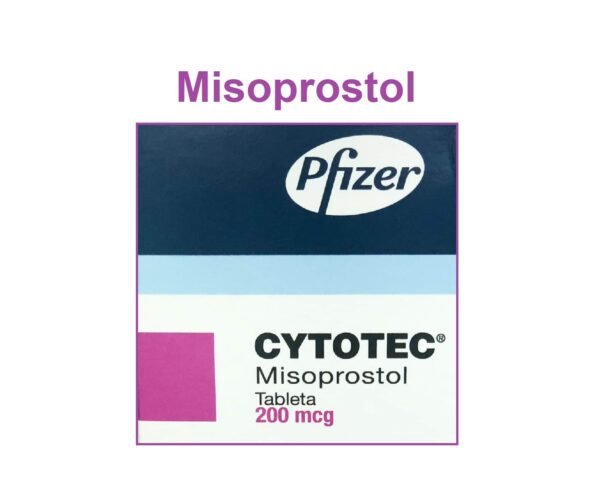
Misoprostol (Cytotec) belongs to the class of drugs called prostaglandin analogs. It is used in the treatment and prevention of NSAID-induced gastric ulcers and post-partum hemorrhage. It is also used in the induction of labor and termination of early pregnancy in combination with mifepristone.
Misoprostol (Cytotec) Uses:
-
NSAID-induced gastric ulcers, prevention:
- It is to reduce the risk of NSAID-induced gastric ulcers in patients at high risk of complications.
-
Termination of intrauterine pregnancy:
- Medical termination of intrauterine pregnancy through 70 days' gestation in combination with mifepristone (Mifeprex prescribing information March 2016)
-
Off Label Use of Misoprostol in Adults:
- Cervical ripening and labor induction
- Early pregnancy loss
- Treatment of incomplete or missed abortion
- Prevention and treatment of Postpartum hemorrhage.
Misoprostol Dose in Adults:
Misoprostol (Cytotec) Dose in the prevention of NSAID-induced gastric ulcers:
- 200 mcg orally 4 times a day;
- if not tolerated, decrease the dose to 100 mcg 4 times per day
Misoprostol (Cytotec) Dose in the treatment of Termination of intrauterine pregnancy:
- Refer to the Mifepristone monograph.
Misoprostol (Cytotec) Dose in the treatment of early pregnancy loss (off-label):
- Intravaginal (off-label route):
- Initial dose: 800 mcg.
- May repeat with one dose if needed, ≥3 hours after the first dose, and typically within 7 days if no reaction to the initial dose is observed.
- Consider its usage in combination with oral mifepristone when mifepristone is available.
Misoprostol (Cytotec) Dose in the treatment of Incomplete abortion (off-label):
- 600 mcg orally as a single dose.
Misoprostol (Cytotec) Dose in the treatment of Labor induction or cervical ripening (off-label):
- Intravaginal (off-label route):
- 25 mcg (one-fourth of 100 mcg tablet);
- It may repeat at interludes no more frequently than every 3 to 6 hours; though in some cases 50 mcg every 6 hours may be used.
- Oral:
- 25 mcg (one-fourth of 100 mcg tablet) to be taken every 2 hours
- 20 mcg dose every 2 hours has also been evaluated.
Note:
- The vaginal route can be more efficient; although, some adverse events may occur less frequently when misoprostol is administered orally for this indication.
- Sublingual and buccal routes ought not to be used for cervical ripening or induction of labor.
- To further define the optimal dose and route of administration additional data may be necessary.
Misoprostol (Cytotec) Dose in the treatment of Missed abortion (off-label):
- Intravaginal (off-label route):
- 800 mcg;
- The dose may be repeated every 3 hours for 2 additional doses if required.
- Sublingual (off-label route):
- 600 mcg;
- if required, the dose may be repeated every 3 hours for 2 additional doses.
Misoprostol (Cytotec) Dose in the prevention of Postpartum hemorrhage (off-label):
- Note:
- Side effects are mainly linked with the use and may be dose and route related.
- Though, additional data may be necessary to further define the optimal dose and route of administration.
Oral: 600 mcg as a single dose administered right after delivery.
Misoprostol (Cytotec) Dose in the treatment of Postpartum hemorrhage (off-label):
Note:
- Side effects are related to the use and may be dose and route related.
- To further define the optimal dose and route of administration additional data may be necessary.
- 600 to 1,000 mcg orally as a single dose.
- Rectal (off-label route):
- 600 to 1,000 mcg as a solo dose.
- Sublingual (off-label route):
- 800 mcg as a single dose.
- Use cautiously if a prophylactic dose was already given, especially when adverse events were observed.
- Dosage ranges of 600 to 1,000 mcg as a single dose have been noted, however, a lower 400 mcg dose has also been recommended.
Use in Children:
Not indicated.
Misoprostol (Cytotec) Pregnancy Risk Category: X
- It is contraindicated for pregnant women to use it to prevent NSAID-induced gastric cancers.
- [US Boxed Warning]
- Misoprostol use during pregnancy can cause birth defects, abortion, premature birth, and uterine rupture.
- Misoprostol administered to pregnant women to induce labor, or abortion has been shown to cause uterine rupture.
- With advancing gestational age and earlier uterine surgery (including cesarean delivery), the risk of uterine leakage increases.
- There have been reports of congenital anomalies after first-trimester contact, including underpinning skull defects and cranial nerve palsies, facial malformations, and limb defects.
- Misoprostol can cause uterine contractions, fetal death, uterine perforation, and abortion.
- However, FDA approval has been granted to misoprostol for medical termination of pregnancy within =70 days when used in combination with mifepristone.
- Because misoprostol can induce or augment uterine cramps, it has been approved for use off-label.
- Misoprostol should be avoided during the third trimester if spontaneous labor or vaginal delivery is not possible.
- This includes women who have had previous cesarean deliveries or major uterine surgeries (as the risk of uterine rupturing is increased).
- It can also be used to treat incomplete or missed abortions, early pregnancy loss, severe postpartum hemorrhage, and for other purposes.
- In situations where oxytocin cannot be obtained, some guidelines recommend misoprostol as a secondary treatment for postpartum hemorrhage.
- Postpartum hemorrhage can be managed by multiple routes
- Sublingual administration is the fastest to begin, while the oral route has the largest initial increase in tonus.
- The rectal and vaginal routes have longer durations of action than the oral and sublingual routes.
- Uterine tachystole (may cause decreased placental blood flow), uterine burst, amniotic fluid embolism, and adverse fetal heart conditions are some of the possible side effects associated with off-label obstetric use.
- Sublingual misoprostol is commonly used to treat postpartum hemorrhage. However, side effects can occur depending on the dose.
- [US Boxed Warning]
- Misoprostol should not be used to lower the risk of NSAID-induced gastric ulcers in women with childbearing potential unless she is at high risk for developing gastric ulceration or at risk of complications.
- If the patient has had a negative pregnancy test within the last 2 weeks, misoprostol might be recommended.
- It can comply with effective contraceptive methods.
- Written and oral deterrents have been given to it about the potential dangers of misoprostol and the possibility of contraception failure.
- Misoprostol will be started only after the first or third day of your next normal period.
- Due to its abortifacient properties, patients should not give this drug to anyone else.
Use during breastfeeding:
- Breast milk contains misoprostol acid, which is an active metabolite.
- Misoprostol acid concentrations in milk reach their peak within one hour of an oral maternal dose. They then decline over five hours.
- One study suggests that the mother should take the maternal dose immediately after each feed.
- However, it is acceptable to continue with the next feed within 3-4 hours.
- Breastfeeding infants are free from adverse events.
- If breastfeeding is occurring, the manufacturer recommends that you take care.
Cytotec Dose in Kidney Disease:
Adjusting the dose is not routinely needed; however, the dose may lessen down if the recommended dose is not tolerated. Though, it is not defined if misoprostol is removed by dialysis.
Cytotec Dose in Liver disease:
No dosage adjustments are provided in the manufacturer's labeling.
Common Side Effects of Misoprostol (Cytotec):
-
Gastrointestinal:
- Diarrhea
- Abdominal pain
Less Common Side Effects of Misoprostol (Cytotec):
-
Central nervous system:
- Headache
-
Gastrointestinal:
- Constipation
- Dyspepsia
- Flatulence
- Nausea
- Vomiting
Contraindications to Misoprostol (Cytotec):
- Hypersensitivity to misoprostol or other prostaglandins; pregnancy
- When using Mifepristone to terminate intrauterine pregnancy, please refer to the Mifepristone monograph.
Warnings and precautions
-
Abortifacient: [US Boxed Warning]:
- Patients should not give this medication to anyone else due to its abortifacient properties.
-
Cardiovascular disease
- Patients with heart disease should be cautious.
-
Renal impairment
- Patients with impaired renal function should be cautious and dosage adjustments are necessary.
Misoprostol: Drug Interaction
|
Risk Factor C (Monitor therapy) |
|
|
Phenylbutazone |
May enhance the neurotoxic effect of MiSOPROStol. Specifically, the combination may result in headaches, dizziness, and transient diplopia. |
|
Risk Factor D (Consider therapy modification) |
|
|
Oxytocin |
MiSOPROStol may enhance the adverse/toxic effect of Oxytocin. Specifically, oxytocic effects may be enhanced. Management: The manufacturer of misoprostol recommends avoiding concomitant use with oxytocin. Misoprostol may augment the effects of oxytocin, particularly when given within 4 hours of oxytocin initiation. |
|
Risk Factor X (Avoid combination) |
|
|
Antacids |
May enhance the adverse/toxic effect of MiSOPROStol. More specifically, concomitant use of magnesium-containing antacids may increase the risk of diarrhea. Management: Avoid concomitant use of misoprostol and magnesium-containing antacids. In patients requiring antacid therapy, employ magnesium-free preparations. Monitor for increased adverse effects (e.g., diarrhea, dehydration). Exceptions: Aluminum Hydroxide; Calcium Carbonate; Potassium Bicarbonate; Sodium Bicarbonate. |
|
Carbetocin |
MiSOPROStol may enhance the adverse/toxic effect of Carbetocin. Specifically, Carbetocin oxytocic effects may be enhanced. |
Monitoring parameters:
- Prevention of NSAID-induced gastric ulcers:
- Prior to a therapy pregnancy test in women of reproductive potential
- Proper diagnostic measures in all such cases of undiagnosed abnormal vaginal bleeding
- Pregnancy-related uses:
- Monitor uterine activity and fetal status.
- When used for incomplete or missed abortion, reevaluate 1 to 2 weeks after dosing.
- When used for termination of pregnancy:
- Prior to the procedure, confirm pregnancy and Rh status; assess hemoglobin and hematocrit if anemia is suspected.
- Following the procedure: Clinical exam, human Chorionic Gonadotropin (hCG) testing, and/or ultrasound to confirm complete termination of pregnancy; hemoglobin, hematocrit, and red blood cell count in cases of heavy bleeding.
- Consider CBC in any patient who reports nausea, vomiting, or diarrhea and weakness with or without abdominal pain, and without fever or other signs of infection more than 24 hours after administration of misoprostol.
- When used for medical management of early pregnancy loss, evaluate Rh status;
- Evaluate response to treatment within 7 days after the first dose.
How to administer Misoprostol (Cytotec)?
It must be administered with food. Avoid the concomitant use of magnesium-containing antacids (minimizes diarrhea); however, the last dose of the day should be taken at bedtime. Therapy needs to be continued through the duration of NSAID therapy.
Termination of intrauterine pregnancy:
- Refers to the Mifepristone monograph.
Labor induction or cervical ripening (off-label uses):
- The suggested doses require the breaking of the commercially available tablets, though some reports recommend weighing the tablet fragments (for oral or vaginal use) or preparing a solution (for oral use) to ensure accurate dosing.
Mechanism of action of Misoprostol (Cytotec):
- Misoprostol is a synthetic prostaglandin E analog that replaces the protective prostaglandins consumed with prostaglandin-inhibiting therapies (eg, NSAIDs) that have been shown to induce uterine contractions.
The onset of action:
- The onset of action to inhibit gastric acid secretion occurs within 30 minutes
Duration of action:
- Inhibition of gastric acid secretion: 3 hours
Absorption:
- Rapid and extensive;
- Food decreases its absorption.
Protein binding:
- Misoprostol acid: <90%
Metabolism:
- It is rapidly de-esterified in the liver to the active compound, misoprostol acid.
Half-life elimination:
- 20 to 40 minutes
Time to peak serum concentration:
- Fasting: 12 ± 3 minutes
Excretion:
- Urine (80%)
International Brand Names of Misoprostol:
- Cytotec
- NOVO-Misoprostol
- PMS-Misoprostol
- Aboprost
- Alsoben
- Asotec
- Chromalux
- Cyprostil
- Cyprostol
- Cyrux
- Cytil
- Cytolog
- Cytotec
- Dazitum
- Gastrul
- Gymiso
- Herwont
- Isovent
- Mipros
- Mirolut
- Misel
- Miso-Fem
- Misoclear
- Misodel
- Misodex
- Misofar
- MisoOne
- Misoone
- Misopa
- Misoprost
- Misoprost-200
- Misotac
- Misotrol
- Mispregnol
- Misprolen
- Misprosmek
- Mysodelle
- Myspess
- Mystol
- Noprostol
- Prosomed
- Taneciprol
- Topogyne
- U-Miso
- Vagiprost
Misoprostol Brand Names in Pakistan:
Misoprostol Tablets 25 mcg |
|
| Mite | Genix Pharma (Pvt) Ltd |
| S.T Mom | Zafa Pharmaceutical Laboratories (Pvt) Ltd. |
| Stmom | Zafa Pharmaceutical Laboratories (Pvt) Ltd. |
Misoprostol Tablets 50 mcg |
|
| Mite | Genix Pharma (Pvt) Ltd |
Misoprostol Tablets 100 mcg |
|
| Mitek | Genix Pharma (Pvt) Ltd |
| Prosotec | Atco Laboratories Limited |
| Tector | Macter International (Pvt) Ltd. |
| Zivus | Wilshire Laboratories (Pvt) Ltd. |
Misoprostol Tablets 200 mcg |
|
| Breeky | Sami Pharmaceuticals (Pvt) Ltd. |
| Cyotec | Biogen Pharma |
| Cytotol | Saffron Pharmaceutical Company |
| Miso | Global Pharmaceuticals |
| Misoclear | Zafa Pharmaceutical Laboratories (Pvt) Ltd. |
| Mite | Genix Pharma (Pvt) Ltd |
| Prosotec | Atco Laboratories Limited |
| Stmom | Zafa Pharmaceutical Laboratories (Pvt) Ltd. |
| Tector | Macter International (Pvt) Ltd. |
| Zivus | Wilshire Laboratories (Pvt) Ltd. |
.png)


