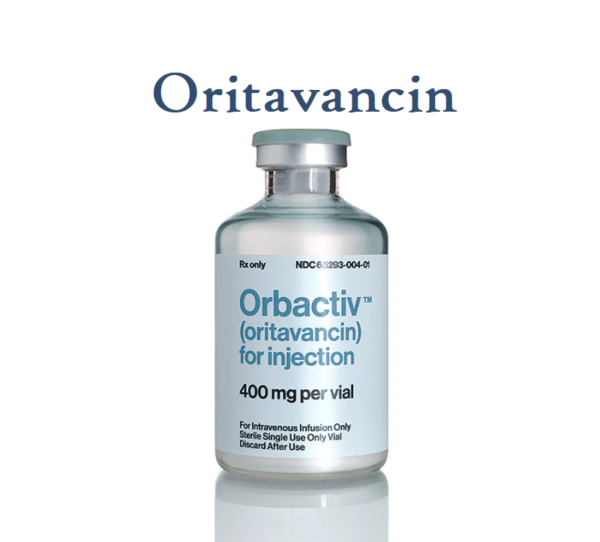
Oritavancin (Orbactiv) is a new-generation synthetic lipoglycopeptide that is used as a single injection for the treatment of acute bacterial skin and soft-tissue infections.
Oritavancin Uses:
-
Acute bacterial skin and skin structure infections:
- It is used for treating adult patients having acute bacterial skin and skin structure infections (ABSSSI) caused by susceptible isolates of the following gram-positive microorganisms:
- Staphylococcus aureus (including methicillin-susceptible and methicillin-resistant isolates)
- Streptococcus pyogenes
- Streptococcus agalactiae
- Streptococcus dysgalactiae, Streptococcus anginosus group (including S. anginosus, S. intermedius, S. constellatus)
- Enterococcus faecalis (vancomycin-susceptible isolates only)
- It is used for treating adult patients having acute bacterial skin and skin structure infections (ABSSSI) caused by susceptible isolates of the following gram-positive microorganisms:
Oritavancin (Orbactiv) Dose in Adults
Oritavancin (Orbactiv) Dose in the treatment of Acute bacterial skin and skin structure infections (ABSSI):
- IV: 1,200 mg as a stat dose.
Use in Children:
Not studied in children.
Pregnancy Risk Factor C
- In animal reproduction studies, no adverse events were observed.
Use during breastfeeding:
- It is unknown if the drug is excreted from breast milk.
- It is recommended that nursing women be cautious when administering the medication.
Dose in Kidney Disease:
-
CrCl ≥30 mL/minute:
- Dosage adjustment not necessary.
-
CrCl <30 mL/minute:
- No dosage adjustments have been provided in the manufacturer’s labeling (has not been studied).
-
ESRD requiring hemodialysis:
- No dosage adjustments have been provided in the manufacturer’s labeling (has not been studied)
- It is not removed by hemodialysis.
Dose in Liver Disease:
-
Mild to moderate hepatic impairment (Child-Pugh class A or B):
- Dosage adjustment not necessary.
-
Severe hepatic impairment (Child-Pugh class C):
- No dosage adjustments have been provided in the manufacturer’s labeling (has not been studied).
Side Effects of Oritavancin (Orbactiv):
-
Cardiovascular:
- Tachycardia
- Hypersensitivity Angiitis
- Peripheral Edema
-
Central Nervous System:
- Headache
- Dizziness
-
Dermatologic:
- Erythema Multiforme
- Pruritus
- Skin Rash
- Urticaria
-
Endocrine & Metabolic:
- Hyperuricemia
- Hypoglycemia
-
Gastrointestinal:
- Nausea
- Vomiting
- Diarrhea
-
Hematologic & Oncologic:
- Anemia
- Eosinophilia
-
Hepatic:
- Increased Serum ALT
- Increased Serum AST
- Increased Total Serum Bilirubin
-
Hypersensitivity:
- Angioedema
- Hypersensitivity Reaction
-
Infection:
- Abscess
-
Local:
- Injection Site Phlebitis
- Injection Site Reaction
- Erythema At Injection Site
- Extravasation
- Induration At Injection Site
-
Neuromuscular & Skeletal:
- Myalgia
- Osteomyelitis
- Tenosynovitis
-
Respiratory:
- Bronchospasm
- Wheezing
Contraindications to Oritavancin (Orbactiv):
- Hypersensitivity to oritavancin, or any other component of this formulation
- Use of IV UFH (unfractionated heparin) for 5 days after administration of the drug (it causes false elevation of aPTT for up to 5 days after administration)
Warnings and precautions
-
Hypersensitivity
- There have been reports of severe hypersensitivity reactions (median onset in studies was 1.2 days).
- If there is an acute reaction, it is important to stop the infusion immediately and provide supportive care (median resolution: 2.4 days).
- Patients with a history glycopeptide allergy should be asked about any hypersensitivity reactions they have had in the past.
-
Infusion reactions
- Reports of infusion-related reactions including urticaria, pruritus, and flushing have been made.
- If there is a reaction, you can interrupt or slow down infusion.
-
Osteomyelitis
- Patients treated with oritavancin had more osteomyelitis cases in clinical trials.
- Patients should be monitored for osteomyelitis signs and symptoms and, if necessary, provide alternate antibacterial treatment.
-
Superinfection
- Oritavancin may cause fungal or bacterial superinfection. This includes C. difficile associated diarrhea(CDAD) and pseudomembranous collitis (CDAD).
- These cases have been reported more than 2 months after treatment.
Oritavancin: Drug Interaction
Note: Drug Interaction Categories:
- Risk Factor C: Monitor When Using Combination
- Risk Factor D: Consider Treatment Modification
- Risk Factor X: Avoid Concomitant Use
Risk Factor C (Monitor therapy) |
|
| Anticoagulants | Oritavancin may diminish the therapeutic effect of Anticoagulants. Specifically, oritavancin may artificially increase the results of laboratory tests commonly used to monitor anticoagulant effectiveness, which could lead to incorrect decisions to decrease anticoagulant doses. Exceptions: Antithrombin; Bemiparin; Dalteparin; Enoxaparin; Fondaparinux; Nadroparin; Protein C Concentrate (Human); Tinzaparin. |
| BCG Vaccine (Immunization) | Antibiotics may diminish the therapeutic effect of BCG Vaccine (Immunization). |
| Lactobacillus and Estriol | Antibiotics may diminish the therapeutic effect of Lactobacillus and Estriol. |
| Vitamin K Antagonists (eg, warfarin) | Oritavancin may increase the serum concentration of Vitamin K Antagonists. |
Risk Factor D (Consider therapy modification) |
|
| Sodium Picosulfate | Antibiotics may diminish the therapeutic effect of Sodium Picosulfate. Management: Consider using an alternative product for bowel cleansing prior to a colonoscopy in patients who have recently used or are concurrently using an antibiotic. |
| Typhoid Vaccine | Antibiotics may diminish the therapeutic effect of Typhoid Vaccine. Only the live attenuated Ty21a strain is affected. Management: Vaccination with live attenuated typhoid vaccine (Ty21a) should be avoided in patients being treated with systemic antibacterial agents. Use of this vaccine should be postponed until at least 3 days after cessation of antibacterial agents. |
Risk Factor X (Avoid combination) |
|
| BCG (Intravesical) | Antibiotics may diminish the therapeutic effect of BCG (Intravesical). |
| Cholera Vaccine | Antibiotics may diminish the therapeutic effect of Cholera Vaccine. Management: Avoid cholera vaccine in patients receiving systemic antibiotics, and within 14 days following the use of oral or parenteral antibiotics. |
| Heparin | Oritavancin may diminish the therapeutic effect of Heparin. Specifically, oritavancin may artificially increase the results of laboratory tests commonly used to monitor IV heparin effectiveness, which could lead to incorrect decisions to decrease heparin doses. |
Monitoring Parameters:
- Baseline renal functions (serum urea nitrogen, creatinine) & liver function tests (AST, ALT, bilirubin).
- Patients should be monitored for any kind of infusion-related reactions i.e pruritus, urticaria, flushing, signs & symptoms of osteomyelitis & hypersensitivity reactions (especially in patients with known glycopeptide allergy).
How to administer Oritavancin (Orbactiv)?
- Intravenous: Infuse over three hours.
- If a common IV line is being used for the administration of other drugs in addition to oritavancin, flush the IV line before and after each infusion with dextrose water.
- If an infusion-related reaction i.e pruritus, urticaria, flushing occurs, consider interrupting or slowing infusion.
Mechanism of action of Oritavancin (Orbactiv):
- It is a lipoglycopeptide having a concentration-dependent bactericidal activity.
- It inhibits cell wall biosynthesis by binding to stempeptides of peptidoglycan precursors.
- This inhibits cross-linking by binding bridging segments and by disrupting integrity of the bacterial membrane.
Protein binding:
- 85%
Metabolism:
- metabolized
Half-life elimination:
- About 245 hours
Excretion:
- Excreted in feces and urine as unchanged drug (less than 1% in feces & 5% in urine, over 2 weeks after administration)
International Brand Names of Oritavancin:
- Orbactiv
Oritavancin Brand Names in Pakistan:
No Brands Available in Pakistan.
.png)


