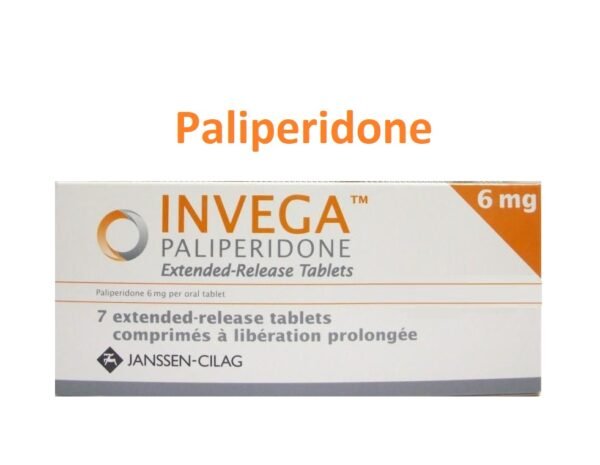
Paliperidone (Invega) is an atypical antipsychotic medicine. It is the active metabolite of risperidone. It is used to treat patients with schizophrenia and psychosis.
Paliperidone Uses:
-
Schizophrenia:
- Treatment of schizophrenia
-
Schizoaffective disorder (oral and monthly IM paliperidone):
- Treatment of schizoaffective disorder as monotherapy and as an adjunct to mood stabilizers or antidepressants
-
Off Label Use of Paliperidone in Adults:
- Delusional infestation (also called delusional parasitosis);
- Psychosis/agitation associated with dementia
Paliperidone (Invega) Dose in Adults
Paliperidone (Invega) Dose in the treatment of Schizoaffective disorder:
-
Oral:
- Usual: 6 mg once daily (administered in the morning in clinical trials);
- titration not needed, though some may benefit from lower or higher doses (range: 3 to 12 mg daily).
- If more than 6 mg daily, increases of 3 mg daily are recommended at intervals of more than 4 days, up to a maximum of 12 mg daily.
-
Injection:
- Monthly IM:
- Note:
- Before starting monthly IM paliperidone, for patients naive to oral paliperidone or oral or injectable risperidone tolerance should be maintained with a test dose of oral paliperidone or oral risperidone.
- The previous oral antipsychotic regimen can be gradually discontinued at the time of starting monthly IM paliperidone.
- Dosing based on paliperidone palmitate (US labeling) or paliperidone base.
-
Initiation of therapy:
- Initial:
- 234 mg (as palmitate) or 150 mg (as the base) on treatment day 1 followed by 156 mg (as palmitate) OR
- 100 mg (as the base) 1 week later with both doses administered in the deltoid muscle.
- The second dose may be given 4 days before or after the weekly time point.
- Maintenance:
- After the 1-week beginning regimen, adjust the dose based on response and tolerance and begin a maintenance dose of 39 to 234 mg (as palmitate) OR
- 25 to 150 mg (as the base) every month injected in either the deltoid or gluteal muscle (the 39 mg dose [as palmitate] was not studied in schizoaffective disorder trials).
- The monthly maintenance dose may be administered 7 days before or after the monthly time point.
- Initial:
Conversion from oral paliperidone to monthly IM paliperidone:
- Start monthly IM paliperidone as described using the 1-week initiation regimen.
- Patients previously stabilized on oral doses can expect similar steady-state exposure during maintenance treatment with monthly IM paliperidone using the following conversion:
- Oral extended-release dose of 12 mg daily, then IM maintenance dose of 234 mg (as palmitate) or 150 mg (as the base) monthly
- Oral extended-release dose of 9 mg daily, then IM maintenance dose of 156 mg (as palmitate) or 100 mg (as the base) monthly
- Oral extended-release dose of 6 mg daily, then IM maintenance dose of 117 mg (as palmitate) or 75 mg (as the base) monthly
- Oral extended-release dose of 3 mg daily, then IM maintenance dose of 39 to 78 mg (as palmitate) or 25 to 50 mg (as the base) monthly
Conversion from other oral antipsychotics to monthly IM paliperidone:
- There is no solid data about switching patients from other oral antipsychotics to monthly IM paliperidone.
Switching from other long-acting injectable antipsychotics (at steady-state) to monthly IM paliperidone:
- Start monthly IM paliperidone in the place of the next scheduled injection and continue at monthly intervals.
- The two beginning doses are not needed in these patients.
When switching from injectable risperidone (Risperdal Consta) to monthly IM paliperidone the following recommendations have been made (Invega Sustenna Canadian product labeling):
- Risperdal Consta dose of 25 mg every 2 weeks, then IM paliperidone maintenance dose of 78 mg (as palmitate) or 50 mg (as the base) monthly
- Risperdal Consta dose of 37.5 mg every 2 weeks, then IM paliperidone maintenance dose of 117 mg (as palmitate) or 75 mg (as the base) monthly
- Risperdal Consta dose of 50 mg every 2 weeks, then IM paliperidone maintenance dose of 156 mg (as palmitate) or 100 mg (base) monthly
Paliperidone (Invega) Dosage adjustments:
- Adjustments may be made monthly (full effect from adjustments may not be seen for several months)
-
Missed second initiation dose:
- If <4 weeks have passed since the first injection:
- Administer the missed dose 156 mg (as palmitate) or 100 mg (as the base) in the deltoid as soon as possible, later a third dose of 117 mg (as palmitate) OR
- 75 mg (as the base) in either the deltoid or gluteal muscle 5 weeks after the first injection (regardless of when the second injection was administered), then start normal monthly maintenance dosing.
- If ≥4 weeks and ≤7 weeks have passed since the first injection:
- Administer a dose of 156 mg (as palmitate) or 100 mg (as the base) in the deltoid as soon as possible, later another 156 mg dose (as palmitate) OR
- 100 mg dose (as the base) in the deltoid 1 week after, then start normal monthly maintenance dosing.
- If >7 weeks have passed since the first injection:
- Therapy must be restarted following dosing recommendations for the beginning of therapy.
- If <4 weeks have passed since the first injection:
Paliperidone (Invega) Missed maintenance dose:
- If ≥4 weeks and ≤6 weeks have passed since the last monthly injection:
- Administer the missed dose as soon as possible and continue therapy at monthly intervals.
- If >6 weeks and ≤6 months have passed since the last monthly injection:
- If the maintenance dose was <234 mg (as palmitate) or 150 mg (as the base):
- Administer the same dose the patient was previously stabilized on in the deltoid as soon as possible, later a second equivalent dose in the deltoid 1 week later, then restart maintenance dose at monthly intervals.
- If the maintenance dose was 234 mg (as palmitate) or 150 mg (as the base):
- Administer a 156 mg dose (as palmitate) or 100 mg dose (as the base) in the deltoid as soon as possible, later a second dose of 156 mg (as palmitate) OR
- 100 mg dose (as the base) in the deltoid 1 week later, then restart maintenance dose at monthly intervals.
- If the maintenance dose was <234 mg (as palmitate) or 150 mg (as the base):
- If >6 months have passed since the last monthly maintenance injection:
- Therapy must be restarted after dosing recommendations for the beginning of therapy.
Paliperidone (Invega) Dose in the treatment of Schizophrenia:
-
Oral:
- Usual: 6 mg once daily (administered in the morning in clinical trials);
- titration not required, though some may benefit from lower or higher doses (range: 3 to 12 mg daily).
- If exceeding 6 mg daily, increases of 3 mg daily are advised no more frequently than every 5 days, up to a maximum of 12 mg daily.
-
Injection: IM:
- Monthly paliperidone (Invega Sustenna):
- Note:
- Before starting monthly IM paliperidone, for patients naïve to oral paliperidone or oral or injectable risperidone tolerability should be maintained with a test dose of oral paliperidone or oral risperidone.
- A previous oral antipsychotic regimen can be slowly discontinued at the time of initiation of monthly IM paliperidone.
- Dosing based on paliperidone palmitate (US labeling) or paliperidone base (Canadian labeling).
-
Initiation of therapy:
- Initial: 234 mg (as palmitate) or 150 mg (as the base) on treatment day 1 later by 156 mg (as palmitate) or 100 mg (as the base) 1 week after with both doses administered in the deltoid muscle.
- The second dose may be given 4 days before or after the weekly time point.
-
Maintenance:
- After the 1-week starting regimen, start a maintenance dose of 117 mg (as palmitate) or 75 mg (as the base) every month administered in either the deltoid or gluteal muscle.
- Some patients may benefit from higher or lower monthly maintenance doses (monthly maintenance dosage range: 39 to 234 mg [as palmitate] or 25 to 150 mg [as the base]).
- The monthly maintenance dose may be given 7 days before or after the monthly time point.
Conversion from oral paliperidone to IM paliperidone:
- Start IM therapy as described using the 1-week initiation regimen. Patients previously stabilized on oral doses can expect similar steady state exposure during maintenance treatment with IM therapy using the following conversion:
- Oral extended-release dose of 12 mg daily, then IM maintenance dose of 234 mg (as palmitate) or 150 mg (as the base) monthl
- Oral extended-release dose of 9 mg daily, then IM maintenance dose of 156 mg (as palmitate) or 100 mg (as the base) monthly
- Oral extended-release dose of 6 mg daily, then IM maintenance dose of 117 mg (as palmitate) or 75 mg (as the base) monthly
- Oral extended-release dose of 3 mg daily, then IM maintenance dose of 39 to 78 mg (as palmitate) or 25 to 50 mg (as the base) monthly
Conversion from other oral antipsychotics to IM paliperidone:
- There are no systematically collected data to address switching patients from other oral antipsychotics to IM paliperidone.
Switching from other long-acting injectable antipsychotics (at steady-state) to IM paliperidone:
- Initiate IM paliperidone in the place of the next scheduled injection and continue at monthly intervals. The two initiation doses are not required in these patients.
When switching from injectable risperidone (Risperdal Consta) to monthly IM paliperidone the following recommendations have been made (Invega Sustenna Canadian product labeling):
- Risperdal Consta dose of 25 mg every 2 weeks, then IM paliperidone maintenance dose of 50 mg (as the base) monthly
- Risperdal Consta dose of 37.5 mg every 2 weeks, then IM paliperidone maintenance dose of 75 mg (as the base) monthly
- Risperdal Consta dose of 50 mg every 2 weeks, then IM paliperidone maintenance dose of 100 mg (as the base) monthly
Paliperidone (Invega) Dosage adjustments:
- May be adjusted monthly (full effect from adjustments may not be seen for several months)
-
Missed second initiation dose:
- If <4 weeks have elapsed since the first injection:
- Administer the missed dose (156 mg [as palmitate] or 100 mg [as the base]) in the deltoid as soon as possible, followed by a third dose of 117 mg (as palmitate) OR
- 75 mg (as the base) in either the deltoid or gluteal muscle 5 weeks after the first injection (regardless of when the second injection was given), then start normal monthly maintenance dosing.
- If ≥4 weeks and ≤7 weeks have passed since the first injection:
- Administer a dose of 156 mg (as palmitate) or 100 mg (as the base) in the deltoid as soon as possible, later another 156 mg dose (as palmitate) OR
- 100 mg dose (as the base) in the deltoid 1 week later, then start normal monthly maintenance dosing.
- If >7 weeks have passed since the first injection: Therapy must be restarted after dosing recommendations for the beginning of therapy.
- If <4 weeks have elapsed since the first injection:
Missed maintenance dose:
- If ≥4 weeks and ≤6 weeks have passed since the last monthly injection:
- Administer the missed dose as soon as possible and continue therapy at monthly intervals.
- If >6 weeks and ≤6 months have passed since the last monthly injection:
- If the maintenance dose was <234 mg (as palmitate) or <150 mg (as the base):
- Administer the same dose the patient was previously stabilized on in the deltoid as soon as possible, later a second equivalent dose in the deltoid 1 week later, then restart maintenance dose at monthly intervals.
- If the maintenance dose was 234 mg (as palmitate) or 150 mg (as the base):
- Administer a 156 mg dose (as palmitate) or 100 mg dose (as the base) in the deltoid as soon as possible, later a second dose of 156 mg (as palmitate) OR
- 100 mg (as the base) in the deltoid 1 week later, then restart maintenance dose at monthly intervals.
- If >6 months have passed since the last monthly maintenance injection:
- Therapy must be restarted after dosing recommendations for the beginning of therapy.
- If the maintenance dose was <234 mg (as palmitate) or <150 mg (as the base):
Three-month paliperidone (Invega Trinza):
Note:
- Three-month IM paliperidone is to be used only after monthly IM paliperidone (Invega Sustenna) has been established as an adequate treatment for at least 4 months.
- The last 2 doses of monthly IM paliperidone should be the same dosage strength prior to starting 3month IM paliperidone.
Conversion from monthly injection to 3-month injection:
- Start 3-month IM paliperidone when the next monthly IM paliperidone dose is scheduled.
- Base the 3-month dose on the previous monthly dose, using the equivalent 3.5 times higher dose.
- Three-month IM paliperidone may be administered up to 7 days before or after the next monthly dose date.
- After the initial injection, administer every 3 months.
- Patients may be given the injection up to 2 weeks before or after the 3-month time point.
- Conversion from monthly IM paliperidone (Invega Sustenna) 39 mg (as palmitate) or 25 mg (as the base) to 3month IM paliperidone (Invega Trinza) has not been studied.
- Monthly IM paliperidone (Invega Sustenna) 78 mg (as palmitate) or 50 mg (as base) = 3-month IM paliperidone (Invega Trinza) 273 mg (as palmitate) or 175 mg (as base)
- Monthly IM paliperidone (Invega Sustenna) 117 mg (as palmitate) or 75 mg (as base) = 3-month IM paliperidone (Invega Trinza) 410 mg (as palmitate) or 263 mg (as base)
- Monthly IM paliperidone (Invega Sustenna) 156 mg (as palmitate) or 100 mg (as base) = 3-month IM paliperidone (Invega Trinza) 546 mg (as palmitate) or 350 mg (as base)
- Monthly IM paliperidone (Invega Sustenna) 234 mg (as palmitate) or 150 mg (as base) = 3-month IM paliperidone (Invega Trinza) 819 mg (as palmitate) or 525 mg (as base)
Conversion from 3-month IM paliperidone to monthly IM paliperidone:
- Initiate monthly IM paliperidone when the next 3-month IM paliperidone dose is scheduled.
- Base the monthly dose on the previous 3-month dose, using the equivalent 3.5 times the lower dose. After the initial injection, administer once monthly.
- 3-month IM paliperidone (Invega Trinza) 273 mg (as palmitate) or 175 mg (as base) = Monthly IM paliperidone (Invega Sustenna) 78 mg (as palmitate) or 50 mg (as base)
- 3-month IM paliperidone (Invega Trinza) 410 mg (as palmitate) or 263 mg (as base) = Monthly IM paliperidone (Invega Sustenna) 117 mg (as palmitate) or 75 mg (as base)
- 3-month IM paliperidone (Invega Trinza) 546 mg (as palmitate) or 350 mg (as base) = Monthly IM paliperidone (Invega Sustenna) 156 mg (as palmitate) or 100 mg (as base)
- 3-month IM paliperidone (Invega Trinza) 819 mg (as palmitate) or 525 mg (as base) = Monthly IM paliperidone (Invega Sustenna) 234 mg (as palmitate) or 150 mg (as base)
Conversion from 3-month IM paliperidone to paliperidone extended-release tablets:
- Start paliperidone extended release tablets 3 months after the last dose of 3-month IM paliperidone.
- According to the once-daily extended-release tablet dose on the last 3-month injection dose and weeks since last administered. Use the following conversion.
- If the last 3-month IM paliperidone dose was:
- 273 mg (as palmitate) or 175 mg (as base): 3 months to >24 weeks since the last dose = 3 mg paliperidone extended-release tablets
- 410 mg (as palmitate) or 263 mg (as the base):
- 3 months to 24 weeks since the last dose = 3 mg paliperidone extended-release tablets
- >24 weeks since the last dose = 6 mg paliperidone extended-release tablets
- 546 mg (as palmitate) or 350 mg (as the base):
- 3 months to 18 weeks since the last dose = 3 mg paliperidone extended-release tablet
- >18 weeks to 24 weeks since the last dose = 6 mg paliperidone extended-release tablets
- >24 weeks since the last dose = 9 mg paliperidone extendedrelease tablets
- 819 mg (as palmitate) or 525 mg (as the base):
- 3 months to 18 weeks since the last dose = 6 mg paliperidone extended-release tablets
- >18 weeks to 24 weeks since the last dose = 9 mg paliperidone extended-release tablets
- >24 weeks since the last dose = 12 mg paliperidone extendedrelease tablets
Paliperidone (Invega) Dosage adjustments:
- Dosage adjustments can be made every 3 months in increments within the range of 273 to 819 mg (as palmitate) or 175 to 525 mg (as the base)according to response and tolerability.
- Due to the long-acting nature, the patient's response to an adjusted dose may not be apparent for several months.
- Missed dose 3 1/2 months to 4 months since the last injection:
- Administer the prior 3-month dose as soon as possible and continue with normal dosing.
- Missed dose 4 months to 9 months since the last injection:
- Do not administer the next 3-month dose. If the last 3-month dose was:
- 273 mg (as palmitate) or 175 mg (as the base):
- Administer 78 mg (as palmitate) or 50 mg (as the base) of monthly IM paliperidone (Invega Sustenna) into the deltoid muscle.
- Repeat the same dose of monthly IM paliperidone (Invega Sustenna) one week later.
- One month after the second injection, administer 273 mg (as palmitate) or 175 mg (as the base) of 3-month IM paliperidone (Invega Trinza) into the deltoid or gluteal muscle and restart normal dosing at 3-month intervals.
- 410 mg (as palmitate) or 263 mg (as the base):
- Administer 117 mg (as palmitate) or 75 mg (as the base) of monthly IM paliperidone (Invega Sustenna) into the deltoid muscle.
- Repeat the same dose of monthly IM paliperidone (Invega Sustenna) one week later. One month after the second injection, administer 410 mg (as palmitate) or 263 mg (as the base) of 3-month IM paliperidone (Invega Trinza) into the deltoid or gluteal muscle and restart normal dosing at 3-month intervals.
- 546 mg (as palmitate) or 350 mg (as base):
- Administer 156 mg (as palmitate) or 100 mg (as the base) of monthly IM paliperidone (Invega Sustenna) into the deltoid muscle.
- Repeat the same dose of monthly IM paliperidone (Invega Sustenna) one week later.
- One month after the second injection, administer 546 mg (as palmitate) or 350 mg (as the base) of 3-month IM paliperidone (Invega Trinza) into the deltoid or gluteal muscle and restart normal dosing at 3-month intervals.
- 819 mg (as palmitate) or 525 mg (as base):
- Administer 156 mg (as palmitate) or 100 mg (as the base) of monthly IM paliperidone (Invega Sustenna) into the deltoid muscle.
- Repeat the same dose of monthly IM paliperidone (Invega Sustenna) one week later.
- One month after the second injection, administer 819 mg (as palmitate) or 525 mg (as the base) of 3-month IM paliperidone (Invega Trinza) into the deltoid or gluteal muscle and restart normal dosing at 3-month intervals.
- Missed dose longer than 9 months since the last injection:
- Resume treatment with monthly IM paliperidone (Invega Sustenna).
- Three-month IM paliperidone can be restarted after the patient has been adequately treated with monthly IM paliperidone for at least 4 months.
- 273 mg (as palmitate) or 175 mg (as the base):
- Do not administer the next 3-month dose. If the last 3-month dose was:
Paliperidone (Invega) Dose in the treatment of Delusional infestation (also called delusional parasitosis) (off-label):
- Oral:
- Initial: 3 mg daily;
- Adjust dose based on response and tolerance up to 9 mg/day.
- Responses to therapy commonly observed after 2 weeks with maximal effect after 4 weeks.
- Additional data may be needed to further define the role of paliperidone in this condition.
Paliperidone (Invega) Discontinuation of therapy:
- American Psychiatric Association (APA), Canadian Psychiatric Association (CPA), and World Federation of Societies of Biological Psychiatry (WFSBP) guidelines recommend gradually tapering antipsychotics to avoid withdrawal symptoms and minimize the risk of relapse.
- The risk for withdrawal symptoms may be highest with highly anticholinergic or dopaminergic antipsychotics.
- When stopping antipsychotic therapy in patients with schizophrenia, the CPA guidelines recommend a gradual taper over 6 to 24 months, and the APA guidelines recommend reducing the dose by 10% each month.
- Continuing anti-parkinsonism agents for a brief period after discontinuation may prevent withdrawal symptoms.
- When switching antipsychotics, 3 strategies have been suggested:
- Cross-titration (gradually discontinuing the first antipsychotic while gradually increasing the new antipsychotic),
- overlap and taper (maintaining the dose of the first antipsychotic while gradually increasing the new antipsychotic, then tapering the first antipsychotic), and
- abrupt change (abruptly discontinuing the first antipsychotic and either increasing the new antipsychotic slowly or starting it at a treatment dose).
- Evidence supporting ideal switch strategies and taper rates is limited, and results are conflicting.
Paliperidone (Invega) Dose in Childrens
Paliperidone (Invega) Dose in the treatment of irritability associated with autistic disorder: Limited data available:
-
Children ≥12 years and Adolescents: Oral:
-
Extended-release tablet:
- Initial: 3 mg once daily;
- Titrate on a weekly basis in 3 mg/day increments until clinical response or intolerance;
- The maximum daily dose: 12 mg/day.
- Dosing based on an open-label trial of 25 patients (mean age: 15.3 years; age range: 12 to 21 years);
- The therapeutic response was reported in 84% of patients at a mean final dose: 7.1 mg/day.
-
Paliperidone (Invega) Dose in the treatment of Schizoaffective disorder: Oral:
-
Extended-release tablet:
-
Adolescents ≥18 years:
- Usual: 6 mg once daily (administered in the morning in clinical trials);
- titration not required, though some may benefit from lower or higher doses (range: 3 to 12 mg daily).
- If exceeding 6 mg daily, increases of 3 mg daily are recommended at intervals of more than 4 days, up to a maximum daily dose: 12 mg/day.
-
Parenteral: Adolescents ≥18 years:
- Monthly paliperidone injection (Invega Sustenna): IM:
- Note:
- Before beginning monthly IM paliperidone, patients naive to oral paliperidone or oral or injectable risperidone should have tolerance established with a test dose of oral paliperidone or oral risperidone.
- Before oral antipsychotic regimen can be slowly discontinued at the time of the beginning of monthly IM paliperidone.
-
-
Initiation of therapy (2-dose series):
- Initial: 234 mg on treatment day 1 followed by 156 mg 1 week later with both doses administered in the deltoid muscle.
- The second dose may be administered 4 days before or after the weekly time point.
-
Missed second initiation dose:
- If the target administration date of 1 week ± 4 days for the second dose is missed, catch-up dosing depends on the time passed since the first dose.
| Time elapsed since the last first dose | Catch-up dose for therapy initiation |
| <4 weeks | Administer the missed dose 156 mg (in the deltoid) as soon as possible, followed by a third dose of 117 mg (in either the deltoid or gluteal muscle) 5 weeks after the first injection (regardless of when the second injection was administered), then begin normal monthly maintenance dosing. |
| ≥4 weeks to ≤7 weeks | Administer a dose of 156 mg (in the deltoid) as soon as possible, followed by another 156 mg dose (in the deltoid) 1 week later, then begin normal monthly maintenance dosing |
| >7 weeks | Reinitiate following dosing recommendations for initiation of therapy |
-
Maintenance:
- The first maintenance injection should be administered 5 weeks after the first injection of the initial series.
- Adjust the dose based on response and tolerance and start a maintenance dose of 78 to 234 mg (every month administered in either the deltoid or gluteal muscle).
- The monthly maintenance dose may be administered 7 days before or after the monthly time point.
-
Missed maintenance dose:
- Dose and interval dependent upon time since the last dose, see table:
| Time elapsed since last monthly maintenance injection | Catch-up dose for therapy initiation |
| ≥4 weeks to ≤6 weeks | Administer the missed dose as soon as possible and continue therapy at monthly interval |
| >6 weeks to ≤6 months and dose <234 mg | Administer the same dose the patient was previously stabilized on in the deltoid as soon as possible, followed by a second equivalent dose in the deltoid 1 week later, then resume maintenance dose at monthly intervals. |
| >6 weeks to ≤6 months and dose 234 mg | Administer a 156 mg dose in the deltoid as soon as possible, followed by a second dose of 156 mg in the deltoid 1 week later, then resume maintenance dose at monthly intervals. |
| >6 month | Reinitiate following dosing recommendations for initiation of therapy. |
Conversion from oral extended-release paliperidone to monthly IM paliperidone:
- Start monthly IM paliperidone as described using the 1-week initiation regimen.
- Patients previously stabilized on oral doses can expect similar steady-state exposure during maintenance treatment with monthly IM paliperidone using the following conversion:
| Oral extended-release once-daily dose | Monthly maintenance IM dose (Invega Sustenna) |
| 3 mg | 39 to 78 mg |
| 6 mg | 117 mg |
| 9 mg | 156 mg |
| 12 mg | 234 mg |
Conversion from other oral antipsychotics to monthly IM paliperidone:
- There are no systematically collected data to address switching patients from other oral antipsychotics to monthly IM paliperidone.
Switching from other long-acting injectable antipsychotics (at steady-state) to monthly IM paliperidone:
- Start monthly IM paliperidone in the place of the next scheduled injection and continue at monthly intervals;
- It may be administered in the deltoid or gluteal muscle.
- The two starting doses are not needed in these patients.
-
Dosage adjustments:
- Adjustments may be made monthly (full effect from adjustments may not be seen for several months
Paliperidone (Invega) Dose in the treatment of Schizophrenia:
-
Oral: Extended-release tablet:
-
Children ≥12 and Adolescents <18 years:
- 3 mg once daily; titration not necessary; if after clinical assessment a dosage increase is needed, may increase the dose in 3 mg/day increments at least every 5 days;
- The maximum daily dose is weight dependent:
- Less than 51 kgs: 6 mg/day;
- 51 kgs or more: 12 mg/day;
- Note: During adolescent clinical trials, higher doses were not associated with greater efficacy, but increased risk of adverse effects.
-
Adolescents: ≥18 years:
- Usual dose: 6 mg once daily (administered in the morning in clinical trials); titration not required, though some may benefit from lower or higher doses (range: 3 to 12 mg daily).
- If exceeding 6 mg daily, increases of 3 mg daily are recommended no more frequently than every 5 days, up to a maximum of 12 mg daily.
-
-
Parenteral Treatment:
-
Adolescents ≥18 years:
- Monthly paliperidone injection (Invega Sustenna): IM:
- Note:
- Before beginning monthly IM therapy, tolerability should be established with oral paliperidone or oral risperidone; may need a test dose of oral paliperidone or risperidone.
- Previous oral antipsychotics can be discontinued at the time of starting IM therapy.
-
Initiation of therapy (2-dose series):
- Initial:
- 234 mg on treatment day 1 followed by 156 mg 1 week later with both doses administered in the deltoid muscle.
- The second dose may be administered 4 days before or after the weekly time point.
- Missed second initiation dose:
- If the target administration date of 1 week ± 4 days for the second dose is missed, catch-up dosing depends on the time passed since the first dose.
- Initial:
-
| Time elapsed since last monthly maintenance injection | Catch-up dosing |
| ≥4 weeks to ≤6 weeks | Administer the missed dose as soon as possible and continue therapy at monthly interval |
| >6 weeks to ≤6 months and dose <234 mg | Administer the same dose the patient was previously stabilized on in the deltoid as soon as possible, followed by a second equivalent dose in the deltoid 1 week later, then resume maintenance dose at monthly intervals. |
| >6 weeks to ≤6 months and dose 234 mg | Administer a 156 mg dose in the deltoid as soon as possible, followed by a second dose of 156 mg in the deltoid 1 week later, then resume maintenance dose at monthly intervals. |
| >6 months | Reinitiate following dosing recommendations for initiation of therapy. |
Conversion from oral paliperidone to IM paliperidone monthly injection:
- Start IM therapy as described using the 1-week initiation regimen.
- Patients previously stabilized on oral doses can expect similar steady-state exposure during maintenance treatment with IM therapy using the following conversion:
| Oral extended-release once-daily dose | Monthly maintenance IM dose (Invega Sustenna) |
| 3 mg | 39 to 78 mg |
| 6 mg | 117 mg |
| 9 mg | 156 mg |
| 12 mg | 234 mg |
-
Switching from other long-acting injectable antipsychotics to IM paliperidone:
- Start IM paliperidone in the place of the next scheduled injection and continue at monthly intervals.
- The 1-week initiation regimen is not needed in these patients.
Paliperidone (Invega) Dosage adjustments:
- Adjustments may be made monthly (full effect from adjustments may not be seen for several months).
- Three-month paliperidone (Invega Trinza): IM:
- Note:
- 3-month IM paliperidone is to be used only after monthly IM paliperidone (Invega Sustenna) has been established as an adequate treatment for at least 4 months.
- The last 2 doses of monthly IM paliperidone should be the same dosage strength before beginning 3-month IM paliperidone.
Conversion from monthly injection and 3-month injection:
- Monthly to 3-month injections:
- Start 3-month IM paliperidone when the next monthly IM paliperidone dose is scheduled.
- Base the 3-month dose on the prior monthly dose, using the equivalent 3.5 times higher dose.
- Three-month IM paliperidone may be administered up to 7 days before or after the next monthly dose date.
- After the initial injection, administer every 3 months.
- Patients may be given the injection up to 2 weeks before or after the 3-month time point.
- Three-month to monthly injections:
- Start monthly IM paliperidone when the next 3-month IM paliperidone dose is scheduled.
- Base the monthly dose on the previous 3-month dose, using the equivalent 3.5 times lower dose (see following table).
- After initial injection, administer once monthly.
| Monthly IM paliperidone dose (Invega Sustenna) | 3-month paliperidone dose (Invega Trinza) |
| 78 mg | 273 mg |
| 117 mg | 410 mg |
| 156 mg | 546 mg |
| 234 mg | 819 mg |
| Note: Conversion from monthly IM paliperidone (Invega Sustenna) 39 mg to 3-month IM paliperidone (Invega Trinza) has not been studied. | |
Conversion from 3-month IM paliperidone to oral paliperidone extended-release tablets:
- Start paliperidone extended-release tablets at least 3 months after the last dose of 3-month IM paliperidone.
- Base the once-daily extended-release tablet dose on the last 3-month injection dose and weeks since last administered.
- Use the following conversion.
| 3-month paliperidone dose (Invega Trinza) | Time elapsed since last IM dose | Oral extended-release once-daily dose |
| 273 mg | ≥12 weeks | 3 mg |
| 410 mg | 12 weeks to ≤24 weeks | 3 mg |
| >24 weeks | 6 mg | |
| 546 mg | 12 to ≤18 weeks | 3 mg |
| >18 to ≤24 weeks | 6 mg | |
| >24 weeks | 9 mg | |
| 819 mg | 12 to ≤18 weeks | 6 mg |
| >18 to ≤24 weeks | 9 mg | |
| >24 weeks | 12 mg |
-
Paliperidone (Invega) Dosage adjustments:
- Dosage adjustments can be made every 3 months in increments within the range of 273 to 819 mg based on response and tolerance.
- Because of its long-acting nature, the patient's response to an adjusted dose may not be apparent for several months.
- Missed doses:
- Dose and interval dependent upon time since the last dose; use of the monthly dosage form (Invega Sustenna) may be necessary in some cases; see table:
| Time elapsed since last 3-month maintenance dose |
Catch-up dosing |
| 3.5 months to 4 months | Administer the previous 3-month dose as soon as possible and continue with normal dosing |
| 4 months to 9 months and dose 273 mg | Administer 78 mg of monthly IM paliperidone (Invega Sustenna) into the deltoid muscle. Repeat same dose of monthly IM paliperidone (Invega Sustenna) 1 week later. One month following the second injection, administer 273 mg of 3-month IM paliperidone (Invega Trinza) into the deltoid or gluteal muscle and resume normal dosing at 3-month intervals |
| 4 months to 9 months and dose 410 mg | Administer 117 mg of monthly IM paliperidone (Invega Sustenna) into the deltoid muscle. Repeat same dose of monthly IM paliperidone (Invega Sustenna) 1 week later. One month following the second injection, administer 410 mg of 3-month IM paliperidone (Invega Trinza) into the deltoid or gluteal muscle and resume normal dosing at 3-month intervals. |
| 4 months to 9 months and dose 546 mg | Administer 156 mg of monthly IM paliperidone (Invega Sustenna) into the deltoid muscle. Repeat same dose of monthly IM paliperidone (Invega Sustenna) 1 week later. One month following the second injection, administer 546 mg of 3-month IM paliperidone (Invega Trinza) into the deltoid or gluteal muscle and resume normal dosing at 3-month intervals. |
| 4 months to 9 months and dose 819 mg | Administer 156 mg of monthly IM paliperidone (Invega Sustenna) into the deltoid muscle. Repeat same dose of monthly IM paliperidone (Invega Sustenna) 1 week later. One month following the second injection, administer 819 mg of 3-month IM paliperidone (Invega Trinza) into the deltoid or gluteal muscle and resume normal dosing at 3-month intervals. |
| >9 months | Re-initiate treatment with monthly IM paliperidone (Invega Sustenna). Three-month IM paliperidone can be resumed after the patient has been adequately treated with monthly IM paliperidone for at least 4 months. |
Paliperidone (Invega) Pregnancy Category: Not assigned
- There is not much information available on pregnancy paliperidone.
- There is a possibility of withdrawal symptoms and extrapyramidal symptoms in the third trimester if antipsychotics are used during pregnancy.
- The newborn can experience agitation, feeding disorders, hypotonia and respiratory distress as well as somnolence and tremor.
- These effects can be self-limiting, allowing recovery in hours or days with no treatment or severe enough to require prolonged hospitalization.
- ACOG recommends that treatment during pregnancy is individualized; treatment with psychotropic medications during pregnancy should include the clinical expertise of the primary healthcare provider, mental health clinician, and pediatrician.
- There are limited safety data regarding atypical antipsychotics during pregnancy. Routine use is not recommended.
- If a woman accidentally takes an antipsychotic during pregnancy, she may need to continue therapy.
- Hyperprolactinemia may be caused by paliperidone, which can cause a reversible decrease in fertility in females.
Use of paliperidone while breastfeeding
- Breast milk contains paliperidone.
- According to the manufacturer breastfeeding during therapy is a decision that should be made after considering the risks to infants and the benefits to mothers.
- Breastfeeding infants should be monitored for excessive sedation, extrapyramidal signs, failure to thrive, and jitteriness.
Paliperidone (Invega) Dose in Kidney Disease:
-
Clearance is decreased in renal impairment; adjust the dose according to renal function:
-
Oral Administration:
-
Mild impairment (CrCl 50 to 79 mL/minute):
- Initial dose: 3 mg once daily;
- The maximum dose: 6 mg once daily
-
Moderate to severe impairment (CrCl 10 to 49 mL/minute):
- Initial dose: 1.5 mg once daily;
- The maximum dose: 3 mg once daily
-
Severe impairment (CrCl <10 mL/minute):
- Use not recommended (has not been studied).
-
-
IM Administration:
-
Mild impairment (CrCl 50 to 79 mL/minute):
- Monthly IM paliperidone (Invega Sustenna):
- Start of therapy: 156 mg (as palmitate) or 100 mg (as the base) on treatment day 1, followed by 117 mg (as palmitate) OR
- 75 mg (as the base) 1 week later with both doses administered in the deltoid, followed by a maintenance dose of 78 mg (as palmitate) OR
- 50 mg (as the base) every month (administered in the deltoid or gluteal muscle)
- Three-month IM paliperidone (Invega Trinza):
- Adjust dosage and stabilize the patient using the monthly IM injection, then transition to the 3-month IM injection.
- Note:
- Monthly IM paliperidone (Invega Sustenna) 78 mg (as palmitate) or 50 mg (as base) = 3-month IM paliperidone (Invega Trinza) 273 mg (as palmitate) or 175 mg (as base).
- Monthly IM paliperidone (Invega Sustenna):
-
Moderate to severe impairment (CrCl <50 mL/minute):
- Use not recommended
-
Paliperidone (Invega) Dose in Liver Disease:
- Oral, IM (monthly, 3- month):
- Mild to moderate impairment (Child-Pugh class A or B):
- No dosage adjustment needed.
- Severe impairment:
- No dosage adjustments provided in the manufacturer’s labeling (has not been studied).
- Mild to moderate impairment (Child-Pugh class A or B):
Unless otherwise noted, the frequency of adverse effects is reported for the oral/IM formulation in adults.
Common Side Effects of Paliperidone (Invega):
-
Cardiovascular:
- Tachycardia
-
Central Nervous System:
- Drowsiness
- Extrapyramidal Reaction
- Akathisia
- Headache
- Parkinsonian-Like Syndrome
- Dystonia
-
Endocrine & Metabolic:
- Increased Serum Prolactin
- Decreased HDL Cholesterol
- Increased LDL Cholesterol
- Weight Gain
- Increased Serum Triglycerides
- Increased Serum Cholesterol
- Hyperglycemia
-
Gastrointestinal:
- Vomiting
-
Neuromuscular & Skeletal:
- Hyperkinesia
- Tremor
Less Common Side Effects Of Paliperidone (Invega):
-
Cardiovascular:
- Orthostatic Hypotension
- Bundle Branch Block
- First Degree Atrioventricular Block
- Hypertension
- Sinus Arrhythmia
- Bradycardia
- Edema
- Palpitations
-
Central Nervous System:
- Agitation
- Anxiety
- Sedation
- Dizziness
- Dysarthria
- Lethargy
- Fatigue
- Sleep Disorder
- Nightmares
- Insomnia
- Opisthotonus
-
Dermatologic:
- Pruritus
- Skin Rash
-
Endocrine & Metabolic:
- Amenorrhea
- Galactorrhea
- Gynecomastia
- Decreased Libido
-
Gastrointestinal:
- Nausea
- Dyspepsia
- Sialorrhea
- Constipation
- Abdominal Distress
- Upper Abdominal Pain
- Diarrhea
- Swollen Tongue
- Increased Appetite
- Toothache
- Xerostomia
- Stomach Discomfort
- Decreased Appetite
- Flatulence
-
Genitourinary:
- Urinary Tract Infection
- Breast Tenderness
- Irregular Menses
- Retrograde Ejaculation
- Erectile Dysfunction
-
Hepatic:
- Increased Serum ALT
- Increased Serum AST
-
Hypersensitivity:
- Anaphylaxis
-
Local:
- Injection Site Reaction
- Erythema At Injection Site
- Swelling At Injection Site
-
Neuromuscular & Skeletal:
- Dyskinesia
- Myalgia
- Weakness
- Back Pain
- Tongue Paralysis
- Limb Pain
- Muscle Rigidity
- Arthralgia
-
Ophthalmic:
- Blurred Vision
- Abnormal Eye Movements
-
Respiratory:
- Upper Respiratory Tract Infection
- Nasopharyngitis
- Cough
- Rhinitis
- Epistaxis
- Pharyngolaryngeal Pain
- Nasal Congestion
Uncommon Side effects of Paliperidone (Invega) Frequency Not Defined:
-
Cardiovascular:
- Cerebrovascular Accident (IM)
- ECG Abnormality (IM)
- Hypotension (Oral)
- Ischemia (Oral)
- Left Bundle Branch Block (Oral)
- Peripheral Edema (Oral)
- Postural Orthostatic Tachycardia (IM)
- Transient Ischemic Attacks (Oral)
-
Central Nervous System:
- Abnormal Gait (Oral; Parkinsonian Gait)
- Cogwheel Rigidity (IM)
- Drooling
- Hypertonia (IM)
- Orthostatic Dizziness (IM)
- Psychomotor Agitation (IM)
- Restlessness (IM)
- Seizure
- Tonic-Clonic Seizures (Oral)
- Trismus (Oral)
- Vertigo (IM)
-
Dermatologic:
- Fixed Drug Eruption (IM)
- Papular Rash (Oral)
- Urticaria (IM)
-
Endocrine & Metabolic:
- Menstrual Disease (IM)
-
Gastrointestinal:
- Abdominal Pain (Oral)
- Hyperinsulinism (IM)
- Oromandibular Dystonia (IM)
-
Genitourinary:
- Breast Engorgement (Oral)
- Breast Hypertrophy (IM)
- Breast Swelling (IM)
- Ejaculatory Disorder (IM)
- Mastalgia
- Nipple Discharge (IM)
- Sexual Disorder (IM)
-
Hypersensitivity:
- Hypersensitivity (IM)
-
Neuromuscular & Skeletal:
- Bradykinesia (IM)
- Joint Stiffness (IM)
- Muscle Spasm (IM)
- Muscle Twitching (IM)
- Musculoskeletal Pain (Oral)
- Neck Stiffness (IM)
- Torticollis (Oral)
-
Ophthalmic:
- Oculogyric Crisis (IM)
-
Respiratory:
- Aspiration Pneumonia
Contraindications to Paliperidone (Invega):
Hypersensitivity to paliperidone or risperidone or any component in the formulation
Warnings and precautions
-
Modified cardiac conduction
- Can alter cardiac conduction and prolong QTc interval. Life-threatening arrhythmias have been reported with therapeutic doses antipsychotics.
- Concomitant medication or conditions that cause hypokalemia, bradycardia and/or hypomagnesemia may increase the risk.
- Do not use with QTc-prolonging medications.
- Patients with congenital long QT syndrome or patients with previous cardiac arrhythmia should not use this medication.
-
Anti-emetic effects
- Antiemetic effects may mask toxicities of other drugs and conditions (eg, Reye syndrome or brain tumor).
-
Blood dyscrasias
- Clinical trials and postmarketing reports involving antipsychotic use have reported leukopenia, neutropenia, and sometimes fatal agranulocytosis.
- Periodic blood count assessments should be done if there are any risk factors, such as low WBC or an ANC or preexisting history of drug-induced neutropenia/ leukopenia.
- Patients with clinically significant neutropenia should be monitored for fever and other signs of infection. If absolute neutrophil count is 1,000/mm3, stop therapy.
-
Effects on the cerebrovascular system:
- In placebo-controlled trials of Risperidone (paliperidone, the primary active metabolite, was tested in elderly patients suffering from dementia-related psychosis), there was an increase in cerebrovascular adverse events (eg, stroke, transient ischemic attacks, stroke).
-
Depression in the CNS:
- CNS depression can lead to mental or physical impairments. Patients should be cautious about driving, operating machinery, and other tasks that require mental alertness.
-
Dyslipidemia
- There have been increases in cholesterol and triglycerides, and decreased HDL.
- Patients with an abnormal lipid profile should be cautious.
-
Aspiration and Esophageal Dysmotility:
- Antipsychotic use has been linked to esophageal dysmotility, aspiration, and increased risk with age.
- Patients at high risk of aspiration pneumonia (eg Alzheimer's disease) should be treated with caution, especially patients over 75 years old.
-
Extrapyramidal symptoms
- Extrapyramidal symptoms (EPS) may occur, including pseudo-parkinsonism and acute dystonic reactions. These reactions are generally less common than those caused by conventional antipsychotics. Frequency reports are comparable to placebo.
- Higher doses of antipsychotics and use of antipsychotics for men, younger patients, and males may increase the risk of dystonia.
- There are several factors that increase the vulnerability to tardive dyskinesia, including older age, female gender, postmenopausal status and Parkinson disease symptoms.
- Stop treating tardive dyskinesia symptoms and signs.
-
Falls
- May increase the chance of falling due to somnolence and orthostatic hypotension.
- Patients with certain diseases or medications that can increase fall risk should have their fall risk assessed at baseline and again periodically throughout treatment.
-
Hyperglycemia
- Hyperglycemia can be caused by antipsychotics that are not typical. In some cases, this may lead to hyperglycemia, hyperosmolar compa or even death.
- Hyperglycemia symptoms (eg, weakness, polydipsia or polyuria) should be checked on all patients.
- Patients with diabetes (or risk factors for it) should be cautious. Monitor for any changes in glucose control.
- Patients at high risk for diabetes (eg obesity, family history) should have a baseline fasting sugar level and be monitored periodically throughout treatment.
-
Hyperprolactinemia
- It is associated with higher prolactin levels. However, the clinical significance and clinical significance of hyperprolactinemia in patients suffering from breast cancer or other prolactin dependent tumors is not known.
-
Hypersensitivity
- Reports of hypersensitivity reactions including anaphylactic reactions or angioedema have been made.
-
Intraoperative floppy-iris syndrome:
- There are very few cases of intraoperative floppy iris (IFIS), in patients who have received risperidone or had cataract surgery.
- IFIS with paliperidone has not been reported, but you should be cautious as it is an active metabolite to risperidone.
- Before you undergo cataract surgery, make sure to check for any previous risperidone or paliperidone use.
- It is not known whether there are any benefits or risks to interrupting paliperidone and risperidone prior to surgery. Clinicians should proceed cautiously.
-
Neuroleptic malignant Syndrome:
- This medication may cause neuroleptic malignant symptoms.
- Monitor for changes in mental status, fever, rigidity of the muscles, and/or instability.
- Patients with Parkinson's disease, Lewy body dementia, or Parkinson's may be at greater risk.
-
Orthostatic hypotension
- Orthostatic hypotension or syncope may occur. Use caution in patients with known cardiovascular diseases (heart failure, history or myocardial injury or ischemia), cerebrovascular disease or other conditions that could lead to hypotension (dehydration and hypovolemia and treatment with antihypertensive medication).
-
Priapism
- Rare cases of priapism were reported.
-
Suicidal thoughts:
- Psychotic illness and bipolar disorder can lead to suicide attempts. It is important to be cautious when starting therapy for high-risk patients.
- Good patient care requires that prescriptions be limited to the minimum amount.
-
Temperature regulation
- It is possible to have impaired core body temperature regulation. Avoid heat exposure, strenuous exercise and any anticholinergic medication.
-
Weight loss:
- Antipsychotic therapy has led to significant weight gain; incidences vary from product to product.
- You should monitor your waist circumference, and body mass index.
-
Dementia: [US Boxed Warning]
- Antipsychotics have a higher death rate than placebo for dementia-related psychosis in the elderly.
- The majority of deaths were either from cardiovascular disease (eg heart failure, sudden death, etc.) or infectious diseases (eg pneumonia).
- Patients with Parkinson's disease or Lewy body dementia should be cautious.
- There is a greater risk of adverse reactions, increased sensitivity for extrapyramidal effects and an association with irreversible cognitive decline or death.
- Paliperidone has not been approved to treat dementia-related psychosis.
-
Renal impairment
- Patients with mild renal disease should be cautious; a reduction in dosage is advised.
- Patients with severe (IM route only), or moderate dysfunction are not recommended.
-
Seizures
- Patients at high risk of seizures should be treated with caution, especially those who have had seizures in the past, are brain damaged, suffered from head trauma or have been drinking, and/or are receiving concurrent treatment with medication that could lower their seizure threshold.
- Due to the increased prevalence of predisposing factors, elderly patients could be more at risk for seizures.
Paliperidone: Drug Interaction
|
Risk Factor C (Monitor therapy) |
|
|
Acetylcholinesterase Inhibitors (Central) |
May enhance the neurotoxic (central) effect of Antipsychotic Agents. Severe extrapyramidal symptoms have occurred in some patients. |
|
Alcohol (Ethyl) |
CNS Depressants may enhance the CNS depressant effect of Alcohol (Ethyl). |
|
Alizapride |
May enhance the CNS depressant effect of CNS Depressants. |
|
Amifampridine |
Agents With Seizure Threshold Lowering Potential may enhance the neuroexcitatory and/or seizure-potentiating effect of Amifampridine. |
|
Amphetamines |
Antipsychotic Agents may diminish the stimulatory effect of Amphetamines. |
|
Antidiabetic Agents |
Hyperglycemia-Associated Agents may diminish the therapeutic effect of Antidiabetic Agents. |
|
Blood Pressure Lowering Agents |
May enhance the hypotensive effect of Antipsychotic Agents (Second Generation [Atypical]). |
|
Brexanolone |
CNS Depressants may enhance the CNS depressant effect of Brexanolone. |
|
Brimonidine (Topical) |
May enhance the CNS depressant effect of CNS Depressants. |
|
BuPROPion |
May enhance the neuroexcitatory and/or seizure-potentiating effect of Agents With Seizure Threshold Lowering Potential. |
|
Cannabidiol |
May enhance the CNS depressant effect of CNS Depressants. |
|
Cannabis |
May enhance the CNS depressant effect of CNS Depressants. |
|
CarBAMazepine |
May decrease the serum concentration of Paliperidone. |
|
Chlorphenesin Carbamate |
May enhance the adverse/toxic effect of CNS Depressants. |
|
CNS Depressants |
May enhance the adverse/toxic effect of other CNS Depressants. |
|
Deutetrabenazine |
May enhance the adverse/toxic effect of Antipsychotic Agents. Specifically, the risk for akathisia, parkinsonism, or neuroleptic malignant syndrome may be increased. |
|
Dimethindene (Topical) |
May enhance the CNS depressant effect of CNS Depressants. |
|
Doxylamine |
May enhance the CNS depressant effect of CNS Depressants. Management: The manufacturer of Diclegis (doxylamine/pyridoxine), intended for use in pregnancy, specifically states that use with other CNS depressants is not recommended. |
|
Dronabinol |
May enhance the CNS depressant effect of CNS Depressants. |
|
Erdafitinib |
May increase the serum concentration of P-glycoprotein/ABCB1 Substrates. |
|
Esketamine |
May enhance the CNS depressant effect of CNS Depressants. |
|
Guanethidine |
Antipsychotic Agents may diminish the therapeutic effect of Guanethidine. |
|
Haloperidol |
QT-prolonging Agents (Indeterminate Risk - Avoid) may enhance the QTcprolonging effect of Haloperidol. |
|
HydrOXYzine |
May enhance the CNS depressant effect of CNS Depressants. |
|
Kava Kava |
May enhance the adverse/toxic effect of CNS Depressants. |
|
Lithium |
May enhance the neurotoxic effect of Antipsychotic Agents. Lithium may decrease the serum concentration of Antipsychotic Agents. Specifically noted with chlorpromazine. |
|
Lofexidine |
May enhance the CNS depressant effect of CNS Depressants. Management: Drugs listed as exceptions to this monograph are discussed in further detail in separate drug interaction monographs. |
|
Lumacaftor |
May decrease the serum concentration of P-glycoprotein/ABCB1 Substrates. Lumacaftor may increase the serum concentration of P-glycoprotein/ABCB1 Substrates. |
|
Magnesium Sulfate |
May enhance the CNS depressant effect of CNS Depressants. |
|
Methylphenidate |
Antipsychotic Agents may enhance the adverse/toxic effect of Methylphenidate. Methylphenidate may enhance the adverse/toxic effect of Antipsychotic Agents. |
|
MetyroSINE |
CNS Depressants may enhance the sedative effect of MetyroSINE. |
|
MetyroSINE |
May enhance the adverse/toxic effect of Antipsychotic Agents. |
|
Minocycline |
May enhance the CNS depressant effect of CNS Depressants. |
|
Mirtazapine |
CNS Depressants may enhance the CNS depressant effect of Mirtazapine. |
|
Nabilone |
May enhance the CNS depressant effect of CNS Depressants. |
|
P-glycoprotein/ABCB1 Inhibitors |
May increase the serum concentration of Pglycoprotein/ABCB1 Substrates. P-glycoprotein inhibitors may also enhance the distribution of pglycoprotein substrates to specific cells/tissues/organs where p-glycoprotein is present in large amounts (e.g., brain, T-lymphocytes, testes, etc.). |
|
QT-prolonging Agents (Highest Risk) |
QT-prolonging Agents (Indeterminate Risk - Avoid) may enhance the QTc-prolonging effect of QT-prolonging Agents (Highest Risk). Management: Monitor for QTc interval prolongation and ventricular arrhythmias when these agents are combined. Patients with additional risk factors for QTc prolongation may be at even higher risk. |
|
Quinagolide |
Antipsychotic Agents may diminish the therapeutic effect of Quinagolide. |
|
Ranolazine |
May increase the serum concentration of P-glycoprotein/ABCB1 Substrates. |
|
Rufinamide |
May enhance the adverse/toxic effect of CNS Depressants. Specifically, sleepiness and dizziness may be enhanced. |
|
Selective Serotonin Reuptake Inhibitors |
CNS Depressants may enhance the adverse/toxic effect of Selective Serotonin Reuptake Inhibitors. Specifically, the risk of psychomotor impairment may be enhanced. |
|
Serotonin Modulators |
May enhance the adverse/toxic effect of Antipsychotic Agents. Specifically, serotonin modulators may enhance dopamine blockade, possibly increasing the risk for neuroleptic malignant syndrome. Antipsychotic Agents may enhance the serotonergic effect of Serotonin Modulators. This could result in serotonin syndrome. Exceptions: Nicergoline. |
|
Tetrabenazine |
May enhance the adverse/toxic effect of Antipsychotic Agents. |
|
Tetrahydrocannabinol |
May enhance the CNS depressant effect of CNS Depressants. |
|
Tetrahydrocannabinol and Cannabidiol |
May enhance the CNS depressant effect of CNS Depressants. |
|
Trimeprazine |
May enhance the CNS depressant effect of CNS Depressants. |
|
Valproate Products |
May increase the serum concentration of Paliperidone. |
|
Risk Factor D (Consider therapy modification) |
|
|
Anti-Parkinson Agents (Dopamine Agonist) |
Antipsychotic Agents (Second Generation [Atypical]) may diminish the therapeutic effect of Anti-Parkinson Agents (Dopamine Agonist). Management: Consider using an alternative antipsychotic agent when possible in patients with Parkinson disease. If an atypical antipsychotic is necessary, consider using clozapine or quetiapine, which may convey the lowest interaction risk. |
|
Blonanserin |
CNS Depressants may enhance the CNS depressant effect of Blonanserin. |
|
Buprenorphine |
CNS Depressants may enhance the CNS depressant effect of Buprenorphine. Management: Consider reduced doses of other CNS depressants, and avoiding such drugs in patients at high risk of buprenorphine overuse/self-injection. Initiate buprenorphine at lower doses in patients already receiving CNS depressants. |
|
Chlormethiazole |
May enhance the CNS depressant effect of CNS Depressants. Management: Monitor closely for evidence of excessive CNS depression. The chlormethiazole labeling states that an appropriately reduced dose should be used if such a combination must be used. |
|
Droperidol |
May enhance the CNS depressant effect of CNS Depressants. Management: Consider dose reductions of droperidol or of other CNS agents (eg, opioids, barbiturates) with concomitant use. Exceptions to this monograph are discussed in further detail in separate drug interaction monographs. |
|
Flunitrazepam |
CNS Depressants may enhance the CNS depressant effect of Flunitrazepam. |
|
HYDROcodone |
CNS Depressants may enhance the CNS depressant effect of HYDROcodone. Management: Avoid concomitant use of hydrocodone and benzodiazepines or other CNS depressants when possible. These agents should only be combined if alternative treatment options are inadequate. If combined, limit the dosages and duration of each drug. |
|
Inducers of CYP3A4 (Strong) and P-glycoprotein |
May decrease the serum concentration of Paliperidone. Management: Avoid using the 3-month extended-release injectable suspension (Invega Trinza) with inducers of both CYP3A4 and P-glycoprotein during the 3-month dosing interval if possible. If combination is necessary, consider using extended-release tablets. |
|
Iohexol |
Agents With Seizure Threshold Lowering Potential may enhance the adverse/toxic effect of Iohexol. Specifically, the risk for seizures may be increased. Management: Discontinue agents that may lower the seizure threshold 48 hours prior to intrathecal use of iohexol. Wait at least 24 hours after the procedure to resume such agents. In nonelective procedures, consider use of prophylactic anticonvulsants. |
|
Iomeprol |
Agents With Seizure Threshold Lowering Potential may enhance the adverse/toxic effect of Iomeprol. Specifically, the risk for seizures may be increased. Management: Discontinue agents that may lower the seizure threshold 48 hours prior to intrathecal use of iomeprol. Wait at least 24 hours after the procedure to resume such agents. In nonelective procedures, consider use of prophylactic anticonvulsants. |
|
Iopamidol |
Agents With Seizure Threshold Lowering Potential may enhance the adverse/toxic effect of Iopamidol. Specifically, the risk for seizures may be increased. Management: Discontinue agents that may lower the seizure threshold 48 hours prior to intrathecal use of iopamidol. Wait at least 24 hours after the procedure to resume such agents. In nonelective procedures, consider use of prophylactic anticonvulsants. |
|
Itraconazole |
May enhance the QTc-prolonging effect of Paliperidone. Itraconazole may decrease the metabolism of Paliperidone. |
|
Mequitazine |
Antipsychotic Agents may enhance the arrhythmogenic effect of Mequitazine. Management: Consider alternatives to one of these agents when possible. While this combination is not specifically contraindicated, mequitazine labeling describes this combination as discouraged. |
|
Methotrimeprazine |
CNS Depressants may enhance the CNS depressant effect of Methotrimeprazine. Methotrimeprazine may enhance the CNS depressant effect of CNS Depressants. Management: Reduce adult dose of CNS depressant agents by 50% with initiation of concomitant methotrimeprazine therapy. Further CNS depressant dosage adjustments should be initiated only after clinically effective methotrimeprazine dose is established. |
|
Opioid Agonists |
CNS Depressants may enhance the CNS depressant effect of Opioid Agonists. Management: Avoid concomitant use of opioid agonists and benzodiazepines or other CNS depressants when possible. These agents should only be combined if alternative treatment options are inadequate. If combined, limit the dosages and duration of each drug. |
|
OxyCODONE |
CNS Depressants may enhance the CNS depressant effect of OxyCODONE. Management: Avoid concomitant use of oxycodone and benzodiazepines or other CNS depressants when possible. These agents should only be combined if alternative treatment options are inadequate. If combined, limit the dosages and duration of each drug. |
|
Perampanel |
May enhance the CNS depressant effect of CNS Depressants. Management: Patients taking perampanel with any other drug that has CNS depressant activities should avoid complex and high-risk activities, particularly those such as driving that require alertness and coordination, until they have experience using the combination. |
|
RisperiDONE |
May enhance the adverse/toxic effect of Paliperidone. Management: Additive paliperidone exposure is expected with this combination. Consider using an alternative combination when possible. |
|
Sodium Oxybate |
May enhance the CNS depressant effect of CNS Depressants. Management: Consider alternatives to combined use. When combined use is needed, consider minimizing doses of one or more drugs. Use of sodium oxybate with alcohol or sedative hypnotics is contraindicated. |
|
St John's Wort |
May decrease the serum concentration of Paliperidone. Management: Avoid using the 3-month extended-release injectable suspension (Invega Trinza) with inducers of both CYP3A4 and P-glycoprotein during the 3-month dosing interval if possible. If combination is necessary, consider using extended-release tablets. |
|
Suvorexant |
CNS Depressants may enhance the CNS depressant effect of Suvorexant. Management: Dose reduction of suvorexant and/or any other CNS depressant may be necessary. Use of suvorexant with alcohol is not recommended, and the use of suvorexant with any other drug to treat insomnia is not recommended. |
|
Tapentadol |
May enhance the CNS depressant effect of CNS Depressants. Management: Avoid concomitant use of tapentadol and benzodiazepines or other CNS depressants when possible. These agents should only be combined if alternative treatment options are inadequate. If combined, limit the dosages and duration of each drug. |
|
Zolpidem |
CNS Depressants may enhance the CNS depressant effect of Zolpidem. Management: Reduce the Intermezzo brand sublingual zolpidem adult dose to 1.75 mg for men who are also receiving other CNS depressants. No such dose change is recommended for women. Avoid use with other CNS depressants at bedtime; avoid use with alcohol. |
|
Risk Factor X (Avoid combination) |
|
|
Amisulpride |
Antipsychotic Agents may enhance the adverse/toxic effect of Amisulpride. Management: Drugs listed as exceptions to this monograph are discussed in further detail in separate drug interaction monographs. |
|
Azelastine (Nasal) |
CNS Depressants may enhance the CNS depressant effect of Azelastine (Nasal). |
|
Bromopride |
May enhance the adverse/toxic effect of Antipsychotic Agents. |
|
Bromperidol |
May enhance the CNS depressant effect of CNS Depressants. |
|
Metoclopramide |
May enhance the adverse/toxic effect of Antipsychotic Agents. |
|
Orphenadrine |
CNS Depressants may enhance the CNS depressant effect of Orphenadrine. |
|
Oxomemazine |
May enhance the CNS depressant effect of CNS Depressants. |
|
Paraldehyde |
CNS Depressants may enhance the CNS depressant effect of Paraldehyde. |
|
Piribedil |
Antipsychotic Agents may diminish the therapeutic effect of Piribedil. Piribedil may diminish the therapeutic effect of Antipsychotic Agents. Management: Use of piribedil with antiemetic neuroleptics is contraindicated, and use with antipsychotic neuroleptics, except for clozapine, is not recommended. |
|
Sulpiride |
Antipsychotic Agents may enhance the adverse/toxic effect of Sulpiride. |
|
Thalidomide |
CNS Depressants may enhance the CNS depressant effect of Thalidomide. |
Monitoring Parameters:
- Mental status
- vital signs (as clinically indicated)
- blood pressure (baseline; repeat 3 months after antipsychotic initiation, then annually)
- weight, height, BMI, waist circumference (baseline; repeat at 4, 8, and 12 weeks after beginning or changing therapy, then quarterly; consider switching to a different antipsychotic for a weight gain ≥5% of initial weight)
- CBC (as clinically indicated; monitor frequently during the first few months of therapy in patients with previously low WBC or history of drug-induced leukopenia/neutropenia)
- electrolytes
- renal and liver function (yearly and as clinically indicated)
- personal and family history of obesity, diabetes, dyslipidemia, hypertension, or cardiovascular disease (baseline; repeat yearly)
- fasting plasma glucose level/HbA (baseline; repeat 3 months after starting antipsychotic, then annually)
- fasting lipid panel (baseline; repeat 3 months after the beginning of antipsychotic; if the LDL level is normal, repeat testing at 2- to 5-year intervals or more frequently if clinically indicated)
- changes in menstruation, libido, development of galactorrhea, erectile and ejaculatory function (at each visit for the first 12 weeks after the antipsychotic is started or until the dose is stable, then annually)
- Abnormal involuntary movements or parkinsonian signs (baseline; repeat weekly until dose stabilized for at least 2 weeks after the introduction and for 2 weeks after any significant dose increase)
- Tardive dyskinesia (every 12 months; high-risk patients every 6 months)
- Ocular examination (annually in patients older than 40 years; every 2 years in younger patients).
How to administer Paliperidone?
Oral:
- You can take it with or without food.
- Extended-release tablets should always be taken whole and mixed with liquids
- Do not crush, chew or divide
Injection of IM:
- Only administer by IM route as a single dose (do NOT divide).
- Do not use any other method of administration.
- Avoid accidental injections into the vasculature.
Monthly paliperidone, Invega Sustenna
- Mix it with other products or diluents.
- Before injecting, shake the syringe.Minimum 10 secondsTo ensure homogeneous suspension
- Use only the included needles to administer the medication.
- For patients who weigh more than 90 kg, the 2 initial injections should take place using a 1 1/2-inch, 22-gauge needle. Patients weighing less then 90 kgs need a 1 1/4-inch, 23-gauge tip.
- Two initial intramuscular deltoid injections are required to achieve therapeutic concentrations quickly.
- Alternate deltoid injections (right or left deltoid muscles).
- The fourth dose can be administered 4 days prior to or after the weekly time period.
- You can administer monthly maintenance doses in either the gluteal or deltoid muscles. Inject the gluteal muscles using a 1 1/2-inch, 22-gauge needle. You can alternate gluteal injections (right gluteal muscle and left gluteal muscles).
- The monthly maintenance dose can be administered seven days prior to or after the monthly time period.
Three-months of paliperidone, Invega Trinza
- Before injecting, shake the syringe tip upwardsMinimum 15 secondsTo ensure homogeneous suspension
- After vigorous shaking, inject within five minutes.
- Slowly inject the medication deep into the gluteal or deltoid muscles.
- Only use the supplied thin wall needles.
- Don'tTo reduce the chance of blocking, use needles made from monthly IM Paliperidone and other commercially-available materials.
- For patients who weigh more than 90 kg, use a 1 1/2-inch, 22-gauge thin wall needle to reach the center of the deltoid muscles. A 1 inch, 22 gauge thin-wall tip is used for patients weighing less then 90 kgs.
- Alternate deltoid injections (right or left deltoid muscles).
- Apply injections to the gluteal muscles using a thin-walled needle of 1 1/2 inches and 22-gauge (regardless patient weight).
- Alternate gluteal injections (right gluteal muscle and left gluteal muscle).
- Do not inject the dose that was not administered correctly.
- Keep an eye on the patient and administer oral supplementation when clinically necessary until the next 3-month injection.
Mechanism of action of Paliperidone (Invega):
- Paliperidone, which is the primary active metabolite in risperidone, is a benzisoxazole antipsychotic.
- It's thought that it is a combination of central serotonergic, dopaminergic antagonism.
- Serotonin antagonism is a classic neuroleptic mechanism that improves psychoses by reducing the number of extrapyramidal side effect.
- Paliperidone is similar to risperidone in that it has a high affinity for a1, a2, and D2, H1, 5-HT-2A receptors, and a low affinity with muscarinic.
- Contrary to risperidone paliperidone has a nearly 10x lower affinity for 5-HT-2A and 5-HT-2A receptors and a three-to fivefold lower affinity for 5-HT-1A or 5-HT-1D.
Notice:
- The pharmacokinetic parameters of adolescents weighing more than 51 kg were comparable to those of adults.
- A higher drug exposure was observed in adolescents weighing less than 51 kg (23%) compared to adults. However, this was not clinically significant.
Absorption: IM:
- Slow-release (Monthly: Begins on day 1 and continues up to 126 days);
- 3-month: Begins on day 1 and continues up to 18 months.
Protein binding:
- 74%
Metabolism:
- Hepatic via CYP2D6 and 3A4 (limited role in elimination);
- Minor metabolism (<10% each) via dealkylation, hydroxylation, dehydrogenation, and benzisoxazole scission
Bioavailability:
- Oral: 28%
Half-life elimination:
- Oral: 23 hours; 24 to 51 hours with renal dysfunction (CrCl <80 mL/minute)
- Monthly IM (following a single-dose administration): Range: 25 to 49 days
- 3-month IM: Deltoid injection range: 84 to 95 days;
- Gluteal injection range: 118 to 139 days
Time to peak plasma:
- Oral: About 24 hours;
- Monthly IM: 13 days;
- 3-month IM: 30 to 33 days
Excretion:
- Urine (80%; 59% as unchanged drug);
- feces (11%)
International Brand Names of Paliperidone:
- Invega
- Invega Sustenna
- Invega Trinza
- Inveda
- Inveda Sustenna
- Invega
- Invega SR
- Invega Sustenna
- Invega Trinza
- Keplioon
- Trevicta
- Xeplion
Paliperidone Brand Names in Pakistan:
No Brands Available in Pakistan.
.png)