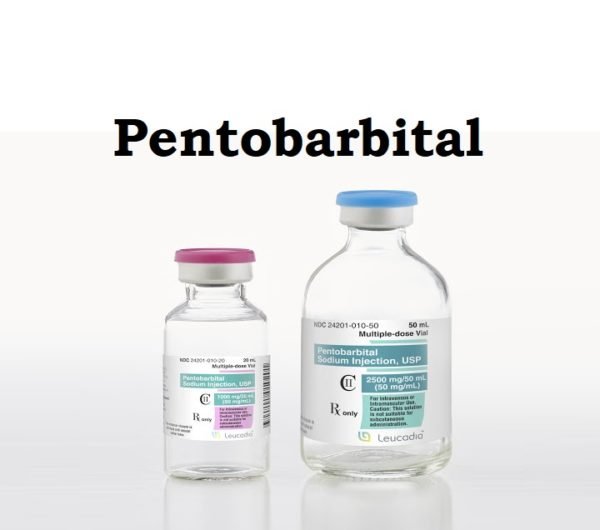
Pentobarbital is a short-acting barbiturate drug that inhibits the neuronal activity. It is used to treat patients with seizures and insomnia. It may cause respiratory paralysis and death if given in high doses or if the patient is not monitored when the drug is given especially after the drug is administered intravenously. It should be avoided with concomitant hypnotics and sedatives.
Indications of Pentobarbital:
-
Sedative/ hypnotic/ pre-anesthesia:
- It is used for short term treatment of insomnia or as pre-anesthesia.
-
Seizures:
- It is indicated for the management of status epilepticus, cholera, eclampsia, meningitis, tetanus, toxic reactions to strychnine or local anesthetics.
-
Off Label Use of Pentobarbital in Adults:
- Barbiturate coma in severe brain injury patients/elevated intracranial pressure.
Pentobarbital dose in adults:
Note: Adjust dose based on the patient's age, weight, and condition.
Pentobarbital dose in the treatment of Sedative/ hypnotic/ pre-anesthesia:
- 150 to 200 mg intramuscular as a single dose.
- Initial: 100 mg intravenous if needed, may administer additional increments after at least 1 minute, up to a total dose of 200 to 500 mg.
Pentobarbital Dose in Seizures:
Note:
Mechanical ventilation and cardiovascular monitoring required; Titrate the dose until the cessation of electrographic seizures or burst suppression.
-
Pentobarbital Neurocritical Care Society recommendations:
-
Loading dose:
- 5 to 15 mg/kg administered at a rate of ≤50 mg/minute, may give an additional 5 to 10 mg/kg with a continuous infusion.
-
Continuous infusion:
- 5 to 5 mg/kg/hour.
- If the patient experiences breakthrough status epilepticus while on continuous infusion, administer an additional 5 mg/kg bolus and increase infusion rate by 0.5 to 1 mg/kg/hour every 12 hours.
-
Note:
Before withdrawing continuous infusion, electrographic control is recommended for at least 24 to 48 hours, and it should be slowly withdrawn to prevent recurrent status epilepticus.
Barbiturate coma in severe brain injury patients and elevated intracranial pressure (off-label):
-
Loading dose:
- 10 mg/kg intravenous given over 30 minutes (or ≤25 mg/minute), followed by 5 mg/kg every hour for 3 doses, monitor blood pressure and respiratory rate.
-
Maintenance infusion:
- 1 mg/kg/hour initially;
- The dose may be increased to 2 to 4 mg/kg/hour to maintain burst suppression on EEG.
Pentobarbital dose in children:
Note:
Consider the potential for delayed metabolism or elimination in infants <6 months of age.
Pentobarbital Dose in the Hypnotic:
-
Children:
- 2 to 6 mg/kg intramuscular
- The maximum dose: 100 mg/dose.
- Note: Use has generally been replaced by other agents.
Pentobarbital Dose in the Preoperative sedation:
Note:
Use has generally been replaced by other agents.
Infants and Children:
- 2 to 6 mg/kg intramuscular
- The maximum dose is 100 mg/dose.
- 1 to 3 mg/kg intravenous every 10 minutes up to a maximum total dose of 6 mg/kg, not to exceed a total dose of 100 mg.
Pentobarbital Dose in the Procedural sedation:
Note: Use has generally been replaced by other agents.
-
Infants and Children:
- 2 to 6 mg/kg intramuscular.
- The maximum dose is 100 mg/dose.
-
Infants and Children:
- 1 to 2 mg/kg intravenous initially, additional doses of 1 to 2 mg/kg every 3 to 5 minutes to the desired effect.
- The usual effective total dose is 1 to 6 mg/kg.
- The maximum total dose is 100 mg/dose.
- Note: Patients receiving concurrent barbiturate therapy may require higher total mg/kg doses (up to 9 mg/kg).
-
Adolescents:
- 100 mg
-
Oral: Limited data available:
-
Infants:
- 4 mg/kg/dose per oral, if needed supplemental 2 to 4 mg/kg/dose every 30 minutes.
- The maximum total dose is 8 mg/kg.
-
Children:
-
<4 years:
- 3 to 6 mg/kg per oral.
- The maximum dose is 100 mg/dose.
-
≥4 years:
- 1.5 to 3 mg/kg per oral.
- The maximum dose is 100 mg/dose.
-
-
-
Rectal: Limited data available:
- Children:
-
<4 years:
- 3 to 6 mg/kg;
- The maximum dose is 100 mg
-
≥4 years:
- 5 to 3 mg/kg;
- The maximum dose is 100 mg
-
- Children:
Pentobarbital Dose in the Reduction of elevated ICP:
Note:
Intubation is required. The dose is adjusted according to hemodynamics, ICP, cerebral perfusion pressure, and EEG.
-
Low dose:
-
Children and Adolescents:
- 5 mg/kg intravenous every 4 to 6 hours.
-
-
High-dose pentobarbital coma:
-
Children and Adolescents:
- Loading dose: 10 mg/kg intravenous over 30 minutes, then 5 mg/kg every hour for 3 hours;
- The initial maintenance infusion is 1 mg/kg/hour;
- Adjust the dose to maintain burst suppression on EEG;
- The maintenance dose range: 1 to 2 mg/kg/hour.
-
Dose in the Sedation of mechanically ventilated ICU patient (who failed standard therapy):
- Loading dose: 1 mg/kg intravenous followed by 1 mg/kg/hour infusion.
- Additional boluses at a dose equal to hourly rate may be given every 2 hours as needed.
- If ≥4 to 6 boluses are administered within 24 hours, then increase maintenance rate by 1 mg/kg/hour;
- The reported required range: 1 to 6 mg/kg/hour (median: 2 mg/kg/hour).
- Tapering of dose and/or conversion to oral phenobarbital has been reported for therapy ≥5 days.
Note:
Higher loading and initial maintenance doses are known to cause increased chances of adverse effects.
Pentobarbital dose in the treatment of refractory Status epilepticus:
Note:
Mechanical ventilation and cardiovascular monitoring required; titrate the dose to the cessation of electrographic seizures or burst suppression.
-
Infants, Children, and Adolescents:
- Loading dose: 5 mg/kg intravenous;
- maintenance infusion: 1 mg/kg/hour initially;
- The dose may be increased up to 3 mg/kg/hour (usual range: 1 to 3 mg/kg/hour);
- Maintain burst suppression on EEG for 24 to 48 hours (no seizure activity), tapering pentobarbital rate by 0.5 mg/kg every 12 hours has been reported.
-
High-dose pentobarbital coma:
-
Infants and Children:
- Loading dose: 10 to 15 mg/kg intravenous given slowly over 1 to 2 hours;
- monitor blood pressure and respiratory rate.
- Maintenance infusion: Initial: 1 mg/kg/hour;
- The dose may be increased up to 5 mg/kg/hour (usual range: 0.5 to 5 mg/kg/hour);
- Maintain burst suppression on EEG;
- If the patient experiences breakthrough status epilepticus while on continuous infusion, administer an additional 5 mg/kg bolus and increase infusion rate by 0.5 to 1 mg/kg/hour every 12 hours until burst suppression.
-
Note: Loading doses of 20 to 35 mg/kg (given over 1 to 2 hours) have been utilized in pediatric patients for pentobarbital coma, but these higher loading doses often cause hypotension requiring vasopressor therapy.
Pregnancy Risk Factor D
- If used during pregnancy, barbiturates may cross the placenta. They can be seen in the fetal liver or fetal brain. This could lead to an increase in the incidence of fetal abnormalities.
- If given in the final trimester, it will decrease the frequency of uterine cramps.
- Neonatal neonates can experience withdrawal symptoms such as seizures and hyperirritability if pentobarbital has been given to the mother during the third trimester.
- Pentobarbital can cause respiratory depression in newborns if mothers are given it, especially in premature infants.
Use of pentobarbital while breastfeeding
- Breast milk contains barbiturates.
- Pentobarbital should not be administered to nursing mothers.
Dose adjustment in renal disease:
The manufacturer's labeling does not include any dosage adjustments. Dose reduction is possible.
Notice:Patients receiving pentobarbital have a higher risk of developing toxic reactions to propylene glycol, particularly if they are on prolonged therapy or receive higher doses.
Dose adjustment in liver disease:
There are no dosage adjustments provided in the manufacturer’s labeling. However dose reduction is required.
Side effects of Pentobarbital:
-
Cardiovascular:
- Bradycardia
- Hypotension
- Syncope
-
Central Nervous System:
- Abnormality In Thinking
- Agitation
- Anxiety
- Ataxia
- Central Nervous System Stimulation
- Confusion
- Depression
- Dizziness
- Drowsiness
- Hallucination
- Headache
- Insomnia
- Nervousness
- Nightmares
- Psychiatric Disturbance
-
Dermatologic:
- Exfoliative Dermatitis
- Skin Rash
-
Gastrointestinal:
- Constipation
- Nausea
- Vomiting
-
Hematologic & Oncologic:
- Megaloblastic Anemia
-
Hepatic:
- Hepatotoxicity
-
Hypersensitivity:
- Angioedema
- Hypersensitivity Reaction
-
Local:
- Injection Site Reaction
-
Neuromuscular & Skeletal:
- Hyperkinesia
- Laryngospasm
-
Respiratory:
- Apnea (Especially With Rapid IV Use)
- Hypoventilation
- Respiratory Depression
-
Miscellaneous:
- Fever
Contraindications to Pentobarbital:
- Hypersensitivity to barbiturates and any component of the formulation
- Porphyria
Warnings and precautions
-
Depression in the CNS:
- CNS depression can result, which could impair mental or physical abilities. Therefore, it is important to be cautious when operating machinery or driving.
-
Respiratory depression
- Intrachenous pentobarbital may cause respiratory depression so it is important to be careful.
- Management of seizures and traumatic brain injuries requires intubation.
-
Depression
- You should not use it if you are suffering from depression or suicidal tendencies.
-
Hepatic impairment
- Hepatic impairment requires caution and dose reduction. Avoid it in the case of hepatic impairment.
-
Renal impairment
- Patients with impaired renal function should exercise caution and reduce their doses.
-
Substance abuse
- Pentobarbitol can be addictive and cause dependence in patients who have been abused.
Pentobarbital: Drug Interaction
|
Alcohol (Ethyl) |
CNS Depressants may enhance the CNS depressant effect of Alcohol (Ethyl). |
|
Alizapride |
May enhance the CNS depressant effect of CNS Depressants. |
|
Beta-Blockers |
Barbiturates may decrease the serum concentration of Beta-Blockers. Exceptions: Atenolol; Levobunolol; Metipranolol; Nadolol. |
|
Blood Pressure Lowering Agents |
Barbiturates may enhance the hypotensive effect of Blood Pressure Lowering Agents. |
|
Brexanolone |
CNS Depressants may enhance the CNS depressant effect of Brexanolone. |
|
Brimonidine (Topical) |
May enhance the CNS depressant effect of CNS Depressants. |
|
Bromopride |
May enhance the CNS depressant effect of CNS Depressants. |
|
Calcium Channel Blockers |
Barbiturates may increase the metabolism of Calcium Channel Blockers. Management: Monitor for decreased therapeutic effects of calcium channel blockers with concomitant barbiturate therapy. Calcium channel blocker dose adjustments may be necessary. Nimodipine Canadian labeling contraindicates concomitant use with phenobarbital. Exceptions: Clevidipine. |
|
Cannabidiol |
May enhance the CNS depressant effect of CNS Depressants. |
|
Cannabis |
May enhance the CNS depressant effect of CNS Depressants. |
|
Chlorphenesin Carbamate |
May enhance the adverse/toxic effect of CNS Depressants. |
|
CNS Depressants |
May enhance the adverse/toxic effect of other CNS Depressants. |
|
Dimethindene (Topical) |
May enhance the CNS depressant effect of CNS Depressants. |
|
Doxylamine |
May enhance the CNS depressant effect of CNS Depressants. Management: The manufacturer of Diclegis (doxylamine/pyridoxine), intended for use in pregnancy, specifically states that use with other CNS depressants is not recommended. |
|
Dronabinol |
May enhance the CNS depressant effect of CNS Depressants. |
|
Esketamine |
May enhance the CNS depressant effect of CNS Depressants. |
|
Felbamate |
May increase the serum concentration of Barbiturates. Barbiturates may decrease the serum concentration of Felbamate. Management: Monitor for elevated barbiturate concentrations/toxicity if felbamate is initiated/dose increased, or reduced concentrations/effects if felbamate is discontinued/dose decreased. Refer to phenobarbital dosing guidelines for patients receiving that agent. |
|
Griseofulvin |
Barbiturates may decrease the serum concentration of Griseofulvin. |
|
Kava Kava |
May enhance the adverse/toxic effect of CNS Depressants. |
|
Lofexidine |
May enhance the CNS depressant effect of CNS Depressants. Management: Drugs listed as exceptions to this monograph are discussed in further detail in separate drug interaction monographs. |
|
Magnesium Sulfate |
May enhance the CNS depressant effect of CNS Depressants. |
|
MetyroSINE |
CNS Depressants may enhance the sedative effect of MetyroSINE. |
|
Minocycline |
May enhance the CNS depressant effect of CNS Depressants. |
|
Mirtazapine |
CNS Depressants may enhance the CNS depressant effect of Mirtazapine. |
|
Multivitamins/Minerals (with ADEK, Folate, Iron) |
May decrease the serum concentration of Barbiturates. |
|
Nabilone |
May enhance the CNS depressant effect of CNS Depressants. |
|
Piribedil |
CNS Depressants may enhance the CNS depressant effect of Piribedil. |
|
Pramipexole |
CNS Depressants may enhance the sedative effect of Pramipexole. |
|
Primidone |
May enhance the adverse/toxic effect of Barbiturates. Primidone is converted to phenobarbital, and thus becomes additive with existing barbiturate therapy. |
|
Propacetamol |
Barbiturates may increase the metabolism of Propacetamol. This may 1) diminish the desired effects of propacetamol; and 2) increase the risk of liver damage. |
|
Pyridoxine |
May increase the metabolism of Barbiturates. Apparent in high pyridoxine doses (eg, 200 mg/day) |
|
Rifamycin Derivatives |
May increase the metabolism of Barbiturates. |
|
ROPINIRole |
CNS Depressants may enhance the sedative effect of ROPINIRole. |
|
Rotigotine |
CNS Depressants may enhance the sedative effect of Rotigotine. |
|
Rufinamide |
May enhance the adverse/toxic effect of CNS Depressants. Specifically, sleepiness and dizziness may be enhanced. |
|
Selective Serotonin Reuptake Inhibitors |
CNS Depressants may enhance the adverse/toxic effect of Selective Serotonin Reuptake Inhibitors. Specifically, the risk of psychomotor impairment may be enhanced. |
|
Tetrahydrocannabinol |
May enhance the CNS depressant effect of CNS Depressants. |
|
Tetrahydrocannabinol and Cannabidiol |
May enhance the CNS depressant effect of CNS Depressants. |
|
Theophylline Derivatives |
Barbiturates may decrease the serum concentration of Theophylline Derivatives. Exceptions: Dyphylline. |
|
Thiazide and Thiazide-Like Diuretics |
Barbiturates may enhance the orthostatic hypotensive effect of Thiazide and Thiazide-Like Diuretics. |
|
Trimeprazine |
May enhance the CNS depressant effect of CNS Depressants. |
|
Valproate Products |
May increase the serum concentration of Barbiturates. Barbiturates may decrease the serum concentration of Valproate Products. |
|
Risk Factor D (Consider therapy modification) |
|
|
Blonanserin: |
NS Depressants may enhance the CNS depressant effect of Blonanserin. |
|
Buprenorphine |
|
|
Chloramphenicol (Systemic) |
May decrease the metabolism of Barbiturates. Barbiturates may increase the metabolism of Chloramphenicol (Systemic). |
|
Chlormethiazole |
May enhance the CNS depressant effect of CNS Depressants. Management: Monitor closely for evidence of excessive CNS depression. The chlormethiazole labeling states that an appropriately reduced dose should be used if such a combination must be used. |
|
CycloSPORINE (Systemic) |
Barbiturates may increase the metabolism of CycloSPORINE (Systemic). |
|
Doxycycline |
Barbiturates may decrease the serum concentration of Doxycycline. |
|
Droperidol |
May enhance the CNS depressant effect of CNS Depressants. Management: Consider dose reductions of droperidol or of other CNS agents (eg, opioids, barbiturates) with concomitant use. Exceptions to this monograph are discussed in further detail in separate drug interaction monographs. |
|
Estrogen Derivatives (Contraceptive) |
Barbiturates may diminish the therapeutic effect of Estrogen Derivatives (Contraceptive). Contraceptive failure is possible. Management: Use of a non-hormonal contraceptive is recommended. |
|
Flunitrazepam |
CNS Depressants may enhance the CNS depressant effect of Flunitrazepam. |
|
HYDROcodone |
CNS Depressants may enhance the CNS depressant effect of HYDROcodone. Management: Avoid concomitant use of hydrocodone and benzodiazepines or other CNS depressants when possible. These agents should only be combined if alternative treatment options are inadequate. If combined, limit the dosages and duration of each drug. |
|
HydrOXYzine |
May enhance the CNS depressant effect of Barbiturates. Management: Consider a decrease in the barbiturate dose, as appropriate, when used together with hydroxyzine. With concurrent use, monitor patients closely for excessive response to the combination. |
|
LamoTRIgine |
Barbiturates may decrease the serum concentration of LamoTRIgine. Management: See lamotrigine prescribing information for specific age-dependent dosing guidelines regarding concurrent use with a barbiturate, as well as for adjusting lamotrigine dosing if concurrent barbiturate therapy is discontinued. |
|
Mefloquine |
May diminish the therapeutic effect of Anticonvulsants. Mefloquine may decrease the serum concentration of Anticonvulsants. Management: Mefloquine is contraindicated for malaria prophylaxis in persons with a history of convulsions. Monitor anticonvulsant concentrations and treatment response closely with concurrent use. |
|
Methotrimeprazine |
CNS Depressants may enhance the CNS depressant effect of Methotrimeprazine. Methotrimeprazine may enhance the CNS depressant effect of CNS Depressants. Management: Reduce adult dose of CNS depressant agents by 50% with initiation of concomitant methotrimeprazine therapy. Further CNS depressant dosage adjustments should be initiated only after clinically effective methotrimeprazine dose is established. |
|
Opioid Agonists |
CNS Depressants may enhance the CNS depressant effect of Opioid Agonists. Management: Avoid concomitant use of opioid agonists and benzodiazepines or other CNS depressants when possible. These agents should only be combined if alternative treatment options are inadequate. If combined, limit the dosages and duration of each drug. |
|
OxyCODONE |
CNS Depressants may enhance the CNS depressant effect of OxyCODONE. Management: Avoid concomitant use of oxycodone and benzodiazepines or other CNS depressants when possible. These agents should only be combined if alternative treatment options are inadequate. If combined, limit the dosages and duration of each drug. |
|
Perampanel |
May enhance the CNS depressant effect of CNS Depressants. Management: Patients taking perampanel with any other drug that has CNS depressant activities should avoid complex and high-risk activities, particularly those such as driving that require alertness and coordination, until they have experience using the combination. |
|
Progestins (Contraceptive) |
Barbiturates may diminish the therapeutic effect of Progestins (Contraceptive). Contraceptive failure is possible. Management: Use of alternative, nonhormonal contraceptives is recommended. |
|
Sodium Oxybate |
May enhance the CNS depressant effect of CNS Depressants. Management: Consider alternatives to combined use. When combined use is needed, consider minimizing doses of one or more drugs. Use of sodium oxybate with alcohol or sedative hypnotics is contraindicated. |
|
Suvorexant |
CNS Depressants may enhance the CNS depressant effect of Suvorexant. Management: Dose reduction of suvorexant and/or any other CNS depressant may be necessary. Use of suvorexant with alcohol is not recommended, and the use of suvorexant with any other drug to treat insomnia is not recommended. |
|
Tapentadol |
May enhance the CNS depressant effect of CNS Depressants. Management: Avoid concomitant use of tapentadol and benzodiazepines or other CNS depressants when possible. These agents should only be combined if alternative treatment options are inadequate. If combined, limit the dosages and duration of each drug. |
|
Teniposide |
Barbiturates may decrease the serum concentration of Teniposide. Management: Consider alternatives to combined treatment with barbiturates and teniposide due to the potential for decreased teniposide concentrations. If the combination cannot be avoided, monitor teniposide response closely. |
|
Tricyclic Antidepressants |
Barbiturates may increase the metabolism of Tricyclic Antidepressants. |
|
Vitamin K Antagonists (eg, warfarin) |
Barbiturates may increase the metabolism of Vitamin K Antagonists. Management: Monitor INR more closely. An anticoagulant dose increase may be needed after a barbiturate is initiated or given at an increased dose. Anticoagulant dose decreases may be needed following barbiturate discontinuation or dose reduction. |
|
Zolpidem |
CNS Depressants may enhance the CNS depressant effect of Zolpidem. Management: Reduce the Intermezzo brand sublingual zolpidem adult dose to 1.75 mg for men who are also receiving other CNS depressants. No such dose change is recommended for women. Avoid use with other CNS depressants at bedtime; avoid use with alcohol. |
|
Risk Factor X (Avoid combination) |
|
|
Azelastine (Nasal) |
CNS Depressants may enhance the CNS depressant effect of Azelastine (Nasal). |
|
Benznidazole |
May enhance the adverse/toxic effect of Products Containing Propylene Glycol. |
|
Bromperidol |
May enhance the CNS depressant effect of CNS Depressants. |
|
Hemin |
Barbiturates may diminish the therapeutic effect of Hemin. |
|
Methoxyflurane |
Barbiturates may enhance the nephrotoxic effect of Methoxyflurane. Barbiturates may increase the metabolism of Methoxyflurane. |
|
MetroNIDAZOLE (Systemic) |
May enhance the adverse/toxic effect of Products Containing Propylene Glycol. A disulfiram-like reaction may occur. |
|
Mianserin |
May enhance the CNS depressant effect of Barbiturates. Mianserin may diminish the therapeutic effect of Barbiturates. Barbiturates may decrease the serum concentration of Mianserin. |
|
Orphenadrine |
CNS Depressants may enhance the CNS depressant effect of Orphenadrine. |
|
Oxomemazine |
May enhance the CNS depressant effect of CNS Depressants. |
|
Paraldehyde |
CNS Depressants may enhance the CNS depressant effect of Paraldehyde. |
|
Somatostatin Acetate |
May enhance the adverse/toxic effect of Barbiturates. Specifically, Somatostatin Acetate may enhance or prolong Barbiturate effects, including sedative effects. |
|
Thalidomide |
CNS Depressants may enhance the CNS depressant effect of Thalidomide. |
|
Ulipristal |
Barbiturates may decrease the serum concentration of Ulipristal. |
Monitoring parameters:
- BP
- Renal function tests/BUN
- Serum lactate
- Cardiovascular status
- CNS status
- Osmolal gap
- Respiratory status (for conscious sedation, includes pulse oximetry)
- clinical signs of propylene glycol toxicity (with long term therapy).
Barbiturate coma:
- Monitor oxygenation as well as arterial and central venous pressures to guide fluid and vasoactive therapy for maintenance of blood pressure; temperature
Elevated ICP:
- Monitor ICP, CPP, EEG
How to administer Pentobarbital?
Intramuscular:
- Inject into a large muscular.
- Because of potential tissue irritation, no more than 5mL (250mg) should be injected at one site.
Intravenous
- You can give IV push doses undiluted but the maximum dose should not exceed 50mg/minute
- Because parenteral solutions can be very alkaline, intra-arterial injections should not be used.
Extravasation management
- You should stop the infusion immediately and disconnect it.
- It is important to slowly aspirate the extravasated solution without flushing it.
- It is important to remove the needle and elevate the limb. Warm compresses are recommended.
Mechanism of action of Pentobarbital:
- Barbiturates depress the sensory cortex, decrease motor activity, alter the cerebellar function, and lead to drowsiness or sedation.
- Higher doses of barbiturates have anticonvulsant effects.
- Higher doses can cause respiratory depression due to its ability to reduce brain metabolism and cerebral bloodflow.
Action in cHildren and Adults Sedation can occur in between 10 and 15 minutes following an intravenous injection, 3 – 5 minutes after intravenous injectables, and 15 – 60 minutes after intravenous injections. Time: For Children and Adults The sedation following an IM injection can last for up to 2 hours. It will also last 15 to 45 minutes after an IV infusion. Protein binding: 45% to 70% Metabolism:Occurs in liver via hydroxylation and glucuronidation. Terminal Half-life elimination: Children: 26 ± 16 hours. Healthy Adults: 22 hours (average) Range: 15 to 50 hours and is dose dependent Excretion: Urine (<1%, as unchanged drug)
International Brands of Pentobarbital:
- Nembutal
- Dormital
- Entobar
- Medinox Mono
- Nembutal
- Pentone
- Praecicalm
- Prodormol
- Sombutol
- Sopental
Pentobarbital Brand Names in Pakistan:
Brands in Pakistan will be updated later.
.png)


