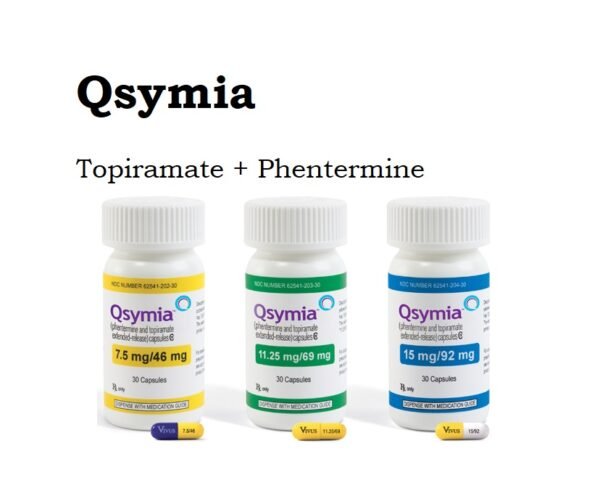
Qsymia is a weight loss pill that contains a combination of topiramate and phentermine. It is used as an adjunct to diet and exercise for the management of weight loss in obese patients.
Qsymia (Phentermine and topiramate) Uses:
-
Weight management:
- Adjunct to a reduced-calorie diet and increased physical activity, in patients with either an initial body mass index (BMI) of ≥30 kg/m² or an initial BMI of ≥27 kg/m² and at least one weight-related co-morbid condition e.g, hypertension, dyslipidemia, type 2 diabetes.
-
Off Label Use of Phentermine and topiramate in Adults:
- Weight management in type 2 diabetes mellitus
Qsymia (Phentermine and topiramate) Dose in Adults
Qsymia Dose in Weight management:
- Oral: Initial:
- Phentermine 3.75 mg/topiramate 23 mg once a day for 14 days.
- Increase the dose to phentermine 7.5 mg/topiramate 46 mg once a day for 12 weeks then evaluate for weight loss.
- If 3% of baseline body weight has not been lost, discontinue use or increase the dose to phentermine 11.25 mg/topiramate 69 mg once daily for 14 days, and then to phentermine 15 mg/topiramate 92 mg once daily.
- Observe weight loss after 3 months on phentermine 15 mg/topiramate 92 mg; if 5% of baseline body weight has not been lost at a dose of phentermine 15 mg/topiramate 92 mg, then gradually discontinue therapy (e.g, 1 dose every other day for at least 7 days).
Qsymia Dose in Weight management in type 2 diabetes mellitus (off-label):
- Oral: Phentermine 7.5 mg/topiramate 46 mg or phentermine 15 mg/topiramate 92 mg once a day
Qsymia use in Children:
Not recommended for use in children.
Pregnancy Risk Factor X
- Pregnant women should not use this combination product.
- First-trimester exposure has been linked to an increased risk of oral clefts (cleft lips with or without cleft palate).
- For more information, refer to the individual monographs.
- Obesity is associated with a high risk of adverse maternal or fetal events. However, weight loss therapy medications are not recommended during pregnancy or at conception.
- A negative pregnancy test should be done on all females with reproductive potential before starting therapy.
- Effective contraception must be used during treatment.
Use of phentermine or topiramate while breastfeeding
- Breast milk contains topiramate, amphetamines and other substances.
- The manufacturer suggests that you stop breastfeeding or discontinue treatment due to possible adverse effects.
- For more information, refer to the individual monographs.
Qsymia Dose in Kidney Disease:
-
Manufacturer's labeling:
-
CrCl ≥50 mL/minute:
- No dosage adjustment is necessary.
-
CrCl <50 mL/minute:
- Maximum dose: Phentermine 7.5 mg/topiramate 46 mg once daily
-
Dialysis:
- Avoid use (has not been studied).
-
-
Alternate dosing (Garvey 2016):
-
CrCl ≥50 mL/minute:
- No dosage adjustment is necessary.
-
CrCl 30 to 49 mL/minute:
- Maximum dose: Phentermine 7.5 mg/topiramate 46 mg once daily
-
CrCl <30 mL/minute:
- Use is not recommended.
-
Qsymia Dose in Liver Disease:
-
Mild impairment (Child-Pugh class A):
- No dosage adjustment is necessary.
-
Moderate impairment (Child-Pugh class B):
- Maximum dose: Phentermine 7.5 mg/topiramate 46 mg once daily
-
Severe impairment (Child-Pugh class C):
- Avoid use (has not been studied).
Common Side Effects of Qsymia (Phentermine and topiramate):
-
Cardiovascular:
- Increased Heart Rate
-
Central Nervous System:
- Paresthesia
- Headache
- Insomnia
-
Endocrine & Metabolic:
- Decreased Serum Bicarbonate
-
Gastrointestinal:
- Xerostomia
- Constipation
-
Respiratory:
- Upper Respiratory Tract Infection
- Nasopharyngitis
Less Common Side Effects Of Qsymia (Phentermine and Topiramate):
-
Cardiovascular:
- Palpitations
- Chest Discomfort
-
Central Nervous System:
- Dizziness
- Depression
- Anxiety
- Cognitive Dysfunction
- Fatigue
- Hypoesthesia
- Disturbance In Attention
- Irritability
- Oral Paresthesia
-
Dermatologic:
- Alopecia
- Skin Rash
-
Endocrine & Metabolic:
- Decreased Serum Potassium
- Hypokalemia
- Increased Thirst
-
Gastrointestinal:
- Dysgeusia
- Nausea
- Diarrhea
- Gastroesophageal Reflux Disease
- Dyspepsia
- Gastroenteritis
- Decreased Appetite
-
Genitourinary:
- Urinary Tract Infection
- Dysmenorrhea
-
Infection:
- Influenza
-
Neuromuscular & Skeletal:
- Back Pain
- Muscle Spasm
- Musculoskeletal Pain
- Neck Pain
-
Ophthalmic:
- Blurred Vision
- Dry Eye Syndrome
- Eye Pain
-
Renal:
- Increased Serum Creatinine
- Nephrolithiasis
-
Respiratory:
- Sinusitis
- Bronchitis
- Cough
- Pharyngolaryngeal Pain
- Sinus Congestion
- Nasal Congestion
Contraindications to Qsymia (Phentermine and topiramate):
- Hypersensitivity to phentermine, other sympathomimetic drugs or any component of it;
- hyperthyroidism
- Glaucoma
- Use within the first 14 days of MAO inhibitor therapy.
- Pregnancy
Warnings and precautions
-
Cardiovascular effects
- It may increase your resting heart rate. Monitor closely when you start or increase the dosage.
- If your resting heart rate continues to rise, reduce or stop using the medication.
-
CNS effects
- Use of medication can lead to cognitive dysfunction or psychiatric disorders (mood disorders such as anxiety, depression, and insomnia).
- Rapid titration and higher dosages may play a role in the occurrence of cognitive events, including attention, memory, or language difficulties.
- It is important to counsel patients about tasks that require mental alertness, such as driving or operating machinery.
- Patients with a history or depression may be at greater risk. Dosage reduction or discontinuation may prove necessary.
-
Glaucoma
- Topiramate has been linked to acute myopia and secondary-angle-closure glaucoma in children and adults, usually within one month of initiation. However, it can occur at any time.
- Patients with severe ocular pain or visual impairment should be discontinued.
-
Hyperthermia
- Hyperthermia and severe oligohidrosis may be caused by topiramate.
- Extreme caution is required and you should monitor carefully during exercise and exposure to high temperatures.
-
Hypokalemia
- Hypokalemia can result. Use caution when taking hydrochlorothiazide and furosemide together.
-
Hypotension
- Hypotension can be increased in hypertensive patients if weight loss is combined with antihypertensive treatment.
- Monitor blood pressure before and during treatment. If necessary, adjust antihypertensive therapy as needed
-
Non-Anion gap Hyperchloremic Metabolic acidosis
- It may cause a decrease in serum bicarbonate concentrations due to inhibition of carbonic acidase, and an increase in renal bicarbonate loss.
- Patients with predisposing conditions to acidosis (eg., diabetes, ketogenic diets, renal disease, severe breathing disorders, status epilepticus or surgery) may be at greater risk.
- Monitor serum electrolytes, bicarbonate, and pH before and during treatment.
- If persistent metabolic acidosis is present, reduce or stop taking the medication.
-
Calculus renal:
- It is linked to the formation of kidney stones.
- Topiramate may increase the likelihood of developing renal stones due to its weak carbonic anhydrase inhibitory property.
- Patients who are on a ketogenic diet, or receiving concurrent treatment with carbonic anhydrase inhibitors, may have a higher risk of developing stones.
- Increase fluid intake may reduce the risk of developing stones.
-
Effects on the renal system:
- This treatment may increase serum creatinine. Peak increases in serum creatinine were seen after 4-8 weeks.
- Short-term changes in serum creatinine and GFR are reversible by discontinuing drug use; long-term effects on renal function are unknown.
- Monitor serum creatinine before and during treatment.
- If you experience persistent elevations, it may be necessary to reduce or stop your dose.
-
Suicidal thoughts:
- A pooled analysis of antiepileptic trials showed an increase in suicidal thoughts and behavior (incidence rate: 0.43 percent for patients who received placebo); the risk was evident as soon as one week after initiation, and continued throughout the trial (most trials were less than 24 weeks).
- Patients who have ever attempted suicide or are currently suicidal should not use this medication.
- Patients should be monitored for any changes in depression, suicidal thoughts, or behavior. If they experience suicidal thinking or behavior discontinue treatment.
-
Diabetes:
- Type 2 Diabetes Mellitus: Use extreme caution
- With weight loss, anorexigens, and concomitant dietary restrictions, antidiabetic drug needs (eg, Insul or oral hyperglycemic drugs) can be reduced.
- Monitor your blood glucose levels before and during treatment.
-
Hepatic impairment
- Patients with severe hepatic impairment should be cautious. Adjustment of dosage may be necessary.
- Patients with severe hepatic impairment (Child Pugh class C) should be avoided
-
Renal impairment
- Patients with impaired renal function should be cautious. Dosage adjustment may be necessary.
- Patients with end-stage renal disease should not be given dialysis.
Phentermine and topiram: Drug Interaction
|
Alizapride |
May enhance the CNS depressant effect of CNS Depressants. |
|
Alpha-/Beta-Agonists (Indirect-Acting) |
|
|
Amantadine |
Carbonic Anhydrase Inhibitors may increase the serum concentration of Amantadine. |
|
Amifampridine |
Agents With Seizure Threshold Lowering Potential may enhance the neuroexcitatory and/or seizure-potentiating effect of Amifampridine. |
|
Amitriptyline |
Topiramate may enhance the CNS depressant effect of Amitriptyline. Topiramate may increase serum concentrations of the active metabolite(s) of Amitriptyline. Topiramate may increase the serum concentration of Amitriptyline. |
|
Ammonium Chloride |
May decrease the serum concentration of Amphetamines. This effect is likely due to an enhanced excretion of amphetamines in the urine. |
|
Amphetamines |
Carbonic Anhydrase Inhibitors may decrease the excretion of Amphetamines. |
|
Antacids |
May decrease the excretion of Amphetamines. |
|
Anticholinergic Agents |
May enhance the adverse/toxic effect of Topiramate. |
|
Antihistamines |
Amphetamines may diminish the sedative effect of Antihistamines. |
|
Antihypertensive Agents |
Amphetamines may diminish the antihypertensive effect of Antihypertensive Agents. |
|
Antipsychotic Agents |
May diminish the stimulatory effect of Amphetamines. |
|
Ascorbic Acid |
May decrease the serum concentration of Amphetamines. |
|
AtoMOXetine |
May enhance the hypertensive effect of Sympathomimetics. AtoMOXetine may enhance the tachycardic effect of Sympathomimetics. |
|
Brexanolone |
CNS Depressants may enhance the CNS depressant effect of Brexanolone. |
|
Brimonidine (Topical) |
May enhance the CNS depressant effect of CNS Depressants. |
|
Bromopride |
May enhance the CNS depressant effect of CNS Depressants. |
|
BuPROPion |
May enhance the neuroexcitatory and/or seizure-potentiating effect of Agents With Seizure Threshold Lowering Potential. |
|
Cannabidiol |
May enhance the CNS depressant effect of CNS Depressants. |
|
Cannabis |
May enhance the CNS depressant effect of CNS Depressants. |
|
Carbonic Anhydrase Inhibitors |
May decrease the excretion of Amphetamines. Exceptions: Brinzolamide; Dorzolamide. |
|
Chlorphenesin Carbamate |
May enhance the adverse/toxic effect of CNS Depressants. |
|
CNS Depressants |
May enhance the adverse/toxic effect of other CNS Depressants. |
|
CYP2D6 Inhibitors (Moderate) |
May increase the serum concentration of Amphetamines. |
|
CYP2D6 Inhibitors (Strong) |
May increase the serum concentration of Amphetamines. |
|
Dimethindene (Topical) |
May enhance the CNS depressant effect of CNS Depressants. |
|
Doxofylline |
Sympathomimetics may enhance the adverse/toxic effect of Doxofylline. |
|
Doxylamine |
May enhance the CNS depressant effect of CNS Depressants. Management: The manufacturer of Diclegis (doxylamine/pyridoxine), intended for use in pregnancy, specifically states that use with other CNS depressants is not recommended. |
|
Dronabinol |
May enhance the CNS depressant effect of CNS Depressants. |
|
Esketamine |
May enhance the hypertensive effect of CNS Stimulants. |
|
Esketamine |
May enhance the CNS depressant effect of CNS Depressants. |
|
Ethosuximide |
Amphetamines may diminish the therapeutic effect of Ethosuximide. Amphetamines may decrease the serum concentration of Ethosuximide. |
|
Flecainide |
Carbonic Anhydrase Inhibitors may increase the serum concentration of Flecainide. |
|
Fosphenytoin |
May decrease the serum concentration of Topiramate. Topiramate may increase the serum concentration of Fosphenytoin. |
|
Gastrointestinal Acidifying Agents |
May decrease the serum concentration of Amphetamines. |
|
Guanethidine |
May enhance the arrhythmogenic effect of Sympathomimetics. Guanethidine may enhance the hypertensive effect of Sympathomimetics. |
|
HydrOXYzine |
May enhance the CNS depressant effect of CNS Depressants. |
|
Ioflupane I 123 |
Amphetamines may diminish the diagnostic effect of Ioflupane I 123. |
|
Kava Kava |
May enhance the adverse/toxic effect of CNS Depressants. |
|
Lacosamide |
Antiepileptic Agents (Sodium Channel Blockers) may enhance the adverse/toxic effect of Lacosamide. Specifically the risk for bradycardia, ventricular tachyarrhythmias, or a prolonged PR interval may be increased. |
|
Lithium |
Topiramate may increase the serum concentration of Lithium. |
|
Lofexidine |
May enhance the CNS depressant effect of CNS Depressants. Management: Drugs listed as exceptions to this monograph are discussed in further detail in separate drug interaction monographs. |
|
Loop Diuretics |
May enhance the hypokalemic effect of Topiramate. |
|
Magnesium Sulfate |
May enhance the CNS depressant effect of CNS Depressants. |
|
Memantine |
Carbonic Anhydrase Inhibitors may increase the serum concentration of Memantine. |
|
MetFORMIN |
Topiramate may enhance the adverse/toxic effect of MetFORMIN. |
|
MetyroSINE |
CNS Depressants may enhance the sedative effect of MetyroSINE. |
|
Mianserin |
May diminish the therapeutic effect of Anticonvulsants. |
|
Minocycline |
May enhance the CNS depressant effect of CNS Depressants. |
|
Mirtazapine |
CNS Depressants may enhance the CNS depressant effect of Mirtazapine. |
|
Multivitamins/Fluoride (with ADE) |
May decrease the serum concentration of Amphetamines. More specifically, the ascorbic acid (vitamin C) in many multivitamins may decrease amphetamine concentrations. |
|
Multivitamins/Minerals (with ADEK, Folate, Iron) |
May decrease the serum concentration of Amphetamines. |
|
Multivitamins/Minerals (with AE, No Iron) |
May decrease the serum concentration of Amphetamines. Specifically, vitamin C may impair absorption of amphetamines. |
|
Nabilone |
May enhance the CNS depressant effect of CNS Depressants. |
|
Orlistat |
May decrease the serum concentration of Anticonvulsants. |
|
PHENobarbital |
Amphetamines may decrease the serum concentration of PHENobarbital. |
|
Phenytoin |
Topiramate may increase the serum concentration of Phenytoin. Phenytoin may decrease the serum concentration of Topiramate. |
|
Pioglitazone |
Topiramate may decrease the serum concentration of Pioglitazone. |
|
Piribedil |
CNS Depressants may enhance the CNS depressant effect of Piribedil. |
|
Pramipexole |
CNS Depressants may enhance the sedative effect of Pramipexole. |
|
Primidone |
Carbonic Anhydrase Inhibitors may enhance the adverse/toxic effect of Primidone. Specifically, osteomalacia and rickets. Carbonic Anhydrase Inhibitors may decrease the serum concentration of Primidone. |
|
QuiNIDine |
Carbonic Anhydrase Inhibitors may decrease the excretion of QuiNIDine. |
|
ROPINIRole |
CNS Depressants may enhance the sedative effect of ROPINIRole. |
|
Rotigotine |
CNS Depressants may enhance the sedative effect of Rotigotine. |
|
Rufinamide |
May enhance the adverse/toxic effect of CNS Depressants. Specifically, sleepiness and dizziness may be enhanced. |
|
Selective Serotonin Reuptake Inhibitors |
CNS Depressants may enhance the adverse/toxic effect of Selective Serotonin Reuptake Inhibitors. Specifically, the risk of psychomotor impairment may be enhanced. |
|
Solriamfetol |
Sympathomimetics may enhance the hypertensive effect of Solriamfetol. |
|
Solriamfetol |
CNS Stimulants may enhance the hypertensive effect of Solriamfetol. |
|
Sympathomimetics |
May enhance the adverse/toxic effect of other Sympathomimetics. |
|
Tedizolid |
May enhance the hypertensive effect of Sympathomimetics. Tedizolid may enhance the tachycardic effect of Sympathomimetics. |
|
Tetrahydrocannabinol |
May enhance the CNS depressant effect of CNS Depressants. |
|
Tetrahydrocannabinol and Cannabidiol |
May enhance the CNS depressant effect of CNS Depressants. |
|
Trimeprazine |
May enhance the CNS depressant effect of CNS Depressants. |
|
Urinary Acidifying Agents |
May decrease the serum concentration of Amphetamines. |
|
Valproate Products |
Topiramate may enhance the adverse/toxic effect of Valproate Products. |
|
Risk Factor D (Consider therapy modification) |
|
|
Alkalinizing Agents |
May decrease the excretion of Amphetamines. Management: Consider alternatives to using amphetamines and alkalinizing agents in combination. If these agents must be used together, patients should be monitored closely for excessive amphetamine effects. |
|
Blonanserin |
CNS Depressants may enhance the CNS depressant effect of Blonanserin. |
|
Buprenorphine |
CNS Depressants may enhance the CNS depressant effect of Buprenorphine. Management: Consider reduced doses of other CNS depressants, and avoiding such drugs in patients at high risk of buprenorphine overuse/self-injection. Initiate buprenorphine at lower doses in patients already receiving CNS depressants. |
|
CarBAMazepine |
May decrease the serum concentration of Topiramate. |
|
Chlormethiazole |
May enhance the CNS depressant effect of CNS Depressants. Management: Monitor closely for evidence of excessive CNS depression. The chlormethiazole labeling states that an appropriately reduced dose should be used if such a combination must be used. |
|
Cocaine (Topical) |
May enhance the hypertensive effect of Sympathomimetics. Management: Consider alternatives to use of this combination when possible. Monitor closely for substantially increased blood pressure or heart rate and for any evidence of myocardial ischemia with concurrent use. |
|
Droperidol |
May enhance the CNS depressant effect of CNS Depressants. Management: Consider dose reductions of droperidol or of other CNS agents (eg, opioids, barbiturates) with concomitant use. Exceptions to this monograph are discussed in further detail in separate drug interaction monographs. |
|
Estrogen Derivatives (Contraceptive) |
Topiramate may decrease the serum concentration of Estrogen Derivatives (Contraceptive). Contraceptive failure is possible. Management: Risk appears greatest for higher topiramate doses (200 mg/day or greater). Some have recommended using at least 50 mcg/day of ethinyl estradiol, but the effectiveness of this is unclear. Consider a nonhormonal form of contraception. |
|
Flunitrazepam |
CNS Depressants may enhance the CNS depressant effect of Flunitrazepam. |
|
HYDROcodone |
CNS Depressants may enhance the CNS depressant effect of HYDROcodone. Management: Avoid concomitant use of hydrocodone and benzodiazepines or other CNS depressants when possible. These agents should only be combined if alternative treatment options are inadequate. If combined, limit the dosages and duration of each drug. |
|
Iohexol |
Agents With Seizure Threshold Lowering Potential may enhance the adverse/toxic effect of Iohexol. Specifically, the risk for seizures may be increased. Management: Discontinue agents that may lower the seizure threshold 48 hours prior to intrathecal use of iohexol. Wait at least 24 hours after the procedure to resume such agents. In nonelective procedures, consider use of prophylactic anticonvulsants. |
|
Iomeprol |
Agents With Seizure Threshold Lowering Potential may enhance the adverse/toxic effect of Iomeprol. Specifically, the risk for seizures may be increased. Management: Discontinue agents that may lower the seizure threshold 48 hours prior to intrathecal use of iomeprol. Wait at least 24 hours after the procedure to resume such agents. In nonelective procedures, consider use of prophylactic anticonvulsants. |
|
Iopamidol |
Agents With Seizure Threshold Lowering Potential may enhance the adverse/toxic effect of Iopamidol. Specifically, the risk for seizures may be increased. Management: Discontinue agents that may lower the seizure threshold 48 hours prior to intrathecal use of iopamidol. Wait at least 24 hours after the procedure to resume such agents. In nonelective procedures, consider use of prophylactic anticonvulsants. |
|
Linezolid |
May enhance the hypertensive effect of Sympathomimetics. Management: Reduce initial doses of sympathomimetic agents, and closely monitor for enhanced pressor response, in patients receiving linezolid. Specific dose adjustment recommendations are not presently available. |
|
Mefloquine |
May diminish the therapeutic effect of Anticonvulsants. Mefloquine may decrease the serum concentration of Anticonvulsants. Management: Mefloquine is contraindicated for malaria prophylaxis in persons with a history of convulsions. Monitor anticonvulsant concentrations and treatment response closely with concurrent use. |
|
Methenamine |
Carbonic Anhydrase Inhibitors may diminish the therapeutic effect of Methenamine. Management: Consider avoiding this combination. Monitor for decreased therapeutic effects of methenamine if used concomitant with a carbonic anhydrase inhibitor. |
|
Methotrimeprazine |
CNS Depressants may enhance the CNS depressant effect of Methotrimeprazine. Methotrimeprazine may enhance the CNS depressant effect of CNS Depressants. Management: Reduce adult dose of CNS depressant agents by 50% with initiation of concomitant methotrimeprazine therapy. Further CNS depressant dosage adjustments should be initiated only after clinically effective methotrimeprazine dose is established. |
|
Opioid Agonists |
CNS Depressants may enhance the CNS depressant effect of Opioid Agonists. Management: Avoid concomitant use of opioid agonists and benzodiazepines or other CNS depressants when possible. These agents should only be combined if alternative treatment options are inadequate. If combined, limit the dosages and duration of each drug. |
|
OxyCODONE |
CNS Depressants may enhance the CNS depressant effect of OxyCODONE. Management: Avoid concomitant use of oxycodone and benzodiazepines or other CNS depressants when possible. These agents should only be combined if alternative treatment options are inadequate. If combined, limit the dosages and duration of each drug. |
|
Perampanel |
May enhance the CNS depressant effect of CNS Depressants. Management: Patients taking perampanel with any other drug that has CNS depressant activities should avoid complex and high-risk activities, particularly those such as driving that require alertness and coordination, until they have experience using the combination. |
|
Progestins (Contraceptive) |
Topiramate may decrease the serum concentration of Progestins (Contraceptive). Management: Caution patients that this combination may be associated with reduced contraceptive effectiveness. Consider adding an additional (non-hormonal) contraceptive method. |
|
Salicylates |
May enhance the adverse/toxic effect of Carbonic Anhydrase Inhibitors. Salicylate toxicity might be enhanced by this same combination. Management: Avoid these combinations when possible.Dichlorphenamide use with high-dose aspirin as contraindicated. If another combination is used, monitor patients closely for adverse effects. Tachypnea, anorexia, lethargy, and coma have been reported. |
|
Sodium Oxybate |
May enhance the CNS depressant effect of CNS Depressants. Management: Consider alternatives to combined use. When combined use is needed, consider minimizing doses of one or more drugs. Use of sodium oxybate with alcohol or sedative hypnotics is contraindicated. |
|
Suvorexant |
CNS Depressants may enhance the CNS depressant effect of Suvorexant. Management: Dose reduction of suvorexant and/or any other CNS depressant may be necessary. Use of suvorexant with alcohol is not recommended, and the use of suvorexant with any other drug to treat insomnia is not recommended. |
|
Tapentadol |
May enhance the CNS depressant effect of CNS Depressants. Management: Avoid concomitant use of tapentadol and benzodiazepines or other CNS depressants when possible. These agents should only be combined if alternative treatment options are inadequate. If combined, limit the dosages and duration of each drug. |
|
Thiazide and Thiazide-Like Diuretics |
May enhance the hypokalemic effect of Topiramate. Thiazide and Thiazide-Like Diuretics may increase the serum concentration of Topiramate. Management: Monitor for increased topiramate levels/adverse effects (e.g., hypokalemia) with initiation/dose increase of a thiazide diuretic. Closely monitor serum potassium concentrations with concomitant therapy. Topiramate dose reductions may be necessary. |
|
Zolpidem |
CNS Depressants may enhance the CNS depressant effect of Zolpidem. Management: Reduce the Intermezzo brand sublingual zolpidem adult dose to 1.75 mg for men who are also receiving other CNS depressants. No such dose change is recommended for women. Avoid use with other CNS depressants at bedtime; avoid use with alcohol. |
|
Risk Factor X (Avoid combination) |
|
|
Acebrophylline |
May enhance the stimulatory effect of CNS Stimulants. |
|
Alcohol (Ethyl) |
May enhance the CNS depressant effect of Topiramate. Alcohol (Ethyl) may increase the serum concentration of Topiramate. This applies specifically to use with the extended-release topiramate capsules (Trokendi XR). Also, topiramate concentrations may be subtherapeutic in the later portion of the dosage interval. Management: Concurrent use of alcohol within 6 hours of ingestion of extended-release topiramate (Trokendi XR) is contraindicated. Any use of alcohol with topiramate should be avoided when possible and should only be undertaken with extreme caution. |
|
Azelastine (Nasal |
CNS Depressants may enhance the CNS depressant effect of Azelastine (Nasal). |
|
Bromperidol |
May enhance the CNS depressant effect of CNS Depressants. |
|
Carbonic Anhydrase Inhibitors |
May enhance the adverse/toxic effect of other Carbonic Anhydrase Inhibitors. The development of acid-base disorders with concurrent use of ophthalmic and oral carbonic anhydrase inhibitors has been reported. Management: Avoid concurrent use of different carbonic anhydrase inhibitors if possible. Monitor patients closely for the occurrence of kidney stones and with regards to severity of metabolic acidosis. |
|
Iobenguane Radiopharmaceutical Products |
Amphetamines may diminish the therapeutic effect of Iobenguane Radiopharmaceutical Products. Management: Discontinue all drugs that may inhibit or interfere with catecholamine transport or uptake for at least 5 biological half-lives before iobenguane administration. Do not administer these drugs until at least 7 days after each iobenguane dose. |
|
Iobenguane Radiopharmaceutical Products |
CNS Stimulants may diminish the therapeutic effect of Iobenguane Radiopharmaceutical Products. Management: Discontinue all drugs that may inhibit or interfere with catecholamine transport or uptake for at least 5 biological half-lives before iobenguane administration. Do not administer these drugs until at least 7 days after each iobenguane dose. |
|
Monoamine Oxidase Inhibitors |
May enhance the hypertensive effect of Amphetamines. While linezolid and tedizolid may interact via this mechanism, management recommendations differ from other monoamine oxidase inhibitors. Refer to monographs specific to those agents for details. Exceptions: Linezolid; Tedizolid. |
|
Orphenadrine |
CNS Depressants may enhance the CNS depressant effect of Orphenadrine. |
|
Oxomemazine |
May enhance the CNS depressant effect of CNS Depressants. |
|
Paraldehyde |
CNS Depressants may enhance the CNS depressant effect of Paraldehyde. |
|
Sibutramine |
May enhance the adverse/toxic effect of Centrally Acting Weight Loss Agents. |
|
Thalidomide |
CNS Depressants may enhance the CNS depressant effect of Thalidomide. |
|
Ulipristal |
Topiramate may decrease the serum concentration of Ulipristal. |
Monitoring Parameters:
- Weight;
- resting heart rate;
- serum bicarbonate, potassium,
- glucose, and serum creatinine (at baseline and periodically during treatment);
- blood pressure;
- suicidality or mood disorders;
- symptoms of secondary angle closure glaucoma;
- symptoms of acute acidosis and complications of long-term acidosis (eg, nephrolithiasis)
How to administer Qsymia (Phentermine and topiramate)?
- Administer in the morning without regard to meals;
- avoid late evening administration (potential for insomnia).
Mechanism of action of Qsymia (Phentermine and topiramate):
Phentermine
- Sympathetic amine that has similar pharmacologic properties to amphetamines.
- CNS effects are what appear to play a secondary role in the mechanism that reduces appetite. This includes stimulation of the hypothalamus to secrete norepinephrine.
- Its effects on weight loss are due to its appetite suppression and satiety enhancement. This is based on a combination if potential mechanisms.
- It inhibits neuronal voltage dependent sodium channels, potentiates GABA(A), inhibits AMPA/kainite glutamate receivers, and weakly inhibits carbonic anhydrase.
You can contact individual agents ( Topiramate, Phenteramine).
International Brands of Phentermine and topiramate:
- Qsymia
Phentermine and topiramate Brand Names in Pakistan:
No Brands Available in Pakistan. Topiramate is available but the combination pill is not available.
.png)


