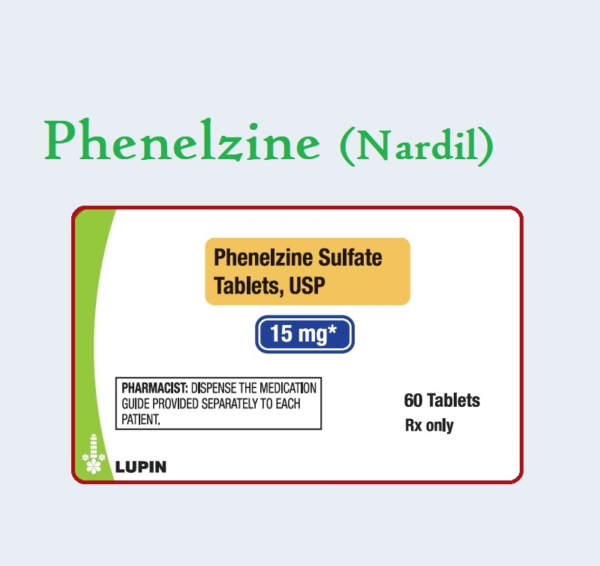
Phenelzine (Nardil) belongs to the class of medicines called Monoamine oxidase inhibitors. It irreversibly inhibits MOA and is used in the treatment of patients with anxiety and depression.
Phenelzine Uses:
-
Depression:
- Treatment of atypical, nonendogenous, or neurotic depression.
Phenelzine (Nardil) Dose in Adults
Phenelzine (Nardil) Dose in the treatment of Depression:
- Oral: Preliminary: 15 mg 3 times daily
-
Early phase:
- Increase swiftly, based on patient endurance, to 60 to 90 mg/day; may take 4 or more weeks of 60 mg/day treatment prior to clinical response.
-
Maintenance:
- After maximum benefit is achieved, slowly reduce the dose over several weeks; the dose may be as low as 15 mg once daily to 15 mg every alternate day.
-
Discontinuation of therapy:
- On stopping antidepressant treatment, slowly taper the dose to minimize the withdrawal symptoms and allow for the detection of re-emerging symptoms.
- Evidence supporting ideal taper rates is inadequate. APA and NICE guidelines advise tapering treatment over at least several weeks with consideration to the half-life of the antidepressant; antidepressants with a shorter half-life and MAO inhibitors may need to be tapered more conservatively.
- Furthermore, for long-term treated patients, WFSBP guidelines suggest tapering over 4-6 months.
- If unbearable withdrawal symptoms occur after a dose reduction, consider resuming the previously proposed dose and/or reduce the dose at a much slower rate.
-
MAO inhibitor recommendations:
- Switching to or from an MAO inhibitor intended to treat psychiatric disorders:
- Allow 2 weeks to pass between stopping an alternate antidepressant without long half-life metabolites (eg, TCAs, paroxetine, fluvoxamine, venlafaxine) or MAO inhibitor meant to treat psychiatric disorders and commencement of phenelzine.
- Allow 5 weeks to pass between discontinuing fluoxetine (with long half-life metabolites) meant to treat psychiatric disorders and initiation of phenelzine.
- Allow 2 weeks to elapse between discontinuing phenelzine and initiation of an alternate antidepressant or MAO inhibitor intended to treat psychiatric disorders.
- Use with other MAO inhibitors (such as linezolid or IV methylene blue):
- Do not begin phenelzine in patients getting linezolid or IV methylene blue; think about other interventions for psychiatric condition (Zyvox prescribing information; methylene blue prescribing information).
- If urgent therapy with linezolid or IV methylene blue is needed in a patient previously getting phenelzine and potential benefits outweigh potential risks, discontinue phenelzine promptly and administer linezolid or IV methylene blue.
- Watch for serotonin syndrome for 2 weeks or until 24 hours following the last dose of linezolid or IV methylene blue, whichever comes first.
- May continue phenelzine 24 hours after the last dose of linezolid or IV methylene blue.
- Switching to or from an MAO inhibitor intended to treat psychiatric disorders:
Use in Children:
Not indicated.
Pregnancy Risk Category: C
- Animal reproductive studies have shown unfavorable results. Information regarding the use of Phenelzine during pregnancy is limited (Frayne 2014, Gracious 1997; Pavy 1996).
- Pregnant women who have been exposed to antidepressants during pregnancy should enroll in the National Pregnancy Registry for Antidepressants.
- The registry can be contacted by women aged 18-45 years or their healthcare providers by calling 844-405-6185. It is important to enroll in pregnancy as soon as possible.
Use of phenelzine while breastfeeding
- It is unknown if breast milk contains phenelzine.
- According to the manufacturer of the product, the decision about whether to breastfeed during treatment should consider the risks to the infant as well as the benefits to the mother.
Dose in Kidney Disease:
-
Mild to moderate impairment:
- There are no dosage modifications given in the manufacturer’s labeling.
-
Severe impairment:
- Use is contraindicated.
Dose in Liver disease:
Use is contraindicated.
Side effects of Phenelzine (Nardil):
-
Cardiovascular:
- Edema
- Orthostatic Hypotension
-
Central Nervous System:
- Anxiety (Acute)
- Ataxia
- Cardiac Insufficiency (Following ECT; Transient)
- Coma
- Delirium
- Dizziness
- Drowsiness
- Euphoria
- Fatigue
- Headache
- Hyperreflexia
- Hypersomnia
- Insomnia
- Mania
- Myoclonus
- Paresthesia
- Schizophrenia
- Seizure
- Twitching
- Withdrawal Syndrome (Nausea
- Vomiting
- Malaise)
-
Dermatologic:
- Diaphoresis
- Pruritus
- Skin Rash
-
Endocrine & Metabolic:
- Hypernatremia
- Weight Gain
-
Gastrointestinal:
- Constipation
- Glottis Edema
- Xerostomia
-
Genitourinary:
- Sexual Disorder (Anorgasmia, Ejaculatory Disorder, Impotence)
- Urinary Retention
-
Hematologic & Oncologic:
- Leukopenia
-
Hepatic:
- Increased Serum Transaminases
- Jaundice
-
Neuromuscular & Skeletal:
- Lupus-Like Syndrome
- Tremor
- Weakness
-
Ophthalmic:
- Blurred Vision
- Glaucoma
- Nystagmus
-
Respiratory:
- Respiratory Depression (Following ECT; Transient)
-
Miscellaneous:
- Fever
Contraindications to Phenelzine (Nardil):
- Allergic reaction to phenelzine, or any component of the formulation
- congestive heart failure
- pheochromocytoma
- Tests of irregular liver function or history of liver disease
- Kidney disease or severe renal damage
- Use parallel
- bupropion
- buspirone
- Excessive use of caffeine
- Alcohol and CNS depressants
- Cocaine
- Local anesthesia that contains sympathomimetic vasoconstrictors and dextromethorphan.
- General anesthesia is required for elective surgery. Discontinue phenelzine at least 10 days prior to elective surgery.
- Guanethidine
- meperidine
- MAO inhibitors and dibenzazepine derivates (eg, amitriptyline or clomipramine; nortriptyline or protriptyline; doxepine, carbamazepine. cyclobenzaprine. amoxapine. maprotiline. perphenazine. trimipramine).
- Ophthalmic agents (eg apraclonidine)
- SSRIs and SNRIs
- Spinal anesthesia
- Sympthomimetics include amphetamines and methylphenidate as well as dopamine, norepinephrine, norepinephrine, and related compounds (levodopa methyldopa or phenylalanine or tryptophan), or foods high tyramine (or within two weeks after stopping treatment).
- BupropionBetween phenelzine discontinuation, and bupropion start date, it should be at least two weeks.
- BuspironeBetween buspirone initiation and phenelzine termination, it should take at least 2 weeks.
- SSRIs and SNRIsBetween the discontinuation of SNRIs or SSRIs, and the initiation phenelzine, it should be at least two weeks. Between the cessation of SNRIs and SSRIs, it should take at least five weeks.Fluoxetineand the initiation phenelzine
- Between the discontinuation or initiation of phenelzine, and the initiation or resumption of SNRIs/SSRIs, it should be at least 2 weeks.
- Between the cessation of phenelzine treatment and the induction of the next agent, it should take at least two weeks.
- Serotoninergic drugs (including SNRIs and SSRIs), bupropion and buspirone and other antidepressants.
- General anesthesia, spinal and hypotension (hypotension) may be exaggerated.
- Patients receiving local anesthetics containing sympathomimetic drugs should not be given phenelzine. Avoid using phenelzine in patients who are undergoing elective surgery.
- Edibles containing high levels of tyramine and dopamine; foods or supplements containing tyrosine or phenylalanine or tryptophan.
- It is difficult to cite any evidence of allergenic cross-reactivity with monoamine oxidase inhibiters.
- Cross-sensitivity can be difficult to rule out because of similar chemical compositions and/or pharmacologic reactions.
Canadian labeling: Additional contraindications not in US labeling
- Simultaneous Use with Reserpine.
Warnings and precautions
-
Depression in the CNS:
- CNS depression can cause mental or physical impairments. Patients should be aware that driving or operating machinery requires mental attention.
-
Hypertension crisis:
- There have been cases of hypertensive crises (sometimes very serious). Symptoms include an occipital headache radiating frontally, nausea/vomiting and neck stiffness/soreness.
- Bradycardia and Tachycardia can be present. These conditions may cause constricting chest pain or dilated pupils.
- All patients should be monitored for blood pressure. Stop therapy immediately if there are tremors and frequent headaches.
- This may occur when you consume edibles/supplements that are high in tyramine or tryptophan, dopamine and phenylalanine.
- Hypertensive crises may be treated with phentolamine.
-
Hypotension
-
- It can cause hypotension postural and syncope.
- Patients at high risk for this effect should be utilised with caution, especially those with pre-existing high bloodpressure or who are unable to tolerate transient hypotensive episodes (cerebrovascular diseases, cardiovascular disease, hypovolemia or concurrent medication use that may lead to hypotension/bradycardia).
- Patients with hypotension tend to increase their dosages more slowly.
-
Intracranial bleeding
- Increased blood pressure has been associated with intracranial bleeding.
-
Diabetes:
- Patients with diabetes mellitus should exercise prudence. Sensitization to insulin effects may occur. Continuously monitor blood glucose.
-
Glaucoma
- Glaucoma: Use with caution in patients with angle-closure.
-
Hypomania/mania:
-
- Patients with bipolar disorder may experience a shift towards hysteria and hypomania.
- Patients with bipolar disorder should not be given monotherapy.
- Bipolar disorder should be considered for patients who exhibit depressive symptoms.
- For the treatment of bipolar disorder, Phenelzine has not been approved by FDA.
-
Seizure disorder
-
- Patients at high risk of seizures should be used with caution, especially those who have had seizures or are currently being treated with medication that can reduce seizure tolerance.
-
Thyroid dysfunction
- Patients with hyperthyroidism should be cautious.
Phenelzine: Drug Interaction
|
Acetylcholinesterase Inhibitors |
May diminish the therapeutic effect of Anticholinergic Agents. Anticholinergic Agents may diminish the therapeutic effect of Acetylcholinesterase Inhibitors. |
|
Alfuzosin |
May enhance the hypotensive effect of Blood Pressure Lowering Agents. |
|
Altretamine |
May enhance the orthostatic hypotensive effect of Monoamine Oxidase Inhibitors. |
|
Amantadine |
May enhance the anticholinergic effect of Anticholinergic Agents. |
|
Amifampridine |
Agents With Seizure Threshold Lowering Potential may enhance the neuroexcitatory and/or seizure-potentiating effect of Amifampridine. |
|
Anticholinergic Agents |
May enhance the adverse/toxic effect of other Anticholinergic Agents. |
|
Antiemetics (5HT3 Antagonists) |
May enhance the serotonergic effect of Serotonin Modulators. This could result in serotonin syndrome. |
|
Antipsychotic Agents |
Serotonin Modulators may enhance the adverse/toxic effect of Antipsychotic Agents. Specifically, serotonin modulators may enhance dopamine blockade, possibly increasing the risk for neuroleptic malignant syndrome. Antipsychotic Agents may enhance the serotonergic effect of Serotonin Modulators. This could result in serotonin syndrome. |
|
Antipsychotic Agents (Second Generation [Atypical]) |
Blood Pressure Lowering Agents may enhance the hypotensive effect of Antipsychotic Agents (Second Generation [Atypical]). |
|
Barbiturates |
May enhance the hypotensive effect of Blood Pressure Lowering Agents. |
|
Benperidol |
May enhance the hypotensive effect of Blood Pressure Lowering Agents. |
|
Beta2-Agonists |
Monoamine Oxidase Inhibitors may enhance the adverse/toxic effect of Beta2Agonists. |
|
Betahistine |
Monoamine Oxidase Inhibitors may increase the serum concentration of Betahistine. |
|
Blood Glucose Lowering Agents |
Monoamine Oxidase Inhibitors may enhance the hypoglycemic effect of Blood Glucose Lowering Agents. |
|
Blood Pressure Lowering Agents |
May enhance the hypotensive effect of HypotensionAssociated Agents. |
|
Botulinum Toxin-Containing Products |
May enhance the anticholinergic effect of Anticholinergic Agents. |
|
Brexanolone |
Phenelzine may enhance the CNS depressant effect of Brexanolone. |
|
Brimonidine (Ophthalmic) |
Monoamine Oxidase Inhibitors may enhance the adverse/toxic effect of Brimonidine (Ophthalmic). Monoamine Oxidase Inhibitors may increase the serum concentration of Brimonidine (Ophthalmic). |
|
Brimonidine (Topical) |
Monoamine Oxidase Inhibitors may enhance the adverse/toxic effect of Brimonidine (Topical). Monoamine Oxidase Inhibitors may increase the serum concentration of Brimonidine (Topical). |
|
Brimonidine (Topical) |
May enhance the hypotensive effect of Blood Pressure Lowering Agents. |
|
Cannabinoid-Containing Products |
Anticholinergic Agents may enhance the tachycardic effect of Cannabinoid-Containing Products. Exceptions: Cannabidiol. |
|
Cerebrolysin |
May enhance the adverse/toxic effect of Monoamine Oxidase Inhibitors. |
|
Chloral Betaine |
May enhance the adverse/toxic effect of Anticholinergic Agents. |
|
Chlorphenesin Carbamate |
May enhance the adverse/toxic effect of Monoamine Oxidase Inhibitors. |
|
Clemastine |
Monoamine Oxidase Inhibitors may enhance the anticholinergic effect of Clemastine. |
|
Codeine |
Monoamine Oxidase Inhibitors may enhance the adverse/toxic effect of Codeine. |
|
Diazoxide |
May enhance the hypotensive effect of Blood Pressure Lowering Agents. |
|
Dihydrocodeine |
May enhance the serotonergic effect of Monoamine Oxidase Inhibitors. This could result in serotonin syndrome. |
|
Domperidone |
Monoamine Oxidase Inhibitors may enhance the adverse/toxic effect of Domperidone. Monoamine Oxidase Inhibitors may diminish the therapeutic effect of Domperidone. Domperidone may diminish the therapeutic effect of Monoamine Oxidase Inhibitors. |
|
Doxapram |
Monoamine Oxidase Inhibitors may enhance the hypertensive effect of Doxapram. |
|
Doxylamine |
Monoamine Oxidase Inhibitors may enhance the anticholinergic effect of Doxylamine. Management: The US manufacturer of Diclegis (doxylamine/pyridoxine) and the manufacturers of Canadian doxylamine products specifically lists use with monoamine oxidase inhibitors as contraindicated. |
|
EPINEPHrine (Nasal) |
Monoamine Oxidase Inhibitors may enhance the hypertensive effect of EPINEPHrine (Nasal). |
|
Epinephrine (Racemic) |
Monoamine Oxidase Inhibitors may enhance the hypertensive effect of Epinephrine (Racemic). |
|
EPINEPHrine (Systemic) |
Monoamine Oxidase Inhibitors may enhance the hypertensive effect of EPINEPHrine (Systemic). |
|
Esketamine |
May enhance the hypertensive effect of Monoamine Oxidase Inhibitors. |
|
Gastrointestinal Agents (Prokinetic) |
Anticholinergic Agents may diminish the therapeutic effect of Gastrointestinal Agents (Prokinetic). |
|
Glucagon |
Anticholinergic Agents may enhance the adverse/toxic effect of Glucagon. Specifically, the risk of gastrointestinal adverse effects may be increased. |
|
Herbs (Hypotensive Properties) |
May enhance the hypotensive effect of Blood Pressure Lowering Agents. |
|
Hypotension-Associated Agents |
Blood Pressure Lowering Agents may enhance the hypotensive effect of Hypotension-Associated Agents. |
|
Itopride |
Anticholinergic Agents may diminish the therapeutic effect of Itopride. |
|
Lormetazepam |
May enhance the hypotensive effect of Blood Pressure Lowering Agents. |
|
Metaraminol |
Monoamine Oxidase Inhibitors may enhance the hypertensive effect of Metaraminol. |
|
Metaxalone |
May enhance the serotonergic effect of Serotonin Modulators. This could result in serotonin syndrome. |
|
Methadone |
May enhance the serotonergic effect of Monoamine Oxidase Inhibitors. This could result in serotonin syndrome. |
|
Metoclopramide |
Serotonin Modulators may enhance the adverse/toxic effect of Metoclopramide. This may be manifest as symptoms consistent with serotonin syndrome or neuroleptic malignant syndrome. |
|
Mirabegron |
Anticholinergic Agents may enhance the adverse/toxic effect of Mirabegron. |
|
Mivacurium |
Phenelzine may increase the serum concentration of Mivacurium. |
|
Molsidomine |
May enhance the hypotensive effect of Blood Pressure Lowering Agents. |
|
Naftopidil |
May enhance the hypotensive effect of Blood Pressure Lowering Agents. |
|
Nicergoline |
May enhance the hypotensive effect of Blood Pressure Lowering Agents. |
|
Nicorandil |
May enhance the hypotensive effect of Blood Pressure Lowering Agents. |
|
Nitroglycerin |
Anticholinergic Agents may decrease the absorption of Nitroglycerin. Specifically, anticholinergic agents may decrease the dissolution of sublingual nitroglycerin tablets, possibly impairing or slowing nitroglycerin absorption. |
|
Nitroprusside |
Blood Pressure Lowering Agents may enhance the hypotensive effect of Nitroprusside. |
|
Norepinephrine |
Monoamine Oxidase Inhibitors may enhance the hypertensive effect of Norepinephrine. |
|
Opioid Agonists |
Anticholinergic Agents may enhance the adverse/toxic effect of Opioid Agonists. Specifically, the risk for constipation and urinary retention may be increased with this combination. |
|
Opioid Agonists |
May enhance the serotonergic effect of Serotonin Modulators. This could result in serotonin syndrome. |
|
Pentoxifylline |
May enhance the hypotensive effect of Blood Pressure Lowering Agents. |
|
Phosphodiesterase 5 Inhibitors |
May enhance the hypotensive effect of Blood Pressure Lowering Agents. |
|
Prostacyclin Analogues |
May enhance the hypotensive effect of Blood Pressure Lowering Agents. |
|
Quinagolide |
May enhance the hypotensive effect of Blood Pressure Lowering Agents. |
|
Ramosetron |
Anticholinergic Agents may enhance the constipating effect of Ramosetron. |
|
Serotonin Modulators |
May enhance the adverse/toxic effect of other Serotonin Modulators. The development of serotonin syndrome may occur. Exceptions: Nicergoline; Tedizolid. |
|
Thiazide and Thiazide-Like Diuretics |
Anticholinergic Agents may increase the serum concentration of Thiazide and Thiazide-Like Diuretics. |
|
Topiramate |
Anticholinergic Agents may enhance the adverse/toxic effect of Topiramate. |
|
TraMADol |
Serotonin Modulators may enhance the adverse/toxic effect of TraMADol. The risk of seizures may be increased. TraMADol may enhance the serotonergic effect of Serotonin Modulators. This could result in serotonin syndrome. |
|
Risk Factor D (Consider therapy modification) |
|
|
Amifostine |
Blood Pressure Lowering Agents may enhance the hypotensive effect of Amifostine. Management: When amifostine is used at chemotherapy doses, blood pressure lowering medications should be withheld for 24 hours prior to amifostine administration. If blood pressure lowering therapy cannot be withheld, amifostine should not be administered. |
|
Benzhydrocodone |
|
|
COMT Inhibitors |
May enhance the adverse/toxic effect of Monoamine Oxidase Inhibitors. |
|
DOPamine |
Monoamine Oxidase Inhibitors may enhance the hypertensive effect of DOPamine. Management: Initiate dopamine at no greater than one-tenth (1/10) of the usual dose in patients who are taking (or have taken within the last 2 to 3 weeks) monoamine oxidase inhibitors. Monitor for an exaggerated hypertensive response to dopamine. |
|
HYDROcodone |
Monoamine Oxidase Inhibitors may enhance the adverse/toxic effect of HYDROcodone. Management: Consider alternatives to this combination when possible. |
|
Iohexol |
Agents With Seizure Threshold Lowering Potential may enhance the adverse/toxic effect of Iohexol. Specifically, the risk for seizures may be increased. Management: Discontinue agents that may lower the seizure threshold 48 hours prior to intrathecal use of iohexol. Wait at least 24 hours after the procedure to resume such agents. In nonelective procedures, consider use of prophylactic anticonvulsants. |
|
Iomeprol |
Agents With Seizure Threshold Lowering Potential may enhance the adverse/toxic effect of Iomeprol. Specifically, the risk for seizures may be increased. Management: Discontinue agents that may lower the seizure threshold 48 hours prior to intrathecal use of iomeprol. Wait at least 24 hours after the procedure to resume such agents. In nonelective procedures, consider use of prophylactic anticonvulsants. |
|
Iopamidol |
Agents With Seizure Threshold Lowering Potential may enhance the adverse/toxic effect of Iopamidol. Specifically, the risk for seizures may be increased. Management: Discontinue agents that may lower the seizure threshold 48 hours prior to intrathecal use of iopamidol. Wait at least 24 hours after the procedure to resume such agents. In nonelective procedures, consider use of prophylactic anticonvulsants. |
|
Levodopa-Containing Products |
May enhance the adverse/toxic effect of Monoamine Oxidase Inhibitors. Of particular concern is the development of hypertensive reactions when levodopa is used with nonselective MAOI. Management: The concomitant use of nonselective monoamine oxidase inhibitors (MAOIs) and levodopa is contraindicated. Discontinue the nonselective MAOI at least two weeks prior to initiating levodopa. Monitor patients taking a selective MAOIs and levodopa. |
|
Lithium |
Monoamine Oxidase Inhibitors may enhance the adverse/toxic effect of Lithium. Management: This combination should be undertaken with great caution. When combined treatment is clinically indicated, monitor closely for signs of serotonin toxicity/serotonin syndrome. |
|
Obinutuzumab |
May enhance the hypotensive effect of Blood Pressure Lowering Agents. Management: Consider temporarily withholding blood pressure lowering medications beginning 12 hours prior to obinutuzumab infusion and continuing until 1 hour after the end of the infusion. |
|
OxyCODONE |
May enhance the serotonergic effect of Monoamine Oxidase Inhibitors. This could result in serotonin syndrome. Management: Seek alternatives when possible. Avoid use of oxycodone/naltrexone during and within 14 days after monoamine oxidase inhibitor treatment. Non-US labeling for some oxycodone products states that such use is contraindicated. |
|
Pindolol |
Monoamine Oxidase Inhibitors may enhance the hypotensive effect of Pindolol. Management: Canadian labeling for pindolol states that concurrent use with a monoamine oxidase inhibitor is not recommended. |
|
Pramlintide |
May enhance the anticholinergic effect of Anticholinergic Agents. These effects are specific to the GI tract. |
|
Reserpine |
Monoamine Oxidase Inhibitors may enhance the adverse/toxic effect of Reserpine. Existing MAOI therapy can result in paradoxical effects of added reserpine (e.g., excitation, hypertension). Management: Monoamine oxidase inhibitors (MAOIs) should be avoided or used with great caution in patients who are also receiving reserpine. |
|
Secretin |
Anticholinergic Agents may diminish the therapeutic effect of Secretin. Management: Avoid concomitant use of anticholinergic agents and secretin. Discontinue anticholinergic agents at least 5 half-lives prior to administration of secretin. |
|
Succinylcholine |
Phenelzine may enhance the neuromuscular-blocking effect of Succinylcholine. |
|
Risk Factor X (Avoid combination) |
|
|
Aclidinium |
May enhance the anticholinergic effect of Anticholinergic Agents. |
|
Alcohol (Ethyl) |
May enhance the adverse/toxic effect of Monoamine Oxidase Inhibitors. |
|
Alpha-/Beta-Agonists (Indirect-Acting) |
Monoamine Oxidase Inhibitors may enhance the hypertensive effect of Alpha-/Beta-Agonists (Indirect-Acting). While linezolid is expected to interact via this mechanism, management recommendations differ from other monoamine oxidase inhibitors. Refer to linezolid specific monographs for details. |
|
Alpha1-Agonists |
Monoamine Oxidase Inhibitors may enhance the hypertensive effect of Alpha1Agonists. While linezolid is expected to interact via this mechanism, management recommendations differ from other monoamine oxidase inhibitors. Refer to linezolid specific monographs for details. |
|
Amphetamines |
Monoamine Oxidase Inhibitors may enhance the hypertensive effect of Amphetamines. While linezolid and tedizolid may interact via this mechanism, management recommendations differ from other monoamine oxidase inhibitors. Refer to monographs specific to those agents for details. |
|
Apraclonidine |
Monoamine Oxidase Inhibitors may enhance the adverse/toxic effect of Apraclonidine. Monoamine Oxidase Inhibitors may increase the serum concentration of Apraclonidine. |
|
AtoMOXetine |
Monoamine Oxidase Inhibitors may enhance the neurotoxic (central) effect of AtoMOXetine. |
|
Atropine (Ophthalmic) |
Monoamine Oxidase Inhibitors may enhance the hypertensive effect of Atropine (Ophthalmic). |
|
Bezafibrate |
Monoamine Oxidase Inhibitors may enhance the adverse/toxic effect of Bezafibrate. |
|
Bromperidol |
Blood Pressure Lowering Agents may enhance the hypotensive effect of Bromperidol. Bromperidol may diminish the hypotensive effect of Blood Pressure Lowering Agents. |
|
Buprenorphine |
May enhance the adverse/toxic effect of Monoamine Oxidase Inhibitors. |
|
BuPROPion |
Monoamine Oxidase Inhibitors may enhance the hypertensive effect of BuPROPion. |
|
BusPIRone |
May enhance the adverse/toxic effect of Monoamine Oxidase Inhibitors. Specifically, blood pressure elevations been reported. |
|
CarBAMazepine |
May enhance the adverse/toxic effect of Monoamine Oxidase Inhibitors. Management: Avoid concurrent use of carbamazepine during, or within 14 days of discontinuing, treatment with a monoamine oxidase inhibitor. |
|
Cimetropium |
Anticholinergic Agents may enhance the anticholinergic effect of Cimetropium. |
|
Cyclobenzaprine |
May enhance the serotonergic effect of Monoamine Oxidase Inhibitors. This could result in serotonin syndrome. |
|
Cyproheptadine |
Monoamine Oxidase Inhibitors may enhance the anticholinergic effect of Cyproheptadine. Cyproheptadine may diminish the serotonergic effect of Monoamine Oxidase Inhibitors. |
|
Dapoxetine |
May enhance the adverse/toxic effect of Serotonin Modulators. |
|
Deutetrabenazine |
Monoamine Oxidase Inhibitors may enhance the adverse/toxic effect of Deutetrabenazine. |
|
Dexmethylphenidate |
Monoamine Oxidase Inhibitors may enhance the hypertensive effect of Dexmethylphenidate. |
|
Dextromethorphan |
Monoamine Oxidase Inhibitors may enhance the serotonergic effect of Dextromethorphan. This may cause serotonin syndrome. |
|
Diethylpropion |
Monoamine Oxidase Inhibitors may enhance the hypertensive effect of Diethylpropion. |
|
Diphenoxylate |
May enhance the hypertensive effect of Monoamine Oxidase Inhibitors. |
|
Droxidopa |
Monoamine Oxidase Inhibitors may enhance the hypertensive effect of Droxidopa. |
|
Eluxadoline |
Anticholinergic Agents may enhance the constipating effect of Eluxadoline. |
|
EPINEPHrine (Oral Inhalation) |
Monoamine Oxidase Inhibitors may enhance the hypertensive effect of EPINEPHrine (Oral Inhalation). |
|
FentaNYL |
May enhance the serotonergic effect of Monoamine Oxidase Inhibitors. This could result in serotonin syndrome. |
|
Glycopyrrolate (Oral Inhalation) |
Anticholinergic Agents may enhance the anticholinergic effect of Glycopyrrolate (Oral Inhalation). |
|
Glycopyrronium (Topical) |
May enhance the anticholinergic effect of Anticholinergic Agents. |
|
Guanethidine |
May enhance the adverse/toxic effect of Monoamine Oxidase Inhibitors. |
|
Heroin |
Monoamine Oxidase Inhibitors may enhance the adverse/toxic effect of Heroin. |
|
HYDROmorphone |
Monoamine Oxidase Inhibitors may enhance the adverse/toxic effect of HYDROmorphone. |
|
Indoramin |
Monoamine Oxidase Inhibitors may enhance the hypotensive effect of Indoramin. |
|
Iobenguane Radiopharmaceutical Products |
Monoamine Oxidase Inhibitors may diminish the therapeutic effect of Iobenguane Radiopharmaceutical Products. Management: Discontinue all drugs that may inhibit or interfere with catecholamine transport or uptake for at least 5 biological half-lives before iobenguane administration. Do not administer these drugs until at least 7 days after each iobenguane dose. |
|
Ipratropium (Oral Inhalation) |
May enhance the anticholinergic effect of Anticholinergic Agents. |
|
Isometheptene |
Monoamine Oxidase Inhibitors may enhance the adverse/toxic effect of Isometheptene. |
|
Levomethadone |
May enhance the adverse/toxic effect of Monoamine Oxidase Inhibitors. |
|
Levonordefrin |
Monoamine Oxidase Inhibitors may enhance the hypertensive effect of Levonordefrin. |
|
Levosulpiride |
Anticholinergic Agents may diminish the therapeutic effect of Levosulpiride. |
|
Linezolid |
Monoamine Oxidase Inhibitors may enhance the adverse/toxic effect of Linezolid. |
|
Maprotiline |
May enhance the adverse/toxic effect of Monoamine Oxidase Inhibitors. |
|
Meperidine |
Monoamine Oxidase Inhibitors may enhance the serotonergic effect of Meperidine. This may cause serotonin syndrome. |
|
Meptazinol |
Monoamine Oxidase Inhibitors may enhance the adverse/toxic effect of Meptazinol. |
|
Mequitazine |
Monoamine Oxidase Inhibitors may enhance the anticholinergic effect of Mequitazine. |
|
Methyldopa |
Monoamine Oxidase Inhibitors may enhance the adverse/toxic effect of Methyldopa. |
|
Methylene Blue |
Monoamine Oxidase Inhibitors may enhance the serotonergic effect of Methylene Blue. This could result in serotonin syndrome. |
|
Methylene Blue |
May enhance the serotonergic effect of Serotonin Modulators. This could result in serotonin syndrome. |
|
Methylphenidate |
Monoamine Oxidase Inhibitors may enhance the hypertensive effect of Methylphenidate. |
|
Mianserin |
Monoamine Oxidase Inhibitors may enhance the neurotoxic effect of Mianserin. |
|
Mirtazapine |
Monoamine Oxidase Inhibitors may enhance the neurotoxic (central) effect of Mirtazapine. While methylene blue and linezolid are expected to interact, specific recommendations for their use differ from other monoamine oxidase inhibitors. Refer to monographs specific to those agents for details. |
|
Moclobemide |
Monoamine Oxidase Inhibitors may enhance the adverse/toxic effect of Moclobemide. |
|
Monoamine Oxidase Inhibitors |
May enhance the hypertensive effect of other Monoamine Oxidase Inhibitors. Monoamine Oxidase Inhibitors may enhance the serotonergic effect of other Monoamine Oxidase Inhibitors. This could result in serotonin syndrome. |
|
Morphine (Systemic |
Monoamine Oxidase Inhibitors may enhance the adverse/toxic effect of Morphine (Systemic). |
|
Nefopam |
Monoamine Oxidase Inhibitors may enhance the adverse/toxic effect of Nefopam. |
|
Opium |
Monoamine Oxidase Inhibitors may enhance the adverse/toxic effect of Opium. |
|
Oxatomide |
May enhance the anticholinergic effect of Anticholinergic Agents. |
|
OxyMORphone |
May enhance the adverse/toxic effect of Monoamine Oxidase Inhibitors. |
|
Pheniramine |
May enhance the anticholinergic effect of Monoamine Oxidase Inhibitors. |
|
Pholcodine |
May enhance the serotonergic effect of Monoamine Oxidase Inhibitors. This could result in serotonin syndrome. |
|
Pizotifen |
Monoamine Oxidase Inhibitors may enhance the anticholinergic effect of Pizotifen. |
|
Potassium Chloride |
Anticholinergic Agents may enhance the ulcerogenic effect of Potassium Chloride. Management: Patients on drugs with substantial anticholinergic effects should avoid using any solid oral dosage form of potassium chloride. |
|
Potassium Citrate |
Anticholinergic Agents may enhance the ulcerogenic effect of Potassium Citrate. |
|
Reboxetine |
Monoamine Oxidase Inhibitors may enhance the adverse/toxic effect of Reboxetine. |
|
Revefenacin |
Anticholinergic Agents may enhance the anticholinergic effect of Revefenacin. |
|
Selective Serotonin Reuptake Inhibitors |
Monoamine Oxidase Inhibitors may enhance the serotonergic effect of Selective Serotonin Reuptake Inhibitors. This may cause serotonin syndrome. While methylene blue and linezolid are expected to interact via this mechanism, management recommendations differ from other monoamine oxidase inhibitors. Refer to monographs specific to those agents for details. |
|
Serotonin 5-HT1D Receptor Agonists |
Monoamine Oxidase Inhibitors may decrease the metabolism of Serotonin 5-HT1D Receptor Agonists. Management: If MAO inhibitor therapy is required, naratriptan, eletriptan or frovatriptan may be a suitable 5-HT1D agonist to employ. Exceptions: Eletriptan; Frovatriptan; Naratriptan. |
|
Serotonin Reuptake Inhibitor/Antagonists |
Monoamine Oxidase Inhibitors may enhance the adverse/toxic effect of Serotonin Reuptake Inhibitor/Antagonists. While methylene blue and linezolid are expected to interact, specific recommendations for their use differ from other monoamine oxidase inhibitors. Refer to monographs specific to those agents for details. |
|
Serotonin/Norepinephrine Reuptake Inhibitors |
Monoamine Oxidase Inhibitors may enhance the serotonergic effect of Serotonin/Norepinephrine Reuptake Inhibitors. This may cause serotonin syndrome. While methylene blue and linezolid are expected to interact via this mechanism, management recommendations differ from other monoamine oxidase inhibitors. Refer to monographs specific to those agents for details. |
|
Solriamfetol |
Monoamine Oxidase Inhibitors may enhance the hypertensive effect of Solriamfetol. |
|
SUFentanil |
May enhance the adverse/toxic effect of Monoamine Oxidase Inhibitors. Specifically, the risk for serotonin syndrome or opioid toxicities (eg, respiratory depression, coma) may be increased. Management: Sufentanil should not be used with monoamine oxidase (MAO) inhibitors (or within 14 days of stopping an MAO inhibitor) due to the potential for serotonin syndrome and/or excessive CNS depression. |
|
Tapentadol |
May enhance the adverse/toxic effect of Monoamine Oxidase Inhibitors. Specifically, the additive effects of norepinephrine may lead to adverse cardiovascular effects. Tapentadol may enhance the serotonergic effect of Monoamine Oxidase Inhibitors. This could result in serotonin syndrome. |
|
Tetrabenazine |
May enhance the adverse/toxic effect of Monoamine Oxidase Inhibitors. |
|
Tetrahydrozoline (Nasal) |
Monoamine Oxidase Inhibitors may enhance the hypertensive effect of Tetrahydrozoline (Nasal). |
|
Tianeptine |
May enhance the adverse/toxic effect of Monoamine Oxidase Inhibitors. |
|
Tiotropium |
Anticholinergic Agents may enhance the anticholinergic effect of Tiotropium. |
|
Tricyclic Antidepressants |
Monoamine Oxidase Inhibitors may enhance the serotonergic effect of Tricyclic Antidepressants. This may cause serotonin syndrome. While methylene blue and linezolid are expected to interact via this mechanism, management recommendations differ from other monoamine oxidase inhibitors. Refer to monographs specific to those agents for details. |
|
Tryptophan |
May enhance the adverse/toxic effect of Monoamine Oxidase Inhibitors. |
|
Umeclidinium |
May enhance the anticholinergic effect of Anticholinergic Agents. |
|
Valbenazine |
May enhance the adverse/toxic effect of Monoamine Oxidase Inhibitors. |
Monitoring parameters:
- Blood glucose;
- renal and hepatic function;
- blood pressure, heart rate;
- mental status;
- worsening of depression, suicidality, or unusual changes in behavior (especially at the beginning of treatment or when doses are increased or reduced)
How to administer Phenelzine (Nardil)?
It is administered with or without meals.
Mechanism of action of Phenelzine (Nardil):
It increases the endogenous levels of serotonin, dopamine and norepinephrine by inhibiting the enzyme (monoamineoxidase), which is responsible for their breakdown.
The onset of action:
- Therapeutic: 4 weeks or more
Duration:
- It may continue to have a therapeutic effect and interactions 2 weeks after discontinuing therapy.
Absorption:
- Well absorbed
Metabolism:
- Oxidized via monoamine oxidase (primary pathway) and acetylation (minor pathway)
Time to peak:
- 43 minutes
Half-life elimination:
- 11.6 hours
Excretion:
- Urine (73% as metabolites)
International Brand Names of Phenelzine:
- Nardil
- Margyl
- Nardelzine
Phenelzine Brand Names in Pakistan:
No Brands Available in Pakistan.
.png)


