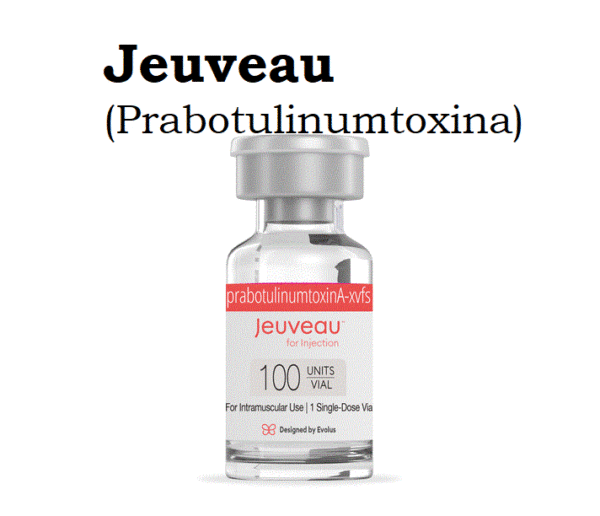
Jeuveau (Prabotulinumtoxina) is an acetylcholine release inhibitor and a neuromuscular blocking drug that is used to treat wrinkles and frown lines.
Jeuveau (PrabotulinumtoxinA) Uses:
-
Glabellar lines:
- A temporary improvement in the appearance of moderate to severe glabellar lines that are associated with corrugator and/or procerus muscle activity in adult patients.
Jeuveau (Prabotulinumtoxina) Dose in Adults
Note:
- Consider the cumulative dose while treating patients with prabotulinumtoxinA, in cases where other botulinum toxin products have been used for the treatment of other indications approved for those products.
Jeuveau (Prabotulinumtoxina) Dose in the treatment of Glabellar lines:
- IM: Inject 4 units (0.1 mL) into each of the 5 sites (2 injections in each corrugator muscle and 1 in mid-line of procerus muscle) for a total dose of 20 units (0.5 mL) per treatment session.
- Do not administer more frequently than every 3 months.
Jeuveau (Prabotulinumtoxina) Dose in Childrens
Not indicated in children.
Jeuveau Pregnancy Risk Category: Not assigned
- In animal reproduction studies, adverse events were not reported.
PrabotulinumtoxinA is used during breastfeeding
- It is unknown if prabotulinumtoxinA can be found in breast milk.
- According to the drug manufacturer breastfeeding during treatment should be considered in light of the risks to infants and the benefits to mothers.
Jeuveau (Prabotulinumtoxina) Dose in Kidney disease:
- There are no dosage adjustments provided in the drug manufacturer's labeling.
Jeuveau (Prabotulinumtoxina) Dose in Liver disease:
- There are no dosage adjustments provided in the drug manufacturer's labeling.
Side Effects of Jeuveau (PrabotulinumtoxinA):
-
Central nervous system:
- Headache
-
Hematologic & oncologic:
- Leukocytosis
-
Ophthalmic:
- Blepharoptosis
-
Respiratory:
- Upper respiratory tract infection
- Dyspnea
-
Gastrointestinal:
- Dysphagia
Contraindications to Jeuveau (PrabotulinumtoxinA)
- Hypersensitivity to botulinum toxins or any other component of the formulation
Jeuveau Warnings & Precautions
-
Anaphylaxis or hypersensitivity reactions
- There have been severe and/or immediate hypersensitivity reactions, including anaphylaxis (serious or immediate), urticaria, soft tissue edema, dyspnea, and serum sickness.
- Stop using the medication immediately if you experience an adverse reaction.
-
Formation of antibodies:
- Antibody formation and efficacy loss may be prevented by administering higher doses or more frequently.
-
Cardiovascular events
- Patients with heart disease should be cautious. Arrhythmias and myocardial injury (some fatal) have been reported.
- These patients were at risk for developing cardiovascular disease, including pre-existing conditions.
-
Dysphagia
- The treatment can cause breathing or swallowing problems. This may last for months and may require the use a feeding tube.
- Aspiration can occur due to severe dysphagia. This is a serious risk when treating patients whose swallowing or respiratory function are already compromised.
- There are several risk factors, including small neck muscle mass and bilateral injections to the sternocleidomastoid muscles.
-
Ophthalmic effects
- Botulinum toxins can cause dry eye, decreased tear production, decreased blinking, and corneal problems. If these symptoms persist, an ophthalmologic evaluation may be necessary.
-
Systemic toxicities: [US Boxed Warning]
- It has been reported that botulinum toxins can spread far beyond the injection site.
- Dysphagia and breathing problems have been reported, as well as dysphagia and dysarthria.
- These symptoms can be observed from hours to weeks following injections.
- Unapproved uses include upper limb spasticity in kids, but approved indications show that symptoms consistent with spreading toxins have been observed at doses similar to or lower than the maximum total recommended dose.
- If you have symptoms such as speech or breathing problems, seek immediate medical attention.
-
Neuromuscular disease
- Patients with amytrophic lateral syndrome, peripheral motor neuroopathic diseases, or neuromuscular junction disorders (eg myasthenia gravis, Lambert Eaton syndrome) should be cautious.
- There may be an increased risk of adverse events such as generalized muscle weakness and diplopia, ptosis dysarthria dysphagia severe dysphagia and respiratory compromise.
-
Respiratory disease
- Patients with pre-existing respiratory conditions should be treated with extreme caution
- Botulinum Toxin treatment may cause the weakness of accessory muscles, which are vital for patients who need to maintain adequate ventilation.
- There have been severe breathing problems, including respiratory failure.
- Patients with severe dysphagia are at greater risk of aspiration due to their reduced respiratory function.
PrabotulinumtoxinA: Drug Interaction
Note: Drug Interaction Categories:
- Risk Factor C: Monitor When Using Combination
- Risk Factor D: Consider Treatment Modification
- Risk Factor X: Avoid Concomitant Use
Risk Factor C (Monitor therapy) |
|
| Aminoglycosides | May enhance the neuromuscular-blocking effect of Botulinum Toxin-Containing Products. |
| Anticholinergic Agents | Botulinum Toxin-Containing Products may enhance the anticholinergic effect of Anticholinergic Agents. |
| Botulinum Toxin-Containing Products | May enhance the neuromuscular-blocking effect of other Botulinum Toxin-Containing Products. |
| Muscle Relaxants (Centrally Acting) | May enhance the adverse/toxic effect of Botulinum ToxinContaining Products. Specifically, the risk for increased muscle weakness may be enhanced. |
| Neuromuscular-Blocking Agents | Botulinum Toxin-Containing Products may enhance the neuromuscular-blocking effect of Neuromuscular-Blocking Agents. |
Monitoring parameters:
- Difficulty with swallowing, speaking, breathing, or muscle weakness or paralysis in areas other than the targeted area;
- ophthalmic effects (eg, eye dryness, eye irritation, photophobia, or changes in vision).
How to administer Jeuveau (PrabotulinumtoxinA)?
IM:
- To administer intramuscularly, use a needle of 30-33 gauge.
- Inject each site with 2 injections into each corrugator muscle, and 1 injection into the mid-line Procerus muscle.
- Assure that the dose being injected is correct and, where possible, keep it to a minimum.
- Patients with greater brow depressor complexes should avoid injections near the levator superioris muscle.
- Injections of lateral corrugator should be at least 1 cm above the bony supraorbital line.
- You should not inject toxic substances closer than 1 cm from the central eyebrow.
- Additional details regarding administration can be found on the labeling of the drug manufacturer.
Mechanism of action of Jeuveau (PrabotulinumtoxinA):
- PrabotulinumtoxinA, also known as botulinum toxin A, is a neurotoxin produced by Clostridium Botulinum.
- It attaches to motor nerve terminal acceptor sites, enters the nerve terminals and blocks the release of Acetylcholine.
- This happens because the neurotoxin cleaves the protein SNAP-25. This protein is essential for successful docking and release acetylcholine vesicles located within nerve endings.
- PrabotulinumtoxinA is intramuscularly administered at therapeutic doses. This causes partial chemical deervation of muscle.
- Additionally, muscle atrophy may occur, axonal sprouting might develop, and extra-junctional Acetylcholine receptors could develop.
- Evidence suggests that muscle reinnervation may occur, slowing down the process of muscle denervation caused by prabotulinumtoxinA.
International Brand Names of prabotulinumtoxina:
- prabotulinumtoxina-xvfs
- Jeuveau
PrabotulinumtoxinA Brand Names in Pakistan:
No Brands Available in Pakistan.
.png)


