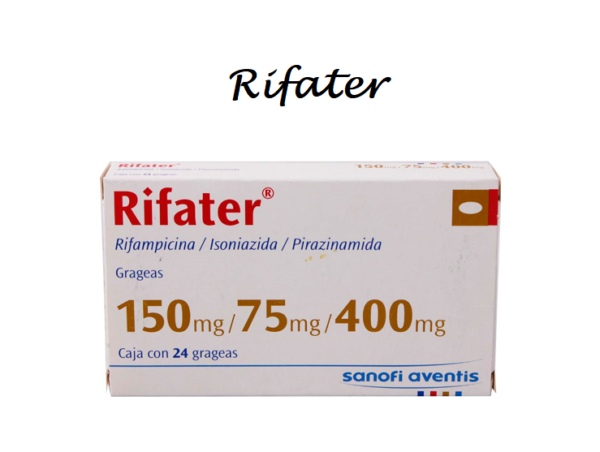
Rifater is a combination of rifampicin, isoniazid, and pyrazinamide.
It is used in the initial phase, short-course treatment of pulmonary tuberculosis.
Current treatment guidelines of adults with previously untreated tuberculosis recommend that a four-drug regimen consisting of rifampin, isoniazid, pyrazinamide, and ethambutol be given in the initial phase of treatment until drug susceptibility has been confirmed.
Rifater dose in Adults
Rifater dose in the treatment of Tuberculosis:
- Concomitant anti-tuberculosis medications should be given according to current guideline recommendations
-
Weight ≤44 kg:
- 4 tablets once daily are given
-
Weight 45 to 54 kg:
- 5 tablets once daily are given
-
Weight ≥55 kg:
- 6 tablets once daily are given
Rifater dose in Childrens
Dosage in the treatment of Tuberculosis:
- Adolescents ≥15 years:
- Oral:
- Refer to adult dosing.
Pregnancy Risk Factor: C
- This combination has not been used in animal reproduction studies. For more information, please contact individual agents.
Use of rifampin, isoniazid and pyrazinamide during breastfeeding:
- Breast milk contains rifampin, isoniazid and pyrazinamide.
- According to the manufacturer, it is recommended that the mother decide whether to stop breastfeeding or if to stop taking the drug.
- This decision should be made considering the importance of the mother's treatment.
Dose in Renal disease:
- There are no dosage adjustments given in the manufacturer's labeling. Use with caution.
Dose in liver disease:
- There are no dosage adjustments given in the manufacturer's labeling.
- Use cautiously;
- It is contraindicated in severe or acute impairment or in cases of previous isoniazid-associated hepatic injury.
Side effects of Rifater (Rifampicin, isoniazid, and pyrazinamide).
-
Cardiovascular:
- Angina Pectoris
- Chest Pain
- Chest Tightness
- Palpitations
- Edema
-
Central Nervous System:
- Anxiety
- Insomnia
- Tingling Of Extremities
- Equilibrium Disturbance
- Vertigo
-
Dermatologic:
- Erythema
- Erythroderma
- Exfoliative Dermatitis
- Localized Rash
- Pruritus
- Skin Rash
- Toxic Epidermal Necrolysis
- Urticaria
- Diaphoresis
-
Endocrine & Metabolic:
- Diabetic Coma
- Increased Uric Acid
-
Gastrointestinal:
- Diarrhea
- Gastrointestinal Pain
- Nausea
- Vomiting
-
Hepatic:
- Increased Serum Transaminases
-
Hypersensitivity:
- Hypersensitivity
-
Neuromuscular & Skeletal:
- Arthralgia
- Ostealgia
-
Otic:
- Tinnitus
-
Respiratory:
- Cough
- Hemoptysis
- Pneumothorax
-
Miscellaneous:
- Fever
Contraindication to Rifater (Rifampin, isoniazid, and pyrazinamide) Include:
- Hypersensitivity to rifampin or other rifamycins, isoniazid, pyrazinamide, or any part of the formulation
- Hepatic injury severe
- Acute liver disease
- acute gout
- History of isoniazid-related severe reactions (eg, drug fevers, chills, arthritis).
- concurrent use of atazanavir, saquinavir, darunavir, fosamprenavir, praziquantel saquinavir/ritonavir, or tipranavir.
Warnings and precautions
-
Cholestasis:
- Rifampin has been shown to cause mild to severe cases of cholestasis.
- Stop treatment for confirmed cholestasis.
-
Coagulopathy
- It may cause vitamin K-dependent coagulation disorders and bleeding.
- Monitor coagulation tests during treatment in patients who are at risk of vitamin K deficiency (eg, chronic liver disease, poor nutritional status, prolonged use of antibacterial agents or anticoagulants).
- Consider stopping if abnormal coagulation tests and/or bleeding occur; consider supplemental vitamin K administration when appropriate.
-
Dermatologic reactions
- Cases of severe cutaneous adverse reactions (SCAR) such as Stevens-Johnson syndrome (SJS), toxic epidermal necrolysis (TEN), acute generalized exanthematous pustulosis (AGEP), and drug reaction with eosinophilia and systemic symptoms (DRESS) syndrome have been seen.
- If you notice any signs or symptoms of SCAR, stop treatment immediately and start the appropriate therapy.
-
Flu-like syndrome:
- High doses of rifampin >600mg once or twice weekly are associated to a high rate of adverse reactions, including flu-like symptoms.
-
Hematologic effects
- It can cause anemia, thrombocytopenia, and leukopenia if you take rifampin >600mg once or twice weekly.
-
Hepatitis: [US-Boxed Warning]
- Isoniazid can cause severe and sometimes fatal liver disease.
- Generally, transaminase levels increase within the first few months after treatment. However, it can also develop after several months.
- Age is a factor in the risk of developing hepatitis.
- Consuming ethanol daily can increase your risk.
- Patients who have taken rifampin or pyrazinamide with other hepatotoxic drugs have been known to develop hepatic dysfunction.
- Monitor patients closely for signs of hepatic dysfunction, and discontinue treatment if there is hepatocellular injury.
-
Hyperbilirubinemia:
- Due to the competition between rifampin, bilirubin for excretory pathway in the liver, hyperbilirubinemia may occur in therapy early.
- If hyperbilirubinemia is present in combination with clinical symptoms, or signs of severe hepatocellular damage, stop therapy.
-
Hypersensitivity
- Hypersensitivity reactions have also occurred with anti-tuberculosis therapy.
- Angioedema and hypotension may be symptoms of allergic reactions.
- Hypersensitivity symptoms and signs should be monitored.
- If you notice signs or symptoms that suggest hypersensitivity, such as fever, lymphadenopathy and eosinophilia, stop therapy, even if there is no rash.
-
Peripheral neuropathies:
- Patients at risk of peripheral neuropathies should be supplemented with pyridoxine.
- Patients at high risk include:
- HIV-infected patients
- nutritional deficiency,
- Diabetes
- Alcoholism
- Chronic renal failure is a condition that can lead to kidney disease.
- Advanced age
-
Superinfection
- Extended use can lead to fungal and bacterial superinfections, such as C. difficile-associated diarrhea(CDAD), or pseudomembranous collitis.
- CDAD was observed for more than two months after antibiotic treatment.
-
Alcoholism
- Patients with a history or alcoholism should be cautious (even if they stop drinking ethanol during therapy).
-
Diabetes:
- Patients with diabetes mellitus should be cautious.
- Patients taking rifampin may have a harder time managing diabetes.
-
Gout
- Pyrazinamide also blocks uric acid excretion
- Acute gouty attacks were seen.
- Patients with chronic gout should be cautious
- It is not recommended for acute gout.
- Patients should have baseline levels of serum uric acid and be checked periodically thereafter.
-
Hepatic impairment
- Patients with hepatic impairment should be cautious.
- It is possible to reduce dosage.
- Patients suffering from hepatic impairment must have their liver function tested before starting therapy. They also need to be evaluated every 2 to 4 week thereafter.
- Stop therapy if you notice signs of hepatocellular injury.
-
Porphyria
- Patients with porphyria should be treated cautiously. Exacerbations have been reported.
-
Renal impairment
- Patients with impaired renal function should be cautious.
-
Tuberculosis
- The current guidelines for treating adults with untreated tuberculosis recommend a 4-drug regimen that includes rifampin (isoniazid), pyrazinamide and ethambutol in the initial phase until drug susceptibility is confirmed.
Monitor:
- Baseline and periodic liver function tests, serum uric acid, serum bilirubin, serum creatinine,
- CBC
- patients at higher risk for hepatitis (eg, existing hepatic impairment, older patients, ethanol consumption, alcoholism) should have liver function tests every 2 to 4 weeks.
- Monitor for prodromal signs of hepatitis
- monitor sputum cultures monthly (until 2 consecutive negative cultures reported)
- monitor chest x-ray 2 to 3 months into treatment and at completion.
- Monitor coagulation tests during treatment in patients at risk of vitamin K deficiency.
How to administer Rifater (Rifampin, isoniazid, and pyrazinamide)?
- Give dose either 1 hour before or 2 hours after a meal with a full glass of water.
Mechanism of action of Rifater (Rifampin, isoniazid, and pyrazinamide):
- Rifampin mainly inhibits bacterial mRNA synthesis by binding to the beta subunit of DNA-dependent RNA polymerase, blocking transcription
- Isoniazid also inhibits mycolic acid synthesis resulting in disruption of the bacterial cell wall
- Pyrazinamide is being converted to pyrazinoic acid in susceptible strains of Mycobacterium which lowers the pH of the environment
International Brands of Rifampin, isoniazid, and pyrazinamide:
- Rifater
- Pro TB3
- Rimcure
- Rimcure 3-FDC
Rifampicin, Isoniazid, and Pyrazinamide brands in Pakistan:
Rifampicin, Isoniazid, and Pyrazinamide [Tabs 150 Mg] |
|
| Rifin | Pacific Pharmaceuticals Ltd. |
| Rifin-P | Pacific Pharmaceuticals Ltd. |
| Rimkid | Novartis Pharma (Pak) Ltd |
Rifampicin, Isoniazid, and Pyrazinamide [Tabs 250 Mg] |
|
| Pyratar | Unexo Labs (Pvt) Ltd. |
| Rifados | Dosaco Laboratories |
| Rifater | Pacific Pharmaceuticals Ltd. |
| Rifazol Pediatric | Schazoo Zaka |
| Risomide | Pharmawise Labs. (Pvt) Ltd. |
Rifampicin, Isoniazid, and Pyrazinamide [Tabs 300 Mg] |
|
| Rifin-P | Pacific Pharmaceuticals Ltd. |
Rifampicin, Isoniazid, andPyrazinamide [Tabs 400 Mg] |
|
| Atd+2 | Unexo Labs (Pvt) Ltd. |
| Rifazol+ | Schazoo Zaka |
| Rimcure | Novartis Pharma (Pak) Ltd |
Rifampicin, Isoniazid, and Pyrazinamide [Tabs 500 Mg] |
|
| Atd+3 | Unexo Labs (Pvt) Ltd. |
| Eri-Plus | Saydon Pharmaceutical Industries (Pvt) Ltd. |
.png)


