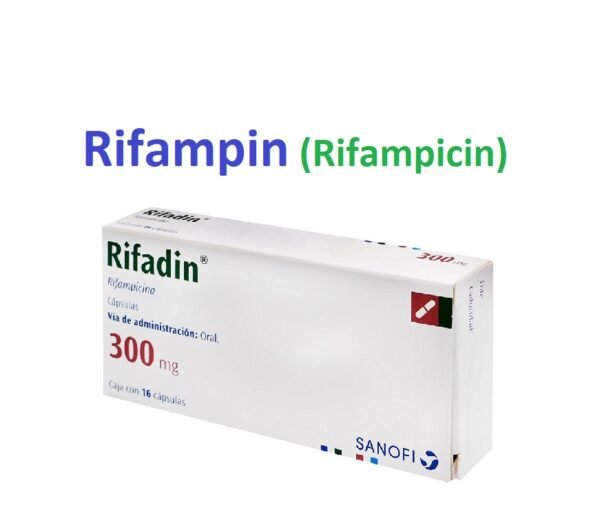
Rifampin (Rifampicin) is a bactericidal antibiotic that is used to treat a variety of bacterial infections. It is primarily used in the treatment of mycobacterial tuberculosis in combination with isoniazid, ethambutol, pyrazinamide, and other drugs. It is also used to treat gram-positive bacterial infections including prosthetic valve infections and infected prosthesis (septic arthritis) caused by staphylococcus aureus.
Rifampin Uses:
-
Meningococcal prophylaxis:
- Treatment of asymptomatic carriers of Neisseria meningitidis to kill meningococci from the nasopharynx
-
Tuberculosis:
- Use to treat tuberculosis in combination with other ATT agents
-
Off Label Use of Rifampin in Adults:
- Anaplasmosis;
- Brain abscess, empyema, and epidural abscess (MRSA);
- Brucellosis;
- Cholestatic pruritus;
- Device-related osteoarticular infection (MRSA);
- Endocarditis (prosthetic valve), treatment;
- Haemophilus influenzae type B, chemoprophylaxis;
- Leprosy;
- Meningitis, bacterial (adjunct therapy);
- Nasal decolonization of S. aureus;
- Nontuberculous mycobacterial disease, pulmonary;
- Osteomyelitis (MRSA);
- Prosthetic joint infection;
- Septic thrombosis of the cavernous or dural venous sinus (MRSA);
- Streptococcus (group A) chronic carriage
Rifampin (Rifampicin) Dose in Adults
Rifampin (Rifampicin) Dose in the prophylaxis of Meningococcal infection:
- Oral, IV: 600 mg two times per day for 2 days
Rifampin (Rifampicin) Dose in the treatment of active drug-susceptible tuberculosis: Oral, IV:
Note: Always administer in combination with other antitubercular drugs.
-
Dosing:
- Manufacturer's labeling:
- 10 mg/kg/day one time per day (maximum: 600 mg/day)
- Alternate recommendations: ATS/CDC/IDSA Drug-susceptible tuberculosis guideline recommendations:
- Once-daily therapy: 10 mg/kg/day once daily (usual dose: 600 mg).
- Manufacturer's labeling:
Note: The preferred frequency of administration is one time per day during the intensive and continuation phases; however, 5-days-per-week administration by directly observed therapy (DOT) is an acceptable alternative.
Twice-weekly or three-times-weekly DOT:
- 10 mg/kg/dose (usual dose: 600 mg) administered 2 or 3 times weekly.
Regimens:
- Treatment regimens for pulmonary tuberculosis and tuberculous meningitis consist of an initial 2-month phase of a 4-drug regimen, followed by a continuation phase of an additional 4 to 7 months of rifampin and isoniazid for pulmonary tuberculosis and a continuation phase of an additional 7 to 10 months of rifampin and isoniazid for tuberculous meningitis (optimal duration is not defined although continuation phase must continue for a minimum of 7 additional months).
- If the isoniazid resistance rate is <4%, an initial treatment regimen with less than 4 drugs may be considered.
- Readdress the need for a fourth drug when susceptibility results are available.
- Adjunctive corticosteroid therapy (eg, dexamethasone, prednisolone) tapered over 6 to 8 weeks is also recommended for tuberculous meningitis.
- Its dosage adjustment depends on the treatment regimen selected; consult current drug-sensitive TB guidelines.
Rifampin (Rifampicin) Dose in the treatment of latent tuberculosis infection (LTBI):
-
As an alternative to isoniazid:
- Oral, IV: 10 mg/kg/day (maximum: 600 mg/day) for 4 months.
Note: Combination with pyrazinamide is not recommended.
Rifampin (Rifampicin) Dose in the treatment of Anaplasmosis, mild cases (patients with a severe allergy to doxycycline) (off-label):
- Oral: 300 mg two times per day for 7 to 10 days.
Note:
- Rifampin is not an effective agent for Rocky Mountain spotted fever (RMSF);
- Ensure that RMSF has been ruled out before use.
- Rifampin is also not effective for Lyme disease; if co-infection with B. burgdorferi is suspected, treat with other antimicrobial agents.
Rifampin (Rifampicin) Dose in the treatment of brain abscess, empyema, and epidural abscess (MRSA) (off-label):
- Oral, IV: 600 mg once daily or 300 to 450 mg twice daily along with vancomycin for 4 to 6 weeks.
Rifampin Dose in the treatment of Brucellosis (off-label):
- Oral: 600 to 900 mg once per day for 6 weeks;
- Use in combination with doxycycline. Additional data may be necessary to further define the role of rifampin in this condition.
Rifampin (Rifampicin) Dose in the treatment of Cholestatic pruritus (off-label): Oral:
-
Dose based on bilirubin value:
- Bilirubin <3 mg/dL:
- 150 mg daily
- Bilirubin ≥3 mg/dL:
- 150 mg twice daily
- Bilirubin <3 mg/dL:
Rifampin (Rifampicin) Dose in the treatment of Device-related osteoarticular infection (MRSA) (off-label):
- Oral: 600 mg once daily or 300 to 450 mg twice daily in combination with other anti-staphylococcal antibiotics.
Rifampin (Rifampicin) Dose in the treatment of prosthetic valve endocarditis (off-label): Oral, IV:
-
MRSA:
- 300 mg every 8 hours for at least 6 weeks (combine with vancomycin for the entire duration of therapy and gentamicin for the first 2 weeks).
-
MSSA:
- 300 mg every 8 hours for at least 6 weeks (combine with nafcillin or oxacillin till the end of therapy and gentamicin for the first 2 weeks).
Rifampin (Rifampicin) Dose in the chemoprophylaxis of H. influenzae type B infection (off-label):
- Oral: 600 mg once per day for 4 days.
Rifampin (Rifampicin) Dose in patients with Leprosy (off-label): Oral:
-
Lepromatous (multibacillary):
- National Hansen Disease Program:
- 600 mg once per day for 24 months in combination with clofazimine and dapsone.
- World Health Organization:
- 600 mg once every month for one year in combination with clofazimine and dapsone.
- National Hansen Disease Program:
-
Tuberculoid (paucibacillary):
- National Hansen Disease Program:
- 600 mg once daily for 12 months in combination with dapsone.
- World Health Organization:
- 600 mg once monthly for 6 months in combination with dapsone.
- National Hansen Disease Program:
Rifampin (Rifampicin) Dose in the treatment of Bacterial Meningitis (adjunct therapy) (off-label):
-
Pathogen-specific therapy (eg, staphylococci [in patients with prosthetic material], S. pneumoniae [when MIC to ceftriaxone is >2 mcg/mL]):
- Oral, IV: 600 mg once daily;
- Use in combination with other antimicrobials.
Rifampin (Rifampicin) Dose in the treatment of Nasal decolonization of Staphylococcus aureus (off-label):
- Oral, IV: 600 mg/day for 5 to 10 days;
- Note:
- Must use in combination with at least one other systemic anti-staphylococcal antibiotic.
- Not recommended as a first-line drug for decolonization;
- The evidence is weak for use in patients with recurrent infections.
Rifampin (Rifampicin) Dose in the treatment of Nontuberculous Pulmonary mycobacterial Disease (off-label): Oral, IV:
-
Mycobacterium avium complex (nodular or bronchiectatic disease):
- 600 mg 3 times weekly in combination with a 3-times-weekly regimen of a macrolide (azithromycin or clarithromycin) and ethambutol;
- Continue treatment until the patient is culture-negative on therapy for 1 year.
-
Mycobacterium avium complex (severe nodular, bronchiectatic, or cavitary lung disease):
- 600 mg (450 mg in patients weighing <50 kg) once daily in combination with a daily macrolide (azithromycin or clarithromycin) and ethambutol therapy;
- Continue treatment until the patient is culture-negative on therapy for 1 year.
- May also consider the addition of 3 times weekly amikacin or streptomycin early in therapy.
-
Mycobacterium avium complex (cystic fibrosis patients):
- <50 kg:
- 450 mg once daily in combination with a daily macrolide (azithromycin [preferred] or clarithromycin) and ethambutol therapy
- >50 kg:
- 600 mg once daily in combination with a daily macrolide (azithromycin [preferred] or clarithromycin) and ethambutol therapy
- <50 kg:
-
Mycobacterium kansasii infection:
- 600 mg once daily in combination with daily ethambutol and isoniazid therapy;
- continue treatment until the patient is culture-negative on therapy for 1 year.
Rifampin (Rifampicin) Dose in the treatment of Osteomyelitis (MRSA) (off-label):
- Oral, IV: 600 mg once daily or 300 to 450 mg two times per day for at least 8 weeks in addition to trimethoprim/sulfamethoxazole, linezolid, or clindamycin.
Rifampin (Rifampicin) Dose in the treatment of Prosthetic joint infection (off-label): Staphylococci (oxacillin-susceptible or oxacillin-resistant): Oral:
-
Acute treatment following debridement and prosthesis retention or following 1-stage exchange:
- 300 to 450 mg every 12 hours in combination with IV anti-staphylococcal antibiotics for 2 to 6 weeks.
-
Chronic Treatment following debridement and prosthesis retention or following 1-stage exchange:
- Total ankle, elbow, hip, or shoulder arthroplasty:
- 300 to 450 mg every 12 hours in combination with an oral anti-staphylococcal antibiotic for 3 months.
- Total knee arthroplasty:
- 300 to 450 mg every 12 hours in combination with an oral anti-staphylococcal antibiotic for 6 months.
- Total ankle, elbow, hip, or shoulder arthroplasty:
Rifampin (Rifampicin) Dose in the treatment of Septic thrombosis of cavernous or dural venous sinus (MRSA) (off-label):
- Oral, IV: 600 mg once per day or 300 to 450 mg two times per day with concomitant vancomycin for 4 to 6 weeks.
Rifampin (Rifampicin) Dose in the treatment of Streptococcus (group A) chronic carriage (off-label):
Note: Most individuals with chronic carriage do not require antibiotics:
-
When combined with oral penicillin V:
- Oral: 600 mg once daily for the last 4 days of treatment.
-
When combined with single dose IM penicillin G benzathine:
- Oral: 300 mg two times per day for 4 days.
Rifampin (Rifampicin) Dose in Childrens
Note:
- Rifampin monotherapy is rarely indicated; most indications require combination therapy with other antimicrobial agent.
- Recommendations often change due to epidemiology (resistance) and emerging information; consult CDC and WHO for current recommendations, as appropriate.
Rifampin (Rifampicin) Dose in the treatment of active drug-susceptible tuberculosis infection (excluding meningitis):
Note:
- Always use as part of a multidrug regimen.
- Any regimens using less than once-daily dosing should administer dosing as directly observed therapy (DOT).
- Treatment regimens for pulmonary tuberculosis consist of an initial 2-month intensive phase of a 4-drug regimen, later on, continuation with isoniazid and rifampin for 4-7 months.
- Rifampin frequency and dosing differ depending on the treatment regimen selected; consult current drug-sensitive TB guidelines for detailed information.
-
ATS/CDC/IDSA Recommendations::
Note:
- For HIV-exposed/positive, refer to specific guidelines for guidance on drug interaction management with antiretroviral therapy.
-
Once-daily or 5-times-a-week (DOT):
- Infants, Children, and Adolescents <15 years, weighing ≤40 kg:
- Oral, IV: 10 to 20 mg/kg/dose once per day,maximum dose: 600 mg/dose
- Children and Adolescents <15 years weighing >40 kg or Adolescents ≥15 years:
- Oral, IV: 10 mg/kg/dose once per day(typical dose: 600 mg)
- Infants, Children, and Adolescents <15 years, weighing ≤40 kg:
-
Three-times-weekly DOT:
-
Note:
- Although suggested dosing based on experience with twice-weekly regimen;
- experts suggest three-times-weekly regimens are more effective than twice-weekly DOT regimens; three-times-weekly DOT may be used as part of an intensive phase and/or continuation phase dosing regimen; consult guidelines for specific information
- Infants, Children, and Adolescents <15 years, weighing ≤40 kg:
- Oral, IV: 10 to 20 mg/kg/dose 3-times-weekly;
- maximum dose: 600 mg/dose
- Children and Adolescents <15 years weighing >40 kg or Adolescents ≥15 years:
- Oral, IV: 10 mg/kg/dose 3-times-weekly (typical dose: 600 mg)
-
Twice-weekly DOT:
- Infants, Children, and Adolescents <15 years, weighing ≤40 kg:
Note:
- Regimen not generally recommended;
- Do not use in HIV patients or those with smear-positive and/or cavitary disease.
- This therapy should only be used following completion of a 2-week intensive phase once-daily (or 5-times a week) regimen.
- Missed doses result in the equivalent of once-weekly dosing it causes drug resistance, treatment failure and relapse.
- Infants, Children, and Adolescents <15 years, weighing ≤40 kg:
- Oral, IV: 10 to 20 mg/kg/dose twice weekly;
- maximum dose: 600 mg/dose
- Children and Adolescents <15 years weighing >40 kg or Adolescents ≥15 years:
- Oral, IV: 10 mg/kg/dose twice weekly (typical dose: 600 mg)
Rifampin (Rifampicin) Dose in the treatment of Latent tuberculosis infection (LTBI):
Note: May be considered for those unable to tolerate isoniazid or if isoniazid-resistance is suspected.
-
Non-HIV-exposed/-positive:
- Infants, Children, and Adolescents:
- Oral: 15 to 20 mg/kg/dose once daily;
- The maximum dose: 600 mg/dose;
- Use in combination with isoniazid for 3 to 4 months or as monotherapy for 4 months.
- Infants, Children, and Adolescents:
Note:
- Lower doses of 10 mg/kg/day have been described; however, pharmacokinetic studies suggest that lower doses of rifampin do not meet the criteria.
-
HIV-exposed/-positive:
Note: Not appropriate for all HIV patients due to drug-drug interactions with some antiretrovirals; refer to specific guidelines for guidance on drug interaction management with antiretroviral therapy (see Drug-Drug Interactions)
- Infants and Children:
- Oral: 10 to 20 mg/kg/dose once daily;
- The maximum dose: 600 mg/dose;
- Use in combination with isoniazid for 3 to 4 months or as monotherapy for 4 to 6 months.
- Continue therapy for 6 months if the exposure to an isoniazid mono-resistant source case.
Note: Pharmacokinetic studies suggest that lower doses of rifampin do not provide adequate drug exposure.
- Adolescents: Oral: 600 mg once per day for 4 months.
Rifampin (Rifampicin) Dose in the treatment of exit-site or tunnel infection of peritoneal dialysis catheter:
-
Infants, Children, and Adolescents:
- Oral: 10 to 20 mg/kg/day divided into 2 doses.
- Maximum dose: 600 mg/dose.
Note: It is not effective as monotherapy or its routinely use in areas where TB is endemic.
Rifampin (Rifampicin) Dose in the treatment of Endocarditis:
-
Empiric therapy for prosthetic valve/material:
- Note: Use in combination with other antibiotics:
-
Early infection (≤1-year postop)/ nosocomial infection associated with cannulation:
- Children and Adolescents:
- Oral, IV: 20 mg/kg/day divided every 8 hours;
- The maximum daily dose: 900 mg/day
- Children and Adolescents:
-
Late infection (>1-year postop):
- Children and Adolescents:
- Oral, IV: 15 to 20 mg/kg/day divided every 12 hours;
- The maximum daily dose: 600 mg/day
- Children and Adolescents:
-
Rifampin (Rifampicin) Dose in the treatment of prosthetic valve MRSA infection:
-
Infants, Children, and Adolescents:
- Oral, IV: 15 mg/kg/day divided every 8 hours;
- The maximum daily dose: 900 mg/day.
Rifampin (Rifampicin) Dose in the prophylaxis of H. influenzae infection:
-
Infants, Children, and Adolescents:
- Oral: 20 mg/kg/day once daily for 4 days, not to exceed 600 mg/dose.
Rifampin (Rifampicin) Dose in the prophylaxis of Meningococcal infection:
-
Infants, Children, and Adolescents:
- Oral: 20 mg/kg/day in divided doses every 12 hours for 2 days, not to exceed 600 mg/dose
Rifampin (Rifampicin) Dose in the treatment of Peritonitis (peritoneal dialysis):
-
Infants, Children, and Adolescents:
- Oral: 10 to 20 mg/kg/day divided into 2 doses;
- The maximum dose: 600 mg/dose.
Rifampin (Rifampicin) Dose in the treatment of Pharyngeal chronic carriers of group A streptococci:
-
Children and Adolescents:
- Oral: 20 mg/kg/day once daily for the last 4 days of treatment when combined with oral penicillin V or 20 mg/kg/day in 2 divided doses for 4 days when combined with intramuscular benzathine penicillin G;
- maximum daily dose: 600 mg/day.
Rifampin (Rifampicin) Dose in the treatment of Staphylococcus aureus, nasal carriers:
-
Children and Adolescents:
- Oral, IV: 15 mg/kg/day divided every 12 hours for 5 to 10 days;
- Note:
- Must use in combination with at least one other systemic antistaphylococcal antibiotic.
- Maximum daily dose: 600 mg/day.
- Not recommended as a first-line drug for decolonization; no data is provided for its use in patients with recurrent infections.
Rifampin (Rifampicin) Pregnancy Risk Category: C
- Rifampin crosses the placental barrier.
- The mother and infant have experienced postnatal hemorhages after the administration of anticoagulants in the last few weeks.
- If the likelihood of developing tuberculosis in the mother is high or moderate, it is recommended that she receive maternal treatment.
- Rifampin could be used in pregnancy to treat mild human anaplasmosis, also known as human granulocytic aplasmosis [HGA]); small-scale case reports have demonstrated positive maternal and pregnancies in rifampin treated pregnant women.
Rifampin use during breastfeeding:
- Breast milk contains rifampin.
- The manufacturer suggests that you decide whether to stop breastfeeding or discontinue using the drug until there are no more adverse reactions.
- Rifampin can be used to treat drug-susceptible tuberculosis. It is safe to breastfeed in cases where the first-line agent (ie, Ritamin) has been administered.
- Breastfeeding infants with tuberculosis is not possible if there is too much drug in their breast milk.
Dose in Kidney Disease:
No dosage adjustment necessary.
- Hemodialysis: No dosage adjustment necessary; administer after hemodialysis on dialysis days.
Dose in Liver disease:
- There are no dosage adjustments provided in manufacturer's labeling; but should use with caution.
Side effects of Rifampin (Rifampicin):
-
Cardiovascular:
- Decreased Blood Pressure
- Flushing
- Shock
- Vasculitis
-
Central Nervous System:
- Ataxia
- Behavioral Changes
- Confusion
- Dizziness
- Drowsiness
- Fatigue
- Headache
- Lack Of Concentration
- Myasthenia
- Numbness
- Peripheral Pain
- Sore Mouth
-
Dermatologic:
- Erythema Multiforme
- Pemphigoid Reaction
- Pruritus
- Skin Rash
- Urticaria
-
Endocrine & Metabolic:
- Adrenocortical Insufficiency
- Menstrual Disease
-
Gastrointestinal:
- Abdominal Cramps
- Anorexia
- Diarrhea
- Epigastric Distress
- Flatulence
- Glossalgia
- Heartburn
- Nausea
- Staining Of Tooth
- Vomiting
-
Genitourinary:
- Hemoglobinuria
- Hematuria
-
Hematologic & Oncologic:
- Decreased Hemoglobin
- Disorder Of Hemostatic Components Of Blood (Vitamin K-Dependent)
- Disseminated Intravascular Coagulation
- Eosinophilia
- Hemolysis
- Hemolytic Anemia
- Hemorrhage
- Leukopenia
- Thrombocytopenia (Especially With High-Dose Therapy)
-
Hepatic:
- Abnormal Hepatic Function Tests
- Hepatic Insufficiency
- Hyperbilirubinemia
- Jaundice
-
Hypersensitivity:
- Hypersensitivity Reaction
-
Neuromuscular & Skeletal:
- Myopathy
-
Ophthalmic:
- Conjunctivitis
- Visual Disturbance
-
Renal:
- Acute Renal Failure
- Interstitial Nephritis
- Renal Insufficiency
- Renal Tubular Necrosis
-
Respiratory:
- Dyspnea
- Flu-Like Symptoms
- Wheezing
-
Miscellaneous:
- Fever
Contraindications to Rifampin (Rifampicin):
- Allergy or sensitivity to rifampin or any component thereof
- concurrent use of atazanavir, darunavir, fosamprenavir, praziquantel, ritonavir/saquinavir, saquinavir, or tipranavir.
Canadian labeling: Additional contraindications not in US labeling
- Reduced bilirubin excretion can cause jaundice
- Infants born prematurely or as newborns
- Breastfeeding women
- Hepatic impairment.
Warnings and precautions
-
Coagulopathy
- May cause bleeding disorders.
- Patients at high risk for vitamin K deficiency should have monitor coagulation tests performed during treatment.
- If abnormal bleeding or coagulation tests are performed, discontinue treatment. Consider supplement vitamin K administration if necessary.
-
Cholestasis:
- Reports of mild to severe cholestasis were made; stop taking any medication if you are confirmed to have it.
-
Dermatologic reactions
- There have been cases of severe cutaneous adverse reactions, such as Stevens Johnson syndrome (SJS), toxic epidermal necrolysis (TEN), acute exanthematous pustulsis (AGEP), and drug reactions with eosinophilia or systemic symptoms syndrome (DRESS) syndrome.
- Stop receiving therapy if you experience symptoms or signs of SCAR.
-
Flu-like syndrome:
- Adults who consume >600mg once or twice weekly have reported a high rate of adverse reactions, including flu-like symptoms.
-
Hematologic effects
- Adults who take >600 mg twice or more weekly may experience thrombocytopenia or leukopenia.
-
Hepatotoxicity:
- Liver dysfunction may occur in those with hepatic diseases who have taken rifampin along with other hepatotoxic drugs.
- If liver function is impaired, discontinue use immediately.
-
Hyperbilirubinemia:
- As a result of the competition between rifampin (bilirubin) and bilirubin in excretory pathways, hyperbilirubinemia can occur in therapy early.
- If hyperbilirubinemia is accompanied by clinical symptoms or signs of severe hepatic dysfunction, discontinue treatment.
-
Hypersensitivity
- Reports of hypersensitivity reactions include rash, fever, angioedema and hypotension.
- Monitoring patients for hypersensitivity signs/symptoms is important. If symptoms (eg. fever, lymphadenopathy or liver abnormalities), are present, discontinue treatment.
-
Superinfection
- Extended use can lead to fungal and bacterial superinfections, including Clostridium.
- CDAD and pseudomembranous Colitis can occur. CDAD was observed for >2 months after antibiotic treatment.
-
Alcoholism
- Patients with a history or alcoholism should be cautious (even if they stop drinking ethanol during therapy).
-
Diabetes mellitus:
- Patients with diabetes mellitus should be cautious. Diabetes management is more difficult for patients who take rifampin.
-
Hepatic impairment
- Patients with liver dysfunction should be treated with caution and closely monitored.
-
Meningococcal Disease:
- You should not use it for meningococcal diseases, but only for the short-term treatment of symptomatic carriers.
-
Porphyria
- Patients with porphyria should be cautious; exacerbations have been reported because of enzyme-inducing properties.
Rifampin (rifampicin): Drug Interaction
|
Apalutamide |
CYP3A4 Inducers (Strong) may decrease the serum concentration of Apalutamide. |
|
Ataluren |
|
|
Barbiturates |
Rifamycin Derivatives may increase the metabolism of Barbiturates. |
|
Bazedoxifene |
RifAMPin may decrease the serum concentration of Bazedoxifene. This may lead to loss of efficacy or, if bazedoxifene is combined with estrogen therapy, an increased risk of endometrial hyperplasia. |
|
BCG Vaccine (Immunization) |
Antibiotics may diminish the therapeutic effect of BCG Vaccine (Immunization). |
|
Benperidol |
CYP3A4 Inducers (Strong) may decrease the serum concentration of Benperidol. |
|
Benzhydrocodone |
CYP3A4 Inducers (Strong) may decrease the serum concentration of Benzhydrocodone. Specifically, the serum concentrations of hydrocodone may be reduced. |
|
Beta-Blockers |
Rifamycin Derivatives may decrease the serum concentration of Beta-Blockers. Exceptions: Atenolol; Carteolol (Ophthalmic); Levobunolol; Metipranolol; Nadolol. |
|
Bosentan |
RifAMPin may decrease the serum concentration of Bosentan. Following the initial several weeks of concurrent rifampin, this effect is most likely. RifAMPin may increase the serum concentration of Bosentan. This effect is most likely to be observed within the initial few weeks of concurrent therapy (and may be greatest immediately following initiation of the combination). Management: Weekly monitoring of liver function tests during the first 4 weeks of concurrent therapy is recommended, with a return to normal recommended monitoring thereafter as appropriate. |
|
Brentuximab Vedotin |
CYP3A4 Inducers (Strong) may decrease the serum concentration of Brentuximab Vedotin. Specifically, concentrations of the active monomethyl auristatin E (MMAE) component may be decreased. |
|
Brentuximab Vedotin |
P-glycoprotein/ABCB1 Inducers may decrease the serum concentration of Brentuximab Vedotin. Specifically, concentrations of the active monomethyl auristatin E (MMAE) component may be decreased. |
|
Buprenorphine |
CYP3A4 Inducers (Strong) may decrease the serum concentration of Buprenorphine. |
|
Calcifediol |
CYP3A4 Inducers (Strong) may decrease the serum concentration of Calcifediol. |
|
Cannabidiol |
CYP3A4 Inducers (Strong) may decrease the serum concentration of Cannabidiol. |
|
Cannabidiol |
CYP2C19 Inducers (Strong) may decrease the serum concentration of Cannabidiol. |
|
Cannabis |
CYP3A4 Inducers (Strong) may decrease the serum concentration of Cannabis. More specifically, tetrahydrocannabinol and cannabidiol serum concentrations may be decreased. |
|
CarBAMazepine |
CYP3A4 Inducers (Strong) may decrease the serum concentration of CarBAMazepine. |
|
Celiprolol |
P-glycoprotein/ABCB1 Inducers may decrease the serum concentration of Celiprolol. |
|
Citalopram |
RifAMPin may decrease the serum concentration of Citalopram. |
|
Cladribine |
BCRP/ABCG2 Inducers may decrease the serum concentration of Cladribine. |
|
Cladribine |
P-glycoprotein/ABCB1 Inducers may decrease the serum concentration of Cladribine. |
|
Clopidogrel |
CYP2C19 Inducers (Strong) may increase serum concentrations of the active metabolite(s) of Clopidogrel. |
|
Codeine |
CYP3A4 Inducers (Strong) may decrease serum concentrations of the active metabolite(s) of Codeine. |
|
Corticosteroids (Systemic) |
CYP3A4 Inducers (Strong) may decrease the serum concentration of Corticosteroids (Systemic). Exceptions: Hydrocortisone (Systemic); PrednisoLONE (Systemic); PredniSONE. |
|
CYP2B6 Substrates (High risk with Inducers) |
CYP2B6 Inducers (Moderate) may decrease the serum concentration of CYP2B6 Substrates (High risk with Inducers). |
|
CYP2C9 Substrates (High risk with Inducers) |
CYP2C9 Inducers (Moderate) may decrease the serum concentration of CYP2C9 Substrates (High risk with Inducers). |
|
Dabrafenib |
CYP3A4 Inducers (Strong) may decrease the serum concentration of Dabrafenib. |
|
Diclofenac (Systemic) |
CYP2C9 Inducers (Moderate) may decrease the serum concentration of Diclofenac (Systemic). |
|
Diethylstilbestrol |
CYP3A4 Inducers (Strong) may decrease the serum concentration of Diethylstilbestrol. |
|
Disopyramide |
RifAMPin may decrease the serum concentration of Disopyramide. |
|
Doxercalciferol |
CYP3A4 Inducers (Strong) may increase serum concentrations of the active metabolite(s) of Doxercalciferol. |
|
Doxycycline |
RifAMPin may decrease the serum concentration of Doxycycline. |
|
Dronabinol |
CYP3A4 Inducers (Strong) may decrease the serum concentration of Dronabinol. |
|
Efavirenz |
RifAMPin may decrease the serum concentration of Efavirenz. |
|
Eltrombopag |
May increase the serum concentration of OATP1B1/1B3 (SLCO1B1/1B3) Substrates. |
|
Estriol (Systemic) |
CYP3A4 Inducers (Strong) may decrease the serum concentration of Estriol (Systemic). |
|
Estriol (Topical) |
CYP3A4 Inducers (Strong) may decrease the serum concentration of Estriol (Topical). |
|
Evogliptin |
CYP3A4 Inducers (Strong) may decrease the serum concentration of Evogliptin. |
|
FentaNYL |
CYP3A4 Inducers (Strong) may decrease the serum concentration of FentaNYL. |
|
Fexofenadine |
RifAMPin may decrease the serum concentration of Fexofenadine. RifAMPin may increase the serum concentration of Fexofenadine. |
|
Gemfibrozil |
May increase the serum concentration of OATP1B1/1B3 (SLCO1B1/1B3) Substrates. See separate drug interaction monographs for agents listed as exceptions. |
|
Gestrinone |
RifAMPin may decrease the serum concentration of Gestrinone. |
|
HYDROcodone |
CYP3A4 Inducers (Strong) may decrease the serum concentration of HYDROcodone. |
|
Hydrocortisone (Systemic) |
CYP3A4 Inducers (Strong) may decrease the serum concentration of Hydrocortisone (Systemic). |
|
Ifosfamide |
CYP3A4 Inducers (Strong) may decrease serum concentrations of the active metabolite(s) of Ifosfamide. CYP3A4 Inducers (Strong) may increase serum concentrations of the active metabolite(s) of Ifosfamide. |
|
Isoniazid |
Rifamycin Derivatives may enhance the hepatotoxic effect of Isoniazid. Even so, this is a frequently employed combination regimen. |
|
Lactobacillus and Estriol |
Antibiotics may diminish the therapeutic effect of Lactobacillus and Estriol. |
|
LamoTRIgine |
RifAMPin may increase the metabolism of LamoTRIgine. |
|
Leflunomide |
RifAMPin may increase serum concentrations of the active metabolite(s) of Leflunomide. |
|
Lesinurad |
CYP2C9 Inducers (Moderate) may decrease the serum concentration of Lesinurad. |
|
Levomethadone |
RifAMPin may decrease the serum concentration of Levomethadone. |
|
Lornoxicam |
CYP2C9 Inducers (Moderate) may decrease the serum concentration of Lornoxicam. |
|
Losartan |
RifAMPin may decrease the serum concentration of Losartan. |
|
Lumacaftor |
May decrease the serum concentration of P-glycoprotein/ABCB1 Substrates. Lumacaftor may increase the serum concentration of P-glycoprotein/ABCB1 Substrates. |
|
Mirabegron |
RifAMPin may decrease the serum concentration of Mirabegron. |
|
Morphine (Systemic) |
RifAMPin may decrease the serum concentration of Morphine (Systemic). |
|
Nalmefene |
RifAMPin may decrease the serum concentration of Nalmefene. |
|
OLANZapine |
RifAMPin may decrease the serum concentration of OLANZapine. |
|
Oxcarbazepine |
RifAMPin may decrease serum concentrations of the active metabolite(s) of OXcarbazepine. Specifically, concentrations of the major active 10-monohydroxy metabolite may be reduced. |
|
OxyCODONE |
RifAMPin may decrease the serum concentration of OxyCODONE. |
|
P-glycoprotein/ABCB1 Inducers |
May decrease the serum concentration of Pglycoprotein/ABCB1 Substrates. P-glycoprotein inducers may also further limit the distribution of p-glycoprotein substrates to specific cells/tissues/organs where p-glycoprotein is present in large amounts (e.g., brain, T-lymphocytes, testes, etc.). |
|
P-glycoprotein/ABCB1 Inhibitors |
May increase the serum concentration of Pglycoprotein/ABCB1 Substrates. P-glycoprotein inhibitors may also enhance the distribution of pglycoprotein substrates to specific cells/tissues/organs where p-glycoprotein is present in large amounts (e.g., brain, T-lymphocytes, testes, etc.). |
|
P-glycoprotein/ABCB1 Substrates |
P-glycoprotein/ABCB1 Inducers may decrease the serum concentration of P-glycoprotein/ABCB1 Substrates. P-glycoprotein inducers may also further limit the distribution of p-glycoprotein substrates to specific cells/tissues/organs where p-glycoprotein is present in large amounts (e.g., brain, T-lymphocytes, testes, etc.). Exceptions: Betrixaban; Edoxaban. |
|
Polatuzumab Vedotin |
CYP3A4 Inducers (Strong) may decrease the serum concentration of Polatuzumab Vedotin. Exposure to unconjugated MMAE, the cytotoxic small molecule component of polatuzumab vedotin, may be decreased. |
|
Prasugrel |
RifAMPin may diminish the antiplatelet effect of Prasugrel. |
|
Pravastatin |
RifAMPin may decrease the serum concentration of Pravastatin. |
|
PrednisoLONE (Systemic) |
CYP3A4 Inducers (Strong) may decrease the serum concentration of PrednisoLONE (Systemic). |
|
PredniSONE |
CYP3A4 Inducers (Strong) may decrease the serum concentration of PredniSONE. |
|
Propacetamol |
RifAMPin may increase the metabolism of Propacetamol. . This may 1) diminish the desired effects of propacetamol; and 2) increase the risk of liver damage. |
|
Propafenone |
CYP3A4 Inducers (Strong) may decrease the serum concentration of Propafenone. |
|
Ramelteon |
CYP3A4 Inducers (Strong) may decrease the serum concentration of Ramelteon. |
|
Reboxetine |
CYP3A4 Inducers (Strong) may decrease the serum concentration of Reboxetine. |
|
Rosuvastatin |
RifAMPin may decrease the serum concentration of Rosuvastatin. |
|
Ruxolitinib |
CYP3A4 Inducers (Strong) may decrease the serum concentration of Ruxolitinib. |
|
SAXagliptin |
CYP3A4 Inducers (Strong) may decrease the serum concentration of SAXagliptin. |
|
Sertraline |
CYP3A4 Inducers (Strong) may decrease the serum concentration of Sertraline. |
|
SUFentanil |
CYP3A4 Inducers (Strong) may decrease the serum concentration of SUFentanil. |
|
Sulfamethoxazole |
RifAMPin may decrease the serum concentration of Sulfamethoxazole. |
|
Terbinafine (Systemic) |
RifAMPin may decrease the serum concentration of Terbinafine (Systemic). |
|
Teriflunomide |
May increase the serum concentration of OATP1B1/1B3 (SLCO1B1/1B3) Substrates. |
|
Tetrahydrocannabinol |
CYP3A4 Inducers (Strong) may decrease the serum concentration of Tetrahydrocannabinol. |
|
Tetrahydrocannabinol and Cannabidiol |
CYP3A4 Inducers (Strong) may decrease the serum concentration of Tetrahydrocannabinol and Cannabidiol. |
|
Thyroid Products |
RifAMPin may decrease the serum concentration of Thyroid Products. |
|
TraMADol |
CYP3A4 Inducers (Strong) may decrease the serum concentration of TraMADol. |
|
Treprostinil |
RifAMPin may decrease the serum concentration of Treprostinil. |
|
Trimethoprim |
RifAMPin may decrease the serum concentration of Trimethoprim. |
|
Tropisetron |
CYP3A4 Inducers (Strong) may decrease the serum concentration of Tropisetron. |
|
Udenafil |
CYP3A4 Inducers (Strong) may decrease the serum concentration of Udenafil. |
|
Vitamin K Antagonists (eg, warfarin) |
Rifamycin Derivatives may increase the metabolism of Vitamin K Antagonists. |
|
Zidovudine |
Rifamycin Derivatives may decrease the serum concentration of Zidovudine. |
|
Zuclopenthixol |
CYP3A4 Inducers (Strong) may decrease the serum concentration of Zuclopenthixol. |
|
Risk Factor D (Consider therapy modification) |
|
|
Abiraterone Acetate |
CYP3A4 Inducers (Strong) may decrease the serum concentration of Abiraterone Acetate. Management: Avoid whenever possible. If such a combination cannot be avoided, increase abiraterone acetate dosing frequency from once daily to twice daily during concomitant use. |
|
Acalabrutinib |
CYP3A4 Inducers (Strong) may decrease the serum concentration of Acalabrutinib. Management: Avoid co-administration of strong CYP3A inducers in patients taking acalabrutinib. If strong CYP3A inducers cannot be avoided, increase the dose of acalabrutinib to 200 mg twice daily. |
|
Afatinib |
P-glycoprotein/ABCB1 Inducers may decrease the serum concentration of Afatinib. Management: Per US labeling: if requiring chronic use of P-gp inducers, increase afatinib dose by 10mg as tolerated; reduce to original afatinib dose 2-3 days after stopping P-gp inducers. Per Canadian labeling: avoid combination if possible. |
|
Alfentanil |
Rifamycin Derivatives may decrease the serum concentration of Alfentanil. Management: Monitor closely for decreased alfentanil effectiveness. Increased alfentanil doses will likely be needed. Alternatively, changing from alfentanil to a different opioid anesthetic (e.g., sufentanil) may also be considered. |
|
Amiodarone |
RifAMPin may decrease serum concentrations of the active metabolite(s) of Amiodarone. Specifically, desethylamiodarone concentrations may decrease. RifAMPin may decrease the serum concentration of Amiodarone. Management: Seek alternatives. When used together, monitor closely for decreased amiodarone concentrations/effects. Dose adjustment may be needed. |
|
Antifungal Agents (Azole Derivatives, Systemic) |
May increase the serum concentration of Rifamycin Derivatives. Only rifabutin appears to be affected. Rifamycin Derivatives may decrease the serum concentration of Antifungal Agents (Azole Derivatives, Systemic). Management: Avoid these combinations when possible. Voriconazole and isavuconazonium are considered contraindicated. |
|
ARIPiprazole |
|
|
ARIPiprazole Lauroxil |
CYP3A4 Inducers (Strong) may decrease serum concentrations of the active metabolite(s) of ARIPiprazole Lauroxil. Management: Patients taking the 441 mg dose of aripiprazole lauroxil increase their dose to 662 mg if used with a strong CYP3A4 inducer for more than 14 days. No dose adjustment is necessary for patients using the higher doses of aripiprazole lauroxil. |
|
Avatrombopag |
RifAMPin may decrease the serum concentration of Avatrombopag. Management: Management of this interaction varies based on avatrombopag indication. Dose adjustments are required for patients using avatrombopag for chronic immune thrombocytopenia. See monograph for details. |
|
Brexpiprazole |
CYP3A4 Inducers (Strong) may decrease the serum concentration of Brexpiprazole. Management: If brexpiprazole is used together with a strong CYP3A4 inducer, the brexpiprazole dose should gradually be doubled over the course of 1 to 2 weeks. |
|
Brivaracetam |
RifAMPin may decrease the serum concentration of Brivaracetam. Management: Increase the brivaracetam dose by up to 100% (ie, double the dose) if used together with rifampin. |
|
BusPIRone |
CYP3A4 Inducers (Strong) may decrease the serum concentration of BusPIRone. Management: Consider alternatives to this combination. If coadministration of these agents is deemed necessary, monitor patients for reduced buspirone effects and increase buspirone doses as needed. |
|
Cabozantinib |
CYP3A4 Inducers (Strong) may decrease the serum concentration of Cabozantinib. Management: Avoid use of strong CYP3A4 inducers with cabozantinib if possible. If combined, cabozantinib dose adjustments are recommended and vary based on the cabozantinib product used and the indication for use. See monograph for details. |
|
Calcium Channel Blockers |
Rifamycin Derivatives may decrease the serum concentration of Calcium Channel Blockers. This primarily affects oral forms of calcium channel blockers. Management: The labeling for some US and Canadian calcium channel blockers contraindicate use with rifampin, however recommendations vary. Consult appropriate labeling. Exceptions: Clevidipine. |
|
Canagliflozin |
RifAMPin may decrease the serum concentration of Canagliflozin. Management: Consider increasing canagliflozin dose to 300 mg/day in patients with estimated GFR >60 mL/min/1.73 m2 who tolerate canagliflozin 100 mg/day and require greater glycemic control. Consider alternatives in patients with estimated GFR 45-60 mL/min/1.73 m2. |
|
Caspofungin |
RifAMPin may decrease the serum concentration of Caspofungin. Management: Caspofungin prescribing information recommends using a dose of 70 mg daily in adults (or 70 mg/m , up to a maximum of 70 mg, daily in pediatric patients) who are also receiving rifampin. 2 |
|
CeFAZolin |
May enhance the adverse/toxic effect of RifAMPin. Specifically, the risk for bleeding may be increased. Management: Avoid concomitant use of rifampin with cefazolin when possible. If combined, closely monitor prothrombin time or other coagulation tests and administer vitamin K as needed. |
|
Cephalosporins (N-methylthiotetrazole [NMTT] Side Chain Containing) |
May enhance the adverse/toxic effect of RifAMPin. Specifically, the risk for bleeding may be increased. Management: Avoid concomitant use of rifampin with cephalosporins that contain an Nmethylthiotetrazole (NMTT) side chain when possible. If combined, closely monitor prothrombin time or other coagulation tests and administer vitamin K as needed. |
|
Chloramphenicol (Systemic) |
RifAMPin may increase the metabolism of Chloramphenicol (Systemic). |
|
Clarithromycin |
CYP3A4 Inducers (Strong) may increase serum concentrations of the active metabolite(s) of Clarithromycin. Clarithromycin may increase the serum concentration of CYP3A4 Inducers (Strong). CYP3A4 Inducers (Strong) may decrease the serum concentration of Clarithromycin. Management: Consider alternative antimicrobial therapy for patients receiving a CYP3A inducer. Drugs that enhance the metabolism of clarithromycin into 14hydroxyclarithromycin may alter the clinical activity of clarithromycin and may impair clarithromycin efficacy. |
|
CycloSPORINE (Systemic) |
Rifamycin Derivatives may increase the metabolism of CycloSPORINE (Systemic). |
|
CYP2C19 Substrates (High risk with Inducers) |
CYP2C19 Inducers (Strong) may increase the metabolism of CYP2C19 Substrates (High risk with Inducers). Management: Consider an alternative for one of the interacting drugs. Some combinations may be specifically contraindicated. Consult appropriate manufacturer labeling. |
|
CYP3A4 Substrates (High risk with Inducers) |
CYP3A4 Inducers (Strong) may increase the metabolism of CYP3A4 Substrates (High risk with Inducers). Management: Consider an alternative for one of the interacting drugs. Some combinations may be specifically contraindicated. Consult appropriate manufacturer labeling. Exceptions: Benzhydrocodone; Buprenorphine; CarBAMazepine; Etizolam; HYDROcodone; TraMADol; Zolpidem. |
|
Dasatinib |
CYP3A4 Inducers (Strong) may decrease the serum concentration of Dasatinib. Management: Avoid when possible. If such a combination cannot be avoided, consider increasing dasatinib dose and monitor clinical response and toxicity closely. |
|
Deferasirox |
RifAMPin may decrease the serum concentration of Deferasirox. Management: Avoid combination when possible; if the combination must be used, consider a 50% increase in initial deferasirox dose, with monitoring of serum ferritin concentrations and clinical responses to guide further dosing. |
|
Dexamethasone (Systemic) |
CYP3A4 Inducers (Strong) may decrease the serum concentration of Dexamethasone (Systemic). Management: Consider dexamethasone dose increases in patients receiving strong CYP3A4 inducers and monitor closely for reduced steroid efficacy. |
|
Dolutegravir |
RifAMPin may decrease the serum concentration of Dolutegravir. Management: Increase dolutegravir dose to 50 mg twice daily in adults or children. Consider alternatives to rifampin for INSTI experienced patients with clinically suspected INSTI resistance or certain INSTI associated resistance substitutions. |
|
DOXOrubicin (Conventional) |
CYP3A4 Inducers (Strong) may decrease the serum concentration of DOXOrubicin (Conventional). Management: Seek alternatives to strong CYP3A4 inducers in patients treated with doxorubicin. One U.S. manufacturer (Pfizer Inc.) recommends that these combinations be avoided. |
|
DOXOrubicin (Conventional) |
P-glycoprotein/ABCB1 Inducers may decrease the serum concentration of DOXOrubicin (Conventional). Management: Seek alternatives to P-glycoprotein inducers in patients treated with doxorubicin whenever possible. One U.S. manufacturer (Pfizer Inc.) recommends that these combinations be avoided. |
|
Elagolix |
RifAMPin may increase the serum concentration of Elagolix. Management: Use of the elagolix 200 mg twice daily dose with rifampin is not recommended. Limit combined use of the elagolix 150 mg once daily dose with rifampin to a maximum of 6 months. |
|
Eluxadoline |
RifAMPin may increase the serum concentration of Eluxadoline. Management: Decrease the eluxadoline dose to 75 mg twice daily if combined with rifampin and monitor patients for increased eluxadoline effects/toxicities. |
|
Enzalutamide |
CYP3A4 Inducers (Strong) may decrease the serum concentration of Enzalutamide. Management: Consider using an alternative agent that has no or minimal CYP3A4 induction potential when possible. If this combination cannot be avoided, increase the dose of enzalutamide from 160 mg daily to 240 mg daily. |
|
Eravacycline |
CYP3A4 Inducers (Strong) may decrease the serum concentration of Eravacycline. Management: Increase the eravacycline dose to 1.5 mg/kg every 12 hours when combined with strong CYP3A4 inducers. |
|
Erlotinib |
CYP3A4 Inducers (Strong) may decrease the serum concentration of Erlotinib. Management: Avoid combination if possible. If combination must be used, increase erlotinib dose by 50 mg increments every 2 weeks as tolerated, to a maximum of 450 mg/day. |
|
Estrogen Derivatives (Contraceptive) |
Rifamycin Derivatives may decrease the serum concentration of Estrogen Derivatives (Contraceptive). Contraceptive failure is possible. Management: Use of an alternative, nonhormonal contraceptive is recommended. |
|
Etoposide |
CYP3A4 Inducers (Strong) may decrease the serum concentration of Etoposide. Management: When possible, seek alternatives to strong CYP3A4-inducing medications in patients receiving etoposide. If combined, monitor patients closely for diminished etoposide response and need for etoposide dose increases. |
|
Etoposide Phosphate |
CYP3A4 Inducers (Strong) may decrease the serum concentration of Etoposide Phosphate. Management: When possible, seek alternatives to strong CYP3A4inducing medications in patients receiving etoposide phosphate. If these combinations cannot be avoided, monitor patients closely for diminished etoposide phosphate response. |
|
Everolimus |
CYP3A4 Inducers (Strong) may decrease the serum concentration of Everolimus. Management: Avoid concurrent use of strong CYP3A4 inducers if possible. If coadministration cannot be avoided, double the daily dose of everolimus using increments of 5 mg or less. Monitor everolimus serum concentrations closely when indicated. |
|
Exemestane |
CYP3A4 Inducers (Strong) may decrease the serum concentration of Exemestane. Management: Exemestane U.S. product labeling recommends using an increased dose (50 mg/day) in patients receiving concurrent strong CYP3A4 inducers. The Canadian product labeling does not recommend a dose adjustment with concurrent use of strong CYP3A4 inducers. |
|
Fosphenytoin |
RifAMPin may decrease the serum concentration of Fosphenytoin. Management: Seek alternatives when possible. If used together, monitor closely for decreased serum phenytoin concentrations following rifampin initiation/dose increase, or increased concentrations and toxic effects following rifampin discontinuation/dose decrease. |
|
Gefitinib |
CYP3A4 Inducers (Strong) may decrease the serum concentration of Gefitinib. Management: In the absence of severe adverse reactions, increase gefitinib dose to 500 mg daily in patients receiving strong CYP3A4 inducers; resume 250 mg dose 7 days after discontinuation of the strong inducer. Carefully monitor clinical response. |
|
GuanFACINE |
CYP3A4 Inducers (Strong) may decrease the serum concentration of GuanFACINE. Management: Increase the guanfacine dose by up to double when initiating guanfacine in a patient taking a strong CYP3A4 inducer. Increase guanfacine dose gradually over 1 to 2 weeks if initiating strong CYP3A4 inducer therapy in a patient already taking guanfacine. |
|
HMG-CoA Reductase Inhibitors (Statins) |
Rifamycin Derivatives may decrease the serum concentration of HMG-CoA Reductase Inhibitors (Statins). Management: Consider use of noninteracting antilipemic agents (note: pitavastatin concentrations may increase with rifamycin treatment). Monitor for altered HMG-CoA reductase inhibitor effects. Rifabutin and fluvastatin, or possibly pravastatin, may pose lower risk. Exceptions: Pitavastatin; Rosuvastatin. |
|
Imatinib |
Rifamycin Derivatives may decrease the serum concentration of Imatinib. Management: Avoid concurrent use of imatinib with the rifamycin derivatives when possible. If such a combination must be used, increase imatinib dose by at least 50% and monitor the patient's clinical response closely. |
|
Imatinib |
CYP3A4 Inducers (Strong) may decrease the serum concentration of Imatinib. Management: Avoid concurrent use of imatinib with strong CYP3A4 inducers when possible. If such a combination must be used, increase imatinib dose by at least 50% and monitor the patient's clinical response closely. |
|
Ixabepilone |
CYP3A4 Inducers (Strong) may decrease the serum concentration of Ixabepilone. Management: Avoid this combination whenever possible. If this combination must be used, a gradual increase in ixabepilone dose from 40 mg/m to 60 mg/m (given as a 4-hour infusion), as tolerated, should be considered. |
|
Larotrectinib |
CYP3A4 Inducers (Strong) may decrease the serum concentration of Larotrectinib. Management: Avoid use of strong CYP3A4 inducers with larotrectinib. If this combination cannot be avoided, double the larotrectinib dose. Reduced to previous dose after stopping the inducer after a period of 3 to 5 times the inducer half-life. |
|
Lefamulin |
CYP3A4 Inducers (Strong) may decrease the serum concentration of Lefamulin. Management: Avoid concomitant use of lefamulin with strong CYP3A4 inducers unless the benefits outweigh the risks. |
|
Lefamulin |
P-glycoprotein/ABCB1 Inducers may decrease the serum concentration of Lefamulin. Management: Avoid concomitant use of lefamulin with P-glycoprotein/ABCB1 inducers unless the benefits outweigh the risks. |
|
Lefamulin (Intravenous) |
CYP3A4 Inducers (Strong) may decrease the serum concentration of Lefamulin (Intravenous). Management: Avoid concomitant use of lefamulin intravenous infusion with strong CYP3A4 inducers unless the benefits outweigh the risks. |
|
Lefamulin (Intravenous) |
P-glycoprotein/ABCB1 Inducers may decrease the serum concentration of Lefamulin (Intravenous). Management: Avoid concomitant use of lefamulin (intravenous) with P-glycoprotein/ABCB1 inducers unless the benefits outweigh the risks. |
|
LinaGLIPtin |
CYP3A4 Inducers (Strong) may decrease the serum concentration of LinaGLIPtin. Management: Strongly consider using an alternative to any strong CYP3A4 inducer in patients who are being treated with linagliptin. If this combination is used, monitor patients closely for evidence of reduced linagliptin effectiveness. |
|
LinaGLIPtin |
P-glycoprotein/ABCB1 Inducers may decrease the serum concentration of LinaGLIPtin. Management: Strongly consider using an alternative to any strong P-glycoprotein inducer in patients who are being treated with linagliptin. If this combination is used, monitor patients closely for evidence of reduced linagliptin effectiveness. |
|
Macrolide Antibiotics |
May decrease the metabolism of Rifamycin Derivatives. Exceptions: Azithromycin (Systemic); Fidaxomicin; Roxithromycin; Spiramycin. |
|
Manidipine |
CYP3A4 Inducers (Strong) may decrease the serum concentration of Manidipine. Management: Consider avoiding concomitant use of manidipine and strong CYP3A4 inducers. If combined, monitor closely for decreased manidipine effects and loss of efficacy. Increased manidipine doses may be required. |
|
Maraviroc |
CYP3A4 Inducers (Strong) may decrease the serum concentration of Maraviroc. Management: Increase maraviroc adult dose to 600 mg twice daily when used with strong CYP3A4 inducers. This does not apply to patients also receiving strong CYP3A4 inhibitors. Do not use maraviroc with strong CYP3A4 inducers in patients with CrCl less than 30 mL/min. |
|
Meperidine |
CYP3A4 Inducers (Strong) may decrease the serum concentration of Meperidine. Management: Consider increasing meperidine dose if concomitant use with strong CYP3A4 inducers is required. Monitor for signs and symptoms of opioid withdrawal. |
|
Methadone |
Rifamycin Derivatives may decrease the serum concentration of Methadone. Management: Seek alternatives when possible. If used concomitantly, monitor closely for symptoms of methadone withdrawal upon rifamycin derivative initiation, and for excess sedation upon rifamycin derivative discontinuation. |
|
MethylPREDNISolone |
CYP3A4 Inducers (Strong) may decrease the serum concentration of MethylPREDNISolone. Management: Consider methylprednisolone dose increases in patients receiving strong CYP3A4 inducers and monitor closely for reduced steroid efficacy. |
|
Mirodenafil |
CYP3A4 Inducers (Strong) may decrease the serum concentration of Mirodenafil. Management: Consider avoiding the concomitant use of mirodenafil and strong CYP3A4 inducers. If combined, monitor for decreased mirodenafil effects. Mirodenafil dose increases may be required to achieve desired effects. |
|
Nevirapine |
RifAMPin may decrease the serum concentration of Nevirapine. Management: Avoid whenever possible. When this combination is necessary, use immediate-release nevirapine (avoid extended-release nevirapine) at a dose of 200 mg twice daily with no lead-in (per adult/adolescent HIV guidelines). Monitor nevirapine response closely. |
|
Nitrazepam |
RifAMPin may decrease the serum concentration of Nitrazepam. Management: Monitor closely for reduced effects of nitrazepam. When possible, consider alternatives to one of these drugs, or increases in initial nitrazepam doses. |
|
Osimertinib |
CYP3A4 Inducers (Strong) may decrease the serum concentration of Osimertinib. |
|
Paliperidone |
Inducers of CYP3A4 (Strong) and P-glycoprotein may decrease the serum concentration of Paliperidone. Management: Avoid using the 3-month extended-release injectable suspension (Invega Trinza) with inducers of both CYP3A4 and P-glycoprotein during the 3-month dosing interval if possible. If combination is necessary, consider using extendedrelease tablets. |
|
Perampanel |
CYP3A4 Inducers (Strong) may decrease the serum concentration of Perampanel. Management: Increase the perampanel starting dose to 4 mg/day when perampanel is used concurrently with moderate and strong CYP3A4 inducers. |
|
Phenytoin |
RifAMPin may decrease the serum concentration of Phenytoin. Management: Seek alternatives when possible. If used together, monitor closely for decreased serum phenytoin concentrations following rifampin initiation/dose increase, or increased concentrations and toxic effects following rifampin discontinuation/dose decrease. |
|
Pitavastatin |
Rifamycin Derivatives may increase the serum concentration of Pitavastatin. Management: Limit pitavastatin dose to a maximum of 2 mg/day with concurrent rifampin. |
|
Pitolisant |
CYP3A4 Inducers (Strong) may decrease the serum concentration of Pitolisant. Management: For patients who are stable on pitolisant doses of 8.9 mg or 17.8 mg/day and who are also taking a strong CYP3A4 inducer, increase the pitolisant dose over 7 days to double the original dose (ie, to either 17.8 mg/day or 35.6 mg/day, respectively). |
|
Progestins (Contraceptive) |
Rifamycin Derivatives may decrease the serum concentration of Progestins (Contraceptive). Contraceptive failure is possible. Management: Contraceptive failure is possible. Use of an alternative, nonhormonal contraceptive is recommended. |
|
Propofol |
RifAMPin may enhance the hypotensive effect of Propofol. Management: Note that use of propofol in a patient who has been taking rifampin may result in clinically significant hypotension. If possible, avoid use of this combination. |
|
Prothionamide |
RifAMPin may enhance the hepatotoxic effect of Prothionamide. Management: Avoid concomitant use of prothionamide and rifampin if possible. If combined use is considered necessary, monitor patients closely for signs and symptoms of hepatotoxicity (eg, jaundice, elevations in liver function tests). |
|
Pyrazinamide |
May enhance the hepatotoxic effect of RifAMPin. Severe (even fatal) liver injury has been reported in patients receiving these 2 drugs as a 2-month treatment regimen for latent TB infection. |
|
QUEtiapine |
CYP3A4 Inducers (Strong) may decrease the serum concentration of QUEtiapine. Management: An increase in quetiapine dose (as much as 5 times the regular dose) may be required to maintain therapeutic benefit. Reduce the quetiapine dose back to the previous/regular dose within 7-14 days of discontinuing the inducer. |
|
QuiNIDine |
Rifamycin Derivatives may decrease the serum concentration of QuiNIDine. Management: Consider alternatives to combination treatment with quinidine and rifampin due to large potential decreases in quinidine concentrations. Monitor for decreased quinidine concentrations/effects with initiation/dose increase of any rifamycin derivative. |
|
Radotinib |
CYP3A4 Inducers (Strong) may decrease the serum concentration of Radotinib. Management: Consider alternatives to this combination when possible as the risk of radotinib treatment failure may be increased. |
|
Raltegravir |
RifAMPin may decrease the serum concentration of Raltegravir. Management: Increase raltegravir dose to 800 mg twice daily (adult dose) when used concomitantly with rifampin. Concurrent use of rifampin with once-daily raltegravir (Isentress HD) is not recommended. |
|
Repaglinide |
RifAMPin may decrease the serum concentration of Repaglinide. Management: Consider alternatives to this combination. Dose timing may substantially affect this interaction; in clinical studies, the lowest magnitude of interaction was seen when repaglinide was given 1 h after rifampin (compared to 0, 12, or 24 h). |
|
RisperiDONE |
CYP3A4 Inducers (Strong) may decrease the serum concentration of RisperiDONE. Management: Consider increasing the dose of oral risperidone (to no more than double the original dose) if a strong CYP3A4 inducer is initiated. For patients on IM risperidone, consider an increased IM dose or supplemental doses of oral risperidone. |
|
Rolapitant |
CYP3A4 Inducers (Strong) may decrease the serum concentration of Rolapitant. Management: Avoid rolapitant use in patients requiring chronic administration of strong CYP3A4 inducers. Monitor for reduced rolapitant response and the need for alternative or additional antiemetic therapy even with shorter-term use of such inducers. |
|
Selexipag |
RifAMPin may decrease serum concentrations of the active metabolite(s) of Selexipag. |
|
Sirolimus |
CYP3A4 Inducers (Strong) may decrease the serum concentration of Sirolimus. Management: Avoid concomitant use of strong CYP3A4 inducers and sirolimus if possible. If combined, monitor for reduced serum sirolimus concentrations. Sirolimus dose increases will likely be necessary to prevent subtherapeutic sirolimus levels. |
|
Sodium Picosulfate |
Antibiotics may diminish the therapeutic effect of Sodium Picosulfate. Management: Consider using an alternative product for bowel cleansing prior to a colonoscopy in patients who have recently used or are concurrently using an antibiotic. |
|
Sulfonylureas |
RifAMPin may decrease the serum concentration of Sulfonylureas. Management: Seek alternatives to these combinations when possible. Monitor closely for diminished therapeutic effects of sulfonylureas if rifampin is initiated/dose increased, or enhanced effects if rifampin is discontinued/dose decreased. |
|
SUNItinib |
CYP3A4 Inducers (Strong) may decrease the serum concentration of SUNItinib. Management: Avoid when possible. If such a combination cannot be avoided, sunitinib dose increases are recommended, and vary by indication. See full monograph for details. |
|
Tacrolimus (Systemic) |
Rifamycin Derivatives may decrease the serum concentration of Tacrolimus (Systemic). Management: Consider alternatives when possible. If these combination are used, monitor for reduced tacrolimus concentrations/effects following rifamycin initiation/dose increase, or increased concentrations/effects following rifamycin discontinuation/dose decrease. |
|
Tadalafil |
CYP3A4 Inducers (Strong) may decrease the serum concentration of Tadalafil. Management: Erectile dysfunction: monitor for decreased effectiveness - no standard dose adjustments recommended. Avoid use of tadalafil for pulmonary arterial hypertension in patients receiving a strong CYP3A4 inducer. |
|
Tamoxifen |
Rifamycin Derivatives may increase the metabolism of Tamoxifen. |
|
Tamoxifen |
CYP3A4 Inducers (Strong) may decrease serum concentrations of the active metabolite(s) of Tamoxifen. CYP3A4 Inducers (Strong) may decrease the serum concentration of Tamoxifen. Management: Consider alternatives to concomitant use of strong CYP3A4 inducers and tamoxifen. If the combination cannot be avoided, monitor for reduced therapeutic effects of tamoxifen. |
|
Temsirolimus |
Rifamycin Derivatives may decrease the serum concentration of Temsirolimus. Rifamycins will likely cause an even greater decrease in the concentration of the active metabolite sirolimus. Management: Temsirolimus prescribing information recommends against coadministration with strong CYP3A4 inducers such as rifampin; however, if concurrent therapy is necessary, an increase in temsirolimus adult dose to 50 mg/week should be considered. |
|
Temsirolimus |
CYP3A4 Inducers (Strong) may decrease the serum concentration of Temsirolimus. Management: Consider increasing the dose of temsirolimus to 50 mg IV/week (from 25 mg IV/week) if a concomitant CYP3A4 strong inducer is necessary. |
|
Thiazolidinediones |
RifAMPin may increase the metabolism of Thiazolidinediones. Management: Consider alternatives to the concomitant use of rifampin with thiazolidinedione antidiabetic agents. Monitor patients receiving these combinations for decreased effects of the thiazolidinedione derivative. |
|
Thiotepa |
CYP3A4 Inducers (Strong) may increase serum concentrations of the active metabolite(s) of Thiotepa. CYP3A4 Inducers (Strong) may decrease the serum concentration of Thiotepa. Management: Thiotepa prescribing information recommends avoiding concomitant use of thiotepa and strong CYP3A4 inducers. If concomitant use is unavoidable, monitor for adverse effects. |
|
TiaGABine |
CYP3A4 Inducers (Strong) may decrease the serum concentration of TiaGABine. Management: Approximately 2-fold higher tiagabine doses and a more rapid dose titration will likely be required in patients concomitantly taking a strong CYP3A4 inducer. |
|
Typhoid Vaccine |
Antibiotics may diminish the therapeutic effect of Typhoid Vaccine. Only the live attenuated Ty21a strain is affected. Management: Vaccination with live attenuated typhoid vaccine (Ty21a) should be avoided in patients being treated with systemic antibacterial agents. Use of this vaccine should be postponed until at least 3 days after cessation of antibacterial agents. |
|
Valproate Products |
RifAMPin may decrease the serum concentration of Valproate Products. |
|
Vemurafenib |
CYP3A4 Inducers (Strong) may decrease the serum concentration of Vemurafenib. Management: Avoid concurrent use of vemurafenib with a strong CYP3A4 inducer and replace with another agent when possible. If a strong CYP3A4 inducer is indicated and unavoidable, the dose of vemurafenib may be increased by 240 mg (1 tablet) as tolerated. |
|
Vilazodone |
CYP3A4 Inducers (Strong) may decrease the serum concentration of Vilazodone. Management: Consider increasing vilazodone dose by as much as 2-fold (do not exceed 80 mg/day), based on response, in patients receiving strong CYP3A4 inducers for > 14 days. Reduce to the original vilazodone dose over 1-2 weeks after inducer discontinuation. |
|
Vortioxetine |
CYP3A4 Inducers (Strong) may decrease the serum concentration of Vortioxetine. Management: Consider increasing the vortioxetine dose to no more than 3 times the original dose when used with a strong drug metabolism inducer for more than 14 days. The vortioxetine dose should be returned to normal within 14 days of stopping the strong inducer. |
|
Zaleplon |
CYP3A4 Inducers (Strong) may decrease the serum concentration of Zaleplon. Management: Consider the use of an alternative hypnotic that is not metabolized by CYP3A4 in patients receiving strong CYP3A4 inducers. If zalephon is combined with a strong CYP3A4 inducer, monitor for decreased effectiveness of zaleplon. |
|
Risk Factor X (Avoid combination) |
|
|
Abemaciclib |
CYP3A4 Inducers (Strong) may decrease the serum concentration of Abemaciclib. |
|
Alpelisib |
CYP3A4 Inducers (Strong) may decrease the serum concentration of Alpelisib. |
|
Antihepaciviral Combination Products |
CYP3A4 Inducers (Strong) may decrease the serum concentration of Antihepaciviral Combination Products. |
|
Apixaban |
CYP3A4 Inducers (Strong) may decrease the serum concentration of Apixaban. |
|
Apremilast |
CYP3A4 Inducers (Strong) may decrease the serum concentration of Apremilast. |
|
Aprepitant |
CYP3A4 Inducers (Strong) may decrease the serum concentration of Aprepitant. |
|
Artemether |
CYP3A4 Inducers (Strong) may decrease serum concentrations of the active metabolite(s) of Artemether. Specifically, dihydroartemisinin concentrations may be reduced. CYP3A4 Inducers (Strong) may decrease the serum concentration of Artemether. |
|
Asunaprevir |
RifAMPin may decrease the serum concentration of Asunaprevir. This effect is most likely with longer-term coadministration; single-dose rifampin may increase asunaprevir concentrations. RifAMPin may increase the serum concentration of Asunaprevir. This effect is likely following only single-dose or short-term rifampin administration. Longer-term coadministration is likely to result in decreased asunaprevir concentrations. |
|
Atazanavir |
RifAMPin may decrease the serum concentration of Atazanavir. |
|
Atovaquone |
Rifamycin Derivatives may decrease the serum concentration of Atovaquone. |
|
Axitinib |
CYP3A4 Inducers (Strong) may decrease the serum concentration of Axitinib. |
|
BCG (Intravesical) |
Antibiotics may diminish the therapeutic effect of BCG (Intravesical). |
|
Bedaquiline |
CYP3A4 Inducers (Strong) may decrease the serum concentration of Bedaquiline. |
|
Betrixaban |
P-glycoprotein/ABCB1 Inducers may decrease the serum concentration of Betrixaban. |
|
Bictegravir |
RifAMPin may decrease the serum concentration of Bictegravir. |
|
Bortezomib |
CYP3A4 Inducers (Strong) may decrease the serum concentration of Bortezomib. |
|
Bosutinib |
CYP3A4 Inducers (Strong) may decrease the serum concentration of Bosutinib. |
|
Brigatinib |
CYP3A4 Inducers (Strong) may decrease the serum concentration of Brigatinib. |
|
Cariprazine |
CYP3A4 Inducers (Strong) may decrease the serum concentration of Cariprazine. |
|
Ceritinib |
CYP3A4 Inducers (Strong) may decrease the serum concentration of Ceritinib. |
|
Cholera Vaccine |
Antibiotics may diminish the therapeutic effect of Cholera Vaccine. Management: Avoid cholera vaccine in patients receiving systemic antibiotics, and within 14 days following the use of oral or parenteral antibiotics. |
|
CloZAPine |
CYP3A4 Inducers (Strong) may decrease the serum concentration of CloZAPine. |
|
Cobicistat |
RifAMPin may decrease the serum concentration of Cobicistat. |
|
Cobimetinib |
CYP3A4 Inducers (Strong) may decrease the serum concentration of Cobimetinib. |
|
Copanlisib |
CYP3A4 Inducers (Strong) may decrease the serum concentration of Copanlisib. |
|
Crizotinib |
CYP3A4 Inducers (Strong) may decrease the serum concentration of Crizotinib. |
|
Dabigatran Etexilate |
P-glycoprotein/ABCB1 Inducers may decrease the serum concentration of Dabigatran Etexilate. Management: Avoid concurrent use of dabigatran with P-glycoprotein inducers whenever possible. |
|
Daclatasvir |
CYP3A4 Inducers (Strong) may decrease the serum concentration of Daclatasvir. |
|
Darolutamide |
Inducers of CYP3A4 (Strong) and P-glycoprotein may decrease the serum concentration of Darolutamide. |
|
Darunavir |
RifAMPin may decrease the serum concentration of Darunavir. |
|
Dasabuvir |
CYP3A4 Inducers (Strong) may decrease the serum concentration of Dasabuvir. |
|
Deflazacort |
CYP3A4 Inducers (Strong) may decrease serum concentrations of the active metabolite(s) of Deflazacort. |
|
Delamanid |
CYP3A4 Inducers (Strong) may decrease the serum concentration of Delamanid. |
|
Delavirdine |
Rifamycin Derivatives may increase the metabolism of Delavirdine. Delavirdine may increase the serum concentration of Rifamycin Derivatives. Specifically, Rifabutin serum concentration may be increased. |
|
Dienogest |
CYP3A4 Inducers (Strong) may decrease the serum concentration of Dienogest. Management: Avoid use of dienogest for contraception when using medications that induce CYP3A4 and for at least 28 days after discontinuation of a CYP3A4 inducer. An alternative form of contraception should be used during this time. |
|
DilTIAZem |
RifAMPin may decrease the serum concentration of DilTIAZem. |
|
Doravirine |
CYP3A4 Inducers (Strong) may decrease the serum concentration of Doravirine. |
|
Dronedarone |
CYP3A4 Inducers (Strong) may decrease the serum concentration of Dronedarone. |
|
Duvelisib |
CYP3A4 Inducers (Strong) may decrease the serum concentration of Duvelisib. |
|
Edoxaban |
RifAMPin may decrease the serum concentration of Edoxaban. |
|
Elbasvir |
CYP3A4 Inducers (Strong) may decrease the serum concentration of Elbasvir. |
|
Eliglustat |
CYP3A4 Inducers (Strong) may decrease the serum concentration of Eliglustat. |
|
Elvitegravir |
RifAMPin may decrease the serum concentration of Elvitegravir. |
|
Encorafenib |
CYP3A4 Inducers (Strong) may decrease the serum concentration of Encorafenib. |
|
Entrectinib |
CYP3A4 Inducers (Strong) may decrease the serum concentration of Entrectinib. |
|
Erdafitinib |
CYP3A4 Inducers (Strong) may decrease the serum concentration of Erdafitinib. |
|
Esomeprazole |
RifAMPin may decrease the serum concentration of Esomeprazole. |
|
Etravirine |
CYP3A4 Inducers (Strong) may decrease the serum concentration of Etravirine. |
|
Fedratinib |
CYP3A4 Inducers (Strong) may decrease the serum concentration of Fedratinib. |
|
Fimasartan |
RifAMPin may increase the serum concentration of Fimasartan. |
|
Flibanserin |
CYP3A4 Inducers (Strong) may decrease the serum concentration of Flibanserin. |
|
Fosamprenavir |
RifAMPin may decrease the serum concentration of Fosamprenavir. Specifically, concentrations of amprenavir (active metabolite) may be decreased. |
|
Fosaprepitant |
CYP3A4 Inducers (Strong) may decrease the serum concentration of Fosaprepitant. Specifically, CYP3A4 Inducers (Strong) may decrease serum concentrations of the active metabolite aprepitant. |
|
Fosnetupitant |
CYP3A4 Inducers (Strong) may decrease serum concentrations of the active metabolite(s) of Fosnetupitant. |
|
Fostamatinib |
CYP3A4 Inducers (Strong) may decrease serum concentrations of the active metabolite(s) of Fostamatinib. |
|
Gemigliptin |
CYP3A4 Inducers (Strong) may decrease serum concentrations of the active metabolite(s) of Gemigliptin. CYP3A4 Inducers (Strong) may decrease the serum concentration of Gemigliptin. |
|
Gilteritinib |
Combined Inducers of CYP3A4 and P-glycoprotein may decrease the serum concentration of Gilteritinib. |
|
Glasdegib |
CYP3A4 Inducers (Strong) may decrease the serum concentration of Glasdegib. |
|
Glecaprevir and Pibrentasvir |
RifAMPin may decrease the serum concentration of Glecaprevir and Pibrentasvir. RifAMPin may increase the serum concentration of Glecaprevir and Pibrentasvir. Specifically, a single dose of rifampin may increase glecaprevir/pibrentasvir concentrations, while chronic daily use of rifampin may decrease glecaprevir/pibrentasvir concentrations. |
|
Grazoprevir |
RifAMPin may decrease the serum concentration of Grazoprevir. Conversely, single doses of Rifampin may increase Grazoprevir concentrations. |
|
Ibrutinib |
CYP3A4 Inducers (Strong) may decrease the serum concentration of Ibrutinib. |
|
Idelalisib |
CYP3A4 Inducers (Strong) may decrease the serum concentration of Idelalisib. |
|
Indinavir |
RifAMPin may decrease the serum concentration of Indinavir. |
|
Irinotecan Products |
CYP3A4 Inducers (Strong) may decrease serum concentrations of the active metabolite(s) of Irinotecan Products. Specifically, serum concentrations of SN-38 may be reduced. CYP3A4 Inducers (Strong) may decrease the serum concentration of Irinotecan Products. |
|
Isavuconazonium Sulfate |
CYP3A4 Inducers (Strong) may decrease serum concentrations of the active metabolite(s) of Isavuconazonium Sulfate. Specifically, CYP3A4 Inducers (Strong) may decrease isavuconazole serum concentrations. |
|
Itraconazole |
CYP3A4 Inducers (Strong) may decrease the serum concentration of Itraconazole. |
|
Ivabradine |
CYP3A4 Inducers (Strong) may decrease the serum concentration of Ivabradine. |
|
Ivacaftor |
CYP3A4 Inducers (Strong) may decrease the serum concentration of Ivacaftor. |
|
Ivosidenib |
CYP3A4 Inducers (Strong) may decrease the serum concentration of Ivosidenib. |
|
Ixazomib |
CYP3A4 Inducers (Strong) may decrease the serum concentration of Ixazomib. |
|
Lapatinib |
CYP3A4 Inducers (Strong) may decrease the serum concentration of Lapatinib. Management: If therapy overlap cannot be avoided, consider titrating lapatinib gradually from 1,250 mg/day up to 4,500 mg/day (HER2 positive metastatic breast cancer) or 1,500 mg/day up to 5,500 mg/day (hormone receptor/HER2 positive breast cancer) as tolerated. |
|
Ledipasvir |
P-glycoprotein/ABCB1 Inducers may decrease the serum concentration of Ledipasvir. |
|
Letermovir |
RifAMPin may decrease the serum concentration of Letermovir. |
|
Lopinavir |
RifAMPin may enhance the adverse/toxic effect of Lopinavir. Specifically, the risk of hepatocellular toxicity may be increased. RifAMPin may decrease the serum concentration of Lopinavir. |
|
Lorlatinib |
CYP3A4 Inducers (Strong) may decrease the serum concentration of Lorlatinib. |
|
Lumefantrine |
CYP3A4 Inducers (Strong) may decrease the serum concentration of Lumefantrine. |
|
Lurasidone |
CYP3A4 Inducers (Strong) may decrease the serum concentration of Lurasidone. |
|
Macimorelin |
CYP3A4 Inducers (Strong) may decrease the serum concentration of Macimorelin. |
|
Macitentan |
CYP3A4 Inducers (Strong) may decrease the serum concentration of Macitentan. |
|
Midostaurin |
CYP3A4 Inducers (Strong) may decrease the serum concentration of Midostaurin. |
|
MiFEPRIStone |
CYP3A4 Inducers (Strong) may decrease the serum concentration of MiFEPRIStone. |
|
Mycophenolate |
Rifamycin Derivatives may decrease the serum concentration of Mycophenolate. Specifically, rifamycin derivatives may decrease the concentration of the active metabolite mycophenolic acid. |
|
Naldemedine |
CYP3A4 Inducers (Strong) may decrease the serum concentration of Naldemedine. |
|
Naloxegol |
CYP3A4 Inducers (Strong) may decrease the serum concentration of Naloxegol. |
|
Nelfinavir |
RifAMPin may decrease the serum concentration of Nelfinavir. |
|
Neratinib |
CYP3A4 Inducers (Strong) may decrease the serum concentration of Neratinib. |
|
Netupitant |
CYP3A4 Inducers (Strong) may decrease the serum concentration of Netupitant. |
|
NIFEdipine |
CYP3A4 Inducers (Strong) may decrease the serum concentration of NIFEdipine. |
|
Nilotinib |
CYP3A4 Inducers (Strong) may decrease the serum concentration of Nilotinib. |
|
NiMODipine |
CYP3A4 Inducers (Strong) may decrease the serum concentration of NiMODipine. |
|
Nintedanib |
Combined Inducers of CYP3A4 and P-glycoprotein may decrease the serum concentration of Nintedanib. |
|
Nisoldipine |
CYP3A4 Inducers (Strong) may decrease the serum concentration of Nisoldipine. |
|
Olaparib |
CYP3A4 Inducers (Strong) may decrease the serum concentration of Olaparib. |
|
Omeprazole |
RifAMPin may decrease the serum concentration of Omeprazole. |
|
Palbociclib |
CYP3A4 Inducers (Strong) may decrease the serum concentration of Palbociclib. |
|
Panobinostat |
CYP3A4 Inducers (Strong) may decrease the serum concentration of Panobinostat. |
|
PAZOPanib |
CYP3A4 Inducers (Strong) may decrease the serum concentration of PAZOPanib. |
|
Pexidartinib |
CYP3A4 Inducers (Strong) may decrease the serum concentration of Pexidartinib. |
|
Pimavanserin |
CYP3A4 Inducers (Strong) may decrease the serum concentration of Pimavanserin. |
|
Piperaquine |
CYP3A4 Inducers (Strong) may decrease the serum concentration of Piperaquine. |
|
PONATinib |
CYP3A4 Inducers (Strong) may decrease the serum concentration of PONATinib. |
|
Praziquantel |
CYP3A4 Inducers (Strong) may decrease the serum concentration of Praziquantel. Management: Use of praziquantel with strong CYP3A4 inducers is contraindicated. Discontinue rifampin 4 weeks prior to initiation of praziquantel therapy. Rifampin may be resumed the day following praziquantel completion. |
|
Pretomanid |
CYP3A4 Inducers (Strong) may decrease the serum concentration of Pretomanid. |
|
QuiNINE |
RifAMPin may decrease the serum concentration of QuiNINE. |
|
Ranolazine |
RifAMPin may decrease the serum concentration of Ranolazine. |
|
Regorafenib |
CYP3A4 Inducers (Strong) may decrease the serum concentration of Regorafenib. |
|
Revefenacin |
OATP1B1/1B3 (SLCO1B1/1B3) Inhibitors may increase serum concentrations of the active metabolite(s) of Revefenacin. |
|
Ribociclib |
CYP3A4 Inducers (Strong) may decrease the serum concentration of Ribociclib. |
|
Rilpivirine |
Rifamycin Derivatives may decrease the serum concentration of Rilpivirine. |
|
Ritonavir |
RifAMPin may decrease the serum concentration of Ritonavir. |
|
Rivaroxaban |
CYP3A4 Inducers (Strong) may decrease the serum concentration of Rivaroxaban. |
|
Roflumilast |
RifAMPin may decrease the serum concentration of Roflumilast. Management: Roflumilast U.S. prescribing information recommends against combining rifampin with roflumilast. The Canadian product monograph makes no such recommendation but notes that rifampin may reduce roflumilast therapeutic effects. |
|
RomiDEPsin |
RifAMPin may increase the serum concentration of RomiDEPsin. |
|
Saquinavir |
RifAMPin may enhance the adverse/toxic effect of Saquinavir. Specifically, the risk of hepatocellular toxicity may be increased. RifAMPin may decrease the serum concentration of Saquinavir. |
|
Simeprevir |
CYP3A4 Inducers (Strong) may decrease the serum concentration of Simeprevir. |
|
Siponimod |
RifAMPin may decrease the serum concentration of Siponimod. Management: Coadministration of siponimod with rifampin, a moderate inducer of CYP2C9 and a strong inducer of CYP3A4, is not recommended. |
|
Sofosbuvir |
P-glycoprotein/ABCB1 Inducers may decrease the serum concentration of Sofosbuvir. |
|
Sonidegib |
CYP3A4 Inducers (Strong) may decrease the serum concentration of Sonidegib. |
|
SORAfenib |
CYP3A4 Inducers (Strong) may decrease the serum concentration of SORAfenib. |
|
Tasimelteon |
CYP3A4 Inducers (Strong) may decrease the serum concentration of Tasimelteon. |
|
Tenofovir Alafenamide |
RifAMPin may decrease the serum concentration of Tenofovir Alafenamide. |
|
Ticagrelor |
CYP3A4 Inducers (Strong) may decrease serum concentrations of the active metabolite(s) of Ticagrelor. CYP3A4 Inducers (Strong) may decrease the serum concentration of Ticagrelor. |
|
Tipranavir |
RifAMPin may decrease the serum concentration of Tipranavir. |
|
Tofacitinib |
CYP3A4 Inducers (Strong) may decrease the serum concentration of Tofacitinib. |
|
Tolvaptan |
CYP3A4 Inducers (Strong) may decrease the serum concentration of Tolvaptan. Management: If concurrent use is necessary, increased doses of tolvaptan (with close monitoring for toxicity and clinical response) may be needed. |
|
Toremifene |
CYP3A4 Inducers (Strong) may decrease the serum concentration of Toremifene. |
|
Trabectedin |
CYP3A4 Inducers (Strong) may decrease the serum concentration of Trabectedin. |
|
Ulipristal |
CYP3A4 Inducers (Strong) may decrease the serum concentration of Ulipristal. |
|
Upadacitinib |
CYP3A4 Inducers (Strong) may decrease the serum concentration of Upadacitinib. |
|
Valbenazine |
CYP3A4 Inducers (Strong) may decrease the serum concentration of Valbenazine. |
|
Vandetanib |
CYP3A4 Inducers (Strong) may decrease the serum concentration of Vandetanib. |
|
Velpatasvir |
CYP2B6 Inducers (Moderate) may decrease the serum concentration of Velpatasvir. |
|
Velpatasvir |
CYP3A4 Inducers (Strong) may decrease the serum concentration of Velpatasvir. |
|
Velpatasvir |
P-glycoprotein/ABCB1 Inducers may decrease the serum concentration of Velpatasvir. |
|
Venetoclax |
CYP3A4 Inducers (Strong) may decrease the serum concentration of Venetoclax. |
|
VinCRIStine (Liposomal) |
CYP3A4 Inducers (Strong) may decrease the serum concentration of VinCRIStine (Liposomal). |
|
VinCRIStine (Liposomal) |
P-glycoprotein/ABCB1 Inducers may decrease the serum concentration of VinCRIStine (Liposomal). |
|
Vinflunine |
CYP3A4 Inducers (Strong) may decrease the serum concentration of Vinflunine. |
|
Vorapaxar |
CYP3A4 Inducers (Strong) may decrease the serum concentration of Vorapaxar. |
|
Voriconazole |
May increase the serum concentration of Rifamycin Derivatives. Rifamycin Derivatives may decrease the serum concentration of Voriconazole. |
|
Voxilaprevir |
RifAMPin may increase the serum concentration of Voxilaprevir. Specifically, a single dose of rifampin may increase voxilaprevir concentrations, while chronic daily use of rifampin may decrease voxilaprevir concentrations. RifAMPin may decrease the serum concentration of Voxilaprevir. |
|
Zolpidem |
RifAMPin may decrease the serum concentration of Zolpidem. |
Monitoring parameters:
- Periodic (baseline and every 2 to 4 weeks during therapy) monitoring of liver function (AST, ALT, bilirubin), CBC, mental status, sputum culture, chest x-ray 2 to 3 months into treatment.
- Monitor coagulation tests during treatment in patients at risk of vitamin K deficiency.
How to administer Rifampin (Rifampicin)?
IV:
- Administer IV preparation by slow IV infusion over 30 minutes to 3 hours at a final concentration not to exceed 6 mg/mL.
- Do not administer IM or SubQ. Avoid extravasation.
Oral:
- Administer on an empty stomach (ie, 1 hour before, or 2 hours after meals or antacids) to increase total absorption.
- The compounded oral suspension must be shaken well before using. May mix contents of the capsule with applesauce or jelly.
Mechanism of action of Rifampin (Rifampicin):
Blocks bacterial RNA production by binding to the beta-subunit of DNA-dependentRNA polymerase.
Time:
- =24 Hours
Absorption:
- Oral: It is better to eat it than to ingest it.
Distribution:
- Highly lipophilic
- crosses blood-brain barrier well
- Relative diffusion of blood into cerebrospinal fluid.
- Appropriate with or without inflammation (exceeds MICs).
- CSF: blood level ratio: Inflamed meninges: 25%
Protein binding:
- 80%
Metabolism:
- Hepatic;
- undergoes enterohepatic recirculation
Half-life elimination:
- 3 to 4 hours;
- prolonged with hepatic impairment;
- End-stage renal disease: 1.8 to 11 hours
Time to peak, serum:
- Oral: 2 to 4 hours
Excretion:
- Feces (60% to 65%) and urine (~30%) as unchanged drug
International Brand Names of Rifampin:
- Rifadin
- Rofact
- Arficin
- Bactromax
- Benemicin
- Corifam
- Eremfat
- Fuhe
- Lyrimpin
- Macox
- Maficin
- Manorifcin
- Mycin
- Myconil
- Oxitrin
- Ramicin
- Rifacilin
- Rifacin
- Rifacure
- Rifadex
- Rifadin
- Rifadine
- Rifaldin
- Rifamcin
- Rifamed
- Rifampicin
- Rifampicin Labatec
- Rifampin
- Rifapin
- Rifarad
- Rifaren
- Rifarm
- Rifasynt
- Rifatan
- Rifocina
- Rifocina Spray
- Rifodex
- Rifoldin
- Rifoldine
- Rimactan
- Rimactane
- Rimactan[inj.]
- Rimafed
- Rimapen
- Rimecin
- Rimpacin
- Rimpin
- Rimycin
- Ripin
- Shu Lan Xin
- Stririfa
- Tubocin
Rifampin Brand Names in Pakistan:
Rifampicin Syrup 100 Mg/5ml in Pakistan |
|
| Afracin | Consolidated Chemical Laboratories (Pvt) Ltd. |
| Lederrif | Pfizer Laboratories Ltd. |
| Remedil | Adamjee Pharmaceuticals (Pvt) Ltd. |
| Rifac | Geofman Pharmaceuticals |
| Rifacin | Pharmawise Labs. (Pvt) Ltd. |
| Rifadin | Pacific Pharmaceuticals Ltd. |
| Rifamed | Mediceena Pharma (Pvt) Ltd. |
| Rifampicin | Zafa Pharmaceutical Laboratories (Pvt) Ltd. |
| Rifucin | Pacific Pharmaceuticals Ltd. |
Rifampicin Suspension 100 Mg/5ml in Pakistan |
|
| Rimactal | Novartis Pharma (Pak) Ltd |
Rifampicin Tablets 150 Mg in Pakistan |
|
| Rifacin | Pharmawise Labs. (Pvt) Ltd. |
| Rifapin | Schazoo Zaka |
Rifampicin Tablets 300 Mg in Pakistan |
|
| Lederrif | Pfizer Laboratories Ltd. |
| Rifac | Geofman Pharmaceuticals |
| Rifacin | Pharmawise Labs. (Pvt) Ltd. |
| Rifacin | Pharmawise Labs. (Pvt) Ltd. |
| Unerif | Unexo Labs (Pvt) Ltd. |
| Unerif | Unexo Labs (Pvt) Ltd. |
Rifampicin Tablets 450 Mg in Pakistan |
|
| Abrifam | Abbott Laboratories (Pakistan) Limited. |
| Lederrif | Pfizer Laboratories Ltd. |
| Rampicin | Dosaco Laboratories |
| Remedil | Adamjee Pharmaceuticals (Pvt) Ltd. |
| Rifac | Geofman Pharmaceuticals |
| Rifacin | Pharmawise Labs. (Pvt) Ltd. |
| Rifacin | Pharmawise Labs. (Pvt) Ltd. |
| Rifadin | Pacific Pharmaceuticals Ltd. |
| Rifagen | Genera Pharmaceuticals |
| Rifagen | Genera Pharmaceuticals |
| Rifamed | Mediceena Pharma (Pvt) Ltd. |
| Rifamed | Mediceena Pharma (Pvt) Ltd. |
| Rifampicin | Dosaco Laboratories |
| Rifapin | Schazoo Zaka |
| Rifucin | Pacific Pharmaceuticals Ltd. |
| Rimactal | Novartis Pharma (Pak) Ltd |
| Rimodin | P.D.H. Pharmaceuticals (Pvt) Ltd. |
| Unerif | Unexo Labs (Pvt) Ltd. |
| Unerif | Unexo Labs (Pvt) Ltd. |
Rifampicin Tablets 600 Mg in Pakistan |
|
| Abrifam | Abbott Laboratories (Pakistan) Limited. |
| Lederrif | Pfizer Laboratories Ltd. |
| Rifadin | Pacific Pharmaceuticals Ltd. |
| Unerif | Unexo Labs (Pvt) Ltd. |
Rifampicin Capsules 150 Mg in Pakistan |
|
| M.Picin | Amson Vaccines & Pharma (Pvt) Ltd. |
| Remedil | Adamjee Pharmaceuticals (Pvt) Ltd. |
| Rifac | Geofman Pharmaceuticals |
| Rifadin | Pacific Pharmaceuticals Ltd. |
| Rifamp | Lisko Pakistan (Pvt) Ltd |
| Rifampicin | Zafa Pharmaceutical Laboratories (Pvt) Ltd. |
| Rifampicin | Polyfine Chempharma (Pvt) Ltd. |
| Rifampicin | Zafa Pharmaceutical Laboratories (Pvt) Ltd. |
| Rifucin | Pacific Pharmaceuticals Ltd. |
| Rimacine | Karachi Chemical Industries |
| Rimodin | P.D.H. Pharmaceuticals (Pvt) Ltd. |
| Ripicin | Irza Pharma (Pvt) Ltd. |
Rifampicin Capsules 300 Mg in Pakistan |
|
| Remedil | Adamjee Pharmaceuticals (Pvt) Ltd. |
| Rifac | Geofman Pharmaceuticals |
| Rifadin | Pacific Pharmaceuticals Ltd. |
| Rifamp | Lisko Pakistan (Pvt) Ltd |
| Rifampicin | Zafa Pharmaceutical Laboratories (Pvt) Ltd. |
| Rifampicin | Lahore Chemical & Pharmaceutical Works (Pvt) Ltd |
| Rifampicin | Lahore Chemical & Pharmaceutical Works (Pvt) Ltd |
| Rifampicin | Lahore Chemical & Pharmaceutical Works (Pvt) Ltd |
| Rifampicin | Polyfine Chempharma (Pvt) Ltd. |
| Rifampicin | Zafa Pharmaceutical Laboratories (Pvt) Ltd. |
| Rifampicin | Lahore Chemical & Pharmaceutical Works (Pvt) Ltd |
| Rifucin | Pacific Pharmaceuticals Ltd. |
| Rimacine | Karachi Chemical Industries |
| Rimactal | Novartis Pharma (Pak) Ltd |
| Rimodin | P.D.H. Pharmaceuticals (Pvt) Ltd. |
Rifampicin Capsules 450 Mg in Pakistan |
|
| M.Picin | Amson Vaccines & Pharma (Pvt) Ltd. |
| Rifac | Geofman Pharmaceuticals |
| Rifamate | Wilshire Laboratories (Pvt) Ltd. |
| Rifamp | Lisko Pakistan (Pvt) Ltd |
| Rifampicin | Lahore Chemical & Pharmaceutical Works (Pvt) Ltd |
| Rifampicin | Zafa Pharmaceutical Laboratories (Pvt) Ltd. |
| Rifampicin | Zafa Pharmaceutical Laboratories (Pvt) Ltd. |
| Rifampicin | Polyfine Chempharma (Pvt) Ltd. |
| Rifampicin | Lahore Chemical & Pharmaceutical Works (Pvt) Ltd |
| Rimodin | P.D.H. Pharmaceuticals (Pvt) Ltd. |
| Ripicin | Irza Pharma (Pvt) Ltd. |
.png)


