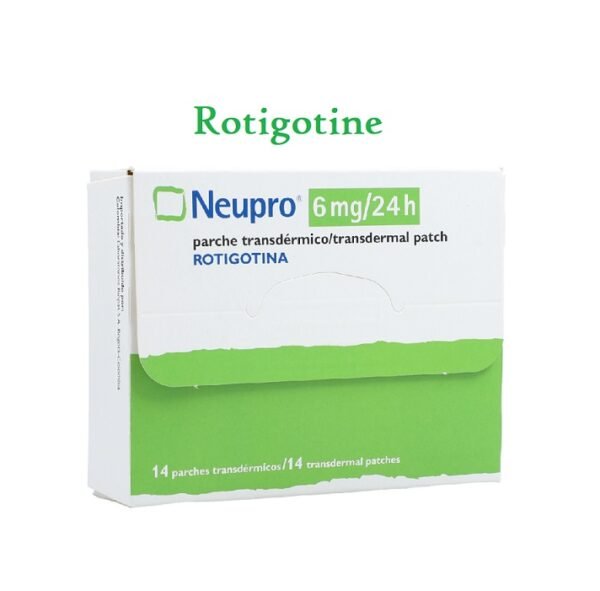
Rotigotine (Neupro) is available as a transdermal patch that is used in the treatment of patients with Parkinson's disease and restless legs syndrome. Parkinson's disease is a neurodegenerative disease that is caused by a deficiency of dopamine in the substantia nigra. It manifests usually in older individuals with pill-rolling tremors, rigidity, and bradykinesia (slow to move). Restless legs syndrome is a condition in which individuals have an urge to move the legs (usually at night). This is often accompanied by an uncomfortable sensation. It is thought to have a genetic predisposition in most individuals. Other mechanisms include iron depletion in the central nervous system and dopaminergic dysfunction.
Rotigotine Uses:
-
Parkinson disease:
- Used for treating Parkinson's disease.
-
Restless legs syndrome:
- Also used for treating moderate to severe primary restless legs syndrome.
Rotigotine (Neupro) Dose in Adults
Rotigotine (Neupro) Dose in the treatment of Parkinson disease: Topical: Transdermal:
-
Early-stage:
- Initial: Apply 2 mg/24 hours patch once a day; dose may be increased by 2 mg/24 hours weekly, based on clinical response and tolerability;
- The lowest effective dose is 4 mg/24 hours (the manufacturer has recommended a maximum dose of 6 mg/24 hours; clinical trials have been done on higher doses [eg, 8 mg/24 hours].
-
Advanced-stage:
- Initial: Apply 4 mg/24 hours patch once a day; dose may be increased by 2 mg/24 hours weekly, based on clinical response and tolerability.
- 8 mg/24 hours is the recommended dose. A maximum dose of up to 16 mg/24 hours was used in clinical trials.
-
Discontinuation of treatment in Parkinson disease:
- Decrease by ≤2 mg/24 hours preferably every other day until complete withdrawal
Rotigotine (Neupro) Dose in the treatment of Restless legs syndrome (RLS): Topical: Transdermal:
- Initial: Apply 1 mg/24 hours patch once a day;
- The dose may be increased by 1 mg/24 hours weekly, based on clinical response and tolerability;
- 1 mg/24 hours is the lowest effective dose. The maximum dose is 3 mg/24 hours.
-
Discontinuation of treatment for RLS:
- Decrease by 1 mg/24 hours preferably every other day until complete withdrawal
Dose in Children:
Not indicated.
Pregnancy Risk Category: C
- There is limited information available on the use of rotigotine during pregnancy.
- According to available guidelines, there is not enough evidence to recommend rotigotine use in pregnant women with Parkinson's or restless leg syndrome.
Use while breastfeeding
- It is unknown if breast milk secretes rotigotine.
- It can cause a decrease of prolactin secretion, and possibly inhibit lactation.
- According to the manufacturer the decision to breastfeed during therapy should consider the risks to infants, the benefits to the mother and the benefits to the mother.
Dose in Kidney Disease:
- Mild-to-severe impairment (CrCl ≥15 mL/minute): Dosage adjustment is not necessary.
- End-stage renal disease (ESRD) requiring hemodialysis: Dosage adjustment is not necessary.
Dose in Liver disease:
- Mild-to-moderate hepatic impairment (Child-Pugh class A or B): Dosage adjustment is not necessary.
- Severe hepatic impairment: No dosage adjustments have been provided in the manufacturer's labeling (has not been studied).
Common Side Effects of Rotigotine (Neupro):
-
Cardiovascular:
- Systolic Hypotension
- Orthostatic Hypotension
- Peripheral Edema
-
Central Nervous System:
- Drowsiness
- Dizziness
- Headache
- Fatigue
- Malaise
- Sleep Disorder
- Hallucination
-
Dermatologic:
- Hyperhidrosis
-
Endocrine & Metabolic:
- Decreased Serum Glucose
-
Gastrointestinal:
- Nausea
- Vomiting
-
Hematologic & Oncologic:
- Decreased Hematocrit
- Decreased Hemoglobin
-
Local:
- Application Site Reaction
-
Neuromuscular & Skeletal:
- Dyskinesia
- Asthenia
- Arthralgia
Less Common Side Effects of Rotigotine (Neupro):
-
Cardiovascular:
- Increased Diastolic Blood Pressure
- Systolic Hypertension
- Hypertension
- Atrioventricular Block
- Hypoesthesia
- Abnormal T Waves On ECG
-
Central Nervous System:
- Abnormal Dreams
- Nightmares
- Paresthesia
- Vertigo
- Depression
- Equilibrium Disturbance
- Irritability
- Sudden Onset Of Sleep
-
Dermatologic:
- Pruritus
- Erythema
-
Endocrine & Metabolic:
- Weight Gain
- Change In Libido
- Hot Flash
- Low Serum Ferritin
- Menstrual Disease
-
Gastrointestinal:
- Constipation
- Anorexia
- Xerostomia
- Diarrhea
- Dyspepsia
- Viral Gastroenteritis
-
Hematologic & Oncologic:
- Basal Cell Carcinoma
- Leukocyturia
-
Infection:
- Herpes Simplex Infection
- Influenza
-
Neuromuscular & Skeletal:
- Tremor
- Muscle Spasm
-
Ophthalmic:
- Visual Disturbance
-
Otic:
- Tinnitus
-
Renal:
- Increased Blood Urea Nitrogen
-
Respiratory:
- Nasopharyngitis
- Cough
- Nasal Congestion
- Paranasal Sinus Congestion
- Sinusitis
Contraindications to Rotigotine (Neupro):
- Hypersensitivity to rotigotine and any other component of the formulation
Warnings and precautions
-
Reactions at the application site:
- Potentially severe dose-dependent reactions have been observed at the application site. Daily rotation of the application sites has been shown to decrease the incidence of reactions.
- If there is a severe, non-application site reaction to the treatment, it should be stopped.
-
Fibrosis
- Rare cases of pleural effusion, thickening, retroperitoneal fibrisis, pericarditis and/or cardiac valveopathy in patients receiving ergot-derived dopamine antagonists have been reported.
- It is not known if rotigotine (a non-ergot-derived dopamine antagonist) could cause similar fibrotic complications.
- Sometimes, complications can be treated with therapy discontinuation. However, this is not always possible.
-
Fluid retention
- There have been reports of fluid retention and weight gain that is primarily related to the development in Parkinson's patients.
-
Hallucinations, psychotic-like behavior and hallucinations:
- Use may cause hallucinations and other psychotic-like behavior (eg, agitation or delusions, aggression).
- Patients with major psychotic disorders should avoid its use.
-
Disorders of impulse control:
- Dopamine agonists may cause compulsive behavior and/or loss in impulse control. This can manifest as pathological gambling, libido rises (hypersexuality) and/or binge-eating.
- It is not clear if the cause of this phenomenon is causation.
- These behaviors can be reversed by reducing or stopping therapy, according to reports. However, not all cases are affected.
-
Melanoma
- Patients with Parkinson's disease are at greater risk of developing melanoma. However, it is not known if there is a drug causality or other factors that contribute to the risk.
- Monitor patients receiving any type of therapy closely and conduct periodic skin checks.
-
Orthostatic hypotension
- Dopamine agonists may cause orthostatic hypotension or syncope; Parkinson's patients have a reduced ability to respond to postural challenges.
- Patients at high risk for hypotension (such patients who are taking antihypertensive medications) and those with low tolerance to transient hypotensive episodes (cardiovascular disease, cerebrovascular disease) should be used with caution.
- Parkinson's and RLS patients who are being treated with dopaminergic antagonists should be monitored for signs and symptoms such as postural hypotension. This is especially true if the dose is increased.
-
Somnolence
- It is common to experience somnolence when you use it..
- Additionally, it has been reported that people fall asleep while performing daily activities, such as driving, without any warning signs.
- Daytime somnolence and pre-existing sleep disorders should be monitored.
- Patients should be aware that driving or operating machinery requires mental alertness.
- Patients who are taking other CNS depressants and psychoactive agents should not use this product. If you experience significant daytime sleepiness, or episodes of falling asleep, discontinue use.
- The effects may be amplified by sedative drugs and ethanol.
-
Cardiovascular disease
- Pre-existing heart disease patients should be cautious as the therapy can cause blood pressure increases (as well orthostatic hypotension) that may be significant (>40mm Hg or >=20mm Hg increase in diastolic or systolic measurements respectively), increased heart rate, syncope and weight gain/fluid retention.
-
Dyskinesia
- Patients with dyskinesia should be cautious as the therapy could cause or exacerbate dyskinesia.
Rotigotine: Drug Interaction
|
Alcohol (Ethyl) |
May enhance the sedative effect of Rotigotine. |
|
Alfuzosin |
May enhance the hypotensive effect of Blood Pressure Lowering Agents. |
|
Blood Pressure Lowering Agents |
May enhance the hypotensive effect of HypotensionAssociated Agents. |
|
Brimonidine (Topical) |
May enhance the hypotensive effect of Blood Pressure Lowering Agents. |
|
Bromopride |
May diminish the therapeutic effect of Anti-Parkinson Agents (Dopamine Agonist). |
|
BuPROPion |
Anti-Parkinson Agents (Dopamine Agonist) may enhance the adverse/toxic effect of BuPROPion. |
|
CNS Depressants |
May enhance the sedative effect of Rotigotine. |
|
Diazoxide |
May enhance the hypotensive effect of Blood Pressure Lowering Agents. |
|
DULoxetine |
Blood Pressure Lowering Agents may enhance the hypotensive effect of DULoxetine. |
|
Herbs (Hypotensive Properties) |
May enhance the hypotensive effect of Blood Pressure Lowering Agents. |
|
Hypotension-Associated Agents |
Blood Pressure Lowering Agents may enhance the hypotensive effect of Hypotension-Associated Agents. |
|
Levodopa-Containing Products |
Blood Pressure Lowering Agents may enhance the hypotensive effect of Levodopa-Containing Products. |
|
Lormetazepam |
May enhance the hypotensive effect of Blood Pressure Lowering Agents. |
|
Methylphenidate |
May enhance the adverse/toxic effect of Anti-Parkinson Agents (Dopamine Agonist). |
|
Metoclopramide |
May diminish the therapeutic effect of Anti-Parkinson Agents (Dopamine Agonist). |
|
Molsidomine |
May enhance the hypotensive effect of Blood Pressure Lowering Agents. |
|
Naftopidil |
May enhance the hypotensive effect of Blood Pressure Lowering Agents. |
|
Nicergoline |
May enhance the hypotensive effect of Blood Pressure Lowering Agents. |
|
Nicorandil |
May enhance the hypotensive effect of Blood Pressure Lowering Agents. |
|
Nitroprusside |
Blood Pressure Lowering Agents may enhance the hypotensive effect of Nitroprusside. |
|
Pentoxifylline |
May enhance the hypotensive effect of Blood Pressure Lowering Agents. |
|
Pholcodine |
Blood Pressure Lowering Agents may enhance the hypotensive effect of Pholcodine. |
|
Phosphodiesterase 5 Inhibitors |
May enhance the hypotensive effect of Blood Pressure Lowering Agents. |
|
Prostacyclin Analogues |
May enhance the hypotensive effect of Blood Pressure Lowering Agents. |
|
Quinagolide |
May enhance the hypotensive effect of Blood Pressure Lowering Agents. |
|
Solriamfetol |
Anti-Parkinson Agents (Dopamine Agonist) may enhance the hypertensive effect of Solriamfetol. |
|
Amifostine |
Blood Pressure Lowering Agents may enhance the hypotensive effect of Amifostine. Management: When amifostine is used at chemotherapy doses, blood pressure lowering medications should be withheld for 24 hours prior to amifostine administration. If blood pressure lowering therapy cannot be withheld, amifostine should not be administered. |
|
Antipsychotic Agents (First Generation [Typical]) |
May diminish the therapeutic effect of AntiParkinson Agents (Dopamine Agonist). Anti-Parkinson Agents (Dopamine Agonist) may diminish the therapeutic effect of Antipsychotic Agents (First Generation [Typical]). Management: Avoid concomitant therapy if possible and monitor for decreased effects of both agents when these combinations cannot be avoided. Atypical antipsychotics such as clozapine and quetiapine may be less likely to reduce the effects of anti-Parkinson agents. |
|
Antipsychotic Agents (Second Generation [Atypical]) |
May diminish the therapeutic effect of AntiParkinson Agents (Dopamine Agonist). Management: Consider using an alternative antipsychotic agent when possible in patients with Parkinson disease. If an atypical antipsychotic is necessary, consider using clozapine or quetiapine, which may convey the lowest interaction risk. |
|
Obinutuzumab |
May enhance the hypotensive effect of Blood Pressure Lowering Agents. Management: Consider temporarily withholding blood pressure lowering medications beginning 12 hours prior to obinutuzumab infusion and continuing until 1 hour after the end of the infusion. |
|
Alizapride |
May diminish the therapeutic effect of Anti-Parkinson Agents (Dopamine Agonist). |
|
Amisulpride |
May diminish the therapeutic effect of Anti-Parkinson Agents (Dopamine Agonist). Anti-Parkinson Agents (Dopamine Agonist) may diminish the therapeutic effect of Amisulpride. |
|
Bromperidol |
Blood Pressure Lowering Agents may enhance the hypotensive effect of Bromperidol. Bromperidol may diminish the hypotensive effect of Blood Pressure Lowering Agents. |
|
Sulpiride |
May diminish the therapeutic effect of Anti-Parkinson Agents (Dopamine Agonist). |
Monitoring parameters:
- Blood pressure (including orthostatic)
- Daytime alertness;
- Skin evaluations, periodically (melanoma development)
How to administer Rotigotine?
Transdermal patch
- Apply the patch to dry, hairless, intact, healthy skin areas on the abdomen, hips, flank, shoulder, and upper arms daily. Before using the patch, remove it from its pouch and press the patch onto the skin for about 30 seconds.
- Rotate the application sites daily. You should not apply to the same site more than once in 14 days.
- Avoid exposing the patch to heat sources such as heat lamps, heat lamps, heating pads, electric blankets, heat lamps, hot tubs, or direct sunlight. The area should be shaved at least 3 days before applying the patch. A new patch should immediately be applied to any area that falls off if the patch is not adhered properly.
Mechanism of action of Rotigotine:
- It acts as a non-ergot D1, D2 and D3 dopamine agonist.
- It is unknown what causes rotigotine to act.
- However, stimulation of D2 autoreceptors in the brain's substantianigra results in enhanced dopaminergic transmission in motor areas of basal ganglia.
Protein binding: Almost 90%
Metabolism: Extensively metabolized via conjugation and N-dealkylation; metabolism is catalyzed by multiple CYP isoenzymes, sulfotransferases, and two UDP-glucuronosyltransferases.
Half-life elimination: ~5 to 7 hours after removal of the patch
Time to peak, plasma: 15 to 18 hours; can occur 4 to 27 hours post application
Excretion:
- Urine (almost 71% as inactive conjugates and metabolites, <1% as unchanged drug)
- Feces (almost 23%)
International Brand Names of Rotigotine:
- Neupro
- Leganto
- Nubrenza
Rotigotine Brand Names in Pakistan:
No Brands Available in Pakistan.
.png)