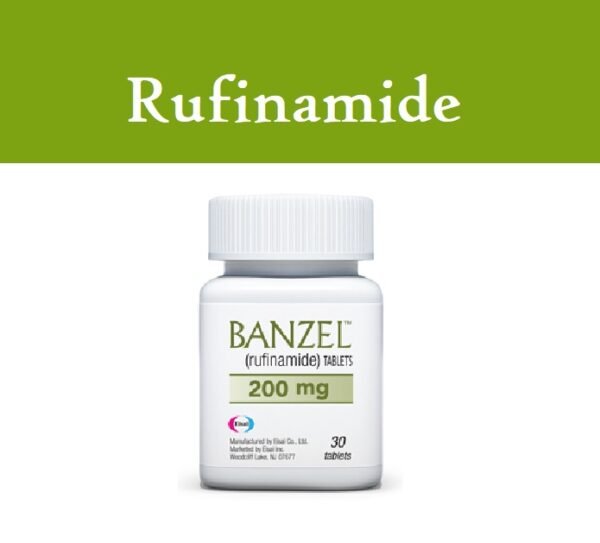
Rufinamide (Banzel) is an orally available antiepileptic medicine that is used as a second-line medicine to treat patients with Lennox-Gastaut syndrome. Lennox-Gastaut Syndrome is a severe form of childhood epilepsy that is characterized by repeated seizures and mental retardation.
Rufinamide Uses:
-
Lennox-Gastaut syndrome:
- Used as an adjunctive treatment of seizures associated with Lennox-Gastaut syndrome in adults and children 1 year and older
Rufinamide (Banzel) Dose in Adults
Rufinamide (Banzel) Dose in the treatment of Lennox-Gastaut syndrome (adjunctive):
- Oral: 400 to 800 mg daily in 2 equally divided doses; dose should be increased by 400 to 800 mg daily every other day to a maximum dose of 3,200 mg daily in 2 equally divided doses
Note: Therapy should be discontinued gradually to minimize the potential of increased seizure frequency unless a more rapid withdrawal is required due to safety concerns. Trials have shown that reducing the dose by approximately 25% every 2 days was effective.
-
Dosage adjustment for concomitant medications:
- Valproate: Starting dose should be <400 mg/day
Rufinamide (Banzel) Dose in Childrens
Rufinamide (Banzel) Dose in the treatment of Lennox-Gastaut syndrome (adjunctive):
-
Children and Adolescents <17 years:
- P/O: Initial: 10 mg/kg/day in 2 equally divided doses; dose should be increased by ~10 mg/kg increments every other day to a target daily dose of 45 mg/kg/day in 2 equally divided doses; maximum daily dose: 3,200 mg/day; effectiveness of doses lower than the target dose is unknown
-
Adolescents ≥17 years:
- P/O: Initial: 400 to 800 mg/day in 2 equally divided doses; dose should be increased by 400 to 800 mg daily every other day to a maximum daily dose of 3,200 mg/day in 2 equally divided doses; effectiveness of doses lower than 3,200 mg/day is unknown
-
Discontinuation of therapy:
-
Children and Adolescents:
- Therapy should be discontinued gradually to minimize the potential of increased seizure frequency unless a more rapid withdrawal is required because of safety concerns. The trials have shown that reducing the dose by approximately 25% every 2 days was effective.
-
-
Dosing adjustment for concomitant valproate:
-
Children and Adolescents:
- P/O: Initial dose should be <10 mg/kg/day (pediatric patients less than 17 years) or <400 mg/day (adolescents ≥17 years)
-
Pregnancy Risk Category: C
- Studies on animal reproduction have shown adverse effects. Concurrent rufinamide may reduce the effectiveness of hormonal contraceptives, making it more difficult to use hormonal contraceptives.
- Patients who were exposed to rufinamide in pregnancy should call 1-888-233-2334 to register for the AED Pregnancy Registry. Further information can be found at www.aedpregnancyregistry.org.
Use while breastfeeding
- Breast milk is not known to contain any excretions, but it could be.
- The drug can cause serious adverse reactions in nursing infants.
- Therefore, the manufacturer recommends that the mother decide whether to stop nursing or discontinue using the drug.
- This decision is made considering the importance of the mother's treatment.
Dose in Kidney Disease:
- CrCl <30 mL/minute: Dosage adjustment not necessary.
- Hemodialysis: No dosage adjustments have been provided in the manufacturer's labeling. However, dosage adjustment should be considered for loss of drug.
Dose in Liver disease:
- Mild to moderate impairment (Child-Pugh score 5 to 9): Use cautiously.
- Severe impairment (Child-Pugh score 10 to 15): No dosage adjustments have been provided in the manufacturer's labeling (has not been studied); not recommended for use.
Common Side Effects of Rufinamide (Banzel):
-
Cardiovascular:
- Shortened Qt Interval
-
Central Nervous System:
- Headache
- Drowsiness
- Dizziness
- Fatigue
-
Gastrointestinal:
- Vomiting
- Nausea
Less Common Side Effects of Rufinamide (Banzel):
-
Central Nervous System:
- Ataxia
- Status Epilepticus
- Aggressive Behavior
- Anxiety
- Disturbance In Attention
- Hyperactivity
- Vertigo
- Abnormal Gait
- Convulsions
-
Dermatologic:
- Skin Rash
- Pruritus
-
Gastrointestinal:
- Decreased Appetite
- Constipation
- Dyspepsia
- Upper Abdominal Pain
- Increased Appetite
-
Hematologic & Oncologic:
- Leukopenia
- Anemia
-
Infection:
- Influenza
-
Neuromuscular & Skeletal:
- Tremor
- Back Pain
-
Ophthalmic:
- Diplopia
- Blurred Vision
- Nystagmus
-
Otic:
- Otic Infection
- Pollakiuria
-
Respiratory:
- Nasopharyngitis
- Bronchitis
- Sinusitis
Contraindication to Rufinamide (Banzel):
- Familial QT syndrome with short duration
- Canadian labeling: Additional contraindications not in US labeling
- Short QT syndrome in the family
- History or presence of a short QT interval
- Hypersensitivity to rufinamide, triazole derivatives or any other component of the formulation
Warnings and precautions
-
Modified cardiac conduction
- It can cause a shortening in the QT interval. Patients taking concurrent drugs that reduce the QT interval should be careful.
- Patients with familial short-QT syndrome are contraindicated from using this medication.
-
CNS effects
- There have been many adverse CNS events associated with the use of it. The most notable were cognitive symptoms (including fatigue or somnolence) and coordination abnormalities (including gait disturbances, dizziness and ataxia).
- It is important to warn patients about tasks that require mental alertness, such as driving or operating machinery.
-
Multiorgan hypersensitivity reactions
- Multiorgan hypersensitivity reactions, which can be fatal and sometimes deadly, have been reported. Also known as drug reactions with Eosinophilia (DRESS) and systemic symptoms (DRESS), they are potentially serious. You should be aware of signs and symptoms such as fever, rash or lymphadenopathy. This could also occur in conjunction with other organ system involvement, such as myocarditis, hepatitis (hepatitis), nephritis (hematological abnormalities), myocarditis (myocarditis), myositis (myocarditis). If signs and symptoms are detected, immediate evaluation is required. This may require the discontinuation of therapy and/or conversion to an alternate treatment.
-
Dermatologic reactions
- Stevens-Johnson syndrome (SJS), which can lead to severe dermatologic reactions, has been reported. These reactions could prove fatal. Patients should be closely monitored for any signs and symptoms.
-
Leukopenia
- A decreased number of white blood cells was reported during treatment.
-
Suicidal thoughts:
- A pooled analysis of antiepileptic trials, regardless of their indication, has shown an increase of the risk of suicidal thought/behavior. The incidence rate is 0.43% for patients who received anti-epileptics and 0.24% for patients who received placebo. This risk of suicidal behavior can be observed as soon as one week after the initiation of the drug. It continues throughout the trial (most trials last less than 24 weeks).
- Patients with changes in behavior that could indicate depression or suicidal thoughts should be closely monitored. If symptoms develop, health care providers should be notified immediately.
-
Hepatic impairment
- Patients with mild to moderate impairment should be cautious; patients with severe impairment are not advised.
Rufinamide: Drug Interaction
|
Alcohol (Ethyl) |
May enhance the adverse/toxic effect of Rufinamide. Specifically, sleepiness and dizziness may be enhanced. |
|
CarBAMazepine |
Rufinamide may decrease the serum concentration of CarBAMazepine. CarBAMazepine may decrease the serum concentration of Rufinamide. |
|
CloZAPine |
CYP3A4 Inducers (Weak) may decrease the serum concentration of CloZAPine. |
|
CNS Depressants |
Rufinamide may enhance the adverse/toxic effect of CNS Depressants. Specifically, sleepiness and dizziness may be enhanced. |
|
Fosphenytoin |
May decrease the serum concentration of Rufinamide. Rufinamide may increase the serum concentration of Fosphenytoin. |
|
Lacosamide |
Antiepileptic Agents (Sodium Channel Blockers) may enhance the adverse/toxic effect of Lacosamide. Specifically the risk for bradycardia, ventricular tachyarrhythmias, or a prolonged PR interval may be increased. |
|
NiMODipine |
CYP3A4 Inducers (Weak) may decrease the serum concentration of NiMODipine. |
|
PHENobarbital |
Rufinamide may increase the serum concentration of PHENobarbital. PHENobarbital may decrease the serum concentration of Rufinamide. |
|
Phenytoin |
Rufinamide may increase the serum concentration of Phenytoin. Phenytoin may decrease the serum concentration of Rufinamide. |
|
Primidone |
May decrease the serum concentration of Rufinamide. |
|
Ethinyl Estradiol |
Rufinamide may decrease the serum concentration of Ethinyl Estradiol. |
|
Norethindrone |
Rufinamide may decrease the serum concentration of Norethindrone. |
|
Valproate Products |
May increase the serum concentration of Rufinamide. Management: Initiate rufinamide at a dose less than 10 mg/kg/day (children) or 400 mg/day (adults) in patients receiving valproic acid. In patients receiving rufinamide, initiate valproic acid at a low dose and titrate based on clinical response. |
Monitoring parameters:
- Seizure (including frequency and duration)
- Serum levels of concurrent anticonvulsants
- Suicidality (eg, suicidal thoughts, depression, behavioral changes)
- Rash (may indicate multi-organ hypersensitivity reactions)
How to administer Rufinamide (Banzel)?
Oral: Should be administered with a meal. May swallow as a whole, split in half or crush the tablet. Administer the oral suspension using the provided adapter and calibrated oral syringe; shake well before each dose.
Mechanism of action of Rufinamide (Banzel):
- It is a triazole derivative antiepileptic with an undetermined mechanism of action.
- It causes in vitro prolongation of the active state of sodium channels, which limits repetition firing of sodium-dependent actions potentials and mediates anticonvulsant effect.
Note:
- Pharmacokinetic data in pediatric patients (1 to 17 years) is similar to adult data.
Absorption: Absorption is slow & extensive (≥85% is absorbed); increases with food.
Protein binding: 34%, primarily to albumin (27%)
Metabolism: Extensively metabolized via carboxylesterase-mediated hydrolysis of the carboxylamide group to CGP 47292 (inactive metabolite); causes weak inhibition of CYP2E1 and weak inductionof CYP3A4
Bioavailability: Extent decreased with increased dose; oral tablets and oral suspension have equal bioavailability.
Half-life elimination: ~6 - 10 hours
Time to peak, plasma: 4 - 6 hours
Excretion: 85% excreted in urine ( ~66% as CGP 47292, 2% as unchanged drug)
International Brand Names of Rufinamide:
- Banzel
- Inovelon
- Rufikem
- Saikel
Rufinamide Brand Names in Pakistan:
No Brands Available in Pakistan.
.png)