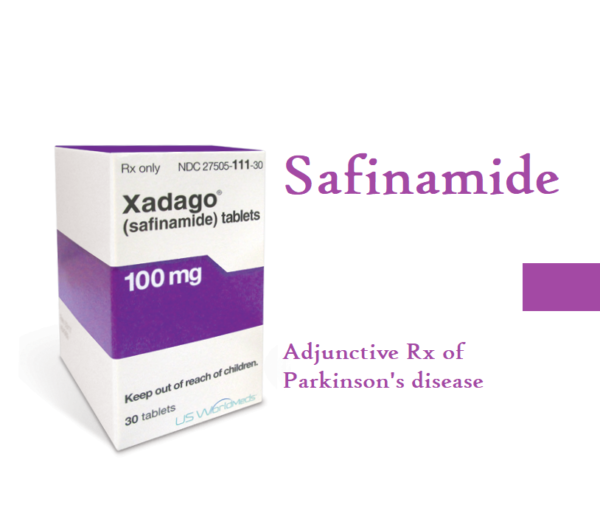
Safinamide (Xadago) is a selective inhibitor of the MAO-B enzyme (at doses not exceeding 100 mg per day). It is used in the treatment of patients with Parkinson's disease in combination with levodopa/carbidopa.
Safinamide Uses:
-
Parkinson disease:
- It is used as adjunctive therapy (to levodopa/carbidopa) in patients with Parkinson's disease (PD) who are experiencing "off" episodes.
- Limitations of use: It has not been shown to be effective when used as monotherapy for the treatment of Parkinson's' disease.
Safinamide (Xadago) Dose in Adults
Safinamide (Xadago) Dose in the treatment of Parkinson disease:
- 50 mg orally once a day.
- The dose may be increased after 2 weeks to 100 mg once a day.
-
Discontinuation of therapy:
- Prior to treatment discontinuation, reduce the dose to 50 mg for one week.
Use in Children:
Not indicated.
Pregnancy Risk Factor C
- Animal reproduction studies have shown adverse pregnancy outcomes.
Use while breastfeeding
- It is unknown if the drug is found in breast milk. However, the manufacturer recommends that breastfeeding be stopped or the drug should not be used because of possible adverse drug reactions.
Dose in Kidney Disease:
There are no dosage adjustments provided in the manufacturer's labeling.
Dose in Liver disease:
- Mild impairment (Child-Pugh class A):
- No dosage adjustment is necessary.
- Moderate impairment (Child-Pugh class B):
- The maximum dose is 50 mg once a day.
- Severe impairment (Child-Pugh class C):
- Its use is contraindicated in these patients.
Common Side Effects of Safinamide (Xadago):
-
Neuromuscular & skeletal:
- Dyskinesia
Less Common Side Effects of Safinamide (Xadago):
-
Cardiovascular:
- Hypertension
- Orthostatic Hypotension
-
Central Nervous System:
- Falling
- Insomnia
- Anxiety
-
Gastrointestinal:
- Nausea
- Dyspepsia
-
Hepatic:
- Increased Serum ALT
- Increased Serum AST
-
Respiratory:
- Cough
Contraindications to Safinamide (Xadago):
- Hypersensitivity to safinamide and any other component of the formulation (eg, swelling of your tongue or oral mucosa or dyspnea).
- Severe liver impairment (Child Puugh class C);
- Use of CNS stimulants such as methylphenidate, amphétamine and their derivatives or dextromethorphan in conjunction with methylphenidate;
- MAO inhibitors should not be used in conjunction with MAO inhibitors. MAO inhibitors are drugs that inhibit MAO enzyme's ability to produce a large amount of metabolites. These include:
- Linezolid
- Opioids (eg meperidine and methadone, propoxyphene or tramadol)
- Serotonin-norepinephrine Reuptake Inhibitors
- Tricyclic, tricyclic or tetracyclic antidepressants
- Cyclobenzaprine is also known as
- St John's Wort.
Canadian labeling: Additional contraindications not in US labeling
- Ocular (ophthalmic), disorders such as albinism, retinal damage, uveitis or inherited retinopathy can all lead to active retinopathy. This includes diabetic patients with progressive severe diabetic retinopathy.
Warnings and precautions
-
Depression in the CNS:
- CNS depression may result in mental or physical impairments. The drug should not be used for patients who are unable to perform tasks such as driving or operating heavy machinery.
- Patients have reported sleeping spells, sometimes without warning, during daily activities.
- These symptoms should be noted and monitored. Patients with severe symptoms should be asked not to continue treatment. Patients should not drive or engage in dangerous activities.
-
Dyskinesia
- The treatment may cause new-onset dyskinesia or worsening preexisting dyskinesia. The symptoms may improve with dosage reduction.
-
Hypertension
- Preexisting hypertension may be exacerbated by treatment. Patients should be closely monitored for signs of hypertension, especially new-onset hypertension.
- Important to remember that if the daily dose is more than 100 mg, the drug's specificity for MAO receptors is lost. This increases the risk of hypertension.
-
Disorders of impulse control:
- Compulsive behavior and loss of impulse control have been linked to the use of dopaminergic drugs. Patients may experience abnormal behaviors such as hypersexuality (increased sexual desire), pathological gambling and binge eating.
- Although the exact cause of these symptoms has not been proven, it is possible that patients with underlying behavioral issues may be more at risk.
- Treatment discontinuation or a decrease in dose may lead to behavioral compulsive symptoms that improve.
-
Serotonin syndrome
- Monitor patients for signs and symptoms that could indicate serotonin syndrome, such as mental state changes (agitation and delirium), autonomic symptoms like sweating, labile pressure and tachycardia, gastrointestinal symptoms (vomiting and diarrhea), and neuromuscular symptoms like myoclonus and rigidity.
- Concomitant serotonergic medication (SSRIs/SNRIs/triptans, TCAs), fentanyl/buspirone, fentanyl/buspirone, St John's wort and tryptophan) should be avoided. Patients on MAO inhibitors, linezolid or methylene blue should also be avoided
- If you notice any of these symptoms, it is important to stop all treatment immediately.
-
Hepatic impairment
- Patients suffering from advanced liver disease should not take the drug. Patients with mild to moderate liver impairment should avoid the drug.
-
Ophthalmic disease
- Patients undergoing treatment should be monitored regularly for any changes in their eyesight. Patients with ophthalmic conditions such as:
- Patients who have a history retinal or macular damage.
- Uveitis
- Retinal conditions that are genetic
- Albinism
- Retinitis pigmentosa
- Any form of active retinopathy, or
- People with a history of hereditary retinal disease.
- Patients undergoing treatment should be monitored regularly for any changes in their eyesight. Patients with ophthalmic conditions such as:
-
Psychotic disorder
- Use of it may lead to psychotic episodes. Patients with preexisting major psychotic disorders may experience new-onset psychosis. If you notice symptoms such as psychosis, such as hallucinations or other psychotic behavior after treatment initiation, it is important to discontinue that treatment immediately.
Safinamide: Drug Interaction
|
Altretamine |
May enhance the orthostatic hypotensive effect of Monoamine Oxidase Inhibitors. |
|
Amifampridine |
Agents With Seizure Threshold Lowering Potential may enhance the neuroexcitatory and/or seizure-potentiating effect of Amifampridine. |
|
Antiemetics (5HT3 Antagonists) |
May enhance the serotonergic effect of Serotonin Modulators. This could result in serotonin syndrome. |
|
Antipsychotic Agents |
Serotonin Modulators may enhance the adverse/toxic effect of Antipsychotic Agents. Specifically, serotonin modulators may enhance dopamine blockade, possibly increasing the risk for neuroleptic malignant syndrome. Antipsychotic Agents may enhance the serotonergic effect of Serotonin Modulators. This could result in serotonin syndrome. |
|
Beta2-Agonists |
Monoamine Oxidase Inhibitors may enhance the adverse/toxic effect of Beta2Agonists. |
|
Betahistine |
Monoamine Oxidase Inhibitors may increase the serum concentration of Betahistine. |
|
Blood Glucose Lowering Agents |
Monoamine Oxidase Inhibitors may enhance the hypoglycemic effect of Blood Glucose Lowering Agents. |
|
Brimonidine (Ophthalmic) |
Monoamine Oxidase Inhibitors may enhance the adverse/toxic effect of Brimonidine (Ophthalmic). Monoamine Oxidase Inhibitors may increase the serum concentration of Brimonidine (Ophthalmic). |
|
Brimonidine (Topical) |
Monoamine Oxidase Inhibitors may enhance the adverse/toxic effect of Brimonidine (Topical). Monoamine Oxidase Inhibitors may increase the serum concentration of Brimonidine (Topical). |
|
Cerebrolysin |
May enhance the adverse/toxic effect of Monoamine Oxidase Inhibitors. |
|
Chlorphenesin Carbamate |
May enhance the adverse/toxic effect of Monoamine Oxidase Inhibitors. |
|
Codeine |
Monoamine Oxidase Inhibitors may enhance the adverse/toxic effect of Codeine. |
|
Dihydrocodeine |
May enhance the serotonergic effect of Monoamine Oxidase Inhibitors. This could result in serotonin syndrome. |
|
Domperidone |
Monoamine Oxidase Inhibitors may enhance the adverse/toxic effect of Domperidone. Monoamine Oxidase Inhibitors may diminish the therapeutic effect of Domperidone. Domperidone may diminish the therapeutic effect of Monoamine Oxidase Inhibitors. |
|
Doxapram |
Monoamine Oxidase Inhibitors may enhance the hypertensive effect of Doxapram. |
|
EPINEPHrine (Nasal) |
Monoamine Oxidase Inhibitors may enhance the hypertensive effect of EPINEPHrine (Nasal). |
|
Epinephrine (Racemic) |
Monoamine Oxidase Inhibitors may enhance the hypertensive effect of Epinephrine (Racemic). |
|
EPINEPHrine (Systemic) |
Monoamine Oxidase Inhibitors may enhance the hypertensive effect of EPINEPHrine (Systemic). |
|
Esketamine |
May enhance the hypertensive effect of Monoamine Oxidase Inhibitors. |
|
Isoniazid |
Safinamide may enhance the adverse/toxic effect of Isoniazid. Specifically, there is an increased risk for hypertension. |
|
Metaraminol |
Monoamine Oxidase Inhibitors may enhance the hypertensive effect of Metaraminol. |
|
Metaxalone |
May enhance the serotonergic effect of Serotonin Modulators. This could result in serotonin syndrome. |
|
Metoclopramide |
Serotonin Modulators may enhance the adverse/toxic effect of Metoclopramide. This may be manifest as symptoms consistent with serotonin syndrome or neuroleptic malignant syndrome. |
|
Norepinephrine |
Monoamine Oxidase Inhibitors may enhance the hypertensive effect of Norepinephrine. |
|
Opioid Agonists |
May enhance the serotonergic effect of Serotonin Modulators. This could result in serotonin syndrome. |
|
Pipamperone [INT] |
May diminish the therapeutic effect of Anti-Parkinson Agents (Monoamine Oxidase Inhibitor). Anti-Parkinson Agents (Monoamine Oxidase Inhibitor) may diminish the therapeutic effect of Pipamperone [INT]. |
|
Risk Factor D (Consider therapy modification) |
|
|
Benzhydrocodone |
May enhance the serotonergic effect of Monoamine Oxidase Inhibitors. This could result in serotonin syndrome. Management: The use of benzhydrocodone is not recommended for patients taking monoamine oxidase inhibitors (MAOIs) or within 14 days of MAOI discontinuation. |
|
COMT Inhibitors |
May enhance the adverse/toxic effect of Monoamine Oxidase Inhibitors. |
|
DOPamine |
Monoamine Oxidase Inhibitors may enhance the hypertensive effect of DOPamine. Management: Initiate dopamine at no greater than one-tenth (1/10) of the usual dose in patients who are taking (or have taken within the last 2 to 3 weeks) monoamine oxidase inhibitors. Monitor for an exaggerated hypertensive response to dopamine. |
|
HYDROcodone |
Monoamine Oxidase Inhibitors may enhance the adverse/toxic effect of HYDROcodone. Management: Consider alternatives to this combination when possible. |
|
Iohexol |
Agents With Seizure Threshold Lowering Potential may enhance the adverse/toxic effect of Iohexol. Specifically, the risk for seizures may be increased. Management: Discontinue agents that may lower the seizure threshold 48 hours prior to intrathecal use of iohexol. Wait at least 24 hours after the procedure to resume such agents. In nonelective procedures, consider use of prophylactic anticonvulsants. |
|
Iomeprol |
Agents With Seizure Threshold Lowering Potential may enhance the adverse/toxic effect of Iomeprol. Specifically, the risk for seizures may be increased. Management: Discontinue agents that may lower the seizure threshold 48 hours prior to intrathecal use of iomeprol. Wait at least 24 hours after the procedure to resume such agents. In nonelective procedures, consider use of prophylactic anticonvulsants. |
|
Iopamidol |
Agents With Seizure Threshold Lowering Potential may enhance the adverse/toxic effect of Iopamidol. Specifically, the risk for seizures may be increased. Management: Discontinue agents that may lower the seizure threshold 48 hours prior to intrathecal use of iopamidol. Wait at least 24 hours after the procedure to resume such agents. In nonelective procedures, consider use of prophylactic anticonvulsants. |
|
Levodopa-Containing Products |
May enhance the adverse/toxic effect of Monoamine Oxidase Inhibitors. Of particular concern is the development of hypertensive reactions when levodopa is used with nonselective MAOI. Management: The concomitant use of nonselective monoamine oxidase inhibitors (MAOIs) and levodopa is contraindicated. Discontinue the nonselective MAOI at least two weeks prior to initiating levodopa. Monitor patients taking a selective MAOIs and levodopa. |
|
Lithium |
Monoamine Oxidase Inhibitors may enhance the adverse/toxic effect of Lithium. Management: This combination should be undertaken with great caution. When combined treatment is clinically indicated, monitor closely for signs of serotonin toxicity/serotonin syndrome. |
|
OxyCODONE |
May enhance the serotonergic effect of Monoamine Oxidase Inhibitors. This could result in serotonin syndrome. Management: Seek alternatives when possible. Avoid use of oxycodone/naltrexone during and within 14 days after monoamine oxidase inhibitor treatment. Non-US labeling for some oxycodone products states that such use is contraindicated. |
|
Pindolol |
Monoamine Oxidase Inhibitors may enhance the hypotensive effect of Pindolol. Management: Canadian labeling for pindolol states that concurrent use with a monoamine oxidase inhibitor is not recommended. |
|
Reserpine |
Monoamine Oxidase Inhibitors may enhance the adverse/toxic effect of Reserpine. Existing MAOI therapy can result in paradoxical effects of added reserpine (e.g., excitation, hypertension). Management: Monoamine oxidase inhibitors (MAOIs) should be avoided or used with great caution in patients who are also receiving reserpine. |
|
Serotonin Modulators |
Anti-Parkinson Agents (Monoamine Oxidase Inhibitor) may enhance the serotonergic effect of Serotonin Modulators. This could result in serotonin syndrome. Management: Monitor for signs and symptoms of serotonin syndrome/serotonin toxicity if selegiline, rasagiline, or safinamide is combined with a serotonin modulator. Use of transdermal selegiline with serotonin modulators is contraindicated. Exceptions: Nicergoline. |
|
Risk Factor X (Avoid combination) |
|
|
Alcohol (Ethyl) |
May enhance the adverse/toxic effect of Monoamine Oxidase Inhibitors. |
|
Alpha-/Beta-Agonists (Indirect-Acting) |
Monoamine Oxidase Inhibitors may enhance the hypertensive effect of Alpha-/Beta-Agonists (Indirect-Acting). While linezolid is expected to interact via this mechanism, management recommendations differ from other monoamine oxidase inhibitors. Refer to linezolid specific monographs for details. |
|
Alpha1-Agonists |
Monoamine Oxidase Inhibitors may enhance the hypertensive effect of Alpha1Agonists. While linezolid is expected to interact via this mechanism, management recommendations differ from other monoamine oxidase inhibitors. Refer to linezolid specific monographs for details. |
|
Amphetamines |
Monoamine Oxidase Inhibitors may enhance the hypertensive effect of Amphetamines. While linezolid and tedizolid may interact via this mechanism, management recommendations differ from other monoamine oxidase inhibitors. Refer to monographs specific to those agents for details. |
|
Apraclonidine: |
Monoamine Oxidase Inhibitors may enhance the adverse/toxic effect of Apraclonidine. Monoamine Oxidase Inhibitors may increase the serum concentration of Apraclonidine. |
|
AtoMOXetine |
Monoamine Oxidase Inhibitors may enhance the neurotoxic (central) effect of AtoMOXetine. |
|
Atropine (Ophthalmic) |
Monoamine Oxidase Inhibitors may enhance the hypertensive effect of Atropine (Ophthalmic). |
|
Bezafibrate |
Monoamine Oxidase Inhibitors may enhance the adverse/toxic effect of Bezafibrate. |
|
Buprenorphine |
May enhance the adverse/toxic effect of Monoamine Oxidase Inhibitors. |
|
BuPROPion |
Monoamine Oxidase Inhibitors may enhance the hypertensive effect of BuPROPion. |
|
BusPIRone |
May enhance the adverse/toxic effect of Monoamine Oxidase Inhibitors. Specifically, blood pressure elevations been reported. |
|
CarBAMazepine |
May enhance the adverse/toxic effect of Monoamine Oxidase Inhibitors. Management: Avoid concurrent use of carbamazepine during, or within 14 days of discontinuing, treatment with a monoamine oxidase inhibitor. |
|
Cyclobenzaprine |
May enhance the serotonergic effect of Monoamine Oxidase Inhibitors. This could result in serotonin syndrome. |
|
Cyproheptadine |
Monoamine Oxidase Inhibitors may enhance the anticholinergic effect of Cyproheptadine. Cyproheptadine may diminish the serotonergic effect of Monoamine Oxidase Inhibitors. |
|
Dapoxetine |
May enhance the adverse/toxic effect of Serotonin Modulators. |
|
Deutetrabenazine |
Monoamine Oxidase Inhibitors may enhance the adverse/toxic effect of Deutetrabenazine. |
|
Dexmethylphenidate |
Monoamine Oxidase Inhibitors may enhance the hypertensive effect of Dexmethylphenidate. |
|
Dextromethorphan |
Monoamine Oxidase Inhibitors may enhance the serotonergic effect of Dextromethorphan. This may cause serotonin syndrome. |
|
Diethylpropion |
Monoamine Oxidase Inhibitors may enhance the hypertensive effect of Diethylpropion. |
|
Diphenoxylate |
May enhance the hypertensive effect of Monoamine Oxidase Inhibitors. |
|
EPINEPHrine (Oral Inhalation) |
Monoamine Oxidase Inhibitors may enhance the hypertensive effect of EPINEPHrine (Oral Inhalation). |
|
FentaNYL |
May enhance the serotonergic effect of Monoamine Oxidase Inhibitors. This could result in serotonin syndrome. |
|
Guanethidine |
May enhance the adverse/toxic effect of Monoamine Oxidase Inhibitors. |
|
Heroin |
Monoamine Oxidase Inhibitors may enhance the adverse/toxic effect of Heroin. |
|
HYDROmorphone |
Monoamine Oxidase Inhibitors may enhance the adverse/toxic effect of HYDROmorphone. |
|
Indoramin |
Monoamine Oxidase Inhibitors may enhance the hypotensive effect of Indoramin. |
|
Iobenguane Radiopharmaceutical Products |
Monoamine Oxidase Inhibitors may diminish the therapeutic effect of Iobenguane Radiopharmaceutical Products. Management: Discontinue all drugs that may inhibit or interfere with catecholamine transport or uptake for at least 5 biological half-lives before iobenguane administration. Do not administer these drugs until at least 7 days after each iobenguane dose. |
|
Isometheptene |
Monoamine Oxidase Inhibitors may enhance the adverse/toxic effect of Isometheptene. |
|
Levomethadone |
May enhance the adverse/toxic effect of Monoamine Oxidase Inhibitors. |
|
Levonordefrin |
Monoamine Oxidase Inhibitors may enhance the hypertensive effect of Levonordefrin. |
|
Linezolid |
Monoamine Oxidase Inhibitors may enhance the adverse/toxic effect of Linezolid. |
|
Maprotiline |
May enhance the adverse/toxic effect of Monoamine Oxidase Inhibitors. |
|
Meperidine |
Monoamine Oxidase Inhibitors may enhance the serotonergic effect of Meperidine. This may cause serotonin syndrome. |
|
Meptazinol |
Monoamine Oxidase Inhibitors may enhance the adverse/toxic effect of Meptazinol. |
|
Mequitazine |
Monoamine Oxidase Inhibitors may enhance the anticholinergic effect of Mequitazine. |
|
Methyldopa |
Monoamine Oxidase Inhibitors may enhance the adverse/toxic effect of Methyldopa. |
|
Methylene Blue |
Monoamine Oxidase Inhibitors may enhance the serotonergic effect of Methylene Blue. This could result in serotonin syndrome. |
|
Methylene Blue |
May enhance the serotonergic effect of Serotonin Modulators. This could result in serotonin syndrome. |
|
Methylphenidate |
Monoamine Oxidase Inhibitors may enhance the hypertensive effect of Methylphenidate. |
|
Mianserin |
Monoamine Oxidase Inhibitors may enhance the neurotoxic effect of Mianserin. |
|
Mirtazapine |
Monoamine Oxidase Inhibitors may enhance the neurotoxic (central) effect of Mirtazapine. While methylene blue and linezolid are expected to interact, specific recommendations for their use differ from other monoamine oxidase inhibitors. Refer to monographs specific to those agents for details. |
|
Moclobemide |
Monoamine Oxidase Inhibitors may enhance the adverse/toxic effect of Moclobemide. |
|
Monoamine Oxidase Inhibitors |
May enhance the hypertensive effect of other Monoamine Oxidase Inhibitors. Monoamine Oxidase Inhibitors may enhance the serotonergic effect of other Monoamine Oxidase Inhibitors. This could result in serotonin syndrome. |
|
Morphine (Systemic) |
Monoamine Oxidase Inhibitors may enhance the adverse/toxic effect of Morphine (Systemic). |
|
Nefopam |
Monoamine Oxidase Inhibitors may enhance the adverse/toxic effect of Nefopam. |
|
Opium |
Monoamine Oxidase Inhibitors may enhance the adverse/toxic effect of Opium. |
|
OxyMORphone |
May enhance the adverse/toxic effect of Monoamine Oxidase Inhibitors. |
|
Pheniramine |
May enhance the anticholinergic effect of Monoamine Oxidase Inhibitors. |
|
Pholcodine |
May enhance the serotonergic effect of Monoamine Oxidase Inhibitors. This could result in serotonin syndrome. |
|
Pizotifen |
Monoamine Oxidase Inhibitors may enhance the anticholinergic effect of Pizotifen. |
|
Reboxetine |
Monoamine Oxidase Inhibitors may enhance the adverse/toxic effect of Reboxetine. |
|
Selective Serotonin Reuptake Inhibitors |
Monoamine Oxidase Inhibitors may enhance the serotonergic effect of Selective Serotonin Reuptake Inhibitors. This may cause serotonin syndrome. While methylene blue and linezolid are expected to interact via this mechanism, management recommendations differ from other monoamine oxidase inhibitors. Refer to monographs specific to those agents for details. |
|
Serotonin 5-HT1D Receptor Agonists |
Monoamine Oxidase Inhibitors may decrease the metabolism of Serotonin 5-HT1D Receptor Agonists. Management: If MAO inhibitor therapy is required, naratriptan, eletriptan or frovatriptan may be a suitable 5-HT1D agonist to employ. Exceptions: Eletriptan; Frovatriptan; Naratriptan. |
|
Serotonin Reuptake Inhibitor/Antagonists |
Monoamine Oxidase Inhibitors may enhance the adverse/toxic effect of Serotonin Reuptake Inhibitor/Antagonists. While methylene blue and linezolid are expected to interact, specific recommendations for their use differ from other monoamine oxidase inhibitors. Refer to monographs specific to those agents for details. |
|
Serotonin/Norepinephrine Reuptake Inhibitors |
Monoamine Oxidase Inhibitors may enhance the serotonergic effect of Serotonin/Norepinephrine Reuptake Inhibitors. This may cause serotonin syndrome. While methylene blue and linezolid are expected to interact via this mechanism, management recommendations differ from other monoamine oxidase inhibitors. Refer to monographs specific to those agents for details. |
|
Solriamfetol |
Monoamine Oxidase Inhibitors may enhance the hypertensive effect of Solriamfetol. |
|
SUFentanil |
May enhance the adverse/toxic effect of Monoamine Oxidase Inhibitors. Specifically, the risk for serotonin syndrome or opioid toxicities (eg, respiratory depression, coma) may be increased. Management: Sufentanil should not be used with monoamine oxidase (MAO) inhibitors (or within 14 days of stopping an MAO inhibitor) due to the potential for serotonin syndrome and/or excessive CNS depression. |
|
Tapentadol |
May enhance the adverse/toxic effect of Monoamine Oxidase Inhibitors. Specifically, the additive effects of norepinephrine may lead to adverse cardiovascular effects. Tapentadol may enhance the serotonergic effect of Monoamine Oxidase Inhibitors. This could result in serotonin syndrome. |
|
Tetrabenazine |
May enhance the adverse/toxic effect of Monoamine Oxidase Inhibitors. |
|
Tetrahydrozoline (Nasal) |
Monoamine Oxidase Inhibitors may enhance the hypertensive effect of Tetrahydrozoline (Nasal). |
|
Tricyclic Antidepressants |
Monoamine Oxidase Inhibitors may enhance the serotonergic effect of Tricyclic Antidepressants. This may cause serotonin syndrome. While methylene blue and linezolid are expected to interact via this mechanism, management recommendations differ from other monoamine oxidase inhibitors. Refer to monographs specific to those agents for details. |
|
Tryptophan |
May enhance the adverse/toxic effect of Monoamine Oxidase Inhibitors. |
|
Valbenazine |
May enhance the adverse/toxic effect of Monoamine Oxidase Inhibitors. |
Monitoring parameters:
- Blood pressure;
- signs and symptoms of serotonin syndrome;
- visual changes.
How to administer Safinamide (Xadago)?
It can be administered without regard to meals at the same time of the day. It is administered in association with levodopa/carbidopa.
Mechanism of action of Safinamide (Xadago):
- It acts as an inhibitor of MAO-B enzyme.
- The brain will have higher levels of dopamine if the MAO-B enzyme is blocked.
- Dopamine's degradation is also inhibited by MAO enzymes.
- Although the exact mechanism behind Parkinson's disease symptoms is unknown, it is believed that an increase in brain dopamine levels may help to alleviate them.
Protein binding:
- About 88%
Metabolism:
- It is metabolized mainly to inactive metabolites by non-microsomal enzymes (cytosolic amidases/MAO-A)
- The enzymatic degradation by CYP3A4 and other CYP iso-enzymes plays little role in its overall biotransformation.
Bioavailability:
- 95%
Half-life elimination:
- 20 to 26 hours
Time to peak:
- 2 to 3 hours
Excretion:
- Urine (76%, primarily in the form of inactive metabolites; about 5% is excreted as unchanged)
International Brand Names of Safinamide:
- Xadago
- Onstryv
Safinamide Brand Names in Pakistan:
No Brands Available in Pakistan.
.png)


