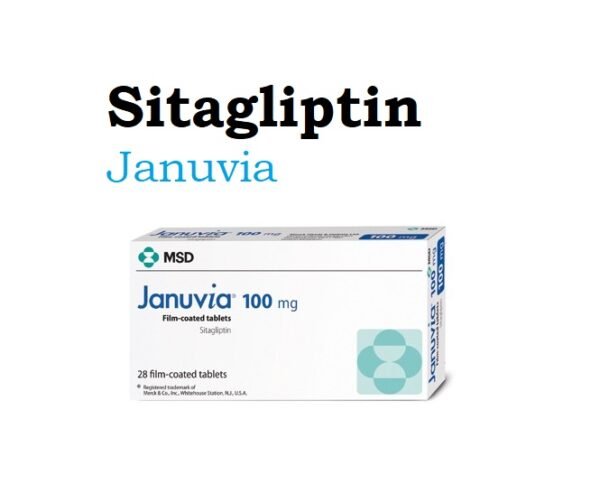
Sitagliptin (Januvia) is an orally available medicine that belongs to the class of medicines called DPP-IV (dipeptidyl peptidase IV) inhibitors. It can be used in a once-daily or twice-daily dose. Other DPP-IV inhibitors include:
Vildagliptin has a shorter half-life compared to sitagliptin. Compared to vildagliptin, sitagliptin is less effective in lowering the A1C.
Sitagliptin Uses:
-
Diabetes mellitus Type 2:
- As an adjunct to diet and exercise to optimize glycemic control in adults with type 2 diabetes mellitus, in the form of monotherapy or combination therapy.
Sitagliptin dose in Adults
Note: Due to a lack of additive glycemic benefit, adjunctive use with a glucagon-like peptide-1 (GLP-1) receptor agonist (eg, exenatide, dulaglutide) should be avoided.
Sitagliptin dose in the treatment of Diabetes mellitus:
Note:
- May be used either in combination therapy or alternative monotherapy for patients who failed to respond adequately to initial therapy with lifestyle modification and with the use of metformin or who cannot take metformin.
- The use of sitagliptin is usually limited to patients close to their glycemic goal and without cardiovascular disease, especially when there is important to minimize the risk of hypoglycemia.
- The usual sitagliptin dose ranges from 25 mg to 100 mg daily in one or two divided doses.
Sitagliptin dose in patients on concomitant insulin or insulin secretagogues:
-
- Reduction in dose of insulin and/or insulin secretagogues may be needed.
Sitagliptin dose in Childrens
Not recommended in children
Pregnancy Risk Category: B
- Maternal hyperglycemia in women with diabetes can lead to congenital anomalies and adverse effects on the fetus, neonate and mother.
- Preventing undesirable outcomes is possible by keeping maternal blood glucose and HbA1C within a close range. This will allow you to achieve your goals, while avoiding significant hypoglycemia.
- Pregnant women with diabetes should be treated with agents other than sitagliptin.
Sitagliptin can be used during breastfeeding
- There is no data to indicate if sitagliptin may be present in breast milk.
- According to the manufacturer the decision to breastfeed while undergoing treatment should be weighed against the risks to the baby and the benefits to the mother.
Sitagliptin dose in patients with kidney disease:
-
eGFR >=45mL/minute/1.73m 2
- There is no need to adjust the dosage.
-
eGFR >=30 - 45mL/minute/1.73m 2
- 50mg once per day
-
eGFR 30mL/minute/1.73m 2
- 25mg once daily
-
ESRD that requires hemodialysis, peritoneal dialysis, or both:
- 25mg once daily; do not worry about the timing of hemodialysis
Sitagliptin dose in patients with liver disease:
-
Mild to moderate impairment (Child Puugh classes A andB)
- There is no need to adjust the dosage.
-
Severe impairment (Child Puugh class C).
- The manufacturer's labeling does not contain any dosage adjustments (hasn't been studied).
Common Side Effects of Sitagliptin (Januvia):
-
Endocrine & metabolic:
- Hypoglycemia
-
Respiratory:
- Nasopharyngitis
Uncommon Side effects of Sitagliptin:
-
Gastrointestinal:
- Diarrhea
- Nausea
-
Renal:
- Increased serum creatinine
Contraindication to Sitagliptin (Januvia):
- Severe hypersensitivity to sitagliptin, or any other component of the formulation (eg anaphylaxis, edema)
Warnings and precautions
-
Arthralgia
- Dipeptidyl Peptidase-4 (DPP-4) inhibitors can cause severe and disabling pains in the joints. These symptoms may appear within a few days to years of treatment. They may disappear with discontinuation.
- If DPP-4 inhibitor therapy is reintroduced, symptoms may recur.
-
Bullous pemphigoid
- Bullous pemphigoid has been linked to DPP-4 inhibitor usage. This can be treated with either topical or systemic immunosuppressive treatment and then the DPP-4 inhibited is removed.
- Patients should be advised to immediately report any blisters or erosions.
- If bullous pemphigoid symptoms are suspected, discontinue treatment and consult a dermatologist.
-
Hypersensitivity reactions
- There have been reports of serious hypersensitivity reactions including anaphylaxis, edema and exfoliative skin reactions such as Stevens Johnson syndrome.
- If you experience hypersensitivity reactions, discontinue use.
- Generally, events are noted within the first three months of therapy. They may also occur after the first dose.
- If the patient has had angioedema from other DPP-4 inhibitors, be cautious.
-
Pancreatitis
- Use has been associated with cases of acute pancreatitis, including hemorhagic and necrotizing deaths.
- You should be aware of signs and symptoms of pancreatitis.
- If pancreatitis is suspected, stop using the medication immediately and seek appropriate treatment.
- Patients with a history or pancreatitis should be cautious. It is not known if they are at higher risk.
-
Effects on the renal system:
- A decrease in renal function can lead to acute renal failure that may require dialysis.
-
Bariatric surgery
-
Absorption altered:
- The anatomical and transit changes caused by gastric bypass surgery and Sleeve gastrectomy surgery may affect absorption.
-
Exposure to Glucagon-like peptide-1 and its therapeutic efficacy
- Monitor your pancreatitis symptoms and signs carefully
- Gastric bypass and Sleeve gastrectomy can increase endogenous production of glucagon-like Peptide-1.
- The placebo-controlled, single-dose study examined short-term sitagliptin therapy for type 2 diabetes in patients undergoing gastric bypass. It was found to be well tolerated and resulted in a modest but significant decrease in blood glucose postprandially.
-
-
Cardiovascular disease
- Heart failure has been linked to treatment with DPP-4 inhibitors in cardiovascular outcome trials of type 2 diabetic patients and patients with atherosclerotic cardio disease.
- According to the American Heart Association, sitagliptin could increase myocardial dysfunction.
- In a large randomized, double-blinded study in patients with type 2, diabetes, and established cardiovascular disease (history or major CAD, ischemic cerebral disease, or atherosclerotic peripheral arterial disease), sitagliptin was not found to be superior to placebo in the occurrences of the primary composite cardiovascular outcome (cardiovascular deaths, nonfatal MI, or hospitalization in unstable angina).
- The rate of heart failure hospitalizations did not differ between the groups.
- DPP-4 inhibitors (except saxagliptin), may be recommended by the ADA for patients with HF.
-
Renal impairment
- Patients with severe or moderate renal impairment and end-stage renal disease (ESRD), which may require hemodialysis, peritoneal dialysis, or hemodialysis should be cautious.
- In renal impairment, sitagliptin dosage adjustment is necessary.
Sitagliptin: Drug Interaction
Notice: Drug Interaction Categories
- Risk Factor CUse Combination Carefully
- Risk Factor DTake into consideration treatment modification
- Risk Factor XAvoid concurrent use
Risk Factor C (Monitor therapy). |
|
| Alpha-Lipoic acid | Antidiabetic Agents may increase the hypoglycemic effects. |
| Androgens | May increase the hypoglycemic effects of Blood Glucose Lowering Agents. Danazol is an exception. |
| Inhibitors of Angiotensin Converting Enzyme | Dipeptidyl Peptidase IV Inhibitors could increase the toxic/adverse effect of Angiotensin Converting Enzyme Inhibitors. In particular, angioedema risk may be increased. |
| Digoxin | SITagliptin could increase Digoxin serum concentrations |
| Direct-Acting Antiviral Agents for (HCV). | Antidiabetic Agents may increase the hypoglycemic effects. |
| Erdafitinib | Increased serum concentrations of P-glycoprotein/ABCB1 Substrates may be possible. |
| Guanethidine | Antidiabetic Agents may increase the hypoglycemic effects. |
| Hyperglycemia-Associated Agents | Antidiabetic Agents may have a reduced therapeutic effect. |
| Hypoglycemia-Associated Agents | Hypoglycemia-Associated Drugs can be enhanced by Antidiabetic Agents. |
| Lumacaftor | May lower the serum concentrations of P-glycoprotein/ABCB1 Substrates. Lumacaftor could increase serum levels of P-glycoprotein/ABCB1 Substrates. |
| Maitake | Might increase the hypoglycemic effects of Blood Glucose Lowing Agents. |
| Monoamine Oxidase inhibitors | Might increase the hypoglycemic effects of Blood Glucose Lowing Agents. |
| Pegvisomant | Might increase the hypoglycemic effects of Blood Glucose Lowing Agents. |
| Inducers of P-glycoprotein/ABCB1 | The serum concentrations of Pglycoprotein/ABCB1 Substrates may be decreased. Inducers of pglycoprotein may limit the distribution to certain cells/tissues/organs in which p-glycoprotein exists in high amounts (e.g. brain, T-lymphocytes and testes). . |
| P-glycoprotein/ABCB1 inhibitors | Increases serum concentrations of Pglycoprotein/ABCB1 substrates. P-glycoprotein inhibitors can also increase the distribution of pglycoprotein substrates to certain cells/tissues/organs in which p-glycoprotein exists in high amounts (e.g. brain, testes and T-lymphocytes). . |
| Prothionamide | Might increase the hypoglycemic effects of Blood Glucose Lowing Agents. |
| Quinolones | May increase the hypoglycemic effects of Blood Glucose Lowing Agents. Quinolones can decrease the therapeutic effects of Blood Glucose Lowing Agents. Quinolones may cause blood sugar control problems if used in conjunction with diabetes treatment. |
| Ranolazine | Increased serum concentrations of P-glycoprotein/ABCB1 Substrates may be possible. |
| Ritodrine | Antidiabetic Agents may have a reduced therapeutic effect. |
| Salicylates | Might increase the hypoglycemic effects of Blood Glucose Lowing Agents. |
| Selective Serotonin Reuptake inhibitors | Might increase the hypoglycemic effects of Blood Glucose Lowing Agents. |
| Thiazide and Thiazide -Like Diuretics | Antidiabetic Agents may have a reduced therapeutic effect. |
Risk Factor D (Consider therapy modifications) |
|
| Insulins | Insulins may have a hypoglycemic effect that is enhanced by dipeptidyl peptidase-IV inhibitors. Management: Patients should be monitored for hypoglycemia and a decrease in insulin dosage when starting treatment with a dipeptidyl Peptidase-IV inhibitor. |
| Sulfonylureas | Dipeptidyl Peptidase IV Inhibitors can increase the hypoglycemic effects of Sulfonylureas. Management: When initiating treatment with a dipeptidyl Peptidase-IV inhibitor, reduce the dose and monitor for hypoglycemia. |
Monitoring parameters:
- Patients who are stable in glycemic control, and have achieved their treatment goals, should undergo HbA at least twice a year.
- Patients who fail to achieve their treatment goals or have therapy changed, should check the glycated hemoglobin at three months interval (4 times per year)
- serum glucose, renal function prior to treatment initiation and periodically throughout treatment;
- Monitor for the signs and symptoms of heart failure
How to administer Sitagliptin?
Oral: Administer without regard to meals. However, when taken with meals, the gastrointestinal side effects are minimized.
Mechanism of action of Sitagliptin (Januvia):
- Sitagliptin blocks the dipeptidylpeptidase-4 enzyme (DPP-4), resulting in higher levels of active incretin for a longer period.
- Incretin hormones, such as glucagon-like protein-1 [GLP-1] or glucose-dependent insulinotropic peptide [GIP], regulate glucose homeostasis.
- They increase insulin synthesis and release by pancreatic beta cells while decreasing pancreatic alpha cell glucagon production.
- A decrease in glucagon secretion leads to a decrease of hepatic glucose production.
- Normal physiological circumstances see incretin hormones being released throughout the day by the intestine. Levels can increase in response to diet intake.
- DPP-4 enzyme is responsible for rapid activation of incretin hormones.
Absorption:
- Rapid
Distribution:
- ~198 L
Protein binding:
- 38%
Metabolism:
- Not extensively metabolized; minor metabolism via CYP3A4 and 2C8 to metabolites (inactive) suggested by in vitro studies
Bioavailability:
- ~87%
Half-life elimination:
- 12.4 hours
Time to peak, plasma:
- 1 to 4 hours
Excretion:
- Urine 87% (~79% excreted as unchanged drug, 16% excreted as metabolites);
- feces 13%
International Brands of Sitagliptin:
- Januvia
- Fazique
- Glactiv
- Glipita
- Inosita
- Janaglip
- Januvia XR
- Janvia
- Ristaben
- Sitagen
- Sitalia
- Sitap
- Sitrg
- Sliptin
- Tesavel
- Xelevia
Sitagliptin Brand Names in Pakistan:
Sitagliptin Tablets 25 mg |
|
| Bounty | Wilsons Pharmaceuticals |
| Nuvia | Werrick Pharmaceuticals |
| Sita | Pharmevo (Pvt) Ltd. |
| Sitagen | Ferozsons Laboratoies Ltd. |
| Sitaglu | Hilton Pharma (Pvt) Limited |
| Tagip | Highnoon Laboratories Ltd. |
| Trevia | Getz Pharma Pakistan (Pvt) Ltd. |
Sitagliptin Tablets 50 mg |
|
| Bounty | Wilsons Pharmaceuticals |
| Gliptin | Himont Pharmaceuticals (Pvt) Ltd. |
| Itaglip | Sami Pharmaceuticals (Pvt) Ltd. |
| Nuvia | Werrick Pharmaceuticals |
| Sita | Pharmevo (Pvt) Ltd. |
| Sitagen | Ferozsons Laboratoies Ltd. |
| Sitaglu | Hilton Pharma (Pvt) Limited |
| Tagip | Highnoon Laboratories Ltd. |
| Trevia | Getz Pharma Pakistan (Pvt) Ltd. |
Sitagliptin Tablets 100 mg |
|
| Bounty | Wilsons Pharmaceuticals |
| Gliptin | Himont Pharmaceuticals (Pvt) Ltd. |
| Itaglip | Sami Pharmaceuticals (Pvt) Ltd. |
| Januvia | Obs |
| Nuvia | Werrick Pharmaceuticals |
| Silo | Macter International (Pvt) Ltd. |
| Sita | Pharmevo (Pvt) Ltd. |
| Sitagen | Ferozsons Laboratoies Ltd. |
| Sitaglu | Hilton Pharma (Pvt) Limited |
| Tagip | Highnoon Laboratories Ltd. |
| Trevia | Getz Pharma Pakistan (Pvt) Ltd. |
.png)