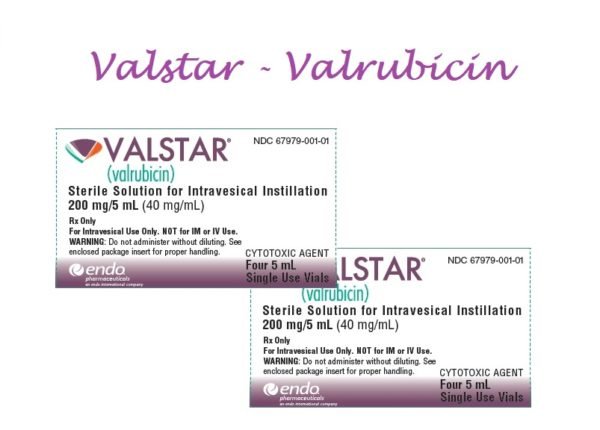
Valstar (Valrubicin) is a chemotherapeutic drug that inhibits the cell cycle in the G phase. It is used in the treatment of BCG-refractory bladder carcinoma (intravesical) in situ of the urinary bladder when cystectomy would be associated with unacceptable morbidity or mortality.
(Valrubicin) Valstar dose in Adults
Note: After transurethral resection and/or fulguration delay use for at least 2 weeks.
(Valrubicin) Valstar dose in the treatment of Bladder cancer:
- Intravesical: 800 mg once a week (retain for 2 hours) for a total of 6 weeks
(Valrubicin) Valstar dose in Childrens
Not studied in children.
Pregnancy Risk Factor C
- Animal reproduction studies showed adverse effects.
- During human pregnancy systemic exposure (eg, with bladder perforation) may result in fetal harm.
- Women of childbearing age should avoid pregnancy during treatment.
- An effective method of contraception should be used in all patients of reproductive age should use during the treatment period.
Valrubicin use during breastfeeding:
- Valrubicin excretion in breast milk is not known.
- Breast-feeding should be discontinued prior to initiation of therapy as there is a potential for serious adverse reactions.
Valstar dose in kidney disease:
- No dosage adjustments have been provided in the manufacturer’s labeling.
- However, dosage adjustment is unlikely due to low systemic absorption
Valstar dose in liver disease:
No dosage adjustments have been provided in the manufacturer’s labeling.
- However, dosage adjustment is unlikely due to low systemic absorption.
Common Side Effects of Valrubicin Include:
-
Genitourinary:
- Irritable Bladder
- Urinary Frequency
- Urinary Urgency
- Dysuria
- Bladder Spasm
- Hematuria
- Bladder Pain
- Urinary Incontinence
- Cystitis
- Urinary Tract Infection
- Red Urine Discoloration
Less Common Side Effects of Valstar (Valrubicin) Include:
-
Cardiovascular:
- Chest Pain
- Vasodilatation
- Peripheral Edema
-
Central Nervous System:
- Localized Burning
- Headache
- Malaise
- Dizziness
-
Dermatologic:
- Skin Rash
-
Endocrine & Metabolic:
- Hyperglycemia
-
Gastrointestinal:
- Abdominal Pain
- Nausea
- Diarrhea
- Vomiting
- Flatulence
-
Genitourinary:
- Nocturia
- Urinary Retention
- Urethral Pain
- Pelvic Pain
-
Hematologic & Oncologic:
- Anemia
-
Neuromuscular & Skeletal:
- Weakness
- Back Pain
- Myalgia
-
Respiratory:
- Pneumonia
-
Miscellaneous:
- Fever
Contraindication to Valrubicin (Valstar) Include:
- Hypersensitivity reactions to polyoxyl or castor oil, anthracyclines or any component of this formulation.
- Perforated bladder. Concurrent urinary tract infection. Small bladder capacity. (Unable to tolerate 75 mL instillation).
Warnings and precautions
-
Bladder irritation
- Retention and instillation can cause symptoms of irritable bladder.
- Patients with severe symptoms of irritable bladder need to be cautious.
- Contact your physician immediately if you experience prolonged symptoms.
-
Urine with a reddish hue
- It may occur within the first 24 hours of instillation. Contact your physician if you experience persistent discoloration.
-
Perforation of the bladder
- Before instillation, it is important to evaluate your bladder status.
- If there is any compromise in the bladder's mucosal integrity or bladder perforation, do not give treatment. Wait until your bladder is fully restored.
-
Bladder procedures
- After transurethral surgery and/or fulguration, valrubicin therapy should be continued for at least two weeks.
Monitor:
- Cystoscopy, biopsy, and urine cytology should be done every 3 months for recurrence or progression of the disease.
How to administer Valrubicin (Valstar)?
- Only intravenous use should be permitted.
- It should not be used intramuscularly or intravenous.
Instillation of intravenous bladder:
- The patient should be catheterized. Before you instill the drug, empty your bladder.
- Slowly, by gravitational flow instill 800 mg/75mL (in 0.9% sodium saltide injection).
- The catheter should be removed. You should keep the drug in your bladder for at least 2 hours.
- Then, void it. Because of the polyoxyl oil component, administration through non-PVC tubing is recommended.
- Following treatment, it is important to maintain adequate hydration.
Mechanism of action of Valrubicin (Valstar mechanism of action):
- DNA topoisomerase 2 is blocked.
- Inhibiting DNA synthesis results in extensive chromosomal damage, and cell development is stopped (in the G phase).
- DNA is not intercalated, unlike other anthracyclines. It easily penetrates cells.
Absorption
- When Intravesical is used: It can penetrate the bladder wall.
- It is dependent on the condition of the bladder wall.
- Systemic absorption is negligible.
- It may be affected by trauma to the mucosa.
- Systemic myelotoxicity can also occur if the bladder wall is perforated.
Metabolism
- After intravesical instillation, 2-hours retention in the bladder, and negligible in other cases.
Excretion:
- Urine (post-2 hour retention): 98.6% for intact drug; 0.4% for Ntrifluoroacetyladriamycin
International Brands of Valrubicin:
- Valstar
- Valtaxin
(Valrubicin) Valstar Brands in Pakistan:
No Brands Available in pakistan
.png)