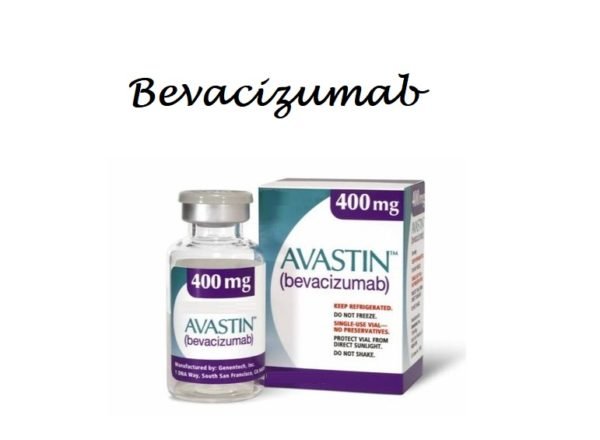
- Bevacizumab (Avastin) is a humanized monoclonal antibody that binds and neutralizes the vascular endothelial growth factor and prevents its association with endothelial receptors, Flt-1 and KDR. Inhibition of the vascular endothelial growth factor results in the inhibition of angiogenesis and new vessel formation.
- It is thus used in a variety of conditions, primarily mitotic processes.
- Patients who have undergone surgical intervention, administration of the drug should be delayed for at least 28 days until the wound has completely healed.
Bevacizumab (Avastin) Uses:
- It is used in combination with paclitaxel and either cisplatin or topotecan to treat patients with recurrent, metastatic, or persistent cervical cancer.
- In combination with fluorouracil-based chemotherapy, it is used as a first or second-line treatment for metastatic colorectal cancer.
- In combination with fluoropyrimidine-irinotecan- or fluoropyrimidine-oxaliplatin-based chemotherapy, it is used as a second line of treatment for metastatic colorectal cancer if the disease progresses with the first line of treatment. It is, however, not indicated for the adjuvant treatment of colon cancer.
- It is used to treat recurrent and progressive Glioblastoma as a single agent in patients with progressive disease.
- It is indicated as a first-line treatment in combination with carboplatin and paclitaxel of locally advanced, unresectable, recurrent, and metastatic non-small cell lung cancer.
- It is used in combination with interfering alpha for the treatment of metastatic renal cell carcinoma.
- It is indicated for the treatment of ovarian, fallopian tube, and primary peritoneal cancer:
- Following initial surgical resection in the treatment of stage III epithelial ovarian, fallopian tube, or primary peritoneal cancer in combination with carboplatin and paclitaxel, followed by single-agent bevacizumab.
- For the treatment of platinum-resistant recurrent epithelial ovarian, fallopian tube, or primary peritoneal cancer in combination with paclitaxel, liposomal doxorubicin, or topotecan.
- in combination with carboplatin and paclitaxel or with carboplatin and gemcitabine and then followed by single-agent bevacizumab for the treatment of platinum-sensitive recurrent epithelial, ovarian, fallopian tube, or primary peritoneal cancer.
-
Off label Uses of Bevacizumab in Adults include:
- Age-related macular degeneration
- Metastatic Breast cancer
- Diabetic macular edema
- Recurrent or persistent endometrial cancer
- Hereditary hemorrhagic telangiectasia
- Unresectable malignant pleural mesothelioma
- Angiosarcoma and hemangiopericytoma (Soft tissue sarcomas)
Bevacizumab Dose in Adults:
Bevacizumab dose in the treatment of Cervical cancer:
- 15 mg/kg intravenously every 3 weeks until the disease progresses or the drug can not be tolerated (in combination with paclitaxel and either cisplatin or topotecan)
Avastin dose in the treatment of colorectal cancer:
- 5 mg/kg Intravenously every 14 days (in combination with bolus-IFL) or
- 10 mg/kg every 14 days (in combination with FOLFOX4)
Avastin dose in the treatment of metastatic colorectal cancer following first-line therapy containing bevacizumab:
- 5 mg/kg Intravenous every 14 days or
- 5 mg/kg every 21 days (in combination with fluoropyrimidine-irinotecan or fluoropyrimidine-oxaliplatin based regimen)
Avastin dose in the treatment of Glioblastoma:
- 10 mg/kg Intravenous every 14 days as a single agent until disease progression or unacceptable toxicity or
- 10 mg/kg every 14 days (in combination with irinotecan) until disease progression or unacceptable toxicity.
Bevacizumab dose in the treatment of Non-small cell lung cancer as first-line therapy:
- 15 mg/kg Intravenous every 21 days (in combination with carboplatin and paclitaxel) for 6 cycles.
-
Off-label combinations:
- 15 mg/kg every 21 days (in combination with pemetrexed and carboplatin) for up to 4 cycles or
- 5 mg/kg every 21 days (in combination with pemetrexed and cisplatin) for 4 cycles or
- 15 mg/kg every 21 days (in combination with atezolizumab, paclitaxel, and carboplatin) for 4 to 6 cycles
-
Maintenance therapy:
- After 6 cycles of induction therapy with bevacizumab, carboplatin, and paclitaxel it is given in a dose of 15 mg/kg every 21 days as a single agent. It is continued until disease progression or unacceptable toxicity or
- Following 4 cycles of induction therapy with bevacizumab, pemetrexed, and carboplatin, it is given in a dose of 15 mg/kg in combination with pemetrexed every 21 days until disease progression or unacceptable toxicity or
- Following 4 cycles of induction therapy with bevacizumab, cisplatin, and pemetrexed, it is given in a dose of 5 mg/kg in combination with pemetrexed every 21 days until disease progression or unacceptable toxicity or
- Following 4 to 6 cycles of induction therapy with atezolizumab, paclitaxel, and carboplatin, it is given in a dose of 15 mg/kg every 21 days, with or without maintenance atezolizumab until disease progression or unacceptable toxicity.
Bevacizumab dose in the treatment of Ovarian (epithelial), fallopian tube, or primary perioteneal cancer:
- 15 mg/kg intravenous every 21 days in combination with carboplatin and paclitaxel for up to 6 cycles, followed by bevacizumab 15 mg/kg every 21 days as monotherapy, for a total of up to 22 cycles or until disease progression.
- The administration of bevacizumab may be delayed until cycle 2 to reduce the risk of wound healing complications.
Bevacizumab dose in the treatment of platinum-resistant recurrent Ovarian (epithelial), fallopian tube, or primary peritoneal cancer:
- 10 mg/kg intravenous every 14 days in combination with weekly paclitaxel, every 4 weeks liposomal doxorubicin, or days 1, 8, and 15 topotecan) or
- 15 mg/kg every 21 days in combination with every 21 days topotecan.
Bevacizumab use in the treatment of platinum-sensitive recurrent Ovarian (epithelial), fallopian tube, or primary peritoneal cancer:
- 15 mg/kg Intravenous every 21 days in combination with carboplatin and gemcitabine for 6 to 10 cycles or with carboplatin and paclitaxel for 6 to 8 cycles, then continue with bevacizumab until the disease progresses or toxicity develops.
Bevacizumab dose in the treatment of metastatic Renal cell cancer:
- 10 mg/kg Intravenous every 14 days in combination with interferon alfa or
- 10 mg/kg every 14 days as monotherapy.
Bevacizumab dosage for Age-related macular degeneration:
- 25 mg (0.05 ml) intravitreal monthly for 3 months, then monthly or as needed based on an ophthalmologic assessment performed at least once a month.
Bevacizumab dosage for metastatic Breast cancer:
- 10 mg/kg Intravenous every 14 days in combination with paclitaxel.
Bevacizumab dosage for Diabetic macular edema:
- 25 mg (0.05 ml) Intravitreal initially.
- It is repeated every month depending on the response as measured by visual acuity or central subfield thickness assessment.
Avastin dose in the treatment of recurrent or persistent endometrial cancer:
- 15 mg/kg Intravenous every 21 days as monotherapy until the disease progresses or toxicity develops.
Avastin dose in the treatment of hereditary hemorrhagic telangiectasia:
- 5 mg/kg Intravenous every 14 days for 6 doses or
- 5 mg/kg every 14 days for 4 doses, followed by 5 mg/kg once a month for 4 doses.
- If required, additional doses may be administered.
Avastin dose in the treatment of unresectable malignant pleural mesothelioma:
- 15 mg/kg Intravenous every 21 days in combination with pemetrexed and cisplatin for up to 6 cycles.
- This is followed by bevacizumab maintenance therapy at 15 mg/kg once every 21 days until toxicity develops or if the disease progresses.
Avastin dose in the treatment of metastatic or locally advanced Soft tissue sarcoma and angiosarcoma:
- 15 mg/kg Intravenous every 21 days until the disease shows signs of progression or toxicity develops.
Bevacizumab dose in Children:
Avastin dosage in the treatment of Refractory solid tumor:
- Children and Adolescents:
- 5 to 15 mg/kg/dose intravenous every 14 days in a 28-day course or
- 5 to 10 mg/kg every 2 to 3 weeks.
Bevacizumab dosage in the treatment of recurrent or refractory medulloblastoma and Gliomas:
- Children and Adolescents:
- 10 mg/kg/dose Intravenous every 14 days in combination with irinotecan with or without temozolomide or
- 15 mg/kg/dose every 21 days has also been used.
Bevacizumab dose in Renal impairment:
- Recommendations in the dose adjustment has not been provided by the manufacturer if renal impairment is present prior to the treatment.
- However, the treatment must be discontinued if the patient develops nephrotic syndrome.
- Patients who develop proteinuria that equals to or exceeds 2 gms should withhold the treatment until the proteinuria is less than 2 gms/ 24 hours.
Bevacizumab dosage in Hepatic impairment:
- The adjustment in dose has not been provided by the manufacturer in patients with liver disease.
Bevacizumab Side effects:
Common Side Effects of Bevacizumab include:
-
Cardiovascular:
- Hypertension
- Venous Thromboembolism
- Peripheral Edema
- Hypotension
- Venous Thromboembolism
- Arterial Thrombosis
-
Central Nervous System:
- Fatigue
- Pain
- Headache
- Dizziness
- Insomnia
- Taste Disorder
- Peripheral Sensory Neuropathy
- Anxiety
- Myasthenia
-
Dermatologic:
- Alopecia
- Exfoliative Dermatitis
- Palmar-Plantar Erythrodysesthesia
- Xeroderma
-
Endocrine & Metabolic:
- Ovarian Failure
- Hyperglycemia
- Hypomagnesemia
- Weight Loss
- Hyponatremia
- Hypoalbuminemia
- Hypocalcemia
-
Gastrointestinal:
- Nausea
- Abdominal Pain
- Vomiting
- Anorexia
- Constipation
- Diarrhea
- Decreased Appetite
- Stomatitis
- Gastrointestinal Hemorrhage
- Dyspepsia
- Mucosal Inflammation
-
Genitourinary:
- Proteinuria
- Urinary Tract Infection
- Pelvic Pain
-
Hematologic & Oncologic:
- Thrombocytopenia
- Hemorrhage
- Leukopenia
- Pulmonary Hemorrhage
- Neutropenia
- Bruise
- Lymphocytopenia
-
Infection:
- Infection
-
Neuromuscular & Skeletal:
- Arthralgia
- Myalgia
- Limb Pain
- Back Pain
- Dysarthria
-
Renal:
- Increased Serum Creatinine
-
Respiratory:
- Epistaxis
- Upper Respiratory Tract Infection
- Cough
- Dyspnea
- Allergic Rhinitis
- Oropharyngeal Pain
- Sinusitis
- Nasal Sign & Symptoms
- Rhinitis
-
Miscellaneous:
- Postoperative Wound Complication
Less Common Side Effects Of Bevacizumab Include:
-
Cardiovascular:
- Thrombosis
- Deep Vein Thrombosis
- Chest Pain
- Intra-Abdominal Thrombosis
- Syncope
- Left Ventricular Dysfunction
- Pulmonary Embolism
-
Central Nervous System:
- Voice Disorder
-
Dermatologic:
- Nail Disease
- Dermal Ulcer
- Cellulitis
- Acne Vulgaris
-
Endocrine & Metabolic:
- Dehydration
- Hyperkalemia
- Hypokalemia
-
Gastrointestinal:
- Hemorrhoids
- Xerostomia
- Gingival Hemorrhage
- Rectal Pain
- Colitis
- Intestinal Obstruction
- Gastrointestinal Perforation
- Gastroesophageal Reflux Disease
- Gingivitis
- Oral Mucosa Ulcer
- Gastrointestinal Fistula
- Gastritis
- Gingival Pain
-
Genitourinary:
- Vaginal Hemorrhage
-
Hematologic & Oncologic:
- Febrile Neutropenia
- Neutropenic Infection
- Hemorrhage
-
Hepatic:
- Increased Serum AST
-
Infection:
- Abscess
-
Neuromuscular & Skeletal:
- Weakness
- Neck Pain
-
Ophthalmic:
- Blurred Vision
-
Otic:
- Tinnitus
- Deafness
-
Respiratory:
- Rhinorrhea
- Nasal Congestion
- Pneumonitis
-
Miscellaneous:
- Fistula
- Infusion Related Reaction
Bevacizumab (including biosimilars of bevacizumab): Drug Interaction
|
Bisphosphonate Derivatives |
Angiogenesis Inhibitors (Systemic) may enhance the adverse/toxic effect of Bisphosphonate Derivatives. Specifically, the risk for osteonecrosis of the jaw may be increased. |
|
Chloramphenicol (Ophthalmic) |
May enhance the adverse/toxic effect of Myelosuppressive Agents. |
|
CloZAPine |
Myelosuppressive Agents may enhance the adverse/toxic effect of CloZAPine. Specifically, the risk for neutropenia may be increased. |
|
Promazine |
May enhance the myelosuppressive effect of Myelosuppressive Agents. |
|
SORAfenib |
Bevacizumab may enhance the adverse/toxic effect of SORAfenib. Specifically, the risk for hand-foot skin reaction may be increased. |
|
Anthracyclines |
Bevacizumab may enhance the cardiotoxic effect of Anthracyclines. |
|
BCG (Intravesical) |
Myelosuppressive Agents may diminish the therapeutic effect of BCG (Intravesical). |
|
Belimumab |
Monoclonal Antibodies may enhance the adverse/toxic effect of Belimumab. |
|
Cladribine |
May enhance the myelosuppressive effect of Myelosuppressive Agents. |
|
Deferiprone |
Myelosuppressive Agents may enhance the neutropenic effect of Deferiprone. |
|
Dipyrone |
May enhance the adverse/toxic effect of Myelosuppressive Agents. Specifically, the risk for agranulocytosis and pancytopenia may be increased |
|
SUNItinib |
May enhance the adverse/toxic effect of Bevacizumab. Specifically, the risk for a specific form of anemia, microangiopathic hemolytic anemia (MAHA), may be increased. Bevacizumab may enhance the hypertensive effect of SUNItinib. |
Monitoring parameters while using Bevacizumab:
- Monitor for clinical and laboratory features of proteinuria and nephrotic syndrome
- Monitor blood pressure twice monthly and frequently if the patient develops hypertension.
- Monitor for allergic reactions and infusion site reactions.
- Observe for gastrointestinal perforation and fistula.
- Observe for bleeding, thromboembolism, and wound healing.
- Monitor the patient for dyspnea and worsening heart failure.
When used in patients with Age-related macular degeneration, monitor:
- intraocular pressure
- Retinal arterial perfusion
- observe for retinal detachment
- Monitor of infectious endophthalmitis
When used for the treatment of diabetic macular edema, monitor:
- Visual acuity
- central subfield thickness,
- Monitor of infectious endophthalmitis,
- cataracts, and
- retinal detachment
When used to treat Hereditary hemorrhagic telangiectasia:
- Monitor cardiac output measurements and
- the liver radiologic response through ultrasound and hepatic CT exams before the initial treatment and at 3 and 6 months following the first dose.
How to administer Bevacizumab (Avastin)?
- The intravenous infusion should be used.
- You can continue infusions up to 30 minutes if the first one is not tolerated.
- Infusions that are not tolerated within 30 minutes can be continued for 10 minutes at 0.5 mg/kg/min.
- Hypersensitivity reactions and infusion-site reactions should be monitored closely by patients.
- The treatment should be stopped or halted in severe reactions.
- Mild reactions can have their infusion rate reduced.
- When intravitreal drug administration takes place, it is essential to provide adequate local anesthesia.
- It is also recommended to use topical broad-spectrum antimicrobial medications.
Bevacizumab Brand Names (International):
-
Avastin
-
Bevastim
-
Bivastin
Bevacizumab Brand Names in Pakistan:
Bevacizumab injection 100 mg |
|
| Avastin | Roche Pakistan Ltd. |
Bevacizumab injection 400 mg |
|
| Avastin | Roche Pakistan Ltd. |
.png)


