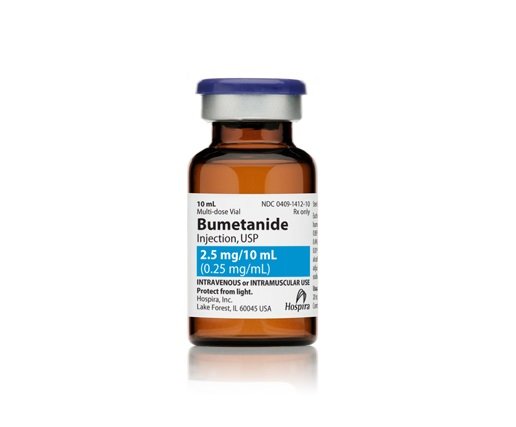
Bumetanide (Bumex) is a loop diuretic that inhibits the reabsorption of water and solutes (sodium, potassium, calcium, phosphate, and magnesium) from the kidneys. It is used to treat the following conditions:
-
Management of edema due to heart failure, liver or renal disease including the nephrotic syndrome.
-
As an alternative agent for the treatment of hypertension.
Bumetanide Dose in Adults
Note: Bumetanide 1 mg = torsemide 20 mg = furosemide 40 mg = ethacrynic acid 50 mg
Bumetanide for edema and heart failure:
- 0.5 to 2 mg/dose orally 1 - 2 times a day to a maximum dose of 10 mg/day, OR
- 0.5 to 1 mg/dose as an intramuscular or intravenous injection.
- The dose may be repeated in 2 - 3 hours up to a maximum dose of 10 mg/day.
- Continuous Intravenous infusion:
- 1 mg Intravenous loading dose then 0.5 - 2 mg/hour as a continuous intravenous infusion.
- 1 mg Intravenous loading dose then 0.5 - 2 mg/hour as a continuous intravenous infusion.
Off label use as alternative agent in the treatment of Hypertension:
- 5 to 2 mg/day orally in two divided doses.
Bumetanide Dose in Childrens
Note: Dose equivalency for adult patients with normal renal function (approximate): Bumetanide 1 mg = furosemide 40 mg = torsemide 20 mg = ethacrynic acid 50 mg
Bumetanide use in the treatment of Edema:
Intermittent dosing:
- Infants and Children:
- 0.01 to 0.1 mg/kg/dose oral, Intramuscular, or intravenous every 6 - 24 hours to a maximum daily dose of 10 mg/day.
- Adolescents:
- 0.5 to 1 mg/dose oral, Intramuscular, or intravenous every 6 - 24 hours to a maximum daily dose of 10 mg/day.
Continuous Intravenous infusion:
- Infants Children and Adolescents less than 16 years:
- 1 to 10 mcg/kg/hour to the maximum dose of 50 mcg/kg/hour.
Pregnancy Risk Factor C
- Adverse fetal events have been observed animal reproduction studies.
Bumetanide use during breastfeeding:
- It is not recommended for use during breastfeeding. Furthermore, diuretics suppress lactation.
Bumetanide Dose in Renal Disease:
The manufacturer has not recommended any dose adjustment in patients with renal disease. Patients with anuria should avoid the drug.
Bumetanide Dose in Liver Disease:
- The manufacturer has not recommended any dose adjustment in patients with liver disease.
- Patients with hepatic encephalopathy should avoid using it. Those with cirrhosis and ascites should use it with caution as it may precipitate hepatic coma.
Common Side Effects of Bumetanide Include:
- Endocrine & metabolic:
- Hyperuricemia
- Hypochloremia
- Hypokalemia
- Genitourinary:
- Azotemia
Less Common Side Effects Of Bumetanide Include:
- Central Nervous System:
- Dizziness
- Endocrine & Metabolic:
- Hyponatremia
- Hyperglycemia
- Phosphorus Change
- Variations In Bicarbonate
- Abnormal Serum Calcium
- Abnormal Lactate Dehydrogenase
- Neuromuscular & Skeletal:
- Muscle Cramps
- Renal:
- Increased Serum Creatinine
- Respiratory:
- Change in carbon dioxide content.
Contraindication to Bumetanide include:
- Allergy reactions to bumetanide and any component of the formulation
- Anuria
- Hepatic Encephalopathy
- An abnormality in the electrolyte.
- Allergie to sulfonamide
- Hepatic Encephalopathy
- Galactose intolerance
- Glucose-Galactose malabsorption
- Lapp Lactose deficiency.
Warnings and Precautions
- Fluid & electrolyte loss: [US Boxed Warning]
- Bumetanide can be a powerful diuretic, and may cause excessive fluid and electrolyte loss.
- Hypokalemia, volume loss and hypocalcemia should all be checked.
- Patients with electrolyte problems may be more susceptible to developing cardiac arrhythmias.
- Hyperuricemia:
- Patients may develop hyperuricemia.
- Nephrotoxicity:
- If the patient is given aggressive diuretics, nephrotoxicity can develop.
- Monitor fluid status, renal function, and serum electrolytes.
- Ototoxicity:
- Rapid intravenous administration, those with renal impairment, on high doses, or on other concomitant ototoxic medicines like aminoglycosides may develop ototoxicity.
- Allergy to sulfonamide
- Sulfa drugs, which contain a sulfonamide chemical compound group, can cause severe allergic reactions in patients who are allergic to them.
- You should be cautious as cross-reactivity could occur.
- Avoid it if you have had severe allergic reactions, such as Steven Johnson syndrome or TEN.
- Hepatic impairment
- Patients suffering from cirrhosis must be cautious when taking the drug.
- With frequent monitoring of electrolytes, a smaller dose should be administered at the beginning.
- Avoid sudden changes in fluids or electrolytes as they can lead to hepatic-encephalopathy.
- Renal impairment
- Patients with impaired renal function may require higher doses in order to reach the desired response.
Bumetanide: Drug Interaction
|
Ajmaline |
Sulfonamides may enhance the adverse/toxic effect of Ajmaline. Specifically, the risk for cholestasis may be increased. |
|
Alfuzosin |
May enhance the hypotensive effect of Blood Pressure Lowering Agents. |
|
Allopurinol |
Loop Diuretics may enhance the adverse/toxic effect of Allopurinol. Loop Diuretics may increase the serum concentration of Allopurinol. Specifically, Loop Diuretics may increase the concentration of Oxypurinol, an active metabolite of Allopurinol. |
|
Amikacin (Oral Inhalation) |
Loop Diuretics may enhance the nephrotoxic effect of Amikacin (Oral Inhalation). Loop Diuretics may enhance the ototoxic effect of Amikacin (Oral Inhalation). |
|
Aminoglycosides |
Loop Diuretics may enhance the adverse/toxic effect of Aminoglycosides. Specifically, nephrotoxicity and ototoxicity. |
|
Amphetamines |
May diminish the antihypertensive effect of Antihypertensive Agents. |
|
Angiotensin-Converting Enzyme Inhibitors |
Loop Diuretics may enhance the hypotensive effect of Angiotensin-Converting Enzyme Inhibitors. Loop Diuretics may enhance the nephrotoxic effect of Angiotensin-Converting Enzyme Inhibitors. |
|
Antidiabetic Agents |
Hyperglycemia-Associated Agents may diminish the therapeutic effect of Antidiabetic Agents. |
|
Antipsychotic Agents (Second Generation [Atypical]) |
Blood Pressure Lowering Agents may enhance the hypotensive effect of Antipsychotic Agents (Second Generation [Atypical]). |
|
Barbiturates |
May enhance the hypotensive effect of Blood Pressure Lowering Agents. |
|
Benperidol |
May enhance the hypotensive effect of Blood Pressure Lowering Agents. |
|
Beta2-Agonists |
May enhance the hypokalemic effect of Loop Diuretics. |
|
Bilastine |
Loop Diuretics may enhance the QTc-prolonging effect of Bilastine. |
|
Brigatinib |
May diminish the antihypertensive effect of Antihypertensive Agents. Brigatinib may enhance the bradycardic effect of Antihypertensive Agents. |
|
Brimonidine (Topical) |
May enhance the hypotensive effect of Blood Pressure Lowering Agents. |
|
Cardiac Glycosides |
|
|
Cefazedone |
May enhance the nephrotoxic effect of Loop Diuretics. |
|
Cefotiam |
Loop Diuretics may enhance the nephrotoxic effect of Cefotiam. |
|
Cefpirome |
Loop Diuretics may enhance the nephrotoxic effect of Cefpirome. |
|
Ceftizoxime |
Loop Diuretics may enhance the nephrotoxic effect of Ceftizoxime. |
|
Cephalothin |
Loop Diuretics may enhance the nephrotoxic effect of Cephalothin. |
|
Cephradine |
May enhance the nephrotoxic effect of Loop Diuretics. |
|
CISplatin |
Loop Diuretics may enhance the nephrotoxic effect of CISplatin. Loop Diuretics may enhance the ototoxic effect of CISplatin. |
|
Corticosteroids (Orally Inhaled) |
May enhance the hypokalemic effect of Loop Diuretics. |
|
Corticosteroids (Systemic) |
May enhance the hypokalemic effect of Loop Diuretics. |
|
CycloSPORINE (Systemic) |
May enhance the adverse/toxic effect of Loop Diuretics. |
|
Dexmethylphenidate |
May diminish the therapeutic effect of Antihypertensive Agents. |
|
Diacerein |
May enhance the therapeutic effect of Diuretics. Specifically, the risk for dehydration or hypokalemia may be increased. |
|
Diazoxide |
May enhance the hypotensive effect of Blood Pressure Lowering Agents. |
|
DULoxetine |
Blood Pressure Lowering Agents may enhance the hypotensive effect of DULoxetine. |
|
Empagliflozin |
May enhance the hypotensive effect of Loop Diuretics. |
|
Fosphenytoin |
May diminish the diuretic effect of Loop Diuretics. |
|
Herbs (Hypertensive Properties) |
May diminish the antihypertensive effect of Antihypertensive Agents. |
|
Herbs (Hypotensive Properties) |
May enhance the hypotensive effect of Blood Pressure Lowering Agents. |
|
Hypotension-Associated Agents |
Blood Pressure Lowering Agents may enhance the hypotensive effect of Hypotension-Associated Agents. |
|
Ipragliflozin |
May enhance the adverse/toxic effect of Loop Diuretics. Specifically, the risk for intravascular volume depletion may be increased. |
|
Ivabradine |
Loop Diuretics may enhance the arrhythmogenic effect of Ivabradine. |
|
Levodopa-Containing Products |
Blood Pressure Lowering Agents may enhance the hypotensive effect of Levodopa-Containing Products. |
|
Licorice |
May enhance the hypokalemic effect of Loop Diuretics. |
|
Lithium |
Loop Diuretics may decrease the serum concentration of Lithium. Loop Diuretics may increase the serum concentration of Lithium. |
|
Lormetazepam |
May enhance the hypotensive effect of Blood Pressure Lowering Agents. |
|
Methylphenidate |
May diminish the antihypertensive effect of Antihypertensive Agents. |
|
Molsidomine |
May enhance the hypotensive effect of Blood Pressure Lowering Agents. |
|
Naftopidil |
May enhance the hypotensive effect of Blood Pressure Lowering Agents. |
|
Neuromuscular-Blocking Agents |
Loop Diuretics may diminish the neuromuscular-blocking effect of Neuromuscular-Blocking Agents. Loop Diuretics may enhance the neuromuscular-blocking effect of Neuromuscular-Blocking Agents. |
|
Nicergoline |
May enhance the hypotensive effect of Blood Pressure Lowering Agents. |
|
Nicorandil |
May enhance the hypotensive effect of Blood Pressure Lowering Agents. |
|
Nitroprusside |
Blood Pressure Lowering Agents may enhance the hypotensive effect of Nitroprusside. |
|
Opioid Agonists |
May enhance the adverse/toxic effect of Diuretics. Opioid Agonists may diminish the therapeutic effect of Diuretics. |
|
Pentoxifylline |
May enhance the hypotensive effect of Blood Pressure Lowering Agents. |
|
Phenytoin |
May diminish the diuretic effect of Loop Diuretics. |
|
Pholcodine |
Blood Pressure Lowering Agents may enhance the hypotensive effect of Pholcodine. |
|
Phosphodiesterase 5 Inhibitors |
May enhance the hypotensive effect of Blood Pressure Lowering Agents. |
|
Probenecid |
May enhance the adverse/toxic effect of Loop Diuretics. Probenecid may diminish the diuretic effect of Loop Diuretics. Probenecid may increase the serum concentration of Loop Diuretics. Management: Monitor for decreased diuretic effects or increased adverse effects of loop diuretics with concomitant use of probenecid. Bumetanide prescribing information recommends against concomitant use of probenecid. |
|
Prostacyclin Analogues |
May enhance the hypotensive effect of Blood Pressure Lowering Agents. |
|
Quinagolide |
May enhance the hypotensive effect of Blood Pressure Lowering Agents. |
|
Reboxetine |
May enhance the hypokalemic effect of Loop Diuretics. |
|
RisperiDONE |
Loop Diuretics may enhance the adverse/toxic effect of RisperiDONE. |
|
Salicylates |
May diminish the diuretic effect of Loop Diuretics. Loop Diuretics may increase the serum concentration of Salicylates. |
|
Tobramycin (Oral Inhalation) |
Loop Diuretics may enhance the nephrotoxic effect of Tobramycin (Oral Inhalation). Loop Diuretics may enhance the ototoxic effect of Tobramycin (Oral Inhalation). |
|
Topiramate |
Loop Diuretics may enhance the hypokalemic effect of Topiramate. |
|
Xipamide |
May enhance the adverse/toxic effect of Loop Diuretics. Specifically, the risk of hypovolemia, electrolyte disturbances, and prerenal azotemia may be increased. |
|
Yohimbine |
May diminish the antihypertensive effect of Antihypertensive Agents. |
|
Risk Factor D (Consider therapy modification) |
|
|
Amifostine |
Blood Pressure Lowering Agents may enhance the hypotensive effect of Amifostine. Management: When amifostine is used at chemotherapy doses, blood pressure lowering medications should be withheld for 24 hours prior to amifostine administration. If blood pressure lowering therapy cannot be withheld, amifostine should not be administered. |
|
Bile Acid Sequestrants |
May decrease the absorption of Loop Diuretics. |
|
Canagliflozin |
|
|
Dofetilide |
Loop Diuretics may enhance the QTc-prolonging effect of Dofetilide. Management: Monitor serum potassium and magnesium more closely when dofetilide is combined with loop diuretics. Some therapy modification may be required. |
|
Foscarnet |
Loop Diuretics may increase the serum concentration of Foscarnet. |
|
Methotrexate |
May diminish the therapeutic effect of Loop Diuretics. Loop Diuretics may increase the serum concentration of Methotrexate. Methotrexate may increase the serum concentration of Loop Diuretics. Management: Monitor for increased methotrexate and/or loop diuretic levels/toxicity with concomitant use of these agents and monitor for decreased therapeutic effects of loop diuretics. Methotrexate and/or loop diuretic dose reductions may be necessary. |
|
Nonsteroidal Anti-Inflammatory Agents |
May diminish the diuretic effect of Loop Diuretics. Loop Diuretics may enhance the nephrotoxic effect of Nonsteroidal Anti-Inflammatory Agents. Management: Monitor for evidence of kidney injury or decreased therapeutic effects of loop diuretics with concurrent use of an NSAID. Consider avoiding concurrent use in CHF or cirrhosis. Concomitant use of bumetanide with indomethacin is not recommended. |
|
Obinutuzumab |
May enhance the hypotensive effect of Blood Pressure Lowering Agents. Management: Consider temporarily withholding blood pressure lowering medications beginning 12 hours prior to obinutuzumab infusion and continuing until 1 hour after the end of the infusion. |
|
Sodium Phosphates |
Diuretics may enhance the nephrotoxic effect of Sodium Phosphates. Specifically, the risk of acute phosphate nephropathy may be enhanced. Management: Consider avoiding this combination by temporarily suspending treatment with diuretics, or seeking alternatives to oral sodium phosphate bowel preparation. If the combination cannot be avoided, hydrate adequately and monitor fluid and renal status. |
|
Risk Factor X (Avoid combination) |
|
|
Bromperidol |
Blood Pressure Lowering Agents may enhance the hypotensive effect of Bromperidol. Bromperidol may diminish the hypotensive effect of Blood Pressure Lowering Agents. |
|
Desmopressin |
Loop Diuretics may enhance the hyponatremic effect of Desmopressin. |
|
Levosulpiride |
Loop Diuretics may enhance the adverse/toxic effect of Levosulpiride. |
|
Mecamylamine |
Sulfonamides may enhance the adverse/toxic effect of Mecamylamine. |
|
Promazine |
Loop Diuretics may enhance the QTc-prolonging effect of Promazine. |
Monitor:
- Blood pressure
- Serum electrolytes
- Renal function
- Fluid status
How to administer Bumetanide?
- Intravenous administration:
- Administer as a slow intravenous injection over 1 - 2 minutes.
- Intramuscular administration:
- It may be administered as an Intramuscular injection.
- Oral administration:
- It may be administered without regards to meals (and has a greater and stable bioavailability than furosemide) on alternate-days or every third or fourth day with rest periods of 1 - 2 days.
- Intermittent administration is the most tolerable and effective regimen.
Mechanism of action of Bumetanide:
- It increases water excretion because it inhibits the reabsorption sodium and chloride from the proximal renal tubules.
- It not only increases water excretion but also causes sodium, magnesium, phosphate and calcium excretion through interfering in the chloride binding cotransport system.
- It doesn't affect the distal tubules in the kidneys.
The Onset of action after intramuscular injection is 0.5 to 1 hour, 2 - 3 minutes after intravenous administration.
The peak effect is seen in 1 - 2 hours after oral administration and 15 - 30 minutes after an intravenous administration.
The duration of action after oral administration is 4 - 6 hours and 2 - 3 hours after intravenous administration. 94 - 96% of the drug is protein-bound.
It is partially metabolized by the liver and is 59 - 89% bioavailable.
The half-life elimination in neonates is 6 hours, infants less than 2 months is 2.5 hours, 2 - 6 months is 1.5 hours, and in adults is 1 - 1.5 hours. It is primarily excreted via urine.
International Brands of Bumetanide:
- Biulan
- Brinex
- Budema
- Bumecard
- Bumelex
- Bumet
- Bumetanid
- Burinex
- Butinat
- Conart
- Diunide
- Drenural
- Edemex
- Exametanide
- Fontego
- Fordiuran
- Huiyuan
- Miccil
- Urenide
- Urinide
Bumetanide brands in Pakistan:
|
Bumetanide [Tabs 0.5 mg] |
|
|
Xurin- K |
Pacific Pharmaceuticals Ltd. |
.png)


