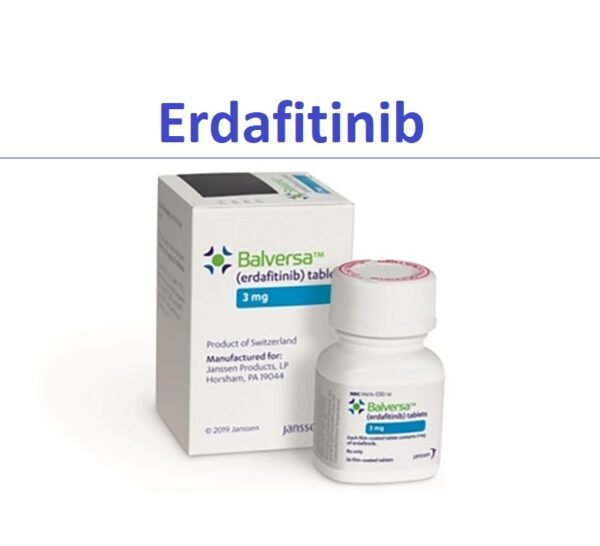
Erdafitinib (Balversa) is a fibroblast growth factor receptor kinase inhibitor that is indicated for the treatment of patients with locally advanced or metastatic urothelial cancer with susceptibility to FGFR gene mutations.
Erdafitinib Uses:
-
Urothelial carcinoma, locally advanced or metastatic:
- For advanced or metastatic urothelial carcinoma in adults in whom:
- Susceptibility to FGFR3 or FGFR2 genetic alterations present and
- The disease spread despite receiving platinum-based therapy including use within 12 months of neoadjuvant or adjuvant platinum-containing chemotherapy
- For advanced or metastatic urothelial carcinoma in adults in whom:
Erdafitinib (Balversa) Dose in Adults
Note: phosphate restriction to 600 to 800 mg/day, repeat levels 2-3 weeks after treatment initiation.
Erdafitinib (Balversa) Dose in the treatment of locally advanced or metastatic urothelial carcinoma (with susceptible FGFR genetic alteration):
- Oral: Initial: 8 mg once daily repeat serum phosphate after 2,3 weeks is <5.5 mg/dL (and no ocular disorders or ≥ grade 2 toxicity), increase dose to 9 mg once daily according to tolerance.
- Continue until disease progression or until unacceptable toxic adverse effects develop.
-
Missed or vomited doses:
- If a dose is missed can be taken again as soon as remembered. Dose need not be replaced if vomiting occurs.
Use in Children:
Not indicated.
Erdafitinib (Balversa) Pregnancy Category: X
- Fetal harm can be caused by erdafitinib. It is important to rule out pregnancy before you start treatment.
- Therapy should be completed within one month of completion. Male patients and their female partners must avoid pregnancy.
Use of Erdafitinib while breastfeeding
- Breastfeeding is not recommended for infants during treatment or up to one month after last erdafitinib dosage.
Erdafitinib (Balversa) Dose in Kidney Disease:
-
eGFR 30 to 89 mL/minute/1.73 m²:
- No dose adjustment needed.
-
eGFR <30 mL/minute/1.73 m²:
- No dose adjustment needed.
-
ESRD requiring dialysis:
- No dose adjustment needed.
Erdafitinib (Balversa) Dose in Liver disease:
- Mild impairment (total bilirubin ≤ ULN and AST > ULN or total bilirubin >1 to 1.5 times ULN and any AST):
- No dose adjustment needed.
- Moderate or severe impairment:
- No dose adjustment recommended.
Common Side Effects of Erdafitinib (Balversa):
-
Central Nervous System:
- Fatigue
-
Dermatologic:
- Onycholysis
- Xeroderma
- Alopecia
- Palmar-Plantar Erythrodysesthesia
- Paronychia
- Nail Discoloration
-
Endocrine & Metabolic:
- Hyperphosphatemia
- Decreased Serum Sodium
- Decreased Serum Albumin
- Decreased Serum Magnesium
- Decreased Serum Phosphate
- Increased Serum Calcium
- Increased Serum Potassium
- Weight Loss
-
Gastrointestinal:
- Stomatitis
- Diarrhea
- Xerostomia
- Decreased Appetite
- Dysgeusia
- Constipation
- Abdominal Pain
- Nausea
- Vomiting
-
Genitourinary:
- Urinary Tract Infection
- Hematuria
-
Hematologic & Oncologic:
- Decreased Hemoglobin
- Decreased Platelet Count
- Decreased White Blood Cell Count
-
Hepatic:
- Increased Serum Alanine Aminotransferase
- Increased Serum Alkaline Phosphatase
- Increased Serum Aspartate Aminotransferase
-
Neuromuscular & Skeletal:
- Musculoskeletal Pain
- Arthralgia
-
Ophthalmic:
- Dry Eye Syndrome
- Retinal Pigment Epithelium Detachment
- Retinopathy
- Blurred Vision
- Conjunctivitis
-
Renal:
- Increased Serum Creatinine
-
Respiratory:
- Oropharyngeal Pain
-
Miscellaneous:
- Fever
Less Common Side Effects of Erdafitinib (Balversa):
-
Hematologic & oncologic:
- Increase in fasting plasma glucose
- Decreased neutrophils
-
Ophthalmic:
- Increased lacrimation
-
Respiratory:
- Dyspnea
-
Neuromuscular & skeletal:
- Asthenia
Contraindication to Erdafitinib (Balversa):
- The manufacturer's labeling does not list any contraindications.
Warnings and precautions
-
Hyperphosphatemia
- Therapy may cause hyperphosphatemia. Monitor your levels during treatment. You may need to adjust the dose or withhold treatment if you use phosphate binders.
- Limit your dietary intake. Limit your intake of agents that can increase serum phosphate (eg, potassium-phosphate or Vitamin D supplements, antiacids, laxatives or phosphate-containing medications, etc.)
-
Ocular toxicities:
- One-fourth of patients with central serous retinopathy/retinal color epithelial detached (CSR/RPED), were reported to have it in a clinical study, which included grade 3 events. Average onset at 50 days, transient in 13%, and permanent in 1%
- CSR/RPED can cause visual field defects including central field defects.
- If symptoms don't improve within a month, you can continue therapy.
- Dry eye symptoms were reported in more than one quarter of patients, with grade 3 events included. If necessary, administer dry eye prophylaxis (with or without ocular demulcents).
- Complete eye exams at baseline, monthly for the first four months, then every three months and as often as clinically necessary.
- Ocular toxicities can be treated with a dose adjustment, withholding, or even stopping.
Erdafitinib: Drug Interaction
Note: Drug Interaction Categories:
- Risk Factor C: Monitor When Using Combination
- Risk Factor D: Consider Treatment Modification
- Risk Factor X: Avoid Concomitant Use
Risk Factor C (Monitor therapy) |
|
| Aprepitant | May increase the serum concentration of CYP3A4 Substrates (High risk with Inhibitors). |
| Clofazimine | May increase the serum concentration of CYP3A4 Substrates (High risk with Inhibitors). |
| CYP3A4 Inhibitors (Moderate) | May decrease the metabolism of CYP3A4 Substrates (High risk with Inhibitors). |
| CYP3A4 Substrates (High risk with Inducers) | Erdafitinib may decrease the serum concentration of CYP3A4 Substrates (High risk with Inducers). |
| CYP3A4 Substrates (High risk with Inhibitors) | Erdafitinib may increase the serum concentration of CYP3A4 Substrates (High risk with Inhibitors). |
| Deferasirox | May decrease the serum concentration of CYP3A4 Substrates (High risk with Inducers). |
| Duvelisib | May increase the serum concentration of CYP3A4 Substrates (High risk with Inhibitors). |
| Fosaprepitant | May increase the serum concentration of CYP3A4 Substrates (High risk with Inhibitors). |
| Fosnetupitant | May increase the serum concentration of CYP3A4 Substrates (High risk with Inhibitors). |
| Ivosidenib | May decrease the serum concentration of CYP3A4 Substrates (High risk with Inducers). |
| Larotrectinib | May increase the serum concentration of CYP3A4 Substrates (High risk with Inhibitors). |
| Netupitant | May increase the serum concentration of CYP3A4 Substrates (High risk with Inhibitors). |
| OCT2 Substrates | Erdafitinib may increase the serum concentration of OCT2 Substrates. |
| Palbociclib | May increase the serum concentration of CYP3A4 Substrates (High risk with Inhibitors). |
| P-glycoprotein/ABCB1 Substrates | Erdafitinib may increase the serum concentration of Pglycoprotein/ABCB1 Substrates. |
| Sarilumab | May decrease the serum concentration of CYP3A4 Substrates (High risk with Inducers). |
| Siltuximab | May decrease the serum concentration of CYP3A4 Substrates (High risk with Inducers). |
| Simeprevir | May increase the serum concentration of CYP3A4 Substrates (High risk with Inhibitors). |
| Tocilizumab | May decrease the serum concentration of CYP3A4 Substrates (High risk with Inducers). |
Risk Factor D (Consider therapy modification) |
|
| CYP3A4 Inducers (Moderate) | May decrease the serum concentration of Erdafitinib. Management: Dose modifications of erdafitinib may be required. See full monograph for details. |
| CYP3A4 Inhibitors (Strong) | May increase the serum concentration of Erdafitinib. Management: Avoid concomitant use of erdafitinib and strong CYP3A4 inhibitors when possible. If combined, monitor closely for erdafitinib adverse reactions and consider dose modifications accordingly. |
| Dabrafenib | May decrease the serum concentration of CYP3A4 Substrates (High risk with Inducers). Management: Seek alternatives to the CYP3A4 substrate when possible. If concomitant therapy cannot be avoided, monitor clinical effects of the substrate closely (particularly therapeutic effects). |
| Dabrafenib | May decrease the serum concentration of CYP2C9 Substrates (High risk with Inducers). Management: Seek alternatives to the CYP2C9 substrate when possible. If concomitant therapy cannot be avoided, monitor clinical effects of the substrate closely (particularly therapeutic effects). |
| Fluconazole | May increase the serum concentration of Erdafitinib. Management: Avoid concomitant use of erdafitinib and fluconazole when possible. If combined, monitor closely for erdafitinib adverse reactions and consider dose modifications accordingly. |
| Lorlatinib | May decrease the serum concentration of CYP3A4 Substrates (High risk with Inducers). Management: Avoid concurrent use of lorlatinib with any CYP3A4 substrates for which a minimal decrease in serum concentrations of the CYP3A4 substrate could lead to therapeutic failure and serious clinical consequences. |
| MiFEPRIStone | May increase the serum concentration of CYP2C9 Substrates (High risk with Inhibitors). Management: Use CYP2C9 substrates at the lowest recommended dose, and monitor closely for adverse effects, during and in the 2 weeks following mifepristone treatment. |
| MiFEPRIStone | May increase the serum concentration of CYP3A4 Substrates (High risk with Inhibitors). Management: Minimize doses of CYP3A4 substrates, and monitor for increased concentrations/toxicity, during and 2 weeks following treatment with mifepristone. Avoid cyclosporine, dihydroergotamine, ergotamine, fentanyl, pimozide, quinidine, sirolimus, and tacrolimus. |
| Pitolisant | May decrease the serum concentration of CYP3A4 Substrates (High risk with Inducers). Management: Combined use of pitolisant with a CYP3A4 substrate that has a narrow therapeutic index should be avoided. Other CYP3A4 substrates should be monitored more closely when used with pitolisant. |
| Serum Phosphate Level-Altering Agents | May diminish the therapeutic effect of Erdafitinib. Management: Avoid coadministration of serum phosphate level-altering agents with erdafitinib before initial dose increase period based on serum phosphate levels (Days 14 to 21). Exceptions: Calcipotriene; Calcitriol (Topical); Potassium Bicarbonate; Sodium Bicarbonate. |
| St John's Wort | May decrease the serum concentration of CYP3A4 Substrates (High risk with Inducers). Management: Consider an alternative for one of the interacting drugs. Some combinations may be specifically contraindicated. Consult appropriate manufacturer labeling. |
| Stiripentol | May increase the serum concentration of CYP3A4 Substrates (High risk with Inhibitors). Management: Use of stiripentol with CYP3A4 substrates that are considered to have a narrow therapeutic index should be avoided due to the increased risk for adverse effects and toxicity. Any CYP3A4 substrate used with stiripentol requires closer monitoring. |
Risk Factor X (Avoid combination) |
|
| Conivaptan | May increase the serum concentration of CYP3A4 Substrates (High risk with Inhibitors). |
| CYP3A4 Inducers (Strong) | May decrease the serum concentration of Erdafitinib. |
| Fusidic Acid (Systemic) | May increase the serum concentration of CYP3A4 Substrates (High risk with Inhibitors). |
| Idelalisib | May increase the serum concentration of CYP3A4 Substrates (High risk with Inhibitors). |
Monitoring parameters:
- susceptibility to FGFR genetic alteration
- serum phosphate level at baseline, initially after 2 to 3 weeks, then monthly then as needed
- Rule out pregnancy before starting treatment
- an eye examination at baseline, once monthly for the first 4 months, then every 3 months or as needed
- Close observation in patients with known or suspected CYP2C9*3/*3 genotype
- Monitor compliance.
How to administer Erdafitinib (Balversa)?
Oral: Administer with or without food; swallow whole, do not break or chew.
Mechanism of action of Erdafitinib (Balversa):
- Erdafitinib inhibits fibroblast growth factor receptor (FGFR), FGFR2, FGFR3, FGFR4 enzyme activities and is a fibroblast-growth factor receptor (FGFR).
- Erdafitinib binds also to RET, CSF1R and PDGFRA.This results in decreased FGFR-related signals and decreased cell viability for cell lines expressing FGFR genetic alterations.
Protein binding:
- 99.8%, primarily to alpha-1-acid glycoprotein
Metabolism:
- Primarily hepatic by CYP2C9 and CYP3A4
Half-life elimination:
- 59 hours
Time to peak:
- 2.5 hours (range: 2 to 6 hours)
Excretion:
- Feces: ~69% (19% as unchanged drug);
- urine: 19% (13% as unchanged drug).
International Brand Names of Erdafitinib:
- Balversa
Erdafitinib Brand Names in Pakistan:
No Brands Available in Pakistan.
.png)