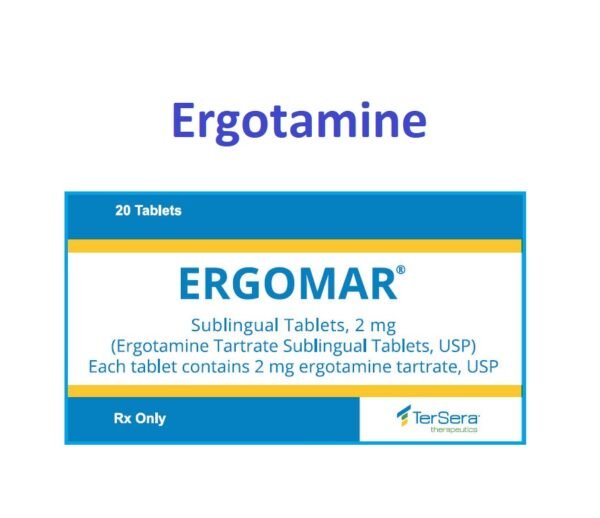
Ergotamine (Ergomar) acts on the smooth muscles of the blood vessels and uterine muscles. It is used in the treatment and prevention of migraine. The drug has been associated with serious cardiovascular adverse events and should be avoided in patients with hypertension, angina, and those with risk factors for ischemia.
Ergotamine Uses:
-
Vascular headache:
- It is used in the prevention and acute abortive treatment of vascular headaches such as migraine headaches, migraine variant headaches, and histaminic cephalgia.
Ergotamine (Ergomar) Dose in Adults
Ergotamine (Ergomar) Dose in the treatment of Vascular headache:
- Sublingual:
- It is administered as one tablet (2 mg) under the tongue as soon as the patient senses a sign of a migraine,
- The dose may be repeated in a dose of 2 mg every 30 minutes if required to a maximum dose of 6 mg per day and a total of 10 mg per week
Ergotamine (Ergomar) Dose in Childrens
Ergotamine (Ergomar) Dose in the treatment of Vascular headache:
-
Adolescents:
- Sublingual:
- It is administered as 2 mg (one tablet) under the tongue as soon as the patient senses the first sign of a migraine.
- The dose may then be repeated in a dose of 2 mg (one tablet) every 30 minutes as tolerated and if required.
- The maximum dose per day should not exceed 6 mg and the maximum dose per week should not exceed 10 mg.
- Sublingual:
Note:
- It is important to note that newer antimigraine medicines are more commonly used because of better efficacy and fewer adverse effects.
- Newer antimigraine medicines used to abort the migraine attack include:
Pregnancy Risk Factor X
- It results in decreased placental blood flow by causing smooth muscle contractions in the uterine blood vessels and myometrium.
- A reduced blood supply to the foetus can cause fetal growth retardation.
Use of ergotamine while breastfeeding
- Breastmilk may contain the drug.
- This can cause vomiting, diarrhea, weaken pulse, and changes in blood pressure in the infant who is being fed.
- Sometimes, nursing or treatment may have to be stopped.
Dose in Kidney Disease:
It should be avoided in patients with impaired renal function.
Dose in Liver disease:
It is not indicated in patients with liver disease.
Side effects of Ergotamine (Ergomar):
-
Cardiovascular:
- Bradycardia
- Cold Extremities
- ECG Changes
- Edema
- Hypertension
- Ischemia
- Tachycardia
- Valvular Sclerosis
- Vasospasm
-
Central Nervous System:
- Numbness
- Paresthesia
- Precordial Pain
- Vertigo
-
Dermatologic:
- Gangrene Of Skin Or Other Tissue
- Pruritus
-
Gastrointestinal:
- Nausea
- Vomiting
-
Genitourinary:
- Retroperitoneal Fibrosis
-
Neuromuscular & Skeletal:
- Myalgia
- Weakness
-
Respiratory:
- Cyanosis
- Pleuropulmonary Fibrosis
Contraindications to Ergotamine (Ergomar):
- Allergy to any drug or component of the formulation
- Peripheral Vascular Disease
- Liver and kidney disease
- Coronary artery disease
- Hypertension
- Sepsis
- Use with strong inhibitors of CYP3A4 such as protease inhibitors and azole antifungals along with some macrolide antibiotics
- Pregnancy
Warnings and precautions
-
Cardiac Valvular Fibrosis:
- The rare association with fibrotic thickening of the aortic, mitral and tricuspid valves has been found to be caused by prolonged use of ergotalkaloids.
-
Cardiovascular effects
- Ergot derivatives affect the smooth muscles in the blood vessels, causing vasoconstriction. This could lead to hypertension and a decrease in cerebral blood flow.
- The drug can cause peripheral vasoconstriction, which could lead to angina, digital ischemia, ischemic collitis, myocardial injury, and ischemic colitis if it is used for a prolonged period.
- Patients with vascular disease should be cautious about taking ergot alkaloids.
- According to the American Heart Association (AHA), it is suspected of causing myocardial toxicemia (magnitude major).
-
Ergotism:
- Ergotamine and other alkaloids from ergot may cause severe vasoconstriction (ergotism), which may lead to peripheral vascular ischemia, which can cause gangrene in the distal parts like the fingers and toes.
- Overdosage and prolonged use can lead to ergotism. Avoid overdosing or prolonged use of the drug.
-
Retroperitoneal and pleural fibrosis
- The drug can rarely be used for prolonged periods of time.
Ergotamine: Drug Interaction
Note: Drug Interaction Categories:
- Risk Factor C: Monitor When Using Combination
- Risk Factor D: Consider Treatment Modification
- Risk Factor X: Avoid Concomitant Use
Risk Factor C (Monitor therapy) |
|
| Antiemetics (5HT3 Antagonists) | May enhance the serotonergic effect of Serotonin Modulators. This could result in serotonin syndrome. |
| Antipsychotic Agents | Serotonin Modulators may enhance the adverse/toxic effect of Antipsychotic Agents. Specifically, serotonin modulators may enhance dopamine blockade, possibly increasing the risk for neuroleptic malignant syndrome. Antipsychotic Agents may enhance the serotonergic effect of Serotonin Modulators. This could result in serotonin syndrome. |
| Aprepitant | May increase the serum concentration of CYP3A4 Substrates (High risk with Inhibitors). |
| Chloroprocaine | May enhance the hypertensive effect of Ergot Derivatives. |
| Clofazimine | May increase the serum concentration of CYP3A4 Substrates (High risk with Inhibitors). |
| CYP3A4 Inhibitors (Moderate) | May decrease the metabolism of CYP3A4 Substrates (High risk with Inhibitors). |
| Duvelisib | May increase the serum concentration of CYP3A4 Substrates (High risk with Inhibitors). |
| Erdafitinib | May increase the serum concentration of CYP3A4 Substrates (High risk with Inhibitors). |
| Fosaprepitant | May increase the serum concentration of CYP3A4 Substrates (High risk with Inhibitors). |
| Fosnetupitant | May increase the serum concentration of CYP3A4 Substrates (High risk with Inhibitors). |
| Larotrectinib | May increase the serum concentration of CYP3A4 Substrates (High risk with Inhibitors). |
| Metaxalone | May enhance the serotonergic effect of Serotonin Modulators. This could result in serotonin syndrome. |
| Methylphenidate | May enhance the adverse/toxic effect of Serotonin Modulators. Specifically, the risk of serotonin syndrome or serotonin toxicity may be increased. |
| Metoclopramide | Serotonin Modulators may enhance the adverse/toxic effect of Metoclopramide. This may be manifest as symptoms consistent with serotonin syndrome or neuroleptic malignant syndrome. |
| Netupitant | May increase the serum concentration of CYP3A4 Substrates (High risk with Inhibitors). |
| Opioid Agonists | May enhance the serotonergic effect of Serotonin Modulators. This could result in serotonin syndrome. |
| Palbociclib | May increase the serum concentration of CYP3A4 Substrates (High risk with Inhibitors). |
| Reboxetine | May enhance the hypertensive effect of Ergot Derivatives. |
| Serotonin Modulators | May enhance the adverse/toxic effect of other Serotonin Modulators. The development of serotonin syndrome may occur. Exceptions: Nicergoline; Tedizolid. |
| Simeprevir | May increase the serum concentration of CYP3A4 Substrates (High risk with Inhibitors). |
| Tedizolid | May enhance the serotonergic effect of Serotonin Modulators. This could result in serotonin syndrome. |
| TraMADol | Serotonin Modulators may enhance the adverse/toxic effect of TraMADol. The risk of seizures may be increased. TraMADol may enhance the serotonergic effect of Serotonin Modulators. This could result in serotonin syndrome. |
Risk Factor D (Consider therapy modification) |
|
| Anti-Parkinson Agents (Monoamine Oxidase Inhibitor) | May enhance the serotonergic effect of Serotonin Modulators. This could result in serotonin syndrome. Management: Monitor for signs and symptoms of serotonin syndrome/serotonin toxicity if selegiline, rasagiline, or safinamide is combined with a serotonin modulator. Use of transdermal selegiline with serotonin modulators is contraindicated. |
| Beta-Blockers | May enhance the vasoconstricting effect of Ergot Derivatives. |
| CYP3A4 Inhibitors (Strong) | May decrease the metabolism of CYP3A4 Substrates (High risk with Inhibitors). |
| Linezolid | May enhance the serotonergic effect of Serotonin Modulators. This could result in serotonin syndrome. Management: Due to a risk of serotonin syndrome/serotonin toxicity, discontinue serotonin modulators 2 weeks prior to the administration of linezolid. If urgent initiation of linezolid is needed, discontinue serotonin modulators immediately and monitor closely. |
| Macrolide Antibiotics | May increase the serum concentration of Ergot Derivatives. Cabergoline and Clarithromycin may interact, see specific monograph for full details. Exceptions: Azithromycin (Systemic); Fidaxomicin; Spiramycin. |
| Stiripentol | May increase the serum concentration of CYP3A4 Substrates (High risk with Inhibitors). Management: Use of stiripentol with CYP3A4 substrates that are considered to have a narrow therapeutic index should be avoided due to the increased risk for adverse effects and toxicity. Any CYP3A4 substrate used with stiripentol requires closer monitoring. |
Risk Factor X (Avoid combination) |
|
| Alpha-/Beta-Agonists | Ergot Derivatives may enhance the hypertensive effect of Alpha-/BetaAgonists. Ergot Derivatives may enhance the vasoconstricting effect of Alpha-/Beta-Agonists. |
| Alpha1-Agonists | Ergot Derivatives may enhance the hypertensive effect of Alpha1-Agonists. Ergot Derivatives may enhance the vasoconstricting effect of Alpha1-Agonists. |
| Antihepaciviral Combination Products | May increase the serum concentration of Ergot Derivatives. |
| Clarithromycin | May increase the serum concentration of Ergotamine. |
| Cobicistat | May increase the serum concentration of Ergotamine. |
| Conivaptan | May increase the serum concentration of CYP3A4 Substrates (High risk with Inhibitors). |
| Crizotinib | May increase the serum concentration of Ergotamine. |
| Dapoxetine | May enhance the adverse/toxic effect of Serotonin Modulators. |
| Enzalutamide | May decrease the serum concentration of Ergotamine. |
| Fusidic Acid (Systemic) | May increase the serum concentration of CYP3A4 Substrates (High risk with Inhibitors). |
| Idelalisib | May increase the serum concentration of CYP3A4 Substrates (High risk with Inhibitors). |
| Itraconazole | May increase the serum concentration of Ergotamine. |
| Ketoconazole (Systemic) | May increase the serum concentration of Ergotamine. |
| Letermovir | May increase the serum concentration of Ergot Derivatives. |
| Lorcaserin | May enhance the adverse/toxic effect of Ergot Derivatives. Specifically, use of these drugs together may increase the risk of developing valvular heart disease. Lorcaserin may enhance the serotonergic effect of Ergot Derivatives. This could result in serotonin syndrome. |
| Methylene Blue | May enhance the serotonergic effect of Serotonin Modulators. This could result in serotonin syndrome. |
| MiFEPRIStone | May increase the serum concentration of Ergotamine. Management: Avoid ergotamine during and 2 weeks following mifepristone for treatment of hyperglycemia in Cushing's syndrome. The interaction magnitude could be lower with single doses used to terminate pregnancy, but neither effect has been studied clinically. |
| Nitroglycerin | Ergot Derivatives may diminish the vasodilatory effect of Nitroglycerin. This is of particular concern in patients being treated for angina. Nitroglycerin may increase the serum concentration of Ergot Derivatives. |
| Posaconazole | May increase the serum concentration of Ergotamine. |
| Protease Inhibitors | May increase the serum concentration of Ergot Derivatives. |
| Roxithromycin | May increase the serum concentration of Ergot Derivatives. |
| Serotonin 5-HT1D Receptor Agonists | Ergot Derivatives may enhance the vasoconstricting effect of Serotonin 5-HT1D Receptor Agonists. Serotonin 5-HT1D Receptor Agonists may enhance the vasoconstricting effect of Ergot Derivatives. |
| Voriconazole | May increase the serum concentration of Ergotamine. |
Monitoring parameters:
- Monitor blood pressure, pulse, and ECG
- Monitor for the response to treatment.
How to administer Ergotamine (Ergomar)?
The tablets should not be crushed, broken, or chewed. It may be taken without regard to meals.
Mechanism of action of Ergotamine (Ergomar):
- It can act as an antagonist or partial agonist of alpha-adrenergic, tryptamine and dopamine receptors, depending on where they are located.
- It stimulates the contraction of the uterine muscles.
- It causes constriction in the cranial, peripheral blood vessels as well as the depression of central vasomotor systems.
Absorption:
- Absorption is erratic following oral or rectal administration.
Metabolism:
- It is metabolized extensively in the liver, including high first-pass metabolism.
Bioavailability:
- Oral, rectal: Less than 5%.
Half-life elimination:
- 2-2.5 hours.
Time to peak serum concentration after oral administration:
- 2 hours.
Excretion:
- Feces (90%), primarily excreted as metabolites.
International Brand Names of Ergotamine:
- Ergomar
- Antimigraine
- Avamigran
- Cafeton
- Caftar
- Clavigrenin akut
- Cornutamin
- Enxak
- Ergam
- ergo sanol
- Ergo-Kranit
- Ergocaf
- Ergodryl Mono
- Ergokapton
- Ergosanol
- Ergosanol SL
- Ergosanol Spezial N
- Ergotamin
- Ergotamin Medihaler
- Ergotamin ”Dak”
- Ergotamina tartrato
- Ergotaminum Tartaricum
- Ergotan
- Ergotartrat
- Gynergen
- Lingraine
- Medihaler Ergotamine
- Medihaler-Ergotamine
- Migranil
- Migretamine
- Migrexa
- RubieNex
- Secagyn
- Sydolil
- Tetralgin Haler
- Trinergot
Ergotamine Brands Names in Pakistan:
No Brands Available in Pakistan.
.png)


