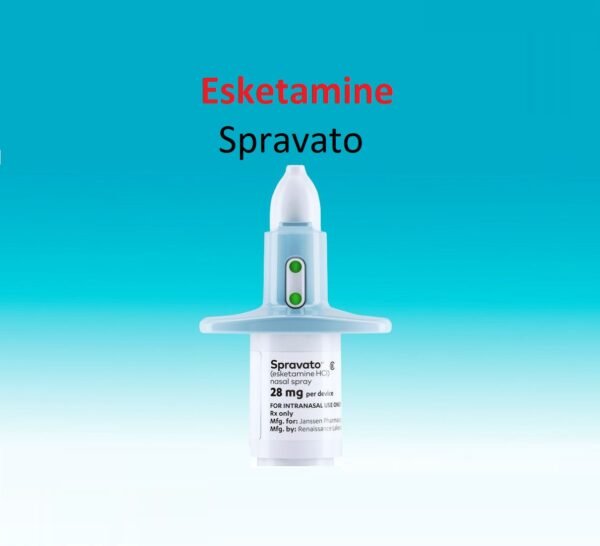
Esketamine (Spravato) is an NMDA-receptor antagonist that is used in the treatment of treatment-resistant depression. It is available as an intranasal spray.
Esketamine (Spravato) Uses:
-
Treatment-resistant Depression:
- Used in the treatment of treatment-resistant depression (TRD) in adults, in conjunction with an oral antidepressant
- Limitations of use: Not approved as an anesthetic agent. The safety and effectiveness of esketamine as an anesthetic agent have not been discovered.
Esketamine (Spravato) Dose in Adults
Esketamine (Spravato) Dose in treatment-resistant Depression:
Note:
- Administer in conjunction with an oral antidepressant.
- Must be administered under the direct supervision of a health care provider with patients monitored for adverse effects for at least 2 hours following administration.
- Intranasal:
- Induction:
- 56 mg twice in a weak;
- may increase the dose (after the first dose) based on response and tolerability up to 84 mg twice in a weak.
- After 4 weeks, evaluate for evidence of therapeutic benefit to determine the need for continued treatment.
- Maintenance:
- Beginning on week 5, using the previously established dose (56 or 84 mg) decrease the dosing frequency to once in a weak.
- At week 9 and onward, adjust the dosing frequency to the least frequent interval to maintain remission/response;
- continue once weekly or decrease to every 2 weeks.
- Induction:
-
Missed treatment sessions or worsening of symptoms:
- Consider returning to the patient's previous dosing schedule (eg, every 2 weeks to one time in a week or weekly to twice times in a weak).
Use in Children:
Not indicated.
Esketamine (Spravato) Pregnancy Risk Category: N (Not assigned)
- According to animal data, brain development may be affected by medications that block N–methyl-D-aspartate receptors (NMDA) and/or inhibit gamma–aminobutyric Acid (GABA) activity.
- The third trimester may be the most vulnerable for human fetuses.
- ACOG recommends that treatment for depression during pregnancy be individualized and include the clinical expertise of both the primary and mental health care providers.
- The American Psychiatric Association states that medication treatment can have risks, but should be weighed against untreated depression and other options.
- Women who have stopped taking antidepressant medication during pregnancy or who are at high risk of postpartum depression can resume their medications after delivery.
- The ACOG and APA have developed treatment algorithms for women suffering from depression during pregnancy and before conception.
- The manufacturer suggests that females with reproductive potential think about pregnancy planning and prevention while on esketamine therapy, based on adverse events in animal reproduction studies.
- Pregnant women who have been exposed to antidepressants during pregnancy should enroll in the National Pregnancy Registry for Antidepressants.
Use of esketamine during lactation
- It can be found in breast milk
- Based on animal data, medications that block N–methyl-D–aspartate receptors (NMDA) and/or inhibit gamma–aminobutyric Acid (GABA) activity may have an impact on brain development.
- Infants are most vulnerable in the first few months of their lives, and perhaps even up to three years old.
- The manufacturer does not recommend breastfeeding due to the possibility of adverse events in nursing infants.
Esketamine (Spravato) Dose in Kidney Disease:
Manufacturer labeling doesn't provide any dosage adjustment (has not been studied).
Esketamine (Spravato) Dose in Liver disease:
-
Mild to moderate impairment (Child-Pugh classes A and B):
- Manufacturer labeling doesn't provide any dosage adjustments (has not been studied); patients with moderate impairment may need to be monitored for adverse effects for a longer period of time.
-
Severe impairment (Child-Pugh class C):
- Use is not recommended (has not been studied).
Common Side Effects of Esketamine (Spravato):
-
Cardiovascular:
- Increased Systolic Blood Pressure
- Increased Diastolic Blood Pressure
-
Central Nervous System:
- Depersonalization
- Derealization
- Headache
- Hypoesthesia
- Anxiety
- Dissociative Reaction
- Sedated State
- Dizzinessa
- Vertigo
- Lethargy
-
Gastrointestinal:
- Nausea
- Dysgeusia
- Vomiting
Less Common Side Effects Of Esketamine (Spravato):
-
Cardiovascular:
- Increased Blood Pressure
- Tachycardia
-
Central Nervous System:
- Insomnia
- Intoxicated Feeling
- Euphoria
- Feeling Abnormal
- Mental Deficiency
- Dysarthria
-
Dermatologic:
- Hyperhidrosis
-
Gastrointestinal:
- Diarrhea
- Xerostomia
- Constipation
- Severe Nausea
- Severe Vomiting
-
Genitourinary:
- Pollakiuria
-
Neuromuscular & Skeletal:
- Tremor
-
Respiratory:
- Nasal Discomfort
- Throat Irritation
- Oropharyngeal Pain
Side effects of Esketamine (Spravato) - Frequency Not Defined:
-
Central Nervous System:
- Cognitive Dysfunction
- Drug Abuse
-
Genitourinary:
- Dysuria
- Cystitis
- Nocturia
- Urinary Urgency
Contraindications to Esketamine (Spravato):
- Hypersensitivity to esketamine or ketamine or any component of this formulation
- Aneurysmal Vascular Disease (including intracranial and peripheral arterial vessels, thoracic, abdominal, and thoracic aorta) or Arteriovenous Malformation.
- History of intracerebral hemorhage
Warnings and precautions
-
Missbrauch and abuse [US Boxed Warning]
- Esketamine can be misused and abused.
- Consider the benefits and risks of prescribing esketamine before use to patients at greater risk of abuse.
- Watch out for signs and symptoms that indicate abuse or misuse.Therapy can include drug-seeking behaviours
- People with a history or drug dependence or abuse are more at risk. Be careful before you start treatment. Also, be aware of signs and symptoms of abuse.
-
CNS Depression: [US Boxed Warning]
- After esketamine is administered, patients are at high risk of feeling sedated.
- Patients must be closely monitored during treatment sessions due to the potential for sedation. After each session, a patient assessment is performed to determine if the patient is clinically stable and ready for discharge.
- CNS depression can cause impairments in mental or physical abilities. Patients should be cautious about driving or operating machinery until they are able to sleep soundly the next day.
- In a 1-year safety study, no adverse effects of esketamine nasal Spray on cognitive function were found. However, memory and cognitive impairments have been linked to repeated ketamine misuse.
- Patients should arrange transport home after treatment according to manufacturer labeling
- Monitor closely the effects of sedation and concomitant CNS depressions.
-
Dissociation: [US Boxed Warning]
- After the administration of esketamine, patients are at high risk for perceptual or dissociative changes.
- Patients must be closely monitored during treatment sessions to avoid dissociation. After that, a patient's clinical stability and readiness to leave the hospital setting should be determined.
- Because esketamine can cause dissociative or perceptual changes (including distortions of time, space and illusions), as well as depersonalization and derealization in some patients, it is important to carefully assess them before administering esketamine. Only initiate treatment if there is a clear benefit.
-
Blood pressure
- All recommended doses have shown increases in systolic (or diastolic) blood pressure (BP), which can occur within 40 minutes and last 4 hours.
- Even if the effects of previous administrations were less, significant BP increases can occur.
- Patients who have a high risk of developing aneurysmal vascular disease or an increase in BP are advised to stop taking Esketamine.
- Before esketamine is given to patients, it is important to assess whether there are any other cerebrovascular and cardiovascular conditions.
- Before administering therapy, assess your BP. If it is elevated (>140/90 mmHg), consider the risks and benefits of delaying treatment.
- BP should be measured within 40 minutes of administration. BP should continue to be measured for at least two hours following the last dose, or until it drops below that level.
- Refer patients suffering from symptoms of hypertensive crisis (eg. chest pain, shortness or breathlessness) or hypertensiveencephalopathy (eg. sudden severe headaches, visual disturbances, seizures, diminished consciousness or focal neurological deficits) to emergency care immediately.
- Monitor blood pressure closely when concomitantly taking esketamine and psychostimulants, or monoamine oxidase inhibitors.
- Patients with a history or hypertensive encephalopathy should be monitored more closely, with more frequent BP monitoring and symptom assessment. These patients are more at risk of developing encephalopathy even with small increases in BP.
-
Suicidal thoughts, behaviors and behavior: [US Boxed Warn]
- In short-term studies, antidepressants were associated with an increase in suicidal behavior and thoughts in young adults and children.
- Studies done in short-term did not reveal an increase in risk for patients over 24 years old. However, they showed a decrease in risk for patients 65 and older.
- Monitor all patients closely for signs of clinical worsening, suicidality or unusual behavior.The patient's caregiver or family should instruct their loved ones to monitor the patient closely and to communicate with the doctor about the condition.
- Drug therapy may need to be modified or discontinued if there are signs and symptoms such as severe suicidality and worsening depression.
- Major depression can lead to suicide attempts. This possibility may continue until remission.
- Pediatric patients are not recommended to use Esketamine.
-
Interstitial or ulcerative cystitis
- Individuals who have long-term ketamine misuse/abuse or off-label usage of ketamine have been known to develop interstitial or ulcerative cystitis.
- Clinical trials showed that patients who were given esketamine for at least one year had lower rates of symptoms of the urinary tract (nocturia and pollakiuria; dysuria; micturition urgency and cystitis); however, there was no evidence of interstitial cystitis.
- Observe for symptoms in the bladder and urinary tract during treatment. If necessary, refer to a qualified health care provider.
-
Hepatic impairment
- Patients with severe hepatic impairment should not take Esketamine.
- Patients with mild hepatic impairment might need to be monitored longer for any adverse reactions.
Esketamine (intranasal): Drug Interaction
|
Risk Factor C (Monitor therapy) |
|
|
Alcohol (Ethyl) |
CNS Depressants may enhance the CNS depressant effect of Alcohol (Ethyl). |
|
Alizapride |
May enhance the CNS depressant effect of CNS Depressants. |
|
Brexanolone |
CNS Depressants may enhance the CNS depressant effect of Brexanolone. |
|
Brimonidine (Topical) |
May enhance the CNS depressant effect of CNS Depressants. |
|
Bromopride |
May enhance the CNS depressant effect of CNS Depressants. |
|
Cannabidiol |
May enhance the CNS depressant effect of CNS Depressants. |
|
Cannabis |
May enhance the CNS depressant effect of CNS Depressants. |
|
Chlorphenesin Carbamate |
May enhance the adverse/toxic effect of CNS Depressants. |
|
CNS Depressants |
Esketamine may enhance the CNS depressant effect of CNS Depressants. |
|
CNS Stimulants |
Esketamine may enhance the hypertensive effect of CNS Stimulants. |
|
Dimethindene (Topical) |
May enhance the CNS depressant effect of CNS Depressants. |
|
Doxylamine |
May enhance the CNS depressant effect of CNS Depressants. Management: The manufacturer of Diclegis (doxylamine/pyridoxine), intended for use in pregnancy, specifically states that use with other CNS depressants is not recommended. |
|
Dronabinol |
May enhance the CNS depressant effect of CNS Depressants. |
|
HydrOXYzine |
May enhance the CNS depressant effect of CNS Depressants. |
|
Kava Kava |
May enhance the adverse/toxic effect of CNS Depressants. |
|
Lofexidine |
May enhance the CNS depressant effect of CNS Depressants. Management: Drugs listed as exceptions to this monograph are discussed in further detail in separate drug interaction monographs. |
|
Magnesium Sulfate |
May enhance the CNS depressant effect of CNS Depressants. |
|
Memantine |
NMDA Receptor Antagonists may enhance the adverse/toxic effect of Memantine. |
|
MetyroSINE |
CNS Depressants may enhance the sedative effect of MetyroSINE. |
|
Minocycline |
May enhance the CNS depressant effect of CNS Depressants. |
|
Mirtazapine |
CNS Depressants may enhance the CNS depressant effect of Mirtazapine. |
|
Monoamine Oxidase Inhibitors |
Esketamine may enhance the hypertensive effect of Monoamine Oxidase Inhibitors. |
|
Nabilone |
May enhance the CNS depressant effect of CNS Depressants. |
|
Piribedil |
CNS Depressants may enhance the CNS depressant effect of Piribedil. |
|
Pramipexole |
CNS Depressants may enhance the sedative effect of Pramipexole. |
|
ROPINIRole |
CNS Depressants may enhance the sedative effect of ROPINIRole. |
|
Rotigotine |
CNS Depressants may enhance the sedative effect of Rotigotine. |
|
Rufinamide |
May enhance the adverse/toxic effect of CNS Depressants. Specifically, sleepiness and dizziness may be enhanced. |
|
Selective Serotonin Reuptake Inhibitors |
CNS Depressants may enhance the adverse/toxic effect of Selective Serotonin Reuptake Inhibitors. Specifically, the risk of psychomotor impairment may be enhanced. |
|
Solriamfetol |
Esketamine may enhance the hypertensive effect of Solriamfetol. |
|
Tetrahydrocannabinol |
May enhance the CNS depressant effect of CNS Depressants. |
|
Tetrahydrocannabinol and Cannabidiol |
May enhance the CNS depressant effect of CNS Depressants. |
|
Trimeprazine |
May enhance the CNS depressant effect of CNS Depressants. |
|
Risk Factor D (Consider therapy modification) |
|
|
Blonanserin |
CNS Depressants may enhance the CNS depressant effect of Blonanserin. |
|
Buprenorphine |
CNS Depressants may enhance the CNS depressant effect of Buprenorphine. Management: Consider reduced doses of other CNS depressants, and avoiding such drugs in patients at high risk of buprenorphine overuse/self-injection. Initiate buprenorphine patches (Butrans brand) at 5 mcg/hr in adults when used with other CNS depressants. |
|
Chlormethiazole |
May enhance the CNS depressant effect of CNS Depressants. Management: Monitor closely for evidence of excessive CNS depression. The chlormethiazole labeling states that an appropriately reduced dose should be used if such a combination must be used. |
|
Corticosteroids (Nasal) |
May diminish the therapeutic effect of Esketamine. Management: Patients who require a nasal corticosteroid on an esketamine dosing day should administer the nasal corticosteroid at least 1 hour before esketamine. |
|
Decongestants (Nasally Administered) |
May diminish the therapeutic effect of Esketamine. Management: Patients who require a nasal decongestant on an esketamine dosing day should administer the nasal decongestant at least 1 hour before esketamine. |
|
Droperidol |
May enhance the CNS depressant effect of CNS Depressants. Management: Consider dose reductions of droperidol or of other CNS agents (eg, opioids, barbiturates) with concomitant use. Exceptions to this monograph are discussed in further detail in separate drug interaction monographs. |
|
Flunitrazepam |
CNS Depressants may enhance the CNS depressant effect of Flunitrazepam. |
|
HYDROcodone |
CNS Depressants may enhance the CNS depressant effect of HYDROcodone. Management: Avoid concomitant use of hydrocodone and benzodiazepines or other CNS depressants when possible. These agents should only be combined if alternative treatment options are inadequate. If combined, limit the dosages and duration of each drug. |
|
Methotrimeprazine |
CNS Depressants may enhance the CNS depressant effect of Methotrimeprazine. Methotrimeprazine may enhance the CNS depressant effect of CNS Depressants. Management: Reduce adult dose of CNS depressant agents by 50% with initiation of concomitant methotrimeprazine therapy. Further CNS depressant dosage adjustments should be initiated only after clinically effective methotrimeprazine dose is established. |
|
Opioid Agonists |
CNS Depressants may enhance the CNS depressant effect of Opioid Agonists. Management: Avoid concomitant use of opioid agonists and benzodiazepines or other CNS depressants when possible. These agents should only be combined if alternative treatment options are inadequate. If combined, limit the dosages and duration of each drug. |
|
OxyCODONE |
CNS Depressants may enhance the CNS depressant effect of OxyCODONE. Management: Avoid concomitant use of oxycodone and benzodiazepines or other CNS depressants when possible. These agents should only be combined if alternative treatment options are inadequate. If combined, limit the dosages and duration of each drug. |
|
Perampanel |
May enhance the CNS depressant effect of CNS Depressants. Management: Patients taking perampanel with any other drug that has CNS depressant activities should avoid complex and high-risk activities, particularly those such as driving that require alertness and coordination, until they have experience using the combination. |
|
Sodium Oxybate |
May enhance the CNS depressant effect of CNS Depressants. Management: Consider alternatives to combined use. When combined use is needed, consider minimizing doses of one or more drugs. Use of sodium oxybate with alcohol or sedative hypnotics is contraindicated. |
|
Suvorexant |
CNS Depressants may enhance the CNS depressant effect of Suvorexant. Management: Dose reduction of suvorexant and/or any other CNS depressant may be necessary. Use of suvorexant with alcohol is not recommended, and the use of suvorexant with any other drug to treat insomnia is not recommended. |
|
Tapentadol |
May enhance the CNS depressant effect of CNS Depressants. Management: Avoid concomitant use of tapentadol and benzodiazepines or other CNS depressants when possible. These agents should only be combined if alternative treatment options are inadequate. If combined, limit the dosages and duration of each drug. |
|
Zolpidem |
CNS Depressants may enhance the CNS depressant effect of Zolpidem. Management: Reduce the Intermezzo brand sublingual zolpidem adult dose to 1.75 mg for men who are also receiving other CNS depressants. No such dose change is recommended for women. Avoid use with other CNS depressants at bedtime; avoid use with alcohol. |
|
Risk Factor X (Avoid combination) |
|
|
Azelastine (Nasal) |
CNS Depressants may enhance the CNS depressant effect of Azelastine (Nasal). |
|
Bromperidol |
May enhance the CNS depressant effect of CNS Depressants. |
|
Orphenadrine |
CNS Depressants may enhance the CNS depressant effect of Orphenadrine. |
|
Oxomemazine |
May enhance the CNS depressant effect of CNS Depressants. |
|
Paraldehyde |
CNS Depressants may enhance the CNS depressant effect of Paraldehyde. |
|
Thalidomide |
CNS Depressants may enhance the CNS depressant effect of Thalidomide. |
Monitoring parameters:
- After the last dose, monitor all patients closely for any adverse effects in a healthcare setting for at most 2 hours.
- Blood pressure (prior and after dose); repeat for at most 40 minutes, then for as long as is clinically necessary for at least two hours.
- Suicidal ideation, especially at the beginning of therapy and when dosages are increased or reduced
- Before administering medication, evaluate patient risk for misuse or abuse, psychosis, cardiovascular and cerebrovascular problems, and psychosis.
- Monitor all patients closely for signs of depression or suicidal thoughts or behaviors. This is especially important during the first few months of therapy.
- To determine if continued treatment is necessary, you should assess the evidence for therapeutic benefit at the conclusion of the induction phase.
- During therapy, closely monitor patients for any signs or symptoms of abuse or misuse;
- Monitor for Sedation when using concomitant CNS Depressants.
- During treatment, monitor your bladder for any symptoms.
How to administer Esketamine (Spravato) Intranasal?
Intranasal:
- Avoid eating for at least two hours prior to administering medication and drink liquids no more than 30 minutes before administering. This will reduce the chance of nausea and vomiting.
- Dosing day: If the patient needs a nasal corticosteroid, or nasal decongestant, it should be administered at least one hour before esketamine is given.
- To avoid medication loss, do not prime the device before you use it. Each nasal spray device has 2 sprays (one for each nostril), and delivers 28 mg. Only one spray per nostril.
- To ensure absorption, you should use 2 or 3 devices to administer 56 mg of the dose.
- Gently blow your nose to clear the nostrils. Use only the schedule III drug procedure and comply with all federal, state and local regulations to dispose of any used devices.
Mechanism of action of Esketamine (Spravato):
- Esketamine (Selective, Noncompetitive Nmethyl-D-aspartate) receptor antagonist is known as Esketamine.
- It is not known how it works. Noresketamine, the major circulating metabolite, demonstrated similar activity but with less affinity.
Protein binding:
- ~43 percent to 45 percent
Metabolism:
- Primarily metabolized to the active metabolite noresketamine via cytochrome P450 (CYP) enzymes CYP2B6 and CYP3A4 and to a lesser extent CYP2C9 and CYP2C19.
- Noresketamine is metabolized via CYP-dependent pathways and certain subsequent metabolites undergo glucuronidation.
Bioavailability:
- ~48 percent
Half-life elimination:
- Esketamine: 7 to 12 hours;
- Noresketamine (active metabolite): ~8 hours
Time to peak, plasma:
- 20 to 40 minutes
Excretion:
- Urine (less than 1 percent as unchanged drug)
International Brand Names of Esketamine Intranasal:
- Spravato (56 MG Dose)
- Esketiv
- Ketanest
- Ketanest S
- Ketanest-S
- Spravato (84 MG Dose)
- Vesierra
Intranasal Esketamine Brand Names in Pakistan:
There is no brand available in Pakistan.
.png)


