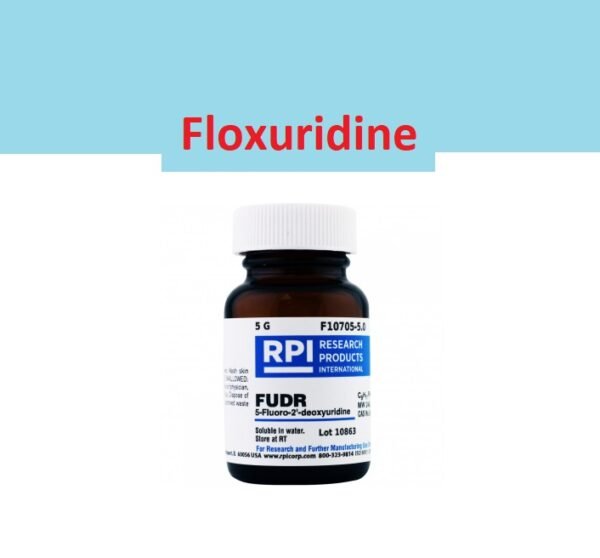
Floxuridine (FUDR) is an antimetabolite drug that is administered intra-arterial for hepatic metastasis of colorectal carcinoma.
Floxuridine (FUDR) Indications:
-
Colorectal cancer with hepatic metastases:
- Used for the palliative management of hepatic metastases of colorectal cancer (administered by continuous regional hepatic intra-arterial infusion) in select patients considered incurable by surgical resection or other means.
- Limitation of use:
- Patients with known disease extending beyond an area capable of a single artery infusion should (in most cases) be considered for systemic chemotherapy with other agents.
Floxuridine (FUDR) Dose in Adults
Floxuridine (FUDR) Dose in the treatment of colorectal cancer with hepatic metastases:
- Hepatic intra-arterial (off-label combination):
- 0.25 mg/kg/day (with dexamethasone and heparin) continuous infusion for 14 days during a 5-week cycle for 6 cycles (in combination with 6 cycles of fluorouracil and leucovorin; begin floxuridine 2 weeks after the fluorouracil and leucovorin cycle).
-
Manufacturer’s labeling:
- Dosing in the prescribing information may not reflect current clinical practice.
- Range: 0.1 to 0.6 mg/kg/day as a continuous infusion;
- Usual dose: 0.4 to 0.6 mg/kg/day as a continuous infusion;
- continue until intolerable toxicity.
Use in Children:
Not indicated.
Pregnancy Risk Factor D
- Humans are known to be teratogenic for drugs that inhibit DNA synthesis.
- Females with reproductive potential should not get pregnant while receiving floxuridine treatment.
- Animal reproduction studies have shown adverse effects.
- If Floxuridine is administered during pregnancy, it can cause harm to the fetus.
Use of loxuridine while breastfeeding
- The manufacturer suggests against breastfeeding while receiving floxuridine treatment.
Dose in Kidney Disease:
Manufacturer’s labeling doesn't provide and dosage adjustments; Use with extreme caution
Floxuridine (FUDR) Dose in Liver disease:
- Manufacturer’s labeling doesn't provide and dosage adjustments;
- Use with extreme caution.
- Dosage adjustments for hepatic impairment have been described in literature.
-
Floyd 2006:
- Serum bilirubin 1.2 x ULN or alkaline phosphatase 1.2 x ULN:
- Administer 80% of the dose.
- Serum bilirubin 1.5 x ULN; transaminases 3 x baseline or alkaline phosphatase 1.5 x ULN:
- Administer 50% of the dose.
- Serum bilirubin 2 x ULN; transaminases >3 x baseline or alkaline phosphatase 2 x ULN:
- No recommendation is available.
- Serum bilirubin 1.2 x ULN or alkaline phosphatase 1.2 x ULN:
- Zalcberg 2004 (baseline is the value obtained on the day of the last floxuridine dose; dosage adjustment based on value on the pump emptying day or planned treatment day [whichever is higher]):
-
AST:
- If baseline AST was ≤50 units/L:
- Administer 80% of the dose if AST is 3 to <4 x the baseline value, and administer 50% of the dose if AST is 4 to <5 x the baseline value.
- If AST is ≥5 x the baseline value, hold floxuridine.
- May restart floxuridine at 50% of the last dose administered when AST is <4 x the baseline value.
- If baseline AST was >50 units/L:
- Administer 80% of the dose if AST is 2 to <3 x the baseline value, and administer 50% of the dose if AST is 3 to <4 x the baseline value.
- If AST is ≥4 x the baseline value, hold floxuridine.
- May restart floxuridine at 50% of the last dose administered when AST is <3 x the baseline value.
- If baseline AST was ≤50 units/L:
-
Alkaline phosphatase:
- If baseline alkaline phosphatase was ≤90 units/L:
- Administer 50% of the dose if alkaline phosphatase is 1.5 to <2 x the baseline value.
- If alkaline phosphatase is ≥2 x the baseline value, hold floxuridine.
- May restart floxuridine at 25% of the last dose administered when alkaline phosphatase is <1.5 x the baseline value.
- If baseline alkaline phosphatase was >90 units/L:
- Administer 50% of the dose if alkaline phosphatase is 1.2 to <1.5 x the baseline value.
- If alkaline phosphatase is ≥1.5 x the baseline value, hold floxuridine.
- May restart floxuridine at 25% of the last dose administered when alkaline phosphatase is <1.2 x the baseline value.
- If baseline alkaline phosphatase was ≤90 units/L:
-
Total bilirubin:
- If the baseline total bilirubin was ≤1.2 mg/dL:
- Administer 50% of the dose if bilirubin is 1.5 to <2 x the baseline value.
- If bilirubin is ≥2 x the baseline value, hold floxuridine.
- May restart floxuridine at 25% of the last dose administered when total bilirubin is <1.5 x the baseline value.
- Administer 50% of the dose if bilirubin is 1.5 to <2 x the baseline value.
- If baseline total bilirubin was >1.2 mg/dL:
- Administer 50% of the dose if bilirubin is 1.2 to <1.5 x the baseline value.
- If bilirubin is ≥1.5 x the baseline value, hold floxuridine.
- May restart floxuridine at 25% of the last dose administered when total bilirubin is <1.2 x the baseline value.
- If the baseline total bilirubin was ≤1.2 mg/dL:
-
Common Side Effects of Floxuridine (FUDR):
-
Gastrointestinal:
- Diarrhea (May Be Dose Limiting)
- Stomatitis
-
Hematologic & Oncologic:
- Anemia
- Bone Marrow Depression (Nadir: 7-10 Days; May Be Dose Limiting)
- Leukopenia
- Thrombocytopenia
Less Common Side Effects Of Floxuridine (FUDR):
-
Dermatologic:
- Alopecia
- Dermatitis
- Localized Erythema
- Skin Hyperpigmentation
- Skin Photosensitivity
-
Gastrointestinal:
- Anorexia
- Biliary Sclerosis
- Cholecystitis
-
Hepatic:
- Jaundice
Contraindications to Floxuridine (FUDR):
- Inadequate nutrition;
- Potentially deadly infections
- Function of the bone marrow is depressed
Warnings and precautions
-
Suppression of bone marrow
- Floxuridine can cause severe leukopenia and hematologic toxicities.
- Anemia and thrombocytopenia are common.
- The nadir is typically between 7 and 10 days. Therapy discontinuation may be necessary for thrombocytopenia or leukopenia.
-
Cardiovascular toxicities:
- There have been reports of myocardial ischemia. If this happens, discontinue or avoid immediately.
-
Gastrointestinal toxicities:
- Could cause gastrointestinal toxicities.
- Stop if you feel that you are experiencing stomatitis, esophagopharyngitis or other symptoms.
- For severe vomiting, diarrhea, and gastrointestinal ulceration/bleeding, discontinue use.
-
Hemorrhage
- If hemorhage occurs (from any site), discontinue use
- There may be bleeding.
-
Toxicity
- It is possible for toxicities to occur. Keep an eye out.
- Patients at high risk are more likely to experience severe toxicities, as well as patients who have had prior alkylating agent use, and patients who have had previous pelvic radiation.
-
Hepatic impairment
- Patients with severe hepatic impairment should use it with caution.
-
Renal impairment
- Patients with severe renal impairment should be cautious.
Floxuridine: Drug Interaction
|
Risk Factor C (Monitor therapy) |
|
|
Chloramphenicol (Ophthalmic) |
May enhance the adverse/toxic effect of Myelosuppressive Agents. |
|
Cimetidine |
May increase serum concentrations of the active metabolite(s) of Floxuridine. Specifically, concentrations of fluorouracil may be increased. |
|
CloZAPine |
Myelosuppressive Agents may enhance the adverse/toxic effect of CloZAPine. Specifically, the risk for neutropenia may be increased. |
|
Coccidioides immitis Skin Test |
Immunosuppressants may diminish the diagnostic effect of Coccidioides immitis Skin Test. |
|
Denosumab |
May enhance the adverse/toxic effect of Immunosuppressants. Specifically, the risk for serious infections may be increased. |
|
Folic Acid |
May enhance the adverse/toxic effect of Floxuridine. |
|
Haloperidol |
QT-prolonging Agents (Indeterminate Risk - Caution) may enhance the QTcprolonging effect of Haloperidol. |
|
Leucovorin Calcium-Levoleucovorin |
May enhance the adverse/toxic effect of Floxuridine. |
|
MetroNIDAZOLE (Systemic) |
May increase serum concentrations of the active metabolite(s) of Floxuridine. Specifically, serum concentrations of fluorouracil may be increased. |
|
Ocrelizumab |
May enhance the immunosuppressive effect of Immunosuppressants. |
|
Pidotimod |
Immunosuppressants may diminish the therapeutic effect of Pidotimod. |
|
Promazine |
May enhance the myelosuppressive effect of Myelosuppressive Agents. |
|
QT-prolonging Agents (Highest Risk) |
QT-prolonging Agents (Indeterminate Risk - Caution) may enhance the QTc-prolonging effect of QT-prolonging Agents (Highest Risk). Management: Monitor for QTc interval prolongation and ventricular arrhythmias when these agents are combined. Patients with additional risk factors for QTc prolongation may be at even higher risk. |
|
Siponimod |
Immunosuppressants may enhance the immunosuppressive effect of Siponimod. |
|
Tertomotide |
Immunosuppressants may diminish the therapeutic effect of Tertomotide. |
|
Trastuzumab |
May enhance the neutropenic effect of Immunosuppressants. |
|
Risk Factor D (Consider therapy modification) |
|
|
Baricitinib |
Immunosuppressants may enhance the immunosuppressive effect of Baricitinib. Management: Use of baricitinib in combination with potent immunosuppressants such as azathioprine or cyclosporine is not recommended. Concurrent use with antirheumatic doses of methotrexate or nonbiologic disease modifying antirheumatic drugs (DMARDs) is permitted. |
|
Echinacea |
May diminish the therapeutic effect of Immunosuppressants. |
|
Fingolimod |
Immunosuppressants may enhance the immunosuppressive effect of Fingolimod. Management: Avoid the concomitant use of fingolimod and other immunosuppressants when possible. If combined, monitor patients closely for additive immunosuppressant effects (eg, infections). |
|
Fosphenytoin |
Floxuridine may increase the serum concentration of Fosphenytoin. |
|
Leflunomide |
Immunosuppressants may enhance the adverse/toxic effect of Leflunomide. Specifically, the risk for hematologic toxicity such as pancytopenia, agranulocytosis, and/or thrombocytopenia may be increased. Management: Consider not using a leflunomide loading dose in patients receiving other immunosuppressants. Patients receiving both leflunomide and another immunosuppressant should be monitored for bone marrow suppression at least monthly. |
|
Lenograstim |
Antineoplastic Agents may diminish the therapeutic effect of Lenograstim. Management: Avoid the use of lenograstim 24 hours before until 24 hours after the completion of myelosuppressive cytotoxic chemotherapy. |
|
Lipegfilgrastim |
Antineoplastic Agents may diminish the therapeutic effect of Lipegfilgrastim. Management: Avoid concomitant use of lipegfilgrastim and myelosuppressive cytotoxic chemotherapy. Lipegfilgrastim should be administered at least 24 hours after the completion of myelosuppressive cytotoxic chemotherapy. |
|
Nivolumab |
Immunosuppressants may diminish the therapeutic effect of Nivolumab. |
|
Palifermin |
May enhance the adverse/toxic effect of Antineoplastic Agents. Specifically, the duration and severity of oral mucositis may be increased. Management: Do not administer palifermin within 24 hours before, during infusion of, or within 24 hours after administration of myelotoxic chemotherapy. |
|
Phenytoin |
Floxuridine may increase the serum concentration of Phenytoin. |
|
Roflumilast |
May enhance the immunosuppressive effect of Immunosuppressants. |
|
Sipuleucel-T |
Immunosuppressants may diminish the therapeutic effect of Sipuleucel-T. Management: Evaluate patients to see if it is medically appropriate to reduce or discontinue therapy with immunosuppressants prior to initiating sipuleucel-T therapy. |
|
Tofacitinib |
Immunosuppressants may enhance the immunosuppressive effect of Tofacitinib. Management: Concurrent use with antirheumatic doses of methotrexate or nonbiologic disease modifying antirheumatic drugs (DMARDs) is permitted, and this warning seems particularly focused on more potent immunosuppressants. |
|
Vaccines (Inactivated) |
Immunosuppressants may diminish the therapeutic effect of Vaccines (Inactivated). Management: Vaccine efficacy may be reduced. Complete all age-appropriate vaccinations at least 2 weeks prior to starting an immunosuppressant. If vaccinated during immunosuppressant therapy, revaccinate at least 3 months after immunosuppressant discontinuation. |
|
Vitamin K Antagonists (eg, warfarin) |
Floxuridine may increase the serum concentration of Vitamin K Antagonists. Management: Monitor INR and signs/symptoms of bleeding closely when starting or stopping floxuridine in a patient receiving a vitamin K antagonist. Anticoagulant dose adjustment will likely be necessary. |
|
Risk Factor X (Avoid combination) |
|
|
BCG (Intravesical) |
Immunosuppressants may diminish the therapeutic effect of BCG (Intravesical). |
|
BCG (Intravesical) |
Myelosuppressive Agents may diminish the therapeutic effect of BCG (Intravesical). |
|
Cladribine |
May enhance the immunosuppressive effect of Immunosuppressants. |
|
Cladribine |
May enhance the myelosuppressive effect of Myelosuppressive Agents. |
|
Cladribine |
Agents that Undergo Intracellular Phosphorylation may diminish the therapeutic effect of Cladribine. |
|
Deferiprone |
Myelosuppressive Agents may enhance the neutropenic effect of Deferiprone. |
|
Dipyrone |
May enhance the adverse/toxic effect of Myelosuppressive Agents. Specifically, the risk for agranulocytosis and pancytopenia may be increased |
|
Gimeracil |
May increase serum concentrations of the active metabolite(s) of Floxuridine. Specifically, gimeracil may increase concentrations of fluorouracil. |
|
Natalizumab |
Immunosuppressants may enhance the adverse/toxic effect of Natalizumab. Specifically, the risk of concurrent infection may be increased. |
|
Pimecrolimus |
May enhance the adverse/toxic effect of Immunosuppressants. |
|
Tacrolimus (Topical) |
May enhance the adverse/toxic effect of Immunosuppressants. |
|
Vaccines (Live) |
Immunosuppressants may enhance the adverse/toxic effect of Vaccines (Live). Immunosuppressants may diminish the therapeutic effect of Vaccines (Live). Management: Avoid use of live organism vaccines with immunosuppressants; live-attenuated vaccines should not be given for at least 3 months after immunosuppressants. |
Monitoring parameters:
- Monitor CBC with differential and platelet count;
- liver function (phosphatase, bilirubin, alkaline and transaminases);
- monitor for signs and symptoms of gastrointestinal ulceration or bleeding, stomatitis or esophagopharyngitis, hemorrhage, vomiting, and/or diarrhea.
How to administer Floxuridine (FUDR)?
Administer as a continuous hepatic intra-arterial infusion using an infusion pump.
Mechanism of action of Floxuridine (FUDR):
- After intra-arterial administration of fluorouracil, Floxuridine is catabolized into fluorouracil.
- This results in an activity similar to fluorouracil. It also inhibits thymidylate synthesis and disrupts DNA/RNA synthesis.
Metabolism:
- It is metabolized by the liver to active metabolites (Floxuridine monophosphate, FUDR-MP and fluorouracil), and inactive metabolites ("Urea, CO2, afluorob-alanine and afluorob-guanidopropionic and ureidopropionic acids, respectively)
Excretion:
- Urine (as fluorouracil and urea), afluorob-alanine; afluorob-guanidopropionic Acid, afluorob-ureidopropionic Acid, and dihydrofluorouracil. Respiratory (as exhaled gases [CO2]).
International Brand Names of Floxuridine:
- FUDR
Floxuridine Brand Names in Pakistan:
There is no brand of Floxuridine available in Pakistan.
.png)


