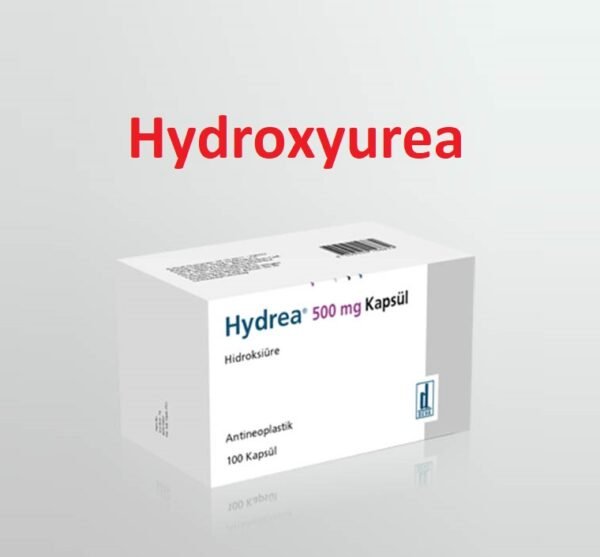
Hydroxyurea (Hydrea) is an antimetabolite that halts the cell cycle. It also alters RBCs interaction with the endothelium, increases Hemoglobin F, increases intracellular water content, and increases cellular permeability.
Hydroxyurea (Hydrea) Uses:
-
Chronic myeloid leukemia, resistant (Hydrea):
- Used for the treatment of resistant chronic myeloid leukemia (CML)
-
Head and neck cancer (Hydrea):
- Management (in combination with chemoradiation therapy) of locally advanced squamous cell head and neck cancer (excluding lip cancer)
-
Sickle cell anemia (Droxia, Siklos):
- Management of sickle cell anemia (to reduce the frequency of painful crises and to reduce the need for blood transfusions in patients with recurrent moderate to severe painful crises) in adults (Droxia) or in children of 2 years or more than 2 years, adolescents, and adults (Siklos)
-
Off Label Use of Hydroxyurea in Adults:
- Used in acute myeloid leukemia, cytoreduction
- Used in essential thrombocythemia, high-risk
- Used in hypereosinophilic syndrome
- Used in meningioma
- Used in polycythemia vera, high-risk
Hydroxyurea (Hydrea) Dose in Adults
Note: Doses should be based on ideal or actual body weight, whichever is less (per manufacturer). Prophylactic administration of folic acid is necessary.
Hydroxyurea (Hydrea) Dose in the treatment of chronic myeloid leukemia (Hydrea):
- Oral: Initial: 40 mg per kg per day (reduce initial dose for thrombocytopenia);
- reduce the dose to 20 mg per kg per day if the WBC count is less than 2,000 per mm³.
- Further, individualize dose based on WBC counts.
- Hydroxyurea may be used for short-term therapy of elevated WBC counts prior to initiating a TKI.
Hydroxyurea (Hydrea) Dose in the treatment of Head and neck cancer (Hydrea):
- Oral (individualize treatment/regimen based on tumor type, response, and current clinical practice standards):
- 1,000 mg every 12 hours for 11 doses per cycle, in combination with continuous infusion of fluorouracil and radiation therapy.
Hydroxyurea (Hydrea) Dose in the treatment of Sickle cell anemia: Oral:
- Droxia:
- Initial: 15 mg per kg per day as a single dose in a day.
- Monitor blood counts every 2 weeks; if blood counts are in an acceptable range, may increase by 5 mg per kg per day every 12 weeks until the maximum tolerated dose of 35 mg per kg per day is achieved or the dose that does not produce toxic effects over 24 consecutive weeks (do not increase the dose if blood counts are between acceptable and toxic ranges).
- If toxicity occurs, withhold treatment until the bone marrow recovers, then restart with a dose reduction of 2.5 mg per kg per day; if no toxicity occurs over the next 12 weeks, then the subsequent dose may be increased by 2.5 mg per kg per day every 12 weeks to a maximum tolerated dose (the dose that does not produce hematologic toxicity for 24 consecutive weeks).
- If hematologic toxicity recurs a second time at a specific dose, discontinue treatment.
- Acceptable hematologic ranges:
- Platelets ≥95,000/mm³;
- hemoglobin >5.3 g/dL;
- Neutrophils ≥2,500/mm³ and reticulocytes ≥95,000/mm³ if hemoglobin is <9 g/dL
- Toxic hematologic ranges:
- hemoglobin <4.5 g/dL;
- Neutrophils <2,000/mm³;
- platelets <80,000/mm³; and
- reticulocytes <80,000/mm³ if hemoglobin is <9 g/dL
- Siklos:
- Initial: 20 mg per kg per day as a single daily dose.
- Monitor blood counts every 2 weeks;
- If blood counts are in an acceptable range, may increase by 5 mg per kg per day every 8 weeks or if a painful crisis occurs until mild myelosuppression (ANC 2,000 to 4,000 per mm³) is achieved, or up to a maximum dose of 35 mg per kg per day.
- If blood counts are in a toxic range, discontinue until hematologic recovery.
- Following hematologic recovery, restart with the dose reduced by 5 mg per kg per day; may titrate dose up or down every 8 weeks in 5 mg per kg per day increments, seeking a stable dose with no hematologic toxicity for 24 weeks.
- Discontinue permanently if hematologic toxicity develops twice.
- Acceptable hematologic ranges:
- hemoglobin >5.3 g/dL;
- Neutrophils ≥2,000/mm³;
- platelets ≥80,000/mm³ and
- reticulocytes ≥80,000/mm³ if hemoglobin is <9 g/dL
- Toxic hematologic ranges:
- Neutrophils <2,000/mm³ (neutrophil limit of 1,250/mm³ may be acceptable in younger patients with lower baseline counts);
- hemoglobin <4.5 g/dL;
- platelets <80,000/mm³; and
- reticulocytes <80,000/mm³ if hemoglobin is <9 g/dL
- Calculate rounded doses to the nearest 50 or 100 mg strength.
Note:
- A clinical response to treatment may take 3 to 6 months; a 6-month trial of the maximum tolerated dose is recommended prior to considering discontinuation due to treatment failure.
- The effectiveness of hydroxyurea depends upon daily dosing adherence. For patients who have a clinical response, long-term hydroxyurea therapy is indicated.
Hydroxyurea (Hydrea) Dose in the treatment of Acute myeloid leukemia (AML), cytoreduction (off-label):
- Oral: 50 to 100 mg per kg per day until WBC less than 100,000 per mm³ or 50 to 60 mg per kg per day until WBC less than 10,000 to 20,000/mm³.
Hydroxyurea (Hydrea) Dose in the treatment of Essential thrombocythemia, high-risk (off-label):
- Oral: 500 to 1000 mg each day; adjust the dose to maintain platelets <400,000/mm³.
Hydroxyurea (Hydrea) Dose in the treatment of Hypereosinophilic syndrome (off-label):
- Oral: 1,000 to 3,000 mg per day.
Hydroxyurea (Hydrea) Dose in the treatment of Meningioma (off-label):
- Oral: 20 mg/kg once in a day.
Hydroxyurea (Hydrea) Dose in the treatment of high-risk Polycythemia vera (off-label):
- Oral: 15 to 20 mg per kg per day.
Hydroxyurea (Hydrea) Dose in Childrens
Note: Doses should be based on ideal or actual body weight, whichever is less (per manufacturer); calculate rounded doses to the nearest 50 mg or 100 mg strengths.
Hydroxyurea (Hydrea) Dose in the treatment of Sickle cell anemia:
-
Infants ≥6 months, Children, and Adolescents: Limited data available in infants and children <2 years:
- Initial: Oral: 20 mg per kg per dose once in a day;
- Monitor blood counts every 2 weeks;
- The dose may be increased by 5 mg per kg per day every 8 weeks until mild myelosuppression (see the following Acceptable Hematologic Ranges) is achieved or if painful crises occur (as long as myelosuppression acceptable);
- The maximum daily dose: 35 mg per kg per day.
- An initial starting dose of 15 mg per kg per dose once a day has also been studied.
- A clinical response to treatment may take 3 to 6 months; a 6-month trial of the maximum tolerated dose is recommended prior to considering discontinuation due to treatment failure; effectiveness of hydroxyurea depends upon daily dosing adherence.
- For patients who have a clinical response, long-term hydroxyurea therapy is indicated.
- Acceptable hematologic ranges:
- Neutrophils ≥2,000 to 4,000/mm³ (younger patients with lower baseline counts may safely tolerate ANC down to 1,250/mm³),
- platelets ≥80,000/mm³;
- hemoglobin >5.3 g/dL, and
- reticulocytes ≥80,000/mm³ if hemoglobin is <9 g/dL
Hydroxyurea (Hydrea) Dosing adjustment for toxicity:
-
Infants ≥6 months, Children, and Adolescents: Oral:
-
Hematologic: Sickle cell disease:
- Toxic myelosuppression (Neutrophils less than 2,000/mm³ [ANC minimum limit of 1,250/mm³ may be acceptable in younger patients with lower baseline counts], platelets less than 80,000/mm³; Hgb less than 4.5 g/dL or reticulocyte less than 80,000/mm³ with Hgb <9 g/dL):
- Hold therapy until counts recover (monitor weekly);
- reinitiate at a dose 5 mg/kg/day lower than the dose given prior to the onset of toxic myelosuppression.
- some have recommended reinitiating at a dose of 2.5 mg per kg per day lower than the prior dose.
- Titrate dose up or down every 8 weeks in 5 mg per kg per day increments until the patient is at a stable dose that does not result in hematologic toxicity for 24 weeks.
- If hematologic toxicity develops again (ie, twice), permanently discontinue therapy.
- Toxic myelosuppression (Neutrophils less than 2,000/mm³ [ANC minimum limit of 1,250/mm³ may be acceptable in younger patients with lower baseline counts], platelets less than 80,000/mm³; Hgb less than 4.5 g/dL or reticulocyte less than 80,000/mm³ with Hgb <9 g/dL):
-
Non-hematologic:
- The presented adjustments are based on experience in adult patients; specific recommendations for pediatric patients are limited.
- Adult:
- Cutaneous vasculitic ulcerations: Discontinue
- Pancreatitis: Discontinue permanently
-
Hydroxyurea (Hydrea) Pregnancy Category: D
- Animal reproduction studies have shown adverse effects.
- Hydroxyurea may cause damage to spermatozoa or testicular tissue.
- Males with female partners who have potential for recurrent pregnancy should use effective contraception throughout and for at most 6 months (Siklos), and 1 year (Droxia/Hydea) after treatment.
- Hydroxyurea can cause harm to the fetus based on its mechanism of action if it is administered during pregnancy.
- Women with reproductive potential should be warned not to become pregnant while on hydroxyurea therapy.
- They should also check their pregnancy status before starting therapy.
- In male patients, oligospermia and zoospermia have been seen.
- Counsel males with reproductive potential about sperm bank before therapy initiation.
Use of hydroxyurea during lactation
- Breast milk contains hydroxyurea.
- The manufacturer suggests that you stop breastfeeding because of the risk of serious adverse reactions in breastfed babies.
Hydroxyurea (Hydrea) Dose in Kidney Disease:
-
CML, head and neck cancer (manufacturer's labeling):
- CrCl ≥60 mL/minute:
- No dosage adjustment (of initial dose) required.
- CrCl <60 mL/minute:
- Reduce initial dose by 50 percent; titrate to response/avoidance of toxicity
- End-stage renal disease (ESRD):
- Reduce initial dose by 50 percent (administer after dialysis on dialysis days); titrate to response/avoidance of toxicity
- CrCl ≥60 mL/minute:
-
Sickle cell anemia:
- Droxia:
- CrCl ≥60 mL/minute:
- No dosage adjustment (of initial dose) required.
- CrCl <60 mL/minute:
- Reduce initial dose by 50 percent to 7.5 mg per kg per day (Yan 2005); titrate to response/avoidance of toxicity (refer to usual dosing).
- ESRD:
- Reduce initial dose by 50 percent to 7.5 mg per kg per dose (administer after dialysis on dialysis days); titrate to response/avoidance of toxicity.
- CrCl ≥60 mL/minute:
- Siklos:
- CrCl ≥60 mL/minute:
- No dosage adjustment (of initial dose) required.
- CrCl <60 mL/minute:
- Reduce initial dose by 50 percent to 10 mg per kg per day; titrate to response/avoidance of toxicity (refer to usual dosing).
- ESRD:
- Reduce initial dose by 50 percent to 10 mg per kg per day; titrate to response/avoidance of toxicity.
- CrCl ≥60 mL/minute:
- NHLBI 2014:
- Chronic kidney disease:
- Initial 5 to 10 mg per kg per day
- Chronic kidney disease:
- Droxia:
Dose in Liver Disease:
Manufacturer's labeling doesn't provided any dosage adjustments; Closely monitor for bone marrow toxicity.
Common Side Effects of Hydroxyurea (Hydrea):
-
Dermatologic:
- Eczema
-
Hematologic & Oncologic:
- Macrocytosis
Less Common Side Effects Of Hydroxyurea (Hydrea):
-
Dermatologic:
- Leg Ulcer
- Dermal Ulcer
-
Gastrointestinal:
- Acute Mucocutaneous Toxicity
-
Respiratory:
- Asthma
Frequency of side effects not defined:
-
Dermatologic:
- Alopecia
- Nail Discoloration (Melanonychia)
-
Gastrointestinal:
- Gastric Distress (Infrequent)
- Gastritis (Potentiated With Radiation Therapy)
- Mucositis (Potentiated With Radiation Therapy)
- Oral Mucosa Ulcer (Infrequent)
-
Hematologic & Oncologic:
- Anemia
- Bone Marrow Depression (Recovery: Within 2 Weeks)
- Hemorrhage
- Leukemia
- Leukopenia
- Reticulocytopenia (Wang 2011)
- Thrombocytopenia
-
Neuromuscular & Skeletal:
- Panniculitis (Antonioli 2012)
Contraindications to Hydroxyurea (Hydrea):
US Labeling
- Hypersensitivity to hydroxyurea and any component of the formulation
Canadian labeling: Additional contraindications not in the US labeling
- Severe bone marrow depression (eg, leukopenia [2,500/mm3], severe anemia [100,000./mm3], or thrombocytopenia]
Warnings/Precaution:
-
Suppression of bone marrow: [US Boxed Warning]
- Hydroxyurea can cause severe myelosuppression.
- Monitor blood pressure at baseline and during treatment.
- You can interrupt treatment or reduce the dosage as needed.
- Commonly, leukopenia or neutropenia occur. Thrombcytopenia and anemia tend to be less frequent.
- Patients who have had radiation or chemotherapy in the past should be cautious. Myelosuppression is more common.
- Before starting treatment, correct severe anemia.
- If bone marrow function has been markedly decreased, do not start therapy.
- At the initial recommended dose, severe or life-threatening myelosuppression can occur.
- Hematologic toxicities can be reversed (rapid) by treatment interruption. After treatment interruption, you can resume treatment at a lower dose.
- Myelosuppression is more common in pediatric patients when dosage adjustments are made due to weight changes.
-
Cutaneous Vasculitic Toxicities:
- If cutaneous vasculitic toxicities develop, discontinue hydroxyurea or reduce its dose.
- Rarely, ulcers can be caused by leukocytoclastic vascular vasculitis.
- Patients with myeloproliferative conditions have reported gangrene and vascular ulcerations during hydroxyurea therapy.
- This is most common in patients who are also receiving interferon therapy.
- Patients with leg ulcers should be avoided
-
Hypersensitivity
- The majority of cases resolve within six weeks after treatment initiation.
- There have been cases of drug-induced fever (with musculoskeletal and dermatologic manifestations), which may need hospitalization.
- Fever is a condition that recurs within 24 hours of the initial challenge.
-
Macrocytosis
- Pernicious anemia may be misdiagnosed.
- Folic acid supplementation should be taken as a preventative measure.
- Self-limiting macrocytosis can be detected early in treatment. It may resemble pernicious Anemia but is not related to vitamin B or folate deficiency.
-
Secondary malignancy: [US-Boxed Warning]
- Hydroxyurea can cause cancer.
- Recommend sun protection for patients and keep them informed about malignancies.
- Secondary leukemia is often associated with myeloproliferative diseases (eg, thrombocythemia and polycythemia vera). It is not known if this is drug-related, or disease-related.
- Long-term hydroxyurea treatment has been linked to skin cancer.
- Pay attention to signs and symptoms of secondary malignancies.
-
Tumor lysis syndrome
- Antineoplastic treatment may cause hyperuricemia. Proper hydration is essential, as well as initiation or adjustment of uricosuric drugs (e.g, allopurinol).
-
HIV-infected patients
- When hydroxyurea was combined with antiretroviral medication, such as didanosine or stavudine, pancreatitis, liver damage, and peripheral neuropathy, these conditions have been reported.
-
Renal impairment
- Patients with impaired renal function should be cautious. Dose reductions may be necessary.
Hydroxyurea (hydroxycarbamide): Drug Interaction
|
Chloramphenicol (Ophthalmic) |
May enhance the adverse/toxic effect of Myelosuppressive Agents. |
|
CloZAPine |
|
|
Coccidioides immitis Skin Test |
Immunosuppressants may diminish the diagnostic effect of Coccidioides immitis Skin Test. |
|
Denosumab |
May enhance the adverse/toxic effect of Immunosuppressants. Specifically, the risk for serious infections may be increased. |
|
Ocrelizumab |
May enhance the immunosuppressive effect of Immunosuppressants. |
|
Pidotimod |
Immunosuppressants may diminish the therapeutic effect of Pidotimod. |
|
Promazine |
May enhance the myelosuppressive effect of Myelosuppressive Agents. |
|
Siponimod |
Immunosuppressants may enhance the immunosuppressive effect of Siponimod. |
|
Tertomotide |
Immunosuppressants may diminish the therapeutic effect of Tertomotide. |
|
Trastuzumab |
May enhance the neutropenic effect of Immunosuppressants. |
|
Risk Factor D (Consider therapy modification) |
|
|
Baricitinib |
Immunosuppressants may enhance the immunosuppressive effect of Baricitinib. Management: Use of baricitinib in combination with potent immunosuppressants such as azathioprine or cyclosporine is not recommended. Concurrent use with antirheumatic doses of methotrexate or nonbiologic disease modifying antirheumatic drugs (DMARDs) is permitted. |
|
Echinacea |
|
|
Fingolimod |
Immunosuppressants may enhance the immunosuppressive effect of Fingolimod. Management: Avoid the concomitant use of fingolimod and other immunosuppressants when possible. If combined, monitor patients closely for additive immunosuppressant effects (eg, infections). |
|
Leflunomide |
Immunosuppressants may enhance the adverse/toxic effect of Leflunomide. Specifically, the risk for hematologic toxicity such as pancytopenia, agranulocytosis, and/or thrombocytopenia may be increased. Management: Consider not using a leflunomide loading dose in patients receiving other immunosuppressants. Patients receiving both leflunomide and another immunosuppressant should be monitored for bone marrow suppression at least monthly. |
|
Lenograstim |
Antineoplastic Agents may diminish the therapeutic effect of Lenograstim. Management: Avoid the use of lenograstim 24 hours before until 24 hours after the completion of myelosuppressive cytotoxic chemotherapy. |
|
Lipegfilgrastim |
Antineoplastic Agents may diminish the therapeutic effect of Lipegfilgrastim. Management: Avoid concomitant use of lipegfilgrastim and myelosuppressive cytotoxic chemotherapy. Lipegfilgrastim should be administered at least 24 hours after the completion of myelosuppressive cytotoxic chemotherapy. |
|
Nivolumab |
Immunosuppressants may diminish the therapeutic effect of Nivolumab. |
|
Palifermin |
May enhance the adverse/toxic effect of Antineoplastic Agents. Specifically, the duration and severity of oral mucositis may be increased. Management: Do not administer palifermin within 24 hours before, during infusion of, or within 24 hours after administration of myelotoxic chemotherapy. |
|
Roflumilast |
May enhance the immunosuppressive effect of Immunosuppressants. |
|
Sipuleucel-T |
Immunosuppressants may diminish the therapeutic effect of Sipuleucel-T. Management: Evaluate patients to see if it is medically appropriate to reduce or discontinue therapy with immunosuppressants prior to initiating sipuleucel-T therapy. |
|
Tofacitinib |
Immunosuppressants may enhance the immunosuppressive effect of Tofacitinib. Management: Concurrent use with antirheumatic doses of methotrexate or nonbiologic disease modifying antirheumatic drugs (DMARDs) is permitted, and this warning seems particularly focused on more potent immunosuppressants. |
|
Vaccines (Inactivated) |
Immunosuppressants may diminish the therapeutic effect of Vaccines (Inactivated). Management: Vaccine efficacy may be reduced. Complete all age-appropriate vaccinations at least 2 weeks prior to starting an immunosuppressant. If vaccinated during immunosuppressant therapy, revaccinate at least 3 months after immunosuppressant discontinuation. |
|
Risk Factor X (Avoid combination) |
|
|
BCG (Intravesical) |
Immunosuppressants may diminish the therapeutic effect of BCG (Intravesical). |
|
BCG (Intravesical) |
Myelosuppressive Agents may diminish the therapeutic effect of BCG (Intravesical). |
|
Cladribine |
May enhance the immunosuppressive effect of Immunosuppressants. |
|
Cladribine |
May enhance the myelosuppressive effect of Myelosuppressive Agents. |
|
Deferiprone |
Myelosuppressive Agents may enhance the neutropenic effect of Deferiprone. |
|
Didanosine |
Hydroxyurea may enhance the adverse/toxic effect of Didanosine. An increased risk of pancreatitis, hepatotoxicity and/or neuropathy may exist. Didanosine may enhance the adverse/toxic effect of Hydroxyurea. An increased risk of pancreatitis, hepatotoxicity and/or neuropathy may exist. |
|
Dipyrone |
May enhance the adverse/toxic effect of Myelosuppressive Agents. Specifically, the risk for agranulocytosis and pancytopenia may be increased |
|
Natalizumab |
Immunosuppressants may enhance the adverse/toxic effect of Natalizumab. Specifically, the risk of concurrent infection may be increased. |
|
Pimecrolimus |
May enhance the adverse/toxic effect of Immunosuppressants. |
|
Stavudine |
Hydroxyurea may enhance the adverse/toxic effect of Stavudine. An increased risk of pancreatitis, hepatotoxicity and/or neuropathy may exist. Stavudine may enhance the adverse/toxic effect of Hydroxyurea. An increased risk of pancreatitis, hepatotoxicity and/or neuropathy may exist. |
|
Tacrolimus (Topical) |
May enhance the adverse/toxic effect of Immunosuppressants. |
|
Vaccines (Live) |
Immunosuppressants may enhance the adverse/toxic effect of Vaccines (Live). Immunosuppressants may diminish the therapeutic effect of Vaccines (Live). Management: Avoid use of live organism vaccines with immunosuppressants; live-attenuated vaccines should not be given for at least 3 months after immunosuppressants. |
Monitoring parameters:
- CBC with differential, platelets and CBC (once in a wet for antineoplastic indications; once every 2 weeks for sickle cell disease)
- Tests of renal function and liver function
- Serum uric acid
- Hemoglobin F levels (sickle cells disease) are checked every 3-4 months.
- Pregnancy status before therapy initiation for women with reproductive potential
- Monitor for skin toxicities
Sickle cell disease:
- Monitor for toxicities every 2 weeks in dose escalation (hemoglobins, reticulocytes and neutrophils) (manufacturer’s labeling), or every 4 weeks when adjusting dose (CBC with WBC differential and reticulocytes).
- Once you have been prescribed a stable dose, it is possible to monitor CBC with differential, reticulocyte count and platelets every 2 to3 months.
- For evidence of a consistent or progressive laboratory response, monitor RBC, MCV and HbF levels.
Monitor adherence.
How to administer Hydroxyurea (Hydrea)?
Orally, take the medication at the same time every day. Take the capsules whole.
Siklos
- Use water to administer the tablets. You may swallow the tablets whole if you are unable to swallow them.
- To allow splitting the 1,000 mg tablets into four parts, there are three lines on the tablets. Wear gloves and use a damp towel to break them up.
- You should not break the 100 mg tablet in smaller pieces.
- When handling hydroxyurea bottles or administering intact tablets or capsules, impervious gloves must be worn.
- After contacting hydroxyurea, wash your hands with soap and water.
- Avoid contact with crushed capsules/tablets and open capsules.
- Wash the skin immediately if you come in contact with crushed capsules/tablets or open capsules.
- Contact with the eye(s) should be made for at least 15 min.
- You should immediately clean up any powder that has been spilled from your capsules or tablets.
- Clean up the spilled powder with a detergent solution and then rinse it off with clean water.
Mechanism of action of Hydroxyurea (Hydrea):
- Hydroxyurea, an antimetabolite, selectively inhibits the ribonucleoside-diphosphate reductase.
- This prevents the conversion of ribonucleotides into deoxyribonucleotides.
- It also halts the cell cycle at the G1/S phases.
- Therefore, it has radiation sensitizing properties by keeping cells in the G phase, interfering with DNA repairs, and is therefore radiosensitizing.
- Hydroxyurea is used to treat sickle cell anemia.
- It increases the red blood cell (RBC), hemoglobin F levels, the RBC water content, deformability of sickled cell, and alters adhesion between RBCs and the endothelium.
Notice:
- Large interpatient variability and phenotypic variations have been observed in pediatric patients.
Onset:
- Sickle cell anemia: Fetal hemoglobin increase: 4 to 12 weeks
Absorption:
- Readily absorbed (≥80 percent ); relatively rapid
Distribution:
- Distributes widely into tissues (including into the brain);
- The estimated volume of distribution approximates total body water. It concentrates in leukocytes and erythrocytes
Metabolism: Up to 60 percent via hepatic metabolism and urease found in intestinal bacteria Bioavailability:
- ~100 percent.
Protein binding:
- 75 percent to 80 percent bound to serum proteins.
Half-life elimination:
- 1.9 to 3.9 hours
- Children: Sickle cell anemia: 1.7 hours (range: 0.7 to 3 hours)
Time to peak:
- Children:
- "Fast" phenotype: 15 to 30 minutes;
- "Slow" phenotype: 60 to 120 minutes
- Adults: 1 to 4 hours
Excretion:
- Urine (sickle cell anemia: ~40 percent of administered dose)
International Brand Names of Hydroxyurea:
- Droxia
- Hidroxicarbamida
- Hydab
- Hydrea
- Hydrine
- Hydrea
- Siklos
- APO-Hydroxyurea
- MYLAN-Hydroxyurea
- Cytodrox
- Droxamida
- Hidrolid
- Hydronix
- Hydroxycarbamid
- Hydroxyurea medac
- Hytinon
- Krabinex
- Litalir
- MPL HiOxy
- Neodrea
- Onco-Carbide
- Siklos
- Syrea
Hydroxyurea Brand Names in Pakistan:
Hydroxyurea Capsules 500 mg in Pakistan |
|
| Hydra | Medinet Pharmaceuticals |
| Hydrea | Glaxosmithkline |
| Hydrine | Al-Habib Pharmaceuticals. |
| Hydrourea | Pharmedic (Pvt) Ltd. |
| Uro-Z | Z-Jans Pharmaceutical (Pvt) Ltd. |
.png)


