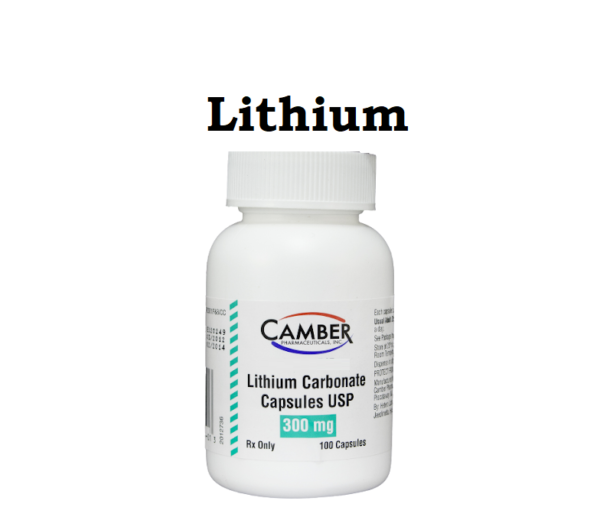
Bipolar depression is treated with immediate-release and sustained-release pills containing lithium carbonate and other lithium salts (mania and depression).
Indications of Lithium:
-
Bipolar disorder:
- It is approved for the treatment of manic episodes and maintenance therapy in patients with a diagnosis of bipolar disorder older than 7 years old.
-
Off Label Use Lithium in Adults:
- Bipolar depression
- Augmentation of antidepressant effect
- Prevention of episodic and chronic cluster headache.
Lithium dose in adults:
Note:
- For appropriate dosing,monitoring of serum concentrations and clinical response (efficacy and toxicity) is necessary.
- Each 5 mL of lithium citrate oral solution contains 8 mEq of lithium ion, equivalent to the amount of lithium in 300 mg of lithium carbonate immediate release capsules/tablets.
- If tolerated, the dosage of lithium may be reduced to a single dose administered before bed.
Lithium dose in the acute and maintenance treatment of Bipolar disorder:
- Initial:
- 600 to 900 mg/day per oral in 2 to 3 divided doses;
- may increase gradually (eg, 300 to 600 mg every 1 to 5 days) based on response and tolerability.
- usual dosage:
- 900 to 1,800 mg/day in 1 to 3 divided doses.
Lithium dose to augment the antidepressant effect of antidepressant:
- Initial:
- Initiate at a low dose (eg, 300 mg per oral once daily or 300 mg twice daily);
- Dependent on response and tolerability, progressively increase.
- usual dosage:
- 600 to 1200 mg daily in divided doses.
Lithium dose in the prevention of episodic or chronic cluster headache as an alternative agent:
- Initial:
- 300 to 900 mg/day per oral in 1 to 3 divided doses;
- may increase gradually in 300 to 600 mg increments every 1 to 7 days based on response and tolerability, doses up to 1.2 g/day have been studied.
Lithium dose in children:
Note:
- For appropriate dosing, monitoring of serum concentrations and clinical response (efficacy and toxicity) is necessary.
- Each 5 mL of lithium oral solution contains 8 mEq of lithium ion, equivalent to the amount of lithium in 300 mg of lithium carbonate immediate-release capsules/tablets.
Lithium dose in the treatment of Bipolar disorder:
-
Immediate release:
- Children ≥7 years and Adolescents:
- Limited data available in weight <20 kg.
- Note: Dosing in weight <20 kg extrapolated from clinical experience.
-
Lithium carbonate capsule or tablet:
-
Patient weight <30 kg:
- Initial: 300 mg per oral twice daily, increase dose at weekly intervals in 300 mg/day increments as tolerated to clinical response and goals based on type of therapy (acute or maintenance).
- Acute therapy:
- Titrate dose to 600 to 1,500 mg/day in divided doses and target serum lithium concentration of 0.8 to 1.2 mEq/L;
- a maximum dose is not described in the manufacturer labeling; in trials, weight-dependent maximum daily doses were reported:
- Patients <23 kg: 900 mg/day;
- patients ≥23 kg: 40 mg/kg/day and doses were not further increased if serum lithium concentration was ≥1.4 mEq/L.
- Maintenance therapy:
- Titrate dose to 600 to 1,200 mg/day in divided doses and target serum trough concentration of 0.8 to 1 mEq/L as tolerated.
-
Patient weight ≥30 kg:
- Initial: 300 mg 3 times daily, increase dose in 300 mg/day increments every 3 days as tolerated to clinical response and goals based on type of therapy (acute or maintenance).
- Acute therapy:
- Titrate dose to 600 mg twice or 3 times daily and target serum lithium concentration of 0.8 to 1.2 mEq/L;
- a maximum dose is not described in the manufacturer labeling; in trials, reported doses did not exceed a maximum daily dose of 40 mg/kg/day and doses were not further increased if serum lithium concentration was ≥1.4 mEq/L.
- Maintenance therapy:
- Titrate dose to 300 to 600 mg twice or 3 times daily and target serum trough concentration of 0.8 to 1 mEq/L as tolerated;
- in a long term trial, doses were not further increased if serum lithium concentration was ≥1.4 mEq/L.
-
Lithium oral solution:
-
Patient weight <30 kg:
- Initial: 8 mEq twice daily, increase dose at weekly intervals in 8 mEq increments as tolerated to clinical response and goals based on type of therapy (acute or maintenance).
- Acute therapy:
- Titrate dose to 16 to 40 mEq/day in divided doses and target serum lithium concentration of 0.8 to 1.2 mEq/L;
- a maximum dose is not described in the manufacturer labeling; in trials, weight-dependent maximum daily doses were reported.
- Patients <23 kg: 900 mg of lithium carbonate/day;
- patients ≥23 kg: 40 mg of lithium carbonate/kg/day and doses were not further increased if serum lithium concentration was ≥1.4 mEq/L.
- Maintenance therapy:
- Titrate dose to 16 to 32 mEq/day in divided doses and target serum trough concentration of 0.8 to 1 mEq/L as tolerated and doses were not further increased if serum lithium concentration was ≥1.4 mEq/L.
-
Patient weight ≥30 kg:
- Initial: 8 mEq 3 times daily, increase dose in 8 mEq increments every 3 days as tolerated to clinical response and goals based on type of therapy (acute or maintenance).
- Acute therapy:
- Titrate dose to 16 mEq twice or 3 times daily and target serum lithium concentration of 0.8 to 1.2 mEq/L;
- maximum doses are not described in the manufacturer labeling;
- in trials, reported doses did not exceed a maximum daily dose of: 40 mg of lithium carbonate/kg/day and doses were not further increased if serum lithium concentration was ≥1.4 mEq/L.
- Maintenance therapy:
- Titrate dose to 8 to 16 mEq twice or 3 times daily and target serum trough concentration of 0.8 to 1 mEq/L as tolerated; in a long term trial, doses were not further increased if serum lithium concentration was ≥1.4 mEq/l.
-
-
- Children ≥7 years and Adolescents:
-
Extended release:
-
Children ≥12 years and Adolescents:
- Weight-based usual daily dosing administered in 2 divided doses:
- <22 kg: 600 mg/day;
- 22 to 41 kg: 900 mg/day, and
- >41 kg: 1,200 mg/day.
- In adults, therapy is initiated at a low dose (eg, 450 mg 2 times daily or less); increased gradually based on response and tolerability, the usual adult dosage is 900 to 1,800 mg/day in 2 divided doses.
- Weight-based usual daily dosing administered in 2 divided doses:
-
Lithium Pregnancy Risk Category: D
- The ability of lithium to cross placenta is similar to that in maternal plasma.
- The infant may develop cardiac malformations from lithium use in the first trimester, including Ebstein anomaly.
- The later trimester can lead to hypoglycemia and diabetes insipidus.
- Exposure to higher doses during pregnancy is associated with adverse events. Fetal echocardiography is necessary in the event of exposure in the early trimester.
- Due to the pregnancy-induced physiological changes, a dose adjustment of lithium is necessary in order to achieve euthymia.
- In cases of planned conception, it is best to avoid lithium use in the first trimester.
- The absolute risk of Ebstein anomaly being present is low, and bipolar disorder treatment should be continued if indicated by a psychiatrist.
- Pregnancy should be monitored closely to ensure that the minimum effective dose is used.
- After the period of organogenesis, therapy should be initiated. Lithium should be withheld for 24 to 48 hours or at the onset labor if the delivery is unplanned.
- The patient should then be medically stable after birth.
Breastfeeding:
- It is excreted from breast milk.
- Breastfeeding infants' serum concentrations could be as high as 10% to 50% above the maternal serum concentration.
- It is well-known that the drug can cause hypotonia, hypothermia and cyanosis as well as electrocardiogram changes.
- It is best to avoid breastfeeding during lithium treatment. However, certain patients may continue the treatment.
- Monitor the maternal serum lithium levels and monitor the hydration status for breastfed infants. Infant serum concentrations should only be checked if there are clinical concerns.
- Studies of long-term effects on behavior and development have not been done.
Lithium Dose adjustment in renal disease:
- CrCl 30 to 89 mL/minute:
- Therapy should be started with low dose;
- titrate slowly with frequent monitoring.
- CrCl < 30 mL/minute:
- Avoid use.
Lithium Dose adjustment in liver disease:
There are no dosage adjustments in labeling.
Side effects of lithium:
-
Cardiovascular:
- Abnormal T Waves On ECG
- Bradycardia
- Cardiac Arrhythmia
- Chest Tightness
- Circulatory Shock
- Cold Extremities
- Edema
- Hypotension
- Myxedema
- Sinus Node Dysfunction
- Startled Response
- Syncope
-
Central Nervous System:
- Ataxia
- Blackout Spells
- Cogwheel Rigidity
- Coma
- Confusion
- Headache
- Drowsiness
- EEG Pattern Changes
- Hypertonia
- Fatigue
- Hallucination
- Hyperactive Deep Tendon Reflex
- Involuntary Choreoathetoid Movements
- Lethargy
- Local Anesthesia
- Memory Impairment
- Loss Of Consciousness
- Metallic Taste
- Dystonia
- Myasthenia Gravis
- Pseudotumor Cerebri
- Psychomotor Retardation
- Reduced Intellectual Ability
- Restlessness
- Dizziness
- Salty Taste
- Sedation
- Extrapyramidal Reaction
- Seizure
- Slowed Intellectual Functioning
- Slurred Speech
- Stupor
- Tics
- Vertigo
- Worsening Of Organic Brain Syndromes
-
Dermatologic:
- Acne Vulgaris
- Alopecia
- Blue-Gray Skin Pigmentation
- Dermal Ulcer
- Dry Or Thinning Of Hair
- Exacerbation Of Psoriasis
- Folliculitis
- Pruritus
- Psoriasis
- Skin Rash
- Xerosis
-
Endocrine & Metabolic:
- Hypothyroidism
- Albuminuria
- Dehydration
- Diabetes Insipidus
- Euthyroid Goiter
- Weight Loss
- Glycosuria
- Hypercalcemia
- Hyperglycemia
- Hyperparathyroidism
- Hyperthyroidism
- Increased Radioactive Iodine Uptake
- Increased Thirst
- Polydipsia
- Weight Gain
-
Gastrointestinal:
- Dyspepsia
- Anorexia
- Dysgeusia
- Excessive Salivation
- Flatulence
- Gastritis
- Nausea
- Abdominal Pain
- Diarrhea
- Vomiting
- Dental Caries
- Sialadenitis
- Sialorrhea
- Swelling Of Lips
- Xerostomia
-
Genitourinary:
- Impotence
- Incontinence
- Oliguria
-
Hematologic & Oncologic:
- Leukocytosis
-
Hypersensitivity:
- Angioedema
-
Neuromuscular & Skeletal:
- Joint Swelling
- Muscle Hyperirritability
- Neuromuscular Excitability
- Polyarthralgia
- Tremor
-
Ophthalmic:
- Blurred Vision
- Exophthalmos
- Nystagmus
- Transient Scotoma
-
Otic:
- Tinnitus
-
Renal:
- Decreased Creatinine Clearance
- Polyuria
-
Miscellaneous:
- Fever
Contraindications to Lithium:
- Hypersensitivity to lithium and any other component of the formulation
- Capsule, solution, and tablet for immediate release
- Dehydration
- Sodium depletion
- Severe debilitation
- Heart disease is a serious condition
- Use diuretics concurrently
Warnings and precautions
-
Depression in the CNS:
- CNS depression can be caused by lithium, which can lead to impairment of physical and mental abilities.
- Patients should be cautious when operating machinery or driving.
-
Pseudotumor cerebri
- Pseudotumor cerebri may be caused by lithium (increased intracranial Pressure and papilledema).
- Undiagnosed cases of blind spot enlargement, visual fields constriction and blindness secondary optic atrophy are possible.
- Therapy can be stopped if symptoms do not bother you.
-
Cardiovascular disease
- Patients with heart disease are at greater risk for toxic effects. If you must use it, be sure to monitor your health and exercise caution.
- Patients with Brugada syndrome should not receive lithium as it can mask their symptoms.
- Expert cardiologist opinions are required if a patient suspects they have Brugada Syndrome or has risk factors such as unexplained or unrelated syncope, a family history or sudden death before the age 45, or if there is unexplained or unrelated syncope after therapy.
-
Heart Failure:
- According to the American Heart Association, lithium can cause myocardial damage. This is easily reversed by stopping the drug.
-
Hypercalcemia
- Therapy can lead to hypercalcemia, with or without hyperparathyroidism.
- Although the dose does not affect the risk, it is higher in older age and for females.
- The average serum calcium level is slightly higher than normal and can go over 15 mg/dL.
- PTH levels can range from normal to high levels to many times the upper limit.
- Magnesium levels are frequently elevated. Serum phosphate levels could be normal or low.
- Monitoring of calcium and PTH levels are important.
- Therapy should be stopped if hypercalcemia symptoms develop, including fatigue, weakness and constipation.
- To return to baseline following withdrawal therapy, serum calcium levels should be monitored every week for one month.
- Although stopping therapy can reverse these changes, it is possible to sustain hypercalcemia or parathyroid gland enlargement.
-
Thyroid disease:
- Hypothyroidism can be caused by therapy, so it is important to use caution when treating patients with thyroid dysfunction.
-
Hypothyroidism
- Hypothyroidism may develop within six to 18 months after starting treatment.
- Hypothyroidism should not be stopped if symptoms of bipolar disorder have been well controlled.
- Hypothyroidism can be more dangerous in females.
-
Renal impairment
- Patients with severe renal disease are at greater risk of lithium poisoning. Therefore, it is important to avoid using lithium.
- If you have to use it, extreme caution and monitoring are necessary.
-
Effects on the renal system:
- Long-term therapy can lead to nephrogenic diabetes insipidus. This condition is often reversible once lithium is stopped.
- Patients with bipolar disorder who have never been exposed to lithium may experience morphologic changes such as glomerular and interstitial fibrosis, nephron atrophy, and prolonged treatment.
- It is not clear if there is a relationship between morphologic changes in the kidney and renal function or whether lithium therapy can be associated with them.
- Regular monitoring of renal status and re-evaluation may be required to ensure adequate hydration.
- Polyuria can develop during lithium therapy. A reduction in the daily dose may result in a decrease of urine output.
-
Serotonin syndrome
- A potentially fatal serotonin syndrome can be precipitated by lithium.
- It may manifest with altered mental state symptoms like agitation, hallucinations, and delirium, coma, autonomic instability (such as tachycardia or labile blood pressure), dizziness, flushing, hypothermia, neuromuscular changes (such as tremors, rigidity, myoclonus hyperreflexia, coordination), and/or seizures.
- These symptoms should not be ignored and supportive therapy should immediately be initiated.
- When lithium is used with SSRIs or SNRIs (fentanyl, tramadol, buspirone, St. John's wort, and tryptophan) as well as medications that interfere with serotonin metabolism, the risk of developing serotonin syndrome increases (eg MAOIs).
-
Dehydration
- Patients with severe fluid loss or decreased sodium levels are at greater risk of toxic effects.
- If this is the case, caution and regular monitoring should be taken.
- Low lithium tolerance can be indicated by diarrhea or sweating.
- This should be treated with dose reductions or withdrawals, as well as supplemental fluid and salt under medical supervision.
- Concomitant infections can cause fever. Dose reduction or withdrawal is required.
-
Suicidal thoughts and depression:
- Patients at high risk for suicide due to drug overdose should be cautious as lithium has a very narrow therapeutic index.
Monitoring parameters:
- Weight (baseline, then regularly)
- CBC with differential (baseline, then repeat as clinically indicated).
- RFTs, including SrCr and BUN (baseline, every 2–3 months for the first 6 months, then once a calendar year in stable patients, or as clinically indicated), are more important in pediatric patients.
- The serum electrolytes (baseline, then periodic)
- Serum calcium (baseline, 2-6 weeks after initiation, then every 6-12 months; repeat clinically indicated).
- TFTs (baseline: 1 to 2 times in the first 6 month of treatment. Then once a year for stable patients or as indicated by the doctor)
- All females who are not sterile (baseline) can have a beta-hCG pregnancy test.
- Polyuria.
- ECG with rhythm strip (baseline ECG for patients over 40 years, or if there are underlying cardiac risk factors)
- The serum lithium levels should be taken twice weekly, until both patients' clinical condition and levels are stable. After that, levels can be repeated every 1 to 3 month or as clinically necessary.
How to administer Lithium?
It should be taken orally with meals to decrease GI upset. The extended-release tablets must be swallowed whole without crushing or chewing.
Mechanism of action of Lithium:
- It is unclear what the exact mechanism of action is in mood disorders.
- It is thought to alter cell membrane cation transport in nerve and muscle cells.
- This influences the reuptake and/or norepinephrine levels and inhibits second messenger systems that involve the phosphatidylinositol cycling.
- It increases glutamate clearance and inhibits apoptotic Glygen Synase Kinase Activity.
- There are also higher levels of antiapoptotic Protein Bcl-2. Additionally, it enhances expression of neurotrophic factors including brain-derived Neurotrophic Factor, which can have neuroprotective effects.
Absorption:
- Rapid and complete.
Protein binding:
- Not protein bound.
Metabolism:
- Not metabolized.
Bioavailability:
- 80% to 100%.
Half-life elimination:
- Pediatric patients 7 to 17 years: 27 hours.
- Adults: 18 to 36 hours; prolonged in elderly patients (~28.5 hours).
Time to peak serum concentration:
- Immediate release: ~0.5 to 3 hours.
- Extended-release: 2 to 6 hours.
- Solution: 15 to 60 minutes.
Excretion:
- It is mostly eliminated in urine as an unmodified medication.
- A negligible amount is excreted in the sweat, saliva, and feces.
Clearance:
- The proximal convoluted tubules reabsorb 80% of the filtered lithium.
- Lowered in aged patients as a result of declining renal function with age.
International Brands of Lithium:
- Lithobid
- APO-Lithium Carbonate; Carbolith
- DOM-Lithium Carbonate
- Lithane
- Lithmax
- PMS-Lithium Carbonate
- PMS-Lithium Citrate
- Calith
- Camcolit
- Camcolite
- Carbolim
- Carbolit
- Carbolithium
- Carlit
- Ceglution
- Contemnol
- Eskalith
- Frimania
- Hynorex Retard
- Hypnolith
- Karlit
- Kilonum
- Licab
- Licarb
- Licarbium
- Limas
- Liskonum
- Litarex
- Litcab
- Lithan
- Litheum 300
- Lithicarb
- Lithicarb FC
- Lithin SR
- Lithionit
- Lithium Carbonicum
- Lithiumkarbonat ”Oba”
- Lithocap
- Lithosun SR
- Litiam ER
- Liticarb
- Litij-karbonat
- Litiumkarbonat ”Dak”
- Lito
- Litocarb
- Manicarb SR
- Maniprex
- Microlit
- Milithin
- Neurolepsin
- Plenur
- Priadel
- Priadel Retard
- Prianil C.R.
- Quilonium-R
- Quilonorm
- Quilonorm Retardtabletten
- Quilonum Retard
- Quilonum retard
- Quilonum SR
- Sicolitio
- Teralithe
- Theralite
Lithium Tablets Brands in Pakistan:
Lithium Tablets 200 mg |
|
| Neurolith | Adamjee Pharmaceuticals (Pvt) Ltd. |
Lithium Tablets 400 mg |
|
| Camcolit-400 | Bio Pharma |
| Lithen-Cr | Medicaids Pakistan (Pvt) Ltd. |
| Neuroglit | Glitz Pharma |
| Normalith Sr | Nabiqasim Industries (Pvt) Ltd. |
| Priadel | French Pharmaceutical Group |
| Thicar Sr | Lexicon Pharmaceuticals (Pvt) Ltd. |
Lithium Tablets SR 400 mg |
|
| Lith | Standpharm Pakistan (Pvt) Ltd. |
| Lithotrope | Genetics Pharmaceuticals |
| Neurolith | Adamjee Pharmaceuticals (Pvt) Ltd. |
.png)


