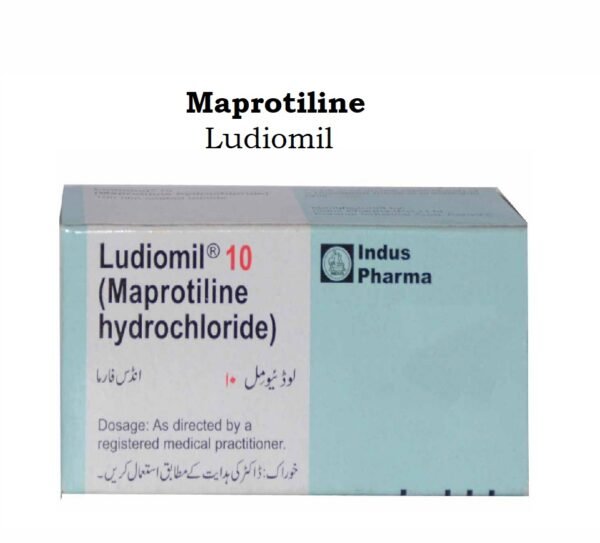
Maprotiline (Ludiomil) is a tetracyclic antidepressant drug that may be used to treat patients with depression. Alternatively, it may be classified as a tricyclic antidepressant drug.
Maprotiline Uses:
-
Depression:
- Treating major depressive disorder (MDD) and depression-related anxiety
Maprotiline Dose in Adults:
Maprotiline Dose in the treatment of Depression:
- Oral:
- Initial: 25 to 75 mg OD or in divided doses
- After two weeks, progressively increase in increments of 25 mg depending on response and tolerability.
- Usual dosage:
- 150 to 225 mg OD or in divided doses
- Maximum dose: 225 mg daily
- Note: In patients who are hospitalised and have severe depression, starting dosages of 100 to 150 mg per day may be explored.
Discontinuation of therapy:
- When discontinuing antidepressant treatment that has lasted for >3 weeks, gradually taper the dose (eg, over 2 to 4 weeks) to minimize withdrawal symptoms and detect reemerging symptoms.
- Reasons for a slower titration include the use of a drug with a half-life <24 hours (eg, paroxetine, venlafaxine), a history of antidepressant withdrawal symptoms, or in patients on high doses of antidepressants.
- If intolerable withdrawal symptoms occur, resume the previously prescribed dose and/or decrease dose at a more gradual rate.
- Select patients (eg, those with a history of discontinuation syndrome) on long-term treatment (>6 months) may benefit from tapering over >3 months.
- Evidence supporting ideal taper rates is limited.
Switching antidepressants:
- There is little information about the best antidepressant switching techniques.
- Cross-titration (gradually reducing the first antidepressant while gradually increasing the new antidepressant) and straight changeover are two techniques (abruptly discontinuing the first antidepressant and then starting the new antidepressant at an equivalent dose or lower dose and increasing it gradually).
- When moving to or from a monoamine oxidase inhibitor, cross-titration is not recommended (e.g., over 1 to 4 weeks depending on sensitivity to withdrawal symptoms and adverse effects) (MAOI).
- In cases when the antidepressant to be discontinued has been used for less than one week or where the discontinuation is due to side effects, a direct changeover to another agent in the same or similar class (for example, when switching between two SSRIs) may be the best course of action.
- Consider the risk of withdrawal symptoms, the possibility of medication interactions, additional antidepressant features (such as half-life, adverse effects, and pharmacodynamics), and the desired level of symptom control when deciding on the switch approach.
-
Switching to or from an MAOI:
- You should wait 14 days before starting maprotiline after stopping an MAOI.
- Stopping maprotiline and starting an MAOI should be separated by 14 days.
Use in Children:
Not indicated.
Pregnancy Risk Factor B
- Maprotiline pregnancy use is not known to have any significant effects.
- Individualized treatment for depression during pregnancy is advised by ACOG.; it should include the clinical expertise of the mental healthcare provider, obstetrician and primary care provider.
- The American Psychiatric Association states that medication treatment has risks, but should be weighed against untreated depression.
- Women who have stopped taking antidepressant medication during pregnancy and are at risk of postpartum depression can resume their medications after delivery.
- The ACOG and APA have developed treatment algorithms for women with depression before conception and during pregnancy.
Use of maprotiline during breastfeeding
- Breast milk contains Maprotiline in a similar concentration to that found in maternal serum.
- Be careful.
Maprotiline dose in Kidney Disease:
- No dosage adjustments provided in the manufacturer’s labeling.
Maprotiline dose in Liver disease:
- No dosage adjustments provided in the manufacturer’s labeling.
Common Side Effects of Maprotiline:
-
Central nervous system:
- Drowsiness
-
Gastrointestinal:
- Xerostomia
Less Common Side Effects of Maprotiline:
-
Central Nervous System:
- Agitation
- Headache
- Nervousness
- Anxiety
- Fatigue
- Insomnia
- Dizziness
-
Gastrointestinal:
- Nausea
- Constipation
-
Neuromuscular & Skeletal:
- Tremor
- Weakness
-
Ophthalmic:
- Blurred Vision
Contraindications to Maprotiline:
- Intolerance to maprotiline and any other formulation ingredient
- seizure disorder
- It is possible to use MAO inhibitors concurrently with maprotiline or within 14 days of quitting either drug.
- Use in patients during the early stages of MI recovery
Warnings and precautions
-
Anticholinergic effects
- Possible anticholinergic side effects: constipation, xerostomia and blurred vision.
- Patients with reduced gastrointestinal motility, paralytic and ileus, urinary retentions, BPH, xerostomia, and visual impairments should be cautious.
- This antidepressant produces a moderate degree of anticholinergic blocking.
-
Depression in the CNS:
- CNS depression can lead to mental or physical impairment.
- It is important to warn patients about tasks that require mental alertness, such as driving or operating machinery.
- Comparatively to other antidepressants, the degree of sedation can be moderate to severe.
-
Fractures
- Antidepressant treatment has been shown to be associated with bone fractures.
- If an antidepressant-treated person experiences unexplained bone pain or tenderness, swelling, bleeding, or bruising, it is possible that a fragility fracture may be present.
-
Ocular effects
- Mild pupillary dilation may occur, which can in some cases lead to narrow-angle glaucoma.
- Patients who have not undergone an iridectomy to reduce the risk of narrow-angle glaucoma should be evaluated.
-
Orthostatic hypotension
- Orthostatic hypotension may occur (risk is moderate in comparison to other antidepressants).
- Patients at high risk for this effect and those who cannot tolerate temporary hypotensive episodes (cerebrovascular Disease, cardiovascular Disease, Hypovolemia) should be cautious.
-
Cardiovascular disease
- Patients with a history or cardiovascular disease (e.g. stroke, MI, or tachycardia) should be cautious.
- This agent has a moderate risk of conduction abnormalities compared to other antidepressants.
-
Diabetes:
- Patients with diabetes mellitus should be cautious as it can alter the glucose regulation.
-
Hypomania/mania:
- Mania and hypomania can occur in bipolar patients.
- Monotherapy is not advised for those with bipolar disorder.
- Bipolar disorder testing should be performed on patients who have depressed symptoms.
- This contains information on past family relationships, suicidal thoughts, and despair.
- The FDA has not approved maprotiline for the treatment of bipolar depression.
-
Seizure disorder
- Patients at high risk for seizures should be used with caution, especially those who have had seizures in the past, brain damage or head trauma.
- Patients with a history or seizure disorder should not take this medication.
- By commencing medication at a low dose and gradually raising it to the maximum effective amount, you can lower your risk of seizures.
Maprotiline: Drug Interaction
|
Acetylcholinesterase Inhibitors |
May diminish the therapeutic effect of Anticholinergic Agents. Anticholinergic Agents may diminish the therapeutic effect of Acetylcholinesterase Inhibitors. |
|
Ajmaline |
May increase the serum concentration of CYP2D6 Substrates (High risk with Inhibitors). |
|
Alcohol (Ethyl) |
CNS Depressants may enhance the CNS depressant effect of Alcohol (Ethyl). |
|
Alizapride |
May enhance the CNS depressant effect of CNS Depressants. |
|
Amantadine |
May strengthen an anticholinergic agent's anticholinergic action. |
|
Anticholinergic Agents |
May enhance the adverse/toxic effect of other Anticholinergic Agents. |
|
Botulinum Toxin-Containing Products |
May enhance the anticholinergic effect of Anticholinergic Agents. |
|
Brexanolone |
CNS Depressants may enhance the CNS depressant effect of Brexanolone. |
|
Brimonidine (Topical) |
May enhance the CNS depressant effect of CNS Depressants. |
|
Bromopride |
May enhance the CNS depressant effect of CNS Depressants. |
|
Cannabidiol |
May enhance the CNS depressant effect of CNS Depressants. |
|
Cannabis |
May enhance the CNS depressant effect of CNS Depressants. |
|
Chloral Betaine |
May enhance the adverse/toxic effect of Anticholinergic Agents. |
|
Chlorphenesin Carbamate |
May enhance the adverse/toxic effect of CNS Depressants. |
|
CloBAZam |
May increase the serum concentration of CYP2D6 Substrates (High risk with Inhibitors). |
|
CNS Depressants |
May enhance the adverse/toxic effect of other CNS Depressants. |
|
Cobicistat |
May increase the serum concentration of CYP2D6 Substrates (High risk with Inhibitors). |
|
CYP2D6 Inhibitors (Moderate) |
May decrease the metabolism of CYP2D6 Substrates (High risk with Inhibitors). |
|
Darunavir |
May increase the serum concentration of CYP2D6 Substrates (High risk with Inhibitors). |
|
Dimethindene (Topical) |
May enhance the CNS depressant effect of CNS Depressants. |
|
Doxylamine |
CNS depressants may have an enhanced CNS depressant impact. Management: The producer of the pregnancy-safe drug Diclegis (doxylamine/pyridoxine) particularly advises against combining it with other CNS depressants. |
|
Dronabinol |
CNS depressants may have an enhanced CNS depressant impact. |
|
Esketamine |
May enhance the CNS depressant effect of CNS Depressants. |
|
Gastrointestinal Agents (Prokinetic) |
Anticholinergic Agents may diminish the therapeutic effect of Gastrointestinal Agents (Prokinetic). |
|
Glucagon |
Anticholinergic Agents may enhance the adverse/toxic effect of Glucagon. Specifically, the risk of gastrointestinal adverse effects may be increased. |
|
HydrOXYzine |
May enhance the CNS depressant effect of CNS Depressants. |
|
Imatinib |
May increase the serum concentration of CYP2D6 Substrates (High risk with Inhibitors). |
|
Itopride |
Anticholinergic Agents may diminish the therapeutic effect of Itopride. |
|
Kava Kava |
May enhance the adverse/toxic effect of CNS Depressants. |
|
Lofexidine |
May enhance the CNS depressant effect of CNS Depressants. Management: Drugs listed as exceptions to this monograph are discussed in further detail in separate drug interaction monographs. |
|
Lumefantrine |
May increase the serum concentration of CYP2D6 Substrates (High risk with Inhibitors). |
|
Magnesium Sulfate |
May enhance the CNS depressant effect of CNS Depressants. |
|
MetyroSINE |
CNS Depressants may enhance the sedative effect of MetyroSINE. |
|
Mianserin |
May enhance the anticholinergic effect of Anticholinergic Agents. |
|
Minocycline (Systemic) |
May enhance the CNS depressant effect of CNS Depressants. |
|
Mirabegron |
Anticholinergic Agents may enhance the adverse/toxic effect of Mirabegron. |
|
Nabilone |
May enhance the CNS depressant effect of CNS Depressants. |
|
Nitroglycerin |
Anticholinergic Agents may decrease the absorption of Nitroglycerin. Specifically, anticholinergic agents may decrease the dissolution of sublingual nitroglycerin tablets, possibly impairing or slowing nitroglycerin absorption. |
|
Panobinostat |
May increase the serum concentration of CYP2D6 Substrates (High risk with Inhibitors). |
|
Peginterferon Alfa-2b |
May decrease the serum concentration of CYP2D6 Substrates (High risk with Inhibitors). Peginterferon Alfa-2b may increase the serum concentration of CYP2D6 Substrates (High risk with Inhibitors). |
|
Perhexiline |
CYP2D6 Substrates (High risk with Inhibitors) may increase the serum concentration of Perhexiline. Perhexiline may increase the serum concentration of CYP2D6 Substrates (High risk with Inhibitors). |
|
Piribedil |
CNS Depressants may enhance the CNS depressant effect of Piribedil. |
|
Pramipexole |
CNS Depressants may enhance the sedative effect of Pramipexole. |
|
QuiNINE |
May increase the serum concentration of CYP2D6 Substrates (High risk with Inhibitors). |
|
Ramosetron |
Anticholinergic Agents may enhance the constipating effect of Ramosetron. |
|
ROPINIRole |
CNS Depressants may enhance the sedative effect of ROPINIRole. |
|
Rotigotine |
CNS Depressants may enhance the sedative effect of Rotigotine. |
|
Rufinamide |
May enhance the adverse/toxic effect of CNS Depressants. Specifically, sleepiness and dizziness may be enhanced. |
|
Selective Serotonin Reuptake Inhibitors |
CNS Depressants may enhance the adverse/toxic effect of Selective Serotonin Reuptake Inhibitors. Specifically, the risk of psychomotor impairment may be enhanced. |
|
Sulfonylureas |
Cyclic Antidepressants may enhance the hypoglycemic effect of Sulfonylureas. |
|
Tetrahydrocannabinol |
May enhance the CNS depressant effect of CNS Depressants. |
|
Tetrahydrocannabinol and Cannabidiol |
May enhance the CNS depressant effect of CNS Depressants. |
|
Thiazide and Thiazide-Like Diuretics |
Anticholinergic Agents may increase the serum concentration of Thiazide and Thiazide-Like Diuretics. |
|
Topiramate |
Anticholinergic Agents may enhance the adverse/toxic effect of Topiramate. |
|
Trimeprazine |
May enhance the CNS depressant effect of CNS Depressants. |
|
Risk Factor D (Consider therapy modification) |
|
|
Abiraterone Acetate |
May increase the serum concentration of CYP2D6 Substrates (High risk with Inhibitors). Management: Avoid concurrent use of abiraterone with CYP2D6 substrates that have a narrow therapeutic index whenever possible. When concurrent use is not avoidable, monitor patients closely for signs/symptoms of toxicity. |
|
Asunaprevir |
May increase the serum concentration of CYP2D6 Substrates (High risk with Inhibitors). |
|
Blonanserin |
CNS Depressants may enhance the CNS depressant effect of Blonanserin. |
|
Buprenorphine |
CNS Depressants may enhance the CNS depressant effect of Buprenorphine. Management: Consider reduced doses of other CNS depressants, and avoiding such drugs in patients at high risk of buprenorphine overuse/self-injection. Initiate buprenorphine at lower doses in patients already receiving CNS depressants. |
|
Chlormethiazole |
May enhance the CNS depressant effect of CNS Depressants. Management: Monitor closely for evidence of excessive CNS depression. The chlormethiazole labeling states that an appropriately reduced dose should be used if such a combination must be used. |
|
CYP2D6 Inhibitors (Strong) |
May decrease the metabolism of CYP2D6 Substrates (High risk with Inhibitors). |
|
Dacomitinib |
May increase the serum concentration of CYP2D6 Substrates (High risk with Inhibitors). Management: Avoid concurrent use of dacomitinib with CYP2D6 subtrates that have a narrow therapeutic index. |
|
Droperidol |
May enhance the CNS depressant effect of CNS Depressants. Management: Consider dose reductions of droperidol or of other CNS agents (eg, opioids, barbiturates) with concomitant use. Exceptions to this monograph are discussed in further detail in separate drug interaction monographs. |
|
Flunitrazepam |
CNS Depressants may enhance the CNS depressant effect of Flunitrazepam. |
|
HYDROcodone |
CNS Depressants may enhance the CNS depressant effect of HYDROcodone. Management: Avoid concomitant use of hydrocodone and benzodiazepines or other CNS depressants when possible. These agents should only be combined if alternative treatment options are inadequate. If combined, limit the dosages and duration of each drug. |
|
Lemborexant |
CNS depressants may have an enhanced CNS depressant impact. Management: Due to the possibility of additive CNS depressant effects when lemborexant and concurrent CNS depressants are administered concurrently, dosage modifications may be required. Effects of CNS depressants must be closely monitored. |
|
Methotrimeprazine |
CNS Depressants may enhance the CNS depressant effect of Methotrimeprazine. Methotrimeprazine may enhance the CNS depressant effect of CNS Depressants. Management: Reduce adult dose of CNS depressant agents by 50% with initiation of concomitant methotrimeprazine therapy. Further CNS depressant dosage adjustments should be initiated only after clinically effective methotrimeprazine dose is established. |
|
Opioid Agonists |
CNS Depressants may enhance the CNS depressant effect of Opioid Agonists. Management: Avoid concomitant use of opioid agonists and benzodiazepines or other CNS depressants when possible. These agents should only be combined if alternative treatment options are inadequate. If combined, limit the dosages and duration of each drug. |
|
OxyCODONE |
CNS Depressants may enhance the CNS depressant effect of OxyCODONE. Management: Avoid concomitant use of oxycodone and benzodiazepines or other CNS depressants when possible. These agents should only be combined if alternative treatment options are inadequate. If combined, limit the dosages and duration of each drug. |
|
Perampanel |
May enhance the CNS depressant effect of CNS Depressants. Management: Patients taking perampanel with any other drug that has CNS depressant activities should avoid complex and high-risk activities, particularly those such as driving that require alertness and coordination, until they have experience using the combination. |
|
Pramlintide |
May enhance the anticholinergic effect of Anticholinergic Agents. These effects are specific to the GI tract. |
|
Secretin |
Anticholinergic Agents may diminish the therapeutic effect of Secretin. Management: Avoid concomitant use of anticholinergic agents and secretin. Discontinue anticholinergic agents at least 5 half-lives prior to administration of secretin. |
|
Sodium Oxybate |
May enhance the CNS depressant effect of CNS Depressants. Management: Consider alternatives to combined use. When combined use is needed, consider minimizing doses of one or more drugs. Use of sodium oxybate with alcohol or sedative hypnotics is contraindicated. |
|
Suvorexant |
CNS Depressants may enhance the CNS depressant effect of Suvorexant. Management: Dose reduction of suvorexant and/or any other CNS depressant may be necessary. Use of suvorexant with alcohol is not recommended, and the use of suvorexant with any other drug to treat insomnia is not recommended. |
|
Tapentadol |
May enhance the CNS depressant effect of CNS Depressants. Management: Avoid concomitant use of tapentadol and benzodiazepines or other CNS depressants when possible. These agents should only be combined if alternative treatment options are inadequate. If combined, limit the dosages and duration of each drug. |
|
Zolpidem |
CNS Depressants may enhance the CNS depressant effect of Zolpidem. Management: Reduce the Intermezzo brand sublingual zolpidem adult dose to 1.75 mg for men who are also receiving other CNS depressants. No such dose change is recommended for women. Avoid use with other CNS depressants at bedtime; avoid use with alcohol. |
|
Risk Factor X (Avoid combination) |
|
|
Aclidinium |
May enhance the anticholinergic effect of Anticholinergic Agents. |
|
Azelastine (Nasal) |
CNS Depressants may enhance the CNS depressant effect of Azelastine (Nasal). |
|
Bromperidol |
May enhance the CNS depressant effect of CNS Depressants. |
|
Cimetropium |
Anticholinergic Agents may enhance the anticholinergic effect of Cimetropium. |
|
Eluxadoline |
Anticholinergic Agents may enhance the constipating effect of Eluxadoline. |
|
Glycopyrrolate (Oral Inhalation) |
Anticholinergic Agents may enhance the anticholinergic effect of Glycopyrrolate (Oral Inhalation). |
|
Glycopyrronium (Topical) |
May enhance the anticholinergic effect of Anticholinergic Agents. |
|
Iobenguane Radiopharmaceutical Products |
Maprotiline may diminish the therapeutic effect of Iobenguane Radiopharmaceutical Products. Management: Discontinue all drugs that may inhibit or interfere with catecholamine transport or uptake for at least 5 biological half-lives before iobenguane administration. Do not administer maprotiline until at least 7 days after each iobenguane dose. |
|
Ipratropium (Oral Inhalation) |
May enhance the anticholinergic effect of Anticholinergic Agents. |
|
Levosulpiride |
Anticholinergic Agents may diminish the therapeutic effect of Levosulpiride. |
|
Monoamine Oxidase Inhibitors |
The negative or toxic effects of monoamine oxidase inhibitors may be exacerbated by maprotiline. |
|
Orphenadrine |
CNS Depressants may enhance the CNS depressant effect of Orphenadrine. |
|
Oxatomide |
May enhance the anticholinergic effect of Anticholinergic Agents. |
|
Oxomemazine |
May enhance the CNS depressant effect of CNS Depressants. |
|
Paraldehyde |
CNS Depressants may enhance the CNS depressant effect of Paraldehyde. |
|
Potassium Chloride |
Anticholinergic Agents may enhance the ulcerogenic effect of Potassium Chloride. Management: Patients on drugs with substantial anticholinergic effects should avoid using any solid oral dosage form of potassium chloride. |
|
Potassium Citrate |
Anticholinergic Agents may enhance the ulcerogenic effect of Potassium Citrate. |
|
Revefenacin |
Anticholinergic Agents may enhance the anticholinergic effect of Revefenacin. |
|
Thalidomide |
CNS Depressants may enhance the CNS depressant effect of Thalidomide. |
|
Tiotropium |
Anticholinergic Agents may enhance the anticholinergic effect of Tiotropium. |
|
Umeclidinium |
May enhance the anticholinergic effect of Anticholinergic Agents. |
Monitoring parameters:
- Blood pressure, heart rate, and ECG (in patients with preexisting cardiac disease or at increased risk for QT-prolonging effects)
- Electrolytes (potassium and magnesium concentrations at baseline and as clinically indicated)
- Suicidal ideation (baseline and with dose changes)
- Blood glucose (baseline and as clinically indicated)
- Weight & BMI (at baseline; periodic intervals)
How to administer Maprotiline?
- Oral: Administer once daily or in divided doses.
Mechanism of action of Maprotiline:
- By inhibiting its reuptake in the presynaptic neural membrane, it increases the synaptic norepinephrine concentration in the central nervous systems.
The beginning of action:
- Individual responses can vary
- To determine if a patient is responding or not, it takes 4-8 weeks.
Absorption:
- Slowly and completely absorbed.
Protein binding:
- 88%
Metabolism:
- Aliphatic and aromatic hydroxylation, oxidative deamination, and N-demethylation in the liver produce active and inactive molecules.
Bioavailability:
- ~65% to 72%
Half-life elimination, serum:
- ~28 to 105 hours
Time to peak, serum:
- 8 to 24 hours
Excretion:
- Urine (70%)
- feces (30%)
International Brands of Maprotiline:
- PMS-Maprotiline
- TEVA-Maprotiline
- Colese
- Epalon
- Keproline
- Ladiomil
- Ludiomil
- Ludiomil[inj.]
- Ludios
- Lunaline
- Maprolu
- Matilina
- Melodil
- Retinyl
- Sandepril
Maprotiline Brand Names in Pakistan:
Maprotiline (HCl) 10 mg Tablets |
|
| Ludiomil | Indus Pharma (Pvt) Ltd. |
Maprotiline (HCl) 25 mg Tablets |
|
| Ludiomil | Indus Pharma (Pvt) Ltd. |
.png)


