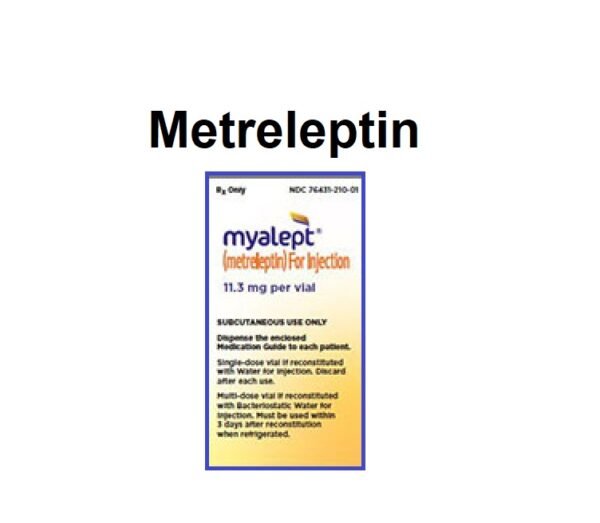
A synthetic analog of leptin called metreleptin (Myalept) is primarily used to treat individuals with lipodystrophy.
Metreleptin (Myalept) Uses:
-
Lipodystrophy:
- In addition to nutrition, it is used as a replacement treatment in individuals with congenital or acquired lipodystrophy to alleviate the side effects of leptin deficit.
- Limitations of use:
- Not recommended for people with lipodystrophy linked to HIV
- Patients with metabolic disorders (such as diabetes mellitus or hypertriglyceridemia) who do not also have congenital or acquired widespread lipodystrophy are not supposed to take it.
Metreleptin Dose in Adults:
Metreleptin (Myalept) Dose in Lipodystrophy:
Note:
- Depending on the patient's clinical reaction (such as poor metabolic control) or other factors, you may choose to increase or reduce the dose (eg, tolerability issues, excessive weight loss [especially in pediatric patients]).
-
Baseline weight ≤40 kg:
- Dosage at first: 0.06 mg/kg subQ once a day.
- On the basis of the reaction or any negative effects, adjust the dosage by 0.02 mg/kg every day.
- 0.13 mg/kg maximum daily dosage.
-
Baseline weight >40 kg:
- The initial dosage is 2.5 mg for men and 5 mg for women, subQ once a day.
- Depending on the reaction or any negative effects, adjust the dosage by 1.25 to 2.5 mg each day.
- 10 milligrams, maximum, once daily.
Discontinuation:
- If a patient has a history of pancreatitis or has severe hypertriglyceridemia, reduce the dose over a week while monitoring their triglyceride levels before stopping their metreleptin medication.
- If necessary, think about starting or modifying the dosage of lipid-lowering drugs.
Metreleptin Dose in Children:
Metreleptin (Myalept) Dose in Lipodystrophy:
-
Infants, Children, and Adolescents:
- The manufacturer’s labeling describes use in infants; however, in trials, the minimal inclusion age was 6 months and the youngest subjects reported in these trials and case series were at least 1 year of age.
- Note: Increase or decrease dose based on the clinical response of the patient (eg, insufficient metabolic control) or additional factors (such as difficulties with tolerance or rapid weight loss).
-
Baseline weight ≤40 kg, male and female patients:
- Adjust the dose (increase or decrease) in 0.02 mg/kg increments based on adverse effects or responses.
- Maximum daily dose: 0.13 mg/kg/day.
- SubQ: Initial dose: 0.06 mg/kg/dose once a day
-
Baseline weight more than 40 kg:
- Female patients:
- Metreleptin dosage should be adjusted (increased or decreased) in 1.25 to 2.5 mg increments dependent on response or side effects. The starting dose is 5 mg SubQ once a day.
- The maximum daily dose: is 10 mg/day
- Male patients:
- Highest daily dose: 10 mg/day
- The initial dosage of 2.5 mg SubQ once a day; dose adjustments (increases or decreases) should be made in 1.25 to 2.5 mg increments dependent on response or negative side effects
- Female patients:
-
Discontinuation:
- When stopping metreleptin medication in individuals with pancreatitis risk factors (eg, history of pancreatitis, severe hypertriglyceridemia).
- Over the course of a week, reduce the dosage gradually while keeping an eye on your triglyceride levels. If necessary, start taking or modifying the dosage of lipid-lowering drugs.
Pregnancy Risk Factor C
- There are few reports of metreleptin being used during pregnancy.
- Lipodystrophy is associated with adverse pregnancy outcomes in pregnant women. These include gestational diabetes and eclampsia.
- According to in vitro data, metreleptin could inhibit uterine contractions during labor in pregnant women.
- Meterleptin is able to restore metabolic and endocrine functions, so women who have had amenorrhea may experience normal menses. Pregnancies and fertility may also be possible.
Use of metreleptin during lactation
- Whether metreleptin is absorbed into breast milk is unknown. However, endogenous leptin exists.
- The manufacturer suggests that the mother decide whether to stop nursing her infant or discontinue metreleptin.
- This is taking into consideration the importance of the mother's treatment.
Dose in Kidney Disease:
There are no dosage adjustments for metreleptin provided in the manufacturer’s labeling (it has not been studied).
Dose in Liver disease:
There are no dosage adjustments provided in the manufacturer’s labeling (It has not been studied).
Side effects of Metreleptin (Myalept)
-
Central Nervous System:
- Exhaustion
- Headache
- Dizziness
- Paresthesia
-
Miscellaneous:
- Fever
-
Endocrine & Metabolic:
- Weight Gain
- Ovarian Cyst
- Decreased Glucose Tolerance
- Diabetes Mellitus
- Hypoglycemia
- Weight Loss
- Increased Serum Triglycerides
-
Gastrointestinal:
- Pancreatitis
- Nausea
- Abdominal Pain
- Diarrhea
-
Dermatologic:
- Urticaria
-
Genitourinary:
- Proteinuria
-
Immunologic:
- Immunogenicity
-
Infection:
- Severe Infection
-
Hematologic & Oncologic:
- Anemia
- Elevated Glycosylated Hemoglobin
-
Local:
- Erythema At Injection Site
-
Otic:
- Otic Infection
-
Neuromuscular & Skeletal:
- Arthralgia
- Back Pain
-
Respiratory:
- Upper Respiratory Tract Infection
Contraindications to Metreleptin (Myalept):
- Hypersensitivity to metreleptin and any formulation ingredient (such as anaphylaxis, urticaria, or widespread skin rash).
- Congenital Leptin deficiency is not linked to general obesity.
Cautions and alerts
-
Antibody development: [US Boxed Warning]:
- Meterleptin has been shown to have anti-metreleptin antibodies that have neutralizing activity.
- Usage may result in loss of metreleptin effectiveness or impairment of endogenous leptin activity.
- Some of the effects include severe infection and/or poor metabolic control.
- Patients who show signs of metreleptin inefficacy or severe infections should be tested for anti-metreleptin antibodies.
- For testing clinical samples for antibodies, contact the manufacturer at 1866-216-1526.
-
Hypersensitivity reactions
- There have been reports of widespread hypersensitivities, such as urticaria or systemic rash.
- If a patient experiences hypersensitivity, instruct them to immediately seek medical advice about discontinuing metreleptin therapy.
-
Lymphomas: [US Boxed Warning]
- A higher incidence of cancer (including lymphoma) has been linked to autoimmune illnesses, and acquired lipodystrophies can be related to autoimmune diseases.
- Patients with acquired generalized lipodystrophy have been known to develop T-cell lymphoma (both treated and untreated).
- Patients who have acquired global lipodystrophy or significant hematologic abnormalities should think about the advantages and disadvantages of metreleptin.
- It is not clear if there is a causal relationship.
-
Autoimmune disorders:
- The progression of membranoproliferative glomerulonephritis, autoimmune hepatitis, and severe proteinuria have all been linked to renal failure.
- It has not been proven that metreleptin treatment is causal.
- Autoimmune conditions are frequently linked to acquired lipodystrophies.
- Patients with an autoimmune disease should consider the risks and benefits associated with metreleptin.
-
Pancreatitis
- When patients who need to stop using metreleptin have risk factors for pancreatitis (such as a history of pancreatitis or severe hypertriglyceridemia), taper the dose over a one-week period while monitoring triglyceride levels and assessing the signs and symptoms of pancreatitis.
- You might consider adjusting or initiating lipid-lowering medication dosages.
Metreleptin: Drug Interaction
|
Risk Factor C (Monitor therapy) |
|
|
CycloSPORINE (Systemic) |
Metreleptin may lower CycloSPORINE levels in the serum (Systemic). CycloSPORINE's serum levels may rise in response to metreleptin (Systemic). |
|
Estrogen Derivatives (Contraceptive) |
Estrogen derivatives' serum levels may drop when metreleptin is taken (Contraceptive). The serum levels of estrogen derivatives may rise in response to metreleptin (Contraceptive). |
|
Progestins (Contraceptive) |
Progestin serum levels may be reduced by metreleptin (Contraceptive). The serum concentration of progestins may rise in response to metreleptin (Contraceptive). |
|
Theophylline |
Theophylline's serum levels may be altered by metreleptin. |
|
Warfarin |
The blood concentration of Warfarin may go up or down depending on metreleptin. |
|
Risk Factor D (Consider therapy modification) |
|
|
Insulins |
Metreleptin may improve insulin's ability to lower blood sugar. Management: To reduce the risk for hypoglycemia when using metreleptin concurrently, insulin dose changes, including possibly significant reductions, may be necessary. Observe carefully. |
|
Sulfonylureas |
Sulfonylureas' hypoglycemic impact may be increased by metreleptin. Management: To reduce the risk for hypoglycemia when using metreleptin concurrently, sulfonylurea dose changes (including possibly significant reductions) may be necessary. Observe carefully. |
Monitoring parameters:
- When patients get severe infections or exhibit symptoms of effectiveness loss, it is important to check for anti-metreleptin antibodies with neutralising activity.
- Patients receiving concurrent insulin or insulin secretagogue treatment should have their blood sugar closely monitored. Track triglyceride levels in individuals who are tapering during a pancreatitis risk period.
How to administer Metreleptin (Myalept)?
- It is intended for SubQ use only.
- SubQ should be injected into the belly, upper arm, or thigh once a day at the same time every day; the timing of meals is irrelevant.
- Rotate injection sites daily.
- A dose of more than 1 mL may be given as two evenly spaced injections.
Mechanism of action of Metreleptin (Myalept):
- It is a recombinant human Leptin analog that treats leptin deficit caused by generalized lipodystrophy by binding to and activating the human LEPR, a member of the class I cytokine receptor family that communicates through JAK/STAT.
Metabolism:
- No apparent systemic metabolism of metreleptin.
Half-life elimination:
- 3.8-4.7 hours
Time to peak:
- 4 hours (range: 2-8 hours)
Excretion:
- Renal (major route).
- clearance delayed in the presence of leptin antibodies and may be delayed in renal impairment
International Brand Names of Metreleptin:
- Myalept
Metreleptin Brand Names in Pakistan:
No Brands Available in Pakistan.
.png)