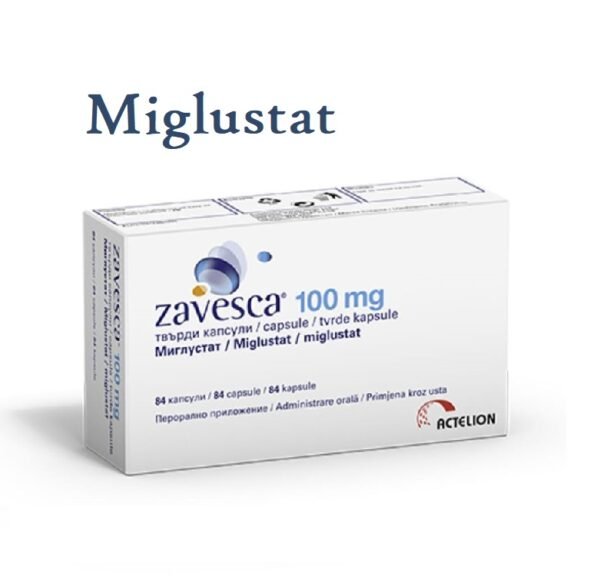
The enzyme glucosylceramide synthase is inhibited by the drug miglustat (Zavesca, Yargesa). Patients with mild to severe type 1 Gaucher disease who cannot be treated with imiglucerase, an enzyme replacement therapy, are prescribed it.
Miglustat Uses:
-
Gaucher disease:
- Used to treat people with mild-to-moderate type 1 Gaucher disease if other treatment alternatives such as enzyme replacement therapy are not available (eg, due to allergy, hypersensitivity, or poor venous access)
-
Off Label Use of Miglustat in Adults:
- Type C Niemann-Pick disease
Miglustat Dose in Adults:
Management of Type 1 Gaucher disease with the drug miglustat (Zavesca, Yargesa) dose:
- Oral: 100 mg TDS; individuals who experience side effects may lower the dosage to 100 mg OD or BD (ie, tremor, diarrhea)
Niemann-Pick Type C illness therapy with miglustat (Zavesca, Yargesa) dosage:
- Oral: 200 mg TDS
Miglustat Dose in Children:
Niemann-Pick Type C illness therapy with miglustat (Zavesca, Yargesa) dosage
Note:
- Miglustat treatment is advised for individuals who have neurological, cognitive, or psychiatric illness symptoms.
- The earliest recorded use of miglustat medication is at the age of seven months. There is very little information on infants; in addition to seizures, noted newborn neurological effects include hypotonia, dysphagia, and feeding problems (onset: 5 to 12 months of age).
- Start dosages gently and modify for tolerance, paying close attention to GI side effects. To notice the therapeutic improvement, several months of treatment were necessary (eg, 6 to 12 months).
-
Infants and Children <12 years: Oral:
- BSA >0.73 to 0.88 m²: 100 mg TDS
- BSA ≤0.47 m²: 100 mg OD
- BSA >1.25 m²: 200 mg 3 TDS
- BSA >0.47 to 0.73 m²: 100 mg BD
- BSA >0.88 to 1.25 m²: 200 mg BD
-
Children ≥12 years and Adolescents:
- 200 mg TDS (Zavesca prescribing information [Canada 2012]; Zavesca prescribing information [European Medicines Agency 2012])
Pregnancy Risk Factor C
- Studies on animal reproduction have shown that there are adverse events.
- Spontaneous abortion risk is increased by type 1 Gaucher illness that is uncontrolled.
- This may also increase the likelihood that a woman will have a miscarriage.
Use of Miglustat while breastfeeding
- It is unknown if breast milk contains miglustat.
- There is a risk of serious adverse reactions in breastfeeding infants.
- Choosing whether to stop taking the medication or keep breastfeeding is crucial.
Miglustat (Zavesca, Yargesa) Dose in Kidney Disease:
-
Gaucher disease:
- CrCl <30 mL/minute/1.73 m²: Not recommended for use
- CrCl >70 mL/minute/1.73 m²: Dosage adjustment not necessary.
- CrCl 30 to 50 mL/minute/1.73 m²: 100 mg OD
- CrCl 50 to 70 mL/minute/1.73 m²: 100 mg BD
-
Niemann-Pick Type C disease: (off-label use) (Zavesca Canadian product monograph)
- CrCl 30 to 50 mL/minute/1.73 m²: 100 mg BD
- CrCl 50 to 70 mL/minute/1.73 m²: 200 mg BD
- CrCl <30 mL/minute/1.73 m²: Not recommended for use
Dose in Liver disease:
- The labeling does not mention dose modifications (has not been studied).
- However, dosage change is rare because the liver does not metabolize miglustat.
Common Side Effects of Miglustat (Zavesca, Yargesa):
-
Endocrine & metabolic:
- Weight loss
-
Neuromuscular & skeletal:
- Weakness
- Tremor
- Leg cramps
-
Central nervous system:
- Dizziness
- Headache
-
Ophthalmic:
- Visual disturbance
-
Gastrointestinal:
- Flatulence
- Diarrhea
- Vomiting
- Abdominal pain
- Nausea
Less Common Side Effects of Miglustat (Zavesca, Yargesa):
-
Central nervous system:
- Unsteady gait
- Memory issues
- Paresthesia
- Migraine
-
Gastrointestinal:
- Constipation
- Dyspepsia
- Xerostomia
- Abdominal distension
- Epigastric pain
- Anorexia
- Bloating
-
Neuromuscular & skeletal:
- Back pain
-
Endocrine & metabolic:
- Menstrual disease
-
Hematologic & oncologic:
- Thrombocytopenia
Contraindications to Miglustat (Zavesca, Yargesa):
- The manufacturer's labeling does not contain any contraindications.
Canadian labeling:
- Pregnancy (or the expectation of being pregnant)
- Hypersensitivity to miglustat and/or any formulation ingredient
Warnings and precautions
-
Diarrhea:
- Weight loss and diarrhea were often noted during the first 12 months.
- Over time, diarrhea will go better with ongoing therapy.
- Changing your diet to include less sugar, lactose, and other carbohydrates, taking Miglustat in between meals, or using anti-diarrhea medication may also be helpful.
- Patients during therapy should be advised to stay away from meals high in carbohydrates.
- It's crucial to obtain a checkup for underlying GI disorders if the symptoms do not go away.
-
Peripheral neuropathy:
- Patients should be examined if they feel tingly or numb. The need to stop treatment can arise.
- Monitoring of the nervous system is required for peripheral neuropathy.
-
Platelet counts decreased:
- Patients with type 1 Gaucher disease have been shown to experience mild thrombocytopenia (without bleeding).
- Platelet counts should be closely monitored during treatment.
-
Tremor:
- Could cause new-onset or worsening of existing tremors.
- Typically, within 30 days of the start of therapy, a tremor appears. It could become better gradually over time (1-3 months) or in response to a dose reduction.
- If the tremor persists after reducing the dosage, discontinue treatment.
-
Renal impairment
-
If you have renal impairment, avoid using it. It is advisable to alter the dosage.
-
The use of this drug is not recommended for people with severe renal impairment.
-
Monitoring parameters:
- Neurologic evaluation should be done at baseline & then every 6 monthly
- Adverse effects
- Weight
- Platelet count
- Renal function
How to administer Miglustat (Zavesca, Yargesa)?
- It May be administered with or without food; the incidence of diarrhea may be decreased with administration between meals.
- The same time of day, at regular intervals, is recommended for taking capsules.
- Before using, pour the contents of the capsule into a drink and deliver it right away if the patient is unable to swallow or accept the capsule.
- Avoid storing the liquid for later use.
- No interactions are expected from sweetening agents.
Mechanism of action of Miglustat (Zavesca, Yargesa):
- Miglustat inhibits enzymes that produce glycosphingolipids by causing a competitive and reversible inhibition.
- It also decreases the formation of glycosphingolipid-glucosylceramide.
- Type 1 Gaucher disease is characterized by an accumulation of glucosylceramide.
- This can lead to complications.
Protein binding:
- Not bound with plasma proteins
Time to peak, plasma:
- 2-2.5 hours
Bioavailability:
- 97%
Metabolism:
- There is no evidence of human metabolism
Half-life elimination:
- 6-7 hours
Excretion:
- Excreted in urine as an unchanged drug
International Brand Names of Miglustat:
- Zavesca
- Brazaves
- Yargesa
Miglustat Brand Names in Pakistan:
No Brands Available in Pakistan.
.png)


