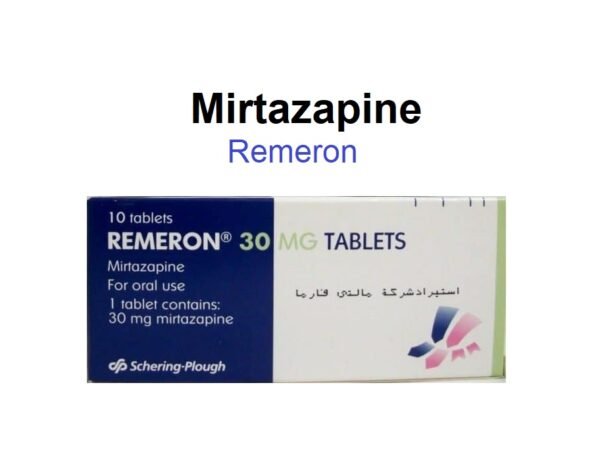
Mirtazapine (Remeron) is a tetracyclic antidepressant drug that is used in the treatment of unipolar major depression, anxiety with panic attacks, and chronic headache.
Mirtazapine (Remeron) Uses:
-
Major depressive disorder (unipolar):
- Treatment of unipolar major depressive disorder (MDD)
-
Off Label Use of Mirtazapine in Adults:
- Prophylaxis of chronic tension-type Headache
- Panic disorder
Mirtazapine Dose in Adults:
Mirtazapine (Remeron) Dose as alternative agent in the prophylaxis of chronic tension-type headache:
- Oral: Initial: 15 mg once a day at bedtime;
- The dose may be increased after 1 week to 30 mg/day based on response and tolerability.
Mirtazapine (Remeron) Dose in the treatment of unipolar major depressive disorder:
- Oral: Initial: 15 mg once a day at bedtime;
- Depending on response and tolerance, the dose may be increased in 15 mg increments no less frequently than once or twice every two weeks.
- Maximum dose: 45 mg/day (product labelling); clinical trials have utilised dosages as high as 60 mg/day.
Mirtazapine (Remeron) Dose as an alternative agent in the treatment of the Panic disorder (off-label):
Note: Comparable to monotherapy or supplementary therapy for patients who do not respond to SSRIs
- Oral: Initial: 15 mg once a day at bedtime;
- Depending on response and tolerance, the dose may be increased by 15 mg increments at intervals of no less than 1 week, with a typical maximum of 45 mg administered once daily (product labeling).
- However, despite doses up to 60 mg/day having been tested, the typical dose in clinical trials was only about 30 mg/day.
-
Discontinuation of therapy:
- When discontinuing antidepressant treatment that has lasted for >3 weeks, gradually taper the dose (e.g. over 2 to 4 weeks) to minimize withdrawal symptoms and detect reemerging symptoms.
- The reasons for a slower titration (eg, over 4 weeks) enlist the use of a drug with a half-life <24 hours (eg, paroxetine, venlafaxine), earlier history of antidepressant withdrawal symptoms, or high doses of antidepressants.
- If intolerable withdrawal symptoms appear, resume the previously prescribed dose and/or reduce it more gradually (Shelton 2001).
- Select patients (eg, those with a history of discontinuation syndrome) on long-term treatment (>6 months) may benefit from tapering over >3 months.
- However, evidence supporting ideal taper rates is limited.
-
Switching antidepressants:
- There is little research to support the best antidepressant switching techniques,
- They include straight switch and cross-titration (gradually stopping the previous antidepressant while concurrently gradually increasing the new antidepressant) (abruptly discontinuing the first antidepressant and then starting the new antidepressant at an equivalent dose or lower dose and increasing it gradually).
- Cross-titration is recommended for most switches but is not recommended when transitioning to or from an MAOI (e.g., over 1 to 4 weeks depending on susceptibility to withdrawal symptoms and side effects).
- When switching from one antidepressant to another in the same or similar class (for example, when switching between two SSRIs), a direct switch may be an appropriate strategy if the antidepressant to be discontinued has been used for less than one week or if the discontinuation is due to side effects.
- Consider the risk of withdrawal symptoms, the possibility of drug interactions, additional antidepressant features (such as half-life, side effects, and pharmacodynamics), as well as the desired level of symptom control, while deciding on the switch strategy.
-
Switching to or from an MAOI:
- The time period between stopping an MAOI and starting mirtazapine is 14 days.
- There must be a 14-day gap between stopping mirtazapine and starting an MAOI.
Use in Children:
Not indicated.
Mirtazapine (Remeron) Pregnancy Risk Category: C
- Mirtazapine crosses the placenta.
- Mirtazapine exposure during pregnancy has not resulted in a significant increase in major teratogenic effect; however, we have limited information.
- Pregnancy treatment with antidepressants should be individualized.
- For some women, psychotherapy and other non-medication therapies might be an option.
- However, pregnant women suffering from moderate to severe major depression should consider antidepressant medication.
- Other agents than mirtazapine may be preferred in cases where MDD treatment is initiated during pregnancy.
- The ACOG and APA have developed treatment algorithms for women suffering from depression before and during pregnancy.
Use Mirtazapine while breastfeeding
- Breast milk contains Mirtazapine as well as its active metabolite.
- The highest reported relative infant dose (RID), of mirtazapine is 4.4%.
- Researchers calculated the RID after maternal administration of mirtazapine 22.5mg/day to a woman 6 weeks postpartum. However, metabolite concentrations weren't evaluated.
- After the maternal dose, breast milk was tested for 4 hours.
- Breast milk can also contain desmethylmirtazpine.
- If the RID of medication falls below 10%, breastfeeding is generally acceptable.
- Some sources mention that breastfeeding should be considered only if the RID for psychotropic drugs is less than 5%.
- Mirtazapine is detectable in breastfed infant serum. However, adverse reactions have not been reported. One case did report possible sedation or weight gain.
- Mothers who use psychotropic medication should monitor their infants at least once per day for any changes in sleep, feeding, behavior, or neurodevelopment.
- When a breastfeeding female is first starting an antidepressant, she may prefer to use an agent other than mirtazapine.
- Manufacturer suggests caution when breastfeeding females are concerned.
Mirtazapine (Remeron) Dose in Kidney Disease:
There are no dosage adjustments provided in the manufacturer’s labeling; though, clearance is decreased with moderate and severe renal impairment. Use carefully.
Mirtazapine (Remeron) Dose in Liver disease:
However, the manufacturer's labelling does not mention dosage modifications, and even then, hepatic impairment may result in a reduction in clearance. Use with caution.
Common Side Effects of Mirtazapine (Remeron):
-
Central nervous system:
- Drowsiness
-
Endocrine & metabolic:
- Increased serum cholesterol
- Weight gain
-
Gastrointestinal:
- Increased appetite
- Constipation
- Xerostomia
Less Common Side Effects of Mirtazapine (Remeron):
-
Cardiovascular:
- Hypertension
- Edema
- Vasodilation
- Peripheral Edema
-
Central Nervous System:
- Twitching
- Abnormal Dreams
- Malaise
- Confusion
- Depression
- Amnesia
- Apathy
- Hypoesthesia
- Agitation
- Myasthenia
- Abnormality In Thinking
- Paresthesia
- Anxiety
- Vertigo
- Dizziness
-
Dermatologic:
- Skin Rash
- Pruritus
-
Endocrine & Metabolic:
- Increased Thirst
- Increased Serum Triglycerides
-
Gastrointestinal:
- Anorexia
- Acute Abdominal Condition
- Vomiting
- Abdominal Pain
-
Genitourinary:
- Urinary Tract Infection
- Urinary Frequency
-
Hepatic:
- Increased Serum Alanine Aminotransferase
-
Neuromuscular & Skeletal:
- Hyperkinetic Muscle Activity
- Back Pain
- Tremor
- Myalgia
- Arthralgia
- Hypokinesia
- Asthenia
-
Respiratory:
- Increased Cough
- Dyspnea
- Sinusitis
- Flu-Like Symptoms
Rare Side effect of Mirtazapine (Remeron):
-
Cardiovascular:
- Orthostatic hypotension
Contraindications to Mirtazapine (Remeron):
- Hypersensitivity to mirtazapine and any component of the formulation
- MAO inhibitors are used to treat psychiatric disorders. They can be used concurrently or within 14-days of stopping mirtazapine.
- Intravenous or linezolid methyleneblue patients may initiate mirtazapine.
Warnings and precautions
-
Akathisia/psychomotor Restlessness
- The majority of these symptoms will manifest within the first few weeks.
- However, it may prove to be harmful for these patients to increase their dose.
-
Anticholinergic effects
- It can cause anticholinergic effects such as constipation, xerostomia and blurred vision.
- Patients with reduced gastrointestinal motility, paralytic and ileus, urinary retentions, BPH, xerostomia, and visual impairments should be cautious.
- This agent produces a low degree of anticholinergic blocking compared to other antidepressants.
-
Arrhythmias
- QT prolongation, Torsade de Pointes, and Ventricular Fibrillation have all been reported (occasionally).
- The majority of incidents involve misusing mirtazapine. However, a series of 84 patients receiving single-agent mirtazapine overdoses failed to find any instances of QT prolongation.
- Patients with cardiovascular disease and those who have had QT prolongation in the past, as well as patients receiving QT-prolonging drugs, should be cautious.
-
Blood dyscrasias
- If you notice signs or symptoms of neutropenia or agranulocytosis, it should be stopped immediately.
-
Depression in the CNS:
- CNS depression can result, which could impair mental or physical abilities.
- However, patients should be cautious about tasks that require mental alertness (e.g. Driving or operating machinery.
- Comparing to other antidepressants, the degree of sedation experienced is moderate to high.
-
Dizziness
- It is possible to feel dizzy, but it isn't clear if tolerance can develop.
-
Fractures
- Antidepressant treatment has been used to treat bone fractures.
- If an antidepressant-treated person presents with unresolved bone pain or tenderness, swelling, or bruising.
-
Hyperlipidemia
- Triglyceride and serum cholesterol levels may rise as a result.
-
Hyponatremia
- Hyponatremia may occur.
- Patients at high risk, such as the elderly and those using drugs that can cause hyponatremia, shouldn't receive treatment.
-
Ocular effects
- It may mildly dilate the pupils, which in some situations can result in narrow-angle glaucoma.
- Patients who have narrow-angle glaucoma risk factors who have not undergone an irisectomy should be assessed.
-
Orthostatic hypotension
- In patients at high risk or those who cannot tolerate brief hypotensive episodes, orthostatic hypotension may develop (risk is minimal compared to other antidepressants).
-
Serotonin syndrome
- Serotonin Syndrome is a potentially fatal side effect of certain serotonergic medications, such as SSRIs (SS).
- SSRIs and SNRIs are frequently used with other serotonergic medications (such as Buspirone, fentanyl, or tramadol can all be used with triptans, TCAs, and fentanyl. Mental diseases are treated with MAO inhibitors.
- Other MAO inhibitors (for instance, intravenous Methylene Blue and linezolid).
- Patients need to be closely watched for symptoms of SS, such as altered mental status (such as agitation, hallucinations, and delirium); coma; autonomic instability (such as tachycardia; labile blood pressure, diaphoresis; neuromuscular changes such as tremor, rigidity, and myoclonus; GI symptoms (such as nausea, vomiting, and diarrhoea); and seizures.
- The course of treatment will be halted right once if any symptoms or signs appear (along with any serotonergic agents)
-
Sexual dysfunction
- Mirtazapine has a lower incidence of sexual dysfunction than SSRIs.
-
Weight loss
- It can increase appetite and stimulate weight growth.
-
Hepatic impairment
- Patients with hepatic impairment should be cautious.
- Transaminase elevations that are clinically significant have been observed.
-
Hypomania/mania:
- This could lead to hypomania or mania in bipolar disorder patients.
- Patients with bipolar disorder should avoid monotherapy.
- Patients with depressive symptoms need to be tested for bipolar disorder.
- This should include details about family history, suicide attempts, bipolar disorder, depression, and other mental health issues.
- Mirtazapine has not been approved by the FDA for treatment of bipolar disorder.
-
Renal impairment
-
In cases of moderate and severe renal impairment, clearance is decreased. Patients with renal impairment, however, need to exercise caution.
-
-
Seizure disorder
- Patients at high risk of seizures should be used with caution.
Mirtazapine: Drug Interaction
Note: Drug Interaction Categories:
- Risk Factor C: Monitor When Using Combination
- Risk Factor D: Consider Treatment Modification
- Risk Factor X: Avoid Concomitant Use
Risk Factor C (Monitor therapy) |
|
| Alizapride |
CNS depressants may have an enhanced CNS depressant impact. Perhaps makes serotonergic agents more effective (High Risk). |
| Almotriptan |
Serotonin syndrome might occur from this. When these medications are taken together, it is important to watch out for any signs and symptoms of serotonin syndrome or serotonin poisoning, such as hyperreflexia, clonus, hyperthermia, diaphoresis, tremor, autonomic instability, and changes in mental status. |
| Alosetron |
Makes serotonergic agents more effective (High Risk). Serotonin syndrome might occur from this. When these medications are taken together, it is important to watch out for any signs and symptoms of serotonin syndrome or serotonin poisoning, such as hyperreflexia, clonus, hyperthermia, diaphoresis, tremor, autonomic instability, and changes in mental status. |
| Amphetamines |
Makes serotonergic agents more effective (High Risk). Serotonin syndrome might occur from this. When these medications are taken together, it is important to watch out for any signs and symptoms of serotonin syndrome or serotonin poisoning, such as hyperreflexia, clonus, hyperthermia, diaphoresis, tremor, autonomic instability, and changes in mental status. |
| Antiemetics (5HT3 Antagonists) | Makes serotonergic agents more effective (High Risk). Serotonin syndrome might occur from this. When these medications are taken together, it is important to watch out for any signs and symptoms of serotonin syndrome or serotonin poisoning, such as hyperreflexia, clonus, hyperthermia, diaphoresis, tremor, autonomic instability, and changes in mental status. Alosetron, Ondansetron, and Ramosetron are exceptions. |
| Antipsychotic Agents |
Antipsychotic Agents' negative or toxic effects may be exacerbated by Serotonergic Agents (High Risk). Particularly, serotonergic drugs may intensify the effects of dopamine blocking, thus raising the danger of neuroleptic malignant syndrome. Serotonergic agents' serotonergic action may be enhanced by antipsychotic drugs (High Risk). Serotonin syndrome might occur from this. |
| Aprepitant | May elevate CYP3A4 substrates' serum concentration (High risk with Inhibitors). |
| Bosentan | May elevate CYP3A4 substrates' serum concentration (High risk with Inhibitors). |
| Brexanolone |
Brexanolone's CNS depressing effects may be amplified by other CNS depressants. CNS depressants may have an enhanced CNS depressant impact. |
| Brimonidine (Topical) |
Makes serotonergic agents more effective (High Risk). |
| Bromopride | Makes serotonergic agents more effective (High Risk). |
| BusPIRone | Serotonin syndrome might occur from this. When these medications are taken together, it is important to watch out for any signs and symptoms of serotonin syndrome or serotonin poisoning, such as hyperreflexia, clonus, hyperthermia, diaphoresis, tremor, autonomic instability, and changes in mental status. Alosetron, Ondansetron, and Ramosetron are exceptions. |
| Cannabidiol | CNS depressants may have an enhanced CNS depressant impact. |
| Cannabis | CNS depressants may have an enhanced CNS depressant impact. |
| Chlorphenesin Carbamate |
CNS depressants' harmful or toxic effects could be increased. Could raise the serum level of mirtazapine. |
| Cimetidine | May elevate CYP3A4 substrates' serum concentration (High risk with Inhibitors). |
| Clofazimine | Other CNS depressants' harmful or toxic effects might be exacerbated. |
| CNS Depressants | Makes serotonergic agents more effective (High Risk). |
| Cyclobenzaprine |
Serotonin syndrome might occur from this. When these medications are taken together, it is important to watch out for any signs and symptoms of serotonin syndrome or serotonin poisoning, such as hyperreflexia, clonus, hyperthermia, diaphoresis, tremor, autonomic instability, and changes in mental status. |
| CYP3A4 Inducers (Moderate) | May lower the serum level of CYP3A4 substrates (High risk with Inducers). |
| CYP3A4 Inducers (Strong) | May lower the level of mirtazapine in the serum. |
| CYP3A4 Inhibitors (Moderate) | May slow down CYP3A4 substrate metabolism (High risk with Inhibitors). |
| CYP3A4 Inhibitors (Strong) | Could raise the serum level of mirtazapine. Nefazodone is an exception. |
| Deferasirox | May lower the serum level of CYP3A4 substrates (High risk with Inducers). |
| Dexmethylphenidate-Methylphenidate | Serotonin syndrome might occur from this. When these medications are taken together, it is important to watch out for any signs and symptoms of serotonin syndrome or serotonin poisoning, such as hyperreflexia, clonus, hyperthermia, diaphoresis, tremor, autonomic instability, and changes in mental status. |
| Dextromethorphan | Serotonin syndrome might occur from this. When these medications are taken together, it is important to watch out for any signs and symptoms of serotonin syndrome or serotonin poisoning, such as hyperreflexia, clonus, hyperthermia, diaphoresis, tremor, autonomic instability, and changes in mental status. |
| Dimethindene (Topical) | CNS depressants may have an enhanced CNS depressant impact. |
| Doxylamine | May enhance the CNS depressant effect of CNS Depressants. Management: The manufacturer of Diclegis (doxylamine/pyridoxine), intended for use in pregnancy, specifically states that use with other CNS depressants is not recommended. |
| Dronabinol | CNS depressants may have an enhanced CNS depressant impact. |
| Duvelisib | May elevate CYP3A4 substrates' serum concentration (High risk with Inhibitors). |
| Eletriptan | Serotonin syndrome might occur from this. When these medications are taken together, it is important to watch out for any signs and symptoms of serotonin syndrome or serotonin poisoning, such as hyperreflexia, clonus, hyperthermia, diaphoresis, tremor, autonomic instability, and changes in mental status. |
| Erdafitinib | May lower the serum level of CYP3A4 substrates (High risk with Inducers). |
| Erdafitinib | May lower the serum level of CYP3A4 substrates (High risk with Inducers). |
| Ergot Derivatives | Serotonin syndrome might occur from this. When these medications are taken together, it is important to watch out for any signs and symptoms of serotonin syndrome or serotonin poisoning, such as hyperreflexia, clonus, hyperthermia, diaphoresis, tremor, autonomic instability, and changes in mental status. Exceptions: Nicergoline. |
| Esketamine | CNS depressants may have an enhanced CNS depressant impact. |
| Fosaprepitant | May elevate CYP3A4 substrates' serum concentration (High risk with Inhibitors). |
| Fosnetupitant | May increase the serum concentration of CYP3A4 Substrates (High risk with Inhibitors). |
| Haloperidol | QT-prolonging Agents (Indeterminate Risk - Caution) may enhance the QTcprolonging effect of Haloperidol. |
| HydrOXYzine | CNS depressants may have an enhanced CNS depressant impact. |
| Ivosidenib | May decrease the serum concentration of CYP3A4 Substrates (High risk with Inducers). |
| Kava Kava | May enhance the adverse/toxic effect of CNS Depressants. |
| Larotrectinib | May increase the serum concentration of CYP3A4 Substrates (High risk with Inhibitors). |
| Lasmiditan | Serotonin syndrome might occur from this. When these medications are taken together, it is important to watch out for any signs and symptoms of serotonin syndrome or serotonin poisoning, such as hyperreflexia, clonus, hyperthermia, diaphoresis, tremor, autonomic instability, and changes in mental status. |
| Lorcaserin | Serotonin syndrome might occur from this. When these medications are taken together, it is important to watch out for any signs and symptoms of serotonin syndrome or serotonin poisoning, such as hyperreflexia, clonus, hyperthermia, diaphoresis, tremor, autonomic instability, and changes in mental status. |
| Magnesium Sulfate | CNS depressants may have an enhanced CNS depressant impact. |
| Metaxalone | Serotonin syndrome might occur from this. When these medications are taken together, it is important to watch out for any signs and symptoms of serotonin syndrome or serotonin poisoning, such as hyperreflexia, clonus, hyperthermia, diaphoresis, tremor, autonomic instability, and changes in mental status. |
| MetyroSINE | The sedative effects of metyroSINE may be strengthened by CNS depressants. |
| Minocycline (Systemic) | CNS depressants may have an enhanced CNS depressant impact. |
| Nabilone | CNS depressants may have an enhanced CNS depressant impact. |
| Nefazodone | Mirtazapine may enhance the serotonergic effect of Nefazodone. Serotonin syndrome might occur from this. When these medications are taken together, it is important to watch out for any signs and symptoms of serotonin syndrome or serotonin poisoning, such as hyperreflexia, clonus, hyperthermia, diaphoresis, tremor, autonomic instability, and changes in mental status. |
| Netupitant | May elevate CYP3A4 substrates' serum concentration (High risk with Inhibitors). |
| Ondansetron | Serotonin syndrome might occur from this. When these medications are taken together, it is important to watch out for any signs and symptoms of serotonin syndrome or serotonin poisoning, such as hyperreflexia, clonus, hyperthermia, diaphoresis, tremor, autonomic instability, and changes in mental status. |
| Oxitriptan | The serotonergic impact of oxitriptan may be enhanced by serotonergic agents (high risk). |
| Palbociclib | May elevate CYP3A4 substrates' serum concentration (High risk with Inhibitors). |
| Piribedil | Piribedil's CNS depressing effects may be enhanced by other CNS depressants. |
| Pramipexole | The sedative effects of pramipexole might be enhanced by CNS depressants. |
| QT-prolonging Agents (Highest Risk) |
The QTc-prolonging action of QT-prolonging Agents may be enhanced by QT-prolonging Agents (Indeterminate Risk - Caution) (Highest Risk). When using these medications together, watch out for cardiac arrhythmias and a prolonged QTc interval. Patients may be considerably more at risk for QTc prolongation if they have additional risk factors. |
| Ramosetron | Serotonin syndrome might occur from this. When these medications are taken together, it is important to watch out for any signs and symptoms of serotonin syndrome or serotonin poisoning, such as hyperreflexia, clonus, hyperthermia, diaphoresis, tremor, autonomic instability, and changes in mental status.V |
| ROPINIRole | The sedative effects of CNS depressants may increase those of ROPINIRole. |
| Rotigotine | Rotigotine's sedative effects may be boosted by CNS depressants. |
| Rufinamide |
CNS depressants' harmful or toxic effects could be increased. Particularly, drowsiness and lightheadedness could be worsened. |
| Sarilumab | May lower the serum level of CYP3A4 substrates (High risk with Inducers). |
| Selective Serotonin Reuptake Inhibitors |
Selective serotonin reuptake inhibitors may have a worsened or more hazardous effect when taken with CNS depressants. Particularly, there may be an increased risk of psychomotor impairment. |
| Selective Serotonin Reuptake Inhibitors | Serotonin syndrome might occur from this. When these medications are taken together, it is important to watch out for any signs and symptoms of serotonin syndrome or serotonin poisoning, such as hyperreflexia, clonus, hyperthermia, diaphoresis, tremor, autonomic instability, and changes in mental status. |
| Serotonergic Agents (High Risk, Miscellaneous) | Serotonin syndrome might occur from this. When these medications are taken together, it is important to watch out for any signs and symptoms of serotonin syndrome or serotonin poisoning, such as hyperreflexia, clonus, hyperthermia, diaphoresis, tremor, autonomic instability, and changes in mental status. |
| Serotonin 5-HT1D Receptor Agonists (Triptans) | Serotonin syndrome might occur from this. When these medications are taken together, it is important to watch out for any signs and symptoms of serotonin syndrome or serotonin poisoning, such as hyperreflexia, clonus, hyperthermia, diaphoresis, tremor, autonomic instability, and changes in mental status.Exceptions: Almotriptan; Eletriptan. |
| Serotonin/Norepinephrine Reuptake Inhibitors |
Serotonin/Norepinephrine Reuptake Inhibitors' serotonergic effects may be strengthened by mirtazapine. This could result in serotonin syndrome. Management: Monitor for signs and symptoms of serotonin syndrome/serotonin toxicity (eg, hyperreflexia, clonus, hyperthermia, diaphoresis, tremor, autonomic instability, mental status changes) when these agents are combined. |
| Siltuximab | May lower the serum level of CYP3A4 substrates (High risk with Inducers). |
| Simeprevir | May elevate CYP3A4 substrates' serum concentration (High risk with Inhibitors). |
| St John's Wort | Serotonin syndrome might occur from this. When these medications are taken together, it is important to watch out for any signs and symptoms of serotonin syndrome or serotonin poisoning, such as hyperreflexia, clonus, hyperthermia, diaphoresis, tremor, autonomic instability, and changes in mental status. |
| Syrian Rue | Serotonin syndrome might occur from this. When these medications are taken together, it is important to watch out for any signs and symptoms of serotonin syndrome or serotonin poisoning, such as hyperreflexia, clonus, hyperthermia, diaphoresis, tremor, autonomic instability, and changes in mental status. |
| Tetrahydrocannabinol | CNS depressants may have an enhanced CNS depressant effect. |
| Tetrahydrocannabinol and Cannabidiol | CNS depressants may have an enhanced CNS depressant effect. |
| Tobacco (Smoked) | May lower the level of mirtazapine in the serum. |
| Tocilizumab | May lower the serum level of CYP3A4 substrates (High risk with Inducers). |
| TraZODone | Could intensify mirtazapine's CNS depressive effects. The serotonergic effect of mirtazapine may be enhanced by trazonodine. |
| Tricyclic Antidepressants | Serotonergic non-opioid CNS depressants may have an enhanced CNS depressant impact. |
| Trimeprazine | Tricyclic antidepressants may increase a CNS depressant's ability to do so. |
| Warfarin | Warfarin's anticoagulant action may be strengthened by mirtazapine. |
Risk Factor D (Consider therapy modification) |
|
| Alpha2-Agonists |
The antihypertensive effects of Alpha2-Agonists may be lessened by mirtazapine. Management: Take into account forgoing concurrent use. If the combination cannot be avoided, keep an eye out for either enhanced effects or decreased effects of alpha2-agonists if mirtazapine is started or dose increased. |
| Blonanserin | CNS Depressants may enhance the CNS depressant effect of Blonanserin. |
| Buprenorphine | CNS Depressants may enhance the CNS depressant effect of Buprenorphine. Management: Consider reduced doses of other CNS depressants, and avoiding such drugs in patients at high risk of buprenorphine overuse/self-injection. Initiate buprenorphine at lower doses in patients already receiving CNS depressants. |
| Chlormethiazole | May enhance the CNS depressant effect of CNS Depressants. Management: Monitor closely for evidence of excessive CNS depression. The chlormethiazole labeling states that an appropriately reduced dose should be used if such a combination must be used. |
| Dabrafenib | May lower the serum level of CYP3A4 substrates (High risk with Inducers).Management: When possible, look for substitutes for the CYP3A4 substrate. If concurrent therapy cannot be avoided, pay special attention to the substrate's clinical consequences (particularly therapeutic effects). |
| Droperidol |
CNS depressants may have an enhanced CNS depressant impact. Consider lowering the dosage of droperidol or other CNS drugs (such as opioids or barbiturates) when they are used concurrently. In separate drug interaction monographs, exceptions to this monograph are covered in more detail. |
| Enzalutamide | May lower the serum level of CYP3A4 substrates (High risk with Inducers).Treatment: Enzalutamide should not be used concurrently with CYP3A4 substrates that have a limited therapeutic index.Enzalutamide use, like with the use of any other CYP3A4 substrate, should be done cautiously and under close observation. |
| Flunitrazepam | CNS Depressants may enhance the CNS depressant effect of Flunitrazepam. |
| HYDROcodone | CNS Depressants may enhance the CNS depressant effect of HYDROcodone. Management: Avoid concomitant use of hydrocodone and benzodiazepines or other CNS depressants when possible. These agents should only be combined if alternative treatment options are inadequate. If combined, limit the dosages and duration of each drug. |
| Lemborexant |
CNS depressants may have an enhanced CNS depressant impact. Management: Due to the possibility of additive CNS depressant effects when lemborexant and concurrent CNS depressants are administered concurrently, dosage modifications may be required. Effects of CNS depressants must be closely monitored. |
| Lorlatinib | May lower the serum level of CYP3A4 substrates (High risk with Inducers).Management: Avoid taking lorlatinib at the same time as any CYP3A4 substrates for which even a small drop in serum levels of the substrate could result in therapeutic failure and negative clinical outcomes. |
| Methotrimeprazine |
The CNS depressing action of methotrimeprazine may be enhanced by CNS depressants. The CNS depressant action of CNS Depressants may be strengthened by methotrimeprazine. Management: Start concurrent methotrimeprazine therapy while reducing the adult dose of CNS depressants by 50%. Only once a clinically effective dose of methotrimeprazine has been established should additional CNS depressant dosage modifications be made. |
| MiFEPRIStone | May elevate CYP3A4 substrates' serum concentration (High risk with Inhibitors).Management: During and two weeks after mifepristone treatment, reduce doses of CYP3A4 substrates and keep an eye out for elevated amounts or toxicity. Fentanyl, pimozide, quinidine, sirolimus, and tacrolimus should all be avoided. Cyclosporine should also be avoided. |
| Mitotane | May lower the serum level of CYP3A4 substrates (High risk with Inducers).Treatment: When administered in individuals receiving mitotane, doses of CYP3A4 substrates may need to be significantly modified. |
| Opioid Agonists | CNS Depressants may enhance the CNS depressant effect of Opioid Agonists. Management: Avoid concomitant use of opioid agonists and benzodiazepines or other CNS depressants when possible. These agents should only be combined if alternative treatment options are inadequate. If combined, limit the dosages and duration of each drug. |
| OxyCODONE | CNS Depressants may enhance the CNS depressant effect of OxyCODONE. Management: Avoid concomitant use of oxycodone and benzodiazepines or other CNS depressants when possible. These agents should only be combined if alternative treatment options are inadequate. If combined, limit the dosages and duration of each drug. |
| Perampanel | May enhance the CNS depressant effect of CNS Depressants. Management: Patients taking perampanel with any other drug that has CNS depressant activities should avoid complex and high-risk activities, particularly those such as driving that require alertness and coordination, until they have experience using the combination. |
| Serotonergic Opioids (High Risk) |
The CNS depressing impact of serotonin-dependent opioids may be enhanced by serotonin-dependent non-opioid CNS depressants (High Risk). The serotonergic action of serotonergic opioids may be enhanced by serotonergic non-opioid CNS depressants (High Risk). Serotonin syndrome might occur from this. Management: Take into account different pharmacological combinations. Keep an eye out for the warning signs and symptoms of CNS depression and serotonin syndrome, if they occur together. |
| Sodium Oxybate |
CNS depressants may have an enhanced CNS depressant impact. Management: Take into account substitutes for combined use. Reduce the doses of one or more medications when simultaneous use is necessary. It is not advised to use sodium oxybate with alcoholic beverages or hypnotic sedatives. |
| Stiripentol | May elevate CYP3A4 substrates' serum concentration (High risk with Inhibitors). Management: Due to the increased potential for side effects and toxicity, stiripentol should not be used with CYP3A4 substrates that are thought to have a narrow therapeutic index. Any CYP3A4 substrate administered with stiripentol requires greater monitoring. |
| Suvorexant |
Suvorexant's CNS depressing effects may be amplified by other CNS depressants. Treatment: Suvorexant and/or any other CNS depressant dosage reduction may be required. Suvorexant shouldn't be taken with alcohol, and it shouldn't be taken for sleeplessness with any other medication either. |
| Tapentadol |
CNS depressants may have an enhanced CNS depressant impact. Treatment: When feasible, refrain from using tapentadol and benzodiazepines or other CNS depressants simultaneously. Only in the event that other treatment choices are insufficient should these medications be combined. Limit the duration and dosage of each medicine when used together. |
| Zolpidem | CNS Depressants may enhance the CNS depressant effect of Zolpidem. Management: Reduce the Intermezzo brand sublingual zolpidem adult dose to 1.75 mg for men who are also receiving other CNS depressants. No such dose change is recommended for women. Avoid use with other CNS depressants at bedtime; avoid use with alcohol. |
Risk Factor X (Avoid combination) |
|
| Alcohol (Ethyl) | May enhance the CNS depressant effect of Mirtazapine. |
| Azelastine (Nasal) | CNS Depressants may enhance the CNS depressant effect of Azelastine (Nasal). |
| Bromperidol | May enhance the CNS depressant effect of CNS Depressants. |
| Conivaptan | May increase the serum concentration of CYP3A4 Substrates (High risk with Inhibitors). |
| Dapoxetine |
Makes serotonergic agents more effective (High Risk). Serotonin syndrome might occur from this. Treatment: Avoid using high-risk serotonergic medications with dapoxetine or within 7 days after stopping them. Within 14 days of using a monoamine oxidase inhibitor, do not take dapoxetine. This combination is listed on the labelling for dapoxetine as being harmful. |
| Fusidic Acid (Systemic) | May elevate CYP3A4 substrates' serum concentration (High risk with Inhibitors). |
| Idelalisib | Could intensify the serotonergic effects of non-opioid serotonergic CNS depressants. |
| Linezolid |
Serotonin syndrome might occur from this. |
| Methylene Blue |
The serotonergic impact of Methylene Blue may be strengthened by serotonergic non-opioid CNS depressants. Serotonin syndrome might occur from this. |
| Monoamine Oxidase Inhibitors (Antidepressant) |
The serotonergic impact of monoamine oxidase inhibitors may be enhanced by serotonergic non-opioid CNS depressants (Antidepressant). Serotonin syndrome might occur from this. |
| Orphenadrine | CNS Depressants may enhance the CNS depressant effect of Orphenadrine. |
| Oxomemazine | May enhance the CNS depressant effect of CNS Depressants. |
| Paraldehyde | CNS Depressants may enhance the CNS depressant effect of Paraldehyde. |
| Pitolisant | Mirtazapine may diminish the therapeutic effect of Pitolisant. |
| Rasagiline | .Could intensify the serotonergic effects of non-opioid serotonergic CNS depressants. |
| Safinamide | Could intensify the serotonergic effects of non-opioid serotonergic CNS depressants. |
| Selegiline | Could intensify the serotonergic effects of non-opioid serotonergic CNS depressants. |
| Thalidomide | This might cause serotonin syndrome. |
Monitoring parameters:
- Patients should be monitored for any agranulocytosis or severe neutropenia symptoms, such as sore throat, stomatitis, or other infection-related symptoms or a low WBC.
- Renal function
- Hepatic function
- Mental Health
- Lipid profile
- Serotonin syndrome
- Weight gain
How to administer Mirtazapine (Remeron)?
Without regard to meals, it is given orally.
Orally disintegrating tablet:
- Place the tablet on your tongue after opening the blister pack.
- There is no need to split the pill because it is designed to dissolve on the tongue without water.
Mechanism of action of Mirtazapine (Remeron):
- Tetracyclic antidepressant mirtazapine functions by inhibiting central presynaptic beta-adrenergic receptors.
- Serotonin and norepinephrine are released more frequently as a result of this.
- Along with being a potent peripheral alpha-adrenergic antagonist and muscarinic antagonist, it also competes with 5-HT-2 and 5-HT-3 serotonin and H histamine receptors.
- It does not prevent norepinephrine and serotonin from being reuptaken.
Absorption:
- Rapid and complete
Protein binding:
- About 85%
Metabolism:
- It is extensively metabolized in the liver via CYP1A2, 2D6, 3A4 and via demethylation and hydroxylation
Bioavailability:
- About 50%
Half-life elimination:
- 20 to 40 hours;
- increased with renal or hepatic impairment
Time to peak serum concentration:
- About 2 hours
Excretion:
- Urine (75%) and feces (15%) as metabolites
International Brand Names of Mirtazapine:
- Remeron
- Remeron SolTab
- APO-Mirtazapine
- Auro-Mirtazapine
- Auro-Mirtazapine OD
- DOM-Mirtazapine
- JAMP-Mirtazapine
- MYLAN-Mirtazapine
- PMS-Mirtazapine
- PRO-Mirtazapine
- Remeron
- Remeron RD
- RIVA-Mirtazapine [DSC]
- SANDOZ Mirtazapine
- TEVA-Mirtazapine
- TEVA-Mirtazapine OD
- Afloyan
- Aurozapine
- Avanza
- Avanza Soltab
- Axit
- Calixta
- Ciblex
- Comment
- Espirtal
- Menelat
- Mi Er Ning
- Mirap
- Mirastad
- Mirazep
- Mirez
- Miro
- Mirta TD
- Mirtapax
- Mirtapil
- Mirtaz
- Mirtazon
- Mirtel
- Mirtimash
- Mitrapil
- Norset
- Noxibel
- Odonazin
- Rapine
- Reflex
- Remergil
- Remergon
- Remeron
- Remeron SolTab
- Remeron Soltab
- Remirta
- Remirta OD
- Remixil ODT
- Resant
- Sinmaron
- Tazeurin
- Trazapin
- U-Mirtaron
- Vastat Flas
- Zamir
- Zapex
- Zapimet
- Zismirt
- Zispin
- Zulin
Mirtazapine Brand Names in Pakistan:
Mirtazapine Tablets 15 mg |
|
| Elaxine | Standpharm Pakistan (Pvt) Ltd. |
| Memron | Biogen Pharma |
| Mirtazep | Zafa Pharmaceutical Laboratories (Pvt) Ltd. |
| Mirton | Genome Pharmaceuticals (Pvt) Ltd |
| Mirtz | Paramount Pharmaceuticals |
| Notense | Qintar Pharmacuticals |
| Ramargon | Organic Pharmaceuticals. |
| Tizapine | Amarant Pharmaceuticals (Pvt) |
| Tizidan | Danas Pharmaceuticals (Pvt) Ltd |
| Tnsles | Panacea Pharmaceuticals |
Mirtazapine 30 mg Tablets |
|
| Elaxine | Standpharm Pakistan (Pvt) Ltd. |
| Mezeron | Obs |
| Mipine | Raazee Theraputics (Pvt) Ltd. |
| Mirpine | Global Pharmaceuticals |
| Mirtazep | Zafa Pharmaceutical Laboratories (Pvt) Ltd. |
| Mirton | Genome Pharmaceuticals (Pvt) Ltd |
| Mirtz | Paramount Pharmaceuticals |
| Notense | Qintar Pharmacuticals |
| Ramargon | Organic Pharmaceuticals. |
| Remeron | Obs |
| Tizapine | Amarant Pharmaceuticals (Pvt) |
| Tizidan | Danas Pharmaceuticals (Pvt) Ltd |
| Tnsles | Panacea Pharmaceuticals |
| Valta | Getz Pharma Pakistan (Pvt) Ltd. |
| Zemer | Mass Pharma (Private) Limited |
| Zimar | Pharma Health Pakistan (Pvt) Ltd |
Mirtazapine Tablets 45 mg |
|
| Charmfil | Wilshire Laboratories (Pvt) Ltd. |
.png)