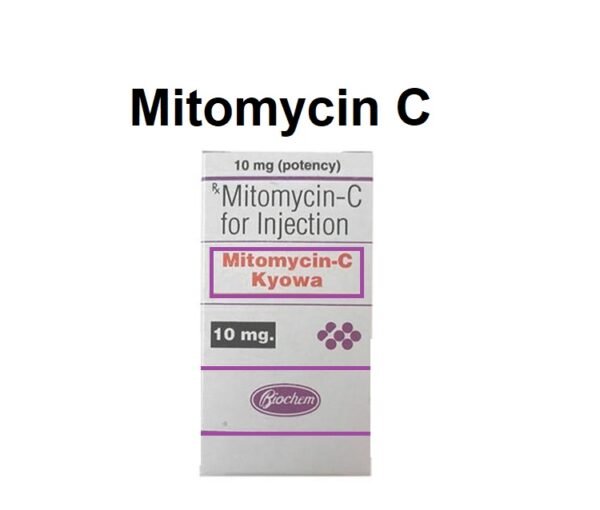
Mitomycin (Datisan) or Mitomycin C is one of the oldest chemotherapeutic drugs that is still used in the treatment of advanced gastric, pancreatic, cervical, anal, and vulvar cancer.
Mitomycin (Datisan) Uses:
-
Gastric cancer:
- It is helpful in the treatment of disseminated adenocarcinoma of the stomach (in combination with other chemotherapy agents) and as a palliative treatment when other modalities have failed.
-
Pancreatic cancer:
- Treatment of disseminated adenocarcinoma of the pancreas (in combination with other chemotherapy agents) and as a palliative treatment when other modalities have failed.
- Limitations of use: It is not proposed for single-agent primary therapy or to replace appropriate surgery and/or radiotherapy in the treatment of such conditions.
-
Off Label Use of Mitomycin in Adults:
- Anal cancer
- Bladder cancer
- recurrent or metastatic cervical cancer,
- Advanced esophageal cancer
- Hepatocellular carcinoma (chemoembolization)
- Advanced vulvar cancer
Mitomycin Dose in Adults:
Mitomycin (Datisan) Dose in the treatment of Anal carcinoma (off-label):
- 10 mg/m² as an IV bolus on days 1 and 29 (maximum: 20 mg/dose) in combination with fluorouracil and radiation therapy or
- 12 mg/m² on day 1 only in amalgam with fluorouracil and radiation therapy or
- 15 mg/m² on day 1 only in combination with fluorouracil and radiation therapy or
- 10 mg/m² on day 1 (maximum dose: 15 mg) in combination with capecitabine and radiation therapy or
- 12 mg/m² on day 1 (maximum dose: 20 mg) in combination with capecitabine and radiation therapy.
Mitomycin (Datisan) Dose in the treatment of Bladder cancer (off-label):
-
Muscle invasive:
- 12 mg/m² on day 1 (in combination with fluorouracil and radiation).
-
Nonmuscle invasive (off-label route): Intravesicular instillation:
- Low risk of recurrence (uncomplicated):
- 40 mg as a single dose postoperatively.
- retain the drug in the bladder for 1 to 2 hours.
- Increased risk of recurrence:
- 20 mg weekly for 6 weeks, in continuation with 20 mg monthly for 3 years;
- need to retain in the bladder for 1 to 2 hours or
- 40 mg weekly for 6 weeks (with urine alkalinization and decreased urine volume to increase drug concentration);
- hold on to in the bladder for 2 hours.
- Low risk of recurrence (uncomplicated):
Mitomycin (Datisan) Dose in the treatment of recurrent or metastatic Cervical cancer:
- IV: 6 mg/m² on day 1 once every 4 weeks (in union with cisplatin) for a minimum of 2 cycles (preferably 9 cycles).
Mitomycin (Datisan) Dose in the treatment of advanced Esophageal cancer, (off-label):
- IV: 7 mg/m² (maximum dose: 14 mg) once every 6 weeks for 4 cycles (in combination with cisplatin and fluorouracil).
Mitomycin (Datisan) Dose in the treatment of Gastric cancer:
- IV: 20 mg/m² once every 6 to 8 weeks
-
Off-label dosing:
- IV: 7 mg/m² (maximum dose: 14 mg) once every 6 weeks for 4 cycles (in union with cisplatin and fluorouracil).
Mitomycin (Datisan) Dose for chemoembolization in the treatment of Hepatocellular cancer:
-
Conventional transcatheter arterial chemoembolization (cTACE):
- Intra-arterial:
- 10 mg as a single dose via intra-arterial injection;
- keeping in view clinical judgment, it may be repeated at 6 to 8-week intervals or
- 8 mg/m² as a single dose via intra-arterial injection every 4 weeks for at least 2 doses.
- It can be referred to as protocol and institutional policies for additional dosing/administration details.
- Intra-arterial:
Mitomycin (Datisan) Dose in the treatment of Pancreatic cancer:
- IV: 20 mg/m² once every 6 to 8 weeks
Mitomycin (Datisan) Dose in the treatment of advanced Vulvar cancer:
- IV: 15 mg/m² on day 1 every 14 days for 2 cycles (in combination with concomitant radiation and fluorouracil).
Use in Children:
The safety and efficacy of the drug in children have not been established.
Mitomycin (Datisan) Pregnancy Risk Category: X
- In animal reproduction studies, however, adverse events are taken into consideration.
Use of mitomycin during breastfeeding
- It is not known if breast milk contains mitomycin.
- The manufacturer does not recommend breastfeeding because of the risk of serious adverse reactions in breastfed babies.
Mitomycin (Datisan) Dose in Kidney Disease:
- The manufacturer’s labeling states to put down its usage in patients with serum creatinine >1.7 mg/dL, though no other dosage modifications are provided.
-
The following adjustments have been recommended (Aronoff 2007):
- CrCl <10 mL/minute:
- Lessen dose to 75% of the usual dose.
- Continuous ambulatory peritoneal dialysis (CAPD):
- The dose needs to be reduced to 75% of the usual dose.
- CrCl <10 mL/minute:
Mitomycin (Datisan) Dose in Liver disease:
However, there are no dosage adjustments provided in the manufacturer’s labeling (has not been studied).
Common Side Effects of Mitomycin (Datisan):
-
Gastrointestinal:
- Anorexia
- Nausea
- Vomiting
-
Hematologic & oncologic:
- Bone marrow depression
- Hemolytic-uremic syndrome
- Thrombotic thrombocytopenic purpura
-
Miscellaneous:
- Fever
Less Common Side Effects of Mitomycin (Datisan):
-
Dermatologic:
- Alopecia
-
Gastrointestinal:
- Mucous membrane disease
- Stomatitis
-
Renal:
- Increased serum creatinine
Contraindications to Mitomycin (Datisan):
- Hypersensitivity to mitomycin and any component of the formula
- Thrombocytopenia
- coagulation disorders or other increased bleeding tendencies.
Warnings and precautions
-
Bladder fibrosis, and contraction
- Bladder fibrosis, and contraction have been included with intravesical administration (unlabeled route).
-
Suppression of bone marrow: [US Boxed Warning]
- It is common to experience bone marrow suppression (thrombocytopenia or leukopenia).
- WBC and platelet loss usually occur within 4 weeks. However, they may occur up to 8 weeks. Recovery occurs in 10 weeks.
- However, sepsis has been linked to fatalities.
- Keep an eye out for infection.
- Myelosuppression can be dose-limiting, delayed in onset and cumulative.
- Therefore, it is important to monitor blood counts for at least 8 weeks after treatment.
- Treatment delay or dosage adjustment may need to be made for severe thrombocytopenia (platelets >100,000./mm3), leukopenia, WBC 4,000/mm3), or progressive declines in either of these values.
-
Extravasation
- Mitomycin is an effective vesicant.
- Before and during infusion, ensure proper placement of the needle or catheter. Avoid extravasation.
- It can cause tissue sloughing and necrosis.
- Reports of delayed erythema or ulceration have been made.
-
Heart Failure:
- The American Heart Association's scientific statement states that mitomycin may cause either reversible or exacerbate underlying myocardial dysfunction (magnitude moderate).
-
Hemolytic-uremic Syndrome: [US Boxed Warn]
- Hemolytic-uremic Syndrome (HUS), has been reported (incidence not determined).
- This condition can include microangiopathic hemolytic Anemia (hematocrit =25%) and thrombocytopenia =100,000./mm3. Irreversible renal failure (serum Creatinine >=1.6 mg/dL).
- HUS can occur with either single-agent therapy or combination therapy. It is most commonly associated with single doses greater than 60 mg. Blood transfusions may also be an option.
- Other, less common causes of pulmonary edema, hypertension, and neurologic abnormalities may also be involved.
- High mortality rates have been reported from HUS.
-
Toxicity in the lungs:
- Patients receiving mitomycin and other chemotherapy were kept at FIO levels >50% perioperatively in cases of severe respiratory distress syndrome (ARDS).
- Be careful to ensure that you only provide enough oxygen to maintain arterial saturation.
- Also, dyspnea and nonproductive cough have been described as pulmonary toxicity. A radiograph may also show pulmonary infiltrates.
- If pulmonary toxicity is observed and other possible causes have been ruled, the therapy may be stopped.
-
Renal impairment
- If serum creatinine levels are >1.7 mg/dL, you don't need to administer.
- Monitor for signs of renal toxicity.
Mitomycin (systemic): Drug Interaction
|
Antineoplastic Agents (Vinca Alkaloids) |
May enhance the adverse/toxic effect of MitoMYcin (Systemic). Specifically, the risk of pulmonary toxicity may be increased. |
|
Chloramphenicol (Ophthalmic) |
May enhance the adverse/toxic effect of Myelosuppressive Agents. |
|
CloZAPine |
Myelosuppressive Agents may enhance the adverse/toxic effect of CloZAPine. Specifically, the risk for neutropenia may be increased. |
|
Coccidioides immitis Skin Test |
Immunosuppressants may diminish the diagnostic effect of Coccidioides immitis Skin Test. |
|
Denosumab |
May enhance the adverse/toxic effect of Immunosuppressants. Specifically, the risk for serious infections may be increased. |
|
Erdafitinib |
May increase the serum concentration of P-glycoprotein/ABCB1 Substrates. |
|
Lumacaftor |
May decrease the serum concentration of P-glycoprotein/ABCB1 Substrates. Lumacaftor may increase the serum concentration of P-glycoprotein/ABCB1 Substrates. |
|
Mesalamine |
May enhance the myelosuppressive effect of Myelosuppressive Agents. |
|
Ocrelizumab |
May enhance the immunosuppressive effect of Immunosuppressants. |
|
P-glycoprotein/ABCB1 Inducers |
May decrease the serum concentration of Pglycoprotein/ABCB1 Substrates. P-glycoprotein inducers may also further limit the distribution of p-glycoprotein substrates to specific cells/tissues/organs where p-glycoprotein is present in large amounts (e.g., brain, T-lymphocytes, testes, etc.). |
|
P-glycoprotein/ABCB1 Inhibitors |
May increase the serum concentration of Pglycoprotein/ABCB1 Substrates. P-glycoprotein inhibitors may also enhance the distribution of pglycoprotein substrates to specific cells/tissues/organs where p-glycoprotein is present in large amounts (e.g., brain, T-lymphocytes, testes, etc.). |
|
Pidotimod |
Immunosuppressants may diminish the therapeutic effect of Pidotimod. |
|
Promazine |
May enhance the myelosuppressive effect of Myelosuppressive Agents. |
|
Ranolazine |
May increase the serum concentration of P-glycoprotein/ABCB1 Substrates. |
|
Siponimod |
Immunosuppressants may enhance the immunosuppressive effect of Siponimod. |
|
Smallpox and Monkeypox Vaccine (Live) |
Immunosuppressants may diminish the therapeutic effect of Smallpox and Monkeypox Vaccine (Live). |
|
Tertomotide |
Immunosuppressants may diminish the therapeutic effect of Tertomotide. |
|
Trastuzumab |
May enhance the neutropenic effect of Immunosuppressants. |
|
Risk Factor D (Consider therapy modification) |
|
|
Baricitinib |
Immunosuppressants may enhance the immunosuppressive effect of Baricitinib. Management: Use of baricitinib in combination with potent immunosuppressants such as azathioprine or cyclosporine is not recommended. Concurrent use with antirheumatic doses of methotrexate or nonbiologic disease modifying antirheumatic drugs (DMARDs) is permitted. |
|
Deferiprone |
|
|
Echinacea |
May diminish the therapeutic effect of Immunosuppressants. |
|
Fingolimod |
Immunosuppressants may enhance the immunosuppressive effect of Fingolimod. Management: Avoid the concomitant use of fingolimod and other immunosuppressants when possible. If combined, monitor patients closely for additive immunosuppressant effects (eg, infections). |
|
Leflunomide |
Immunosuppressants may enhance the adverse/toxic effect of Leflunomide. Specifically, the risk for hematologic toxicity such as pancytopenia, agranulocytosis, and/or thrombocytopenia may be increased. Management: Consider not using a leflunomide loading dose in patients receiving other immunosuppressants. Patients receiving both leflunomide and another immunosuppressant should be monitored for bone marrow suppression at least monthly. |
|
Lenograstim |
Antineoplastic Agents may diminish the therapeutic effect of Lenograstim. Management: Avoid the use of lenograstim 24 hours before until 24 hours after the completion of myelosuppressive cytotoxic chemotherapy. |
|
Lipegfilgrastim |
Antineoplastic Agents may diminish the therapeutic effect of Lipegfilgrastim. Management: Avoid concomitant use of lipegfilgrastim and myelosuppressive cytotoxic chemotherapy. Lipegfilgrastim should be administered at least 24 hours after the completion of myelosuppressive cytotoxic chemotherapy. |
|
Nivolumab |
Immunosuppressants may diminish the therapeutic effect of Nivolumab. |
|
Palifermin |
May enhance the adverse/toxic effect of Antineoplastic Agents. Specifically, the duration and severity of oral mucositis may be increased. Management: Do not administer palifermin within 24 hours before, during infusion of, or within 24 hours after administration of myelotoxic chemotherapy. |
|
Roflumilast |
May enhance the immunosuppressive effect of Immunosuppressants. |
|
Sipuleucel-T |
Immunosuppressants may diminish the therapeutic effect of Sipuleucel-T. Management: Evaluate patients to see if it is medically appropriate to reduce or discontinue therapy with immunosuppressants prior to initiating sipuleucel-T therapy. |
|
Tofacitinib |
Immunosuppressants may enhance the immunosuppressive effect of Tofacitinib. Management: Concurrent use with antirheumatic doses of methotrexate or nonbiologic disease modifying antirheumatic drugs (DMARDs) is permitted, and this warning seems particularly focused on more potent immunosuppressants. |
|
Vaccines (Inactivated) |
Immunosuppressants may diminish the therapeutic effect of Vaccines (Inactivated). Management: Vaccine efficacy may be reduced. Complete all age-appropriate vaccinations at least 2 weeks prior to starting an immunosuppressant. If vaccinated during immunosuppressant therapy, revaccinate at least 3 months after immunosuppressant discontinuation. |
|
Risk Factor X (Avoid combination) |
|
|
BCG (Intravesical) |
Immunosuppressants may diminish the therapeutic effect of BCG (Intravesical). |
|
BCG (Intravesical) |
Myelosuppressive Agents may diminish the therapeutic effect of BCG (Intravesical). |
|
Cladribine |
May enhance the immunosuppressive effect of Immunosuppressants. |
|
Cladribine |
May enhance the myelosuppressive effect of Myelosuppressive Agents. |
|
Dipyrone |
May enhance the adverse/toxic effect of Myelosuppressive Agents. Specifically, the risk for agranulocytosis and pancytopenia may be increased |
|
Lasmiditan |
May increase the serum concentration of P-glycoprotein/ABCB1 Substrates. |
|
Natalizumab |
Immunosuppressants may enhance the adverse/toxic effect of Natalizumab. Specifically, the risk of concurrent infection may be increased. |
|
Pimecrolimus |
May enhance the adverse/toxic effect of Immunosuppressants. |
|
Tacrolimus (Topical) |
May enhance the adverse/toxic effect of Immunosuppressants. |
|
Upadacitinib |
Immunosuppressants may enhance the immunosuppressive effect of Upadacitinib. |
|
Vaccines (Live) |
Immunosuppressants may enhance the adverse/toxic effect of Vaccines (Live). Immunosuppressants may diminish the therapeutic effect of Vaccines (Live). Management: Avoid use of live organism vaccines with immunosuppressants; live-attenuated vaccines should not be given for at least 3 months after immunosuppressants. Exceptions: Smallpox and Monkeypox Vaccine (Live). |
Monitoring parameters:
- Monitor CBC with differential (repeatedly during therapy and for ≥8 weeks following therapy).
- monitor for signs and symptoms of HUS.
- serum creatinine
- pulmonary function tests
- monitor infusion site.
How to administer Mitomycin (Datisan)?
- You can administer IV via a slow IV push/bolus or a freely-running, saline injection. Consider using a central vein catheter.
- It acts as a vesicant. It is important to ensure that the catheter or needle are correctly placed prior to and during infusion. However, extravasation should not be allowed.
-
Extravasation management
- Infusions should be stopped immediately. Extravasation can be prevented by leaving the needle/cannula in place.
- Lift the extremity, and gently aspirate any extravasated solution. Do NOT flush the line.
- Start dimethyl sulfate antidote (DMSO).
- Apply a dry, cold compress for 20 mins four times per day for up to two days.
-
DMSO
- Topically apply to the affected area twice per hour for 7 days. Do not cover it with a dressing.
-
Intravesicular (off-label route):
- Infuse the bladder and retain for 1 to 2 hours.
- Rotate the patient every 15 to 30 minutes.
-
Intra-arterial:
- Transcatheter arterial chemoembolization (TACE; off-label use)
- For conventional TACE, mitomycin was administered with lipiodol and contrast media followed by particle embolization with an embolic agent or
- followed by starch microspheres for vessel occlusion.
- IV antibiotics were administered earlier to the procedure and embolic material was injected through the catheter until hemostasis was achieved.
- Refer to protocol and institutional policies for additional administration details.
Mechanism of action of Mitomycin (Datisan):
- Mitomycin alkylates DNA, producing DNA cross-linking (mainly using guanine or cytosine pairs), and inhibits DNA andRNA synthesis.
- Although it is not specific to cell cycles, it has the greatest effect on cells in late G or early S phases.
Metabolism:
- Primarily hepatic
Half-life elimination:
- 17 minutes (30 mg dose)
Excretion:
- Feces (primarily)
- Urine
International Brands of Mitomycin:
- Mutamycin
- Ametycine
- Baxmicin
- Datisan
- Minazol
- Mitocin
- Mitocyna
- Mitomicina
- Mitomicina-C
- Mitomycin
- Mitomycin C
- Mitomycin-C
- Mitomycin-C Kyowa
- Mitomycine
- Mitonco
- Mitostat
- Mitotie
- Mixandex
- Mutamycin
- Mytomycin C
- Mytoxid
- Riptam
- Vesimycin
- Vetio
Mitomycin Brand Names in Pakistan:
No Brands Are Available in Pakistan.
.png)


