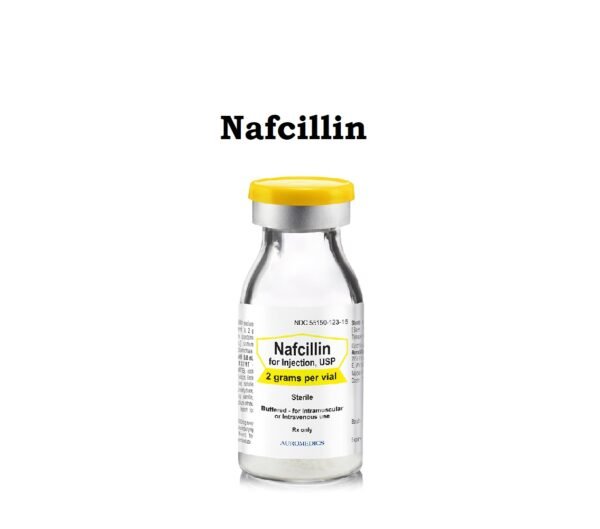
Nafcillin is a narrow spectrum beta-lactamase-resistant penicillin used in the treatment of infections caused by gram-positive organisms resistant to other penicillins.
Nafcillin Uses:
-
Staphylococcal infections:
- for Treatment of infections caused by susceptible penicillinase-producing staphylococci
-
Off Label Use of Nafcillin in Adults:
- Catheter-related bloodstream infections;
- Skin and soft tissue necrotizing infection;
- Streptococcal skin infections;
- Surgical site infections
- Endocarditis caused by susceptible organisms.
Nafcillin Dose in Adults
Nafcillin Dose in the treatment of Catheter-related bloodstream infections (off-label):
- IV: at 2 g every 4 hours.
Nafcillin Dose in the treatment of Endocarditis caused by Methicillin-susceptible Staphylococcus aureus (MSSA):
-
- 12 g/day iV in 4 or 6 divided doses (ie, 2 g every 4 hours or 3 g every 6 hours) for 6 weeks.
- Note: Duration intended for complicated right-sided infective endocarditis (IE) or left-sided IE.
- For uncomplicated right-sided IE, 2 weeks of therapy may be enough.
-
Prosthetic valve endocarditis:
- 12 g/day IV in 6 divided doses (ie, 2 g every 4 hours) for ≥6 weeks (use with rifampin for entire course and gentamicin for first 2 weeks).
Nafcillin Dose in the treatment of bacterial Meningitis, bacterial caused by Methicillin-susceptible S. aureus:
- IV:
- 2 g every 4 hours;
- consider the addition of rifampin if the organism is susceptible to it and prosthetic material is present.
Nafcillin Dose in the treatment of Osteomyelitis: Methicillin-susceptible S. aureus (MSSA) (off-label dose):
- IV: at 1.5 to 2 g every 4 to 6 hours or via continuous infusion (IDSA [Berbari 2015])
Nafcillin Dose in the treatment of Prosthetic joint infections: Methicillin-susceptible S. aureus (MSSA):
- 5 to 2 g every 4 to 6 hours (IDSA [Osmon 2013])
Nafcillin Dose in the treatment of Skin and soft tissue infections:
-
Due to methicillin-susceptible Staphylococcus aureus (MSSA) (off-label dose):
- IV: 1 to 2 g every 4 hours for 7 to 14 days
-
Necrotizing infection due to MSSA (off-label use):
- IV:
- at 1 to 2 g every 4 hours;
- continue until further debridement is not necessary, the patient has clinically improved, and patient remains afebrile for 48 to 72 hours
- IV:
Nafcillin Dose in the treatment of Streptococcal skin infections (off-label):
- IV: at 1 to 2 g every 4 to 6 hours (IDSA [Stevens 2014])
Nafcillin Dose in the treatment of Surgical site infections (trunk or extremity away from axilla or perineum):
- IV: 2 g every 6 hours (IDSA [Stevens 2014])
Nafcillin Dose in Childrens
Nafcillin General dosing in susceptible infections:
-
Mild to moderate infections: IM, IV:
- 100 to 150 mg/kg/day in divided doses every 6 hours;
- maximum daily dose: 4 g/day
-
Severe infections: IM, IV:
- at 150 to 200 mg/kg per day in divided doses every 4 to 6 hours;
- maximum daily dose: 12 g/day
Nafcillin Dose in the treatment of Endocarditis:
-
Children and Adolescents:
- Intravenous:
- 200 mg/kg/day in divided doses every 4 to 6 hours;
- maximum daily dose: 12 g/day;
- treat for at least 4 weeks;
- longer durations may be necessary;
- It may be used in combination with gentamicin for some resistant organisms.
- Intravenous:
Nafcillin Dose in the treatment of Meningitis:
- IV:
- at 200 mg/kg/day in divided doses every 6 hours;
- maximum daily dose: 12 g/day.
Nafcillin Dose in the treatment of Skin and soft tissue infections:
- Methicillin-susceptible Staphylococcus aureus (MSSA):
- 100 to 150 mg/kg/day intravenous in divided doses every 6 hours;
- The maximum daily dose: 12 g/day
-
Necrotizing infection due to MSSA:
- 200 mg/kg/day intravenous in divided doses every 6 hours;
- maximum daily dose: 12 g/day;
- continue until further debridement is not necessary,
- patient has clinically improved,
- and patient stays afebrile for 48 to 72 hours
Nafcillin Dose in the treatment of Streptococcal skin infections:
- IV: at 200 mg/kg/day in divided doses every 6 hours;
- maximum daily dose: 12 g/day
Pregnancy Risk Factor B
- Animal reproduction studies have not shown any adverse events.
- Limited information is available on nafcillin usage during pregnancy.
- Penicillins used by mothers during pregnancy have not been linked to an increase in birth defects.
Use of Nafcillin while breastfeeding
- Breast milk is free from penicillins.
- The drug manufacturer suggests that nursing mothers exercise caution when using nafcillin.
- Modification of the bowel flora could also be a non-dose-related effect.
Nafcillin Dose in Kidney Disease:
- No dosage adjustment necessary;
- use with caution in patients with concomitant hepatic impairment.
- Poorly dialyzed.
- No supplemental dose or dosage adjustment necessary, including patients on intermittent hemodialysis, peritoneal dialysis, or continuous renal replacement therapy (eg, CVVHD).
Nafcillin Dose in Liver disease:
- There are no dosage adjustments provided in the drug manufacturer's labeling.
- Nafcillin primarily undergoes hepatic metabolism;
- dosage adjustment may be necessary, particularly in the setting of concomitant renal impairment.
Side effects of Nafcillin:
-
Cardiovascular:
- Local Thrombophlebitis
-
Central Nervous System:
- Neurotoxicity (High Doses)
-
Gastrointestinal:
- Cholestasis
- Clostridioides (Formerly Clostridium) Difficile-Associated Diarrhea
-
Hematologic & Oncologic:
- Agranulocytosis
- Bone Marrow Depression
- Neutropenia
-
Hepatic:
- Increased Serum Transaminases
-
Hypersensitivity:
- Anaphylaxis
-
Local:
- Inflammation At Injection Site
- Injection Site Phlebitis
- Local Skin Exfoliation (At Injection Site)
- Pain At Injection Site
- Swelling At Injection Site
-
Renal:
- Interstitial Nephritis
- Renal Tubular Disease
Contraindications to Nafcillin:
- Hypersensitivity/ hyperresponsiveness of nafcillin or other penicillins or any component in the formulation
- Limited documentation exists on cross-reactivity between beta-lactams (eg penicillins or cephalosporins), which can cause allergenic reactions.
- Cross-sensitivity is possible due to similarities in chemical structure or mechanism of action.
Warnings and precautions
-
Anaphylactic and hypersensitivity reactions
- Patients on penicillin therapy have had severe, sometimes fatal, hypersensitivity/ hyperresponsiveness reactions (anaphylactic) observed.
- This is especially true if they have a history beta-lactam hypersensitivity and/or sensitivity to multiple allergens.
- Patients with severe allergies or asthma should be cautious.
- If an allergic reaction occurs, discontinue the treatment and initiate appropriate/appropriate therapy.
-
Extravasation:
- Avoid IV Infusions Extravasation
- Before and during infusion, ensure that the catheter or needle is properly positioned.
-
Hepatic effects
- High doses of alcohol can lead to liver transaminases elevation and/or cholestasis.
- Patients with a worsening of hepatic function should be evaluated.
-
Neurotoxic effects
- Neurotoxicity has been linked to large intraventricular or IV doses.
- Patients with renal or hepatic dysfunction should exercise caution.
-
Superinfection
- Prolonged use may develop fungal or bacterial superinfection, including C.difficile-associated diarrhea (CDAD) and pseudomembranous colitis;
- CDAD was observed after >2 months of postantibiotic treatment.
-
Heart failure:
- It may contain significant amounts of sodium.
- Use caution in the event of heart failure
-
Hepatic and renal impairment
- Patients with concomitant renal and hepatic impairments should be used with caution.
Nafcillin: Drug Interaction
|
Risk Factor C (Monitor therapy) |
|
|
Acemetacin |
May increase the serum concentration of Penicillins. |
|
BCG Vaccine (Immunization) |
Antibiotics may diminish the therapeutic effect of BCG Vaccine (Immunization). |
|
Benzhydrocodone |
CYP3A4 Inducers (Moderate) may decrease the serum concentration of Benzhydrocodone. Specifically, the serum concentrations of hydrocodone may be reduced. |
|
CloZAPine |
CYP3A4 Inducers (Moderate) may decrease the serum concentration of CloZAPine. |
|
Codeine |
CYP3A4 Inducers (Moderate) may decrease serum concentrations of the active metabolite(s) of Codeine. |
|
CycloSPORINE (Systemic) |
Nafcillin may increase the metabolism of CycloSPORINE (Systemic). |
|
CYP3A4 Substrates (High risk with Inducers) |
CYP3A4 Inducers (Moderate) may decrease the serum concentration of CYP3A4 Substrates (High risk with Inducers). Exceptions: Apixaban; Rivaroxaban. |
|
Doravirine |
CYP3A4 Inducers (Moderate) may decrease the serum concentration of Doravirine. |
|
Estriol (Systemic) |
CYP3A4 Inducers (Moderate) may decrease the serum concentration of Estriol (Systemic). |
|
Estriol (Topical) |
CYP3A4 Inducers (Moderate) may decrease the serum concentration of Estriol (Topical). |
|
FentaNYL |
CYP3A4 Inducers (Moderate) may decrease the serum concentration of FentaNYL. |
|
Glecaprevir and Pibrentasvir |
CYP3A4 Inducers (Moderate) may decrease the serum concentration of Glecaprevir and Pibrentasvir. |
|
HYDROcodone |
CYP3A4 Inducers (Moderate) may decrease the serum concentration of HYDROcodone. |
|
Ibrutinib |
CYP3A4 Inducers (Moderate) may decrease the serum concentration of Ibrutinib. |
|
Ifosfamide |
CYP3A4 Inducers (Moderate) may decrease serum concentrations of the active metabolite(s) of Ifosfamide. CYP3A4 Inducers (Moderate) may increase serum concentrations of the active metabolite(s) of Ifosfamide. |
|
Lactobacillus and Estriol |
Antibiotics may diminish the therapeutic effect of Lactobacillus and Estriol. |
|
Methotrexate |
Penicillins may increase the serum concentration of Methotrexate. |
|
Mirodenafil |
CYP3A4 Inducers (Moderate) may decrease the serum concentration of Mirodenafil. |
|
Mycophenolate |
Penicillins may decrease serum concentrations of the active metabolite(s) of Mycophenolate. This effect appears to be the result of impaired enterohepatic recirculation. |
|
Naldemedine |
CYP3A4 Inducers (Moderate) may decrease the serum concentration of Naldemedine. |
|
NiMODipine |
CYP3A4 Inducers (Moderate) may decrease the serum concentration of NiMODipine. |
|
Pexidartinib |
CYP3A4 Inducers (Moderate) may decrease the serum concentration of Pexidartinib. |
|
Pitolisant |
CYP3A4 Inducers (Moderate) may decrease the serum concentration of Pitolisant. |
|
Probenecid |
May increase the serum concentration of Penicillins. |
|
Rolapitant |
CYP3A4 Inducers (Moderate) may decrease the serum concentration of Rolapitant. |
|
Upadacitinib |
CYP3A4 Inducers (Moderate) may decrease the serum concentration of Upadacitinib. |
|
Zolpidem |
CYP3A4 Inducers (Moderate) may decrease the serum concentration of Zolpidem. |
|
Risk Factor D (Consider therapy modification) |
|
|
Brigatinib |
CYP3A4 Inducers (Moderate) may decrease the serum concentration of Brigatinib. Management: Avoid concurrent use of brigatinib with moderate CYP3A4 inducers when possible. If combined, increase the daily dose of brigatinib in 30 mg increments after 7 days of treatment with the current brigatinib dose, up to maximum of twice the dose. |
|
Clarithromycin |
CYP3A4 Inducers (Moderate) may increase serum concentrations of the active metabolite(s) of Clarithromycin. CYP3A4 Inducers (Moderate) may decrease the serum concentration of Clarithromycin. Management: Consider alternative antimicrobial therapy for patients receiving a CYP3A inducer. Drugs that enhance the metabolism of clarithromycin into 14-hydroxyclarithromycin may alter the clinical activity of clarithromycin and impair its efficacy. |
|
Daclatasvir |
CYP3A4 Inducers (Moderate) may decrease the serum concentration of Daclatasvir. Management: Increase the daclatasvir dose to 90 mg once daily if used with a moderate CYP3A4 inducer. |
|
Erdafitinib |
CYP3A4 Inducers (Moderate) may decrease the serum concentration of Erdafitinib. Management: Dose modifications of erdafitinib may be required. See full monograph for details. |
|
Estrogen Derivatives (Contraceptive) |
Nafcillin may increase the metabolism of Estrogen Derivatives (Contraceptive). Management: Use of an alternative, nonhormonal form of contraception during nafcillin therapy is recommended. |
|
GuanFACINE |
CYP3A4 Inducers (Moderate) may decrease the serum concentration of GuanFACINE. Management: Increase the guanfacine dose by up to double when initiating guanfacine in a patient taking a moderate CYP3A4 inducer. Increase guanfacine dose gradually over 1 to 2 weeks if initiating a moderate CYP3A4 inducer in a patient already taking guanfacine. |
|
Lefamulin |
CYP3A4 Inducers (Moderate) may decrease the serum concentration of Lefamulin. Management: Avoid concomitant use of lefamulin with moderate CYP3A4 inducers unless the benefits outweigh the risks. |
|
Lefamulin (Intravenous) |
CYP3A4 Inducers (Moderate) may decrease the serum concentration of Lefamulin (Intravenous). Management: Avoid concomitant use of lefamulin (intravenous) with moderate CYP3A4 inducers unless the benefits outweigh the risks. |
|
Lorlatinib |
CYP3A4 Inducers (Moderate) may enhance the hepatotoxic effect of Lorlatinib. CYP3A4 Inducers (Moderate) may decrease the serum concentration of Lorlatinib. Management: Avoid use of lorlatinib with moderate CYP3A4 inducers. If such a combination must be used, monitor AST, ALT, and bilirubin within 48 hours of starting the combination and at least three times within the first week of combined use. |
|
Lurasidone |
CYP3A4 Inducers (Moderate) may decrease the serum concentration of Lurasidone. Management: Monitor for decreased lurasidone effects if combined with moderate CYP3A4 inducers and consider increasing the lurasidone dose if coadministered with a moderate CYP3A4 inducer for 7 or more days. |
|
Meperidine |
CYP3A4 Inducers (Moderate) may decrease the serum concentration of Meperidine. Management: Consider increasing meperidine dose if concomitant use with moderate CYP3A4 inducers is required. Monitor for signs and symptoms of opioid withdrawal. |
|
NIFEdipine |
Nafcillin may decrease the serum concentration of NIFEdipine. |
|
Palbociclib |
CYP3A4 Inducers (Moderate) may decrease the serum concentration of Palbociclib. Management: The US label does not provide specific recommendations concerning use with moderate CYP3A4 inducers, but the Canadian label recommends avoiding use of moderate CYP3A4 inducers. |
|
Perampanel |
CYP3A4 Inducers (Moderate) may decrease the serum concentration of Perampanel. Management: Increase the perampanel starting dose to 4 mg/day when perampanel is used concurrently with moderate and strong CYP3A4 inducers. |
|
Sodium Picosulfate |
Antibiotics may diminish the therapeutic effect of Sodium Picosulfate. Management: Consider using an alternative product for bowel cleansing prior to a colonoscopy in patients who have recently used or are concurrently using an antibiotic. |
|
Tetracyclines |
May diminish the therapeutic effect of Penicillins. |
|
Typhoid Vaccine |
Antibiotics may diminish the therapeutic effect of Typhoid Vaccine. Only the live attenuated Ty21a strain is affected. Management: Vaccination with live attenuated typhoid vaccine (Ty21a) should be avoided in patients being treated with systemic antibacterial agents. Use of this vaccine should be postponed until at least 3 days after cessation of antibacterial agents. |
|
Vitamin K Antagonists (eg, warfarin) |
Nafcillin may diminish the anticoagulant effect of Vitamin K Antagonists. Management: Consider choosing an alternative antibiotic. Monitor for decreased therapeutic effects and need for dose adjustments of oral anticoagulants if nafcillin is initiated/dose increased, or increased effects if nafcillin is discontinued/dose decreased. |
|
Risk Factor X (Avoid combination) |
|
|
Abemaciclib |
CYP3A4 Inducers (Moderate) may decrease the serum concentration of Abemaciclib. |
|
Antihepaciviral Combination Products |
CYP3A4 Inducers (Moderate) may decrease the serum concentration of Antihepaciviral Combination Products. |
|
Asunaprevir |
CYP3A4 Inducers (Moderate) may decrease the serum concentration of Asunaprevir. |
|
Axitinib |
CYP3A4 Inducers (Moderate) may decrease the serum concentration of Axitinib. |
|
BCG (Intravesical) |
Antibiotics may diminish the therapeutic effect of BCG (Intravesical). |
|
Bedaquiline |
CYP3A4 Inducers (Moderate) may decrease the serum concentration of Bedaquiline. |
|
Bosutinib |
CYP3A4 Inducers (Moderate) may decrease the serum concentration of Bosutinib. |
|
Cholera Vaccine |
Antibiotics may diminish the therapeutic effect of Cholera Vaccine. Management: Avoid cholera vaccine in patients receiving systemic antibiotics, and within 14 days following the use of oral or parenteral antibiotics. |
|
Cobimetinib |
CYP3A4 Inducers (Moderate) may decrease the serum concentration of Cobimetinib. |
|
Dasabuvir |
CYP3A4 Inducers (Moderate) may decrease the serum concentration of Dasabuvir. |
|
Deflazacort |
CYP3A4 Inducers (Moderate) may decrease serum concentrations of the active metabolite(s) of Deflazacort. |
|
Elbasvir |
CYP3A4 Inducers (Moderate) may decrease the serum concentration of Elbasvir. |
|
Encorafenib |
CYP3A4 Inducers (Moderate) may decrease the serum concentration of Encorafenib. |
|
Entrectinib |
CYP3A4 Inducers (Moderate) may decrease the serum concentration of Entrectinib. |
|
Fedratinib |
CYP3A4 Inducers (Moderate) may decrease the serum concentration of Fedratinib. |
|
Flibanserin |
CYP3A4 Inducers (Moderate) may decrease the serum concentration of Flibanserin. |
|
Grazoprevir |
CYP3A4 Inducers (Moderate) may decrease the serum concentration of Grazoprevir. |
|
Neratinib |
CYP3A4 Inducers (Moderate) may decrease the serum concentration of Neratinib. |
|
Nisoldipine |
CYP3A4 Inducers (Moderate) may decrease the serum concentration of Nisoldipine. |
|
Olaparib |
CYP3A4 Inducers (Moderate) may decrease the serum concentration of Olaparib. |
|
Pimavanserin |
CYP3A4 Inducers (Moderate) may decrease the serum concentration of Pimavanserin. |
|
Pretomanid |
CYP3A4 Inducers (Moderate) may decrease the serum concentration of Pretomanid. |
|
Ranolazine |
CYP3A4 Inducers (Moderate) may decrease the serum concentration of Ranolazine. |
|
Simeprevir |
CYP3A4 Inducers (Moderate) may decrease the serum concentration of Simeprevir. |
|
Sonidegib |
CYP3A4 Inducers (Moderate) may decrease the serum concentration of Sonidegib. |
|
Velpatasvir |
CYP3A4 Inducers (Moderate) may decrease the serum concentration of Velpatasvir. |
|
Venetoclax |
CYP3A4 Inducers (Moderate) may decrease the serum concentration of Venetoclax. |
Monitoring parameters:
- Baseline and periodic CBC with differential,
- urinalysis,
- BUN, serum creatinine;
- should do baseline and periodic serum bilirubin, AST, ALT, alkaline phosphatase and gamma glutamyl transferase (especially when using high doses);
- observe for signs and symptoms of anaphylaxis during administration of first dose.
- Monitor infusion site.
How to administer Nafcillin?
-
IM:
- Administer as a deep intragluteal injection;
- rotate injection sites.
-
IV:
- Infuse over 30 to 60 minutes.
- Vesicant; ensure proper needle or catheter placement before and during IV infusion.
- Avoid extravasation.
Extravasation management:
- If extravasation occurs, stop infusion instantly and disconnect (leave needle/cannula in place);
- gently aspirate extravasated solution but do NOT flush the line;
- initiate hyaluronidase antidote;
- remove needle/cannula in case of not using IV hyaluronidase antidote),
- apply dry cold compressions.
- elevate extremity.
Hyaluronidase:
- Intradermal or SubQ:
- Inject a total of 1 to 1.7 mL (15 units/mL) as 5 separate 0.2 to 0.3 mL injections (using a 25-gauge needle) into the area of extravasation at the leading edge in clockwise order.
Mechanism of action of Nafcillin:
- Interferes during active multiplication with the bacterial cell wall synthesis, leading to cell wall destruction and bactericidal activity.
- It can be inactivated by staphylococcal penicillinase.
Distribution:
- Widely distributed; CSF penetration is poor but enhanced by meningeal inflammation
Protein binding:
- ~90%; primarily to albumin
Metabolism:
- Primarily hepatic; undergoes enterohepatic recirculation
Half-life elimination:
- Neonates <3 weeks: 2.2 to 5.5 hours; 4 to 9 weeks: 1.2 to 2.3 hours
- Infants and Children 1 month to 14 years: 0.75 to 1.9 hours
- Adults: Normal renal/hepatic function: 33 to 61 minutes
Time to peak serum concentrations:
- IM: 30 to 60 minutes
Excretion:
- Primarily feces; urine (~30% as unchanged drug)
Nafcillin Brand Names (International):
Nafcil Nallpen
Nafcillin Brand Names in Pakistan:
No Brands Available in Pakistan.
.png)