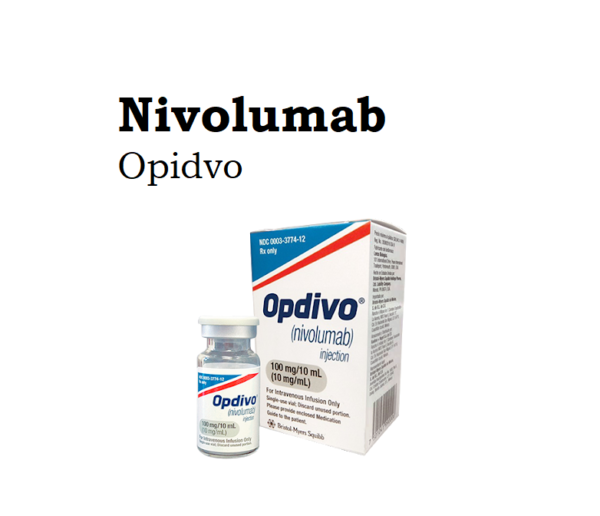
Nivolumab (Opdivo) is a human programmed death receptor-1 (PD-1) blocking antibody that is used to treat various cancers.
Nivolumab (Opdivo) Uses:
-
Metastatic Colorectal Cancer (microsatellite instability high or mismatch repair deficient):
- Used for microsatellite instability-high (MSI-H) treatment (as a single agent or in combination with ipilimumab), or mismatch repair deficient (dMMR) metastatic colorectal cancer (CRC) in adults and pediatric patients 12 years and older that has progressed following treatment with a fluoropyrimidine, oxaliplatin & irinotecan.
-
Recurrent or metastatic squamous cell head and neck cancer:
- Treatment of recurrent or metastatic squamous cell carcinoma of the head and neck in patients with disease progression on or after platinum-based therapy.
-
Hepatocellular carcinoma:
- Treatment of hepatocellular carcinoma (HCC) in patients who have been already treated with sorafenib.
-
Classical Hodgkin lymphoma:
- In adult patients, treatment of classical Hodgkin lymphoma (cHL) that have relapsed or progressed following autologous hematopoietic stem cell transplant (HSCT) and brentuximab vedotin, or after 3 or more lines of systemic therapy that included autologous HSCT.
-
Melanoma:
- Adjuvant treatment of melanoma with involvement of lymph nodes or metastatic disease following complete resection.
- Treatment of unresectable or metastatic melanoma (either as a single agent or in combination with ipilimumab)
-
Metastatic progressive non-small cell lung cancer:
- Treatment of metastatic non-small cell lung cancer (NSCLC) that has progressed on or after platinum-based chemotherapy.
- Prior to receiving nivolumab, patients with EGFR or ALK genomic tumor aberrations should have disease progression (on approved EGFR- or ALK-directed therapy).
-
Advanced Renal cell cancer:
- Treatment (as a single agent) of advanced renal cell cancer (RCC) in patients who have received prior anti-angiogenic therapy.
- Treatment of intermediate or poor risk, previously untreated advanced RCC (in combination with ipilimumab)
-
Small cell lung cancer, metastatic:
- Treatment of metastatic small cell lung cancer (SCLC) in patients with progression after platinum-based chemotherapy and at least one other line of therapy,
-
Locally advanced or metastatic urothelial carcinoma:
- Treatment of locally advanced or metastatic urothelial carcinoma in patients with disease progression during or following a platinum-containing therapy or disease progression within 12 months of neoadjuvant or adjuvant treatment with a platinum-containing therapy.
-
Off Label Use of Nivolumab in Adults:
- Metastatic melanoma with brain metastases
Nivolumab (Opdivo) Dose in Adults
Nivolumab (Opdivo) Dose in the treatment of metastatic colorectal cancer (microsatellite instability-high or mismatch repair deficient; single agent):
- IV:
- 240 mg (flat dose) once every 2 weeks or 480 mg once every 4 weeks until disease progression or unacceptable toxicity,
-
Off-label dosing:
- 3 mg/kg once every 2 weeks until disease progression or unacceptable toxicity.
Nivolumab (Opdivo) Dose in the treatment of metastatic colorectal cancer (microsatellite instability-high or mismatch repair deficient; combination therapy):
-
IV:
- 3 mg/kg once every 3 weeks (in combination with ipilimumab) for 4 combination doses, followed by nivolumab monotherapy at 240 mg (flat dose) once every 2 weeks or 480 mg (flat dose) once every 4 weeks until disease progression or unacceptable toxicity.
- Note:
- Ipilimumab should also be withheld if nivolumab therapy is withheld.
- Off-label dosing:
- 3 mg/kg once every 3 weeks (in combination with ipilimumab) for 4 combination doses, followed by 3 mg/kg once every 2 weeks (nivolumab monotherapy) until disease progression or unacceptable toxicity.
Nivolumab (Opdivo) Dose in the treatment of metastatic or recurrent squamous cell cancer of the head and neck:
- IV:
- 240 mg (flat dose) once every 2 weeks or 480 mg (flat dose) once every 4 weeks until disease progression or unacceptable toxicity,
- Off-label dosing:
- 3 mg/kg once every 2 weeks until disease progression or unacceptable toxicity.
Nivolumab (Opdivo) Dose in the treatment of Hepatocellular carcinoma:
- IV:
- 240 mg (flat dose) once every 2 weeks or 480 mg (flat dose) once every 4 weeks until disease progression or unacceptable toxicity.
- Off-label dosing:
- 3 mg/kg once every 2 weeks until disease progression or unacceptable toxicity.
Nivolumab (Opdivo) Dose in the treatment of Hodgkin lymphoma, classical:
- IV:
- 240 mg (flat dose) once every 2 weeks or 480 mg (flat dose) once every 4 weeks until disease progression or unacceptable toxicity.
- Off-label dosing:
- 3 mg/kg once every 2 weeks until disease progression or unacceptable toxicity,
Nivolumab (Opdivo) Dose in the treatment of Melanoma, adjuvant treatment:
- IV:
- 240 mg (flat dose) once every 2 weeks or 480 mg (flat dose) once every 4 weeks until disease recurrence or unacceptable toxicity for up to 1 year.
- Off-label dosing:
- 3 mg/kg once every 2 weeks until disease recurrence or unacceptable toxicity for up to 1 year.
Nivolumab (Opdivo) Dose in the treatment of metastatic melanoma with brain metastases (off-label):
- IV:
- 1 mg/kg once every three weeks (in combination with ipilimumab), followed by 3 mg/kg once every two weeks (nivolumab monotherapy) for 4 combination doses,
- The total duration of nivolumab therapy is up to 24 months, or until disease progression or unacceptable toxicity.
Nivolumab (Opdivo) Dose in the treatment of unresectable or metastatic melanoma, single-agent therapy:
- IV:
- 240 mg (flat dose) once every two weeks or 480 mg (flat dose) once every four weeks until disease progression or unacceptable toxicity.
- Off-label dosing:
- 3 mg/kg once every two weeks until disease progression or unacceptable toxicity.
Nivolumab (Opdivo) Dose in the treatment of unresectable or metastatic melanoma, combination therapy:
- IV:
- 1 mg/kg once every 3 weeks (in combination with ipilimumab) for a max of 4 combination doses or until unacceptable toxicity (whichever occurs earlier), followed by 240 mg (flat dose) once every 2 weeks or 480 mg (flat dose) once every 4 weeks (nivolumab monotherapy) until toxicity or the progression of the disease.
- Note:
- Ipilimumab should also be withheld if nivolumab therapy is withheld.
- Off-label dosing:
- 1 mg/kg once every 3 weeks (in combination with ipilimumab) for 4 combination doses, followed by 3 mg/kg once every 2 weeks (nivolumab monotherapy) until the disease progression or toxicity develops.
- 3 mg/kg (in combination with reduced-dose ipilimumab) once every 3 weeks, may decrease toxicity in patients who experienced severe toxicity for 4 combination doses, followed 6 weeks later by 480 mg (flat dose) once every 4 weeks (nivolumab monotherapy) until disease progression or unacceptable toxicity.
Nivolumab (Opdivo) Dose in the treatment of metastatic, progressive non-small cell lung cancer:
- IV:
- 240 mg (flat dose) once every 2 weeks or 480 mg (flat dose) once every 4 weeks until toxicity develops or the disease progresses.
- Off-label dosing:
- 3 mg/kg once every 2 weeks until disease progression or unacceptable toxicity.
Nivolumab (Opdivo) Dose in the treatment of advanced Renal cell cancer (previously treated):
- IV:
- 240 mg (flat dose) once every 2 weeks or 480 mg (flat dose) once every 4 weeks (as a single agent) until the disease progression occurs or toxicity develops.
- Off-label dosing:
- 3 mg/kg once every 2 weeks (as a single agent) until toxicity develops or the disease progression occurs.
Nivolumab (Opdivo) Dose in the treatment of advanced renal cell cancer (previously untreated; intermediate or poor-risk), combination therapy:
- IV:
- 3 mg/kg once every 3 weeks (in combination with ipilimumab) for four combination doses, followed by 240 mg (flat dose) once every 2 weeks or 480 mg (flat dose) once every 4 weeks (nivolumab monotherapy) until disease progression or unacceptable toxicity.
- Note:
- Ipilimumab should also be withheld if nivolumab therapy is withheld.
- Off-label dosing:
- 3 mg/kg once every 3 weeks (in combination with ipilimumab) for four combination doses, followed by 3 mg/kg once every 2 weeks (nivolumab monotherapy) until disease progression or unacceptable toxicity.
Nivolumab (Opdivo) Dose in the treatment of metastatic small cell lung cancer:
- IV:
- 240 mg (flat dose) once every 2 weeks until toxicity develops or disease progression.
- Off-label dosing:
- Single-agent:
- IV:
- 3 mg/kg once every 2 weeks until toxicity develops or disease progression
- Combination therapy:
- IV:
- 1 mg/kg once every 3 weeks (in combination with ipilimumab) for a total of four combination doses, followed by 3 mg/kg once every 2 weeks (nivolumab monotherapy) until disease progression or unacceptable toxicity.
Nivolumab (Opdivo) dose in the treatment of locally advanced or metastatic urothelial carcinoma:
- IV:
- 240 mg (flat dose) once every two weeks or 480 mg (flat dose) once every 4 weeks until disease progression or unacceptable toxicity.
- Off-label dosing:
- 3 mg/kg once every 2 weeks until disease progression or unacceptable toxicity.
Nivolumab (Opdivo) Dose in Childrens
Nivolumab (Opdivo) Dose in the treatment of metastatic colorectal cancer (microsatellite instability-high or mismatch repair deficient):
Note:
- FDA approval is through an accelerated process.
- In further trials, continued approval is dependent upon verification of clinical benefit.
-
Single-agent therapy:
-
Children ≥12 years and Adolescents: IV:
- <40 kg:
- 3 mg/kg once every 2 weeks until disease progression or unacceptable toxicity.
- ≥40 kg:
- 240 mg once every 2 weeks or 480 mg once every 4 weeks until disease progression or unacceptable toxicity,
- <40 kg:
-
-
Combination therapy with ipilimumab:
-
Children ≥12 years and Adolescents:
-
<40 kgs:
- 3 mg/kg once every 3 weeks in combination with ipilimumab) for 4 doses (or unless unacceptable toxicity occurs).
- followed by 3 mg/kg once every 2 weeks as monotherapy until disease progression or unacceptable toxicity,.
- Note:
- Ipilimumab should also be withheld if nivolumab therapy is withheld.
-
≥40 kg:
- 3 mg/kg once every three weeks in combination with ipilimumab for 4 doses (or less if unacceptable toxicity occurs).
- followed by 240 mg once every 2 weeks or 480 mg once every 4 weeks as monotherapy until disease progression or unacceptable toxicity.
- Note:
- If nivolumab therapy is withheld, Ipilimumab should also be withheld.
-
Dosing adjustment for toxicity:
-
Children ≥12 years and Adolescents:
- Withhold treatment for any of the following; may resume treatment upon recovery to grade 0 or 1 toxicity:
- Note:
- If receiving combination therapy with ipilimumab, when nivolumab is withheld, ipilimumab should also be withheld.
- For information on ipilimumab dosage adjustment for toxicity, refer to ipilimumab monograph.
- Adrenal insufficiency (grade 2)
- Colitis:
- Grade 2 colitis or diarrhea.
- for grade 2 colitis with a duration of >5 days. Administer systemic corticosteroids (prednisone 0.5 to 1 mg/kg/day or equivalent) followed by a corticosteroid taper. If colitis worsens or does not improve despite corticosteroid use, may increase to prednisone 1 to 2 mg/kg/day (or equivalent)
- Grade 3 colitis or diarrhea (single-agent nivolumab). Administer systemic corticosteroids (prednisone 1 to 2 mg/kg/day or equivalent) followed by a corticosteroid taper.
- Diabetes mellitus, type 1 (grade 3 hyperglycemia).
- Encephalitis (new-onset moderate or severe neurologic toxicity)
- Hypophysitis (grade 2 or 3). Administer high-dose systemic corticosteroids (prednisone 1 mg/kg/day or equivalent).
- Pneumonitis (grade 2). Administer high-dose systemic corticosteroids (prednisone 1 to 2 mg/kg/day or equivalent) followed by a corticosteroid taper
- Rash (grade 3), suspected Stevens-Johnson syndrome, or toxic epidermal necrolysis. Administer high-dose systemic corticosteroids (prednisone 1 to 2 mg/kg/day or equivalent).
- Other immune-mediated toxicities. Administer high-dose systemic corticosteroids followed by a corticosteroid taper (upon improvement to grade 1 or lower) over at least 1 month
- Other treatment-related toxicity (severe or grade 3, first occurrence)
-
Permanently discontinue in the following situations:
- Adrenal insufficiency (grade 3 or 4). Administer high-dose systemic corticosteroids (prednisone 1 to 2 mg/kg/day or equivalent)
- Colitis or diarrhea (grade 3, if in combination with ipilimumab) or colitis or diarrhea (grade 4). Administer high-dose systemic corticosteroids (prednisone 1 to 2 mg/kg/day or equivalent) and then taper off.
- Colitis (recurrent)
- Diabetes mellitus, type 1 (grade 4 hyperglycemia)
- Encephalitis (immune-mediated). Administer high-dose systemic corticosteroids (prednisone 1 to 2 mg/kg/day or equivalent) followed by a corticosteroid taper
- Hypophysitis (grade 4). Also, administer high-dose systemic corticosteroids (prednisone 1 mg/kg/day or equivalent)
- Myocarditis (grade 3). Administer high-dose systemic corticosteroids (upon improvement to grade 1 or lower) over at least 1 month and then taper off.
- Pneumonitis (grade 3 or 4). Administer high-dose systemic corticosteroids (prednisone 1 to 2 mg/kg/day or equivalent). Taper the dose if the patient improves.
- Rash (grade 4), or confirmed Stevens-Johnson syndrome or toxic epidermal necrolysis. Administer high-dose systemic corticosteroids (prednisone 1 to 2 mg/kg/day or equivalent).
- Any toxicity requiring corticosteroid dose of prednisone ≥10 mg/day (or equivalent) for longer than 12 weeks
- Other adverse reactions that are life-threatening or grade 4, severe or grade 3 adverse reactions that recur, or persistent grade 2 or 3 treatment-related toxicity that lasts beyond 12 weeks
-
Infusion-related reaction:
- Mild or moderate reaction:
- Interrupt or slow the infusion rate
- Severe or life-threatening reaction:
- Discontinue
- Thyroid disorder (hyperthyroidism or hypothyroidism):
- There are no recommended dosage modifications.
- For hyperthyroidism, initiate antithyroid therapy.
- Administer thyroid hormone replacement therapy for hypothyroidism.
- Mild or moderate reaction:
Pregnancy Risk Category: D
- If Nivolumab is administered to a pregnant woman based on animal reproduction studies and the mechanism, it may cause harm.
- Nivolumab (Humanized Monoclonal Antibody) is a monoclonal antibody that can be used to treat IgG.
- The potential for placental transfer human IgG to the fetus increases with pregnancy.
- The lowest possible exposure is expected during the period of organogenesis.
- Verify pregnancy status before starting treatment in females with reproductive potential.
- For women with reproductive potential, it is important to use effective contraception during therapy as well as for at least five months following the last nivolumab treatment.
Use of Nivolumab while breastfeeding
- It is unknown if breast milk contains nivolumab.
- The manufacturer recommends that breastfeeding be stopped during treatment as well as for the first 5 months following the last dose of nivolumab.
Nivolumab (Opdivo) Dose in Kidney Disease:
-
Renal impairment prior to treatment initiation:
-
eGFR ≥15 mL/min/1.73 m²:
- In the manufacturer's labeling, there are no dosage adjustments provided.
- However, on nivolumab clearance eGFR ≥15 mL/min/1.73 m had no clinically important effect.
-
eGFR <15 mL/minute/1.73 m²:
- In the manufacturer's labeling, there are no dosage adjustments provided.
-
-
Renal toxicity during treatment (nephritis or renal dysfunction):
-
Creatinine >1.5 to 6 × ULN:
- Withhold treatment.
- Followed by a corticosteroid taper, administer corticosteroids (prednisone 0.5 to 1 mg/kg daily or equivalent).
- Upon recovery to grade 0 or 1 toxicity, may resume therapy.
- Increase corticosteroid dose to prednisone 1 to 2 mg/kg daily if toxicity worsens or does not improve (or equivalent).
-
Creatinine >6 × ULN or life-threatening:
- Permanently discontinue.
- Initiate high-dose systemic corticosteroids (prednisone 1 to 2 mg/kg daily or equivalent) followed by a corticosteroid taper.
-
Nivolumab (Opdivo) Dose in Liver disease:
-
Hepatic impairment prior to treatment initiation:
-
Mild (total bilirubin ≤ ULN and AST > ULN or
-
Total bilirubin >1 to 1.5 × ULN and any AST) or
-
moderate (total bilirubin >1.5 to 3 × ULN and any AST) impairment:
- In the manufacturer's labeling, there are no dosage adjustments provided.
- however, on nivolumab clearance mild or moderate impairment had no clinically important effect.
-
Severe (total bilirubin >3 × ULN and any AST) impairment:
- In the manufacturer's labeling, there are no dosage adjustments provided (has not been studied).
-
-
Hepatotoxicity during treatment:
-
Patients without hepatocellular carcinoma (HCC):
- AST or ALT >3 to 5 × ULN or total bilirubin >1.5 to 3 × ULN:
- Withhold treatment.
- May resume therapy upon recovery to grade 0 or 1 toxicity.
- Initiate high dose systemic corticosteroids if immune-mediated (prednisone 0.5 to 1 mg/kg daily or equivalent).
- AST or ALT >5 × ULN or total bilirubin >3 × ULN:
- Permanently discontinue.
- Initiate high-dose systemic corticosteroids if immune-mediated (prednisone 1 to 2 mg/kg daily or equivalent).
- AST or ALT >3 to 5 × ULN or total bilirubin >1.5 to 3 × ULN:
-
Patients with HCC:
- Administer high-dose systemic corticosteroids (prednisone 1 to 2 mg/kg daily or equivalent followed by a taper) when nivolumab is withheld or discontinued due to immune-mediated hepatitis.
-
If AST and/or ALT is within normal limits at baseline and increases to >3 to 5 × ULN, or
-
if AST and/or ALT is >1 to 3 × ULN at baseline and increases to >5 to 10 × ULN, or
-
if AST and/or ALT is >3 to 5 × ULN at baseline and increases to >8 to 10 × ULN:
- Withhold treatment.
- May resume therapy upon recovery to baseline.
-
If AST or ALT increases to >10 × ULN or total bilirubin increases to >3 × ULN:
- Permanently discontinue.
-
Common Side Effects of Nivolumab (Opdivo):
-
Cardiovascular:
- Edema
- Peripheral Edema
- Hypertension
-
Central Nervous System:
- Fatigue
- Malaise
- Headache
- Dizziness
- Peripheral Neuropathy
-
Dermatologic:
- Skin Rash
- Pruritus
- Vitiligo
-
Endocrine & Metabolic:
- Hyperglycemia
- Hyponatremia
- Increased Serum Triglycerides
- Hyperkalemia
- Increased Thyroid Stimulating Hormone Level
- Hypocalcemia
- Increased Serum Cholesterol
- Hypercalcemia
- Thyroiditis
- Hypomagnesemia
- Hypokalemia
- Thyroid Dysfunction
- Hypothyroidism
-
Gastrointestinal:
- Diarrhea
- Nausea
- Abdominal Pain
- Increased Serum Lipase
- Decreased Appetite
- Vomiting
- Constipation
- Increased Serum Amylase
-
Genitourinary:
- Urinary Tract Infection
-
Hematologic & Oncologic:
- Anemia
- Lymphocytopenia
- Leukopenia
- Thrombocytopenia
- Neutropenia
-
Hepatic:
- Increased Serum Alkaline Phosphatase
- Increased Serum Aspartate Aminotransferase
- Increased Serum Alanine Aminotransferase
- Increased Serum Bilirubin
-
Immunologic:
- Graft Versus Host Disease
- Antibody Development
-
Neuromuscular & Skeletal:
- Asthenia
- Musculoskeletal Pain
- Back Pain
- Arthralgia
-
Renal:
- Increased Serum Creatinine
-
Respiratory:
- Upper Respiratory Tract Infection
- Cough
- Productive Cough
- Dyspnea
- Dyspnea On Exertion
- Bronchopneumonia
- Pneumonia
- Nasal Congestion
-
Miscellaneous:
- Febrile Reaction
- Fever
- Infusion-Related Reaction
Less Common Side Effects Of Nivolumab (Opdivo):
-
Cardiovascular:
- Pulmonary Embolism
-
Central Nervous System:
- Neuritis
- Peripheral Nerve Palsy
- Insomnia
-
Dermatologic:
- Erythema Of Skin
- Xeroderma
-
Endocrine & Metabolic:
- Weight Loss
- Hyperthyroidism
- Adrenocortical Insufficiency
- Increased Gamma-Glutamyl Transferase
-
Gastrointestinal:
- Intestinal Perforation
- Stomatitis
- Colitis
-
Hepatic:
- Hepatitis
-
Immunologic:
- Sjogren's Syndrome
-
Infection:
- Sepsis
-
Neuromuscular & Skeletal:
- Myopathy
- Rheumatism
-
Renal:
- Acute Renal Failure
- Nephritis
- Renal Insufficiency
-
Respiratory:
- Interstitial Pulmonary Disease
- Pneumonitis
- Pleural Effusion
- Respiratory Failure
Side effects of Nivolumab (Opdivo) (Frequency unknown):
-
Central Nervous System:
- Migraine
-
Dermatologic:
- Acneiform Eruption
- Bullous Dermatitis
- Dermatitis
- Erythematous Rash
- Exfoliative Dermatitis
- Maculopapular Rash
- Morbilliform Rash
- Palmar-Plantar Erythrodysesthesia
- Psoriasiform Eruption
- Pustular Rash
- Stevens-Johnson Syndrome
- Toxic Epidermal Necrolysis
-
Endocrine & Metabolic:
- Dehydration
-
Gastrointestinal:
- Abdominal Distress
-
Neuromuscular & Skeletal:
- Limb Pain
Contraindications to Nivolumab (Opdivo):
The US labeling of the manufacturer does not list any contraindications.
Canadian labeling
- Hypersensitivity to nivolumab and any component of the formula
Warnings and precautions
-
Insufficiency of the adrenals:
- It is possible to have adrenal insufficiency.
- You may need to have hormone replacement therapy and corticosteroid therapy.
- In clinical trials, the median time it took for the symptoms to appear was 3 - 4 months. The range of 15 days to 22.3 month is possible.
- Studies showed that high-dose systemic corticosteroid therapy took 9-12 days on average (range: 1 to 5.6 months).
- Examine for signs and symptoms of adrenal insufficiency both during and after treatment.
- For severe (Grade 3 or 4), adrenal insufficiency (Grade 3 or 4), you should take corticosteroids (1 to 2 mg/kg/day, or an equivalent) and taper.
- For moderate (grade 2) toxicity, discontinue nivolumab and for life-threatening (grade 4).
-
Dermatologic toxicities:
- Patients receiving nivolumab have experienced immune-mediated rash (SJS), and toxic epidermal necrolysis.
- Some cases were fatal.
- After initiation of nivolumab, the median time it took for immune-mediated rash to develop was 18 days to 2 months. The range was 1 to 25.8 month.
- Refer to a specialist for evaluation and treatment.
- If confirmed, discontinue permanently
- For severe (grade 3 rash), withhold treatment and discontinue life-threatening (grade 4 rash) and administer corticosteroids (1 to 2 mg/kg/day, or equivalent followed closely by a taper for severe (grade 3 or life-threatening) immune-mediated rash.
- Some patients were given high-dose systemic corticosteroids, followed by a taper of corticosteroids. The median duration was 12-22 days. (range: 1 to 23 months).
- To treat dermatologic toxicity, topical corticosteroids can also be used.
- Complete resolution was achieved in nearly half to two thirds of patients.
- Rehallenge was sometimes used to treat recurrences in some patients.
-
Diabetes mellitus
- Type 1 diabetes mellitus can also occur in cases of diabetic ketoacidosis.
- The median time it took to get started was between 2.5 and 4.4 months (range: 15 to 22 months).
- Hyperglycemia should be monitored.
- Keep nivolumab off your blood sugar until it is under control.
- Permanently stop taking hyperglycemia (Grade 4), if it is life-threatening.
-
Encephalitis
- Immune-mediated Encephalitis (without clear etiology), may occur.
- Studies showed that encephalitis can occur after exposure of between 15 and 7.2 months.
- A case report has reported a fatal limbic encephalitis.
- For new-onset mild to severe neurologic symptoms/signs, withhold nivolumab
- To rule out any other neurologic causes, or infections, you should evaluate.
- Assess with neurology consultation, brain MRI & lumbar perforation.
- For confirmed immune-mediated cerebrosis, administer corticosteroids (1 to 2 mg/kg/day) or an equivalent. If other causes are not possible, taper the corticosteroid dose.
- Stop using nivolumab if you have immune-mediatedencephalitis.
- For the management of encephalitis, Infliximab was used infrequently (in addition to systemic steroids).
-
Toxicity to the gastrointestinal tract:
- Diarrhea and colitis were common in patients who received nivolumab. Some cases were fatal.
- Some patients experienced immune-mediated colitis in addition to cases of colitis grades 2 and 3.
- From initiation of nivolumab, the median time for colitis to occur was 1.65.3 months. The range is 2 days to 21 month.
- Some cases occurred after nivolumab was stopped for other reasons.
- Studies showed that high-dose systemic corticosteroid therapy lasted for 21 days to 1.1 month (range: 1 to 27 months).
- Many patients suffering from immune-related colitis of grade 2 or 3 had complete resolution (improvement in grade 0).
- After resolution, some patients were able to re-initiate nivolumab without recurrence. However, it was discontinued permanently in others.
- Be aware of signs and symptoms that could indicate colitis.
- You may need to interrupt treatment, discontinue corticosteroid therapy and/or stop taking them permanently.
- A corticosteroid taper should be followed by severe colitis (grade 3 or 4). Severe or life-threatening colitis (grades 3 or 4) should then be treated with corticosteroids ( Prednisone 1 - 2 mg/kg daily, or an equivalent).
- Following a corticosteroid taper for moderate colitis (grade 2) lasting >5 days, corticosteroids (prednisone 0.5-0.1 mg/kg daily) should be used.
- You may need to increase the dose of prednisone (or an equivalent) if colitis persists or gets worse despite taking corticosteroid medication.
- Infliximab may be required in some cases.
- For colitis, diarrhea or grade 4 colitis, discontinue use of nivolumab permanently.
-
Hepatotoxicity
- Patients treated with nivolumab have experienced ALT, AST and alkaline phosphatase elevations, as well as total bilirubin elevateds.
- Patients who received nivolumab experienced immuno-mediated liver disease (defined as no other clear cause and requiring corticosteroid treatment).
- However, most cases involved grade 2 or 3 hepatitis.
- The median time it took for nivolumab to kick in was between 2 and 3.3 months. This ranges from 6 days to 27.
- Immune-mediated liver disease was treated with high-dose systemic steroids.
- In some cases, mycophenolate was used in corticosteroid therapy.
- Studies showed that high-dose systemic corticosteroid therapy lasted for an average of 23 days to 1.1 month (range: 1 to 13.2 months).
- Some patients with immune-mediated hepatitis experienced resolution and didn't recur with continued use of corticosteroid. However, some patients experienced recurrences and had to discontinue treatment.
- Most patients experienced complete resolution of their hepatitis following completion of steroid therapy. However, some patients experienced a recurrence of or worsening of their hepatitis when nivolumab was restarted in combination with ipilimumab.
- Monitoring liver function at baseline and periodically for any changes.
- Patients without hepatocellular cancer (HCC) should be started on corticosteroids (prednisone 0.5-2 mg/kg daily or the equivalent for grade 2, or prednisone 1-2mg/kg daily, or equivalent), transaminase elevations (with and without total bilirubin elevations).
- For moderate (grade 2) immune-mediated liver disease, withhold treatment
- Permanently stop taking any medication for severe (Grade 3) or life-threatening immune-mediated liver disease (Grade 4).
- Patients with HCC should be given corticosteroids (prednisone 1-2mg/kg daily or equivalent, followed by a taper) if nivolumab is stopped or withheld due to immune-mediated liver disease.
- Based on severity of immune-mediated liver disease, transaminase level or other changes, discontinue, withhold or continue nivolumab.
-
Hypophysitis
- Hypophysitis can occur.
- Grades 1, 2, and 3 toxicities were experienced by some patients.
- Corticosteroids were used by most patients.
- The majority of patients received combination therapy, with no worsening hypophysitis. However, some patients were continued on corticosteroid treatment.
- Median time from onset was between 2.7 and 4.9 months (range: 27 days to 11 month).
- Pay attention to hypophysitis symptoms and signs.
- For grade 2 and higher toxicities, administer hormone replacement therapy if indicated by a physician.
- Studies showed that high-dose systemic corticosteroid therapy took on average 13-19 days. (References: 1 day to 2 weeks).
- For moderate (grade 2) and severe (grade 3), withhold nivolumab. Permanently stop treatment for hypophysitis (Grade 4).
-
Reactions that are related to infusion:
- Infusion-related reactions can occur with single-agent or combination nivolumab.
- Although rare, severe reactions were seen when a single agent was used.
- Pay attention.
- If you experience severe or life-threatening reactions, discontinue use.
- Mild or moderate reactions can be controlled by interrupting or decreasing infusion rates.
- An infusion safety study of shortened nivolumab times found that there were similar infusion-related reactions to nivolumab administered over 60 minutes or 30 minutes.
- A small percentage of patients who received the 30-min or 60-min infusions experienced symptoms within 48 hours. This could have resulted either in dose delay, permanent discontinuation or withholding nivolumab (0.5% or 1.4%, respectively).
-
Nephrotoxicity
- Renal dysfunction can be caused by nivolumab therapy.
- Immune-mediated Nephritis, which is defined as renal dysfunction or >=grade 2 creatinine elevations without any other clear etiology and requiring the use of corticosteroid therapy) or Autoimmune Nephritis can occur with nivolumab.
- Median time from onset was between 2.7 and4.6 months (range: 1 to 13.2 Months).
- All patients were treated with high-dose systemic steroids (at least 40mg prednisone per day or an equivalent) for single-agent Nivolumab. The median treatment duration was 3 weeks.
- Complete resolution was achieved in approximately one-half the patients, with no recurrences upon rechallenge.
- Patients who received high-dose systemic steroids in combination with ipilimumab (at minimum 40 mg prednisone per day or equivalent) for a median of 13.5-17 days were between two-thirds and three-quarters. (range: 1 to 6 months).
- A majority of patients experienced complete resolution. Some patients also resumed combination therapy without recurrence.
- Monitor serum creatinine at baseline and during treatment.
- Continue with a corticosteroid taper. Initiate corticosteroids (1 to 2 mg/kg daily) for life-threatening (grade 4), serum creatinine elevation, and discontinue nivolumab permanently.
- You should withhold treatment for severe (grade 2) or moderate (grade 3) creatinine levels and instead administer corticosteroids (prednisone 0.5-2 mg/kg daily, equivalent) and a corticosteroid taper.
- If toxicity persists, increase prednisone by 1 to 2 mg/kg (or the equivalent).
-
Ocular toxicities:
- There have been reports of uveitis and iritis.
- If uveitis is present in combination with other immune-mediated adverse effects, you should consider a Vogt Koyanagi Harada-like syndrome. This has been seen in patients who received nivolumab as a single agent or in combination with Ipilimumab. Patients may need systemic corticosteroids in order to reduce the chance of permanent vision loss.
-
Toxicity in the lungs:
- Nivolumab could cause immune-mediated pneumonitis (severe or interstitial pneumonitis)
- There have been fatal cases.
- The term immune-mediated pneumonitis refers to a condition that has no clear etiology, and is treated with corticosteroid injections.
- In clinical trials, the median time from onset was between 1.6 and 3.5 months. The range was 1 to 22.3 months.
- Some cases occurred after nivolumab was stopped for other reasons.
- High-dose systemic corticosteroids were given for a median of 19-30 days. They were followed by a corticosteroid taper (range: 1 to 11.8 months).
- Many patients achieved grade 0 or 1 in their treatment.
- Some patients with grade 2 and 3 pneumonitis experienced complete resolution after completing corticosteroid treatment. In some cases, nivolumab could be reintroduced without recurrence.
- Monitor for symptoms and signs of pneumonitis (using radiographic imaging).
- You may need to interrupt treatment, discontinue corticosteroid therapy and/or stop taking them permanently.
- Following a corticosteroid taper for grades 3, and 4, pneumonitis should then be treated with corticosteroids ( Prednisone 1 - 2 mg/kg daily, or an equivalent).
- Infliximab may be added to corticosteroid therapy in some cases.
- You should not start treatment until the symptoms of moderate (grade 2) immune-mediated pneumonia are resolved.
- For severe (Grade 3 or 4 immune-mediated pneumonitis, discontinue use immediately
-
Thyroid disorders
- Hypothyroidism/thyroiditis and immuno-mediated hyperthyroidism have been reported, most often in grades 1 & 2. One patient who received nivolumab with ipilimumab also experienced grade 3.
- Hyperthyroidism onset was averaged at 23 days to 1.5 month (range: 1 to 14.2 months).
- Most cases are resolved (may require medical treatment, including methimazole & corticosteroids).
- Hypothyroidism was diagnosed with a median age of 2-3 months (range: 1- 21.4 months).
- Patients who had been on thyroid replacement therapy for a while received nivolumab treatment with or without ipilimumab.
- Monitor thyroid function during treatment and periodically monitor for changes (in one study, patients were assessed at baseline, on treatment day 1, and every 6 weeks).
- Hypothyroidism can be treated with hormone replacement therapy.
- To control hyperthyroidism, initiate medical management (eg methimazole).
-
Other immune-mediated toxicities
- There may be other clinically relevant and potentially fatal immune-mediated diseases.
- After discontinuation of Nivolumab, may develop.
- The following immune-mediated adverse reactions were observed: facial/abducens nerve parsis, autoimmune neuropathy (Gillain-Barre Syndrome), duodenitis and gastritis; histiocytic neocortizing lymphadenitis(Kikuchi Lympadenitis); hypopituitarism; motor dysfunction, myasthenic disorder, myocarditis.
- If you suspect that an immune-mediated adverse reaction is occurring, it is important to rule out other possible causes.
- Based on severity of symptoms, discontinue or withhold nivolumab. If necessary, start hormone replacement therapy.
- After improvement to grade 0, or 1, (over a minimum of 1 month), begin corticosteroid taper
- You may consider reinitiating Nivolumab once the corticosteroid taper has been completed. This will be based on the severity and duration of the reaction.
-
Autoimmune disorders
- Anti-PD-1 monoclonal antibody generates an immune response which may exacerbate underlying autoimmune disorders and/or previous immune-related adverse events.
- An retrospective study evaluated the safety and effectiveness of anti-PD-1 monoclonal antibody treatment in melanoma patients who had a preexisting autoimmune condition or significant ipilimumab mediated adverse immune reactions.
- The results showed that although there were some immune reactions to this type of therapy, they were rare and manageable. They also did not require discontinuation of permanent medication.
- A large percentage of patients experienced clinical response to anti-PD-1 monoclonal antitherapy therapy, despite having had prior ipilimumab-related adverse events or baseline autoimmunity (Menzies 2017,
-
Hematopoietic stem cells transplant:
- Patients who had allogeneic hematopoietic cell transplantation (HSCT) before or after anti-PD-1 therapy developed complications, some fatal or serious.
- Transplant-related complications include hyperacute graft versus hosts disease (GVHD), chronic GVHD and acute GVHD. Sinusoidal obstructive Syndrome (SOS) was previously known as veno-occlusive disorder. It is caused by reduced-intensity condition & non-infectious febrile (requiring corticosteroids).
- Transplant complications can occur despite allogeneic HSCT and anti-PD-1 therapy.
- Pay attention to any signs/symptoms that could indicate transplant-related complications and get treatment promptly.
- Consider the benefits and risks of using an anti-PD-1 antibody before or after allogeneic HSCT.
-
Multiple myeloma
- Randomized studies showed an increase in mortality in patients with multiple myeloma treated with a PD-1 blocker (including nivolumab) in addition to thalidomide analogs plus dexamethasone.
- Multiple myeloma, which is not approved for nivolumab treatment, is not allowed.
- Combining nivolumab with dexamethasone and thalidomide analogs for multiple myeloma treatment is not recommended.
Nivolumab: Drug Interaction
Note: Drug Interaction Categories:
- Risk Factor C: Monitor When Using Combination
- Risk Factor D: Consider Treatment Modification
- Risk Factor X: Avoid Concomitant Use
Risk Factor D (Consider therapy modification) |
|
| Immunosuppressants | May diminish the therapeutic effect of Nivolumab. |
Monitoring parameters:
- Tests of liver and renal function (baseline, periodic), and thyroid function (baseline, periodically [eg. at treatment day 1, and every 6 weeks]).
- Blood glucose
- Before treatment begins, confirm pregnancy status in females with reproductive potential.
- Watch out for signs and symptoms of adrenal insufficiency.
- Monitor for infusion reactions.
How to administer Nivolumab (Opdivo)?
- Use an IV infusion for 30 minutes.
- Refer to the protocol below for information on infusion rates when using off-label dosing.
- Use a non-pyrogenic, sterile, low-protein binding, 0.2-1.2 micrometer inline filter to infuse.
- You should not give other medications via the same IV line.
- Flush IV line at end of infusion
- Combination therapy with Ipilimumab
- If administered with ipilimumab, administer nivolumab in the morning followed by ipilimumab at night.
- Separate infusion bags and filters should be used for each infusion.
- If nivolumab treatment is stopped, you should withhold Ipilimumab.
Mechanism of action of Nivolumab (Opdivo):
- Nivolumab, a monoclonal human immunoglobulin G4(IgG4) monoclonal anti-PD-1 antibody, selectively inhibits programmed cells death-1 (PD-1) activity by binding to PD-1 receptor. This binds to ligands PD-1L1 and PD-2.
- Therefore, the negative PD-1 receptor signaling which regulates T-cell activation/proliferation is disrupted (Robert 2015.
- This includes the antitumor immune reaction and releases PD-1 pathway-mediated inhibition.
- Combining nivolumab, anti-PD-1, with ipilimumab, anti-CTLA-4 results in enhanced T-cell function.
- This leads to improved anti-tumor response in metastatic melanoma and advanced renal cell carcinoma.
Distribution:
- The predicted exposure after a 30-min infusion is comparable to that seen with a 60-min infusion.
Half-life elimination:
- ~25 days
Excretion:
- Clearance (geometric mean at steady state):
- 8.2 mL/hour
International Brands of Nivolumab:
- Opdivo
Nivolumab Brand Names in Pakistan:
No Brands Available in Pakistan.
.png)


