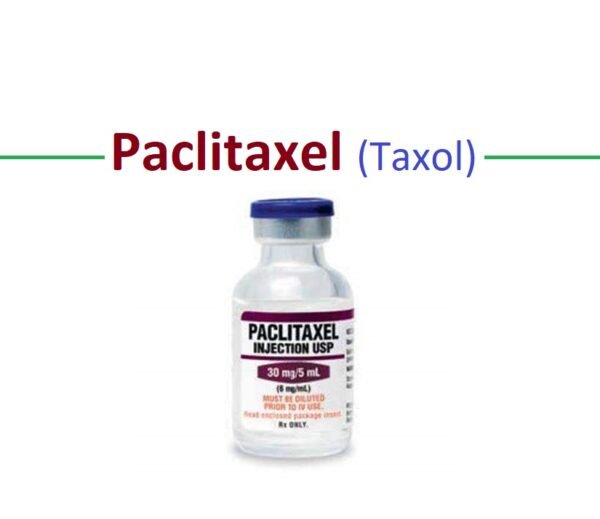
Paclitaxel (Taxol) is a chemotherapeutic agent, a plant alkaloid, that is used in the treatment of various cancers including breast, ovarian, lung, cervical cancer, and Kaposi's sarcoma.
Paclitaxel (Taxol) Uses:
-
Breast cancer:
- Adjuvant treatment of node-positive breast cancer; treatment of metastatic breast cancer after failure of combination chemotherapy or relapse within 6 months of adjuvant chemotherapy (previous therapy must include an anthracycline)
-
Kaposi sarcoma (AIDS-related):
- Second-line treatment of AIDS-related Kaposi sarcoma
-
Non-small cell lung cancer:
- First-line treatment of non-small cell lung cancer (in combination with cisplatin) in patients who are not candidates for potentially curative surgery and/or radiation therapy
-
Ovarian cancer:
- Subsequent therapy for the treatment of advanced ovarian cancer; first-line therapy of ovarian cancer (in combination with cisplatin)
-
Off Label Use of Paclitaxel in Adults:
- Bladder cancer, advanced or metastatic
- Cervical cancer, advanced
- Esophageal/gastric cancer, preoperative chemoradiation
- Head and neck cancers, advanced
- Ovarian cancer, intraperitoneal (offlabel route)
- Penile cancer, metastatic
- Small cell lung cancer, relapsed/refractory
- Soft tissue sarcoma (angiosarcoma), advanced/unresectable
- Testicular germ cell tumors, relapsed/refractory
- Thymoma/thymic carcinoma, advanced
- Unknown primary adenocarcinoma
- Endometrial carcinoma
- Esophageal cancer (metastatic/unresectable)
- Gastric cancer (metastatic/unresectable)
- Melanoma
- Thyroid cancer (anaplastic).
Paclitaxel (Taxol) Dose in Adults
Note:
- Premedication with dexamethasone (20 mg orally at 12 and 6 hours before dose [reduce dexamethasone dose to 10 mg orally with advanced HIV disease]), diphenhydramine (50 mg IV 30 to 60 minutes before dose), and cimetidine, famotidine, or ranitidine (IV 30 to 60 minutes before dose) is advised.
Paclitaxel (Taxol) Dose in the treatment of Breast cancer, adjuvant treatment:
- IV: 175 mg/m² over 3 hours administered every 3 weeks for 4 cycles (administer sequentially after an anthracycline-containing regimen)
Paclitaxel (Taxol) Dose in the treatment of metastatic or relapsed Breast cancer, :
- IV: 175 mg/m² over 3 hours administered every 3 weeks
Paclitaxel (Taxol) Dose in the treatment of AIDS-related Kaposi sarcoma, :
- IV: 135 mg/m over 3 hours every 3 weeks or 100 mg/m² over 3 hours every 2 weeks (due to dose-related toxicity, the 100 mg/m² dose should be used for patients with a lower performance status).
- Note: Reduce the dexamethasone premedication dose to 10 mg.
Paclitaxel (Taxol) Dose in the treatment of Non-small cell lung cancer:
- IV: 135 mg/m² over 24 hours every 3 weeks (combined with cisplatin) OR
-
Off-label dosing/combinations:
- IV: 200 mg/m² on day 1 administered every 3 weeks for 4 cycles (in combination with pembrolizumab and carboplatin) followed by pembrolizumab maintenance therapy OR
- 200 mg/m² (175 mg/m² for Asian patients) on day 1 every 3 weeks for 4 to 6 cycles (in combination with atezolizumab, bevacizumab, and carboplatin) followed by atezolizumab/ bevacizumab maintenance therapy.
Paclitaxel (Taxol) Dose in the treatment of advanced ovarian cancer:
-
Previously treated:
- IV: 135 or 175 mg/m² over 3 hours every 3 weeks
-
Previously untreated:
-
Intraperitoneal (off-label route):
- 60 mg/m² on day 8 of a 21-day treatment cycle for 6 cycles, combined with IV paclitaxel (135 mg/m² over 24 hours on day 1) and intraperitoneal cisplatin.
- Note: Administration of intraperitoneal paclitaxel should include the standard paclitaxel premedication regimen.
-
Previously untreated (off-label combination):
- IV: 175 mg/m² over 3 hours administered every 3 weeks (combined with carboplatin) for 6 cycles, OR
- 60 mg/m² over 1 hour weekly (combined with carboplatin) for 18 weeks OR
- 175 mg/m² on day 1 every 3 weeks (combined with bevacizumab [delayed until cycle 2] and carboplatin) for up to 6 cycles, followed by bevacizumab monotherapy for a total of up to 22 cycles or until disease progression (whichever occurs earlier).
-
Neoadjuvant therapy (off-label combination/schedule):
Note:
- According to guidelines from the Society of Gynecologic Oncology and the American Society of Clinical Oncology for neoadjuvant chemotherapy in newly diagnosed advanced ovarian cancer, neoadjuvant therapy should be utilized only in properly selected patients.
- Selection criteria include:
- patients with newly diagnosed suspected stage IIIC or IV ovarian cancer who have a high perioperative risk profile and/or
- a low likelihood of achieving cytoreduction to <1 cm of residual disease.
- IV: 175 mg/m² over 3 hours on administered on day 1 every 3 weeks (combined with carboplatin) for 3 neoadjuvant cycles, followed by debulking surgery, after 3 additional chemotherapy cycles OR
- 175 mg/m² on day 1 every 3 weeks (in combination with carboplatin) for 3 to 4 neoadjuvant cycles, followed by debulking surgery, followed by 2 to 3 additional chemotherapy cycles, for a total of 6 cycles.
Paclitaxel (Taxol) Dose in the treatment of advanced or metastatic Bladder cancer (off-label):
- IV: 150 mg/m² every 2 weeks (in combination with gemcitabine) OR
- 200 mg/m² over 1 hour every 3 weeks (combined with gemcitabine) for 6 cycles.
Paclitaxel (Taxol) Dose in the treatment of advanced cervical cancer (off-label):
- IV: 135 or 175 mg/m² every 3 weeks (combined with bevacizumab and cisplatin) until disease progression or unacceptable toxicity OR
- 175 mg/m² every 3 weeks (in combination with bevacizumab and topotecan) until disease progression or unacceptable toxicity OR
- 135 mg/m² over 24 hours administered every 3 weeks (in combination with cisplatin) for 6 cycles.
Paclitaxel (Taxol) Dose in the treatment of preoperative chemoradiation of esophageal/ gastric cancer (off-label):
- IV: 50 mg/m² administered on days 1, 8, 15, 22, and 29 (combined with carboplatin and radiation therapy) followed by surgery within 4 to 6 weeks.
Paclitaxel (Taxol) Dose in the treatment of head and neck cancers, advanced (off-label):
- IV: 175 mg/m² over 3 hours administered every 3 weeks (combined with cisplatin) for at least 6 cycles.
Paclitaxel (Taxol) Dose in the treatment of metastatic Penile cancer (off-label):
- IV: 175 mg/m² over 3 hours administered every 3 to 4 weeks (combined with ifosfamide and cisplatin) for 4 cycles.
Paclitaxel (Taxol) Dose in the treatment of relapsed/ refractory small cell lung cancer (off-label):
- IV: 175 mg/m² over 3 hours administered every 3 weeks (as a single agent) for up to 5 cycles OR
- 80 mg/m² over 1 hour administered weekly for 6 weeks of an 8-week treatment cycle (as a single agent) until either the patient develops toxicity or the disease progresses despite treatment.
Paclitaxel (Taxol) Dose in the treatment of advanced/ unresectable soft tissue sarcoma (angiosarcoma), (off-label):
- IV: 80 mg/m² over 1 hour administered on days 1, 8, and 15 of a 4-week treatment cycle (as a single agent) for up to 6 cycles OR
- 135 to 175 mg/m² over 3 hours administered every 3 weeks (as a single agent) OR
- 75 to 100 mg/m² administered once a week (as a single agent).
Paclitaxel (Taxol) Dose in the treatment of relapsed or refractory testicular germ cell tumors (off-label):
- IV: 80 mg/m² over 1 hour administered on days 1 and 8 of a 3-week treatment cycle (combined with gemcitabine and oxaliplatin) for 2 cycles after best response and up to a maximum of 8 cycles OR
- 250 mg/m² over 24 hours administered on day 1 of a 3-week treatment cycle (in combination with ifosfamide, mesna, cisplatin, and filgrastim) for 4 cycles OR
- 100 mg/m² over 1 hour on administered on days 1, 8, and 15 of a 4-week treatment cycle (combined with gemcitabine) for up to 6 cycles.
Paclitaxel (Taxol) Dose in the treatment of advanced Thymoma or thymic carcinoma, (off-label):
- IV: 225 mg/m² over 3 hours administered every 3 weeks (in combination with carboplatin) for up to 6 cycles.
Paclitaxel (Taxol) Dose in the treatment of Unknown primary adenocarcinoma (off-label):
- IV: 200 mg/m² over 3 hours administered every 3 weeks (combined with carboplatin) for 6 to 8 cycles or 200 mg/m² over 1 hour administered every 3 weeks (combined with carboplatin and etoposide) for 4 to 8 cycles.
Use in Children:
Not indicated.
Pregnancy Risk Factor D
- Animal reproduction has been subject to adverse events.
- Ex vivo human placenta fusion model showed that paclitaxel crossed at term.
- Placental transfer was low due to the presence of albumin. Higher albumin levels meant lower paclitaxel transfer.
- Pregnant females may experience some changes in the pharmacokinetic properties.
- Avoid pregnancy.
Use of paclitaxel while breastfeeding
- Breast milk contains paclitaxel.
- A case report showed that paclitaxel was still detected in breast milk at 172 hours after the dose, but it was not detected in the blood at 316 hours.
- Breastfeeding is not recommended due to the risk of serious adverse reactions in breastfeeding infants.
Paclitaxel (Taxol) Dose in Kidney Disease:
There are no dosage adjustments provided in the manufacturer’s labeling. The following have been recommended:
-
CrCl <50 mL/minute:
- No dosage adjustment is needed.
-
Hemodialysis:
- Paclitaxel may be used in cancer patients on hemodialysis and because paclitaxel is not dialyzable, it may be used either before or after hemodialysis.
Paclitaxel (Taxol) Dose in Liver Disease:
Note:
- The manufacturer's labeled dosage adjustment recommendations are based upon the patient's first course of therapy where the usual dose (in patients with normal hepatic function) would be 135 mg/m² dose over 24 hours or the 175 mg/m² dose over 3 hours.
- Dosage in subsequent courses should be based upon individual tolerance.
- Adjustments for other regimens are not available.
-
24-hour infusion:
- Transaminases less than twice the upper limit of normal (ULN) and bilirubin level ≤1.5 mg/dL:
- 135 mg/m²
- Transaminases 2 to less than 10 times ULN and bilirubin level ≤1.5 mg/dL:
- 100 mg/m²
- Transaminases less than 10 times ULN and bilirubin level 1.6 to 7.5 mg/dL:
- 50 mg/m²
- Transaminases ≥10 times ULN or bilirubin level >7.5 mg/dL:
- Avoid use
- Transaminases less than twice the upper limit of normal (ULN) and bilirubin level ≤1.5 mg/dL:
-
3-hour infusion:
- Transaminases less than 10 times ULN and bilirubin level ≤ 1.25 times ULN:
- 175 mg/m²
- Transaminases less than 10 times ULN and bilirubin level 1.26 to 2 times ULN:
- 135 mg/m²
- Transaminases less than 10 times ULN and bilirubin level 2.01 to 5 times ULN:
- 90 mg/m²
- Transaminases 10 times or more than 10 times the ULN or bilirubin level exceeding 5 times the ULN:
- Avoid use
- Transaminases less than 10 times ULN and bilirubin level ≤ 1.25 times ULN:
Common Side Effects of Paclitaxel (Taxol):
-
Cardiovascular:
- Flushing
- ECG Abnormality
- Edema
- Hypotension
-
Central Nervous System:
- Peripheral Neuropathy
-
Dermatologic:
- Alopecia
- Skin Rash
-
Gastrointestinal:
- Nausea
- Vomiting
- Diarrhea
- Mucositis
- Stomatitis
- Abdominal Pain
-
Hematologic & Oncologic:
- Neutropenia
- Leukopenia
- Anemia
- Thrombocytopenia
- Hemorrhage
-
Hepatic:
- Increased Serum Alkaline Phosphatase
- Increased Serum AST
-
Hypersensitivity:
- Hypersensitivity Reaction
-
Infection:
- Infection
-
Local:
- Injection Site Reaction
-
Neuromuscular & Skeletal:
- Arthralgia
- Myalgia
- Weakness
-
Renal:
- Increased Serum Creatinine
Less Common Side Effects Of Paclitaxel (Taxol):
-
Cardiovascular:
- Bradycardia
- Tachycardia
- Hypertension
- Cardiac Arrhythmia
- Syncope
- Venous Thrombosis
-
Dermatologic:
- Changes In Nails
-
Hematologic & Oncologic:
- Febrile Neutropenia
-
Hepatic:
- Increased Serum Bilirubin
-
Respiratory:
- Dyspnea
Contraindications to Paclitaxel (Taxol):
- Hypersensitivity to paclitaxel, paclitaxel 35/polyoxyethylated casting oil (Cremophor EL), and any component of the formulation
- Patients with baseline neutrophil counts of 1,500/mm3 are eligible for treatment of solid tumors.
- Kaposi Sarcoma treatment for patients with baseline neutrophil counts less than 1,000/mm3.
Warnings and precautions
-
Suppression of bone marrow: [US Boxed Warning]
- Sometimes, bone marrow suppression can manifest as neutropenia. This may lead to severe or even fatal infections.
- It is important to monitor blood counts regularly.
- If the baseline neutrophil count (for solid tumors or 1,000/mm3 for patients with AIDS-related Kaposi sarcoma) is below 1,500/mm3, you should not administer the drug.
- Dose-dependent bone marrow suppression (often neutropenia), is the dose-limiting toxicology; neutrophil nadir is typically at a median of 11 day.
- You should not continue with the next cycles until neutrophils reach >1,500/mm3 for solid tumors and 1,000/mm3 for Kaposi Sarcoma. Platelets should rise to 100,000/mm3.
- For severe neutropenia, reduce future doses by 20% (500/mm3 for 7 or more days) and consider supportive therapy including growth factor treatment.
-
Cardiovascular effects
- Infusion-related hypotension and bradycardia may occur especially in the first hour. During infusion, it is important to monitor vital signs regularly.
- Rarely, severe conduction abnormalities are observed. Patients with conduction abnormalities should be monitored continuously during any further infusions.
- The American Heart Association has stated that conventional paclitaxel may cause myocardial damage or worsen existing myocardial dysfunction.
-
Extravasation
- Paclitaxel, an irritant with vesicant-like qualities, is a vesicant. Proper needle and catheter placement must be done before and during infusion. Avoid extravasation.
- Injection-site reactions can be mild and manifest as skin discoloration or redness, swelling, and may occur after an infusion lasting longer than 24 hours.
- However, injection-site reactions can occur up to 7-10 days after the infusion.
- Other severe reactions, such as cellulitis, phlebitis and skin exfoliation, necrosis and fibrosis, have been reported.
- Recall skin reactions can occur even though the drug was administered through another IV site.
-
Hypersensitivity reactions: [US Boxed Warning]
- Clinical studies have shown that 2% to 4% patients experience anaphylaxis or severe allergic reactions (hypotension requiring treatment, hypotension requiring treatment, bronchodilators and/or generalized symptoms of urticaria).
- Before infusion, take corticosteroids and diphenhydramine to premedicate.
- Premedication has not prevented fatalities.
- If you experience hypersensitivity reactions, stop the infusion immediately and don't re-infuse.
- Treatment interruption is not necessary for minor allergic reactions such as skin reactions, flushing, dyspnea or hypotension.
-
Peripheral neuropathy
- Peripheral nerve damage can occur. Patients with neuropathies or coexisting conditions such as diabetes mellitus, prior chemotherapy, or other treatments may be more at risk. Reduce the dose by 20% for severe.
-
Hepatic impairment
- Patients with liver dysfunction should be cautious (myelotoxicity can worsen in patients with total Bilirubin greater than twice the ULN).
- Dose reductions should be encouraged.
Paclitaxel (conventional): Drug Interaction
|
Risk Factor C (Monitor therapy) |
|
|
Abiraterone Acetate |
May increase the serum concentration of CYP2C8 Substrates (High risk with Inhibitors). |
|
Alfuzosin |
May enhance the hypotensive effect of Blood Pressure Lowering Agents. |
|
Antipsychotic Agents (Second Generation [Atypical]) |
Blood Pressure Lowering Agents may enhance the hypotensive effect of Antipsychotic Agents (Second Generation [Atypical]). |
|
Aprepitant |
May increase the serum concentration of CYP3A4 Substrates (High risk with Inhibitors). |
|
Barbiturates |
May enhance the hypotensive effect of Blood Pressure Lowering Agents. |
|
Benperidol |
May enhance the hypotensive effect of Blood Pressure Lowering Agents. Risk C: Monitor therapy |
|
Bexarotene (Systemic) |
PACLitaxel (Conventional) may increase the serum concentration of Bexarotene (Systemic). Bexarotene (Systemic) may decrease the serum concentration of PACLitaxel (Conventional). |
|
Blood Pressure Lowering Agents |
May enhance the hypotensive effect of HypotensionAssociated Agents. |
|
Bosentan |
May decrease the serum concentration of CYP3A4 Substrates (High risk with Inducers). |
|
Brimonidine (Topical) |
May enhance the hypotensive effect of Blood Pressure Lowering Agents. |
|
Chloramphenicol (Ophthalmic) |
May enhance the adverse/toxic effect of Myelosuppressive Agents. |
|
Clofazimine |
May increase the serum concentration of CYP3A4 Substrates (High risk with Inhibitors). |
|
Clopidogrel |
May increase the serum concentration of PACLitaxel (Conventional). |
|
CloZAPine |
Myelosuppressive Agents may enhance the adverse/toxic effect of CloZAPine. Specifically, the risk for neutropenia may be increased. |
|
Coccidioides immitis Skin Test |
Immunosuppressants may diminish the diagnostic effect of Coccidioides immitis Skin Test. |
|
CYP2C8 Inhibitors (Moderate) |
May decrease the metabolism of CYP2C8 Substrates (High risk with Inhibitors). |
|
CYP3A4 Inducers (Moderate) |
May decrease the serum concentration of CYP3A4 Substrates (High risk with Inducers). |
|
CYP3A4 Inhibitors (Moderate) |
May decrease the metabolism of CYP3A4 Substrates (High risk with Inhibitors). |
|
Deferasirox |
May decrease the serum concentration of CYP3A4 Substrates (High risk with Inducers). |
|
Deferasirox |
May increase the serum concentration of CYP2C8 Substrates (High risk with Inhibitors). |
|
Denosumab |
May enhance the adverse/toxic effect of Immunosuppressants. Specifically, the risk for serious infections may be increased. |
|
Diazoxide |
May enhance the hypotensive effect of Blood Pressure Lowering Agents. |
|
DULoxetine |
Blood Pressure Lowering Agents may enhance the hypotensive effect of DULoxetine. |
|
Duvelisib |
May increase the serum concentration of CYP3A4 Substrates (High risk with Inhibitors). |
|
Erdafitinib |
May decrease the serum concentration of CYP3A4 Substrates (High risk with Inducers). |
|
Erdafitinib |
May increase the serum concentration of CYP3A4 Substrates (High risk with Inhibitors). |
|
Erdafitinib |
May increase the serum concentration of P-glycoprotein/ABCB1 Substrates. |
|
Fosaprepitant |
May increase the serum concentration of CYP3A4 Substrates (High risk with Inhibitors). |
|
Fosnetupitant |
May increase the serum concentration of CYP3A4 Substrates (High risk with Inhibitors). |
|
Herbs (Hypotensive Properties) |
May enhance the hypotensive effect of Blood Pressure Lowering Agents. |
|
Hypotension-Associated Agents |
Blood Pressure Lowering Agents may enhance the hypotensive effect of Hypotension-Associated Agents. |
|
Ivosidenib |
May decrease the serum concentration of CYP3A4 Substrates (High risk with Inducers). |
|
Larotrectinib |
May increase the serum concentration of CYP3A4 Substrates (High risk with Inhibitors). |
|
Levodopa-Containing Products |
Blood Pressure Lowering Agents may enhance the hypotensive effect of Levodopa-Containing Products. |
|
Lormetazepam |
May enhance the hypotensive effect of Blood Pressure Lowering Agents. |
|
Mesalamine |
May enhance the myelosuppressive effect of Myelosuppressive Agents. |
|
Molsidomine |
May enhance the hypotensive effect of Blood Pressure Lowering Agents. |
|
Naftopidil |
May enhance the hypotensive effect of Blood Pressure Lowering Agents. |
|
Netupitant |
May increase the serum concentration of CYP3A4 Substrates (High risk with Inhibitors). |
|
Nicergoline |
May enhance the hypotensive effect of Blood Pressure Lowering Agents. |
|
Nicorandil |
May enhance the hypotensive effect of Blood Pressure Lowering Agents. |
|
Nitroprusside |
Blood Pressure Lowering Agents may enhance the hypotensive effect of Nitroprusside. |
|
Ocrelizumab |
May enhance the immunosuppressive effect of Immunosuppressants. |
|
Palbociclib |
May increase the serum concentration of CYP3A4 Substrates (High risk with Inhibitors). |
|
Pentoxifylline |
May enhance the hypotensive effect of Blood Pressure Lowering Agents. |
|
P-glycoprotein/ABCB1 Inhibitors |
May increase the serum concentration of Pglycoprotein/ABCB1 Substrates. P-glycoprotein inhibitors may also enhance the distribution of pglycoprotein substrates to specific cells/tissues/organs where p-glycoprotein is present in large amounts (e.g., brain, T-lymphocytes, testes, etc.). |
|
Pholcodine |
Blood Pressure Lowering Agents may enhance the hypotensive effect of Pholcodine. |
|
Phosphodiesterase 5 Inhibitors |
May enhance the hypotensive effect of Blood Pressure Lowering Agents. |
|
Pidotimod |
Immunosuppressants may diminish the therapeutic effect of Pidotimod. |
|
Promazine |
May enhance the myelosuppressive effect of Myelosuppressive Agents. |
|
Prostacyclin Analogues |
May enhance the hypotensive effect of Blood Pressure Lowering Agents. |
|
Quinagolide |
May enhance the hypotensive effect of Blood Pressure Lowering Agents. |
|
Ranolazine |
May increase the serum concentration of P-glycoprotein/ABCB1 Substrates. |
|
Sarilumab |
May decrease the serum concentration of CYP3A4 Substrates (High risk with Inducers). |
|
Siltuximab |
May decrease the serum concentration of CYP3A4 Substrates (High risk with Inducers). |
|
Simeprevir |
May increase the serum concentration of CYP3A4 Substrates (High risk with Inhibitors). |
|
Siponimod |
Immunosuppressants may enhance the immunosuppressive effect of Siponimod. |
|
Tertomotide |
Immunosuppressants may diminish the therapeutic effect of Tertomotide. |
|
Tocilizumab |
May decrease the serum concentration of CYP3A4 Substrates (High risk with Inducers). |
|
Trastuzumab |
May decrease the serum concentration of PACLitaxel (Conventional). PACLitaxel (Conventional) may increase the serum concentration of Trastuzumab. |
|
Vinorelbine |
PACLitaxel (Conventional) may enhance the neurotoxic effect of Vinorelbine. |
|
Risk Factor D (Consider therapy modification) |
|
|
Amifostine |
Blood Pressure Lowering Agents may enhance the hypotensive effect of Amifostine. Management: When amifostine is used at chemotherapy doses, blood pressure lowering medications should be withheld for 24 hours prior to amifostine administration. If blood pressure lowering therapy cannot be withheld, amifostine should not be administered. |
|
Anthracyclines |
Taxane Derivatives may enhance the adverse/toxic effect of Anthracyclines. Taxane Derivatives may increase the serum concentration of Anthracyclines. Taxane Derivatives may also increase the formation of toxic anthracycline metabolites in heart tissue. |
|
Baricitinib |
Immunosuppressants may enhance the immunosuppressive effect of Baricitinib. Management: Use of baricitinib in combination with potent immunosuppressants such as azathioprine or cyclosporine is not recommended. Concurrent use with antirheumatic doses of methotrexate or nonbiologic disease modifying antirheumatic drugs (DMARDs) is permitted. |
|
CYP2C8 Inhibitors (Strong) |
May decrease the metabolism of CYP2C8 Substrates (High risk with Inhibitors). |
|
CYP3A4 Inducers (Strong) |
May increase the metabolism of CYP3A4 Substrates (High risk with Inducers). Management: Consider an alternative for one of the interacting drugs. Some combinations may be specifically contraindicated. Consult appropriate manufacturer labeling. |
|
CYP3A4 Inhibitors (Strong) |
May decrease the metabolism of CYP3A4 Substrates (High risk with Inhibitors). |
|
Dabrafenib |
May decrease the serum concentration of CYP3A4 Substrates (High risk with Inducers). Management: Seek alternatives to the CYP3A4 substrate when possible. If concomitant therapy cannot be avoided, monitor clinical effects of the substrate closely (particularly therapeutic effects). |
|
Dabrafenib |
May decrease the serum concentration of CYP2C8 Substrates (High risk with Inducers). Management: Seek alternatives to the CYP2C8 substrate when possible. If concomitant therapy cannot be avoided, monitor clinical effects of the substrate closely (particularly therapeutic effects). |
|
Deferiprone |
Myelosuppressive Agents may enhance the neutropenic effect of Deferiprone. Management: Avoid the concomitant use of deferiprone and myelosuppressive agents whenever possible. If this combination cannot be avoided, monitor the absolute neutrophil count more closely. |
|
DOXOrubicin (Conventional) |
Taxane Derivatives may decrease the metabolism of DOXOrubicin (Conventional). Management: Consider using docetaxel instead of paclitaxel as a way to avoid this potential interaction, and monitor closely for toxic effects of doxorubicin. Administer doxorubicin prior to paclitaxel when used concomitantly. |
|
Echinacea |
May diminish the therapeutic effect of Immunosuppressants. |
|
Enzalutamide |
May decrease the serum concentration of CYP3A4 Substrates (High risk with Inducers). Management: Concurrent use of enzalutamide with CYP3A4 substrates that have a narrow therapeutic index should be avoided. Use of enzalutamide and any other CYP3A4 substrate should be performed with caution and close monitoring. |
|
Fingolimod |
Immunosuppressants may enhance the immunosuppressive effect of Fingolimod. Management: Avoid the concomitant use of fingolimod and other immunosuppressants when possible. If combined, monitor patients closely for additive immunosuppressant effects (eg, infections). |
|
Leflunomide |
Immunosuppressants may enhance the adverse/toxic effect of Leflunomide. Specifically, the risk for hematologic toxicity such as pancytopenia, agranulocytosis, and/or thrombocytopenia may be increased. Management: Consider not using a leflunomide loading dose in patients receiving other immunosuppressants. Patients receiving both leflunomide and another immunosuppressant should be monitored for bone marrow suppression at least monthly. |
|
Lenograstim |
Antineoplastic Agents may diminish the therapeutic effect of Lenograstim. Management: Avoid the use of lenograstim 24 hours before until 24 hours after the completion of myelosuppressive cytotoxic chemotherapy. |
|
Lipegfilgrastim |
Antineoplastic Agents may diminish the therapeutic effect of Lipegfilgrastim. Management: Avoid concomitant use of lipegfilgrastim and myelosuppressive cytotoxic chemotherapy. Lipegfilgrastim should be administered at least 24 hours after the completion of myelosuppressive cytotoxic chemotherapy. |
|
Lorlatinib |
May decrease the serum concentration of CYP3A4 Substrates (High risk with Inducers). Management: Avoid concurrent use of lorlatinib with any CYP3A4 substrates for which a minimal decrease in serum concentrations of the CYP3A4 substrate could lead to therapeutic failure and serious clinical consequences. |
|
MiFEPRIStone |
May increase the serum concentration of CYP2C8 Substrates (High risk with Inhibitors). Management: Use CYP2C8 substrates at the lowest recommended dose, and monitor closely for adverse effects (including myopathy), during and in the 2 weeks following mifepristone treatment. |
|
MiFEPRIStone |
May increase the serum concentration of CYP3A4 Substrates (High risk with Inhibitors). Management: Minimize doses of CYP3A4 substrates, and monitor for increased concentrations/toxicity, during and 2 weeks following treatment with mifepristone. Avoid cyclosporine, dihydroergotamine, ergotamine, fentanyl, pimozide, quinidine, sirolimus, and tacrolimus. |
|
Mitotane |
May decrease the serum concentration of CYP3A4 Substrates (High risk with Inducers). Management: Doses of CYP3A4 substrates may need to be adjusted substantially when used in patients being treated with mitotane. |
|
Nivolumab |
Immunosuppressants may diminish the therapeutic effect of Nivolumab. |
|
Obinutuzumab |
May enhance the hypotensive effect of Blood Pressure Lowering Agents. Management: Consider temporarily withholding blood pressure lowering medications beginning 12 hours prior to obinutuzumab infusion and continuing until 1 hour after the end of the infusion. |
|
Palifermin |
May enhance the adverse/toxic effect of Antineoplastic Agents. Specifically, the duration and severity of oral mucositis may be increased. Management: Do not administer palifermin within 24 hours before, during infusion of, or within 24 hours after administration of myelotoxic chemotherapy. |
|
Platinum Derivatives |
May enhance the myelosuppressive effect of Taxane Derivatives. Administer Taxane derivative before Platinum derivative when given as sequential infusions to limit toxicity. |
|
Roflumilast |
May enhance the immunosuppressive effect of Immunosuppressants. |
|
Sipuleucel-T |
Immunosuppressants may diminish the therapeutic effect of Sipuleucel-T. Management: Evaluate patients to see if it is medically appropriate to reduce or discontinue therapy with immunosuppressants prior to initiating sipuleucel-T therapy. |
|
St John's Wort |
May decrease the serum concentration of CYP3A4 Substrates (High risk with Inducers). Management: Consider an alternative for one of the interacting drugs. Some combinations may be specifically contraindicated. Consult appropriate manufacturer labeling. |
|
Stiripentol |
May increase the serum concentration of CYP3A4 Substrates (High risk with Inhibitors). Management: Use of stiripentol with CYP3A4 substrates that are considered to have a narrow therapeutic index should be avoided due to the increased risk for adverse effects and toxicity. Any CYP3A4 substrate used with stiripentol requires closer monitoring. |
|
Tofacitinib |
Immunosuppressants may enhance the immunosuppressive effect of Tofacitinib. Management: Concurrent use with antirheumatic doses of methotrexate or nonbiologic disease modifying antirheumatic drugs (DMARDs) is permitted, and this warning seems particularly focused on more potent immunosuppressants. |
|
Vaccines (Inactivated) |
Immunosuppressants may diminish the therapeutic effect of Vaccines (Inactivated). Management: Vaccine efficacy may be reduced. Complete all age-appropriate vaccinations at least 2 weeks prior to starting an immunosuppressant. If vaccinated during immunosuppressant therapy, revaccinate at least 3 months after immunosuppressant discontinuation. |
|
Risk Factor X (Avoid combination) |
|
|
Atazanavir |
May increase the serum concentration of PACLitaxel (Conventional). Management: Use of paclitaxel or other narrow therapeutic index CYP2C8 substrates with atazanavir without concurrent ritonavir is not recommended. If paclitaxel is used with ritonavir-boosted atazanavir, no significant interaction is expected. |
|
BCG (Intravesical) |
Immunosuppressants may diminish the therapeutic effect of BCG (Intravesical). |
|
BCG (Intravesical) |
Myelosuppressive Agents may diminish the therapeutic effect of BCG (Intravesical). |
|
Bromperidol |
Blood Pressure Lowering Agents may enhance the hypotensive effect of Bromperidol. Bromperidol may diminish the hypotensive effect of Blood Pressure Lowering Agents. |
|
Cladribine |
May enhance the immunosuppressive effect of Immunosuppressants. |
|
Cladribine |
May enhance the myelosuppressive effect of Myelosuppressive Agents. |
|
Conivaptan |
May increase the serum concentration of CYP3A4 Substrates (High risk with Inhibitors). |
|
Dipyrone |
May enhance the adverse/toxic effect of Myelosuppressive Agents. Specifically, the risk for agranulocytosis and pancytopenia may be increased |
|
Fusidic Acid (Systemic) |
May increase the serum concentration of CYP3A4 Substrates (High risk with Inhibitors). |
|
Idelalisib |
May increase the serum concentration of CYP3A4 Substrates (High risk with Inhibitors). |
|
Natalizumab |
Immunosuppressants may enhance the adverse/toxic effect of Natalizumab. Specifically, the risk of concurrent infection may be increased. |
|
Pimecrolimus |
May enhance the adverse/toxic effect of Immunosuppressants. |
|
SORAfenib |
May enhance the adverse/toxic effect of PACLitaxel (Conventional). Management: Concurrent sorafenib with carboplatin and paclitaxel in patients with squamous cell lung cancer is contraindicated. Use in other settings is not specifically contraindicated but should be approached with added caution. |
|
Tacrolimus (Topical) |
May enhance the adverse/toxic effect of Immunosuppressants. |
|
Vaccines (Live) |
Immunosuppressants may enhance the adverse/toxic effect of Vaccines (Live). Immunosuppressants may diminish the therapeutic effect of Vaccines (Live). Management: Avoid use of live organism vaccines with immunosuppressants; live-attenuated vaccines should not be given for at least 3 months after immunosuppressants. |
Monitoring Parameters:
- CBC with differential and platelet count
- liver and kidney function
- monitor for hypersensitivity reactions
- vital signs (frequently during the first hour of infusion)
- continuous cardiac monitoring (patients with conduction abnormalities)
- monitor infusion site during infusion.
How to administer Paclitaxel (Taxol)?
IV:
- You can infuse for 3 to 24 hours depending on the indication/protocol. Some off-label protocols require a 1-hour infusion.
- Infuse using a 0.22-micron inline filter and a polyethylene-lined administration set (non-PVC).
- The sequence of administration of chemotherapy may differ depending on the combination regimen.
- It is recommended to premedicate with dexamethasone (20mg orally or IV at 12, 6 and 6 hours; reduce to 10mg with advanced HIV disease), diphenhydramine (30 to 60 minutes before the dose), and cimetidine 300mg, famotidine 20mg, or ranitidine 50mg (IV 30-60 minutes prior the dose).
It is an irritant that has vesicant-like qualities. Avoid extravasation. Before administering, ensure that the needle or catheter is in the correct position.
Extravasation management
- Extravasation can be fatal
- Stop infusion immediately, and disconnect (leave needle/cannula in place).
- Extravasate the solution by aspirating (do not flush the line).
- Remove needle/cannula
- If necessary, you can start antidote (hyaluronidase).
- Elevate extremity
- Information conflicting regarding the use warm or cold compresses.
- Although clinical experience suggests that hyaluronidase could be used to manage paclitaxel excess, data are limited.
- Use hyaluronidase
- If the needle/cannula is still in place
- Inject 1 to 6 mL (150 units/mL), into an existing IV line.
- Dosage: 1 mL per 1 mL extravasated drug. If needle/cannula is removed, inject subcutaneously clockwise around extravasation. You may repeat this several times in the next 3-4 hours.
- If the needle/cannula is still in place
Intraperitoneal (off label route):
-
- The solution was prepared using warm saline. It was then infused through an intraperitoneal catheter.
Mechanism of action of Paclitaxel (Taxol):
- Paclitaxel stimulates the assembly of microtubules by increasing the action tubulin dimers and stabilizing existing microtubules. It also inhibits their disassembly.
- The drug can also distort mitotic spindles and cause the destruction of chromosomes.
- The immune system may be affected by Paclitaxel, which can suppress cell proliferation and modulate it.
Volume of distribution: 24 hour infusion
- 227-688 L/m2
- Biphasic, with rapid distribution to the peripheral area; later phase is a slower efflux of Paclitaxel from that compartment.
- It is easily absorbed into tissues and body fluids. The dose and duration of the infusion can affect how it distributes.
Protein binding:
- 89% to 98%
Metabolism:
- It is metabolized in the liver via CYP2C8 and 3A4; forms metabolites (primarily 6α-hydroxypaclitaxel)
Half-life elimination:
- Children: 4.6 to 17 hours (varies with dose and infusion duration)
- Adults:
- 3-hour infusion: Mean (terminal): about 13 to 20 hours
- 24-hour infusion: Mean (terminal): about 16 to 53 hours
Excretion:
- Feces (~71%; ~5% as unchanged drug);
- urine (~14%)
International Brand Names of Paclitaxel:
- APO-Paclitaxel
- Aclipak
- Aclixel
- Acoexel
- Alzene
- Anzatax
- Asotax
- Bristaxol
- Britaxol
- Celtax
- Clitaxel
- Cryoxet
- Dalys
- Ebetaxel
- Genaxol
- Genetaxyl
- Intaxel
- Meditaxel
- Mitotax
- Ofoxel
- Pacli-One
- Pacliavenir
- Paclitaxin
- Paclitero
- Paclitex
- Pacxel
- Padexol
- Panataxel
- Parexel
- Paxel
- Paxene
- Paxol
- Paxomed
- Praxel
- Santotaxel
- Sindaxel
- Taxocris
- Taxol
- Vexel
- Xelpac
Paclitaxel Brand Names in Pakistan:
Paclitaxel Injection 210 mg in Pakistan |
|
| Paclitaxel Ebewe | Novartis Pharma (Pak) Ltd |
Paclitaxel Injection 6 mg/ml in Pakistan |
|
| Anzatax | Atco Laboratories Limited |
| Ebetaxel | Bio Pharma |
| Ebetaxel | Bio Pharma |
| Paclitax | Pharmedic (Pvt) Ltd. |
| Paclitaxel | Inno Pharm |
| Paclitaxel Varifarma | Medinet Pharmaceuticals |
| Panataxel | Ferozsons Laboratoies Ltd. |
| Taxol | Glaxosmithkline |
| Unitaxel | Al-Habib Pharmaceuticals. |
Paclitaxel Injection 30 mg/ml in Pakistan |
|
| Anzatax | Atco Laboratories Limited |
| Intaxel | Atco Laboratories Limited |
| Metaplaxel | Consolidated Chemical Laboratories (Pvt) Ltd. |
| Oncotaxel | Pharmevo (Pvt) Ltd. |
| Paclikebir | Oncogene Pharmaceuticals Karachi |
| Paclitaxfil | Atco Laboratories Limited |
| Paclixil | A. J. Mirza Pharma (Pvt) Ltd |
Paclitaxel Injection 100 mg/ml in Pakistan |
|
| Intaxel | Atco Laboratories Limited |
| Paclitax | Pharmedic (Pvt) Ltd. |
| Paclixil | A. J. Mirza Pharma (Pvt) Ltd |
Paclitaxel Injection 150 mg/ml in Pakistan |
|
| Anzatax | Atco Laboratories Limited |
| Metaplaxel | Consolidated Chemical Laboratories (Pvt) Ltd. |
| Paclikebir | Oncogene Pharmaceuticals Karachi |
| Paclitax | Pharmedic (Pvt) Ltd. |
| Paclitaxel Ebewe | Novartis Pharma (Pak) Ltd |
Paclitaxel Injection 260 mg/ml in Pakistan |
|
| Intaxel | Atco Laboratories Limited |
| Paclixil | A. J. Mirza Pharma (Pvt) Ltd |
Paclitaxel Injection 300 mg/ml in Pakistan |
|
| Intaxel | Atco Laboratories Limited |
| Paclikebir | Oncogene Pharmaceuticals Karachi |
| Paclitaxel Ahp | A. J. Mirza Pharma (Pvt) Ltd |
| Paclitaxel Ebewe | Novartis Pharma (Pak) Ltd |
.png)


