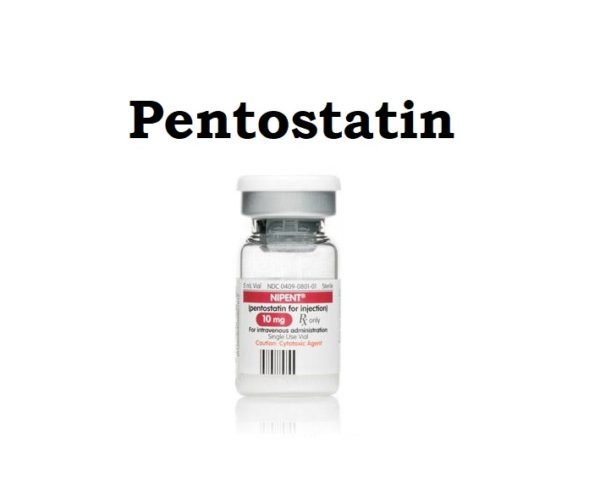
Pentostatin (Nipent) is a purine analog - an anti-metabolite. It is used in the treatment of certain blood cancers.
Indications of Pentostatin:
-
Hairy cell leukemia:
- It is prescribed as monotherapy for untreated and interferon-refractory hairy cell leukemia in patients with active disease.
-
Off Label Use of Pentostatin in Adults:
- Treatment of Acute graft-versus-host disease;
- Treatment of steroid-refractory chronic graft-versus-host disease;
- Chronic lymphocytic leukemia;
- Cutaneous T-cell lymphomas, mycosis fungoides/Sezary syndrome;
- Refractory T-cell prolymphocytic leukemia
Pentostatin dose in adults:
Pentostatin dose in the treatment of Hairy cell leukemia:
- 4 mg/m² intravenous every 2 weeks.
Note:
The optimal duration has not been determined; in the absence of unacceptable toxicity, may continue until complete response is achieved or until 2 doses after complete response. Discontinue after 6 months if partial or complete response is not achieved.
Pentostatin dose in the treatment of steroid-refractory acute graft-versus-host disease (GVHD):
- Initial therapy: 1.5 mg/m² intravenous days 1 to 3 and days 15 to 17 (in combination with corticosteroids).
-
Steroid-refractory disease:
- 5 mg/m intravenous daily for 3 days; may repeat after 2 weeks if needed.
Treatment dose of steroid-refractory chronic graft-versus-host disease (off-label):
- 4 mg/m² intravenous once every 2 weeks; discontinue after 6 months for a sustained objective response, or continue every 2 to 4 weeks for up to 12 months if still improving or 4 mg/m² once every 2 weeks for 3 months.
Pentostatin dose in the treatment of Chronic lymphocytic leukemia (off-label):
-
Previously treated:
- 4 mg/m² intravenous once every 3 weeks (in combination with cyclophosphamide and rituximab) for 6 cycles.
-
Previously untreated:
- 2 mg/m² intravenous once every 3 weeks (in combination with cyclophosphamide and rituximab) for 6 cycles.
Pentostatin dose in the treatment of cutaneous T-cell lymphoma, mycosis fungoides/Sezary syndrome (off-label):
- 4 mg/m² intravenous once weekly for 3 weeks, then every 2 weeks for 6 weeks, then once monthly for a maximum of 6 months.
Pentostatin dose in the treatment of refractory T-cell prolymphocytic leukemia (off-label):
- 4 mg/m² intravenous once weekly for 4 weeks then every 2 weeks until optimum response is achieved or 4 mg/m² once weekly for 4 weeks then every 2 weeks (in combination with alemtuzumab) until complete or best response or up to a total of 14 doses.
Pentostatin dose in children:
Pentostatin dose in steroid-refractory chronic graft-versus-host disease:
-
Infant, Children, and Adolescents:
- Initial: 4 mg/m² intravenous once every 2 weeks;
- after 6 months of therapy, discontinue for sustained objective response, or continue same dose every 2 to 4 weeks for up to 12 months if still improving or 4 mg/m once every 2 weeks for 3 months.
-
Dosing adjustment for toxicity:
-
Infants, Children, and Adolescents:
-
ANC 500 to 1,000/mm³:
- 25% dose reduction.
-
ANC <500/mm³, platelets <20,000/mm³, or neutropenic fever:
- 50% dose reduction.
-
Severe Infection:
- Interrupt treatment until infection is controlled.
-
Rash:
- Severe rashes may require treatment interruption or discontinuation based on experience in adult patients.
-
Other severe adverse reactions:
- Withhold treatment or discontinue based on experience in adult patients.
-
-
Pregnancy Risk Category: D
- Studies on animal reproduction revealed that there were adverse events.
- During treatment, it is important to avoid pregnancy.
Use of pentostatin while breastfeeding
- It is not known if pentostatin is excreted in breast milk.
- Pentostatin can cause serious adverse reactions when it is given to infants. The decision to stop nursing should be made based on the mother's needs.
Pentostatin Dose adjustment in renal disease:
- The manufacturer's labeling does not include any dosage adjustments. However, two CrCl patients with CrCl 50-60 mL/minute responded to treatment with 2 mg/m.
- To prevent renal toxicities, do not take serum creatinine above normal and test creatinine clearance. These adjustments are also recommended:
-
CrCl 46 to 60 mL/minute:
- Administer 70% of the dose.
-
CrCl 31 to 45 mL/minute:
- Administer 60% of dose.
-
CrCl <30 mL/minute:
- Consider use of alternative drug.
-
-
Alternate recommendations:
-
CrCl ≥60 mL/minute:
- Administer 4 mg/m²/dose.
-
CrCl 40 to 59 mL/minute:
- Administer 3 mg/m² /dose.
-
CrCl 20 to 39 mL/minute:
- Administer 2 mg/m² /dose.
-
-
For GVHD treatment:
-
CrCl 30 to 50 mL/minute:
- 50% dose reduction.
-
CrCl <30 mL/minute/1.73 m²:
- Withhold dose.
-
-
For previously treated CLL:
-
Serum creatinine >2 mg/dL or 20% above patient’s baseline:
- Withhold treatment until serum creatinine ≤2 mg/dL or returns to baseline, or until CrCl ≥50 mL/minute.
-
Dose adjustment in liver disease:
There are no dosage adjustments provided in the manufacturer’s labeling.
Common Side Effects of Pentostatin (Nipent):
-
Central Nervous System:
- Fatigue
- Pain
- Chills
- Headache
- Central Nervous System Toxicity
-
Dermatologic:
- Skin Rash
- Pruritus
- Skin Changes
-
Gastrointestinal:
- Nausea
- Vomiting
- Diarrhea
- Anorexia
- Abdominal Pain
- Stomatitis
-
Hematologic & Oncologic:
- Leukopenia
- Anemia
- Thrombocytopenia
- Bone Marrow Depression
-
Hepatic:
- Increased Serum Transaminases
-
Hypersensitivity:
- Hypersensitivity Reaction
-
Infection:
- Infection
-
Neuromuscular & Skeletal:
- Myalgia
- Weakness
-
Respiratory:
- Cough
- Upper Respiratory Tract Infection
- Rhinitis
- Dyspnea
-
Miscellaneous:
- Fever
Rare Side Effects Of Pentostatin:
-
Cardiovascular:
- Chest Pain
- Facial Edema
- Hypotension
- Peripheral Edema
- Angina Pectoris
- Atrioventricular Block
- Bradycardia
- Cardiac Arrhythmia
- Cardiac Failure
- Deep Vein Thrombophlebitis
- Hypertension
- Localized Phlebitis
- Pericardial Effusion
- Sinoatrial Arrest
- Syncope
- Tachycardia
- Vasculitis
- Ventricular Premature Contractions
-
Central Nervous System:
- Anxiety
- Confusion
- Depression
- Dizziness
- Drowsiness
- Insomnia
- Nervousness
- Paresthesia
- Abnormal Dreams
- Abnormality In Thinking
- Amnesia
- Ataxia
- Dysarthria
- Emotional Lability
- Encephalitis
- Hallucination
- Hostility
- Meningism
- Neuralgia
- Neuritis
- Neuropathy
- Paralysis
- Psychoneurosis
- Seizure
- Twitching
- Vertigo
-
Dermatologic:
- Diaphoresis
- Cellulitis
- Furunculosis
- Xeroderma
- Urticaria
- Acne Vulgaris
- Alopecia
- Eczema
- Skin Photosensitivity
-
Endocrine & Metabolic:
- Amenorrhea
- Decreased Libido
- Hypercalcemia
- Hyponatremia
- Gout
- Loss Of Libido
-
Gastrointestinal:
- Dyspepsia
- Flatulence
- Gingivitis
- Constipation
- Dysgeusia
- Dysphagia
- Glossitis
- Intestinal Obstruction
- Oral Candidiasis
-
Genitourinary:
- Urinary Tract Infection
- Impotence
-
Hematologic & Oncologic:
- Agranulocytosis
- Hemorrhage
- Acute Leukemia
- Aplastic Anemia
- Hemolytic Anemia
- Petechia
-
Infection:
- Herpes Zoster
- Viral Infection
- Bacterial Infection
- Herpes Simplex Infection
- Sepsis
- Abscess
-
Neuromuscular & Skeletal:
- Arthralgia
- Arthritis
- Hyperkinesia
- Osteomyelitis
-
Ophthalmic:
- Conjunctivitis
- Amblyopia
- Lacrimal Dysfunction
- Nonreactive Pupils
- Photophobia
- Retinopathy
- Visual Disturbance
- Watery Eyes
- Xerophthalmia
-
Otic:
- Deafness
- Labyrinthitis
- Otalgia
- Tinnitus
-
Renal:
- Increased Serum Creatinine
- Nephrolithiasis
- Renal Disease
- Renal Failure
- Renal Function Abnormality
- Renal Insufficiency
-
Respiratory:
- Pharyngitis
- Sinusitis
- Pneumonia
- Asthma
- Bronchitis
- Bronchospasm
- Flu-Like Symptoms
- Laryngeal Edema
- Pulmonary Embolism
Contraindications to Pentostatin (Nipent):
Hypersensitivity to pentostatin and any component of the formulation
Warnings and precautions
- Suppression of bone marrow
- Pentostatin can cause myelosuppression, most often neutropenia when treated early.
- For persistent neutropenia, it is important to determine the status of your disease.
- During treatment, it is important to monitor blood counts.
- CNS toxicity: [U.S.Boxed Warnings]
- Pentostatin in higher doses can cause severe CNS toxicities.
- In this case, you should not seek treatment.
- Hepatotoxicity: [U.S.Boxed Warnings]
- Pentostatin can cause liver toxicities, including elevated liver function tests and severe liver toxicities if taken in a higher dose.
- Pulmonary toxicities: [U.S.Boxed Warnings]
- High doses can lead to severe pulmonary toxicities.
- Combining fludarabine therapy with fludarabine can lead to fatal pulmonary toxicities.
- Rash:
- It can cause severe rashes that are treated with discontinuation or interruption of treatment.
- Renal toxicities: [U.S.Boxed Warnings]
- High doses can cause severe renal toxicities, as well as elevated serum creatinine.
- Elevated serum creatinine should not be treated. Creatinine clearance should also be monitored.
- You may need to adjust your dosage or stop taking the therapy..
- Infections
- Pentostatin can exacerbate pre-existing infections so it is important to treat any infection before you start therapy.
- Active infections should be treated temporarily during treatment.
- Renal impairment
- Pentostatin's terminal half-life is extended in patients with renal dysfunction (CrCl >60 mL/minute). Therefore, dosage adjustments are necessary.
Pentostatin: Drug Interaction
Note: Drug Interaction Categories:
- Risk Factor C: Monitor When Using Combination
- Risk Factor D: Consider Treatment Modification
- Risk Factor X: Avoid Concomitant Use
Risk Factor C (Monitor therapy) |
|
| Chloramphenicol (Ophthalmic) | May enhance the adverse/toxic effect of Myelosuppressive Agents. |
| CloZAPine | Myelosuppressive Agents may enhance the adverse/toxic effect of CloZAPine. Specifically, the risk for neutropenia may be increased. |
| Coccidioides immitis Skin Test | Immunosuppressants may diminish the diagnostic effect of Coccidioides immitis Skin Test. |
| Cyclophosphamide | Pentostatin may enhance the cardiotoxic effect of Cyclophosphamide. |
| Denosumab | May enhance the adverse/toxic effect of Immunosuppressants. Specifically, the risk for serious infections may be increased. |
| Mesalamine | May enhance the myelosuppressive effect of Myelosuppressive Agents. |
| Ocrelizumab | May enhance the immunosuppressive effect of Immunosuppressants. |
| Pegademase Bovine | Pentostatin may diminish the therapeutic effect of Pegademase Bovine. Pegademase Bovine may diminish the therapeutic effect of Pentostatin. |
| Pidotimod | Immunosuppressants may diminish the therapeutic effect of Pidotimod. |
| Promazine | May enhance the myelosuppressive effect of Myelosuppressive Agents. |
| Siponimod | Immunosuppressants may enhance the immunosuppressive effect of Siponimod. |
| Tertomotide | Immunosuppressants may diminish the therapeutic effect of Tertomotide. |
| Trastuzumab | May enhance the neutropenic effect of Immunosuppressants. |
Risk Factor D (Consider therapy modification) |
|
| Baricitinib | Immunosuppressants may enhance the immunosuppressive effect of Baricitinib. Management: Use of baricitinib in combination with potent immunosuppressants such as azathioprine or cyclosporine is not recommended. Concurrent use with antirheumatic doses of methotrexate or nonbiologic disease modifying antirheumatic drugs (DMARDs) is permitted. |
| Deferiprone | Myelosuppressive Agents may enhance the neutropenic effect of Deferiprone. Management: Avoid the concomitant use of deferiprone and myelosuppressive agents whenever possible. If this combination cannot be avoided, monitor the absolute neutrophil count more closely. |
| Echinacea | May diminish the therapeutic effect of Immunosuppressants. |
| Fingolimod | Immunosuppressants may enhance the immunosuppressive effect of Fingolimod. Management: Avoid the concomitant use of fingolimod and other immunosuppressants when possible. If combined, monitor patients closely for additive immunosuppressant effects (eg, infections). |
| Leflunomide | Immunosuppressants may enhance the adverse/toxic effect of Leflunomide. Specifically, the risk for hematologic toxicity such as pancytopenia, agranulocytosis, and/or thrombocytopenia may be increased. Management: Consider not using a leflunomide loading dose in patients receiving other immunosuppressants. Patients receiving both leflunomide and another immunosuppressant should be monitored for bone marrow suppression at least monthly. |
| Lenograstim | Antineoplastic Agents may diminish the therapeutic effect of Lenograstim. Management: Avoid the use of lenograstim 24 hours before until 24 hours after the completion of myelosuppressive cytotoxic chemotherapy. |
| Lipegfilgrastim | Antineoplastic Agents may diminish the therapeutic effect of Lipegfilgrastim. Management: Avoid concomitant use of lipegfilgrastim and myelosuppressive cytotoxic chemotherapy. Lipegfilgrastim should be administered at least 24 hours after the completion of myelosuppressive cytotoxic chemotherapy. |
| Nivolumab | Immunosuppressants may diminish the therapeutic effect of Nivolumab. |
| Palifermin | May enhance the adverse/toxic effect of Antineoplastic Agents. Specifically, the duration and severity of oral mucositis may be increased. Management: Do not administer palifermin within 24 hours before, during infusion of, or within 24 hours after administration of myelotoxic chemotherapy. |
| Roflumilast | May enhance the immunosuppressive effect of Immunosuppressants. |
| Sipuleucel-T | Immunosuppressants may diminish the therapeutic effect of Sipuleucel-T. Management: Evaluate patients to see if it is medically appropriate to reduce or discontinue therapy with immunosuppressants prior to initiating sipuleucel-T therapy. |
| Tofacitinib | Immunosuppressants may enhance the immunosuppressive effect of Tofacitinib. Management: Concurrent use with antirheumatic doses of methotrexate or nonbiologic disease modifying antirheumatic drugs (DMARDs) is permitted, and this warning seems particularly focused on more potent immunosuppressants. |
| Vaccines (Inactivated) | Immunosuppressants may diminish the therapeutic effect of Vaccines (Inactivated). Management: Vaccine efficacy may be reduced. Complete all age-appropriate vaccinations at least 2 weeks prior to starting an immunosuppressant. If vaccinated during immunosuppressant therapy, revaccinate at least 3 months after immunosuppressant discontinuation. |
Risk Factor X (Avoid combination) |
|
| BCG (Intravesical) | Immunosuppressants may diminish the therapeutic effect of BCG (Intravesical). |
| BCG (Intravesical) | Myelosuppressive Agents may diminish the therapeutic effect of BCG (Intravesical). |
| Cladribine | May enhance the immunosuppressive effect of Immunosuppressants. |
| Cladribine | May enhance the myelosuppressive effect of Myelosuppressive Agents. |
| Cladribine | Agents that Undergo Intracellular Phosphorylation may diminish the therapeutic effect of Cladribine. |
| Dipyrone | May enhance the adverse/toxic effect of Myelosuppressive Agents. Specifically, the risk for agranulocytosis and pancytopenia may be increased |
| Fludarabine | May enhance the adverse/toxic effect of Pentostatin. Pentostatin may enhance the adverse/toxic effect of Fludarabine. Pulmonary toxicity is of specific concern. |
| Natalizumab | Immunosuppressants may enhance the adverse/toxic effect of Natalizumab. Specifically, the risk of concurrent infection may be increased. |
| Nelarabine | Pentostatin may diminish the antineoplastic effect of Nelarabine. Conversion of nelarabine, a pro-drug, to its active form may be inhibited by pentostatin. |
| Pimecrolimus | May enhance the adverse/toxic effect of Immunosuppressants. |
| Tacrolimus (Topical) | May enhance the adverse/toxic effect of Immunosuppressants. |
| Vaccines (Live) | Immunosuppressants may enhance the adverse/toxic effect of Vaccines (Live). Immunosuppressants may diminish the therapeutic effect of Vaccines (Live). Management: Avoid use of live organism vaccines with immunosuppressants; live-attenuated vaccines should not be given for at least 3 months after immunosuppressants. |
Monitoring parameters:
- CBC with differential
- peripheral blood smears (periodically for hairy cells and to assess treatment response)
- Liver function tests
- Renal function tests
- Serum uric acid
- Bone marrow evaluation
- Signs/symptoms of pulmonary and CNS toxicity.
How to administer Pentostatin (Nipent)?
Pentostatin can be given as bolus infusion or intravenous infusion over half an hour with 500 to 1,000 mL fluid hydration before infusion and 500 mL after infusion.
Mechanism of action of Pentostatin (Nipent):
- Pentostatin, a purine antimetabolite, prevents the deamination from adenosine into inosine. It also inhibits adenosine desminase.
- Deoxyadenosine 5’triphosphate (dAdo), and purine metabolism (dAdo), can cause a reduction in purine metabolism, which results in cell death and DNA synthesis being blocked.
Protein binding:
- 4%
Half-life elimination:
- Terminal: 6 hours Renal impairment (CrCl <50 mL/minute): 18 hours (range: 11 to 23 hours).
Excretion:
- Urine (50% to 96%) within 24 hours (30% to 90% as unchanged drug)
- Clearance: Adults: 68 mL/minute/m (mean)
International Brands of Pentostatin:
- Nipent
Pentostatin Brand Names in Pakistan:
No Brands Available in Pakistan.
.png)


