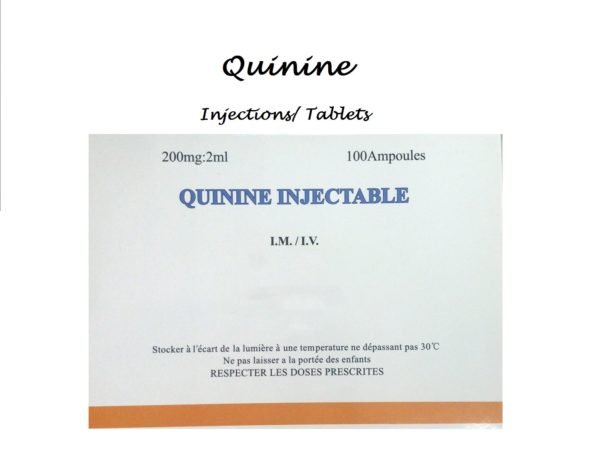
Quinine is an anti-parasitic medicine that is used to treat malaria and babesiosis. It is derived from the bark of a tree called cinchona.
Quinine Uses:
-
Treatment of uncomplicated malaria due to Plasmodium falciparum:
- It is used for the treatment of uncomplicated chloroquine-resistant P. falciparum malaria concurrently with other antimalarial agents.
-
Off-label Use in adults:
- Babesiosis
- Treatment of Uncomplicated malaria due to Plasmodium vivax.
Quinine Dose in Adults
Note:
- Dosage expressed in terms of the salt;
- 1 capsule Qualaquin = 324 mg of quinine sulfate = 269 mg of base;
- Canadian products contain 200 mg of quinine sulfate = 167 mg of base or 300 mg of quinine sulfate = 250 mg of base.
Quinine for the treatment of uncomplicated chloroquine-resistant P. falciparum Malaria:
-
CDC guidelines:
- 648 mg per oral every 8 hours, in combination with doxycycline, tetracycline, or clindamycin (in pregnancy).
Note:
Quinine is given for 3 days in other parts of the world but for infection in Southeast Asia, it is prescribed for one week. Combination therapy is given for one week irrespective of the region.
-
Canadian product:
- 600 mg per oral every 8 hours for 3 to 7 days with combination therapy.
Quinine for the treatment of uncomplicated chloroquine-resistant P. vivax Malaria:
- 648 mg per oral every 8 hours, in combination with doxycycline or tetracycline plus primaquine.
Quinine for the treatment of Babesiosis (off-label):
- 650 mg per oral every 6 to 8 hours for at least 7 to 10 days with clindamycin.
- Six-weeks therapy is advised for relapsing infection.
Note:
- US-manufactured quinine sulfate capsule is 324 mg; 2 capsules (648 mg quinine sulfate) should be enough for adult dosing.
Quinine dose in children:
Quinine dose in the treatment of Malaria:
-
Uncomplicated chloroquine-resistant falciparum malaria:
- 10 mg/kg per oral quinine sulfate every 8 hours for 3 -7 days depending on the region.
- The maximum dose is 650 mg/dose
- Use in combination with tetracycline, doxycycline, or clindamycin depending on patient age.
-
Uncomplicated chloroquine-resistant Vivax malaria:
- 10 mg/kg per oral quinine sulfate every 8 hours for 3 to 7 days depending on the region
- The maximum dose is 650 mg/dose.
- use in combination with primaquine and tetracycline or doxycycline depending on age.
-
Severe malaria:
- Oral tablets/ solutions, using the regimens previously described (dose and duration), may be used following intravenous quinidine including antimicrobial regimen once parasite density is <1% and the patient is able to tolerate oral medications.
Quinine for the treatment of Babesiosis:
-
Children and Adolescents:
- 10 mg/kg per oral quinine sulfate every 8 hours for 7 to 10 days
- The maximum dose is 650 mg/dose
- use in combination with clindamycin as a first-line treatment option.
Quinine dose in pregnancy and lactation: C
- It can be given during pregnancy.
- Although the drug can cross the human placental boundary, the therapeutic doses for malaria do not increase the risk of adverse pregnancy outcomes.
Use during breastfeeding:
- It is found in breastmilk.
- According to the manufacturer breastfeeding during therapy is a decision that should be made after considering the risks and benefits to the infant as well as the benefits to the mother.
- Monitoring is necessary for hemolysis and jaundice especially in children younger than 1 month.
- Infants with G6PD deficiency should not breastfeed during maternal therapy.
Dose adjustment in renal disease:
-
Mild or moderate impairment:
- There are no dosage adjustments provided in the manufacturer’s labeling.
-
Severe chronic impairment:
-
US labeling:
- Patients not on dialysis: Initial dose: 648 mg followed by 324 mg every 12 hours
-
Canadian product:
- Initial dose: 600 mg followed by 300 mg every 12 hours for 7 days
-
-
Alternative recommendations (Aronoff 2007):
Note: Dosage adjustments are not recommended in cases of severe malaria
-
-
Glomerular filtration rate >50 mL/minute:
- No dosage adjustment is necessary.
-
Glomerular filtration rate 10 to 50 mL/minute:
- Administer every 8 to 12 hours
-
Glomerular filtration rate <10 mL/minute:
- Administer every 24 hours
-
Intermittent hemodialysis:
- Administer dose after dialysis.
-
Note: Clearance of 6.5% achieved within 1 hour of hemodialysis.
-
Peritoneal dialysis:
- Dose as for GFR <10 mL/minute
-
CRRT:
- Dose as for GFR 10 to 50 mL/minute
Dose adjustment in liver disease:
-
Mild to moderate impairment (Child-Pugh classes A and B):
- No dosing adjustment required; monitor closely.
-
Severe impairment (Child-Pugh class C):
- Avoid use.
Side effects of Quinine:
-
Cardiovascular:
- Appearance Of U Waves On ECG
- Atrial Fibrillation
- Atrioventricular Block
- Bradycardia
- Cardiac Arrhythmia
- Chest Pain
- Flushing
- Hypersensitivity Angiitis
- Hypotension
- Nodal Rhythm Disorder (Nodal Escape Beats)
- Orthostatic Hypotension
- Palpitations
- Prolonged QT Interval On ECG
- Syncope
- Tachycardia
- Torsades De Pointes
- Unifocal Premature Ventricular Contractions
- Vasodilation
- Ventricular Fibrillation
- Ventricular Tachycardia
-
Central Nervous System:
- Altered Mental Status
- Aphasia
- Ataxia
- Chills
- Coma
- Confusion
- Disorientation
- Dizziness
- Dystonic Reaction
- Headache
- Restlessness
- Seizure
- Vertigo
-
Dermatologic:
- Allergic Contact Dermatitis
- Bullous Dermatitis
- Diaphoresis
- Exfoliative Dermatitis
- Erythema Multiforme
- Pruritus
- Skin Necrosis (Acral)
- Skin Photosensitivity
- Skin Rash (Papular Rash
- Scarlatiniform Rash
- Urticaria)
- Stevens-Johnson Syndrome
- Toxic Epidermal Necrolysis
-
Endocrine & Metabolic:
- Hypoglycemia
-
Gastrointestinal:
- Abdominal Pain
- Anorexia
- Diarrhea
- Esophagitis
- Gastric Irritation
- Nausea
- Vomiting
-
Genitourinary:
- Hemoglobinuria
-
Hematologic & Oncologic:
- Agranulocytosis
- Aplastic Anemia
- Blood Coagulation Disorder
- Bruise
- Disseminated Intravascular Coagulation
- Hemolysis (Blackwater Fever)
- Hemolytic Anemia
- Hemolytic-Uremic Syndrome
- Hemorrhage
- Hypoprothrombinemia
- Immune Thrombocytopenia (ITP)
- Leukopenia
- Neutropenia
- Pancytopenia
- Petechia
- Thrombocytopenia
- Thrombotic Thrombocytopenic Purpura
-
Hepatic:
- Abnormal Hepatic Function Tests
- Granulomatous Hepatitis
- Hepatitis
- Jaundice
-
Hypersensitivity:
- Hypersensitivity Reaction
-
Immunologic:
- Antibody Development (Lupus Anticoagulant Syndrome)
-
Neuromuscular & Skeletal:
- Lupus-Like Syndrome
- Myalgia
- Tremor
- Weakness
-
Ophthalmic:
- Blindness
- Blurred Vision (With Or Without Scotomata)
- Diplopia
- Mydriasis
- Nocturnal Amblyopia
- Optic Neuritis
- Photophobia
- Vision Color Changes
- Vision Loss (Sudden)
- Visual Field Loss
-
Otic:
- Auditory Impairment
- Deafness
- Tinnitus
-
Renal:
- Acute Interstitial Nephritis
- Renal Failure
- Renal Insufficiency
-
Respiratory:
- Asthma
- Dyspnea
- Pulmonary Edema
-
Miscellaneous:
- Fever
Contraindications to Quinine:
- Hypersensitivity to quinine and any other component of the formulation
- Hypersensitivity to quinidine or mefloquine (cross-sensitivity reported).
- Myasthenia gravis
- Optic neuritis
- Prolonged QT syndrome
- Idiopathic thrombocytopenic Purpura
- Hemolytic uremic syndrome [HUS] and thrombocytopenia due to prior quinine usage.
Warnings and precautions
-
Hemolytic anemia
- Patients with G6PD deficiency can also experience acute hemolytic anemia. Therefore, it is important to keep your eyes open for these symptoms.
-
Hypersensitivity reactions
- Stopping therapy for severe hypersensitivity reactions, such as Stevens Johnson syndrome, anaphylactic stress, interstitial Nephritis and neutropenia, is a good idea.
-
Hypoglycemia:
- Due to the quinine-induced insulin production, use can cause severe hypoglycemia.
-
Thrombocytopenia:
- It is possible to develop immune-mediated fatal thrombocytopenia. This can be reversed by stopping the drug.
- TTP can also lead to chronic renal failure.
-
Modified cardiac conduction
- Reports of atrial fibrillation (or flutter), QT-interval prolongation and fatal torsade des pointes, ventricular fibrillation, and QT-interval prolongation have been made.
- Concurrent use of drugs causing prolonged QT such as Class IA (eg, quinidine, procainamide) or Class III (eg, amiodarone, dofetilide, sotalol) antiarrhythmic agents should be avoided.
Quinine: Drug Interaction
|
Alkalinizing Agents |
May increase the serum concentration of QuiNINE. |
|
Androgens |
May enhance the hypoglycemic effect of Blood Glucose Lowering Agents. Exceptions: Danazol. |
|
Antidiabetic Agents |
May enhance the hypoglycemic effect of Hypoglycemia-Associated Agents. |
|
Antipsychotic Agents (Phenothiazines) |
Antimalarial Agents may increase the serum concentration of Antipsychotic Agents (Phenothiazines). |
|
Aprepitant |
May increase the serum concentration of CYP3A4 Substrates (High risk with Inhibitors). |
|
Blood Pressure Lowering Agents |
Herbs (Hypotensive Properties) may enhance the hypotensive effect of Blood Pressure Lowering Agents. |
|
Bosentan |
May decrease the serum concentration of CYP3A4 Substrates (High risk with Inducers). |
|
Brentuximab Vedotin |
P-glycoprotein/ABCB1 Inhibitors may increase the serum concentration of Brentuximab Vedotin. Specifically, concentrations of the active monomethyl auristatin E (MMAE) component may be increased. |
|
Celiprolol |
P-glycoprotein/ABCB1 Inhibitors may increase the serum concentration of Celiprolol. |
|
CYP2D6 Substrates (High risk with Inhibitors) |
QuiNINE may increase the serum concentration of CYP2D6 Substrates (High risk with Inhibitors). |
|
CYP3A4 Inducers (Moderate) |
May decrease the serum concentration of CYP3A4 Substrates (High risk with Inducers). |
|
CYP3A4 Inhibitors (Moderate) |
May decrease the metabolism of CYP3A4 Substrates (High risk with Inhibitors). |
|
Deferasirox |
May decrease the serum concentration of CYP3A4 Substrates (High risk with Inducers). |
|
Digoxin |
QuiNINE may increase the serum concentration of Digoxin. |
|
Duvelisib |
May increase the serum concentration of CYP3A4 Substrates (High risk with Inhibitors). |
|
Erdafitinib |
May decrease the serum concentration of CYP3A4 Substrates (High risk with Inducers). |
|
Erdafitinib |
May increase the serum concentration of CYP3A4 Substrates (High risk with Inhibitors). |
|
Erdafitinib |
May increase the serum concentration of P-glycoprotein/ABCB1 Substrates. |
|
Everolimus |
P-glycoprotein/ABCB1 Inhibitors may increase the serum concentration of Everolimus. |
|
Fingolimod |
May enhance the QTc-prolonging effect of QT-prolonging Agents (Highest Risk). Management: Monitor for QTc interval prolongation and ventricular arrhythmias (including TdP) with a continuous overnight ECG when fingolimod is combined with QT prolonging drugs. Patients with additional risk factors for QTc prolongation may be at even higher risk. |
|
Fosaprepitant |
May increase the serum concentration of CYP3A4 Substrates (High risk with Inhibitors). |
|
Fosnetupitant |
May increase the serum concentration of CYP3A4 Substrates (High risk with Inhibitors). |
|
Herbs (Hypoglycemic Properties |
May enhance the hypoglycemic effect of HypoglycemiaAssociated Agents. |
|
Herbs (Hypotensive Properties) |
May enhance the adverse/toxic effect of other Herbs (Hypotensive Properties). Excessive blood pressure lowering may manifest. |
|
Hypoglycemia-Associated Agents |
May enhance the hypoglycemic effect of other HypoglycemiaAssociated Agents. |
|
Larotrectinib |
May increase the serum concentration of CYP3A4 Substrates (High risk with Inhibitors). |
|
Larotrectinib |
P-glycoprotein/ABCB1 Inhibitors may increase the serum concentration of Larotrectinib. |
|
Local Anesthetics |
Methemoglobinemia Associated Agents may enhance the adverse/toxic effect of Local Anesthetics. Specifically, the risk for methemoglobinemia may be increased. |
|
Maitake |
May enhance the hypoglycemic effect of Blood Glucose Lowering Agents. |
|
Monoamine Oxidase Inhibitors |
May enhance the hypoglycemic effect of Blood Glucose Lowering Agents. |
|
Naldemedine |
P-glycoprotein/ABCB1 Inhibitors may increase the serum concentration of Naldemedine. |
|
Naloxegol |
P-glycoprotein/ABCB1 Inhibitors may increase the serum concentration of Naloxegol. |
|
Netupitant |
May increase the serum concentration of CYP3A4 Substrates (High risk with Inhibitors). |
|
Nevirapine |
May decrease the serum concentration of QuiNINE. |
|
Nitric Oxide |
May enhance the adverse/toxic effect of Methemoglobinemia Associated Agents. Combinations of these agents may increase the likelihood of significant methemoglobinemia. Management: Monitor patients for signs of methemoglobinemia (e.g., hypoxia, cyanosis) when nitric oxide is used in combination with other agents associated with development of methemoglobinemia. Avoid lidocaine/prilocaine. |
|
Palbociclib |
May increase the serum concentration of CYP3A4 Substrates (High risk with Inhibitors). |
|
Pegvisomant |
May enhance the hypoglycemic effect of Blood Glucose Lowering Agents. |
|
P-glycoprotein/ABCB1 Inhibitors |
May increase the serum concentration of Pglycoprotein/ABCB1 Substrates. P-glycoprotein inhibitors may also enhance the distribution of pglycoprotein substrates to specific cells/tissues/organs where p-glycoprotein is present in large amounts (e.g., brain, T-lymphocytes, testes, etc.). |
|
P-glycoprotein/ABCB1 Substrates |
P-glycoprotein/ABCB1 Inhibitors may increase the serum concentration of P-glycoprotein/ABCB1 Substrates. P-glycoprotein inhibitors may also enhance the distribution of p-glycoprotein substrates to specific cells/tissues/organs where p-glycoprotein is present in large amounts (e.g., brain, T-lymphocytes, testes, etc.). Exceptions: Loperamide. |
|
Prilocaine |
Methemoglobinemia Associated Agents may enhance the adverse/toxic effect of Prilocaine. Combinations of these agents may increase the likelihood of significant methemoglobinemia. Management: Monitor patients for signs of methemoglobinemia (e.g., hypoxia, cyanosis) when prilocaine is used in combination with other agents associated with development of methemoglobinemia. Avoid lidocaine/prilocaine in infants receiving such agents. |
|
Prothionamide |
May enhance the hypoglycemic effect of Blood Glucose Lowering Agents. |
|
Prucalopride |
P-glycoprotein/ABCB1 Inhibitors may increase the serum concentration of Prucalopride. |
|
QT-prolonging Agents (Indeterminate Risk - Avoid) |
May enhance the QTc-prolonging effect of QT-prolonging Agents (Highest Risk). Management: Monitor for QTc interval prolongation and ventricular arrhythmias when these agents are combined. Patients with additional risk factors for QTc prolongation may be at even higher risk. |
|
QT-prolonging Agents (Indeterminate Risk - Caution) |
May enhance the QTc-prolonging effect of QT-prolonging Agents (Highest Risk). Management: Monitor for QTc interval prolongation and ventricular arrhythmias when these agents are combined. Patients with additional risk factors for QTc prolongation may be at even higher risk. |
|
Quinolones |
May enhance the hypoglycemic effect of Blood Glucose Lowering Agents. Quinolones may diminish the therapeutic effect of Blood Glucose Lowering Agents. Specifically, if an agent is being used to treat diabetes, loss of blood sugar control may occur with quinolone use. |
|
Ranolazine |
P-glycoprotein/ABCB1 Inhibitors may increase the serum concentration of Ranolazine. |
|
Ranolazine |
May increase the serum concentration of P-glycoprotein/ABCB1 Substrates. |
|
RifAXIMin |
P-glycoprotein/ABCB1 Inhibitors may increase the serum concentration of RifAXIMin. |
|
Salicylates |
May enhance the hypoglycemic effect of Blood Glucose Lowering Agents. |
|
Sarilumab |
May decrease the serum concentration of CYP3A4 Substrates (High risk with Inducers). |
|
Selective Serotonin Reuptake Inhibitors |
May enhance the hypoglycemic effect of Blood Glucose Lowering Agents. |
|
Silodosin |
P-glycoprotein/ABCB1 Inhibitors may increase the serum concentration of Silodosin. |
|
Siltuximab |
May decrease the serum concentration of CYP3A4 Substrates (High risk with Inducers). |
|
Simeprevir |
May increase the serum concentration of CYP3A4 Substrates (High risk with Inhibitors). |
|
Sodium Nitrite |
Methemoglobinemia Associated Agents may enhance the adverse/toxic effect of Sodium Nitrite. Combinations of these agents may increase the likelihood of significant methemoglobinemia. |
|
Talazoparib |
P-glycoprotein/ABCB1 Inhibitors may increase the serum concentration of Talazoparib. Management: These listed exceptions are discussed in detail in separate interaction monographs. |
|
Tegaserod |
P-glycoprotein/ABCB1 Inhibitors may increase the serum concentration of Tegaserod. |
|
Tetracycline (Systemic) |
May increase the serum concentration of QuiNINE. |
|
Theophylline Derivatives |
QuiNINE may increase the serum concentration of Theophylline Derivatives. |
|
Tobacco (Smoked) |
May decrease the serum concentration of QuiNINE. |
|
Tocilizumab |
May decrease the serum concentration of CYP3A4 Substrates (High risk with Inducers). |
|
Vitamin K Antagonists (eg, warfarin) |
QuiNINE may enhance the anticoagulant effect of Vitamin K Antagonists. |
|
Risk Factor D (Consider therapy modification) |
|
|
Afatinib |
P-glycoprotein/ABCB1 Inhibitors may increase the serum concentration of Afatinib. Management: Reduce afatinib by 10 mg if not tolerated. Some non-US labeling recommends avoiding combination if possible. Iif used, administer the P-gp inhibitor simultaneously with or after the dose of afatinib. |
|
Amiodarone |
QT-prolonging Miscellaneous Agents (Highest Risk) may enhance the QTcprolonging effect of Amiodarone. Management: Consider alternatives to this drug combination. If combined, monitor for QTc interval prolongation and ventricular arrhythmias. Patients with additional risk factors for QTc prolongation may be at even higher risk. |
|
Amisulpride |
QT-prolonging Agents (Highest Risk) may enhance the QTc-prolonging effect of Amisulpride. Management: Consider alternatives to this combination. Patients with other risk factors (eg, older age, female sex, bradycardia, hypokalemia, hypomagnesemia, heart disease, and higher drug concentrations) are likely at greater risk for these toxicities. |
|
Arsenic Trioxide |
|
|
Astemizole |
QT-prolonging Miscellaneous Agents (Highest Risk) may enhance the QTcprolonging effect of Astemizole. Management: Consider alternatives to this drug combination. If combined, monitor for QTc interval prolongation and ventricular arrhythmias. Patients with additional risk factors for QTc prolongation may be at even higher risk. |
|
Azithromycin (Systemic) |
QT-prolonging Agents (Highest Risk) may enhance the QTc-prolonging effect of Azithromycin (Systemic). Management: Consider alternatives to this combination. Patients with other risk factors (eg, older age, female sex, bradycardia, hypokalemia, hypomagnesemia, heart disease, and higher drug concentrations) are likely at greater risk for these toxicities. |
|
Bedaquiline |
QT-prolonging Miscellaneous Agents (Highest Risk) may enhance the QTcprolonging effect of Bedaquiline. Management: Consider alternatives to this drug combination. If combined, monitor for QTc interval prolongation and ventricular arrhythmias. Patients with additional risk factors for QTc prolongation may be at even higher risk. |
|
Bepridil |
QT-prolonging Miscellaneous Agents (Highest Risk) may enhance the QTc-prolonging effect of Bepridil. Management: Consider alternatives to this drug combination. If combined, monitor for QTc interval prolongation and ventricular arrhythmias. Patients with additional risk factors for QTc prolongation may be at even higher risk. |
|
Betrixaban |
P-glycoprotein/ABCB1 Inhibitors may increase the serum concentration of Betrixaban. Management: Decrease the adult betrixaban dose to an initial single dose of 80 mg followed by 40 mg once daily if combined with a P-glycoprotein inhibitor. |
|
Bilastine |
P-glycoprotein/ABCB1 Inhibitors may increase the serum concentration of Bilastine. Management: Consider alternatives when possible; bilastine should be avoided in patients with moderate to severe renal insufficiency who are receiving p-glycoprotein inhibitors. |
|
CarBAMazepine |
May decrease the serum concentration of QuiNINE. QuiNINE may increase the serum concentration of CarBAMazepine. |
|
Chloroquine |
QT-prolonging Agents (Highest Risk) may enhance the QTc-prolonging effect of Chloroquine. Management: Consider alternatives to this combination. If combined, monitor for QTc interval prolongation and ventricular arrhythmias. Patients with additional risk factors for QTc prolongation may be at even higher risk. |
|
ChlorproMAZINE |
QT-prolonging Miscellaneous Agents (Highest Risk) may enhance the QTcprolonging effect of ChlorproMAZINE. Management: Consider alternatives to this drug combination. If combined, monitor for QTc interval prolongation and ventricular arrhythmias. Patients with additional risk factors for QTc prolongation may be at even higher risk. |
|
Cimetidine |
May increase the serum concentration of QuiNINE. |
|
Cisapride |
QT-prolonging Miscellaneous Agents (Highest Risk) may enhance the QTc-prolonging effect of Cisapride. Management: Consider alternatives to this drug combination. If combined, monitor for QTc interval prolongation and ventricular arrhythmias. Patients with additional risk factors for QTc prolongation may be at even higher risk. |
|
Clofazimine |
QT-prolonging Agents (Highest Risk) may enhance the QTc-prolonging effect of Clofazimine. Management: Consider alternatives to this combination. If combined, monitor for QTc interval prolongation and ventricular arrhythmias. Patients with additional risk factors for QTc prolongation may be at even higher risk. |
|
CloZAPine |
QT-prolonging Agents (Highest Risk) may enhance the QTc-prolonging effect of CloZAPine. Management: Consider alternatives to this combination. Patients with other risk factors (eg, older age, female sex, bradycardia, hypokalemia, hypomagnesemia, heart disease, and higher drug concentrations) are likely at greater risk for these toxicities. |
|
Colchicine |
P-glycoprotein/ABCB1 Inhibitors may increase the serum concentration of Colchicine. Colchicine distribution into certain tissues (e.g., brain) may also be increased. Management: Colchicine is contraindicated in patients with impaired renal or hepatic function who are also receiving a p-glycoprotein inhibitor. In those with normal renal and hepatic function, reduce colchicine dose as directed. See full monograph for details. |
|
CYP3A4 Inducers (Strong) |
May increase the metabolism of CYP3A4 Substrates (High risk with Inducers). Management: Consider an alternative for one of the interacting drugs. Some combinations may be specifically contraindicated. Consult appropriate manufacturer labeling. |
|
CYP3A4 Inhibitors (Strong) |
May decrease the metabolism of CYP3A4 Substrates (High risk with Inhibitors). |
|
Dabigatran Etexilate |
P-glycoprotein/ABCB1 Inhibitors may increase serum concentrations of the active metabolite(s) of Dabigatran Etexilate. Management: Dabigatran dose reductions may be needed. Specific recommendations vary considerably according to US vs Canadian labeling, specific P-gp inhibitor, renal function, and indication for dabigatran treatment. Refer to full monograph or dabigatran labeling. |
|
Dabrafenib |
May decrease the serum concentration of CYP3A4 Substrates (High risk with Inducers). Management: Seek alternatives to the CYP3A4 substrate when possible. If concomitant therapy cannot be avoided, monitor clinical effects of the substrate closely (particularly therapeutic effects). |
|
Dapsone (Systemic) |
Antimalarial Agents may enhance the adverse/toxic effect of Dapsone (Systemic). Specifically, concomitant use of antimalarial agents with dapsone may increase the risk of hemolytic reactions. Dapsone (Systemic) may enhance the adverse/toxic effect of Antimalarial Agents. Specifically, concomitant use of dapsone with antimalarial agents may increase the risk for hemolytic reactions. Management: Closely monitor patients for signs/symptoms of hemolytic reactions with concomitant use of dapsone and antimalarial agents, particularly in patients deficient in glucose-6-phosphate dehydrogenase (G6PD), methemoglobin reductase, or with hemoglobin M. |
|
Dapsone (Topical) |
Antimalarial Agents may enhance the adverse/toxic effect of Dapsone (Topical). Specifically, the risk of hemolytic reactions may be increased. Management: Closely monitor for signs/symptoms of hemolytic reactions with concomitant use of topical dapsone and antimalarial agents. Patients with glucose-6-phosphate dehydrogenase deficiency may be at particularly high risk for adverse hematologic effects. |
|
Dasatinib |
QT-prolonging Agents (Highest Risk) may enhance the QTc-prolonging effect of Dasatinib. Management: Consider alternatives to this combination. Patients with other risk factors (eg, older age, female sex, bradycardia, hypokalemia, hypomagnesemia, heart disease, and higher drug concentrations) are likely at greater risk for these toxicities. |
|
Delamanid |
QT-prolonging Miscellaneous Agents (Highest Risk) may enhance the QTcprolonging effect of Delamanid. Management: Consider alternatives to this drug combination. If combined, monitor for QTc interval prolongation and ventricular arrhythmias. Patients with additional risk factors for QTc prolongation may be at even higher risk. |
|
Doxepin-Containing Products |
QT-prolonging Agents (Highest Risk) may enhance the QTcprolonging effect of Doxepin-Containing Products. Management: Consider alternatives to this combination. Patients with other risk factors (eg, older age, female sex, bradycardia, hypokalemia, hypomagnesemia, heart disease, and higher drug concentrations) are likely at greater risk for these toxicities. |
|
DOXOrubicin (Conventional) |
P-glycoprotein/ABCB1 Inhibitors may increase the serum concentration of DOXOrubicin (Conventional). Management: Seek alternatives to P-glycoprotein inhibitors in patients treated with doxorubicin whenever possible. One U.S. manufacturer (Pfizer Inc.) recommends that these combinations be avoided. |
|
Dronedarone |
QT-prolonging Miscellaneous Agents (Highest Risk) may enhance the QTcprolonging effect of Dronedarone. Management: Consider alternatives to this drug combination. If combined, monitor for QTc interval prolongation and ventricular arrhythmias. Patients with additional risk factors for QTc prolongation may be at even higher risk. |
|
Droperidol |
QT-prolonging Agents (Highest Risk) may enhance the QTc-prolonging effect of Droperidol. Management: Consider alternatives to this combination. Patients with other risk factors (eg, older age, female sex, bradycardia, hypokalemia, hypomagnesemia, heart disease, and higher drug concentrations) are likely at greater risk for these toxicities. |
|
Edoxaban |
P-glycoprotein/ABCB1 Inhibitors may increase the serum concentration of Edoxaban. Management: See full monograph for details. Reduced doses are recommended for patients receiving edoxaban for venous thromboembolism in combination with certain P-gp inhibitors. Similar dose adjustment is not recommended for edoxaban use in atrial fibrillation. |
|
Encorafenib |
May enhance the QTc-prolonging effect of QT-prolonging Agents (Highest Risk). Management: Consider alternatives to this combination. Patients with other risk factors (eg, older age, female sex, bradycardia, hypokalemia, hypomagnesemia, heart disease, and higher drug concentrations) are likely at greater risk for these toxicities. |
|
Enzalutamide |
May decrease the serum concentration of CYP3A4 Substrates (High risk with Inducers). Management: Concurrent use of enzalutamide with CYP3A4 substrates that have a narrow therapeutic index should be avoided. Use of enzalutamide and any other CYP3A4 substrate should be performed with caution and close monitoring. |
|
Escitalopram |
QT-prolonging Agents (Highest Risk) may enhance the QTc-prolonging effect of Escitalopram. Management: Consider alternatives to this combination. Patients with other risk factors (eg, older age, female sex, bradycardia, hypokalemia, hypomagnesemia, heart disease, and higher drug concentrations) are likely at greater risk for these toxicities. |
|
Flecainide |
QT-prolonging Agents (Highest Risk) may enhance the QTc-prolonging effect of Flecainide. Management: Consider alternatives to this combination. Patients with other risk factors (eg, older age, female sex, bradycardia, hypokalemia, hypomagnesemia, heart disease, and higher drug concentrations) are likely at greater risk for these toxicities. |
|
Fluconazole |
QT-prolonging Miscellaneous Agents (Highest Risk) may enhance the QTcprolonging effect of Fluconazole. Fluconazole may enhance the QTc-prolonging effect of QTprolonging Miscellaneous Agents (Highest Risk). Management: Consider alternatives to this drug combination. If combined, monitor for QTc interval prolongation and ventricular arrhythmias. Patients with additional risk factors for QTc prolongation may be at even higher risk. |
|
Fosphenytoin |
May decrease the serum concentration of QuiNINE. |
|
Gadobenate Dimeglumine |
QT-prolonging Agents (Highest Risk) may enhance the QTcprolonging effect of Gadobenate Dimeglumine. Management: Consider alternatives to this combination. If combined, monitor for QTc interval prolongation and ventricular arrhythmias. Patients with additional risk factors for QTc prolongation may be at even higher risk. |
|
Gemifloxacin |
May enhance the QTc-prolonging effect of QT-prolonging Miscellaneous Agents (Highest Risk). Management: Consider alternatives to this drug combination. If combined, monitor for QTc interval prolongation and ventricular arrhythmias. Patients with additional risk factors for QTc prolongation may be at even higher risk. |
|
Gilteritinib |
May enhance the QTc-prolonging effect of QT-prolonging Agents (Highest Risk). Management: Consider alternatives to this combination. If use is necessary, monitor for QTc interval prolongation and arrhythmias. |
|
Haloperidol |
QT-prolonging Miscellaneous Agents (Highest Risk) may enhance the QTcprolonging effect of Haloperidol. Management: Consider alternatives to this drug combination. If combined, monitor for QTc interval prolongation and ventricular arrhythmias. Patients with additional risk factors for QTc prolongation may be at even higher risk. |
|
HMG-CoA Reductase Inhibitors (Statins) |
QuiNINE may increase the serum concentration of HMG-CoA Reductase Inhibitors (Statins). Management: Consider using a lower starting dose and lower maintenance/maximum doses of atorvastatin, simvastatin, or lovastatin when used together with quinine. Exceptions: Fluvastatin; Pitavastatin; Pravastatin; Red Yeast Rice; Rosuvastatin. |
|
Inotuzumab Ozogamicin |
QT-prolonging Agents (Highest Risk) may enhance the QTc-prolonging effect of Inotuzumab Ozogamicin. Management: Consider alternatives to this combination. If combined, monitor for QTc interval prolongation and ventricular arrhythmias. Patients with additional risk factors for QTc prolongation may be at even higher risk. |
|
Levofloxacin-Containing Products (Systemic) |
May enhance the QTc-prolonging effect of QTprolonging Miscellaneous Agents (Highest Risk). Management: Consider alternatives to this combination. If combined, monitor for QTc interval prolongation and ventricular arrhythmias. Patients with additional risk factors for QTc prolongation may be at even higher risk. |
|
Lofexidine |
QT-prolonging Agents (Highest Risk) may enhance the QTc-prolonging effect of Lofexidine. Management: Consider alternatives to this combination. If combined, monitor for QTc interval prolongation and ventricular arrhythmias. Patients with additional risk factors for QTc prolongation may be at even higher risk. |
|
Lorlatinib |
May decrease the serum concentration of CYP3A4 Substrates (High risk with Inducers). Management: Avoid concurrent use of lorlatinib with any CYP3A4 substrates for which a minimal decrease in serum concentrations of the CYP3A4 substrate could lead to therapeutic failure and serious clinical consequences. |
|
Methadone |
May enhance the QTc-prolonging effect of QT-prolonging Miscellaneous Agents (Highest Risk). Management: Consider alternatives to this drug combination. If combined, monitor for QTc interval prolongation and ventricular arrhythmias. Patients with additional risk factors for QTc prolongation may be at even higher risk. |
|
Midostaurin |
QT-prolonging Agents (Highest Risk) may enhance the QTc-prolonging effect of Midostaurin. Management: Consider alternatives to this combination. If combined, monitor for QTc interval prolongation and ventricular arrhythmias. Patients with additional risk factors for QTc prolongation may be at even higher risk. |
|
MiFEPRIStone |
May increase the serum concentration of CYP3A4 Substrates (High risk with Inhibitors). Management: Minimize doses of CYP3A4 substrates, and monitor for increased concentrations/toxicity, during and 2 weeks following treatment with mifepristone. Avoid cyclosporine, dihydroergotamine, ergotamine, fentanyl, pimozide, quinidine, sirolimus, and tacrolimus. |
|
Mitotane |
May decrease the serum concentration of CYP3A4 Substrates (High risk with Inducers). Management: Doses of CYP3A4 substrates may need to be adjusted substantially when used in patients being treated with mitotane. |
|
OLANZapine |
QT-prolonging Agents (Highest Risk) may enhance the QTc-prolonging effect of OLANZapine. Management: Consider alternatives to this combination. Patients with other risk factors (eg, older age, female sex, bradycardia, hypokalemia, hypomagnesemia, heart disease, and higher drug concentrations) are likely at greater risk for these toxicities. |
|
Ondansetron |
QT-prolonging Agents (Highest Risk) may enhance the QTc-prolonging effect of Ondansetron. Management: Consider alternatives to this combination. If combined, monitor for QTc interval prolongation and ventricular arrhythmias. Patients with additional risk factors for QTc prolongation may be at even higher risk. |
|
Osimertinib |
QT-prolonging Agents (Highest Risk) may enhance the QTc-prolonging effect of Osimertinib. Management: Consider alternatives to this combination. Patients with other risk factors (eg, older age, female sex, bradycardia, hypokalemia, hypomagnesemia, heart disease, and higher drug concentrations) are likely at greater risk for these toxicities. |
|
Pentamidine (Systemic) |
QT-prolonging Agents (Highest Risk) may enhance the QTc-prolonging effect of Pentamidine (Systemic). Management: Consider alternatives to this combination. If combined, monitor for QTc interval prolongation and ventricular arrhythmias. Patients with additional risk factors for QTc prolongation may be at even higher risk. |
|
PHENobarbital |
QuiNINE may increase the serum concentration of PHENobarbital. PHENobarbital may decrease the serum concentration of QuiNINE. |
|
Phenytoin |
May decrease the serum concentration of QuiNINE. |
|
Pilsicainide |
QT-prolonging Agents (Highest Risk) may enhance the QTc-prolonging effect of Pilsicainide. Management: Consider alternatives to this combination. If combined, monitor for QTc interval prolongation and ventricular arrhythmias. Patients with additional risk factors for QTc prolongation may be at even higher risk. |
|
Propafenone |
May enhance the QTc-prolonging effect of QT-prolonging Miscellaneous Agents (Highest Risk). Management: Consider alternatives to this combination. If combined, monitor for QTc interval prolongation and ventricular arrhythmias. Patients with additional risk factors for QTc prolongation may be at even higher risk. |
|
QT-prolonging Class IA Antiarrhythmics (Highest Risk) |
May enhance the QTc-prolonging effect of QT-prolonging Miscellaneous Agents (Highest Risk). Management: Consider alternatives to this drug combination. If combined, monitor for QTc interval prolongation and ventricular arrhythmias. Patients with additional risk factors for QTc prolongation may be at even higher risk. |
|
QT-prolonging Class III Antiarrhythmics (Highest Risk) |
May enhance the QTc-prolonging effect of QT-prolonging Miscellaneous Agents (Highest Risk). Management: Consider alternatives to this drug combination. If combined, monitor for QTc interval prolongation and ventricular arrhythmias. Patients with additional risk factors for QTc prolongation may be at even higher risk. Exceptions: Dronedarone. |
|
QT-prolonging Kinase Inhibitors (Highest Risk) |
May enhance the QTc-prolonging effect of QTprolonging Miscellaneous Agents (Highest Risk). Management: Consider alternatives to this drug combination. If combined, monitor for QTc interval prolongation and ventricular arrhythmias. Patients with additional risk factors for QTc prolongation may be at even higher risk. |
|
QT-prolonging Miscellaneous Agents (Highest Risk) |
May enhance the QTc-prolonging effect of QuiNINE. Management: Consider alternatives to this drug combination. If combined, monitor for QTc interval prolongation and ventricular arrhythmias. Patients with additional risk factors for QTc prolongation may be at even higher risk. Exceptions: Arsenic Trioxide; Astemizole; Bedaquiline; Bepridil; ChlorproMAZINE; Cisapride; Delamanid. |
|
QT-prolonging Moderate CYP3A4 Inhibitors (Moderate Risk) |
May enhance the QTc-prolonging effect of QT-prolonging Miscellaneous Agents (Highest Risk). QT-prolonging Moderate CYP3A4 Inhibitors (Moderate Risk) may increase the serum concentration of QT-prolonging Miscellaneous Agents (Highest Risk). Management: Consider alternatives to this drug combination. If combined, monitor for QTc interval prolongation and ventricular arrhythmias. Patients with additional risk factors for QTc prolongation may be at even higher risk. Exceptions: Fluconazole; Nilotinib; Ribociclib. |
|
RisperiDONE |
QT-prolonging Agents (Highest Risk) may enhance the CNS depressant effect of RisperiDONE. QT-prolonging Agents (Highest Risk) may enhance the QTc-prolonging effect of RisperiDONE. Management: Consider alternatives to this drug combination. If combined, monitor for QTc interval prolongation and ventricular arrhythmias. Patients with additional risk factors for QTc prolongation may be at even higher risk. |
|
Sodium Stibogluconate |
QT-prolonging Agents (Highest Risk) may enhance the QTc-prolonging effect of Sodium Stibogluconate. Management: Consider alternatives to this combination. If combined, monitor for QTc interval prolongation and ventricular arrhythmias. Patients with additional risk factors for QTc prolongation may be at even higher risk. |
|
St John's Wort |
May decrease the serum concentration of CYP3A4 Substrates (High risk with Inducers). Management: Consider an alternative for one of the interacting drugs. Some combinations may be specifically contraindicated. Consult appropriate manufacturer labeling. |
|
Stiripentol |
May increase the serum concentration of CYP3A4 Substrates (High risk with Inhibitors). Management: Use of stiripentol with CYP3A4 substrates that are considered to have a narrow therapeutic index should be avoided due to the increased risk for adverse effects and toxicity. Any CYP3A4 substrate used with stiripentol requires closer monitoring. |
|
Telithromycin |
May enhance the QTc-prolonging effect of QuiNINE. Telithromycin may increase the serum concentration of QuiNINE. Management: Concomitant therapy with quinine and telithromycin should be avoided, if possible, due to the risk of elevated quinine serum levels and potential adverse cardiac effects. If combined, monitor for QT prolongation and quinine toxicities. |
|
Vemurafenib |
QT-prolonging Agents (Highest Risk) may enhance the QTc-prolonging effect of Vemurafenib. Management: Consider alternatives to this combination. Patients with other risk factors (eg, older age, female sex, bradycardia, hypokalemia, hypomagnesemia, heart disease, and higher drug concentrations) are likely at greater risk for these toxicities. |
|
Venetoclax |
P-glycoprotein/ABCB1 Inhibitors may increase the serum concentration of Venetoclax. Management: Consider a venetoclax dose reduction by at least 50% in patients requiring concomitant treatment with P-glycoprotein (P-gp) inhibitors. |
|
Risk Factor X (Avoid combination) |
|
|
Antacids |
May decrease the serum concentration of QuiNINE. Exceptions: Calcium Carbonate; Potassium Bicarbonate; Sodium Bicarbonate. |
|
Antihepaciviral Combination Products |
May increase the serum concentration of QuiNINE. |
|
Artemether |
May enhance the adverse/toxic effect of Antimalarial Agents. Management: Artemether/Lumefantrine (combination product) should not be used with other antimalarials unless there is no other treatment option. |
|
Citalopram |
QT-prolonging Agents (Highest Risk) may enhance the QTc-prolonging effect of Citalopram. |
|
Clarithromycin |
QT-prolonging Agents (Highest Risk) may enhance the QTc-prolonging effect of Clarithromycin. |
|
Conivaptan |
May increase the serum concentration of CYP3A4 Substrates (High risk with Inhibitors). |
|
Domperidone |
QT-prolonging Agents (Highest Risk) may enhance the QTc-prolonging effect of Domperidone. |
|
Entrectinib |
May enhance the QTc-prolonging effect of QT-prolonging Agents (Highest Risk). |
|
Flupentixol |
QT-prolonging Agents (Highest Risk) may enhance the QTc-prolonging effect of Flupentixol. |
|
Fusidic Acid (Systemic) |
May increase the serum concentration of CYP3A4 Substrates (High risk with Inhibitors). |
|
Halofantrine |
May enhance the QTc-prolonging effect of QuiNINE. |
|
Idelalisib |
May increase the serum concentration of CYP3A4 Substrates (High risk with Inhibitors). |
|
Lefamulin |
May enhance the QTc-prolonging effect of QT-prolonging CYP3A4 Substrates. Management: Do not use lefamulin tablets with QT-prolonging CYP3A4 substrates. Lefamulin prescribing information lists this combination as contraindicated. |
|
Lopinavir |
May decrease the serum concentration of QuiNINE. This effect has been seen with lopinavir/ritonavir. The individual contributions of lopinavir and ritonavir to this effect are unclear. |
|
Lumefantrine |
Antimalarial Agents may enhance the adverse/toxic effect of Lumefantrine. Management: Artemether/Lumefantrine (combination product) should not be used with other antimalarials unless there is no other treatment option. |
|
Mefloquine |
QuiNINE may enhance the adverse/toxic effect of Mefloquine. Specifically, the risk for QTc-prolongation and the risk for convulsions may be increased. Mefloquine may increase the serum concentration of QuiNINE. Management: Avoid concurrent use, and delay administration of mefloquine until at least 12 hours after the last dose of quinine when possible. |
|
Moxifloxacin (Systemic) |
QT-prolonging Agents (Highest Risk) may enhance the QTc-prolonging effect of Moxifloxacin (Systemic). |
|
Neuromuscular-Blocking Agents |
QuiNINE may enhance the neuromuscular-blocking effect of Neuromuscular-Blocking Agents. |
|
Nilotinib |
QT-prolonging Agents (Highest Risk) may enhance the QTc-prolonging effect of Nilotinib. |
|
PAZOPanib |
P-glycoprotein/ABCB1 Inhibitors may increase the serum concentration of PAZOPanib. |
|
Pimozide |
QT-prolonging Agents (Highest Risk) may enhance the QTc-prolonging effect of Pimozide. Management: Consider alternatives to this combination. Patients with other risk factors (eg, older age, female sex, bradycardia, hypokalemia, hypomagnesemia, heart disease, and higher drug concentrations) are likely at greater risk for these toxicities. |
|
Piperaquine |
QT-prolonging Agents (Highest Risk) may enhance the QTc-prolonging effect of Piperaquine. |
|
Posaconazole |
May increase the serum concentration of QT-prolonging CYP3A4 Substrates. Such increases may lead to a greater risk for proarrhythmic effects and other similar toxicities. |
|
Probucol |
QT-prolonging Agents (Highest Risk) may enhance the QTc-prolonging effect of Probucol. |
|
QT-prolonging Strong CYP3A4 Inhibitors (Moderate Risk) |
May enhance the QTc-prolonging effect of QT-prolonging Miscellaneous Agents (Highest Risk). QT-prolonging Strong CYP3A4 Inhibitors (Moderate Risk) may increase the serum concentration of QT-prolonging Miscellaneous Agents (Highest Risk). Exceptions: Clarithromycin. |
|
QUEtiapine |
QT-prolonging Agents (Highest Risk) may enhance the QTc-prolonging effect of QUEtiapine. |
|
Ribociclib |
QT-prolonging Agents (Highest Risk) may enhance the QTc-prolonging effect of Ribociclib. |
|
RifAMPin |
May decrease the serum concentration of QuiNINE. |
|
Ritonavir |
May decrease the serum concentration of QuiNINE. This effect has been seen with lopinavir/ritonavir. The individual contributions of lopinavir and ritonavir to this effect are unclear. QuiNINE may increase the serum concentration of Ritonavir. Ritonavir may increase the serum concentration of QuiNINE. |
|
Sparfloxacin |
QT-prolonging Agents (Highest Risk) may enhance the QTc-prolonging effect of Sparfloxacin. |
|
Thioridazine |
QT-prolonging Agents (Highest Risk) may enhance the QTc-prolonging effect of Thioridazine. |
|
Topotecan |
P-glycoprotein/ABCB1 Inhibitors may increase the serum concentration of Topotecan. |
|
VinCRIStine (Liposomal) |
P-glycoprotein/ABCB1 Inhibitors may increase the serum concentration of VinCRIStine (Liposomal). |
Monitoring parameters:
- Complete blood count
- blood glucose
- LFTs
- ECG
- ophthalmologic examination
How to administer Quinine?
- It should be taken as a whole orally with food.
- Aluminum or magnesium-containing antacids should be avoided because of drug absorption problems.
Mechanism of action of Quinine:
- It reduces oxygen uptake and interferes with the metabolism of carbohydrates.
- It can also be intercalated into DNA, disrupting replication and transcription. It has similar cardiovascular effects to quinidine.
Absorption isRapid, mainly from upper small intestine.
Distribution
- It is 30 to 50% of plasma concentration that gets into the erythrocytes. It is poorly distributed to the CSF, with a concentration of 2% to 7 %.
Protein binding
- 69% to 92% for healthy subjects. 78% to 95% for malaria patients due to an increase of alpha 1-acid glycoprotein.
Metabolism
- CYP450 enzymes are responsible for forming metabolites. 3-hydroxyquinine is the most active metabolite, but it is less active than the parent compound.
Bioavailability isHealthy subjects are at 76%-88% when it comes to malaria.
Half-life elimination:
- Children: 3 hours in healthy subjects; 12 hours with malaria
- Healthy adults: 10 to 13 hours
- Healthy elderly subjects: 18 hours
Time to reach peak serum concentration:
- Children: 2 hours in healthy subjects; 4 hours with malaria
- Adults: 2 to 4 hours in healthy subjects; 1 to 11 hours with malaria
Excretion:
- Occurs in urine (20% as unchanged drug); renal excretion is twofold in the presence of acidic urine
Quinine Brand Names (International):
- Qualaquin
- APO-QuiNINE
- JAMP-QuiNINE
- PRO-QuiNINE-200
- QuiNINE-Odan
- TEVA-QuiNINE
- Aethylcarbonis Chinin
- Albiquin
- Circonyl
- Genin
- Jasoquin
- Kanaquine
- Kinin
- Malaquin
- Q200
- Q300
- Quinate
- Quinbisu
- Quinimax
- Quininga
Quinine Brand Names in Pakistan:
Quinine 300 mg/ml Injection |
|
| Gomal | Lahore Chemical & Pharmaceutical Works (Pvt) Ltd |
| Hydroquine | Pharmedic (Pvt) Ltd. |
| Konien | Multinational Buisness Link |
| Malapak | Medicraft Pharmaceuticals (Pvt) Ltd. |
| Q-Phos | Caraway Pharmaceuticals |
| Quinine | Lawrence Pharma |
| Quinine Dihydrochloride | Orient Laboratories |
| Quinine Dihydrochloride | Venus Pharma |
| Zafquin | Zafa Pharmaceutical Laboratories (Pvt) Ltd. |
Quinine 300 mg Tablets |
|
| Circonyl | Rotex Medica Pakistan (Pvt) Ltd |
| Mediquin | Semos Pharmaceuticals (Pvt) Ltd. |
| Pmalamed | Medicraft Pharmaceuticals (Pvt) Ltd. |
| Quinine Bi-Sulphate | Lahore Chemical & Pharmaceutical Works (Pvt) Ltd |
.png)


