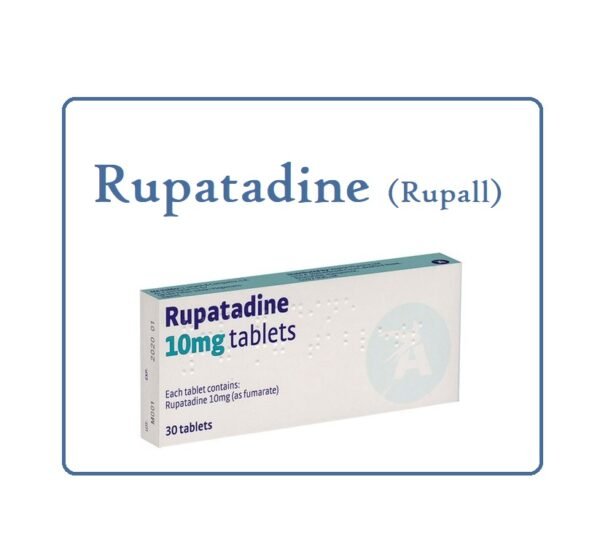
Rupatadine (Rupall) is a selective long-acting antihistamine that is used for the symptomatic treatment of patients with seasonal and perennial allergic rhinitis. It is also used in the treatment of patients with chronic urticaria. Rupatadine Uses:
-
Allergic rhinitis:
- It is used for the symptomatic treatment of seasonal and perennial allergic rhinitis in patients 2 years of age or older.
-
Chronic spontaneous urticaria:
- It is also used for the symptomatic treatment of chronic spontaneous urticaria manifesting as pruritus and hives in patients 2 years of age and older.
Read:
Rupatadine (Rupall) Dose in Adults
Rupatadine (Rupall) Dose in the treatment of Allergic rhinitis and chronic spontaneous urticaria:
- 10 mg orally once a day to a maximum of 10 mg/day.
Rupatadine (Rupall) Dose in Childrens
Rupatadine (Rupall) Dose in the treatment of Allergic rhinitis and chronic spontaneous urticaria: Oral:
-
Children ≥2 to <12 years:
- 10 kg to 25 kg:
- 2.5 mg once a day (maximum dose: 2.5 mg/day).
- >25 kg: 5 mg once a day (maximum dose: 5 mg/day).
- 10 kg to 25 kg:
-
Children ≥12 years and Adolescents:
- Refer to adult dosing.
Rupatadine (Rupall) pregnancy Risk Category: B (C)
- Although antihistamines can be used in pregnancy to treat symptomatic issues, it has not been proven effective for long-term treatment.
- It is recommended that pregnant women use it with caution.
Use during breastfeeding:
- It is unknown if the drug will be absorbed into breastmilk. The manufacturer suggests that you avoid breastfeeding during treatment.
Dose in Kidney Disease:
It has not been studied in patients with kidney disease and is contraindicated in renal impairment.
Dose in Liver disease:
It has not been studied in patients with liver disease and is contraindicated.
Side Effects of Rupatadine (Rupall):
-
Cardiovascular:
- Prolonged Q-T Interval On ECG
-
Central Nervous System:
- Drowsiness
- Headache
- Fatigue
- Hypersomnia
-
Gastrointestinal:
- Gastroenteritis
- Odynophagia
- Sore Throat
- Vomiting
- Abdominal Pain
- Xerostomia
- Epigastric Pain
-
Genitourinary:
- Dysmenorrhea
-
Infection:
- Cold Symptoms
-
Neuromuscular & Skeletal:
- Increased Creatine Phosphokinase
-
Respiratory:
- Allergic Conjunctivitis
- Allergic Rhinitis
- Cough
- Flu-Like Symptoms
- Nasopharyngitis
- Rhinitis
- Tonsillitis
Contraindications to Rupatadine (Rupall):
- Allergy reactions to rupatadine and any component of the formulation
- An antecedent history of QTc prolongation or torsades d'pointes (including individuals with congenital long QT syndromes);
- People with a history cardiac arrhythmias.
- Concurrent use of CYP3A4 inhibitors or other QTc prolonging drugs
- Galactose intolerance, glucose–galactose malabsorption, or Lapp lactase deficiencies (tablet formulation) are some of the patients.
- Patients suffering from fructose intolerance, glucose -galactose malabsorption or sucrose-isomaltase deficiency (oral remedy)
Warnings and precautions
-
Modified cardiac conduction
- It has been linked to a prolongation of the QTc interval, and very rarely Torsade des pointes.
- Patients at high risk for developing cardiac arrhythmias or torsade des pointes, such as electrolyte imbalance, should not take this drug.
- Patients who have had a history QTc interval prolongation and/or torsade de pointses, or those with congenital long QT Syndrome, should not use other drugs. Patients with a history cardiac arrhythmias and patients with a history QTc interval prolongation should also avoid concomitant drug use.
-
Hypersensitivity
- There have been rare reports of hypersensitivity reactions, including severe reactions like anaphylaxis, urticarial, and angioedema.
-
Myalgia:
- Patients might experience muscle pain and weakness. Patients with underlying muscular disorders should limit their use.
-
Hepatic impairment
- It has not been tested in patients suffering from liver disease, so it is not recommended for these patients.
-
Renal impairment
- It has not been tested in patients with chronic kidney disease. Therefore, it is not recommended for these patients.
Rupatadine (United States: Not available): Drug Interaction
|
Acetylcholinesterase Inhibitors |
May diminish the therapeutic effect of Anticholinergic Agents. Anticholinergic Agents may diminish the therapeutic effect of Acetylcholinesterase Inhibitors. |
|
Alcohol (Ethyl) |
CNS Depressants may enhance the CNS depressant effect of Alcohol (Ethyl). |
|
Alizapride |
May enhance the CNS depressant effect of CNS Depressants. |
|
Amantadine |
May enhance the anticholinergic effect of Anticholinergic Agents. |
|
Amezinium |
Antihistamines may enhance the stimulatory effect of Amezinium. |
|
Amphetamines |
May diminish the sedative effect of Antihistamines. |
|
Anticholinergic Agents |
May enhance the adverse/toxic effect of other Anticholinergic Agents. |
|
Aprepitant |
May increase the serum concentration of CYP3A4 Substrates (High risk with Inhibitors). |
|
Betahistine |
Antihistamines may diminish the therapeutic effect of Betahistine. |
|
Botulinum Toxin-Containing Products |
May enhance the anticholinergic effect of Anticholinergic Agents. |
|
Brexanolone |
CNS Depressants may enhance the CNS depressant effect of Brexanolone. |
|
Brimonidine (Topical) |
May enhance the CNS depressant effect of CNS Depressants. |
|
Bromopride |
May enhance the CNS depressant effect of CNS Depressants. |
|
Cannabidiol |
May enhance the CNS depressant effect of CNS Depressants. |
|
Cannabis |
May enhance the CNS depressant effect of CNS Depressants. |
|
Chloral Betaine |
May enhance the adverse/toxic effect of Anticholinergic Agents. |
|
Chlorphenesin Carbamate |
May enhance the adverse/toxic effect of CNS Depressants. |
|
Clofazimine |
May increase the serum concentration of CYP3A4 Substrates (High risk with Inhibitors). |
|
CNS Depressants |
May enhance the adverse/toxic effect of other CNS Depressants. |
|
CYP3A4 Inhibitors (Moderate) |
May increase the serum concentration of Rupatadine. |
|
Dimethindene (Topical) |
May enhance the CNS depressant effect of CNS Depressants. |
|
Doxylamine |
May enhance the CNS depressant effect of CNS Depressants. Management: The manufacturer of Diclegis (doxylamine/pyridoxine), intended for use in pregnancy, specifically states that use with other CNS depressants is not recommended. |
|
Dronabinol |
May enhance the CNS depressant effect of CNS Depressants. |
|
Duvelisib |
May increase the serum concentration of CYP3A4 Substrates (High risk with Inhibitors). |
|
Erdafitinib |
May increase the serum concentration of CYP3A4 Substrates (High risk with Inhibitors). |
|
Esketamine |
May enhance the CNS depressant effect of CNS Depressants. |
|
Fosaprepitant |
May increase the serum concentration of CYP3A4 Substrates (High risk with Inhibitors). |
|
Fosnetupitant |
May increase the serum concentration of CYP3A4 Substrates (High risk with Inhibitors). |
|
Gastrointestinal Agents (Prokinetic) |
Anticholinergic Agents may diminish the therapeutic effect of Gastrointestinal Agents (Prokinetic). |
|
Glucagon |
Anticholinergic Agents may enhance the adverse/toxic effect of Glucagon. Specifically, the risk of gastrointestinal adverse effects may be increased. |
|
HMG-CoA Reductase Inhibitors (Statins) |
Rupatadine may enhance the adverse/toxic effect of HMG-CoA Reductase Inhibitors (Statins). Specifically, the risk for increased CPK and/or other muscle toxicities may be increased. |
|
HydrOXYzine |
May enhance the CNS depressant effect of CNS Depressants. |
|
Itopride |
Anticholinergic Agents may diminish the therapeutic effect of Itopride. |
|
Kava Kava |
May enhance the adverse/toxic effect of CNS Depressants. |
|
Larotrectinib |
May increase the serum concentration of CYP3A4 Substrates (High risk with Inhibitors). |
|
Lofexidine |
May enhance the CNS depressant effect of CNS Depressants. Management: Drugs listed as exceptions to this monograph are discussed in further detail in separate drug interaction monographs. |
|
Magnesium Sulfate |
May enhance the CNS depressant effect of CNS Depressants. |
|
MetyroSINE |
CNS Depressants may enhance the sedative effect of MetyroSINE. |
|
Mianserin |
May enhance the anticholinergic effect of Anticholinergic Agents. |
|
Minocycline |
May enhance the CNS depressant effect of CNS Depressants. |
|
Mirabegron |
Anticholinergic Agents may enhance the adverse/toxic effect of Mirabegron. |
|
Mirtazapine |
CNS Depressants may enhance the CNS depressant effect of Mirtazapine. |
|
Nabilone |
May enhance the CNS depressant effect of CNS Depressants. |
|
Netupitant |
May increase the serum concentration of CYP3A4 Substrates (High risk with Inhibitors). |
|
Nitroglycerin |
Anticholinergic Agents may decrease the absorption of Nitroglycerin. Specifically, anticholinergic agents may decrease the dissolution of sublingual nitroglycerin tablets, possibly impairing or slowing nitroglycerin absorption. |
|
Palbociclib |
May increase the serum concentration of CYP3A4 Substrates (High risk with Inhibitors). |
|
Piribedil |
CNS Depressants may enhance the CNS depressant effect of Piribedil. |
|
Pramipexole |
CNS Depressants may enhance the sedative effect of Pramipexole. |
|
Ramosetron |
Anticholinergic Agents may enhance the constipating effect of Ramosetron. |
|
ROPINIRole |
CNS Depressants may enhance the sedative effect of ROPINIRole. |
|
Rotigotine |
CNS Depressants may enhance the sedative effect of Rotigotine. |
|
Rufinamide |
May enhance the adverse/toxic effect of CNS Depressants. Specifically, sleepiness and dizziness may be enhanced. |
|
Selective Serotonin Reuptake Inhibitors |
CNS Depressants may enhance the adverse/toxic effect of Selective Serotonin Reuptake Inhibitors. Specifically, the risk of psychomotor impairment may be enhanced. |
|
Simeprevir |
May increase the serum concentration of CYP3A4 Substrates (High risk with Inhibitors). |
|
Tetrahydrocannabinol |
May enhance the CNS depressant effect of CNS Depressants. |
|
Tetrahydrocannabinol and Cannabidiol |
May enhance the CNS depressant effect of CNS Depressants. |
|
Thiazide and Thiazide-Like Diuretics |
Anticholinergic Agents may increase the serum concentration of Thiazide and Thiazide-Like Diuretics. |
|
Topiramate |
Anticholinergic Agents may enhance the adverse/toxic effect of Topiramate. |
|
Trimeprazine |
May enhance the CNS depressant effect of CNS Depressants. |
|
Risk Factor D (Consider therapy modification) |
|
|
Benzylpenicilloyl Polylysine |
Antihistamines may diminish the diagnostic effect of Benzylpenicilloyl Polylysine. Management: Suspend systemic H1 antagonists for benzylpenicilloyl-polylysine skin testing and delay testing until systemic antihistaminic effects have dissipated. A histamine skin test may be used to assess persistent antihistaminic effects. |
|
Blonanserin |
CNS Depressants may enhance the CNS depressant effect of Blonanserin. |
|
Buprenorphine |
|
|
Chlormethiazole |
May enhance the CNS depressant effect of CNS Depressants. Management: Monitor closely for evidence of excessive CNS depression. The chlormethiazole labeling states that an appropriately reduced dose should be used if such a combination must be used. |
|
Droperidol |
May enhance the CNS depressant effect of CNS Depressants. Management: Consider dose reductions of droperidol or of other CNS agents (eg, opioids, barbiturates) with concomitant use. Exceptions to this monograph are discussed in further detail in separate drug interaction monographs. |
|
Flunitrazepam |
CNS Depressants may enhance the CNS depressant effect of Flunitrazepam. |
|
Hyaluronidase |
Antihistamines may diminish the therapeutic effect of Hyaluronidase. Management: Patients receiving antihistamines (particularly at larger doses) may not experience the desired clinical response to standard doses of hyaluronidase. Larger doses of hyaluronidase may be required. |
|
HYDROcodone |
CNS Depressants may enhance the CNS depressant effect of HYDROcodone. Management: Avoid concomitant use of hydrocodone and benzodiazepines or other CNS depressants when possible. These agents should only be combined if alternative treatment options are inadequate. If combined, limit the dosages and duration of each drug. |
|
Methotrimeprazine |
CNS Depressants may enhance the CNS depressant effect of Methotrimeprazine. Methotrimeprazine may enhance the CNS depressant effect of CNS Depressants. Management: Reduce adult dose of CNS depressant agents by 50% with initiation of concomitant methotrimeprazine therapy. Further CNS depressant dosage adjustments should be initiated only after clinically effective methotrimeprazine dose is established. |
|
Opioid Agonists |
CNS Depressants may enhance the CNS depressant effect of Opioid Agonists. Management: Avoid concomitant use of opioid agonists and benzodiazepines or other CNS depressants when possible. These agents should only be combined if alternative treatment options are inadequate. If combined, limit the dosages and duration of each drug. |
|
OxyCODONE |
CNS Depressants may enhance the CNS depressant effect of OxyCODONE. Management: Avoid concomitant use of oxycodone and benzodiazepines or other CNS depressants when possible. These agents should only be combined if alternative treatment options are inadequate. If combined, limit the dosages and duration of each drug. |
|
Perampanel |
May enhance the CNS depressant effect of CNS Depressants. Management: Patients taking perampanel with any other drug that has CNS depressant activities should avoid complex and high-risk activities, particularly those such as driving that require alertness and coordination, until they have experience using the combination. |
|
Pramlintide |
May enhance the anticholinergic effect of Anticholinergic Agents. These effects are specific to the GI tract. |
|
Secretin |
Anticholinergic Agents may diminish the therapeutic effect of Secretin. Management: Avoid concomitant use of anticholinergic agents and secretin. Discontinue anticholinergic agents at least 5 half-lives prior to administration of secretin. |
|
Sodium Oxybate |
May enhance the CNS depressant effect of CNS Depressants. Management: Consider alternatives to combined use. When combined use is needed, consider minimizing doses of one or more drugs. Use of sodium oxybate with alcohol or sedative hypnotics is contraindicated. |
|
Stiripentol |
May increase the serum concentration of CYP3A4 Substrates (High risk with Inhibitors). Management: Use of stiripentol with CYP3A4 substrates that are considered to have a narrow therapeutic index should be avoided due to the increased risk for adverse effects and toxicity. Any CYP3A4 substrate used with stiripentol requires closer monitoring. |
|
Suvorexant |
CNS Depressants may enhance the CNS depressant effect of Suvorexant. Management: Dose reduction of suvorexant and/or any other CNS depressant may be necessary. Use of suvorexant with alcohol is not recommended, and the use of suvorexant with any other drug to treat insomnia is not recommended. |
|
Tapentadol |
May enhance the CNS depressant effect of CNS Depressants. Management: Avoid concomitant use of tapentadol and benzodiazepines or other CNS depressants when possible. These agents should only be combined if alternative treatment options are inadequate. If combined, limit the dosages and duration of each drug. |
|
Zolpidem |
CNS Depressants may enhance the CNS depressant effect of Zolpidem. Management: Reduce the Intermezzo brand sublingual zolpidem adult dose to 1.75 mg for men who are also receiving other CNS depressants. No such dose change is recommended for women. Avoid use with other CNS depressants at bedtime; avoid use with alcohol. |
|
Risk Factor X (Avoid combination) |
|
|
Aclidinium |
May enhance the anticholinergic effect of Anticholinergic Agents. |
|
Azelastine (Nasal) |
CNS Depressants may enhance the CNS depressant effect of Azelastine (Nasal). |
|
Bromperidol |
May enhance the CNS depressant effect of CNS Depressants. |
|
Cimetropium |
Anticholinergic Agents may enhance the anticholinergic effect of Cimetropium. |
|
Conivaptan |
May increase the serum concentration of CYP3A4 Substrates (High risk with Inhibitors). |
|
CYP3A4 Inhibitors (Strong) |
May increase the serum concentration of Rupatadine. |
|
Eluxadoline |
Anticholinergic Agents may enhance the constipating effect of Eluxadoline. |
|
Fusidic Acid (Systemic) |
May increase the serum concentration of CYP3A4 Substrates (High risk with Inhibitors). |
|
Glycopyrrolate (Oral Inhalation) |
Anticholinergic Agents may enhance the anticholinergic effect of Glycopyrrolate (Oral Inhalation). |
|
Glycopyrronium (Topical) |
May enhance the anticholinergic effect of Anticholinergic Agents. |
|
Grapefruit Juice |
May increase the serum concentration of Rupatadine. |
|
Idelalisib |
May increase the serum concentration of CYP3A4 Substrates (High risk with Inhibitors). |
|
Ipratropium (Oral Inhalation) |
May enhance the anticholinergic effect of Anticholinergic Agents. |
|
Levosulpiride |
Anticholinergic Agents may diminish the therapeutic effect of Levosulpiride. |
|
Orphenadrine |
CNS Depressants may enhance the CNS depressant effect of Orphenadrine. |
|
Oxatomide |
May enhance the anticholinergic effect of Anticholinergic Agents. |
|
Oxomemazine |
May enhance the CNS depressant effect of CNS Depressants. |
|
Paraldehyde |
CNS Depressants may enhance the CNS depressant effect of Paraldehyde. |
|
Pitolisant |
Antihistamines may diminish the therapeutic effect of Pitolisant. |
|
Potassium Chloride |
Anticholinergic Agents may enhance the ulcerogenic effect of Potassium Chloride. Management: Patients on drugs with substantial anticholinergic effects should avoid using any solid oral dosage form of potassium chloride. |
|
Potassium Citrate |
Anticholinergic Agents may enhance the ulcerogenic effect of Potassium Citrate. |
|
Revefenacin |
Anticholinergic Agents may enhance the anticholinergic effect of Revefenacin. |
|
Thalidomide |
CNS Depressants may enhance the CNS depressant effect of Thalidomide. |
|
Tiotropium |
Anticholinergic Agents may enhance the anticholinergic effect of Tiotropium. |
|
Umeclidinium |
May enhance the anticholinergic effect of Anticholinergic Agents. |
Monitoring Parameters:
None mentioned.
How to administer Rupatadine (Rupall)?
- It is administered orally with or without food.
- For oral solutions, the oral syringe provided with product packaging should be used.
- It is inserted into the perforated stopper, the bottle is then turned upside down, and the syringe is allowed to fill the appropriate dose.
- The syringe should be washed after use.
Mechanism of action of Rupatadine (Rupall):
- It is a member of the second-generation antihistamines.
- It has a long half-life and is a selective inhibitor for peripheral histamine (H-1) receptors.
- When administered in higher doses, it also inhibits the release and degranulation of cytokines, particularly TNF-alpha from human mast cells and monoocytes.
Initial:
- 1 to 2 hours
Duration:
- Antihistaminic activity: Up to 24 hours
Absorption:
- Rapid
Protein binding:
- 98.5% to 99%
Metabolism:
- It is converted to its active metabolites by undergoing oxidation, hydroxylation, and N-dealklyation mainly by CYP 3A4 and to a lesser extent by CYP2C9, CYP2C19, and CYP2D6.
- The active metabolites include desloratadine and hydroxylated derivatives of desloratadine
Half-life elimination:
- Children: 2 to 5 years: 15.9 hours;
- Children: 6 to 11 years: 12.3 hours
- Adults: 4.04 to 6.07 hours
- Elderly: 8.7 hours
Time to peak serum concentration:
- 0.75 to 1 hour
Excretion:
- It is excreted in the urine (34.6%; negligible amount as unchanged drug) and feces (60.9%; negligible amount as unchanged drug).
International Brand Names of Rupatadine:
- Rupall
- Alergoliber
- Darupax
- Hisatrop
- Largix
- Levostar-R
- Ralzal
- Repafet
- Rinepan
- Rinialer
- Rupa
- Rupadin
- Rupafin
- Rupahjist
- Rupastar
- Rupatal
- Rupatall
- Rupex
- Rupiz
- Stavrohist
- Tamalis
- Wystamm
Rupatadine Brand Names in Pakistan:
No Brands Available in Pakistan.
.png)