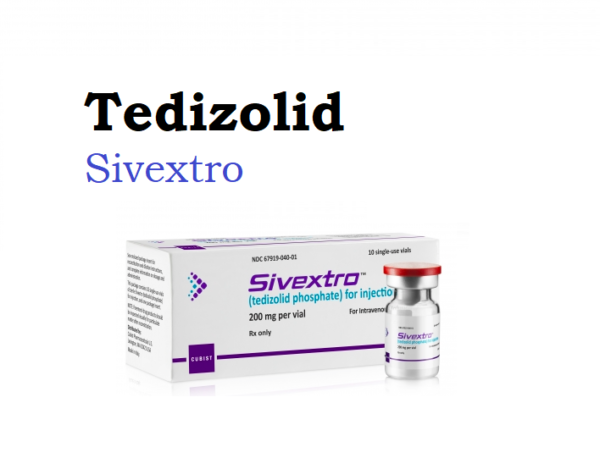
Tedizolid (Sivextro) inhibits bacterial protein synthesis by interfering with the ribosomal subunits of the bacterial thereby inhibiting bacterial replication.
Tedizolid (Sivextro) Uses:
-
Skin and skin structure infections:
- It is indicated for the treatment of acute bacterial skin and soft tissue infections caused by organisms susceptible to the drug.
- It can be used to treat the following susceptible gram-positive organisms:
- Staphylococcus aureus (including MRSA and MSSA (methicillin-resistant and methicillin-susceptible) isolates,
- Streptococcus pyogenes,
- Streptococcus agalactiae,
- Streptococcus anginosus group (including Streptococcus anginosus, Streptococcus intermedius, and Streptococcus constellatus), and
- Enterococcus faecalis
Tedizolid (Sivextro) dose in Adults
Tedizolid (Sivextro) dose in the treatment of Skin and skin structure infections:
- 200 mg orally or intravenously once a day for 6 days.
-
If a dose is missed:
- It should be administered as soon as possible (and up to 8 hours before the next scheduled dose).
- If less than 8 hours remain before the next scheduled dose, the dose should be given at the scheduled time.
Tedizolid (Sivextro) use in children
The safety and efficacy of tedizolid in children have not been established.
Pregnancy Risk Factor C
- Studies on animal reproduction have shown negative outcomes for fetuses.It has not been tested in human pregnancies.
Tedizolid use during breastfeeding:
- It is unknown if the drug will be excreted into breastmilk.
- Manufacturers recommend weighing the benefits and risks of drug exposure for the infant, as well as treating the mother.
Tedizolid dose in kidney disease.
Adjustment in the dosage is not necessary in patients with renal disease.
Tedizolid dose in liver disease:
Adjustment in the dosage is not necessary in patients with liver disease.
Side Effects of Tedizolid (Sivextro):
-
Cardiovascular:
- Flushing
- Hypertension
- Palpitations
- Tachycardia
-
Central Nervous System:
- Headache
- Dizziness
- Facial Nerve Paralysis
- Hypoesthesia
- Insomnia
- Paresthesia
- Peripheral Neuropathy
-
Dermatologic:
- Dermatitis
- Pruritus
- Urticaria
-
Endocrine & Metabolic:
- Increased Gamma-Glutamyl Transferase
-
Gastrointestinal:
- Nausea
- Diarrhea
- Vomiting
- Clostridioides Difficile Colitis
- Oral Candidiasis
-
Hematologic & Oncologic:
- Decreased Hemoglobin
- Decreased Platelet Count
- Anemia
- Decreased White Blood Cell Count
-
Hepatic:
- Increased Serum Alanine Aminotransferase
- Increased Serum Aspartate Transaminase
- Increased Serum Transaminases
-
Hypersensitivity:
- Hypersensitivity
-
Infection:
- Fungal Infection
-
Local:
- Injection Site Reaction
-
Ophthalmic:
- Asthenopia
- Blurred Vision
- Visual Impairment
- Vitreous Opacity
-
Miscellaneous:
- Infusion Related Reaction
Contraindication to Tedizolid (Sivextro):
The manufacturer's labeling does not contain any contraindications.
Warnings and precautions
- Superinfection
- Long-term antibiotic use can lead to superinfections with fungi or resistant bacteria, including C. difficile-associated diarrhea.
- After 2 months of postantibiotic treatment, C. difficile-associated diarrhea and pseudomembranous Colitis were reported.
- Neutropenia:
- Patients with a baseline neutrophil count less than 1000 cells/mm should avoid it.
- Alternative treatment options may be available for these patients.
Tedizolid: Drug Interaction
|
Amifampridine |
Agents With Seizure Threshold Lowering Potential may enhance the neuroexcitatory and/or seizure-potentiating effect of Amifampridine. |
|
Antiemetics (5HT3 Antagonists) |
May enhance the serotonergic effect of Serotonin Modulators. This could result in serotonin syndrome. |
|
Antipsychotic Agents |
Serotonin Modulators may enhance the adverse/toxic effect of Antipsychotic Agents. Specifically, serotonin modulators may enhance dopamine blockade, possibly increasing the risk for neuroleptic malignant syndrome. Antipsychotic Agents may enhance the serotonergic effect of Serotonin Modulators. This could result in serotonin syndrome. |
|
BCG Vaccine (Immunization) |
Antibiotics may diminish the therapeutic effect of BCG Vaccine (Immunization). |
|
BCRP/ABCG2 Substrates |
Tedizolid may increase the serum concentration of BCRP/ABCG2 Substrates. |
|
Betahistine |
Monoamine Oxidase Inhibitors may increase the serum concentration of Betahistine. |
|
Blood Glucose Lowering Agents |
Monoamine Oxidase Inhibitors may enhance the hypoglycemic effect of Blood Glucose Lowering Agents. |
|
Brimonidine (Ophthalmic) |
Monoamine Oxidase Inhibitors may enhance the adverse/toxic effect of Brimonidine (Ophthalmic). Monoamine Oxidase Inhibitors may increase the serum concentration of Brimonidine (Ophthalmic). |
|
Brimonidine (Topical) |
Monoamine Oxidase Inhibitors may enhance the adverse/toxic effect of Brimonidine (Topical). Monoamine Oxidase Inhibitors may increase the serum concentration of Brimonidine (Topical). |
|
Cerebrolysin |
May enhance the adverse/toxic effect of Monoamine Oxidase Inhibitors. |
|
Chloramphenicol (Ophthalmic) |
May enhance the adverse/toxic effect of Myelosuppressive Agents. |
|
Chlorphenesin Carbamate |
May enhance the adverse/toxic effect of Monoamine Oxidase Inhibitors. |
|
CloZAPine |
Myelosuppressive Agents may enhance the adverse/toxic effect of CloZAPine. Specifically, the risk for neutropenia may be increased. |
|
Codeine |
Monoamine Oxidase Inhibitors may enhance the adverse/toxic effect of Codeine. |
|
Dihydrocodeine |
May enhance the serotonergic effect of Monoamine Oxidase Inhibitors. This could result in serotonin syndrome. |
|
Domperidone |
Monoamine Oxidase Inhibitors may enhance the adverse/toxic effect of Domperidone. Monoamine Oxidase Inhibitors may diminish the therapeutic effect of Domperidone. Domperidone may diminish the therapeutic effect of Monoamine Oxidase Inhibitors. |
|
EPINEPHrine (Systemic) |
Monoamine Oxidase Inhibitors may enhance the hypertensive effect of EPINEPHrine (Systemic). |
|
Esketamine |
May enhance the hypertensive effect of Monoamine Oxidase Inhibitors. |
|
Lactobacillus and Estriol |
Antibiotics may diminish the therapeutic effect of Lactobacillus and Estriol. |
|
Mesalamine |
May enhance the myelosuppressive effect of Myelosuppressive Agents. |
|
Metaraminol |
Monoamine Oxidase Inhibitors may enhance the hypertensive effect of Metaraminol. |
|
Metaxalone |
May enhance the serotonergic effect of Serotonin Modulators. This could result in serotonin syndrome. |
|
Methadone |
May enhance the serotonergic effect of Monoamine Oxidase Inhibitors. This could result in serotonin syndrome. |
|
Metoclopramide |
Serotonin Modulators may enhance the adverse/toxic effect of Metoclopramide. This may be manifest as symptoms consistent with serotonin syndrome or neuroleptic malignant syndrome. |
|
Opioid Agonists |
May enhance the serotonergic effect of Serotonin Modulators. This could result in serotonin syndrome. |
|
Promazine |
May enhance the myelosuppressive effect of Myelosuppressive Agents. |
|
Serotonin Modulators |
Tedizolid may enhance the serotonergic effect of Serotonin Modulators. This could result in serotonin syndrome. Exceptions: Nicergoline. |
|
Sympathomimetics |
Tedizolid may enhance the hypertensive effect of Sympathomimetics. Tedizolid may enhance the tachycardic effect of Sympathomimetics. |
|
Talazoparib |
BCRP/ABCG2 Inhibitors may increase the serum concentration of Talazoparib. |
|
TraMADol |
Serotonin Modulators may enhance the adverse/toxic effect of TraMADol. The risk of seizures may be increased. TraMADol may enhance the serotonergic effect of Serotonin Modulators. This could result in serotonin syndrome. |
|
Risk Factor D (Consider therapy modification) |
|
|
Alpelisib |
BCRP/ABCG2 Inhibitors may increase the serum concentration of Alpelisib. Management: Avoid coadministration of BCRP/ABCG2 inhibitors and alpelisib due to the potential for increased alpelisib concentrations and toxicities. If coadministration cannot be avoided, closely monitor for increased alpelisib adverse reactions. |
|
Benzhydrocodone |
|
|
COMT Inhibitors |
May enhance the adverse/toxic effect of Monoamine Oxidase Inhibitors. |
|
Deferiprone |
Myelosuppressive Agents may enhance the neutropenic effect of Deferiprone. Management: Avoid the concomitant use of deferiprone and myelosuppressive agents whenever possible. If this combination cannot be avoided, monitor the absolute neutrophil count more closely. |
|
DOPamine |
Monoamine Oxidase Inhibitors may enhance the hypertensive effect of DOPamine. Management: Initiate dopamine at no greater than one-tenth (1/10) of the usual dose in patients who are taking (or have taken within the last 2 to 3 weeks) monoamine oxidase inhibitors. Monitor for an exaggerated hypertensive response to dopamine. |
|
HYDROcodone |
Monoamine Oxidase Inhibitors may enhance the adverse/toxic effect of HYDROcodone. Management: Consider alternatives to this combination when possible. |
|
Iohexol |
Agents With Seizure Threshold Lowering Potential may enhance the adverse/toxic effect of Iohexol. Specifically, the risk for seizures may be increased. Management: Discontinue agents that may lower the seizure threshold 48 hours prior to intrathecal use of iohexol. Wait at least 24 hours after the procedure to resume such agents. In nonelective procedures, consider use of prophylactic anticonvulsants. |
|
Iomeprol |
Agents With Seizure Threshold Lowering Potential may enhance the adverse/toxic effect of Iomeprol. Specifically, the risk for seizures may be increased. Management: Discontinue agents that may lower the seizure threshold 48 hours prior to intrathecal use of iomeprol. Wait at least 24 hours after the procedure to resume such agents. In nonelective procedures, consider use of prophylactic anticonvulsants. |
|
Iopamidol |
Agents With Seizure Threshold Lowering Potential may enhance the adverse/toxic effect of Iopamidol. Specifically, the risk for seizures may be increased. Management: Discontinue agents that may lower the seizure threshold 48 hours prior to intrathecal use of iopamidol. Wait at least 24 hours after the procedure to resume such agents. In nonelective procedures, consider use of prophylactic anticonvulsants. |
|
Levodopa-Containing Products |
May enhance the adverse/toxic effect of Monoamine Oxidase Inhibitors. Of particular concern is the development of hypertensive reactions when levodopa is used with nonselective MAOI. Management: The concomitant use of nonselective monoamine oxidase inhibitors (MAOIs) and levodopa is contraindicated. Discontinue the nonselective MAOI at least two weeks prior to initiating levodopa. Monitor patients taking a selective MAOIs and levodopa. |
|
Lithium |
Monoamine Oxidase Inhibitors may enhance the adverse/toxic effect of Lithium. Management: This combination should be undertaken with great caution. When combined treatment is clinically indicated, monitor closely for signs of serotonin toxicity/serotonin syndrome. |
|
OxyCODONE |
May enhance the serotonergic effect of Monoamine Oxidase Inhibitors. This could result in serotonin syndrome. Management: Seek alternatives when possible. Avoid use of oxycodone/naltrexone during and within 14 days after monoamine oxidase inhibitor treatment. Non-US labeling for some oxycodone products states that such use is contraindicated. |
|
Pindolol |
Monoamine Oxidase Inhibitors may enhance the hypotensive effect of Pindolol. Management: Canadian labeling for pindolol states that concurrent use with a monoamine oxidase inhibitor is not recommended. |
|
Reserpine |
Monoamine Oxidase Inhibitors may enhance the adverse/toxic effect of Reserpine. Existing MAOI therapy can result in paradoxical effects of added reserpine (e.g., excitation, hypertension). Management: Monoamine oxidase inhibitors (MAOIs) should be avoided or used with great caution in patients who are also receiving reserpine. |
|
Sodium Picosulfate |
Antibiotics may diminish the therapeutic effect of Sodium Picosulfate. Management: Consider using an alternative product for bowel cleansing prior to a colonoscopy in patients who have recently used or are concurrently using an antibiotic. |
|
Typhoid Vaccine |
Antibiotics may diminish the therapeutic effect of Typhoid Vaccine. Only the live attenuated Ty21a strain is affected. Management: Vaccination with live attenuated typhoid vaccine (Ty21a) should be avoided in patients being treated with systemic antibacterial agents. Use of this vaccine should be postponed until at least 3 days after cessation of antibacterial agents. |
|
Risk Factor X (Avoid combination) |
|
|
Alcohol (Ethyl) |
May enhance the adverse/toxic effect of Monoamine Oxidase Inhibitors. |
|
Apraclonidine |
Monoamine Oxidase Inhibitors may enhance the adverse/toxic effect of Apraclonidine. Monoamine Oxidase Inhibitors may increase the serum concentration of Apraclonidine. |
|
AtoMOXetine |
Monoamine Oxidase Inhibitors may enhance the neurotoxic (central) effect of AtoMOXetine. |
|
Atropine (Ophthalmic) |
Monoamine Oxidase Inhibitors may enhance the hypertensive effect of Atropine (Ophthalmic). |
|
BCG (Intravesical) |
Antibiotics may diminish the therapeutic effect of BCG (Intravesical). |
|
BCG (Intravesical) |
Myelosuppressive Agents may diminish the therapeutic effect of BCG (Intravesical). |
|
Bezafibrate |
Monoamine Oxidase Inhibitors may enhance the adverse/toxic effect of Bezafibrate. |
|
Buprenorphine |
May enhance the adverse/toxic effect of Monoamine Oxidase Inhibitors. |
|
BuPROPion |
Monoamine Oxidase Inhibitors may enhance the hypertensive effect of BuPROPion. |
|
BusPIRone |
May enhance the adverse/toxic effect of Monoamine Oxidase Inhibitors. Specifically, blood pressure elevations been reported. |
|
CarBAMazepine |
May enhance the adverse/toxic effect of Monoamine Oxidase Inhibitors. Management: Avoid concurrent use of carbamazepine during, or within 14 days of discontinuing, treatment with a monoamine oxidase inhibitor. |
|
Cholera Vaccine |
Antibiotics may diminish the therapeutic effect of Cholera Vaccine. Management: Avoid cholera vaccine in patients receiving systemic antibiotics, and within 14 days following the use of oral or parenteral antibiotics. |
|
Cladribine |
May enhance the myelosuppressive effect of Myelosuppressive Agents. |
|
Cyclobenzaprine |
May enhance the serotonergic effect of Monoamine Oxidase Inhibitors. This could result in serotonin syndrome. |
|
Cyproheptadine |
Monoamine Oxidase Inhibitors may enhance the anticholinergic effect of Cyproheptadine. Cyproheptadine may diminish the serotonergic effect of Monoamine Oxidase Inhibitors. |
|
Dapoxetine |
May enhance the adverse/toxic effect of Serotonin Modulators. |
|
Deutetrabenazine |
Monoamine Oxidase Inhibitors may enhance the adverse/toxic effect of Deutetrabenazine. |
|
Dextromethorphan |
Monoamine Oxidase Inhibitors may enhance the serotonergic effect of Dextromethorphan. This may cause serotonin syndrome. |
|
Diethylpropion |
Monoamine Oxidase Inhibitors may enhance the hypertensive effect of Diethylpropion. |
|
Diphenoxylate |
May enhance the hypertensive effect of Monoamine Oxidase Inhibitors. |
|
Dipyrone |
May enhance the adverse/toxic effect of Myelosuppressive Agents. Specifically, the risk for agranulocytosis and pancytopenia may be increased |
|
Droxidopa |
Monoamine Oxidase Inhibitors may enhance the hypertensive effect of Droxidopa. |
|
EPINEPHrine (Oral Inhalation) |
Monoamine Oxidase Inhibitors may enhance the hypertensive effect of EPINEPHrine (Oral Inhalation). |
|
FentaNYL |
May enhance the serotonergic effect of Monoamine Oxidase Inhibitors. This could result in serotonin syndrome. |
|
Guanethidine |
May enhance the adverse/toxic effect of Monoamine Oxidase Inhibitors. |
|
Heroin |
Monoamine Oxidase Inhibitors may enhance the adverse/toxic effect of Heroin. |
|
HYDROmorphone |
Monoamine Oxidase Inhibitors may enhance the adverse/toxic effect of HYDROmorphone. |
|
Indoramin |
Monoamine Oxidase Inhibitors may enhance the hypotensive effect of Indoramin. |
|
Iobenguane Radiopharmaceutical Products |
Monoamine Oxidase Inhibitors may diminish the therapeutic effect of Iobenguane Radiopharmaceutical Products. Management: Discontinue all drugs that may inhibit or interfere with catecholamine transport or uptake for at least 5 biological half-lives before iobenguane administration. Do not administer these drugs until at least 7 days after each iobenguane dose. |
|
Isometheptene |
Monoamine Oxidase Inhibitors may enhance the adverse/toxic effect of Isometheptene. |
|
Levomethadone |
May enhance the adverse/toxic effect of Monoamine Oxidase Inhibitors. |
|
Levonordefrin |
Monoamine Oxidase Inhibitors may enhance the hypertensive effect of Levonordefrin. |
|
Linezolid |
Monoamine Oxidase Inhibitors may enhance the adverse/toxic effect of Linezolid. |
|
Maprotiline |
May enhance the adverse/toxic effect of Monoamine Oxidase Inhibitors. |
|
Meperidine |
Monoamine Oxidase Inhibitors may enhance the serotonergic effect of Meperidine. This may cause serotonin syndrome. |
|
Meptazinol |
Monoamine Oxidase Inhibitors may enhance the adverse/toxic effect of Meptazinol. |
|
Mequitazine |
Monoamine Oxidase Inhibitors may enhance the anticholinergic effect of Mequitazine. |
|
Methyldopa |
Monoamine Oxidase Inhibitors may enhance the adverse/toxic effect of Methyldopa. |
|
Methylene Blue |
Monoamine Oxidase Inhibitors may enhance the serotonergic effect of Methylene Blue. This could result in serotonin syndrome. |
|
Methylene Blue |
May enhance the serotonergic effect of Serotonin Modulators. This could result in serotonin syndrome. |
|
Methylphenidate |
Monoamine Oxidase Inhibitors may enhance the hypertensive effect of Methylphenidate. |
|
Mianserin |
Monoamine Oxidase Inhibitors may enhance the neurotoxic effect of Mianserin. |
|
Moclobemide |
Monoamine Oxidase Inhibitors may enhance the adverse/toxic effect of Moclobemide. |
|
Monoamine Oxidase Inhibitors |
May enhance the hypertensive effect of other Monoamine Oxidase Inhibitors. Monoamine Oxidase Inhibitors may enhance the serotonergic effect of other Monoamine Oxidase Inhibitors. This could result in serotonin syndrome. |
|
Morphine (Systemic) |
Monoamine Oxidase Inhibitors may enhance the adverse/toxic effect of Morphine (Systemic). |
|
Nefopam |
Monoamine Oxidase Inhibitors may enhance the adverse/toxic effect of Nefopam. |
|
Opium |
Monoamine Oxidase Inhibitors may enhance the adverse/toxic effect of Opium. |
|
OxyMORphone |
May enhance the adverse/toxic effect of Monoamine Oxidase Inhibitors. |
|
PAZOPanib |
BCRP/ABCG2 Inhibitors may increase the serum concentration of PAZOPanib. |
|
Pheniramine |
May enhance the anticholinergic effect of Monoamine Oxidase Inhibitors. |
|
Pholcodine |
May enhance the serotonergic effect of Monoamine Oxidase Inhibitors. This could result in serotonin syndrome. |
|
Pizotifen |
Monoamine Oxidase Inhibitors may enhance the anticholinergic effect of Pizotifen. |
|
Reboxetine |
Monoamine Oxidase Inhibitors may enhance the adverse/toxic effect of Reboxetine. |
|
Serotonin 5-HT1D Receptor Agonists |
Monoamine Oxidase Inhibitors may decrease the metabolism of Serotonin 5-HT1D Receptor Agonists. Management: If MAO inhibitor therapy is required, naratriptan, eletriptan or frovatriptan may be a suitable 5-HT1D agonist to employ. Exceptions: Eletriptan; Frovatriptan; Naratriptan. |
|
Solriamfetol |
Monoamine Oxidase Inhibitors may enhance the hypertensive effect of Solriamfetol. |
|
SUFentanil |
May enhance the adverse/toxic effect of Monoamine Oxidase Inhibitors. Specifically, the risk for serotonin syndrome or opioid toxicities (eg, respiratory depression, coma) may be increased. Management: Sufentanil should not be used with monoamine oxidase (MAO) inhibitors (or within 14 days of stopping an MAO inhibitor) due to the potential for serotonin syndrome and/or excessive CNS depression. |
|
Tapentadol |
May enhance the adverse/toxic effect of Monoamine Oxidase Inhibitors. Specifically, the additive effects of norepinephrine may lead to adverse cardiovascular effects. Tapentadol may enhance the serotonergic effect of Monoamine Oxidase Inhibitors. This could result in serotonin syndrome. |
|
Tetrabenazine |
May enhance the adverse/toxic effect of Monoamine Oxidase Inhibitors. |
|
Tetrahydrozoline (Nasal) |
Monoamine Oxidase Inhibitors may enhance the hypertensive effect of Tetrahydrozoline (Nasal). |
|
Tianeptine |
May enhance the adverse/toxic effect of Monoamine Oxidase Inhibitors. |
|
Topotecan |
BCRP/ABCG2 Inhibitors may increase the serum concentration of Topotecan. |
|
Valbenazine |
May enhance the adverse/toxic effect of Monoamine Oxidase Inhibitors. |
Monitor:
Monitor completed blood counts with differential at baseline and during the treatment (monitor for neutropenia)
How to administer Tedizolid (Sivextro)?
Oral:
- Administer without regard to food.
Intravenous:
- It should be administered as an intravenous infusion over one hour. Avoid administering as an IV push or bolus.
- If other drugs are administered in the same intravenous line, the line should be flushed with normal saline before and after tedizolid administration.
- Intra-arterial, SubQ, intrathecal, intraperitoneal, SubQ, and Intramuscular administration should be avoided.
Mechanism of action of Tedizolid (Sivextro):
- Tedizolidphosphate, a bacteriostatic medication that is converted to its active form tedizolid, acts as a bacteriostatic drug.
- It prevents the bacterial replication in enterococci and staphylococci by binding to the 50S subunit of the bacterial ribosomal bacterial subunit.
- This also prevents the formation of the 70S complex and, thus, inhibits bacterial protein synthesis.
It works well absorbedWhen taken orally.
70% to 90% of the drug is Protein-bound:
Metabolism: It is metabolized by phosphatases into the active metabolite Tedizolid.
The oral bioavailability is about 91%
It has a half-life elimination of about 12 hours
The time to reach peak serum concentration after oral administration is about 3 hours and after intravenous administration is 1 - 1.5 hours.
Excretion: 82% is excreted in the feces and 18% in the urine both as inactive sulfate conjugates. Less than 3% of the drug is excreted in feces or urine as parent drug.
International Brand Names of Tedizolid:
- Cubizolid
- Sivextro
- Tedimerp
- Trcarezolid
- Zolidocyrl
Tedizolid Brand Names in Pakistan:
No Brands Available in Pakistan.
.png)


