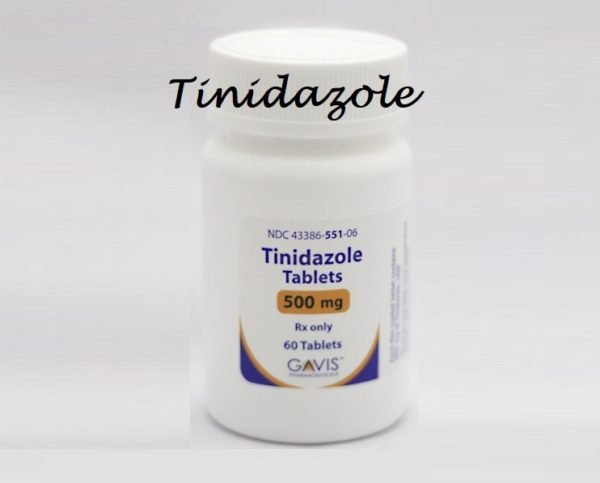
Tinidazole is an antibiotic medicine that is used to treat protozoal infections.
It is used to treat the following disorders:
-
Amebiasis:
-
It is used in the treatment of intestinal amebiasis and amebic liver abscess caused by Entamoeba histolytica in adults and pediatric patients older than 3 years.
-
It is not indicated for the treatment of asymptomatic cyst passage.
-
-
Bacterial vaginosis:
-
It is used in the treatment of bacterial vaginosis (previously referred to as Haemophilus vaginitis, Gardnerella vaginitis, nonspecific vaginitis, or anaerobic vaginosis) in adult women.
-
-
Giardiasis:
-
It is used in the treatment of giardiasis caused by Giardia duodenalis (also termed Giardia lamblia) in adults and pediatric patients older than 3 years.
-
-
Trichomoniasis:
-
It is used in the treatment of trichomoniasis caused by Trichomonas vaginalis;
-
Partners of infected patients should be treated simultaneously to prevent reinfection.
-
-
Off Label Usage of Tinidazole in Adults:
-
It is used for Helicobacter pylori eradication;
-
It is used for prophylaxis against sexually transmitted diseases following sexual assault;
-
It is used for urethritis, nongonococcal (persistent and recurrent)
-
Tinidazole Dose in Adults
Dosage in the treatment of intestinal Amebiasis:
- Orally 2 g once daily for 3 days
Dosage in the treatment of Amebic liver abscess:
- Orally 2 g once daily for 3 to 5 days
Dosage in the treatment of bacterial vaginosis:
- Orally 2 g once daily for 2 days or 1 g once daily for 5 days
Off label dosage in the treatment of recurrent bacterial vaginosis:
- Orally 500 mg twice daily for 7 days followed by intravaginal therapy with boric acid, followed by intravaginal metronidazole suppressive therapy
Dosage in the treatment of Giardiasis:
- Orally 2 g as a single dose
Off label dosage in the treatment of Helicobacter pylori eradication:
-
Concomitant regimen:
- 500 mg twice daily is given in combination with clarithromycin 500 mg twice daily, amoxicillin 1 g twice daily, and a standard-dose proton pump inhibitor twice daily
- continue this regimen for 10 to 14 days.
-
Sequential regimen:
- Amoxicillin 1 g twice daily plus a standard-dose proton pump inhibitor twice daily is given for 5 to 7 days;
- Amoxicillin & PPIs should be followed by clarithromycin 500 mg twice daily, tinidazole 500 mg twice daily, and a standard-dose proton pump inhibitor daily for 5 to 7 days.
-
Hybrid regimen:
- Amoxicillin 1 g twice daily plus a standard-dose proton pump inhibitor twice daily is given for 7 days;
- Then it is followed with amoxicillin 1 g twice daily, clarithromycin 500 mg twice daily, tinidazole 500 mg twice daily, and a standard-dose proton pump inhibitor twice daily for 7 days.
Off label dosage in the treatment of Prophylaxis against sexually transmitted diseases following sexual assault:
- Orally 2 g as a single dose in combination with azithromycin plus ceftriaxone
Dosage in the treatment of Trichomoniasis:
- Orally2 g as a single dose;
- sexual partners should be treated at the same time
Off Label dosage in the treatment of Trichomoniasis, persistent or recurrent (ie, treatment failure of nitroimidazole [eg, metronidazole]):
- Orally 2 g once daily for 7 days
Off Label dosage in the treatment of Urethritis, nongonococcal (recurrent or persistent urethritis in men who have sex with women and who live in regions where T. vaginalis is prevalent):
- Orally 2 g as a single dose.
- Compliance with the initial regimen and lack of reexposure to an untreated sex partner has to be excluded prior to use
Tinidazole Dose in Childrens
Dosage the treatment of intestinal Amebiasis:
-
Children >3 years and Adolescents:
- Orally 50 mg/kg/day for 3 days is given
- The maximum daily dose is 2000 mg/day
- for patients with the severe and extraintestinal disease, give for 5 days
Dose in the treatment of Amebic liver abscess:
-
Children >3 years and Adolescents:
- Orally 50 mg/kg/day for 3 to 5 days
- The maximum daily dose is 2000 mg/day
Dosage in the treatment of bacterial vaginosis:
-
Adolescents:
- Orally 2000 mg once daily for 2 days or 1000 mg once daily for 5 days is given
Dosage in the treatment of Giardiasis:
-
Children >3 years and Adolescents:
- Orally 50 mg/kg as a single dose
- The maximum dose is 2000 mg
Dosage in the treatment of Helicobacter pylori infection:
-
Children >3 years and Adolescents:
- Orally 20 mg/kg/day in 1 to 2 divided doses for 5 to 7 days in combination with other agents
- some experts use a longer duration of 2 to 6 weeks
- The maximum daily dose is 1000 mg/day
Dose in the treatment of recurrent, persistent, Nongonococcal urethritis:
-
Adolescents:
- Orally 2000 mg as a single dose in combination with azithromycin is given
Dose in the treatment of Trichomoniasis:
-
Children >3 years:
- Orally 50 mg/kg as a single dose
- The maximum dose is 2000 mg
-
Adolescents:
- Orally 2000 mg as a single dose is given
- sexual partners should be treated at the same time
- if treatment failure, then consider extended regimen of 2000 mg once daily for 5 days
Pregnancy Risk Factor: C
- Tinidazole crosses into the fetal circulation and enters the human placenta.
- Tinidazole's safety for treatment of bacterial vignanosis or trichomoniasis in pregnant women is not well understood.
- Pregnancy is best served by other agents.
Tinidazole use during breastfeeding:
- Breast milk contains Tinidazole.
- Tinidazole concentrations in breast milk are the same as in maternal serum, and they decrease by 72 hours after last maternal dose
- The manufacturer doesn't recommend breastfeeding during therapy, or 72 hours after last tinidazole dosage.
Dose in kidney disease:
- No dosage adjustment required
Hemodialysis:
- An additional dose equal to ½ the usual dose should be given at the end of hemodialysis if tinidazole is administered prior to hemodialysis on a dialysis day.
Dose in liver disease:
- There are no dosage adjustments given in the manufacturer’s labeling (has not been studied);
- use with caution.
Less Common Side Effects of Tinidazole Include:
-
Central Nervous System:
- Fatigue
- Malaise
- Dizziness
- Headache
-
Dermatologic:
- Body Odor
-
Endocrine & Metabolic:
- Hypermenorrhea
-
Gastrointestinal:
- Dysgeusia
- Nausea
- Anorexia
- Decreased Appetite
- Flatulence
- Dyspepsia
- Abdominal Cramps
- Epigastric Distress
- Vomiting
- Constipation
-
Genitourinary:
- Vulvovaginal Candidiasis
- Dysuria
- Pelvic Pain
- Urine Abnormality
- Vulvovaginal Disease
-
Neuromuscular & Skeletal:
- Weakness
-
Renal:
- Urinary Tract Infection
-
Respiratory:
- Upper Respiratory Tract Infection
Frequency of side effects not defined:
-
Cardiovascular:
- Flushing
- Palpitations
-
Central Nervous System:
- Ataxia
- Burning Sensation
- Drowsiness
- Insomnia
- Peripheral Neuropathy
- Seizure
- Vertigo
-
Dermatologic:
- Diaphoresis
- Pruritus
- Skin Rash
- Urticaria
-
Endocrine & Metabolic:
- Increased Thirst
-
Gastrointestinal:
- Abdominal Pain
- Diarrhea
- Oral Candidiasis
- Salivation
- Stomatitis
- Tongue Discoloration
- Xerostomia
-
Genitourinary:
- Dark Urine
- Vaginal Discharge
-
Hematologic & Oncologic:
- Leukopenia
- Neutropenia
-
Hepatic:
- Increased Serum Transaminases
-
Hypersensitivity:
- Angioedema
-
Infection:
- Candidiasis
-
Neuromuscular & Skeletal:
- Arthralgia
- Arthritis
- Myalgia
-
Miscellaneous:
- Fever
Contraindication to Tinidazole Include:
- Hypersensitivity to tinidazole derivatives and nitroimidazole derivatives or any component of the formulation
Warnings and precautions
-
Carcinogenic: [US Boxed Warning]
- In animal studies, carcinogenicity was observed with another nitroimidazole derivative, metronidazole.
- Only approved indications should be used.
- Avoid prolonged use
-
CNS effects
- With tinidazole or other nitroimidazole derivatives, seizures and peripheral neuropathy (eg extremity numbness or paresthesia) have been reported.
- If you notice abnormal neurological signs or symptoms, stop treating them.
-
Superinfection
- Long-term use of the antibiotic can lead to fungal and bacterial superinfections, such as C. difficile-associated diarrhea, pseudomembranous collitis, and/or vaginal candidiasis.
- CDAD was observed for more than two months after antibiotic treatment.
-
Blood dyscrasias:
- Patients with a history or current blood disorder should be cautious.
-
Hepatic impairment
- Patients with hepatic impairment should be cautious.
Tinidazole: Drug Interaction
|
BCG Vaccine (Immunization) |
Antibiotics may diminish the therapeutic effect of BCG Vaccine (Immunization). |
|
Lactobacillus and Estriol |
Antibiotics may diminish the therapeutic effect of Lactobacillus and Estriol. |
|
Sodium Picosulfate |
Antibiotics may diminish the therapeutic effect of Sodium Picosulfate. Management: Consider using an alternative product for bowel cleansing prior to a colonoscopy in patients who have recently used or are concurrently using an antibiotic. |
|
Typhoid Vaccine: |
Antibiotics may diminish the therapeutic effect of Typhoid Vaccine. Only the live attenuated Ty21a strain is affected. Management: Vaccination with live attenuated typhoid vaccine (Ty21a) should be avoided in patients being treated with systemic antibacterial agents. Use of this vaccine should be postponed until at least 3 days after cessation of antibacterial agents. |
|
Alcohol (Ethyl) |
Tinidazole may enhance the adverse/toxic effect of Alcohol (Ethyl). A disulfiramlike reaction may occur. |
|
BCG (Intravesical) |
Antibiotics may diminish the therapeutic effect of BCG (Intravesical). |
|
Cholera Vaccine |
Antibiotics may diminish the therapeutic effect of Cholera Vaccine. Management: Avoid cholera vaccine in patients receiving systemic antibiotics, and within 14 days following the use of oral or parenteral antibiotics. |
|
Disulfiram |
Tinidazole may enhance the adverse/toxic effect of Disulfiram. |
Monoitor:
Monitor Liver functions, Blood CBC, and clinical features of neuropathy.
How to administer Tinidazole?
- Use with food.
Mechanism of action of Tinidazole:
- Tinidazole can cause cytotoxicity in the organism by damaging DNA and stopping further DNA synthesis after it has been absorbed.
Absorption:
- It is Rapid and complete
Distribution:
- V : almost 50 L; distributes to most body tissues and fluids; crosses the blood-brain barrier
Protein binding:
- 12%
Metabolism:
- Mainly Hepatic via CYP3A4 ; undergoes oxidation, hydroxylation and conjugation; forms a metabolite
Half-life elimination:
- 13.2 hours
Time to peak, plasma:
- 1.6 hours (fasting, delayed ~2 hours when given with food)
Excretion:
- From Urine (~20% to 25%) & feces (~12%) [/bg_collapse]
International Brands of Tinidazole:
- Amibiol
- Asgin
- Astiba
- Cachtin
- Dyzole
- Estovit-T
- Fasdol
- Fasigin
- Fasigyn
- Fasigyne
- Induken
- Jie Li
- Protocide
- Protogyn
- Protozole
- Simplotan
- Su
- T-Zol
- Tindol
- Tiniba
- Tinidan
- Tinidazine
- Tinidol
- Tinirem
- Tinizol
- Tinoral
- Tiprogyn
- Tricolam
- Tricor 500
- Trinigyn
- Troxxil
Tinidazole Brands in Pakistan:
Tinidazole [Tabs 1 g] |
|
| Prevent | Platinum Pharmaceuticals (Pvt.) Ltd. |
Tinidazole [Tabs 300 mg] |
|
| Physijin | Pharmawise Labs. (Pvt) Ltd. |
Tinidazole [Tabs 500 mg] |
|
| Fasigyn | Pfizer Laboratories Ltd. |
| Trichogin | Chiesi Pharmaceuticals (Pvt) Ltd. |
.png)


